


After October 7, Israel’s defense establishment takes every warning and threat seriously—especially those coming from political figures known for accurate past predictions.
On Friday, former Defense Minister Avigdor Lieberman warned on X that “anyone who thinks the confrontation with Iran is over is gravely mistaken.” He claimed Tehran is rapidly rebuilding its military defenses, accelerating work at its nuclear sites, and preparing for a possible surprise attack. He urged Israelis to remain cautious during the Sukkot holiday: “Celebrate and enjoy with your families, but stay close to shelters. We cannot rely on this government—only on the IDF and ourselves.”
Gallery
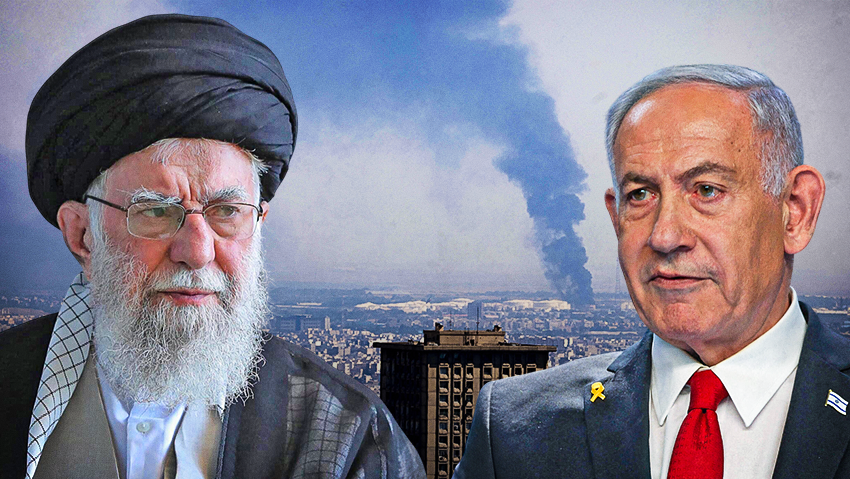
Ali Khamenei, Benjamin Netanyahu
(Photo: Getty Images, ATTA KENARE / AFP, Reuters/ Ronen Zvulun)
However, according to senior Israeli defense sources who spoke to Ynet, there are no intelligence indications that Iran is preparing or even considering a strike on Israel. Likewise, the sources confirmed that Israel currently has no intention of launching a preemptive attack on Iran.
Rebuilding missiles, not nuclear arms
Lieberman’s concerns are not entirely unfounded. Officials acknowledge that Iran is working to restore its air defense systems, destroyed during recent conflicts, and is seeking assistance from China, Russia, and possibly North Korea.
Tehran is also trying to revive its ballistic missile production, though progress remains slow. The key missing component, Israeli experts say, is access to planetary mixers, specialized industrial machines used to produce solid fuel for long-range missiles.

former Defense Minister Avigdor
(Photo: Tal Shahar)
By contrast, there are no signs that Iran has resumed uranium enrichment beyond existing levels, nor any renewed effort to rebuild its nuclear weapons program—halted after Israel’s covert “Operation Am Kelavi” several years ago.
What concerns Israeli intelligence is the stockpile of about 400 kilograms of uranium enriched to 60%, which Iran still possesses. In theory, this could be used to build a crude nuclear explosive or a “dirty bomb,” but officials emphasize that there is no indication such a project is underway.
Intelligence blind spot
The greater worry, officials admit, is that Iran expelled International Atomic Energy Agency (IAEA) inspectors, leaving the world with only limited visibility into its nuclear activities.
Meanwhile, Iran continues to bolster its proxy network—supporting Hezbollah in Lebanon, Shiite militias in Iraq, the Houthis in Yemen, and Hamas in Gaza. These efforts suggest that Tehran’s leadership remains focused on maintaining regional leverage through proxies and missile power, not on restarting its nuclear program.
Still, Israeli analysts caution that Iran’s Supreme Leader Ali Khamenei has yet to make a final decision. Even if he ordered a renewed push for a bomb today, experts estimate it would take at least a year to reconstitute the necessary infrastructure and personnel—many of whom were killed in past Israeli operations.
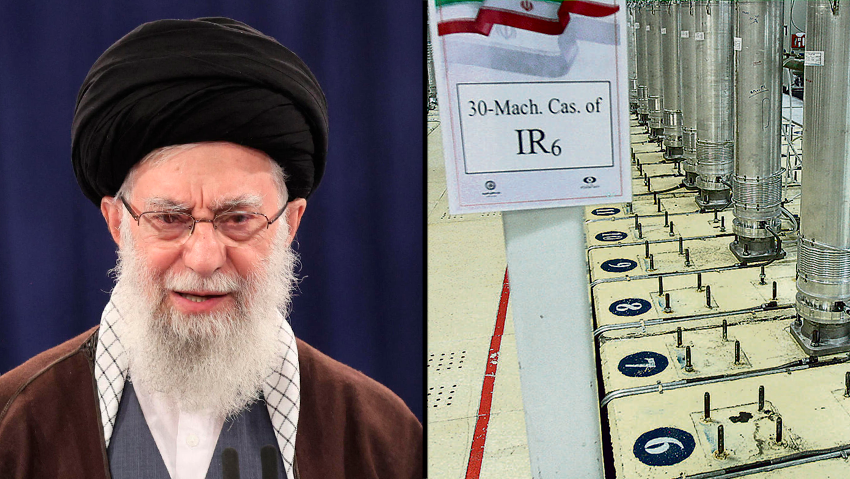
(Photo: AFP, AP)
For now, Iran’s three major strategic programs—missiles, proxies, and nuclear development—are all in early or limited stages. The country also lacks the radar and early warning systems that would allow it to detect an incoming Israeli strike. With its forward positions in Syria largely lost, Tehran’s intelligence on Israel is thinner than in previous years.
That vulnerability fuels Iranian paranoia. Officials there reportedly believe that recent Western and Israeli diplomacy is a smokescreen, recalling how negotiations preceded Israel’s June strike on Iranian assets.
Now, with the UN Security Council preparing to reimpose “snapback” sanctions under pressure from European powers, Iran suspects Israel might use this diplomatic window to launch another surprise attack.
The danger of political noise
Such tensions explain why comments like Lieberman’s raise alarms within Israel’s defense establishment. Officials fear Tehran could misread his statements as a signal that Israel is planning an imminent strike—prompting Iran to act preemptively.
This kind of misunderstanding is precisely what Israeli strategists call a “miscalculation”—an unintended escalation caused by rhetoric rather than actual policy.
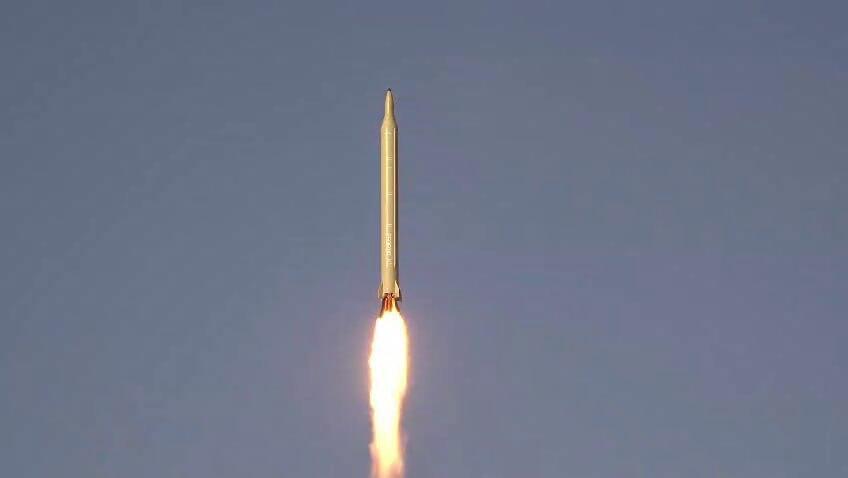
Iranian balisitc missile
“There’s no sign Iran intends to attack,” one senior defense source told Ynet, “but words have consequences. A misinterpretation in Tehran could spark an unnecessary crisis.”
Officials quietly urge both coalition and opposition politicians—and even U.S. Ambassador Mike Huckabee, who recently made his own hawkish remarks—to exercise restraint.
Lieberman’s warning, they say, was likely meant to criticize the government’s security handling, not to predict an imminent war. But in Tehran, where mistrust and anxiety run deep, such rhetoric could still be taken as a provocation.
For now, Israel’s message to its citizens is one of calm vigilance: no war with Iran appears to be on the horizon—but in a region on edge, even a few words can shift the balance.