


Saudi jets backed down and a ten-year blockade shattered overnight. Here is why the desperate gamble by the Crown Prince to protect his mega projects just handed Tehran the ultimate regional victory.
The civilian airliner that pierced the predawn darkness over Sanaa International Airport on July 3 delivered a definitive and ruinous verdict on the regional security architecture built by Saudi Crown Prince Mohammed bin Salman. When an Iranian aircraft successfully navigated Houthi controlled airspace, brushed aside retreating Saudi fighter jets, unloaded unidentified cargo, and departed with a senior Houthi delegation bound for Tehran, the entire balance of power in the Middle East shifted violently in a single morning.
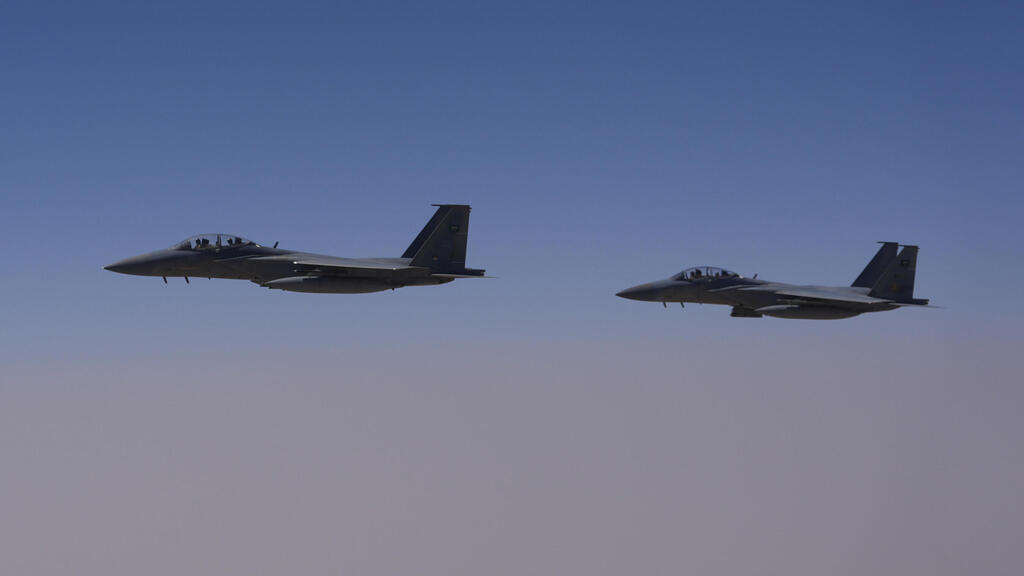
The uncontested landing in Sanaa represents a catastrophic structural collapse born of a profound strategic miscalculation by the Saudi leadership. In his haste to clear the geopolitical ledger for his domestic projects, the Crown Prince traded hard earned regional deterrence for a fragile, dangerous illusion of peace. This capitulation handed the Islamic Republic of Iran the perfect cover to rebuild its deadliest proxy network right on the southern flank of the Middle East. It places the State of Israel and its regional allies directly in the crosshairs of a reinvigorated threat.
To understand how the region arrived at this dangerous impasse, one must examine the core assumptions underpinning Saudi foreign policy over the last three years. Mohammed bin Salman has tethered his legacy entirely to his Vision 2030 initiatives. This grand transformation requires hundreds of billions in foreign investment and a global perception of Saudi Arabia as a stable oasis.
This domestic ambition created an acute strategic vulnerability. The Saudi leadership realized that a single Iranian aligned Houthi drone strike on the financial district in Riyadh could instantly shatter investor confidence. Desperate for a security guarantee his own military could not reliably enforce, the Crown Prince made a fateful gamble. In March 2023, under Chinese brokerage, he signed a normalization agreement with Iran, pivoting away from active resistance toward a policy of absolute appeasement.
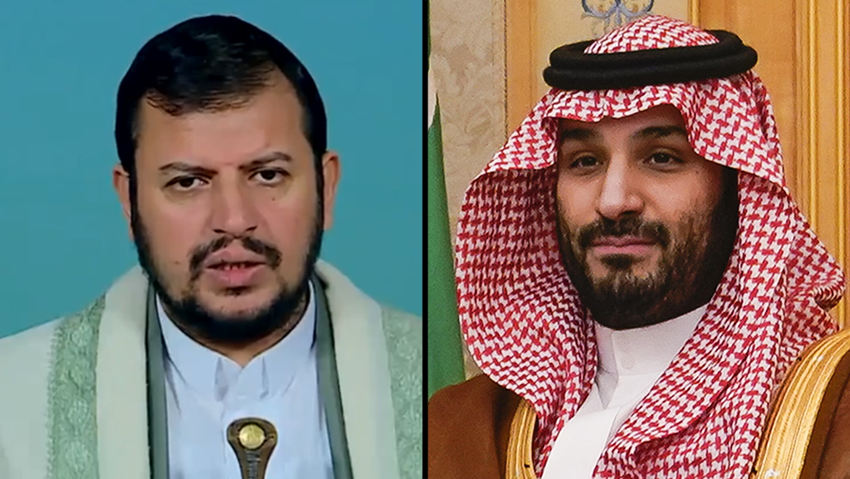
Houthi leader Abdul-Malik al-Houthi and Saudi Crown Prince Mohammed bin Salman
(Photo: Nathan Howard, AP)
Riyadh whispered that economic engagement would tether Tehran to international norms. The Crown Prince assumed that by offering Iran a path out of isolation, he could convince the regime to abandon its proxy warfare. It was a naive calculation revealing a fundamental misunderstanding of the ideological core of the Iranian axis. For Tehran, proxy warfare is never a bargaining chip to be bartered for economic concessions. It remains the vital mechanism of its forward defense strategy and its stated goal of encircling and destroying Israel.
The consequences of Saudi paralysis are felt most acutely in Jerusalem and Tel Aviv. The State of Israel operates under the doctrine of defending against a multi front ring of fire orchestrated by the Islamic Revolutionary Guard Corps. The Houthi movement is no longer a localized Yemeni tribal insurgency. It has evolved into a transnational terrorist army armed with advanced ballistic missiles, cruise missiles, and loitering munitions capable of striking Israeli cities. Since late 2023, the Houthis have repeatedly launched projectiles toward the southern Israeli city of Eilat, forcing Israelis into bomb shelters and severely disrupting the local economy.
The port of Eilat faces crippling operational pauses due to the Houthi maritime blockade in the Red Sea. Israel relied on the assumption that an international maritime coalition, coupled with the Saudi airspace blockade, would gradually choke off the supply of advanced Iranian weaponry reaching Sanaa. The July 3 flight proves that assumption dead. By personalizing Saudi foreign policy and refusing to enforce basic red lines, Mohammed bin Salman allowed Iran to establish a direct, unhindered air bridge to its southern vanguard. The Israeli defense establishment must now calculate the severe implications of an adversary that can resupply its most advanced munitions without relying on slow moving maritime smuggling routes.
For nearly ten years, an international coalition spent billions deploying naval task forces to police the Bab el Mandeb Strait and the Gulf of Aden. These fleets intercepted countless dhows laden with Iranian missile components and explosive precursors. Mohammed bin Salman passive acceptance of the Sanaa air corridor renders those immense maritime interdiction efforts largely obsolete overnight. Through this newly reopened air highway, Tehran can now transport advanced telemetry equipment, automated drone guidance systems, precision guided munitions, and senior Iranian military advisors directly into Sanaa without risking maritime seizure.
By cloaking these flights as humanitarian missions or diplomatic transport, Iran exploits international legal norms to build a secure logistical pipeline. Intercepting civilian flagged airliners carries massive political risk. Tehran understands this vulnerability perfectly and weaponizes it ruthlessly to bypass Western naval supremacy. This unchecked logistical pipeline means the Houthis can replenish their arsenals faster than the Israeli Defense Forces and allied navies can degrade them. A fully rearmed Houthi militia directly threatens the vital shipping lanes of the Red Sea, forcing major global transit lines to abandon the Suez Canal route entirely.
 Amine Ayoub
This disruption drives up global inflation and specifically targets the economic lifelines of Israel and its Western allies. Furthermore, Houthi leadership has recently issued explicit warnings regarding maritime infrastructure in Somaliland, proving their ambitions extend across the entire Horn of Africa. The timing of this aerial breakthrough underlines the supreme irony of the Saudi diplomatic strategy. The Iranian flight took place just days before international negotiators prepared to convene in Islamabad on July 11. These talks are designed to hammer out sanctions relief and the unfreezing of Iranian assets under the framework of the April ceasefire.
The Houthi delegation high profile arrival in Tehran for the state funeral of Supreme Leader Ali Khamenei, who was eliminated in a joint American and Israeli strike in February, was a calculated theatrical display. It served as a message to Washington and Jerusalem that the Iranian proxy network remains completely untouched by recent kinetic conflicts. The ceasefire mechanisms the Crown Prince championed as a diplomatic triumph have become the exact instruments used by Tehran to institutionalize its regional influence. As the United States and its allies approach the Islamabad talks, they must refuse to validate this submissive regional posture.
Amine Ayoub, a fellow at the Middle East Forum, is a policy analyst and writer based in Morocco. Follow him on X: @amineayoubx