

Even for a U.S. president long focused on deal-making, Donald Trump’s decision to have his preferred envoys juggle two sets of negotiations — the Iranian nuclear standoff and Russia’s war in Ukraine — in a single day in Geneva has left many foreign policy experts puzzled.
The shuttle diplomacy Tuesday by U.S. special envoy Steve Witkoff and Trump’s son-in-law Jared Kushner raised questions not only about whether they are overstretched and outmatched, but also about their prospects for resolving either crisis, analysts say. Trump, who has frequently boasted about ending multiple wars and conflicts during the first year of his second term, has made clear he wants more international agreements he can tout as he pursues a Nobel Peace Prize.
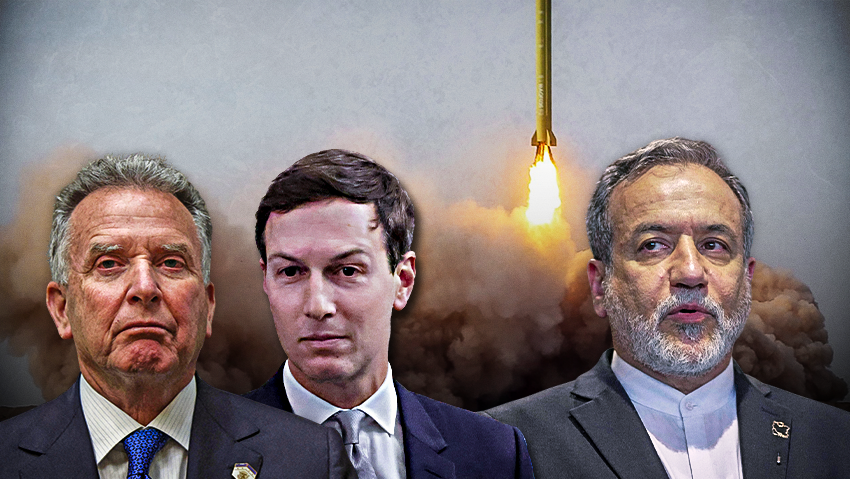
The high-stakes negotiations over the two long-running conflicts were arranged quickly, and the choice of Geneva as the venue for both was not clearly explained beyond the city’s history as a hub for international diplomacy.
“Trump seems more focused on quantity over quality instead of the difficult, detailed work of diplomacy,” said Brett Bruen, a former Obama administration foreign policy adviser who now heads the Global Situation Room consultancy. “Tackling both issues at the same time in the same place doesn’t make a lot of sense.”
Iran was the first focus in Geneva, where talks were held under tight security at two locations on opposite sides of the Swiss city. After 3½ hours of indirect discussions between the U.S. delegation and Iranian Foreign Minister Abbas Araqchi, mediated by Oman, both sides signaled some progress but gave no indication that an agreement was near in the long-running dispute over Iran’s nuclear program.
As long as diplomacy continues, Trump can maintain a significant U.S. military buildup near Iran, signaling that force remains an option. That prospect has kept the Middle East on edge, with fears that U.S. strikes could spark a wider regional war.
‘Overstretch’?
With little pause, U.S. officials moved from the Iran talks at Oman’s diplomatic mission to the InterContinental hotel for the first of two days of Russia-Ukraine negotiations over a war Trump promised during the 2024 campaign to end in a day.
Expectations for a breakthrough in the latest effort to halt Europe’s largest conflict since World War II remain low.
A regional official close to Iran’s leadership said Washington’s double agenda in Geneva reinforced doubts about U.S. sincerity.
“The approach risks overstretch,” the official, speaking on condition of anonymity, told Reuters. “It resembles an emergency room with two critically ill patients and a single doctor unable to give either case sustained attention, increasing the likelihood of failure.”
Mohanad Hajj-Ali of the Carnegie Middle East Center in Beirut said too much was at stake in the Iran crisis for such an approach.
“Having a team of Witkoff and Kushner tasked with resolving all the world’s problems is, frankly, a shocking reality,” he said.
Some analysts argue that both men, whose backgrounds are in New York real estate development, lack the experience to negotiate with seasoned counterparts such as Araqchi and senior Russian officials, and may be in over their heads in such complex conflicts.
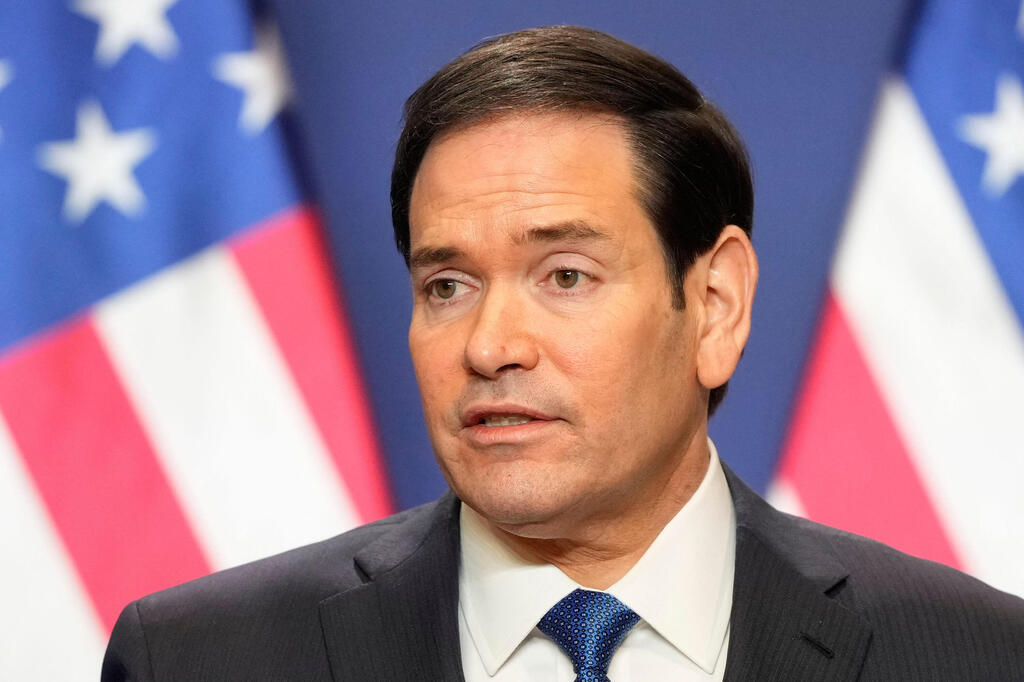
(Photo: Alex Brandon / POOL / AFP)
Notably absent from the Geneva meetings was Secretary of State Marco Rubio, Trump’s top diplomat.
White House spokesperson Anna Kelly defended the administration’s efforts, saying Trump and his team “have done more than anyone to bring both sides together to stop the killing and deliver a peace deal” in Ukraine. She criticized anonymous detractors but did not address specific questions about the strategy.
‘Envoy for everything’
Administration officials have long defended Witkoff and Kushner, citing their deal-making skills, Trump’s trust in them and what they describe as the failures of traditional diplomacy.
Witkoff, a longtime Trump associate sometimes dubbed the “envoy for everything” because of his broad portfolio, played a key role in brokering a ceasefire between Israel and Hamas last year, though progress toward a lasting resolution has stalled. His efforts with Iran and Russia have so far yielded limited results.
During Trump’s first term, Kushner led negotiations for the Abraham Accords, under which several Arab states established diplomatic ties with Israel. The accords have seen little expansion since Trump returned to office.
Some analysts say the envoys’ task has been complicated by what they describe as a hollowing out of the foreign policy establishment at the State Department and National Security Council, where many veteran officials have departed.
“We’ve seen a hollowing out of our diplomatic bench,” Bruen said. “So there’s a question of whether we still have the right people to work on these big issues.”