

The stunning preemptive interception of the Gaza-bound Global Sumud Flotilla far from Israel’s shores was a model of professionalism, discipline and strategic clarity. Once again, the IDF, the Navy and our intelligence services demonstrated that national security can be defended firmly, intelligently and without unnecessary drama.
The mission was executed cleanly: no injuries, no chaos, no televised confrontation and no manufactured spectacle for these radical Israel-hating terrorists and activists eager to provoke headlines—and that matters.
The Israeli Navy warns members of the Gaza-bound Global Sumud Flotilla to change course
(Video: from social media)


For years, flotilla organizers have relied on a predictable formula: create a confrontation, capture selective footage, spread distortions and unleash the usual chorus of Israel-bashing governments, terrorist apologists and Qatari-sponsored professional agitators.
Their real cargo is never really humanitarian aid, medicine or help for Gaza civilians, but rather antisemitic propaganda. This time, however, Israel moved fast and sucked all the wind out of their sails. There was no stage, no grandstanding, no CNN, no France2, no Al Jazeera live updates, no Gretas and no opportunity to turn sailors defending their country into villains for international consumption.
Credit belongs not only to the naval personnel who carried out the operation with precision, but also to Israel’s intelligence services, both Mossad and Naval Intelligence, whose planning and foresight made such a smooth outcome possible. Quiet success is often the hardest kind to achieve. It requires patience, preparation and the ability to act before danger reaches your doorstep.
Predictably, however, critics were quick to respond. The operation has been scornfully described by some Israel critics as a violation of maritime law or even as “piracy.” However, all states retain the inherent right to protect their national security interests against threats, including those that originate beyond their immediate borders.
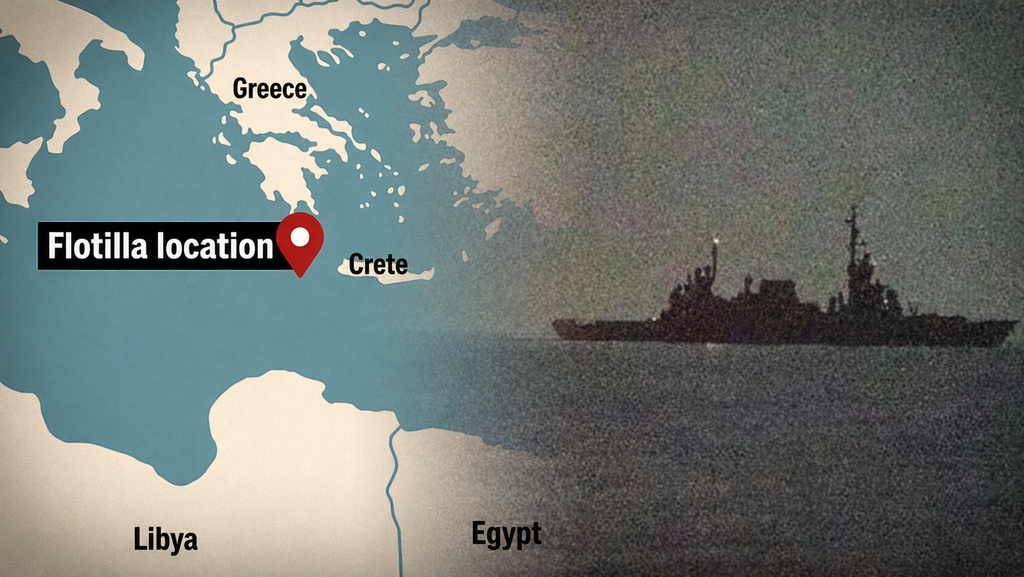
(Photo: from social media)
The naval blockade of Gaza has been widely recognized in international law as a lawful security measure when properly declared and enforced. In that context, publicly declared attempts to breach a lawful sea blockade must be viewed as unlawful extremist conduct rather than legitimate protest or humanitarian action.
Accordingly, Israel is required to take the necessary and proportionate measures available under international law to enforce its rights and ensure the integrity of the blockade, including actions on the high seas.
This, of course, is not a new challenge. Flotilla schemes have been attempted before—and defeated before. Years ago, our organization, Shurat HaDin, used legal jiu-jitsu to stop similar efforts before they ever left port.
By threatening lawsuits, we succeeded in getting maritime insurers to cancel coverage and service providers to withdraw GPS support. We had the Greek coast guard in Athens impound the militants’ boats. It was a reminder that those who abuse international systems for political warfare can be challenged through the rule of law.
 Attorney Nitsana Darshan-Leitner Photo: Shurat HaDin
But legal creativity alone is not enough. Israeli lawmakers must finally enact serious deterrence measures to end this recurring cycle.
The Knesset should pass legislation mandating the confiscation of all vessels used in blockade-running operations. Participants should face meaningful minimum jail sentences of one year and substantial fines that need to be paid, with significantly harsher penalties for repeat offenders. Those who knowingly assist organizations aligned with terrorist interests should understand there is a real price for doing so.
Israel should also reconsider diplomatic relations with states that knowingly allow such flotillas to depart from their ports in defiance of maritime security obligations. Friendly relations cannot be one-sided. Governments that permit provocations, such as Spain, Turkey, Italy and Greece, aimed at Israel should be held accountable for enabling them.
Most importantly, Israeli servicemen and women should not be forced, again and again, to risk their lives boarding hostile vessels while taxpayers foot the bill for expensive operations. Too often, the perpetrators walk away with sandwiches, a slap on the wrist and a free plane ticket home—only to announce to the media their next anti-Israel stunt. That absurdity must end.
Israel has shown that it can boldly stop these provocations with daring restraint and professionalism. Now it must translate that operational success into enduring policy—so that the message at sea is unmistakable: Israeli waters are watched, the rules are enforced and these provocations simply do not set sail.
- The author is an Israeli civil rights attorney, president of Shurat HaDin Law Center and host of ynet Global's ALL CAPS podcast.