

Political considerations have always accompanied Israel’s wars and diplomatic arrangements. The most recent war has shattered records in this regard. The unprecedented weight of political calculations now affects not only the definition of objectives, the policies pursued and the duration of the campaign, but also the ability to distinguish between enemies and allies. As always, the sharpest divides emerge around the Palestinian issue, deeply embedded in Israeli political discourse and saturated with ideology, and far less around areas marked by broad consensus, such as the struggle against Hezbollah and Iran.
In the absence of a coherent strategy, anyone who criticizes Israel is automatically labeled an enemy, while anyone who opposes Israel’s critics, even without a direct connection to Israel, is deemed a friend. Thus, those who recognized a Palestinian state last September are automatically suspected of antisemitism or of being under Islamic influence, particularly in Europe, while any actor who pushes back against criticism of Israel is considered an ally. This is a policy devoid of consistency and a clear compass, often determined by immediate needs or sheer arbitrariness.

(Photo: IDF Spokesperson)
In this confused and contradictory atmosphere, Qatar is defined as a “complex” state and shortly afterward is attacked on its territory. Joe Biden, whose stern warnings to Iran and Hezbollah helped spare Israel a multi-front war at the outset of the fighting, is branded hostile. At the same time, members of the Israeli government maintain ties with far-right groups in Europe, without much scrutiny of their ideology or past.
In practice, Israel’s government is operating within a narrow maneuvering space bounded on one side by threats from Religious Zionism and Otzma Yehudit, and on the other by red lines set by Washington. Instead of a coherent and updated security doctrine grounded in a rigorous reckoning with October 7, what exists is ad hoc conduct centered on the use of force and territorial control, coupled with mockery of those calling for strategy and the presentation of current actions as evidence of “sobriety.”
As a result, Israel increasingly appears as a stubborn actor trapped in fantasies, losing balance and inflicting damage on itself, as highlighted by the strike in Qatar. This perception is especially evident in Gaza, where Israel demands an almost utopian outcome: a governing authority that is neither the Palestinian Authority nor Hamas, full demilitarization and de-radicalization. The result has been a shrinking of Israel’s relevance in shaping the “day after,” illustrated by the fact that Israel was not invited to a meeting convened by Steve Witkoff on a multinational force in Gaza. Senior officials from Turkey and Qatar attended, countries Israel does not want to wield influence there. This comes amid continued Turkish hints about a desire to be present in Gaza and the absence of clear American messaging on the issue.
The vacuum where strategy should exist is being filled by US President Donald Trump, who is making a series of decisions on Israel’s behalf, particularly on the Palestinian issue. In Gaza, this has included his decision to end the war despite Hamas’ response falling short of both his demands and Israel’s, his insistence on maintaining a ceasefire despite repeated Hamas violations, his push for phase two of the agreement despite deep gaps, including Hamas’ refusal to disarm and its failure to return the body of hostage Ran Gvili, and the question mark he left after the killing of Raad Saad regarding Israel’s ability to take similar action in the future.
In the West Bank, Trump flatly rejected the “new conception” embraced by some in Israel that he would allow annexation. He has also incorporated the term “Palestinian state” into a recent UN resolution and agreed to sell F-35 fighter jets to Saudi Arabia without conditioning the deal on normalization with Israel, despite Israeli demands to do so without any discussion of the Palestinian issue.
Additional issues underscore the growing gaps between Jerusalem and Washington: pressure to advance arrangements in Syria and avoid strikes against the al-Sharaa regime, as well as in Lebanon; Trump’s deepening ties with Turkish President Recep Tayyip Erdogan; and the signing of a strategic defense pact with Qatar shortly after Israel’s failed strike in Doha, alongside pressure on Prime Minister Benjamin Netanyahu to issue an apology. Despite this troubling list, Israeli officials continue to argue, implausibly, that Israel’s international strategic position is excellent and that criticism is merely “sour.”
The disruption of Israel’s ally-versus-adversary identification mechanism is also evident in the emerging hostility toward Egypt, fueled by vague and questionable claims from coalition figures that Cairo is planning an attack on Israel. Here too, Trump has intervened to force Israeli moves in situations where he believes Israel is harming both its own interests and his. Notably, he is planning a summit between Netanyahu and Egyptian President Abdel Fattah el-Sissi, an initiative that under normal circumstances would be a clear Israeli interest, and to that end pressed Netanyahu to sign a gas agreement with Egypt.
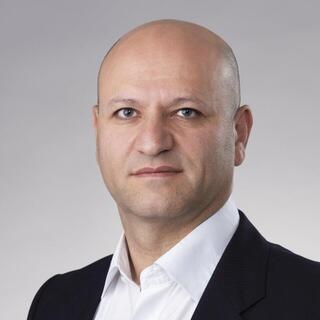
 Dr. Michael Milshtein
The late Henry Kissinger’s remark that Israel has no foreign policy, only domestic politics, is fundamentally accurate. What has unfolded since October 7, however, is a disturbing intensification of this longstanding phenomenon, causing strategic damage and undermining Israel’s image as a state guided by a coherent strategy and sound judgment. A leadership that refuses to investigate the past has adopted a defiant counter-approach that assumes it is almost always right and that any criticism is politically motivated. The result is a destructive cycle in which new conceptions are repeatedly formed, promising further damage.
In this context, another of Kissinger’s observations is worth recalling: “Actions that seem necessary at a certain moment become dangerous if pursued for too long.”
Dr. Michael Milshtein is head of the Palestinian Studies Forum at the Dayan Center at Tel Aviv University