


For decades, the partnership between Turkey and Azerbaijan has been summarized by a single slogan: “One Nation, Two States.” Turkish military technology, shared Turkic heritage and common regional interests helped make the relationship one of the South Caucasus’s most consequential alliances. Turkish-made Bayraktar drones, bilateral defense agreements, energy infrastructure and diplomatic coordination became symbols of that partnership. Yet close military and economic ties do not necessarily guarantee agreement over domestic governance. Azerbaijan’s school-headscarf dispute has exposed that limit.
In October 2026, Azerbaijan opened criminal proceedings against Turkish commentators, placed seven additional individuals on its international wanted list and barred 31 Turkish citizens from entering the country. The dispute reveals Baku’s willingness to defend independent decision-making when political figures in a close partner country challenge its domestic policy. For Israel, the issue matters because Azerbaijan is a major energy supplier and an important defense partner. The confrontation does not mean Baku has chosen Israel over Turkey. It shows that shared identity does not eliminate competing national interests, with consequences for regional security.
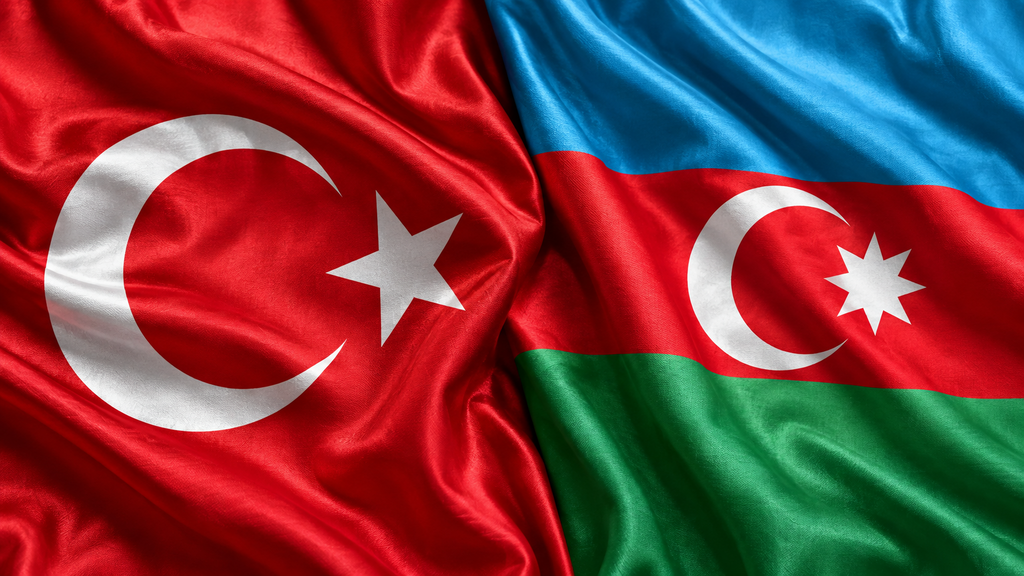
Turkey and Azerbaijan flags
The controversy began with Resolution No. 309, adopted by Azerbaijan’s Cabinet of Ministers on September 21, 2026, amending uniform requirements for students in state schools. A separate Resolution No. 325, adopted on October 6, established clothing requirements for teachers. Neither measure explicitly names the Islamic headscarf. Resolution No. 309 prohibits additional clothing items that disrupt the prescribed student uniform or conflict with the secular principle of general education. Resolution No. 325 establishes separate dress requirements for teachers, including clothing consistent with the secular character of public education. When schools began enforcing the regulations on October 12, their practical consequences became visible. Some female students and teachers wearing headscarves were turned away at school entrances. The policy remains contested inside Azerbaijan. The government defends its requirements as a safeguard for secular public education, while affected families and religious advocates argue that excluding students restricts educational access and freedom of conscience. The dispute prompted demonstrations. Azerbaijan’s Interior Ministry reported that 37 people were detained in Baku on October 12 over what it described as public-order violations.
The controversy quickly entered Turkish domestic politics. The ruling Justice and Development Party has gradually dismantled headscarf restrictions in universities and public employment, and Azerbaijan’s rules drew immediate criticism. Oktay Saral, an adviser to President Recep Tayyip Erdoğan, called the restrictions unacceptable, while several ruling-party lawmakers voiced similar objections. Conservative Turkish organizations, including Özgür-Der and Köklü Değişim, organized demonstrations outside Azerbaijani diplomatic missions in Ankara and Istanbul. Other Turkish political figures urged caution against allowing the dispute to damage bilateral relations. The disagreement therefore involved competing positions within Turkey, not demonstrated evidence of a unified government campaign to destabilize Azerbaijan.
On October 16, Azerbaijan’s Prosecutor General opened criminal proceedings over alleged calls for the forcible overthrow of the government and incitement to religious hatred. The office said Turkish columnist Celal Çiftçi had been formally charged and declared internationally wanted. On October 19, Azerbaijani authorities announced that seven additional individuals had been formally charged and placed on the international wanted list, according to a Prosecutor General’s Office announcement published the following day. The allegations involved purported calls for a forcible seizure of power, changes to the constitutional order and incitement to religious hatred. The allegations remain unproven. On October 21, Azerbaijan’s Foreign Ministry designated 31 Turkish citizens as undesirable persons and barred them from entry. The list included politicians, media figures and religious activists, most notably New Welfare Party leader Fatih Erbakan. International wanted-list status does not, by itself, establish that Interpol Red Notices were issued.
The diplomatic fallout has not produced a formal rupture between the two governments. Erdoğan sent Azerbaijani President Ilham Aliyev a congratulatory message on October 18 and spoke with him by telephone on October 21. Erdoğan expressed confidence that bilateral cooperation would continue to deepen, while Aliyev said relations would continue to develop successfully. Both governments have powerful reasons to preserve cooperation in defense, energy, transport and regional diplomacy.
Secularism, sovereignty and religious freedom
Azerbaijan’s response reflects the particular role of secularism in its state identity. In 1918, the Azerbaijan Democratic Republic became a pioneering parliamentary democracy in the Muslim East and granted women the right to vote, ahead of several Western European countries. Seven decades of Soviet rule later suppressed religious practice, but post-independence Azerbaijan retained a strongly secular state framework.
Today, Azerbaijan is a majority-Muslim country with a predominantly Shia population, a substantial Sunni minority, and longstanding Jewish and Christian communities. Its leadership presents state neutrality in public institutions, especially schools, as necessary to reduce sectarian friction and protect social stability.
Azerbaijan’s constitutional separation of religion and state must be distinguished from the government’s regulation of religious life. The United States Commission on International Religious Freedom and other monitoring bodies have documented extensive state oversight of religious institutions, clerical appointments and religious literature. The headscarf controversy raises a question beyond foreign interference: how should a secular state reconcile uniform education standards with freedom of conscience and equal access to classrooms? Azerbaijan has the right to set domestic education policy, but that does not remove the need to consider the rights of students and teachers affected by enforcement.
Azerbaijan’s sensitivity to religious mobilization also reflects its security concerns about Iran. The Stimson Center has documented the Iran-linked Huseyniyyun movement’s efforts to recruit Azerbaijani citizens and challenge the government in Baku. Yet political criticism and demonstrations by Turkish organizations should not automatically be equated with foreign-directed paramilitary activity.
Israel’s strategic partnership with Azerbaijan
Energy and defense cooperation underpin Azerbaijan’s relationship with Israel. Reuters reported in January 2026, citing Kpler data, that Azerbaijani crude accounted for 46.4 percent of Israel’s crude-oil imports in 2025. Much of this oil travels through the Baku-Tbilisi-Ceyhan pipeline to Turkey’s Ceyhan terminal before being shipped across the Mediterranean to Israeli ports.
This route illustrates the complexity of regional energy relations. Although official Turkish data recorded no trade between Turkey and Israel from June 2024, Azerbaijani crude continued to be loaded at Ceyhan and shipped to Israel. Ankara has maintained that it does not control the ultimate destination of Azerbaijani oil carried through the pipeline. Energy flows can therefore persist across commercial and political boundaries even when governments disagree sharply over regional policy. Israeli defense technology has also contributed to the modernization of Azerbaijan’s armed forces, making the relationship important to both countries’ security interests, including their concerns about Iran.
The partnership also sits alongside Azerbaijan’s longstanding Mountain Jewish community, including in Quba’s Red Village. Some Turkish conservative and Islamist figures have criticized Azerbaijan’s relationship with Israel. The school-uniform controversy brought that criticism into sharper focus. On October 13, the ruling New Azerbaijan Party had already criticized remarks by Turkish officials, arguing that Azerbaijan’s relationship with Israel was normal interstate cooperation based on international law and mutual interests. That statement preceded Erbakan’s later attack on Aliyev.
 Amine Ayoub
On October 21, Erbakan criticized Aliyev for hosting Israeli President Isaac Herzog in Baku and linked the headscarf restrictions to what he portrayed as an abandonment of Islamic solidarity. His remarks showed how a domestic dispute had become entangled with a wider argument over Azerbaijan’s independent foreign policy.
For Israeli policymakers, the lesson is not that Azerbaijan has chosen Israel over Turkey. Baku’s relationships with both countries serve distinct national interests. Turkey remains important to Azerbaijan’s regional security and transport links, while Israel is a consequential energy and defense partner. The dispute exposes the limits of political solidarity without establishing the collapse of the Turkish-Azerbaijani alliance.
Israel should continue deepening its relationship with Baku through diplomatic engagement, energy cooperation and defense ties. The objective should not be to force Azerbaijan to choose between its partners, but to preserve a partnership grounded in concrete mutual interests. The episode demonstrates that shared identity does not eliminate competing national priorities, even among close allies.
- Amine Ayoub, a fellow at the Middle East Forum, is a policy analyst and writer based in Morocco. Follow him on X: @amineayoubx