


The illusion of green independence
This week, the Egyptian government celebrated what its state media outlets described as a historic milestone in the nation's journey toward energy independence.
At the Africa Energy Forum in Cape Town, Cairo officially authorized the largest single solar supply agreement in the history of the African continent.
Gallery
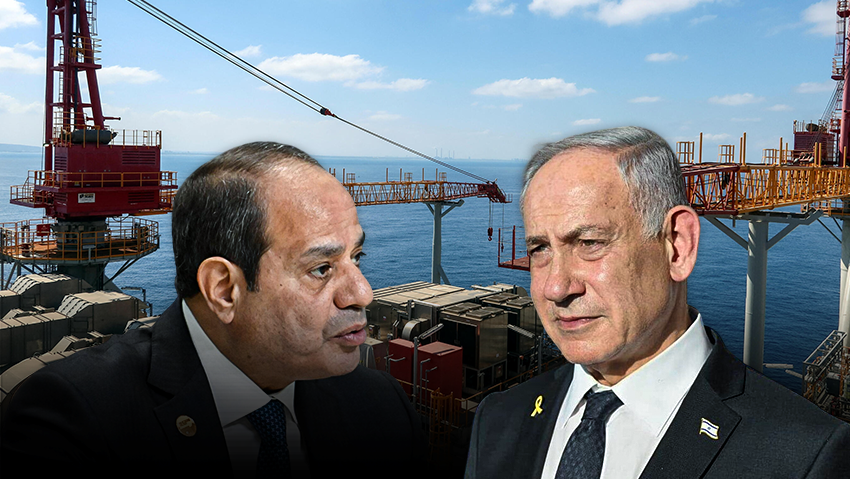
Egyptian President Abdel Fattah El-Sisi, Prime Minister Benjamin Netanyahu
(Photo: Reuters/Ari Rabinovitch, Alexander Nemenov/AP, GPO)
This ambitious endeavor involves the construction of a massive solar complex in the Minya Governorate, a project designed to supply electricity to approximately one million households while theoretically eliminating over one million tons of carbon emissions annually.
Government officials and commentators immediately heralded the contract as definitive proof that Egypt is rapidly outperforming its regional peers in the transition toward a green economy. What the official press releases deliberately omitted, however, is a much more inconvenient geopolitical reality.
The only reason that domestic refrigerators, industrial factories and hospital ventilators across Egypt remained operational this month is a multibillion-dollar emergency fuel acquisition strategy. This scramble heavily relies on a natural gas pipeline originating in Israel, an energy corridor that nearly buckled under the strategic pressures of regional warfare just several months ago.
The reality of the situation is clear: Egypt is not making a clean break from fossil fuels in favor of solar energy. Instead, Cairo is signing solar contracts with one hand while relying on vital Israeli energy lifelines with the other.
Decoupling public relations from infrastructure reality
On paper, the data points emerging from the Cape Town signing ceremony are undeniably substantial. A prominent Chinese solar technology manufacturer that received a prestigious grade-A rating from Wood Mackenzie has committed to supplying its highly efficient modules to the Nefer Minya project located in the Egyptian desert.
This sprawling installation will be paired with hundreds of megawatt-hours of advanced battery storage, financed in significant part by the European Bank for Reconstruction and Development. This project follows closely on the heels of its smaller predecessor in Aswan, which is already on track to achieve grid connection by the conclusion of this calendar year.
Taken together, these initiatives move developers significantly closer to establishing ten gigawatts of clean energy capacity across the African continent over the next decade.
To a casual observer or a foreign investor looking at a balance sheet, Egypt appears to be a forward-thinking nation resolving its structural energy deficits by harnessing an asset it possesses in infinite abundance, which is desert sunlight.
Consequently, international financial institutions are increasingly treating the North African topography as premium bankable collateral rather than vacant wasteland. Yet, when one strips away the celebratory language of corporate public relations, the recent past reveals a far more volatile narrative that solar arrays alone cannot resolve because underlying issues require baseline power sources that only gas can provide effectively.
The staggering cost of domestic supply failures
Throughout the scorching summer months of recent years, the government in Cairo was forced to implement mandatory, nationwide load shedding protocols. This policy resulted in rolling blackouts that severed electrical access for multiple hours daily in the capital city, and for even longer in the provincial towns of Upper Egypt, where ambient temperatures frequently hovered around 50 degrees Celsius (122 degrees Fahrenheit).
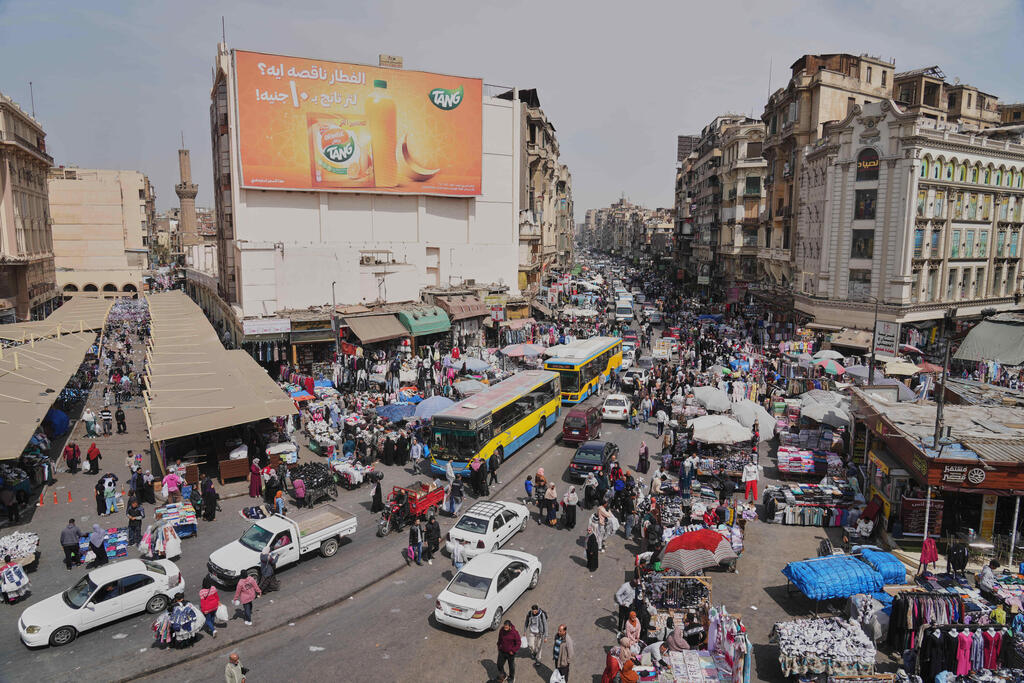
Cairo
(Photo: AP Photo/Amr Nabil)
The human and economic costs of these grid failures were devastating. Citizens lost their lives after becoming trapped in unventilated elevators during peak heat hours. Cellular broadcast towers routinely lost power, suddenly isolating entire municipal neighborhoods from mobile communication networks for hours at a time. Local bakeries lost their commercial ovens mid-bake, and standard street-side falafel vendors, who rely entirely on electric grinders to prepare their food, simply shuttered their operations.
The underlying cause of this systemic collapse was not a sudden deficit of sunshine. Rather, it was the catastrophic decline of Egypt’s domestic natural gas production, which had been in a continuous downward spiral.
This production drop occurred precisely as domestic demand for air conditioning surged past forty thousand megawatts. Compounding the physical shortage was a severe fiscal crisis, as the Egyptian government had fallen deep into multi-billion dollar financial arrears owed to its international drilling partners, which essentially halted all operations and left the entire domestic network helpless without foreign fuel support mechanisms.
Israel as the indispensable anchor of stability
This summer, the Egyptian ministry of petroleum has confidently assured the public that the era of rolling blackouts is officially over. For the first time in recent memory, that political promise is backed by tangible physical infrastructure.
Four major floating storage and regasification units have been strategically positioned at the ports of Ain Sokhna and Damietta. These specialized vessels provide the national electrical grid with massive new seaborne fuel import capacity. Furthermore, the state has finally paid down a significant portion of the financial arrears owed to its international exploration partners.
Yet, the fiscal price tag of this short-term stabilization is extraordinarily high, and it underscores a profound structural transformation. Egypt imported virtually no liquefied natural gas a few years ago. By contrast, the country imported historic amounts recently, and imported gas now constitutes nearly three-quarters of the entire volume of natural gas that Egypt obtains from external markets.
This brings us to the core strategic reality that policymakers in Cairo are loath to admit publicly, but which remains glaringly obvious to Israel: a massive percentage of Egypt’s energy baseline is tied directly to Israeli gas fields.
This reality demonstrates that Israel serves as the indispensable anchor of regional energy security and grid stability within this critical zone, protecting its neighbor from immediate structural failure during times of high operational stress levels.
Strategic realism for Western policymakers
This profound vulnerability became structural reality this past spring, when pipeline deliveries of Israeli gas plummeted by nearly 80 percent in a single month. This sudden drop was triggered by intense regional security escalations stemming from the broader confrontation with Iran, which forced temporary, precautionary production suspensions at offshore platforms.
 Amine Ayoub
When the infrastructure connected to Israel experienced a temporary shock, the entire architectural framework of Egypt’s summer energy security plan experienced a simultaneous crisis. This dependency is not a minor statistical footnote; it is the central pivot upon which the entire Egyptian state grid balances.
For Washington and Western leadership, this systemic vulnerability presents a clear strategic opportunity to protect the pipeline and stabilize the region. Green projects look impressive on paper, but solar future remains completely underwritten by Israeli resource abundance and strategic resilience, proving that true stability relies on robust regional partnerships with Israel rather than optical displays of solar development.
Western financial institutions must stop treating these pipelines as simple commercial elements; they are vital arteries of regional peace. Moving forward, Egypt must acknowledge that its lights stay on because of Israeli natural resources, anchoring a broader reality that cooperation is the only sustainable strategy for the Middle East, while clean energy projects serve as secondary commentary and cosmetic enhancements to mask deep systemic realities that bind Cairo to its neighbor indefinitely.
- Amine Ayoub, a fellow at the Middle East Forum, is a policy analyst and writer based in Morocco. Follow him on X: @amineayoubx