


The combat training images emerging from Egyptian military facilities this month should trigger immediate alarm within Israel's defense and intelligence communities.
While global attention remains fractured by ongoing conflicts elsewhere, Cairo and Ankara have quietly launched a massive joint military exercise codenamed Golden Eagle. This is no routine training deployment in some remote, abstract landscape. Elite paratroopers, special forces and thunderbolt commando units from both nations are actively practicing synchronized operations on Egyptian soil.
Gallery
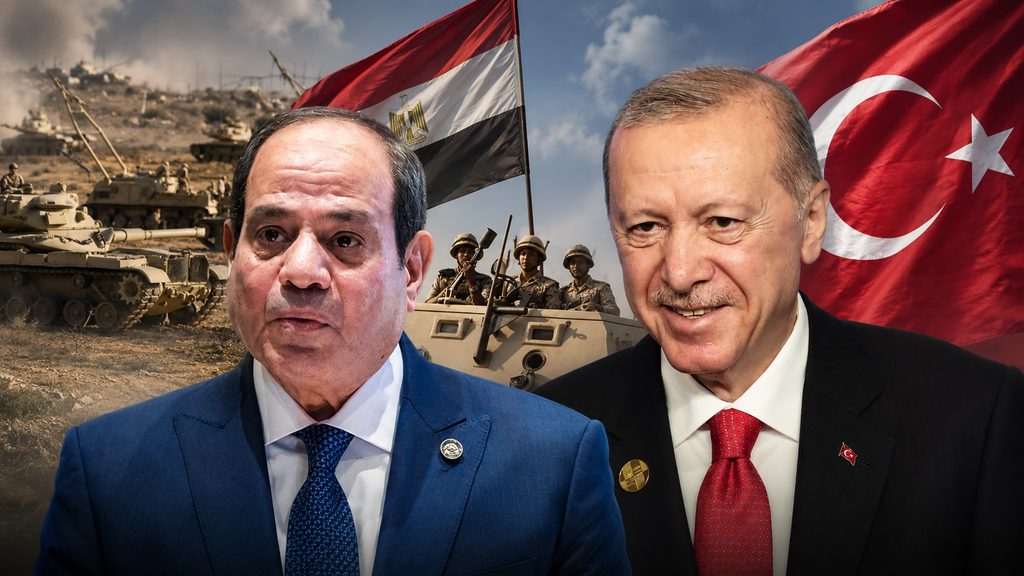
While global attention remains fractured by ongoing conflicts elsewhere, Cairo and Ankara have quietly launched a massive joint military exercise codenamed Golden Eagle
(Photo: Saul Loeb/ AFP, Ludovic Marin/ AFP, Martin Sylvest / RITZAU SCANPIX / AFP, Khaled DESOUKI / AFP, AP/ Hassan Ammar)
For anyone who understands the intricate chessboard of Middle Eastern geopolitics, this sudden military intimacy is nothing short of a profound alarm bell. It represents the formalization of a relationship that was considered completely impossible just a few short years ago.
This shift follows a major defense framework agreement signed in Cairo during Turkish President Recep Tayyip Erdogan's high-profile visit to Egyptian President Abdel Fattah el-Sisi. Although official military spokesmen frame these maneuvers as routine cooperation with friendly nations, the timing and composition reveal a deeper reality.
This is a cold, cynical strategic alliance between two authoritarian heavyweights, and its long-term consequences could permanently destabilize the Eastern Mediterranean while breathing dangerous new life into regional Islamism.
To understand why Golden Eagle is so alarming, one must look at what preceded it just weeks ago. This special forces drill is actually the second major escalation in bilateral military cooperation this summer.
In late June 2026, the two nations concluded a massive, multi-day joint air force exercise hosted across several strategic air bases inside Egypt. That aerial summit featured advanced multi-role fighter aircraft, specifically American-made F-16 jets, which form the backbone of both the Turkish and Egyptian air fleets.
Immediately following those maneuvers, Egypt deployed its assets to participate in the Anatolian Eagle 2026 trilateral air exercise hosted in Turkey alongside Azerbaijan and NATO assets. During those intense aerial sorties, pilots practiced advanced command and control procedures, coordinated strikes and complex electronic warfare tactics.
The rapid transition from complex air force exercises to face-to-face commando drills proves that this is not a temporary diplomatic flirtation. It is a highly coordinated, multi-domain integration of two of the largest militaries in the region, systematically building interoperability from the skies down to urban warfare trenches.
The speed of this military convergence suggests that technical and operational barriers are being systematically dismantled, fundamentally altering the traditional balance of power.
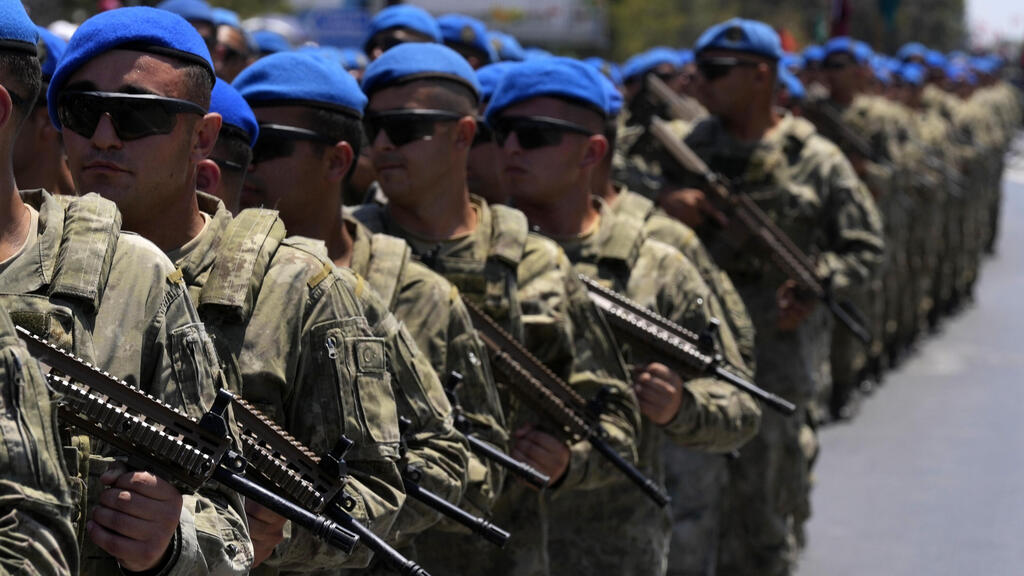
Turkish soldiers
(Photo: AP Photo/Petros Karadjias)
To fully grasp the magnitude of this threat, observers must look past polished diplomatic press releases and examine the raw power dynamics uniting Sisi and Erdogan.
For a decade, these two men were the most bitter rivals in the region. Sisi was the secular general who saved Egypt from the brink of total Islamist collapse, while Erdogan acted as the self-appointed global champion of the Muslim Brotherhood.
Today, they are burying the hatchet, but they are not doing it for the sake of regional peace. They are doing it because their respective paths to domestic survival and geopolitical projection have converged.
Their newfound military cooperation sends a dark, unmistakable message to Israel and the Western world that ideological principles mean absolutely nothing when authoritarian survival is on the line.
By inviting Turkish commandos onto Egyptian soil, Sisi is validating a foreign leader who has spent his entire career attempting to subvert the traditional Arab state structure. Erdogan, facing severe economic isolation and shifting global alliances, sees Egypt as the perfect vehicle to legitimize his regional ambitions.
It is a transactional marriage of convenience where the currency of exchange is military hardware, shared tactical doctrine and an eventual realignment of regional dominance.
Israel cannot afford to remain blind to the ideological undercurrents driving Turkish foreign policy.
Under Erdogan's long rule, Ankara has transformed from a vital secular ally into a primary state sponsor of political Islam. Turkey has sheltered senior Hamas operatives, provided diplomatic cover to extremist networks and funded Muslim Brotherhood assets across Europe and the Middle East.
Erdogan openly dreams of restoring historical Ottoman influence over former provincial territories, with North Africa sitting at the very top of his geopolitical agenda. Turkey's aggressive military interventions in Libya, its deep footprint in Syria and its recent geopolitical push into the Horn of Africa all point to a singular goal of projecting Islamist nationalist soft and hard power across the Mediterranean basin.
The Golden Eagle drills provide Ankara with the ultimate cover. By integrating its elite units with the Egyptian military, Turkey secures a permanent foothold closer to Israeli waters and critical international sea lanes.
This is not just a tactical exchange. It is a mechanism for Turkey to project its shadow directly onto Israel's southern borders under the guise of an accepted Arab partnership.
For years, Jerusalem and Washington viewed Sisi's Egypt as an immovable bulwark against religious radicalism, built on the systematic dismantling of the Muslim Brotherhood.
However, Sisi's Egypt is currently drowning in profound economic misery and systemic domestic repression, creating a perfect breeding ground for covert radicalization. By opening the door to intense military cooperation with Erdogan, Sisi is importing Turkish-style Islamist soft power into a highly sensitive society.
This normalization inadvertently grants the ideology the mainstream legitimacy it needs to fester beneath the surface.
This domestic shift directly intersects with geopolitical realignments in the Eastern Mediterranean, a highly contested arena characterized by vast natural gas discoveries and disputed maritime boundaries.
 Amine Ayoub
A deepening military nexus between Cairo and Ankara completely upends the delicate balance of power. Beyond joint maneuvers, Egypt has explored participation in Turkey's KAAN stealth fighter program and signed agreements with Turkish defense firms for the domestic production of advanced drones.
This level of defense integration builds shared technical and operational capabilities that alter the traditional strategic assumptions of the region.
Israel's historic peace treaty with Egypt has always been a cold, transactional calculation born out of military reality, not shared values. Israel can no longer rely on passive monitoring.
Israel must explicitly warn its Western allies, particularly the U.S., that unconditional financial and military aid to Cairo must be re-evaluated if Egypt continues to build a strategic axis with an adversarial, Hamas-backing Turkish regime.
Israel must respond with aggressive, clear-eyed diplomacy, leveraging security ties to demand strict oversight on how American-supplied technology, including the F-16 fleets used in recent exercises, is shared or integrated during joint maneuvers.
Intelligence agencies must track the specific tactical doctrines and hardware shared between Ankara and Cairo.
If Israel remains complacent, it will soon face a heavily armed, highly synchronized axis on its southern border, led by an erratic Islamist in Ankara and an economically desperate strongman in Cairo.
The lines between secular autocracy and political Islam are blurring into a dangerous regional challenge that threatens historical security buffers. Jerusalem must proactively dismantle this evolving configuration before these integrated forces redirect their shared tactical capabilities, ensuring that deterrence remains absolute across all frontiers.
- Amine Ayoub, a fellow at the Middle East Forum, is a policy analyst and writer based in Morocco. Follow him on X: @amineayoubx