


It is worth listening carefully to the warning issued by Defense Ministry Director-General Maj. Gen. (res.) Amir Baram. When he says that Israel’s military buildup is “dangerously behind Iran,” this is not just another statement made in the context of budget talks. It is a professional warning from the person responsible for the force buildup of the IDF and the defense establishment after nearly 1,000 days of fighting.
Baram cannot publicly detail the full picture of the operational gaps. Much of the information is classified, and the enemy is listening to every word. Precisely because of that, the fact that he chose to warn publicly about the lag in force buildup should set off alarms among decision-makers.
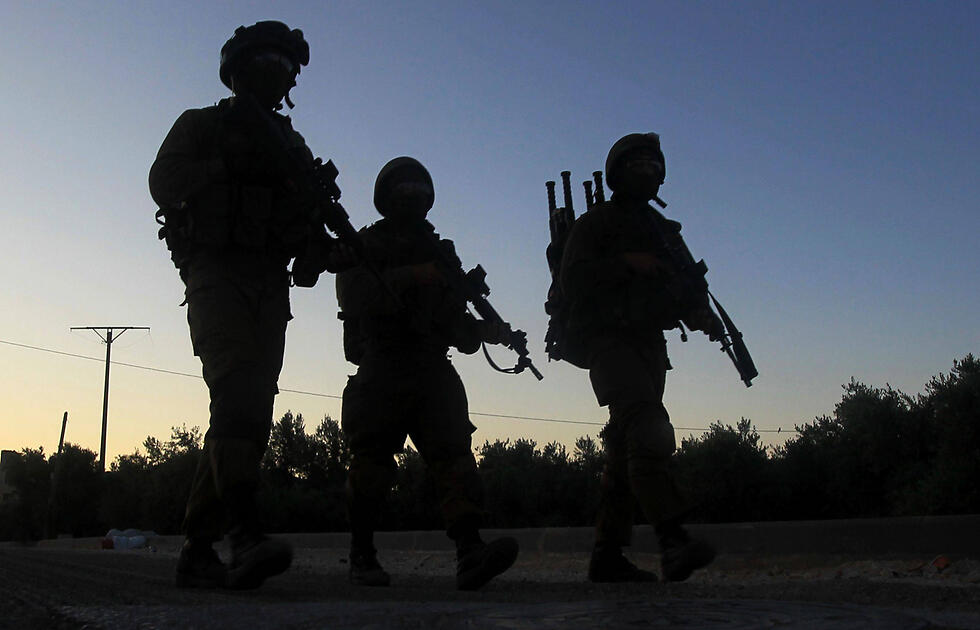
(Photo: AFP)
Baram is warning against any reduction in the roughly 40 billion shekels ($12 billion) that is supposed to be added to the base of the defense budget. This money is meant to replenish interceptor and offensive munition stocks, expand intelligence capabilities, restore formations eroded across the ground forces, air force and navy, and ensure the IDF’s operational continuity.
“We must not repeat the mistakes of the past. We must not again arrive unprepared as we did on October 7,” he warned.
But force buildup does not depend only on budgets and weapons. It also depends on the most important resource of all: manpower. Here, too, the defense establishment’s warnings are becoming more severe.
The draft issue is no longer only a moral question of sharing the burden. It has become a first-order security, operational and economic issue. The less the circle of those who serve expands, the greater the dependence on the reserves becomes, and the cost to the economy and state budget continues to rise.
60,000 reservists called up under emergency orders
We reported yesterday that about 60,000 reservists are currently mobilized under emergency call-up orders, at a cost of billions of shekels to the economy. At the same time, almost every IDF arena remains active: Lebanon, the Gaza Strip, Syria, where forces are also operating beyond the fence, the West Bank with more than 20 battalions, the Egyptian border, the reinforced Eilat sector and the eastern border with Jordan.
After October 7, the Swords of Iron war and the direct campaign against Iran, the threats have only expanded. Israel is required to maintain significant forces in several arenas at once, replenish stockpiles, build new capabilities and ensure operational continuity. All of this requires both money and manpower.
Against the backdrop of this unprecedented operational burden, the IDF is warning that without expanding the pool of recruits, and if compulsory service is shortened from 36 months to 30 months, about 8,000 additional reservists, most of them combat soldiers, will be needed just to bridge the manpower shortage.
The meaning is clear: Without a real solution to the draft crisis, the burden on the reserves will only grow, and with it the cost to the defense budget and the entire economy.
Baram’s warning recalls one issued in 2021 by then-Deputy Chief of Staff Maj. Gen. Eyal Zamir. “The IDF is on the verge of the minimum force size needed to face threats more complex than those we have experienced in recent years,” Zamir said at the time.
He added that Israel needed not only advanced technological capabilities, but also “a critical mass of force, in both quality and quantity.” At the time, some saw it as a theoretical warning. Four years later, it is hard not to understand how accurate it was.
 Yossi Yehoshua
That is why any attempt to cut the budget increase or once again postpone a decision on the draft issue would be far more than a budgetary or political decision. It would be a security decision.
The central lesson of October 7 is that the price of ignoring professional warnings is far higher than the price of making decisions on time. When Baram warns of a dangerous lag in force buildup, and when the IDF warns of a worsening manpower shortage, this is not a demand for more money. It is a wake-up call to a country that must not repeat the mistake for which it has already paid such a heavy price.