

Would you demolish Auschwitz? Of course not. The memory of the victims, the documentation of the crimes, the proof of the horrors — all must be preserved despite the pain, for the sake of future generations. But what if you had to keep living there? To face the destruction every morning? To rush to class or grab a coffee by passing through a murder scene frozen in time? In that case, the answer might be different. The need to move forward, rebuild and reestablish routine would all enter the equation.
This is precisely the heartbreaking dilemma the members of Kibbutz Be'eri recently confronted. Still trying to rise from the disaster, they voted by a narrow margin that life inside a memorial site is not life. The decision means clearing and demolishing the homes destroyed in the October 7 massacre. One house will remain, a testimony to what happened and to what must never happen again.
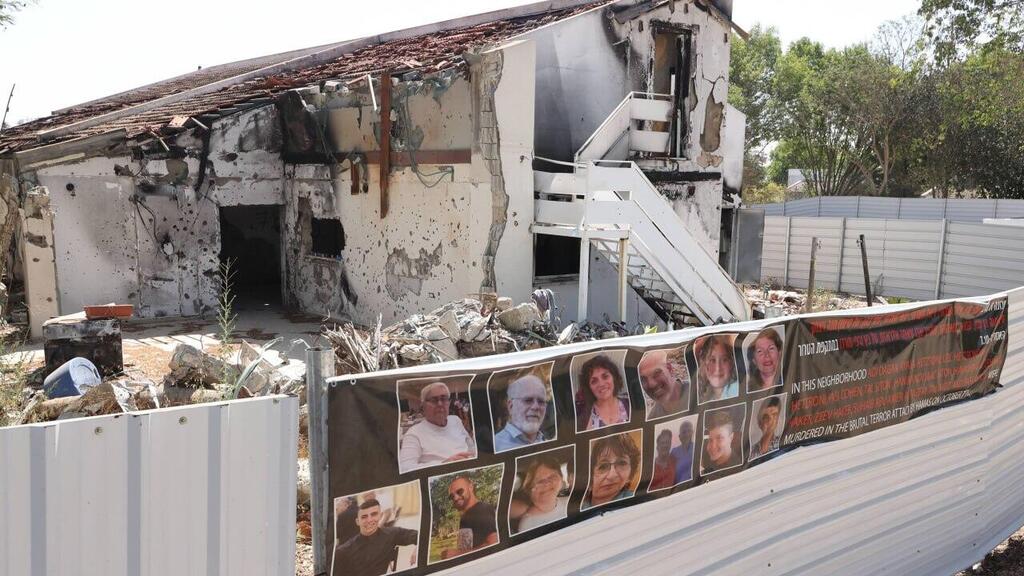
The house of Pessi Cohen
(Photo: Gadi Kabalo)
This is not a decision anyone can fairly criticize. No one can claim to know better than those who endured devastation and must now live again at the center of trauma. Whatever they say deserves a quiet amen. Yet what matters is understanding that Be'eri’s decision will not be the last on this issue. It opens a window into the present and future dilemmas of Nir Oz, Kfar Aza, Nirim, Nahal Oz, Re’im and other communities along Israel’s border. These are places that, against their will, have become focal points in a struggle between remembrance and renewal. That reality highlights not only the depth of the tragedy. It underscores the need for more effective state action in preserving the national heritage.
The Tekuma Authority has allocated tens of millions to establish a national memorial for October 7, but its creation depends on legislation that remains unfinished. More than two years have passed since the massacre, yet the necessary administrative work is still incomplete. A state commission of inquiry is also deliberately avoided. As a result, the content that would fill any memorial institution is, by definition, partial and lacking. Such commissions are not only meant to assign responsibility. They are designed to form a narrative explaining how the country reached this point. Just as the Holocaust did not begin with the establishment of the death camps, October 7 did not begin on October 7.
The problem with this dynamic, in which the state moves at its own pace, is that life is not a made-to-order program. It does not wait for government directives, bureaucracy or paperwork. It pushes past every document on its way to the next stage and forces survivors to confront decisions they must make. A community’s ability to tell its own story must always be preserved. But had the authorities and political leadership operated with greater transparency and efficiency, the members of Be'eri could have considered how future national commemoration would be shaped. That would have allowed them to highlight aspects the state does not emphasize or raise issues that matter to them in a different way. Their decision would have been made in context, not in a fog.
 Gadi Ezra Photo: Avigail Uzi
Disclosure: At the end of October 2023 I was there as a reservist. The walls of the dental clinic that still stood practically screamed. The path leading to it ran through the same buildings now slated for demolition. ZAKA teams were still searching them for remains. Crushed cars lined the road. Other homes appeared intact but were anything but. Bloodstains on balconies revealed what had happened inside. Still others remained as they were the day they were abandoned — to Gaza, to the next world or to evacuation hotels. In truth that scene has not ended. War does not finish when the last soldier crosses back over the border. Even after Ran Gvili returns, it will end only when the residents return home. It is the state’s duty to ease that journey. Shaping memory in a way that helps them make decisions is an inseparable part of that responsibility.