

The United Arab Emirates has become much more than a popular destination in recent years. It has opened its doors to businesspeople across a range of industries, to family vacations and to leisure travel. The attempted hijacking of the Flydubai flight may serve first and foremost as a reminder that no matter how close Israel’s ties with the countries around it become, and perhaps precisely because those ties are becoming significantly closer, Israel must keep its eyes wide open for enemies who will always look for ways to bring us down, and not only by trying to hijack an aircraft.
But there is another important point: the nature of the regimes in the countries around us and the way emergency situations must be handled with them.
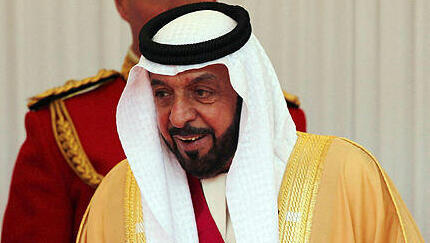
Khalifa bin Zayed Al Nahyan
(Photo: Reuters)
It is easy to forget, while spending time at theme parks and sitting in luxury restaurants, and Arab countries certainly know how to host, where we actually are. Usually, only a short distance from those glamorous places, not only are residents’ living conditions entirely different, but the presence of the regime is far more tangible.
We got a taste of that during Operation Roaring Lion, when Israelis were stranded in the UAE as Iranian attacks targeted both the Emirates and Israel.
Ultimately, these are not democracies. When Israelis travel to Arab countries, especially during security emergencies, strict rules apply to everyone. The country’s leaders are the decision-makers, with little room for appeal or public criticism.
For an entire day, from the attempted hijacking until the Israeli passengers landed back in Israel, neither the UAE nor Saudi Arabia issued an official statement.
Every development took place behind the scenes. The only announcements throughout the day came from the Emirati airline Flydubai and from Tabuk airport in Saudi Arabia, where the Israeli passengers landed after control of the aircraft was regained.
Saudi Crown Prince Mohammed bin Salman delivered a speech that evening without mentioning the incident in his country at all, while condemning what he called the “continued attacks by the occupation against the Palestinians.”
Only in the evening did the UAE issue a statement referring to a “security incident that was brought under control.”
None of this contradicts the need to strengthen Israel’s ties with the countries around it. Quite the opposite. Stronger relations create alliances and weaken our enemies.
But the closer those relationships become, the more those same enemies will seek to strike at both Israel and its regional ties.
Israel’s preparations for the dangers, possible scenarios and security challenges must therefore be clear and precise. That responsibility should not fall on the individual Israeli citizen, even if Israelis have repeatedly proven themselves capable of rising to extraordinary situations in recent years.
Normalization offers enormous advantages. But greater closeness also brings greater challenges, and Flydubai crisis provided another reminder of that reality.
First published: 10:53, 10.02.26