

On Monday, December 22, a convoy of black armored vehicles sliced through the rain-slicked streets of Damascus, carrying a delegation that symbolizes the total overturning of the Middle East’s old order.
Inside were Turkey’s "troika of power": Foreign Minister Hakan Fidan, Defense Minister Yaşar Güler and Intelligence Chief İbrahim Kalın. They did not arrive as conquerors, but as partners, there to embrace the new master of the Levant: President Ahmad al-Sharaa.
Gallery
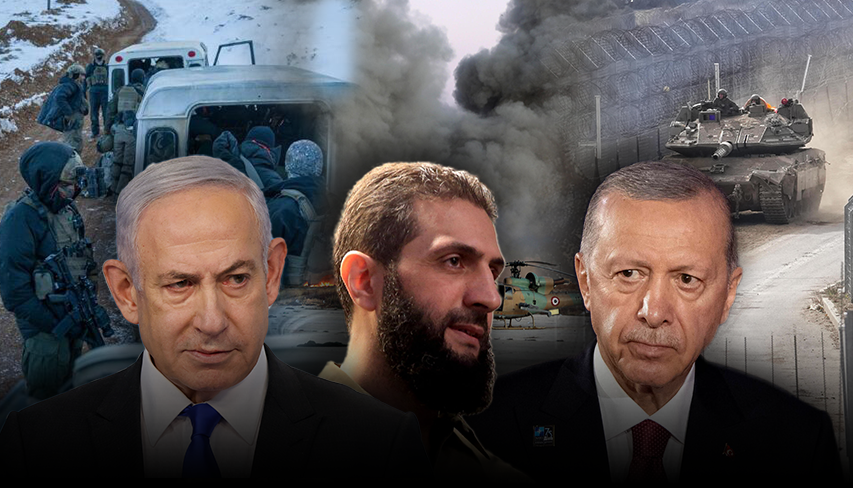
Prime Minister Benjamin Netanyahu, Syrian President Ahmad al-Sharaa, Turkish President Recep Tayyip Erdoğan
(Photo: Haj Suleiman/Getty Images, GPO, Abdulaziz KETAZ / AFP, Marc Israel Sellem, AP PhotoAlex Brandon, Andrew Harnik/GETTY IMAGES NORTH AMERICA/AFP)
For the Israeli observer, the optics were jarring. Sharaa—known to the world for years as Abu Mohammed al-Jolani, the leader of the al-Qaeda affiliate Hay’at Tahrir al-Sham (HTS)—is now the man shaking hands with NATO ministers.
This summit marks the beginning of a dangerous new chapter. While Turkey’s Hakan Fidan warned that Ankara’s "patience is running out" regarding the Kurdish forces in the northeast, a far more significant geopolitical shift was solidified. A new Sunni Islamist axis is being forged on Israel’s northern border, backed by Turkish drones and emboldened by a pragmatic American withdrawal.
The sultan’s ambition
However, while President Donald Trump’s withdrawal is a calculated move to conserve American power, President Recep Tayyip Erdoğan is using the vacuum to project Turkish power in ways that should alarm Israel.
Erdogan is not interested in mere stability; he is building a neo-Ottoman sphere of influence. The "patience" that Fidan claims is running out is a rhetorical cover for a planned war of conquest. Ankara’s demand is absolute: the Syrian Democratic Forces (SDF)—the Kurdish-led group that served as the West’s most effective hammer against ISIS—must be dismantled and dissolved into Sharaa’s army.
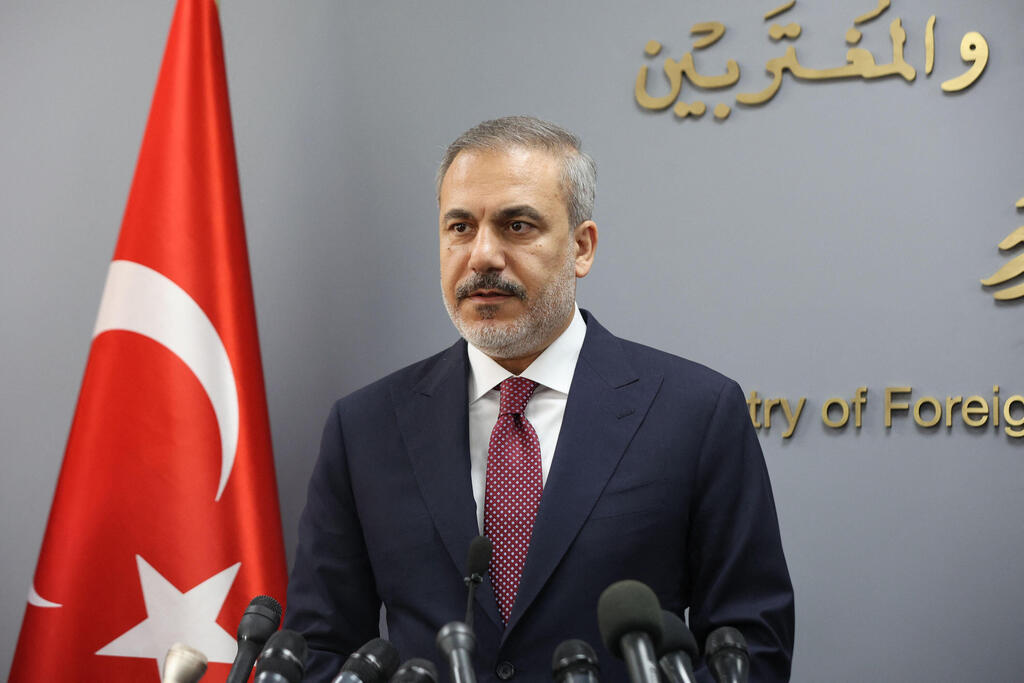
Turkish Foreign Minister Hakan Fidan
(Photo: ANWAR AMRO / AFP)
This is where the "unlikely alliance" becomes a threat. Erdogan is effectively outsourcing his war on the Kurds to the new Syrian state. By equipping Sharaa’s army and integrating Turkish intelligence (MIT) into his security detail—thwarting three assassination attempts against him this year alone—Turkey has turned the Syrian president into a client.
The anti-Israel pivot
For Israel, the danger is not just a strong Syria, but a radicalized one aligned with Ankara. During the press conference in Damascus, Hakan Fidan explicitly accused the SDF of "coordinating certain activities with Israel," claiming this cooperation is the "greatest obstacle" to peace.
This is a classic Erdogan tactic: using anti-Zionism to cement his alliances. By painting the Kurds as Israeli proxies, he delegitimizes them in the eyes of the Arab public and binds Sharaa’s Islamist base closer to Turkey. It frames the coming slaughter in the northeast not as an ethnic cleansing of Kurds, but as a "resistance" operation against Zionist influence.
Israel now faces a "Sunni Blade" on its border. Unlike the Iranian "Shia Crescent," which was stretched thin and alien to Syria’s majority population, this new axis has religious legitimacy and the backing of a NATO military power.
The betrayal of the Kurds
The tragedy of the SDF is the collateral damage of this realignment. General Mazloum Abdi and his fighters believed the promises of the U.S. State Department bureaucracy, which for years hinted at a permanent autonomous statelet. Trump’s "One Syria" policy has ripped away that illusion.
 Amine Ayoub
The deal on the table—the "March 10 Agreement"—is essentially a surrender document. If the SDF does not integrate into Sharaa’s army by the end of the year, Turkey and Syria will attack. The clashes that erupted this week in Aleppo’s Sheikh Maqsoud neighborhood are the opening shots of this coerced integration.
Wake up, Israel
President Trump is right to extract America from this quagmire. He has given the region the "sovereignty" it asked for. But sovereignty has consequences.
For Israel, the lesson is stark. It can no longer rely on an indefinite American buffer in the north. The "devil we knew" in Bashar Assad has been replaced by a dynamic, Turkish-backed Islamist regime that is rapidly gaining international legitimacy.
As the Turkish and Syrian armies prepare to crush the last vestiges of Kurdish autonomy, they are forging a battle-hardened partnership. Today, their sights are set on Qamishli and Hasakah. But with Erdogan whispering in Sharaa’s ear, and anti-Israel rhetoric filling the air in Damascus, it is only a matter of time before that gaze turns south toward the Golan.
- Amine Ayoub, a fellow at the Middle East Forum, is a policy analyst and writer based in Morocco.