


When the United States needed its Spanish bases to prosecute the air war against Iran, Prime Minister Pedro Sanchez said no. Fifteen American aircraft, including refueling tankers critical to the operation, were relocated within hours. The country sitting on NATO's southern gateway had just handed Iran's strategic planners a gift they did not need to earn.
What made that decision remarkable was not just its geopolitical recklessness. It was the backdrop against which it was made. Spain leads the European Union in jihadist arrests. Its courts convicted individuals in 82 percent of terrorism prosecutions over the past decade. In 2024 alone, Spanish authorities conducted 49 counter-terrorism operations and arrested 81 people on jihadist charges, surpassed only by the 94 detentions logged in the first ten months of 2025.
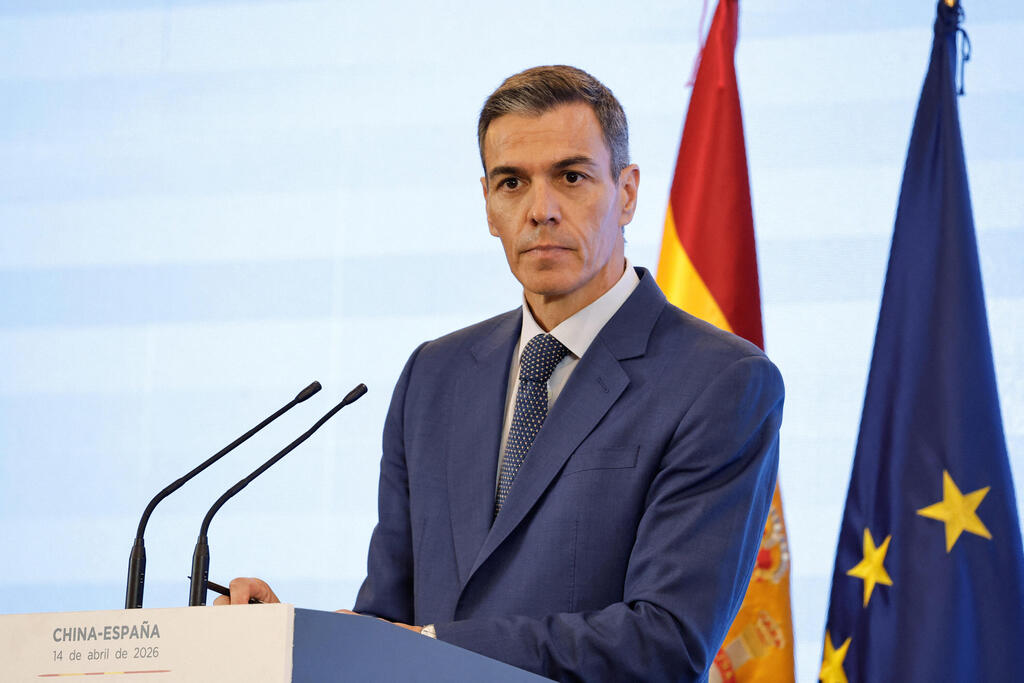
No country in the European Union is fighting harder, at home, against the ecosystem that Iran has spent decades financing and weaponizing. And yet Sanchez chose Iran's comfort over America's operational needs.
The domestic picture is worse than the headline numbers suggest. In 2024, Spanish authorities arrested 15 minors on jihadist terrorism charges, a figure that exceeded the total number of minors detained in the preceding seven years combined.
The radicalization pipeline is getting younger, faster and more decentralized. Online propaganda has made Salafi-jihadist content accessible to teenagers with no prior connection to extremist networks, no travel history, no recruiter in their mosque. The ideology now arrives directly to the phone.
Spain's preventive judicial model, which intervenes at early stages before plots materialize, is the most sophisticated in Europe. It is also, by the scale of its caseload, an implicit admission of how severe the underlying problem is.
The geography of radicalization within Spain tells its own story. Catalonia accounts for nearly 30 percent of all jihadist convictions over the past decade. The North African enclave of Ceuta contributes another 22 percent despite its tiny population.
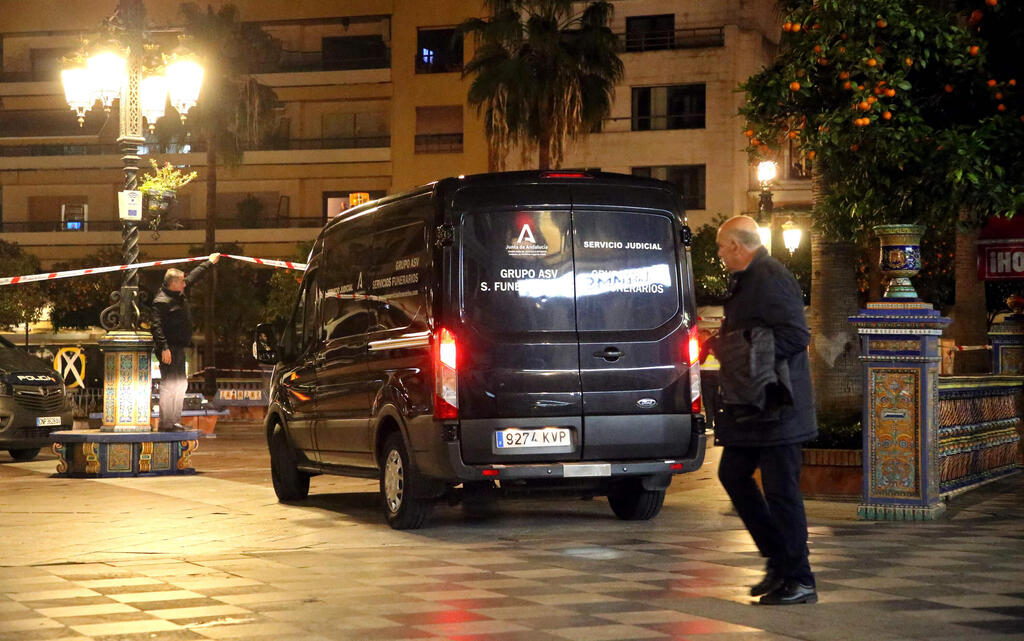
Spanish security forces stand at the scene of a machete attack near a church in Algeciras, southern Spain, on Jan. 25, 2023. One person was killed and several others were wounded in the attack, which authorities investigated as a possible act of terrorism
(Photo: AFP)
In Ceuta's El Príncipe district, a poor and almost entirely Muslim neighborhood pressed against the Moroccan border, integration with mainstream Spanish society is described by researchers as virtually nonexistent. Radicalization there operates through intimate networks: in nearly 87 percent of analyzed cases, detainees were influenced by someone they knew personally, and in nearly 70 percent of cases, that person was a family member or childhood friend.
The Muslim Brotherhood has operated inside Spain's official Islamic bodies since the 1980s. A pivotal 1984 summit in Madrid helped lay the foundations for the Federation of Islamic Organizations in Europe. Brotherhood-linked figures subsequently penetrated the Islamic Commission of Spain, the body through which Madrid formally interfaces with its Muslim population, projecting a distorted image of moderation while maintaining ideological continuity with an organization whose goals are incompatible with liberal democracy.
In 2019, Operation WAMOR made the clandestine dimension visible: investigators uncovered a network rooted inside those same official institutions that had been channeling money to Al-Qaeda affiliates in Syria through the informal hawala transfer system. Qatar has separately funded mosque expansion programs across Barcelona, Zaragoza and other cities through preaching initiatives that disproportionately benefited Brotherhood-linked associations.
Spain is not a passive victim of outside radicalization. It is one of the primary European theaters for it, both as a target and as a node of institutional penetration. And the Al-Andalus narrative gives Spain a symbolic weight in jihadist cosmology that no other Western European country matches.
ISIS and Al-Qaeda propaganda frame the recovery of Muslim Iberia not as a historical grievance but as a live strategic objective. A pro-Al-Qaeda media outfit called the Voice of Al-Andalus disseminates Spanish-language propaganda encouraging local mobilization. When jihadist recruiters target young men in Barcelona or Ceuta, they are not operating in a symbolic vacuum.
 Amine Ayoub
Against this backdrop, the Sanchez government's foreign policy choices become something more than diplomatic disagreement. Spain announced a 1.6 million euro funding increase for the ICC immediately after the Netanyahu arrest warrant was issued, with Foreign Minister José Manuel Albares declaring that Madrid had become one of the court's top ten financial backers. Spain's attorney general subsequently created a dedicated investigative team tasked with gathering evidence of alleged violations in Gaza and making it available to the ICC.
A government whose own courts are prosecuting Brotherhood financing networks and teenage IS sympathizers by the dozen is simultaneously directing state resources toward the legal persecution of the country Iran has spent thirty years trying to destroy.
The strategic cost of Spain's Iran refusal is visible in geography alone. Rubio publicly raised the question of whether the United States needs to reconsider its troop presence in Spain altogether. Washington moved quickly, signing a new military cooperation roadmap with Morocco, shifting strategic weight to the southern shore of the Strait of Gibraltar that Spain had made politically unreliable.
- Amine Ayoub, a fellow at the Middle East Forum, is a policy analyst and writer based in Morocco.