

No leader of the Arab states that U.S. President Donald Trump spoke with ahead of signing agreements with Iran can be suspected of any fondness for the ayatollah regime. On the contrary, every one of the rulers of Egypt, Saudi Arabia, Jordan, Iraq, Turkey and even Morocco would gladly wake up one morning to news that the current Iranian government, this extremist Islamic theocracy, has left the stage.
Just as the rule of Shah Reza Pahlavi fell in February 1979 in favor of Khomeini’s radical regime, so too do many across the Arab world dream of the end of the ayatollah regime. And as long as that does not materialize, they must adapt to a reality in which Trump, despite his public theatrics, has failed and this is the bitter truth for all of us, to defeat the Revolutionary Guards.
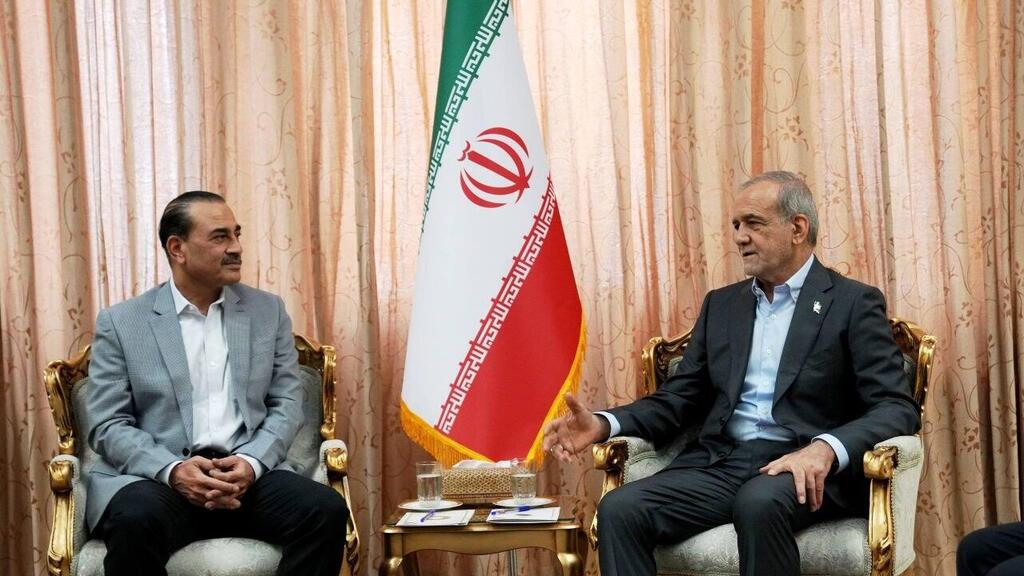
The American president called a long list of Arab leaders to update them on the emerging memorandum of understanding with Iran: the Saudi crown prince, the Egyptian president, the Jordanian king, the UAE ruler, the king of Bahrain and the Qatari emir. He also spoke with the president of Turkey and the prime minister of Pakistan. At the end of the round, he also called Prime Minister Netanyahu. From what is being said, no one came away satisfied from the conversation.
What choice did those receiving the calls from Washington really have? On the one hand, and they will not say it out loud, each of these Arab leaders understands that Trump and his team have not succeeded, at least for now, in bending the Iranians. The nuclear talks are being pushed to a “next stage,” it is unclear whether the Revolutionary Guards will agree to remove nuclear capabilities from their territory at all, and how much of the 400 kilograms of uranium is now buried deep underground.
On the other hand, the Egyptian president is still waiting for Iran to open the Strait of Hormuz to free shipping and for cargo to finally reach the Suez Canal and boost revenues. And what about Saudi Arabia, already under weeks of pressure from Iranian attacks? The future city “NEOM” has lost momentum, investors have fled, oil revenues are shrinking and the generous budget is tightening. Even Turkey is suffering from the war, not to mention the steep decline in financial aid to Syria and Lebanon. If there is no passage through the Strait of Hormuz, there is no income and therefore no spare money for aid to weaker states.
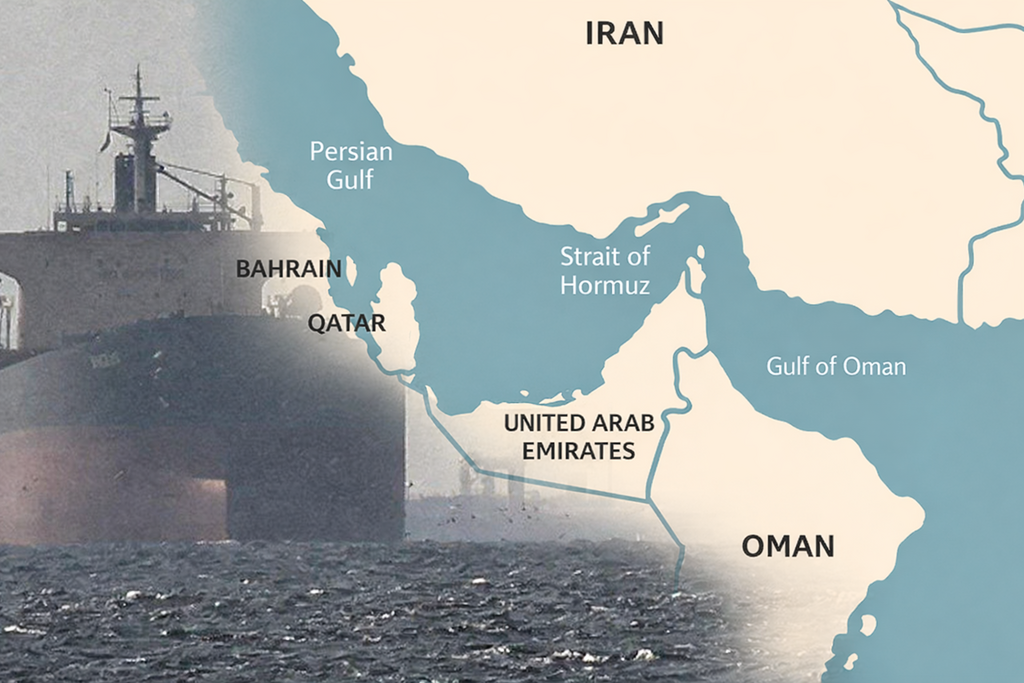
The Strait of Hormuz
Suddenly, we see and hear statements about a moderate policy from the 22 Arab League countries that issued a congratulatory message on the “diplomatic solution.” Here and there, in conversations with officials from the Arab world, I receive a sobering picture: no one wants war, especially not in the Gulf, out of real fear that their country could be wiped out. And no one now trusts the regime in Iran, where it is unclear who is really making decisions and who is in control. Trust in Trump has also eroded. It does not seem he will send forces again. From the perspective of the Arab world, there is no one to rely on.
Saudi Arabia stresses it will not allow US forces to use its territory to attack Iran. The Iranian threat is far more serious than the somewhat clumsy explanation from President Trump. Jordan’s King Abdullah has a long-standing grievance over Iran’s attack on Israel, which was intercepted within his country’s territory. There is no doubt this is a relief, even if financial compensation has not arrived. What dictates the behavior of Arab states is the economic motive. If there is further escalation, the economy and trade ties will suffer a painful blow, while the economic situation is already difficult.
Look at the Saudi tourist city of NEOM on the Red Sea coast. All projects have been shut down. There is no budget. There are no foreign investors. In general, businesspeople are reluctant to come to any Arab country. Their leaders have already done the math and are loudly declaring they do not want war, while downplaying what they truly think because they have no choice. The interesting question is whether this new, frustrating situation from all directions will lead to a cautious Arab state moving closer to Israel.