

Across the globe, clashes rooted in ethnic, cultural and ideological divides – intensified by aggressive centralization and the rise of radical Islamism – threaten the stability of multiethnic societies. From Southeast Europe to the Levant, two seemingly disparate conflicts-in Bosnia-Herzegovina and Syria–illuminate a profound global tension: the pursuit of cultural and political autonomy against centralizing forces driven by ethnic, ideological or religious absolutism.
The clash between civilizations became, on a regional level, a clash of ethnicities, often orchestrated with the shadowy influence of foreign actors. The recent tensions between the Druze community in Syria’s Sweida province and the jihadist-leaning government of Ahmed al-Sharaa mirror the persistent friction between Republika Srpska and the Muslim-majority central government of Bosnia-Herzegovina.
Footage of atrocities from Sweida


Ultimately, the Western Balkans, long known as Europe’s powder keg, and the Middle East, increasingly resembling the world's eternal tinderbox, exemplify a disturbing trend: the collision between radical Islamism and the delicate tapestry of multi-ethnic societies. These geographically distant conflicts reflect a deeper struggle between Islam and Western civilization, now unfolding in Europe and North America, where competing visions of identity, governance, and culture collide.
Dispelling misconceptions
Before drawing parallels between these conflicts, it’s crucial to address a pervasive mischaracterization: the notion that resistance to radical Islamism equates to Islamophobia. This oversimplification distorts complex geopolitical realities and dismisses the legitimate fears of communities fighting not against Islam as a faith, but against ideological extremism, political marginalization and cultural erasure.
The Druze in Syria, whose syncretic faith traces its roots to the Ismaili branch of Shia Islam, embody a unique spiritual and cultural identity often misunderstood within and beyond the Muslim world. Likewise, the Serbs of Republika Srpska, one of Bosnia and Herzegovina’s three constituent peoples, have coexisted with Muslim communities for centuries, navigating a history marked by both cooperation and tragic conflict. Their resistance stems not from religious animus but from a deeper struggle for autonomy, dignity and survival amid the pressures of political Islamism, centralized governance, and socioeconomic exclusion. These are battles shaped by history, trauma, and the fear of cultural annihilation, not by prejudice.
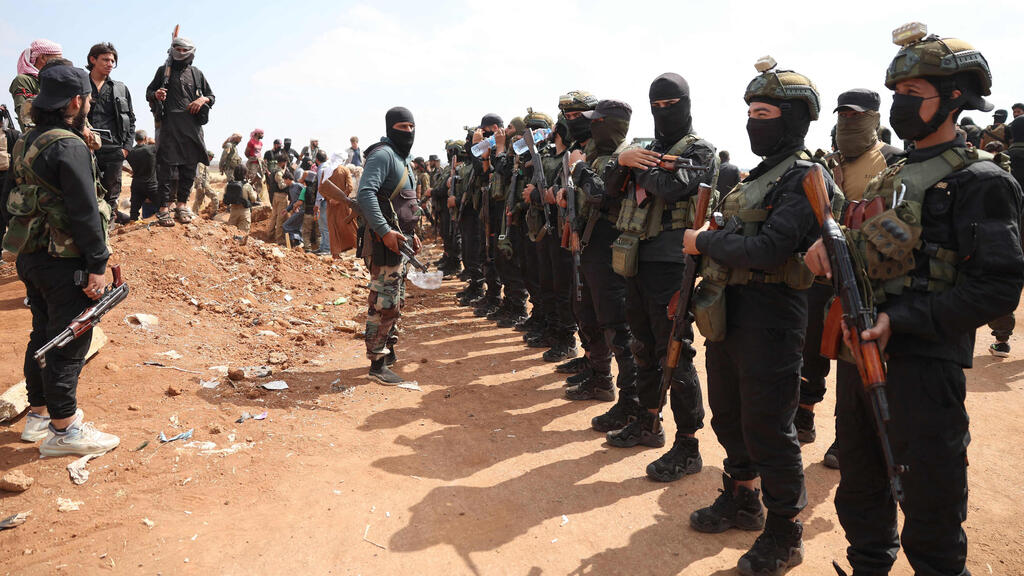
The core of their resistance is not against “Islam” per se, but rather against political Islamism and jihadist extremism. In Bosnia, this manifests in growing concerns about ideological and geopolitical alignments. The Federation of Bosnia and Herzegovina, predominantly controlled by Sunni Bosnian political elites, has demonstrated troubling signs of political radicalization and antisemitism-evidenced, for instance, by the cancellation of the Conference of European Rabbis in June 2025, and reported efforts to initiate open military cooperation with the Islamic Republic of Iran.
Furthermore, it is important to emphasize that, in both Bosnia and Syria, local political and socioeconomic dynamics-including economic marginalization, political corruption, and unresolved historical grievances-play crucial roles alongside religious or ideological tensions. The Druze in Sweida, for example, are not only resisting the jihadist-influenced regime of Ahmad al-Sharaa but are also asserting their demand for economic security and political representation in an increasingly fragmented Syrian state.
Similarly, Republika Srpska's pursuit of greater autonomy is motivated not only by ethnic identity but also by concerns over political dominance and economic marginalization within a deeply divided Bosnian federation. Bosnia has, over time, taken on the characteristics of a quasi-colonial international protectorate, with real power concentrated in the hands of the Office of the High Representative (OHR). Notably, Christian Schmidt, the current High Representative, appointed without election by the United Nations Security Council, has assumed authority beyond the scope of the Dayton Agreement, unilaterally enacting laws, overriding domestic institutions, and circumventing constitutional procedures, thereby positioning himself above Bosnia and Herzegovina's constitutional framework.
Meanwhile, Turkey under President Erdoğan continues to assert influence in northern Syria, pursuing a neo-Ottoman vision that extends beyond humanitarian or counterterrorism goals. Erdoğan’s Islamist past and his government’s ideological agenda have raised alarms among minority communities like the Druze, who view Ankara’s involvement as a direct threat to Syria’s post-war sovereignty. Erdoğan’s neo-Ottoman aspirations are also at work in the Western Balkans and particularly in Bosnia, where Turkey is closely coordinated with the Muslim Bosniacs.
The Druze: Resistance in a fractured Syria
The Druze, a small but resilient community in southern Syria, have long sought to maintain neutrality amid the country's turbulent sectarian politics. Their militias in Sweida have acted primarily as self-defense forces, ensuring local security while avoiding entanglement in wider conflicts. However, the collapse of Bashar al-Assad’s regime in December 2024 has upended this precarious balance, ushering in a new era of instability.
Power in Damascus has now fallen into the hands of Ahmad al-Sharaa, a former leader of Hayat Tahrir al-Sham (HTS)-a jihadist group formerly and formally linked to al-Qaida. Though rebranded as a governing authority, Sharaa’s administration remains ideologically hostile toward minorities. The Druze, whose faith is considered heretical by Sunni extremists, have become immediate targets of suspicion and repression.
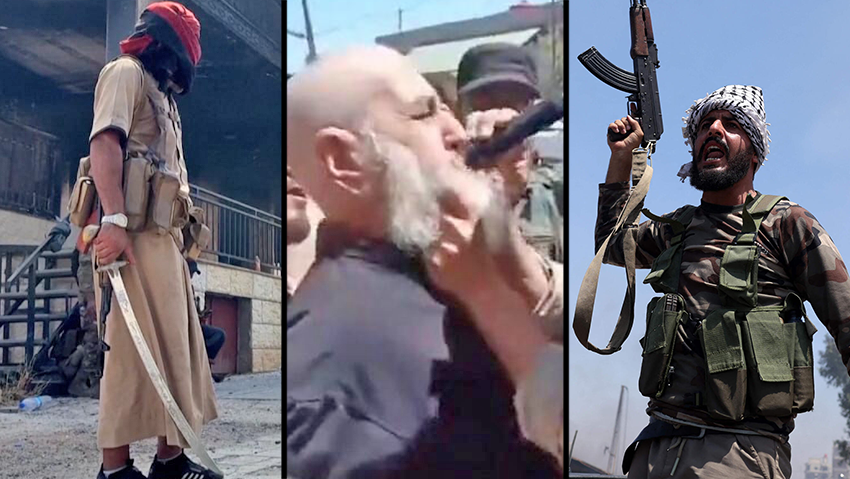
Scenes of violence last week in Sweida
(Photos: Bakr ALkasem / AFP, Reuters)
The fragile calm was shattered in July 2025 after a violent roadside assault on a prominent Druze merchant by members of a Bedouin tribal group near the Damascus–Sweida highway. The attack, widely believed to have been enabled-or at least ignored-by government forces, escalated into a deadly spiral of violence, resulting in more than 350 deaths, where government-aligned actors, after their involvement, were committing executions, sexual violence, vandalism, and massacres.
For the Druze, this was not merely a local tragedy-it was confirmation that the new regime regards them as expendable. Since Assad’s fall, the Druze have refused to integrate their militias into the national army and have rejected official security deployments in Sweida. Their resistance reflects a broader refusal to submit to a state apparatus perceived as ideologically alien and dangerously unstable.
Republika Srpska: Defending autonomy in Bosnia
In Bosnia-Herzegovina, the Serb-majority Republika Srpska faces a parallel crisis of legitimacy. Under the 1995 Dayton Peace Accords, Bosnia was established as a bi-entity state, comprising the Bosniak-Croat Federation of Bosnia and Herzegovina and Republika Srpska. However, nearly three decades later, the institutional balance enshrined by Dayton appears increasingly tenuous.
Many Serbs view the central government in Sarajevo as dominated by Bosniak elites who seek to consolidate power, often at Republika Srpska’s expense. Leaders like Milorad Dodik (President of Republika Srpska) have repeatedly emphasized Sarajevo’s encroachments on political and legal autonomy, and have been calling for strict adherence to the original Dayton Accords. These tensions have been compounded by perceived ideological drift within the Federation, particularly the influence of Islamist-leaning actors and foreign alliances with countries like Iran.

Protesters gather outside the Office of the High Representative of Bosnia and Herzegovina in 2022
(Photo: David I. Klein)
The OHR's unilaterally expanded authority has further inflamed Serb grievances. While intended as a safeguard for Bosnia’s postwar stability, the office has often been seen as an unaccountable, foreign-imposed institution that undermines domestic governance. One particularly irksome example is the attempt by the OHR to deprive Republika Srpska of control over its mineral wealth in contravention of the Dayton Accords at a time when the United States is keenly interested in locating non-Chinese sources of rare earths and other strategic minerals.
A shared fault line: Identity vs. Centralization
Consequently, despite differences in geography, religion and political context, the struggles of the Druze in Syria and the Serbs in Republika Srpska converge around a common axis: the tension between local identity and centralizing power shaped by ideological agendas. In Syria, the threat is jihadist rule; in Bosnia, it is the dominance of one constituent ethnicity (Bosniaks) over others (Serbs and Croats) and severe interference of foreign actors (OHR).
Get the Ynetnews app on your smartphone: Google Play: https://bit.ly/4eJ37pE | Apple App Store: https://bit.ly/3ZL7iNv
Ultimately, the Druze and Serbs remind us that the fight for autonomy is universal, but so is the need for coexistence in a fractured world. Their resistance underscores a broader lesson: sustainable peace demands governance that rejects extremist ideologies, embraces local identities, and fosters inclusive dialogue to bridge divides and ensure stability. Can Syria and Bosnia achieve this inclusive governance? Potentially, but this can only be realized if the severe foreign interference-whether from external powers like the OHR in Bosnia or regional actors like Turkey in Syria-ceases, allowing local communities to forge their own paths towards the multi-ethnic dialogue.
Marc Zell is Chairman of Republicans Overseas Israel and an international attorney practicing in Israel and the United States, representing Republika Srpska. Dana Levinson holds an M.A. in Security & Diplomacy Studies from Tel Aviv University