


Nearly a month after an antisemitic shooting attack at a Hanukkah party in Bondi Beach that shook Sydney’s Jewish community and the city as a whole and claimed the lives of about 15 people, one of the metropolitan area’s most talked-about urban projects of recent years is preparing to open on the opposite end of the city. The new Sydney Fish Market, located a short distance from the existing market building, is expected to open next month following seven years of planning, construction and anticipation.
The large-scale project seeks to redefine the city’s relationship with its waterfront. It takes the form of a vast horizontal structure topped by a dramatic wave-like roof and opened toward sweeping views of the bay. Designed to function not only as a culinary destination but also as an active urban space, the market is intended to serve as a lively public hub. The project aims to bring together Australia’s seafood industry under one roof while creating a meeting point for commerce, tourism and contemporary architectural experience, offering a moment of urban renewal during a socially and emotionally charged period.
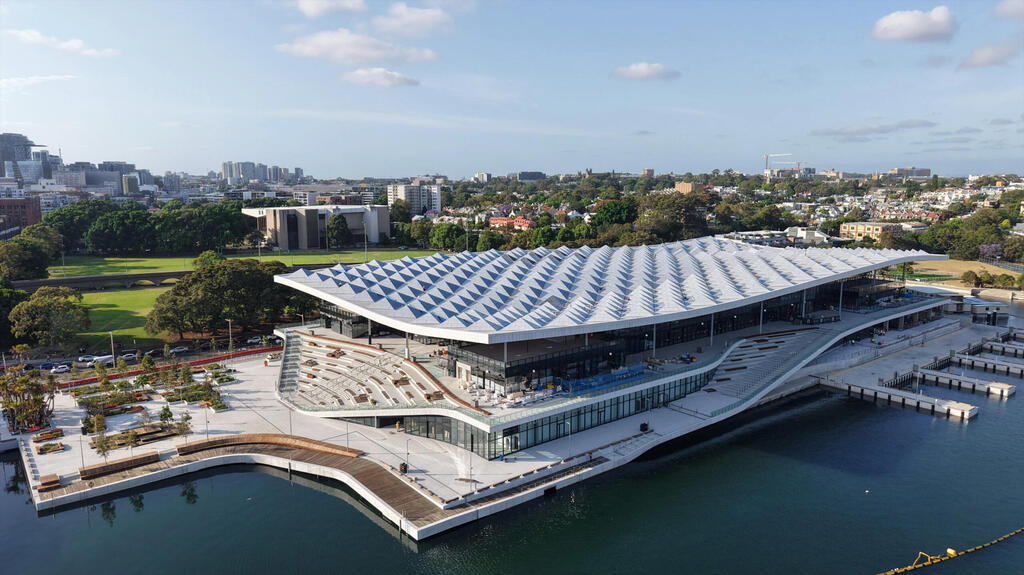
Named the Sydney Fish Market, the new complex is planned to be the largest fish market in the Southern Hemisphere and is already marked as one of Sydney’s key cultural and tourist destinations for decades to come. Located on Blackwattle Bay, the project spans roughly 65,000 square meters. At its center stands a monumental timber roof, the largest of its kind ever built in Australia, giving the building an iconic presence while maintaining an open and welcoming atmosphere.
According to forecasts, the market’s opening next month is expected to double visitor numbers, drawing more than six million people annually. Beyond food enthusiasts, the site is designed to attract residents, tourists and visitors seeking a rare combination of shopping, cuisine, architecture and public waterfront space.
Sydney Fish Market
(Video: 3XN Architects)


Second only to the Opera House
The decision to construct a new and modern fish market was driven not by cosmetic considerations but by the practical limitations of the aging existing facility, which had suffered from accelerated deterioration and poor maintenance conditions. The old market, built in the early 1980s and located within walking distance of the new complex, became over time one of Sydney’s most significant economic, tourist and social hubs. Its operations generated annual revenues of more than $300 million and served as a primary gateway to the city’s culinary and maritime culture.
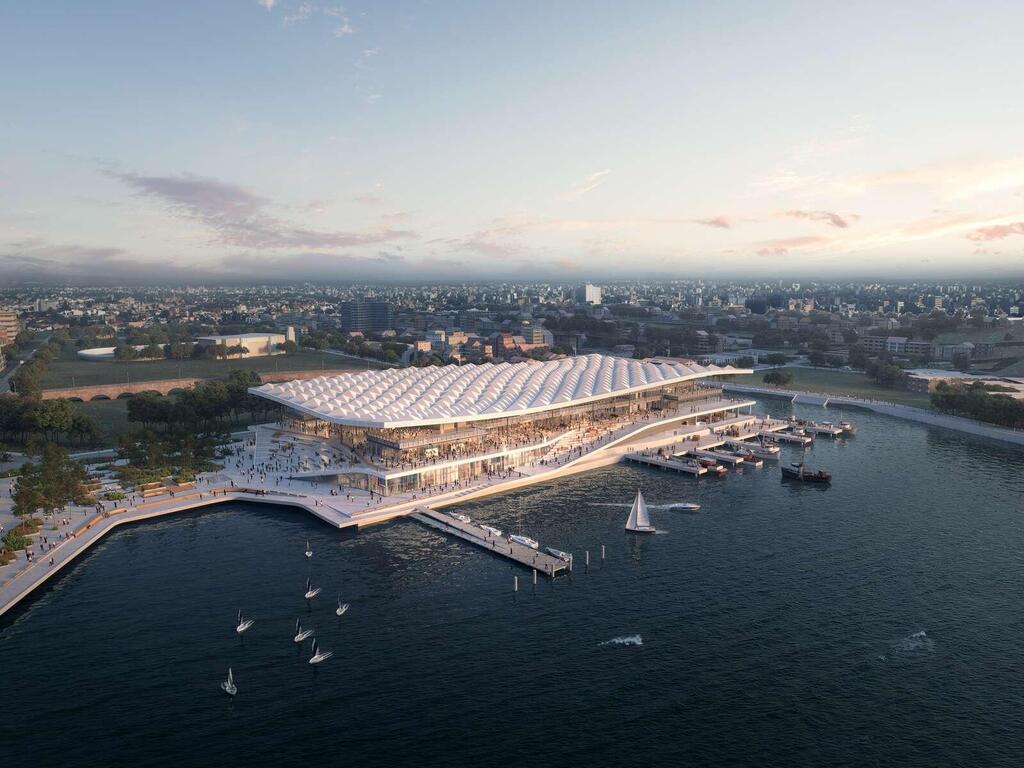
The largest fish market in the Southern Hemisphere
(Photo: 3XN Architects)
The market’s central status was highlighted in 2016 by then New South Wales Premier Gladys Berejiklian, who said while presenting plans to replace it that one in five international tourists visiting Sydney stops at the fish market, making it the city’s second most visited attraction after the Opera House.
While traditional fish markets are often associated with relentless bustle, sharp odors and clutter, the new market aims to elevate the experience. Its planning and culinary concept seek to preserve the authenticity of seafood markets, the direct interaction between fishermen, fresh produce and the public, while wrapping it in contemporary infrastructure, improved visitor conditions and a broader range of dining and aesthetic experiences.
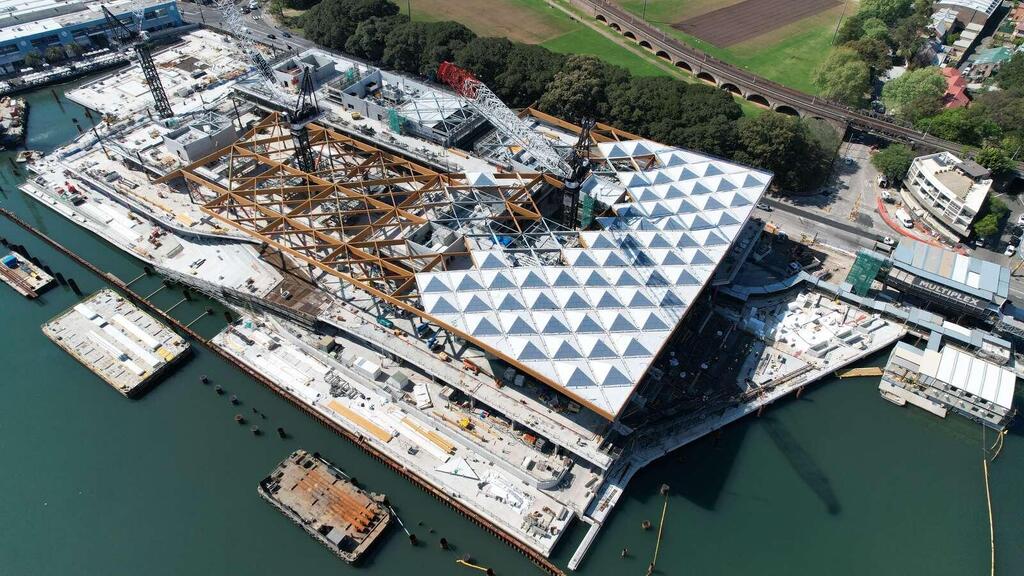
During construction. Sydney Fish Market
(Photo: 3XN Architects)
Alongside classic fish stalls, the complex is developing into a full culinary destination with chef-driven restaurants, bars, open seating areas and waterfront viewing points. In this way, the market is positioned not merely as a shopping venue but as a new urban arena that reinforces Sydney’s standing as an international culinary destination, bridging long-standing maritime tradition with contemporary food culture and urban tourism.
Blurring the line between industry and leisure
The architectural design of the new fish market was led by Scandinavian firm 3XN Architects. The project’s starting point was the architects’ understanding that a market is not only a functional commercial site but first and foremost a social and urban space, a place of encounter, movement and daily experience that has historically existed at the heart of cities.
“The market is the social center of cities around the world. It is typically composed of a series of open stalls covered by a canopy and set within a large public square,” said lead architect Fred Holt, a senior partner at the firm. He said preserving the authentic feeling of a market was a central design goal, with the project focused on human scale and the creation of a genuine market atmosphere.
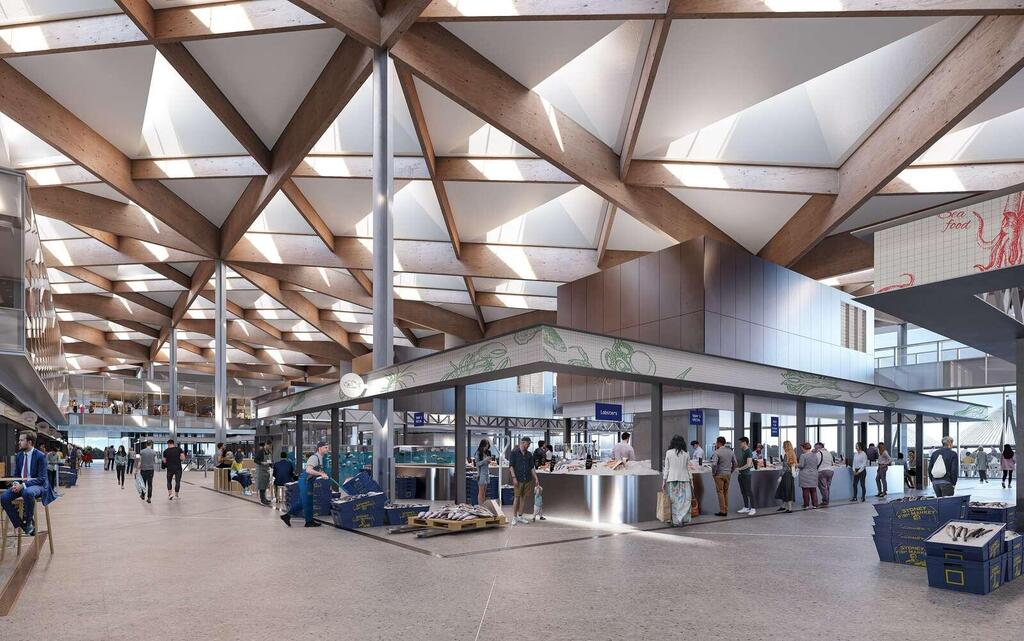
A place of meeting, movement and everyday experience
(Photo: 3XN Architects)
Accordingly, the building maintains the intimacy and flexibility of open stalls, all gathered beneath a single expansive canopy and the wave-shaped roof that has become the project’s defining feature. At the same time, the design addresses a particularly complex challenge, integrating a fully functioning market, an active industrial port and an open public and tourist destination.
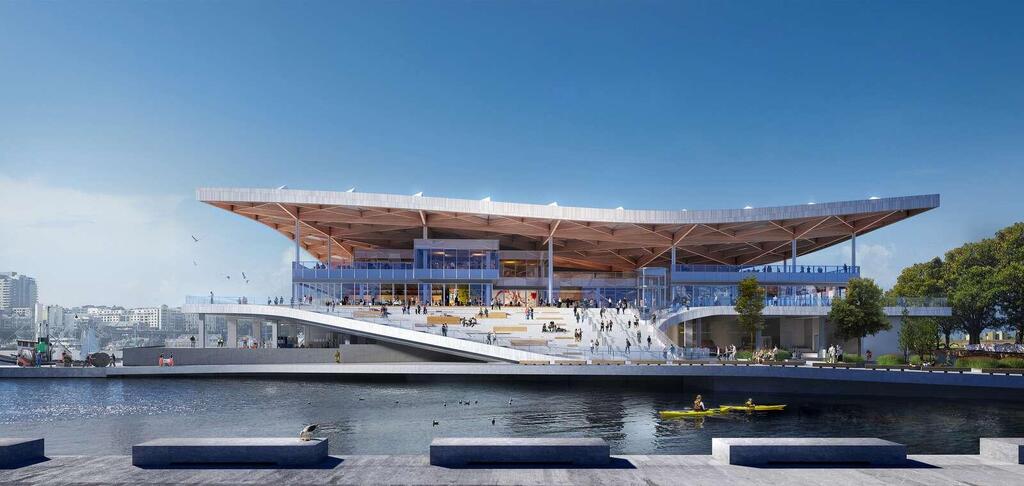
The fish market in Sydney, Australia
(Photo: 3XN Architects)
While in many cities wholesale fish markets remain closed to the public due to operational risks and industrial processes, the architects here chose to blur the boundaries and allow broad public access without compromising the market’s daily operations. The ground level concentrates traditional fish market functions, including unloading and loading, wholesale trading and auction halls. Surrounding these areas is a system of stairways and a public waterfront promenade that wraps around the active pier, creating a sequence of intersecting views. Visitors can observe the commercial and operational heart of the market up close, experiencing its dynamic activity while maintaining a clear and safe separation from work zones.
Nearly 600 timber beams overhead
Beyond its architectural ambitions, the fish market is also positioned as a leading environmental project. For the Scandinavian firm, known for its sustainable and context-sensitive approach, the Sydney project demonstrates how environmental and social principles can be integrated into large-scale urban development. From the earliest planning stages, clear targets were set to significantly reduce energy, water and waste consumption compared with the existing market, while markedly improving conditions for both the public and vendors.
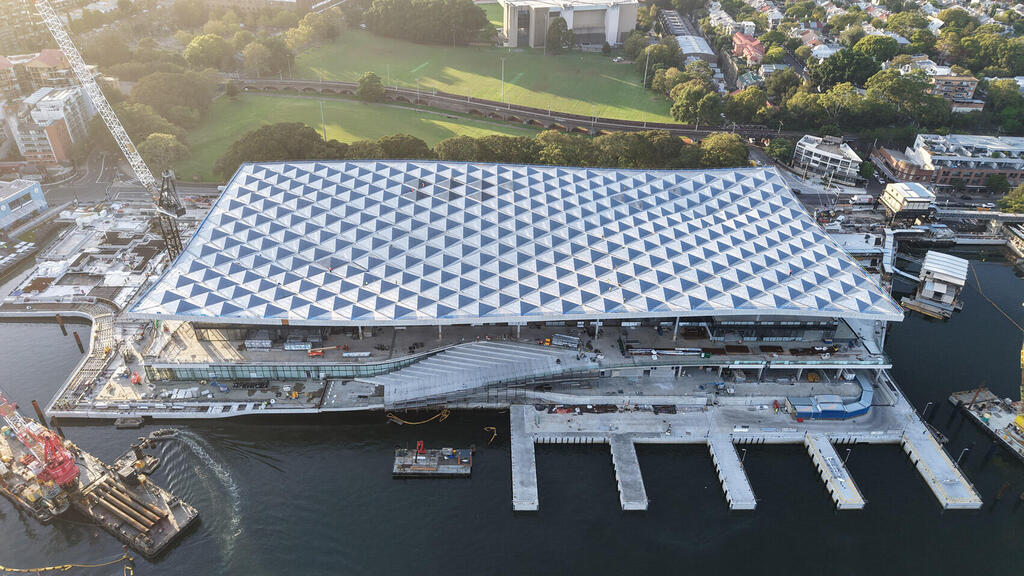
594 massive timber beams and 400 aluminum photovoltaic panels
(Photo: 3XN Architects)
“Environmental and social sustainability is a vital and inseparable part of the design,” Holt said. “The roof, the open planning of the building and the materials shaping the market experience all express this integration. Throughout the concept and development process, public comfort and environmental responsibility were at the core of decision-making.”
The roof, constructed from 594 massive timber beams and 400 aluminum photovoltaic panels, is the project’s most striking feature. Its advanced design allows for rainwater collection and reuse, daylight filtering, protection from direct sun exposure and the use of prevailing winds to remove hot air, reducing the need for mechanical air conditioning. According to Holt, the roof design cuts energy loads by 35 percent compared with a conventional building.
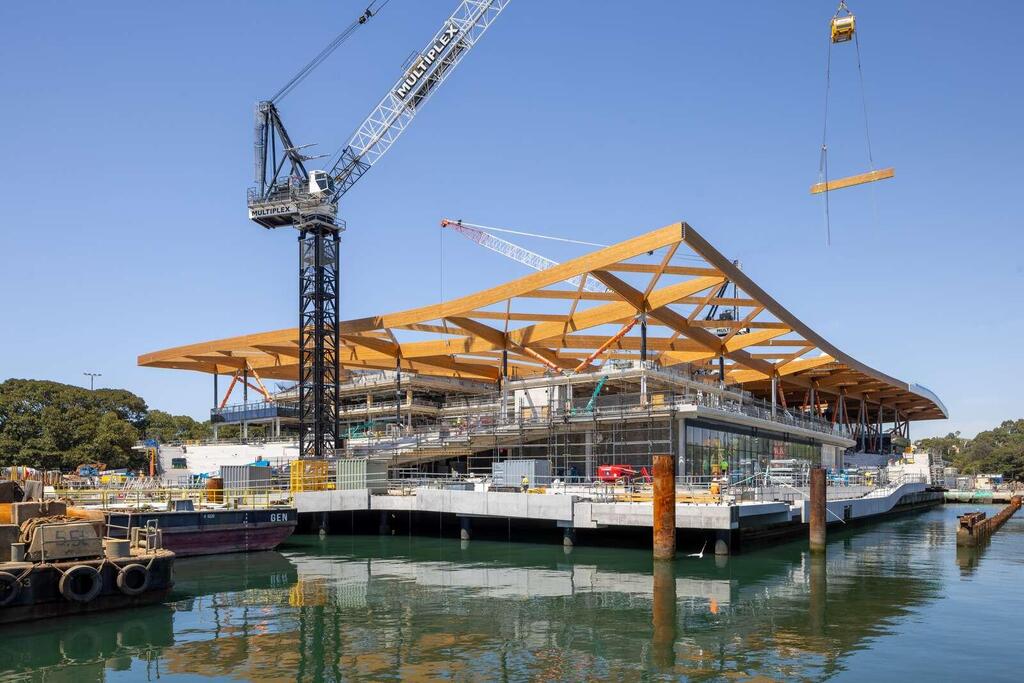
An environmentally friendly complex expected to welcome millions of visitors each year
(Photo: 3XN Architects)
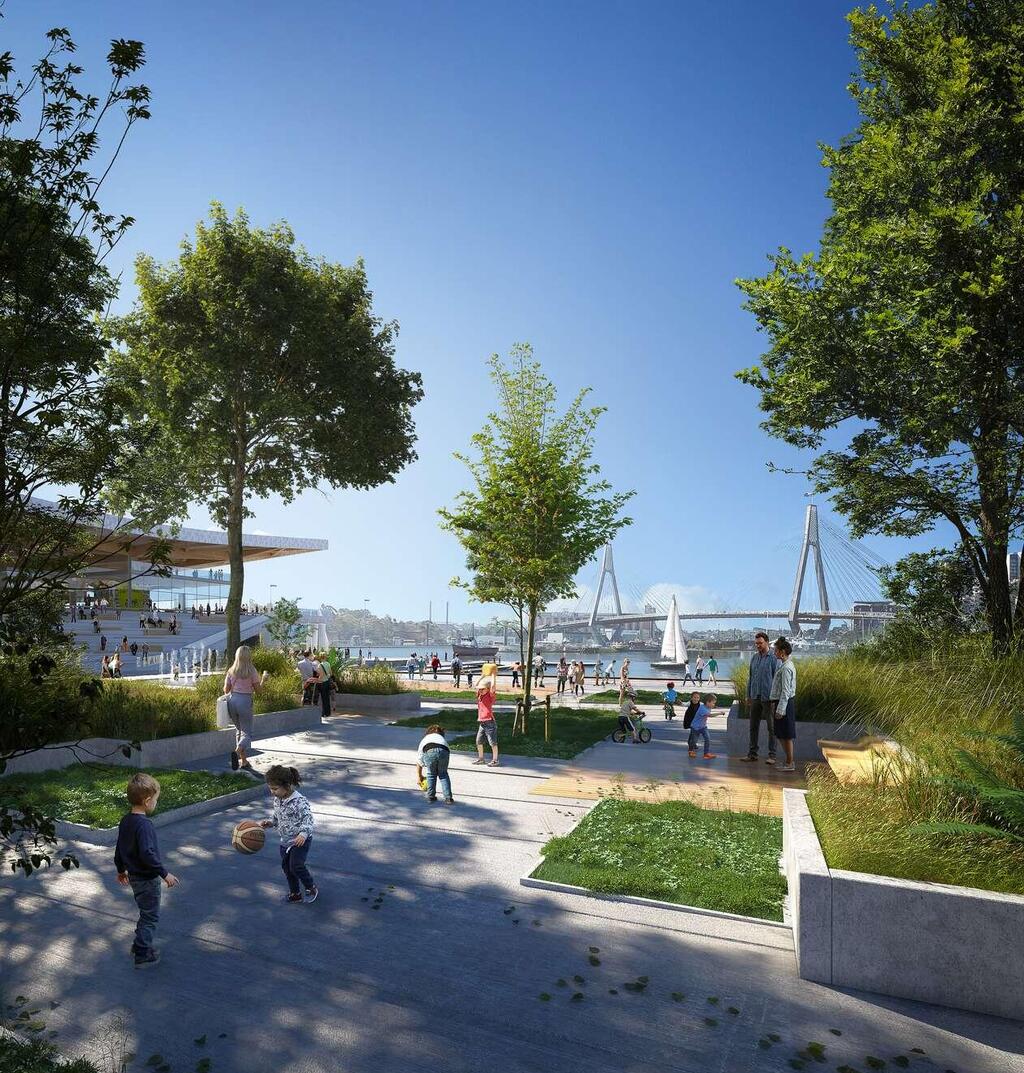
Indoor and outdoor leisure
(Photo: 3XN Architects)
The complex also includes advanced systems for gray water recycling, biological and mechanical filtration and industrial food waste treatment, all aimed at conserving resources and reducing the ecological footprint of a site expected to host millions of visitors each year.
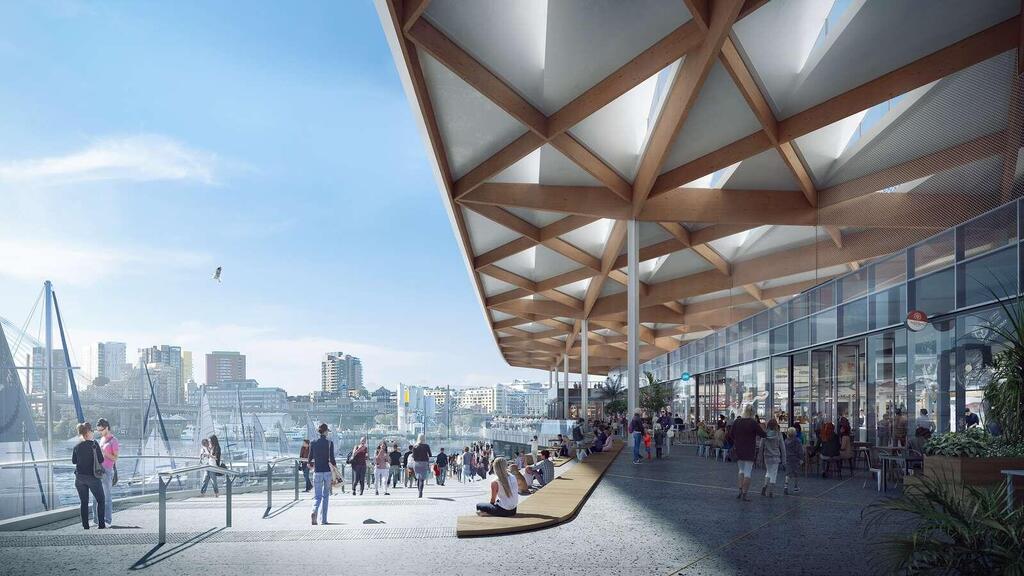
Along the waterfront
(Photo: Aestetica Studio)
Like many large-scale projects worldwide, Sydney’s new fish market faced budget challenges during construction. Recent estimates place the total cost at about $830 million, a significant increase from initial projections. The rise was driven largely by construction delays and disruptions, including the coronavirus pandemic and a crane collapse, which led to disputes and a $250 million lawsuit filed by the project’s development company.
Beyond cost overruns, engineering complexity and environmental innovation, the new market represents a broader urban statement about what a public market can be in the 21st century. It is envisioned not only as a commercial site but as an open, multi-layered space that connects industry, culture, architecture and environment. Against the backdrop of a tense and painful period for the city, the market’s opening symbolizes an attempt to create a place of encounter, routine and shared urban life along the waterfront. In this sense, Sydney’s new fish market is not merely a tourist or culinary attraction but a declaration of the city’s capacity to renew itself, recover and articulate an open, sustainable and inclusive future.