


In a hidden location with only vague directions, a few dozen young people gathered last Friday — some barefoot, others in Blundstones — for the launch of a shipping container transformed into a stylish home. “The container house,” as its creator, Shahar Gefen, calls it, opened to the public at a reveal event after three months of intensive work documented in 28 social-media episodes.
“For three months we worked every day on a unique, first-of-its-kind project in Israel — minima ecohome,” Gefen said. “We took a used shipping container that had finished its life transporting goods and, with our own hands, turned it into a dream home. We brainstormed, designed, built, filmed, edited and published everything online.”
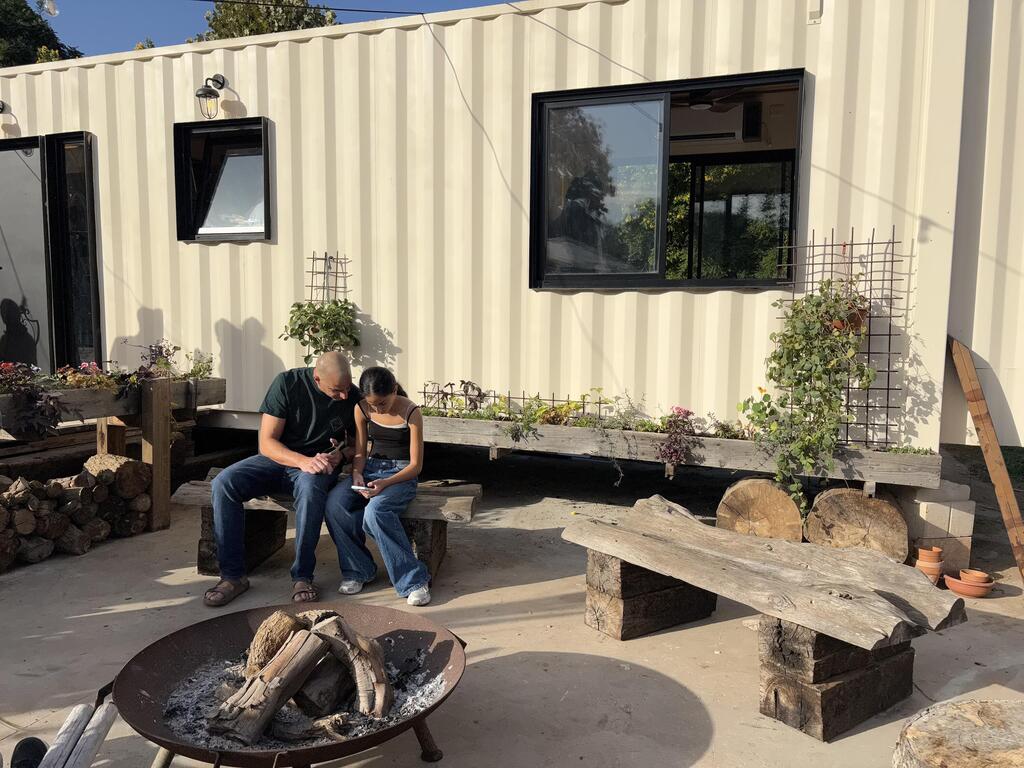
The container house in the moshav will soon be offered for sale
(Video: Yulia Prilik-Niv)


The team is mainly Gefen and his brother Roi, though professionals and friends also contributed. Together, they transformed a used blue container from the Ashdod port — which cost about NIS 10,000 — into a tiny 28-square-meter home (roughly 12 meters long and 2.5 meters wide) with a living room, kitchen, bathroom and bedroom, plus storage, an outdoor shower and a yard with a deck and a firepit. There is even a small wine fridge.
From surfing to homebuilding
Israel’s tiny-house sector is still in its infancy, though it is not clear why. As many young Israelis are pushed further from the dream of buying a home and as the housing crisis becomes a fixed part of life, tiny houses suited for singles, couples and, in some cases, young families may offer one answer.
The Gefen brothers built the tiny container home in Moshav Bnei Zion, surrounded by open green space and fields, between villas and farms with sky-high prices. But this is not the home’s final stop. Gefen plans to put the unit up for sale soon and says he has already received several offers, though he cannot yet name a price. He has not finished calculating the full costs. “It definitely cost us more than NIS 200,000,” he estimated.
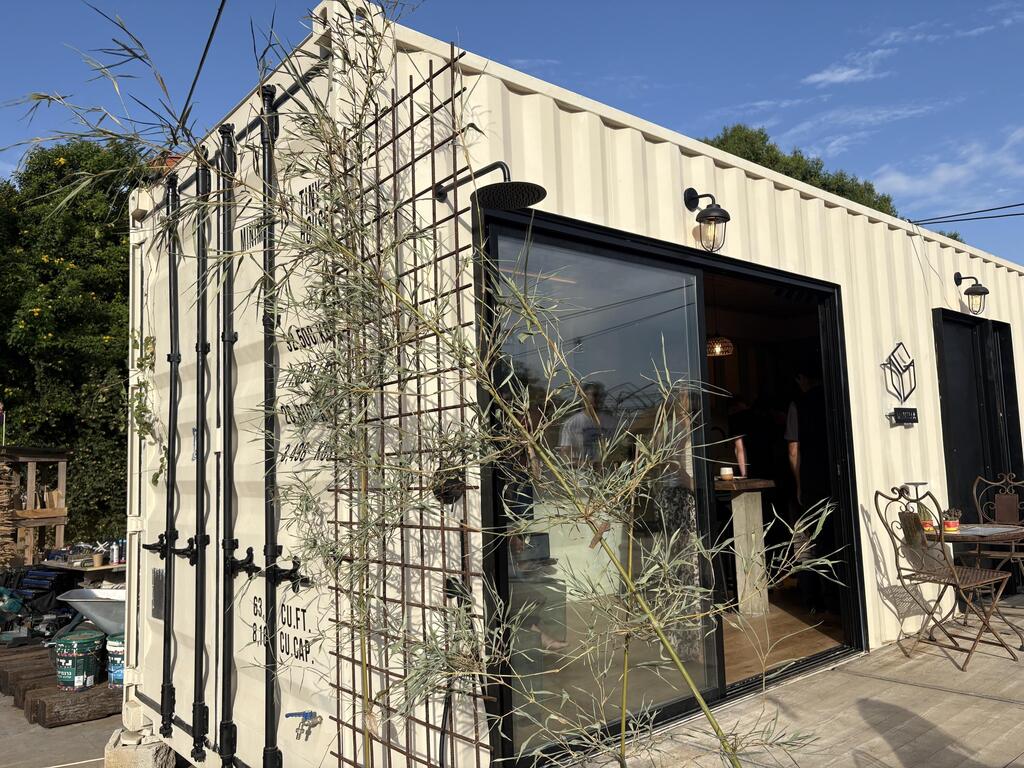
There's even an outdoor shower and a wooden deck out front
(Photo: Yulia Prilik-Niv)
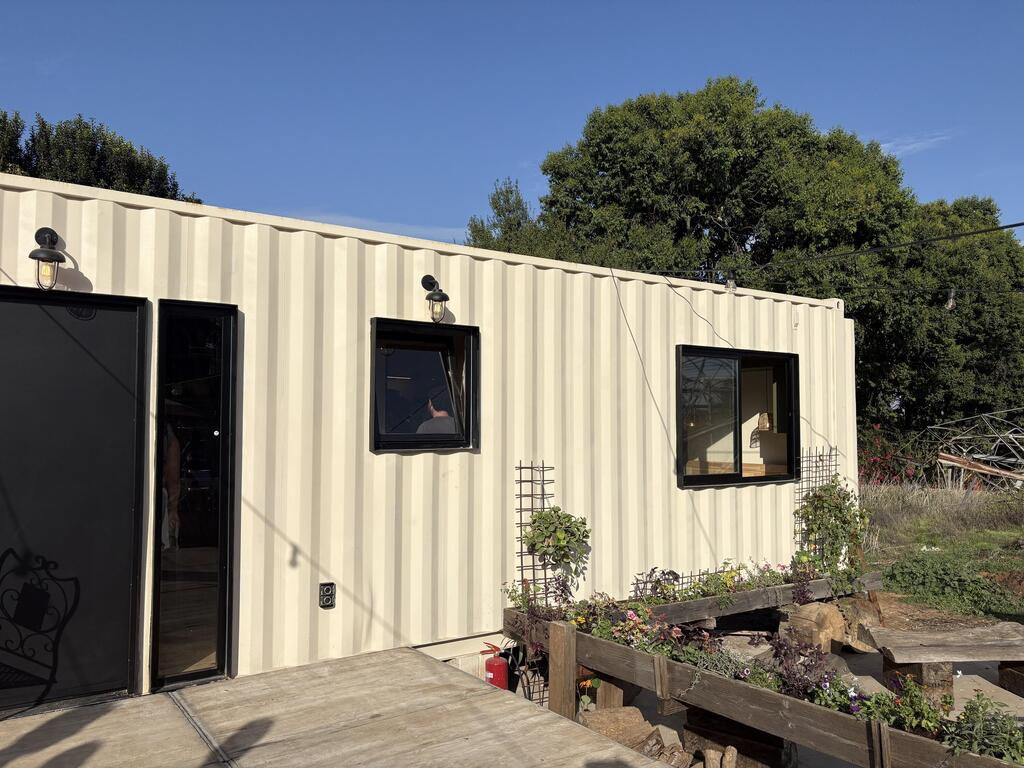
About 28 square meters of a house from what was once a blue shipping container
(Photo: Yulia Prilik-Niv)
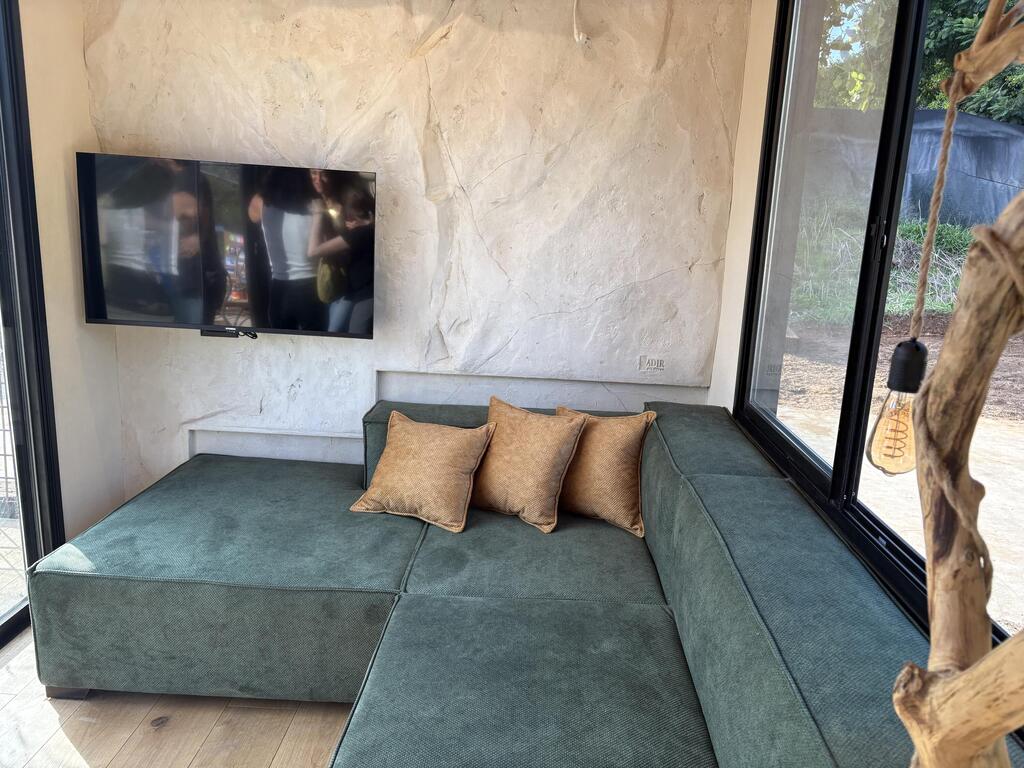
The green living room, including a light fixture made from a branch found in the field and a rock wall created by Kobi Adir
(Photo: Yulia Prilik-Niv)
How did Gefen, a moshav native, end up building a fully outfitted container home? While in California, he encountered young surfers who lived out of vans during surf season. He traveled to the United States, bought a van of his own, renovated it and spent a year and a half on the road. Covid interrupted that journey. Later he moved to France and worked for a company that specializes in producing and outfitting vans for customers.
His next step was returning to Israel to train in design. He spent time at a local firm, gained expertise and shifted into the field of lightweight construction. He rolled up his sleeves and built a home in Kfar Yehoshua in northern Israel, which is now rented out and can also be seen on social media.
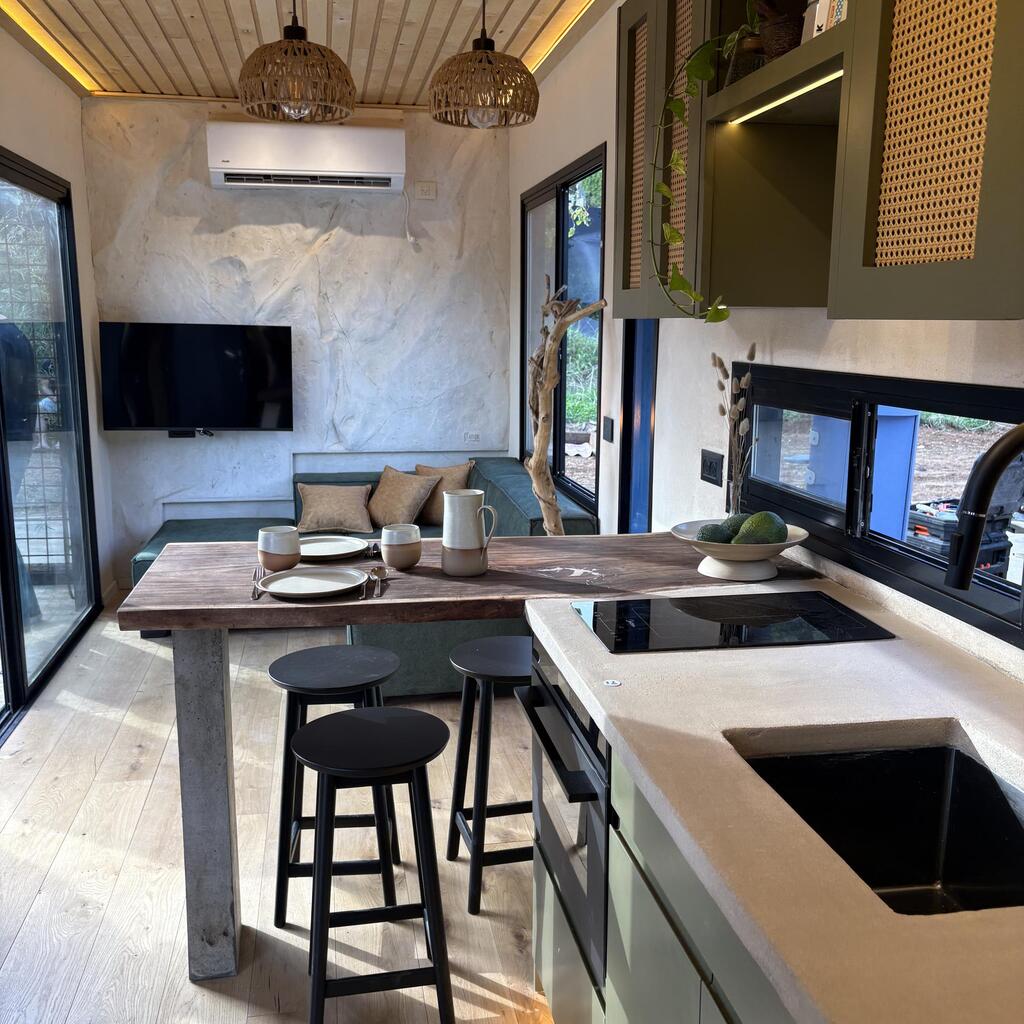
The kitchen includes a seating counter
(Photo: Yulia Prilik-Niv)
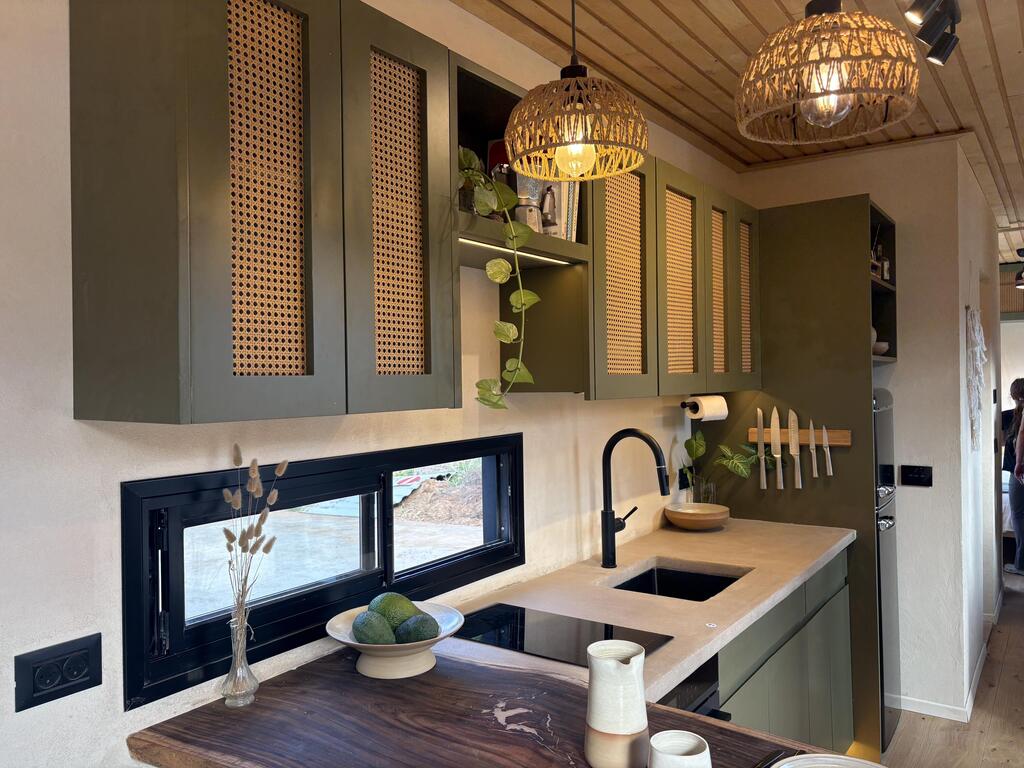
The cabinet fronts were replaced with brass for a natural, rustic and light look
(Photo: Yulia Prilik-Niv)
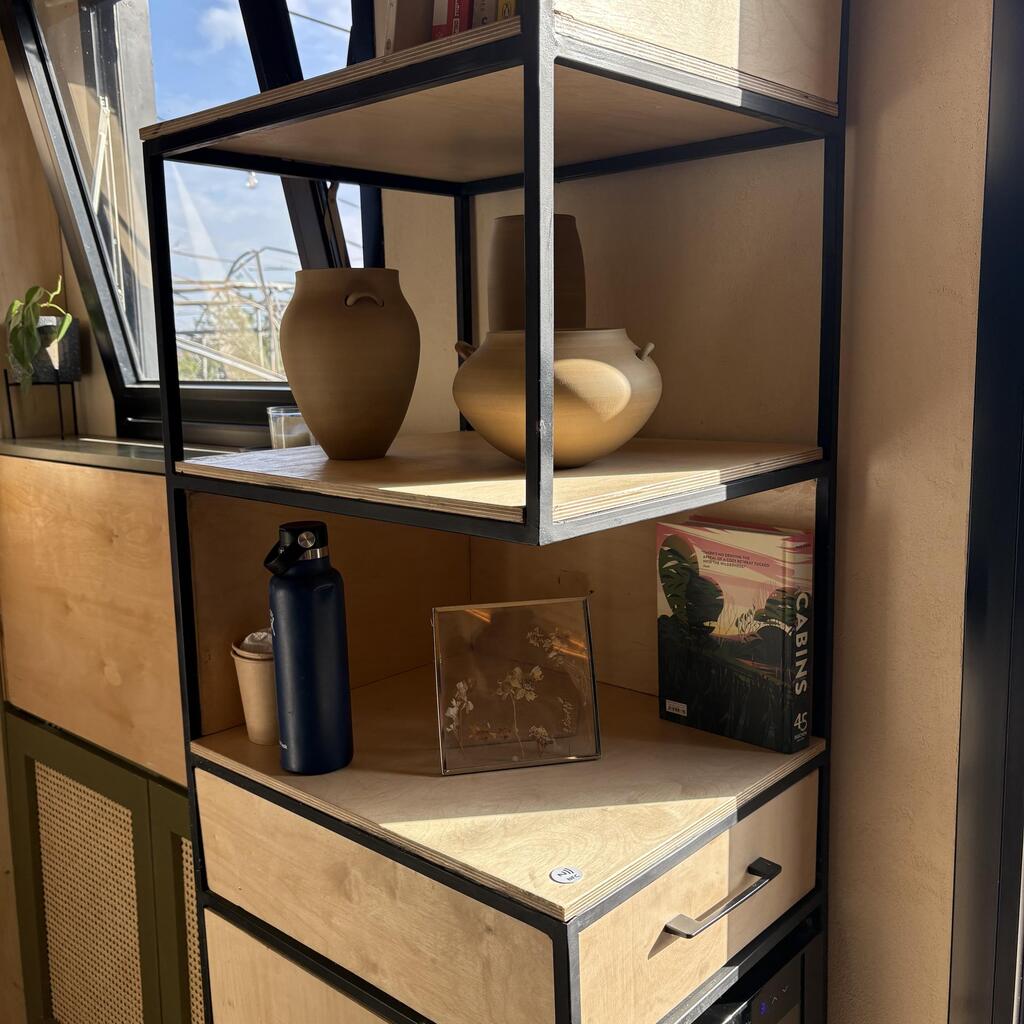
Storage in the entryway, including a wine cooler downstairs and a pull-out desk from the wall
(Photo: Yulia Prilik-Niv)
Home in every sense
A few months ago, Gefen decided that the future of small-scale living lies in used steel shipping containers. He said they can serve as the skeleton for an eco-friendly home. He invested heavily in insulation, construction, cladding, furnishings and a range of adaptations to turn the steel shell into a warm, comfortable living space.
The early chapters of the project focused on far less glamorous tasks than choosing décor — rust removal, cutting openings in the sealed container, structural reinforcement, welding and similar work. Later the brothers, sometimes with professional help, connected the unit to electricity, water and other systems.
It is hard to imagine how a cold industrial steel frame became a cozy home filled with wood on the floors, ceilings and some furniture. The dominant interior color is green — in the kitchen, sofa and bedroom carpentry — complementing the nature outside and the different woods inside, such as acacia on the kitchen island and birch in parts of the furniture. Rattan fronts in the kitchen and bedroom cabinets add a rustic feel. Another natural material, concrete, appears in the cast leg of the kitchen island, at the base of the table lamp and in the kitchen countertop. A black basalt sink in the bathroom adds an unexpected natural touch.
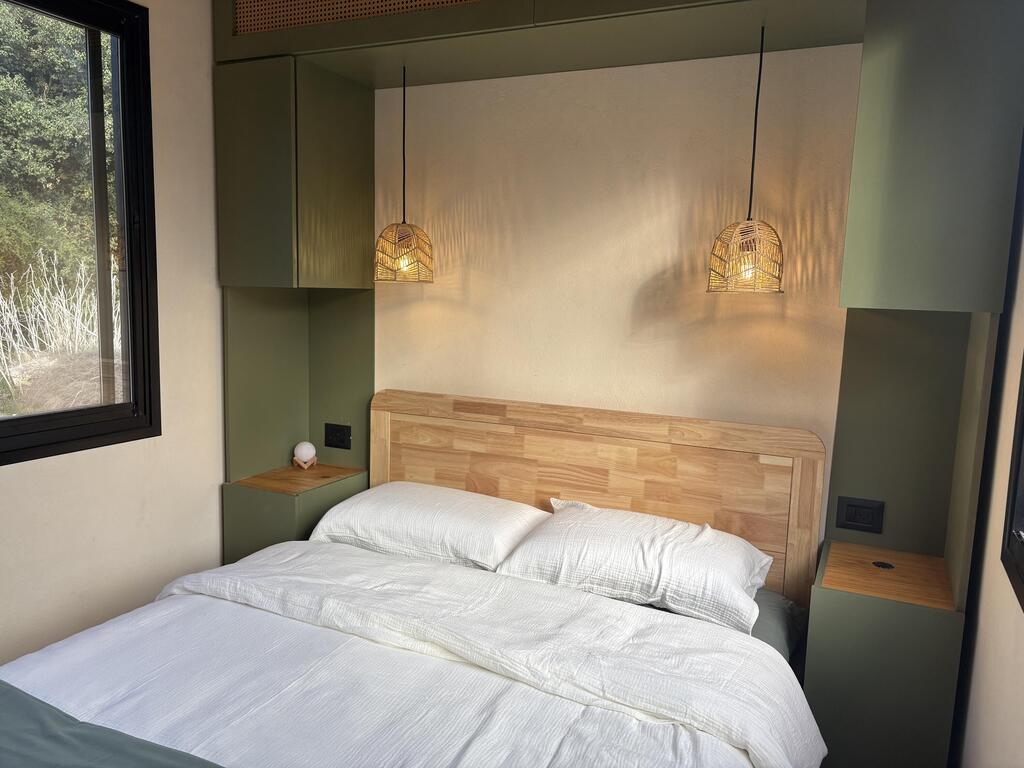
A bedroom with a warm design, including storage and soft lighting
(Photo: Yulia Prilik-Niv)
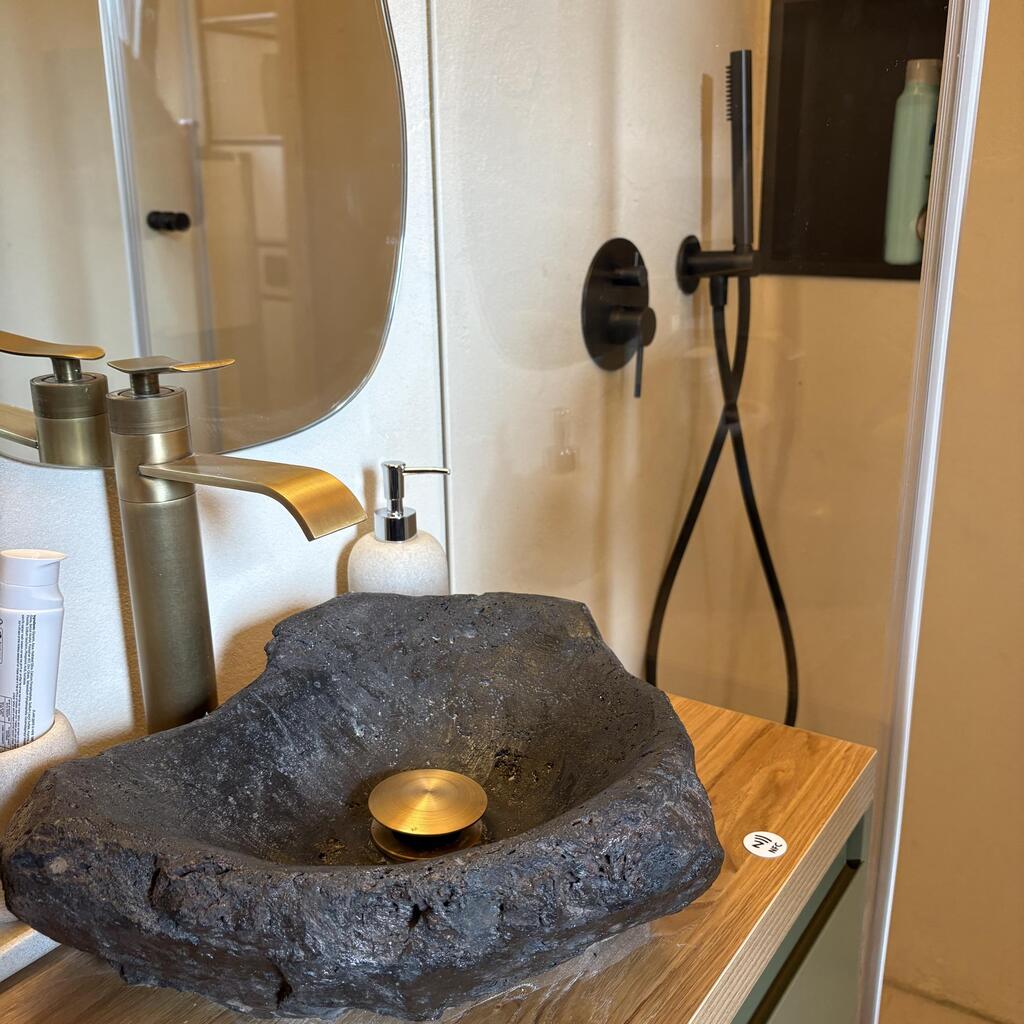
Black basalt sink in the bathroom
(Photo: Yulia Prilik-Niv)
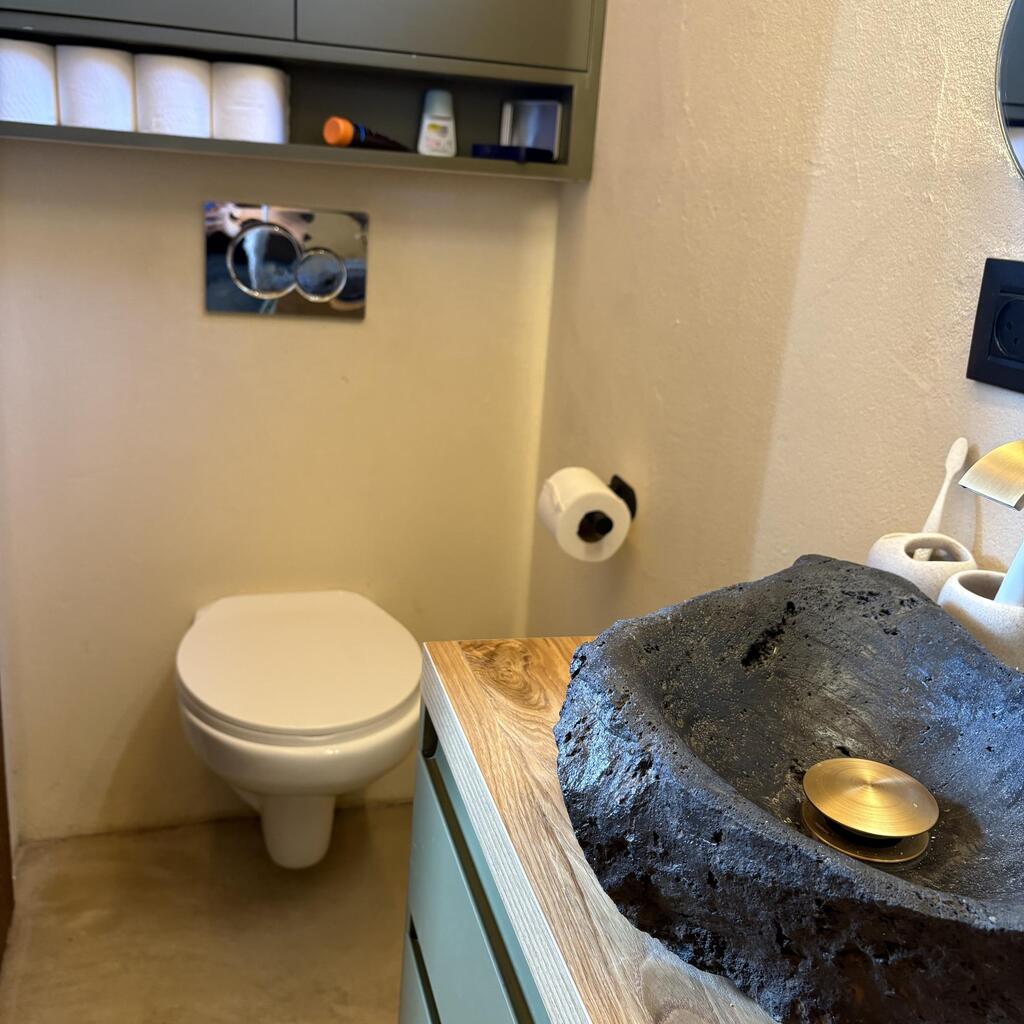
Toilet and more storage above
(Photo: Yulia Prilik-Niv)
One notable part of the project is that many elements were produced by Israeli colleagues and companies, including from the north and the Gaza border communities, creating a type of circular economy that also provided them work. For example, Kobi Adir created the stone wall above the living room sofa.
The brothers also invested heavily in insulation and sealing so that the container — originally blue and later painted cream — would be suitable for year-round living without leaks. And whatever nature does not regulate, the air-conditioning and other systems built into the unusual housing unit will.