


A black SUV with tinted windows turns off a cobblestone street in Tribeca and disappears behind an iron gate. Seconds later, the gate closes, the passenger steps out in an underground garage and takes an elevator directly to the apartment door.
No sidewalk. No lobby doorman. No curious neighbor. In New York, a city whose mythology is built on chance encounters in the street, this has become a coveted luxury: the ability to live in the middle of Manhattan without Manhattan seeing you.
For decades, celebrities accepted New York as a package deal. The apartment or brownstone might be enormous and the doorman discreet, but movie stars still stood in line at the pharmacy and walked their dogs on public sidewalks.
Sarah Jessica Parker and Matthew Broderick became part of the landscape of Greenwich Village. Yoko Ono was regularly seen near the Dakota on Central Park West. The city gave celebrities culture, restaurants and one of the world’s most desirable addresses. In return, it extracted a measure of privacy.
That bargain is changing. A new generation of stars wants New York’s restaurants, clubs and cultural life with the access conditions of a Beverly Hills estate. In real estate circles, the formula is sometimes described as “Los Angeles living in New York.”
To understand the shift, it helps to understand an institution that is almost uniquely New York: the housing cooperative. A buyer in a co-op does not directly own an apartment. Instead, the buyer purchases shares in a corporation that owns the building and receives a proprietary lease for the unit. That means the neighbors, through the co-op board, get to scrutinize anyone seeking to move in.
In prestigious buildings on Park Avenue, Fifth Avenue and Central Park West, the application process can involve tax returns, bank and investment statements, debt disclosures, recommendation letters and, in some cases, proof that the buyer will still have millions of dollars left after closing.
Then comes the interview, a polite encounter in which even an answer that sounds a little too perfect can work against the applicant.
A board can reject a buyer without explaining why, provided it does not violate anti-discrimination laws. A New York City law that took effect in July requires most boards to reach a decision within 45 days after receiving a completed application, but it did not strip them of their power to reject buyers or require them to explain their reasoning.
A private investigation
A process designed to protect the stability of a building can feel more like a private investigation conducted by the same people a buyer will later meet in the elevator.
For an actor, musician or influencer whose income comes from contracts, royalties and production companies, the system can also struggle to make sense of the complicated finances that often accompany fame.
Barbra Streisand learned that firsthand. In the 1960s, she was reportedly rejected by two luxury Upper East Side co-ops before eventually buying a three-level penthouse at the Ardsley on Central Park West. Even after she was accepted into the building, however, she was not free to sell the property to whomever she wanted.
In 1999, Mariah Carey offered to buy the penthouse from Streisand for $8 million in cash. The board rejected Carey after her interview. No official reason was made public, but reports at the time said board members were unimpressed by Carey’s short skirt and the entourage she brought with her. Streisand kept the apartment for roughly three more years before selling it in 2002 for $4.25 million, only slightly more than half what Carey had offered.
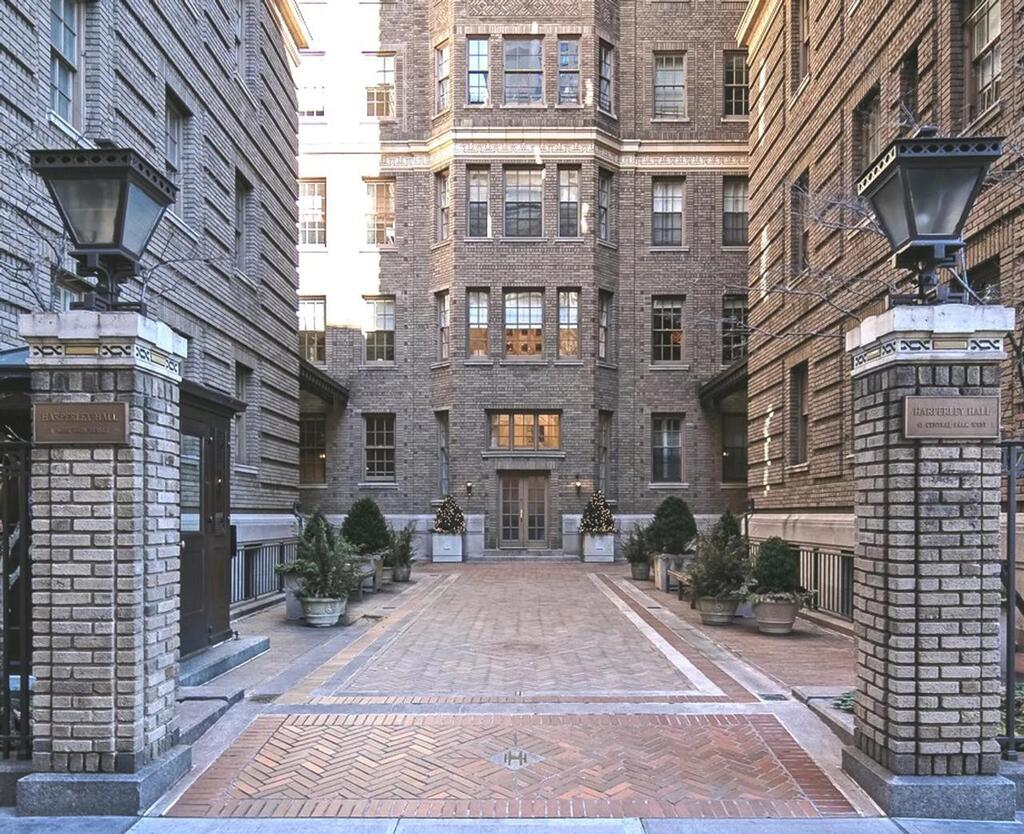
Harperley Hall
(Photo: Henry W. Wilkinson)
Co-op boards can continue regulating residents even after the purchase. At Harperley Hall, where Madonna bought an apartment for $7.3 million, the board ruled that her children or employees could not live there when she was absent. For a singer who spends months on tour, that was no small restriction. Madonna fought the board in court for nearly three years and lost.
Jerry Seinfeld encountered another form of co-op control: renovation limits. After work on his apartment at the Beresford stretched beyond two years, that building and other Manhattan co-ops adopted rules imposing daily fines on renovations that ran past their deadlines. In the industry, the restrictions became known as the “Seinfeld rules.”
The condo solution
The obstacles posed by co-ops have pushed celebrities toward another option: the condominium. The ownership structure is fundamentally different. Condo buyers own the property itself, while the board generally has only a right of first refusal, meaning it can match the buyer’s offer and purchase the apartment instead.
On luxury properties priced at $10 million or $20 million, that is an exceedingly rare move. A condo board may still request documents and regulate renovations, but its power over buyers is much more limited. It is also generally easier to purchase a condo through a limited liability company or trust and rent it out when needed.
According to the New York City comptroller, 21% of Manhattan condo units are registered to companies. That does not hide ownership from authorities, and sometimes not even from building management, but it can make it harder for the public to immediately connect a famous name to an address.
True privacy, however, is not simply a matter of whose name appears in public records. It is increasingly designed into the concrete and the route from the street. A covered motor court, internal garage, coded elevator and service entrance can allow a resident to move from the back seat of a car to the kitchen without ever appearing before paparazzi cameras on the sidewalk. Swimming pools and spas may look good in sales brochures, although many stars barely use them.
For celebrities, the most important amenity may be the gate. A townhouse offers independence, but turning one into a fortress costs a fortune and requires staff. In a condo, security costs are spread among dozens of owners.

443 Greenwich
(Photo: CetraRuddy)
In Brooklyn, the 12-story Standish was built in 1903 as a Beaux-Arts hotel and converted in 2016 into just 32 condominium units. Located on Columbia Heights, the building offers a 24-hour doorman, gym and rooftop views of New York Harbor and Manhattan while retaining the appearance of old New York.
Matt Damon paid $16.7 million for the penthouse in 2018, then a Brooklyn record. Emily Blunt and John Krasinski bought two adjoining apartments for about $11 million. Last summer, Adam Driver joined them, paying $11.5 million for three sixth-floor units totaling about 3,500 square feet.
But the Standish has no underground garage allowing residents to come and go unseen. It offers privacy, but not complete separation from the neighborhood. The building sits on a quiet street opposite the promenade, surrounded by the historic brownstones of Brooklyn Heights. Residents are still visible.
When Damon moved into his penthouse, part of the street had to be closed so a crane could lift furniture and trees into the apartment, an event quickly documented by local blogs. Still, the presence of several Hollywood families appears to attract others.
For prospective celebrity buyers, the fact that other stars have successfully maintained relatively private lives there acts as proof that the building works, even without a gate and garage cutting them off completely from the street.

Matt Damon in ‘The Odyssey.’ Paid a record price for a Brooklyn condo
(Photo: Courtesy of Tulip Entertainment)
The ‘celebrity dorm’
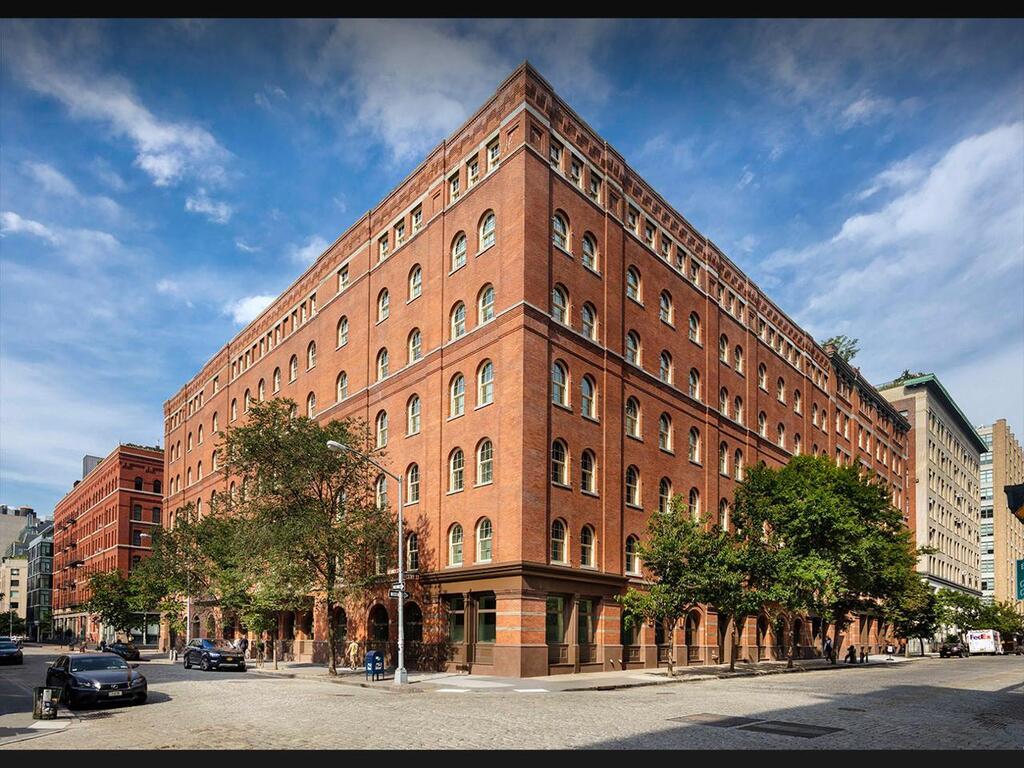
At 443 Greenwich in Tribeca, the compromise nearly disappears. The late-19th-century bookbinding factory occupies an entire city block, with stone arches, timber beams and high ceilings that give its apartments the look of classic New York lofts.
Behind the preserved facade sits an underground garage entered through iron gates, four elevator banks with coded access, a roughly 75-foot swimming pool, Turkish bath, sauna, wine cellar and landscaped interior courtyard.
Jennifer Lawrence, Harry Styles, Justin Timberlake and Jessica Biel, Jake Gyllenhaal, Meg Ryan, Mike Myers and Lewis Hamilton have all owned apartments there or lived in the building, earning it the nickname the “celebrity dorm.”
The property is also a reminder that an impressive gate does not eliminate real estate risk. Its condo board is currently pursuing a $376 million lawsuit against the developer and architects, alleging construction defects, water intrusion and problems with the facade.
Yet famous buyers continue to arrive, perhaps because for someone pursued by photographers, the location of the parking garage may matter more than a crack being litigated in court. At prices of roughly $10 million to $25 million, the building offers a level of separation that would otherwise require a far more expensive townhouse.
Around 443 Greenwich, a corridor of similarly fortified condos has emerged, including 70 Vestry and 150 Charles Street. Their proximity to the West Side Highway, a drawback for many ordinary New Yorkers, is an advantage for anyone traveling by private car to a restaurant, studio or private jet at Teterboro Airport.
It allows residents to live near the West Village, Tribeca and private clubs without turning every departure from home into a production.

160 Leroy
(Photo: Ian Schrager Company)
At 160 Leroy, on the edge of the West Village, the car itself has become part of the arrival ritual. The undulating building designed by Herzog & de Meuron for luxury hotelier Ian Schrager includes a covered motor court and garage, allowing the gate to close before a car door even opens. Hailey and Justin Bieber paid $12 million this summer for a four-bedroom apartment of about 2,800 square feet.
The building also has a roughly 70-foot pool, sauna and children’s playroom. Its penthouse was purchased for $43.5 million by Michael Rubin, founder of sports merchandising giant Fanatics, and includes a private pool.
At 80 Clarkson, a two-tower development near the Hudson River, roughly 50,000 square feet will be devoted to shared amenities. Plans include an 82-foot pool, sports court, private restaurant, music studio, photography and content-production space, and a three-story indoor garden with palm trees. A vehicle entrance will lead to a secure internal courtyard where residents can get out of their cars away from the street.
The building will also include a waiting room for private drivers so they do not have to remain in the lobby. Some extras are being sold separately at extraordinary prices: $750,000 for a parking space and as much as $1 million for a private wine room.
Although construction is not yet complete and the apartments are not listed on mainstream real estate sites such as StreetEasy and Zillow, contracts worth more than $1 billion have already been signed in the development.
Traditional co-ops, however, are far from finished. They offer larger rooms, thick walls, craftsmanship in wood and stone that is difficult to reproduce, and often a lower price than a comparable condo.
In 2025, historic co-ops increased their share of Manhattan transactions above $2 million, and in June there was even a rare week in which more luxury co-ops were sold than condos. For someone seeking a permanent home and stable neighbors, a strict board can even be seen as an advantage. At first glance, this may seem like a minor shift in the housing habits of a tiny elite. But it touches something central to the New York experience.
The city has always promised that even an enormously famous person can become, for a few minutes, just another pedestrian among eight million others. The new condo towers are turning parts of the city into vertical gated communities, connected by highways, private elevators and access codes.
The stars still want the skyline outside their windows. They just prefer to view it from the safe side of the glass, enjoying New York without having to appear in it.