


The historic building at 5 Brenner Street in Tel Aviv was built more than 90 years ago. In recent years, it has been given a new and contemporary life.
The functional structure, designed in 1935 by architect Arieh Sharon, has undergone careful preservation and redesign and now operates as a boutique hotel with historical depth and an architectural style that connects the nostalgia of the White City with bold elegance, 1970s touches and historical references.
Gallery
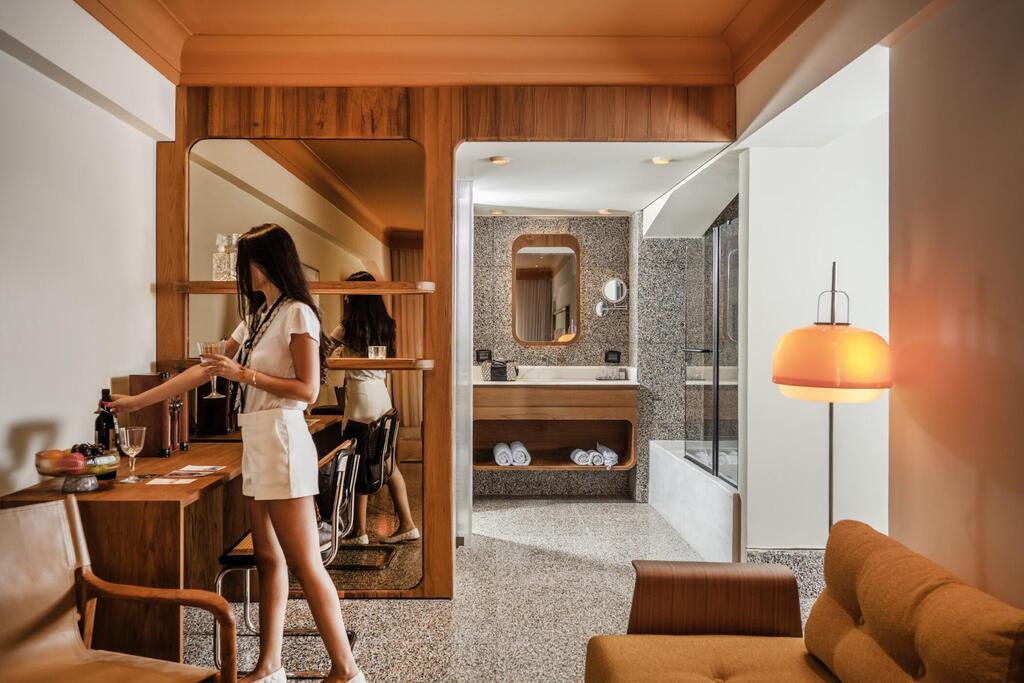
A room at Hotel 1935, once a meeting place for workers in the Tel Aviv
(Photo: Suzie Levinson and Idan Goor)
Step away for a moment from the urban rush of Rothschild Boulevard and Allenby Street, just parallel to lively Sheinkin Street, and you reach Brenner Street, one of the city’s small, shaded streets. In recent years, several boutique hotels have opened there, many hiding a rich historical past behind their walls.
The building was initially planned to operate under the Brown Hotels chain, but it never opened to the public. It has now been inaugurated under a new chain, Adam Hotels, which operates in four locations that previously housed Brown hotels.
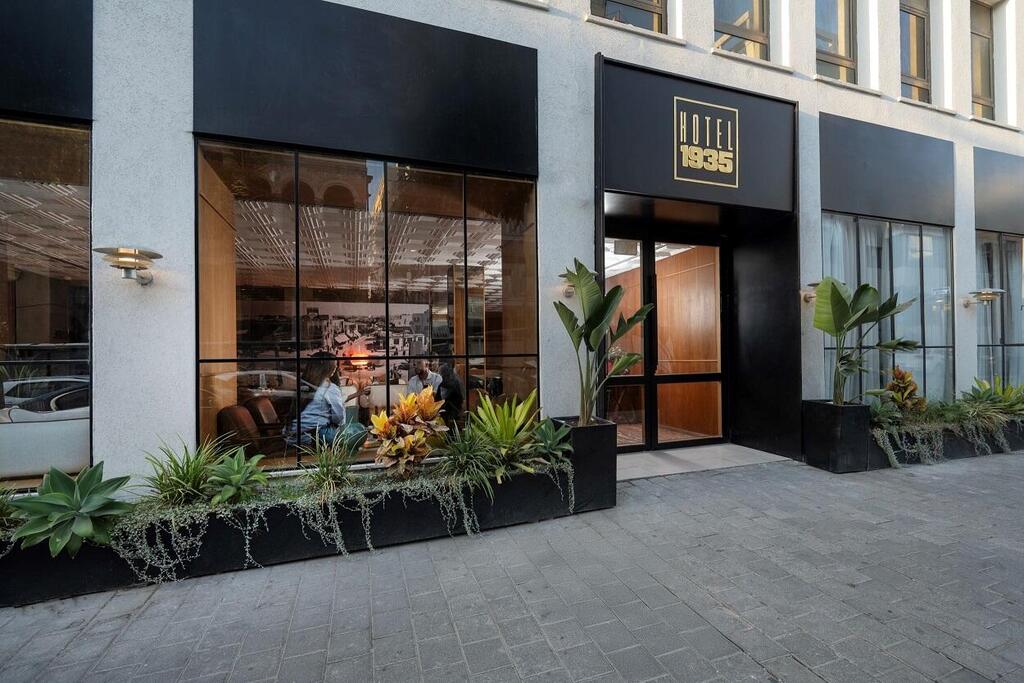
It began as the Tel Aviv Workers’ Council House and was built with donations
(Photo: Suzie Levinson and Idan Goor)
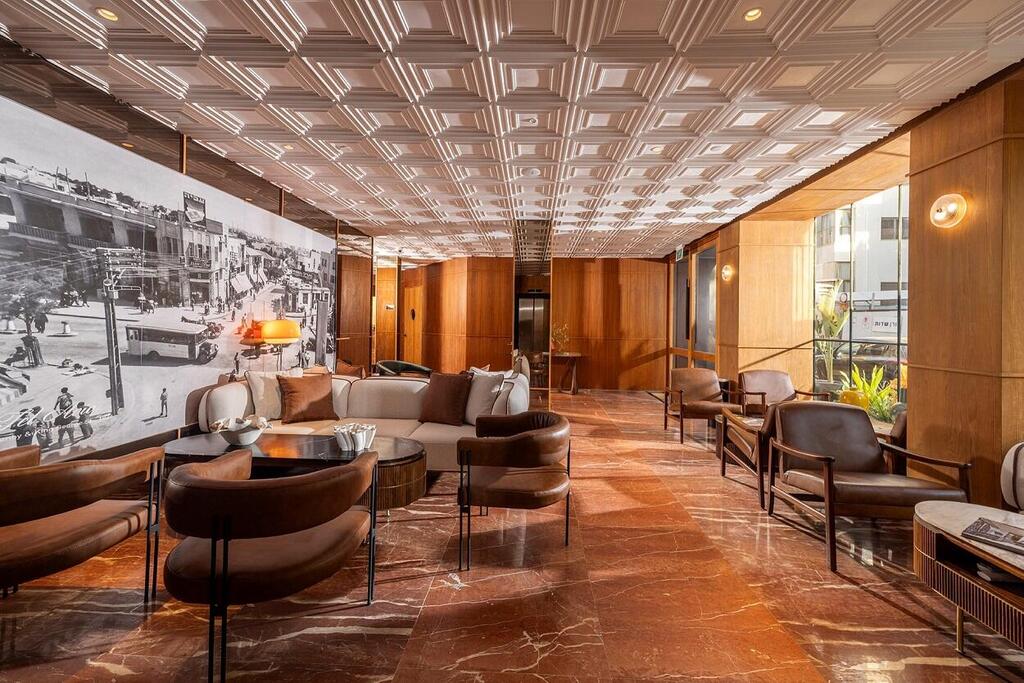
The silver lobby ceiling contrasts with the reddish floor
(Photo: Suzie Levinson and Idan Goor)
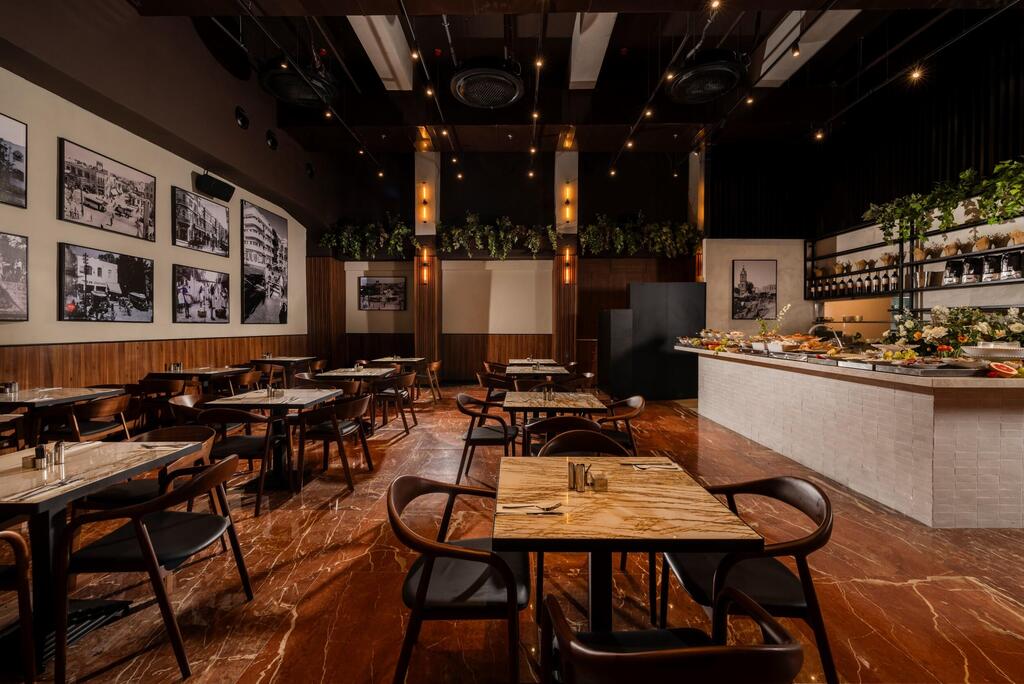
The dining room continues the same design language, but with a completely different ceiling
(Photo: Suzie Levinson and Idan Goor)
Interior designer Vered Ben Simon, who leads design and architecture tours in Tel Aviv, knows these hidden stories well. One of her tours enters the city’s side streets, where nearly every building carries a fascinating story. This time, the story belongs to the building at 5 Brenner Street.
“This iconic building, which has come back to life, has become the intriguing boutique Hotel 1935. When it is not fully booked, I bring groups inside for a tour that connects past and present. Even David Ben-Gurion used to hold important meetings here,” Ben Simon says.
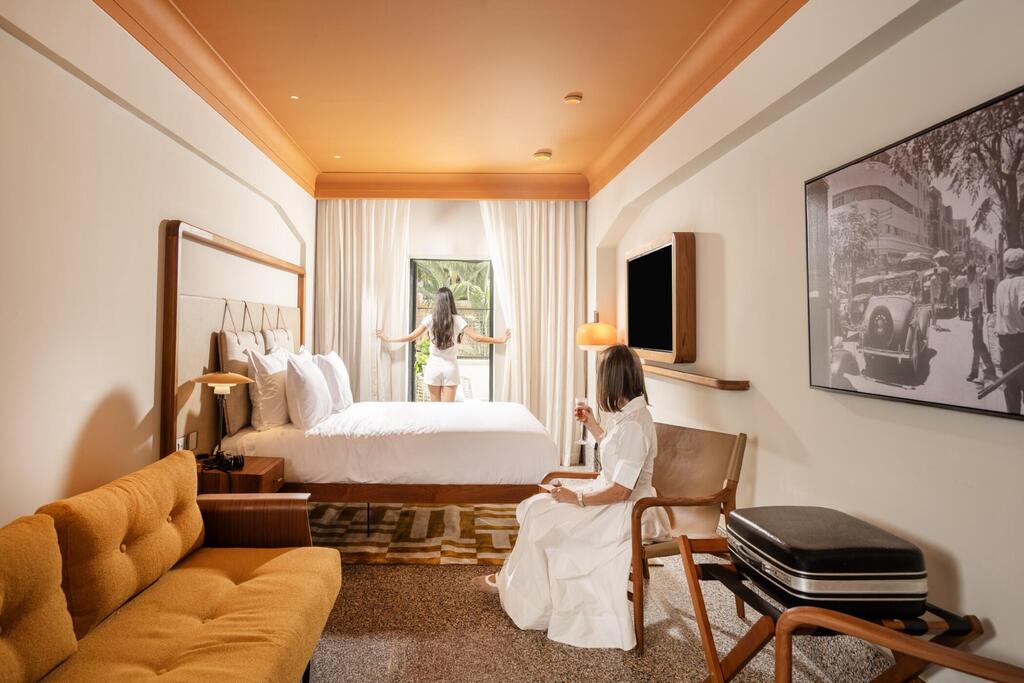
David Ben-Gurion used to hold important meetings here
(Photo: Suzie Levinson and Idan Goor)
When Tel Aviv’s workers meet Bauhaus
To understand the distinctive design of Hotel 1935, named for the year the building was established, one must go back 91 years. The building was inaugurated in August 1935 as the Tel Aviv Workers’ Council House. It was built with donations raised by the city’s workers themselves and served as a cultural, political and employment center for old Tel Aviv.
Ben-Gurion, one of the founders of the Histadrut and its first secretary-general, regularly visited the site for pivotal party meetings and official events. Needless to say, the style then was very different and far more austere.
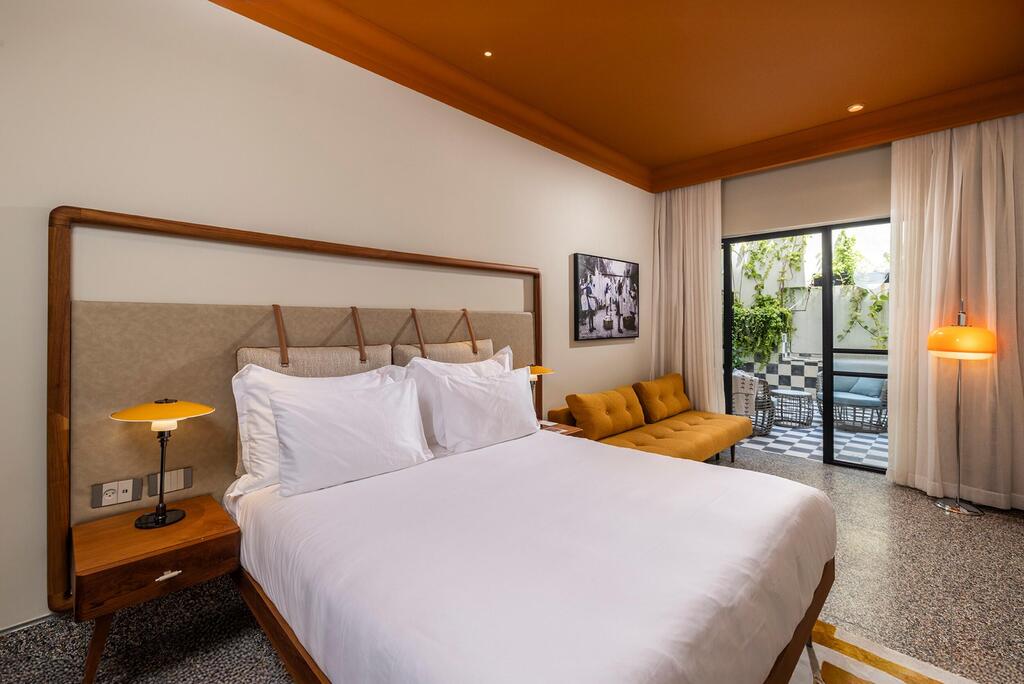
Once an austere building used by workers and guilds, now a family room with garden access
(Photo: Suzie Levinson and Idan Goor)
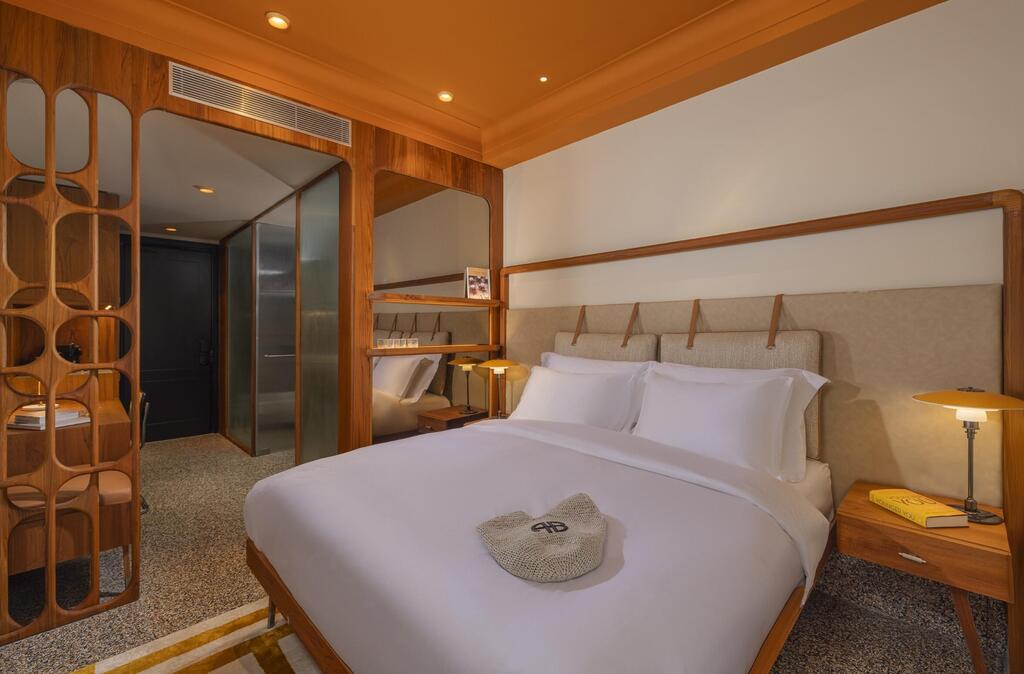
(Photo: Suzie Levinson and Idan Goor)
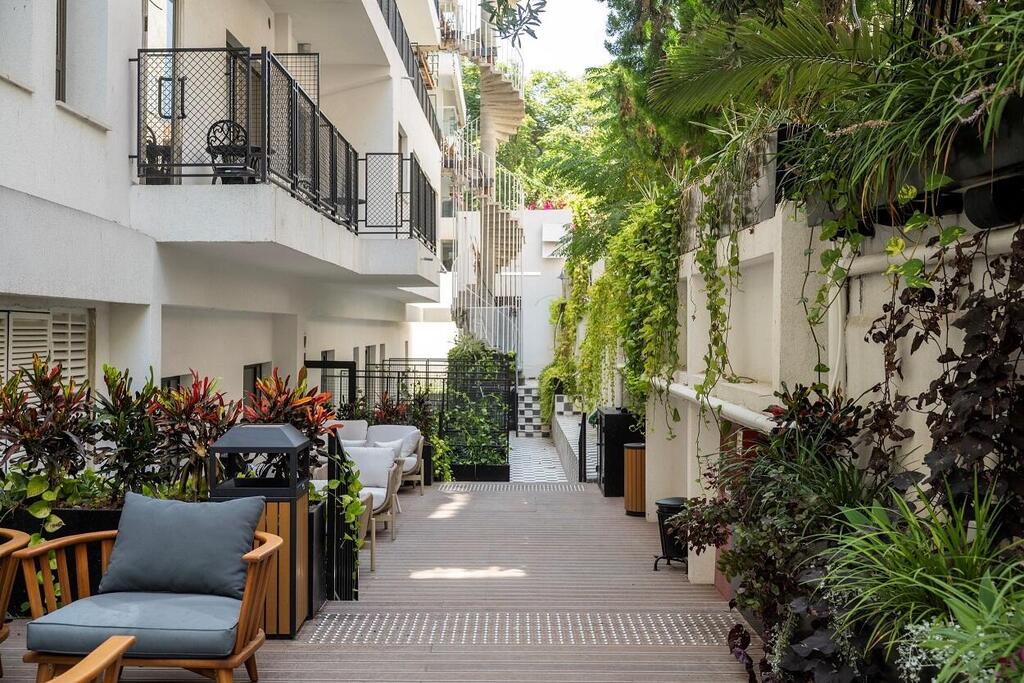
A green garden hidden from the bustle of the street
(Photo: Suzie Levinson and Idan Goor)
The original design was entrusted to none other than architect Arieh Sharon, one of the key figures behind Israel’s Bauhaus, or International Style, architecture, and a recipient of the Israel Prize for Architecture and the Rokach Prize. Sharon, who immigrated to Mandatory Palestine in the 1920s, brought with him from Germany a language of functionality, clean lines and unpretentious, accessible aesthetics.
As a young man, Sharon studied architecture at the Bauhaus school in Dessau, Germany, after already designing several buildings locally, mainly in kibbutzim. After returning, and before turning to Brutalist architecture, he designed functional buildings, including in Tel Aviv.
After undergoing many phases, including years as a gray, unremarkable office building, the structure has been carefully preserved, renovated and converted into a boutique hotel. The redesign was led by architect Dana Oberson and her team, Oded Livyatan, Lior Inbar and Dana Keshet, with licensing by Anat Nesher.
The architectural challenge was significant: how do you take a building designed for austere, old Tel Aviv and give it the fresh energy of urban Mediterranean hospitality without losing its authenticity?
The interior design suggests the transformation succeeded. The rooms and public spaces, including the lobby, corridors and dining room, are designed with a quiet aesthetic and a daring edge, like the set of the iconic series “Mad Men” meeting Tel Aviv’s old glamour.
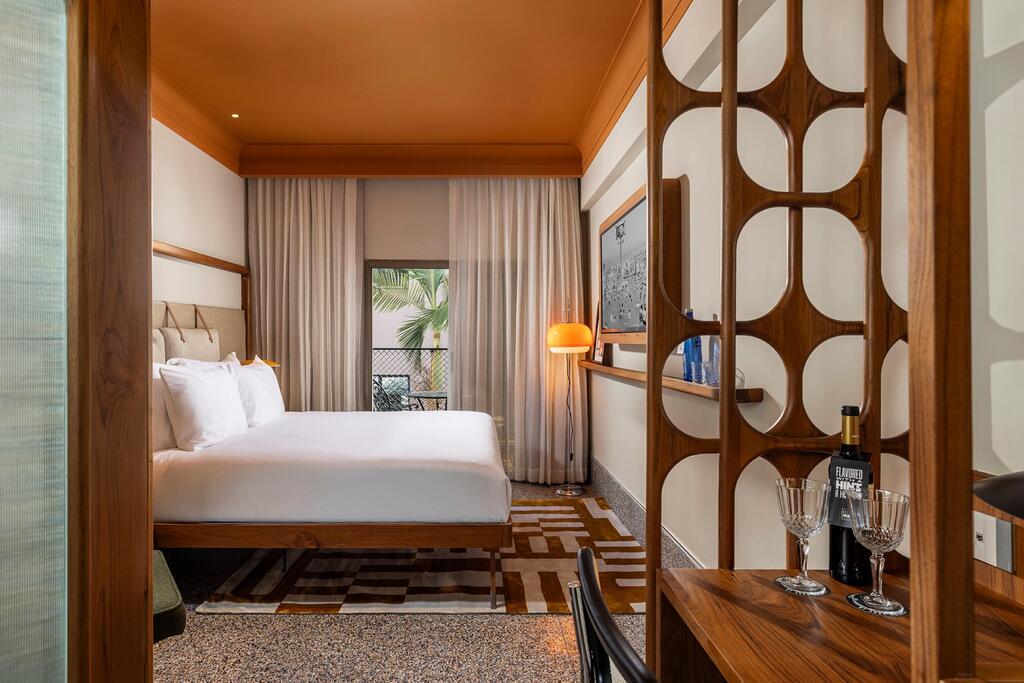
Teak partitions, terrazzo flooring and rounded lines
(Photo: Suzie Levinson and Idan Goor)
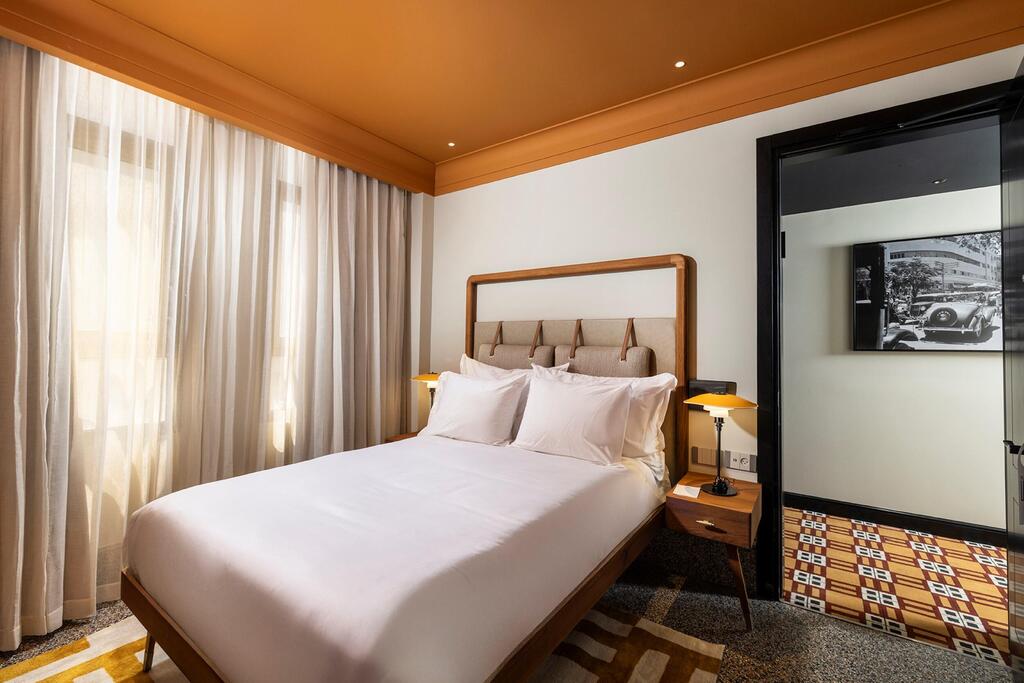
Geometric carpets add warmth, while the painted ceiling creates a more intimate feel
(Photo: Suzie Levinson and Idan Goor)
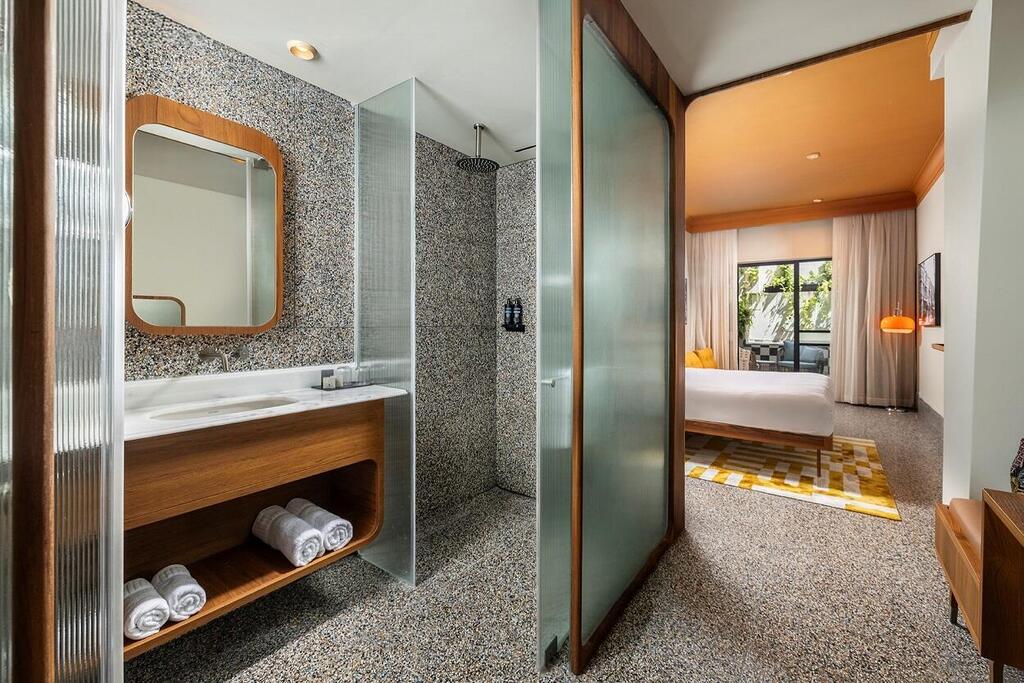
A bathroom clad in black-and-white terrazzo, with glass and teak elements
(Photo: Suzie Levinson and Idan Goor)
A feeling of 'old money'
The design language of Hotel 1935 draws direct inspiration from the period in which the building was constructed, the 1930s, a time of beginnings and bold creation, combined with contemporary touches and motifs from the 1970s.
Rather than create a historical reconstruction that would not feel appealing today, Oberson and the design team chose a quiet but character-filled aesthetic. The design refers to old Tel Aviv through materials, smoky shades of brown, khaki, orange and gray, natural materials such as teak, terrazzo, colored glass in orange and yellow, brass, and archival black-and-white photographs that decorate the spaces.
Contrast is central here. On one hand, there are clean lines, high ceilings and contemporary functionality. On the other hand, there is a rougher, mysterious, almost edgy atmosphere, created through iron elements, dark hardware and deep textures. Every detail was carefully chosen to create a sense of depth and calm, allowing guests to feel part of the city’s history rather than tourists observing it from the outside.
“The hotel’s design takes us back to the good old days, to Tel Aviv’s golden age in the 1950s and 1960s,” Oberson says. “When developing the design concept, we focused on the modesty and minimalism that characterized the period of Israel’s founding.
"To these values we connected nostalgic, bohemian and period features, influences from architects and designers who came from Europe to the local scene. Like curatorial work, we took the architectural essence and created an eclectic language of elegant simplicity, one that tells the story of the building at 5 Brenner Street and the heart of the city, and pours that content into the new hotel.”
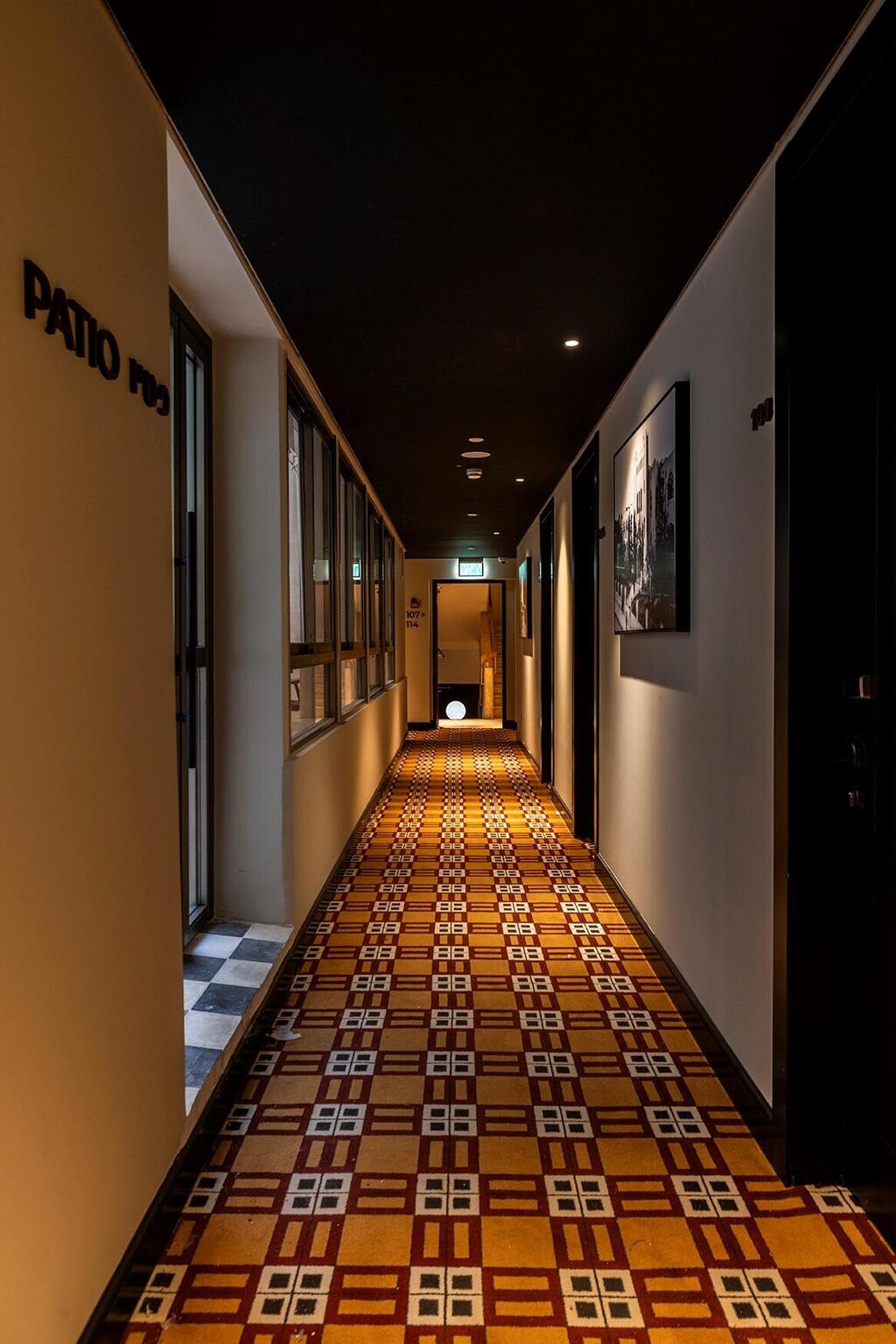
Back to the good old days: Hotel 1935 at 5 Brenner Street, Tel Aviv
(Photo: Suzie Levinson and Idan Goor)
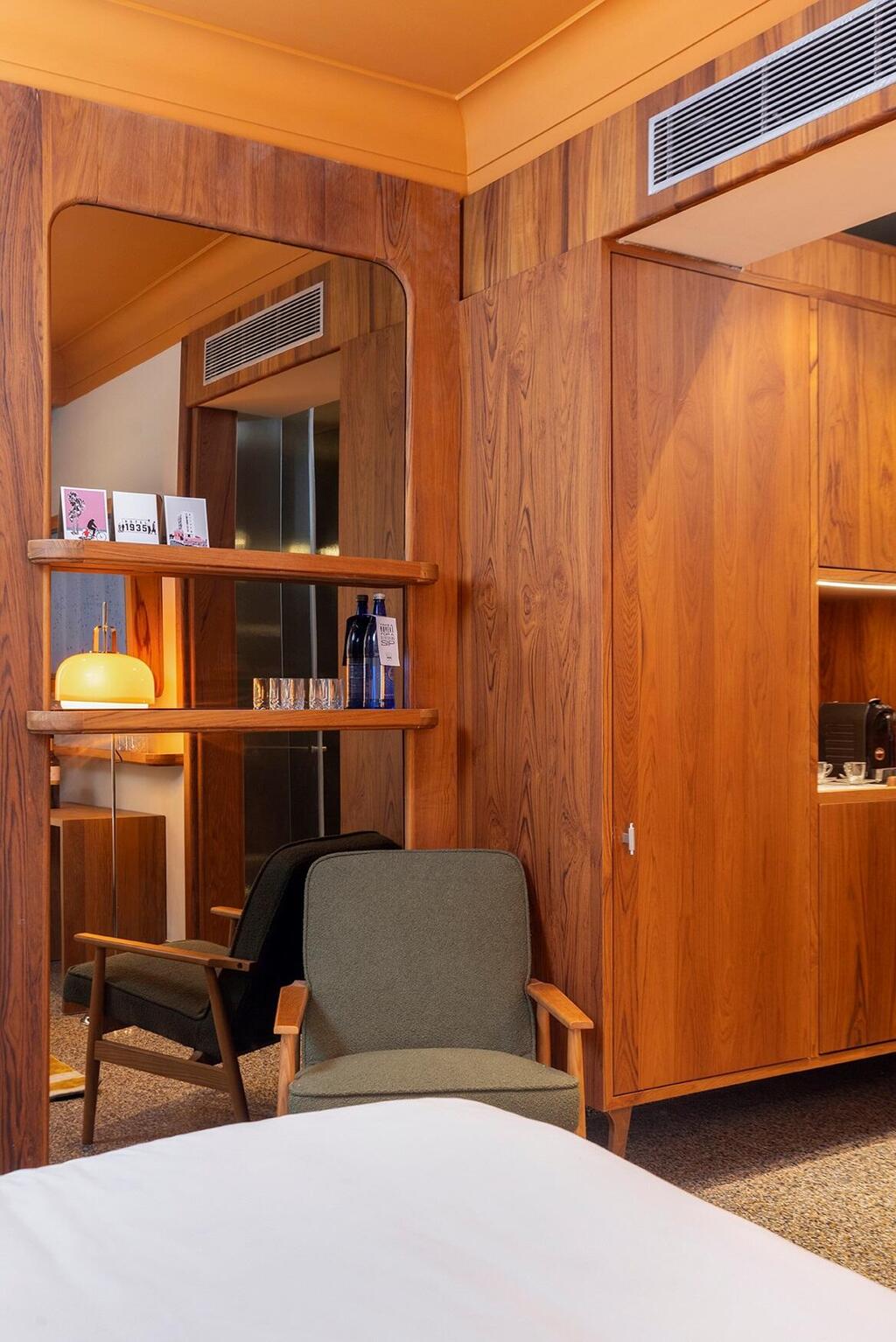
Iconic Midcentury Modern pieces were incorporated into the design
(Photo: Suzie Levinson and Idan Goor)
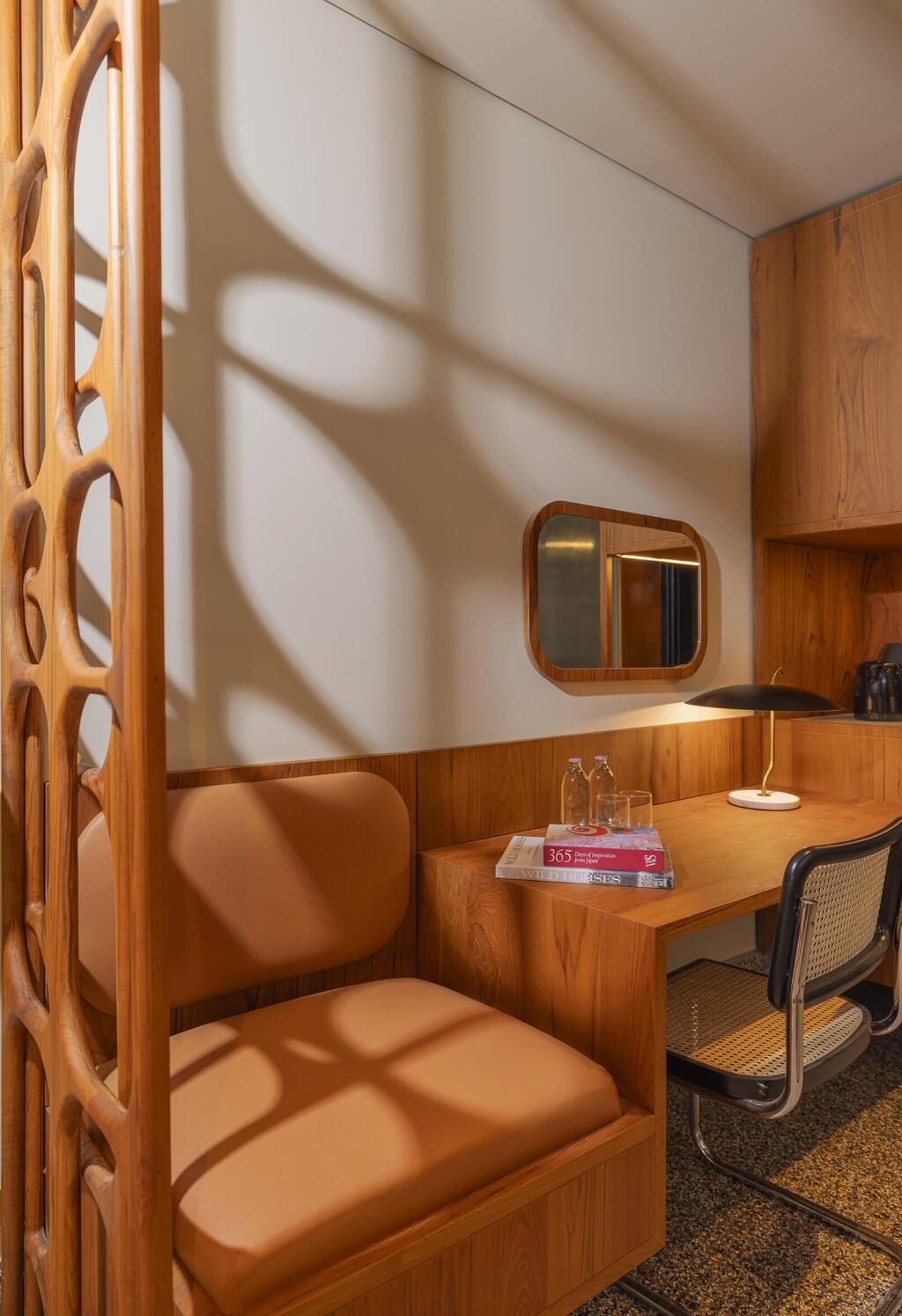
Emphasis on carpentry and lighting fixtures
(Photo: Suzie Levinson and Idan Goor)
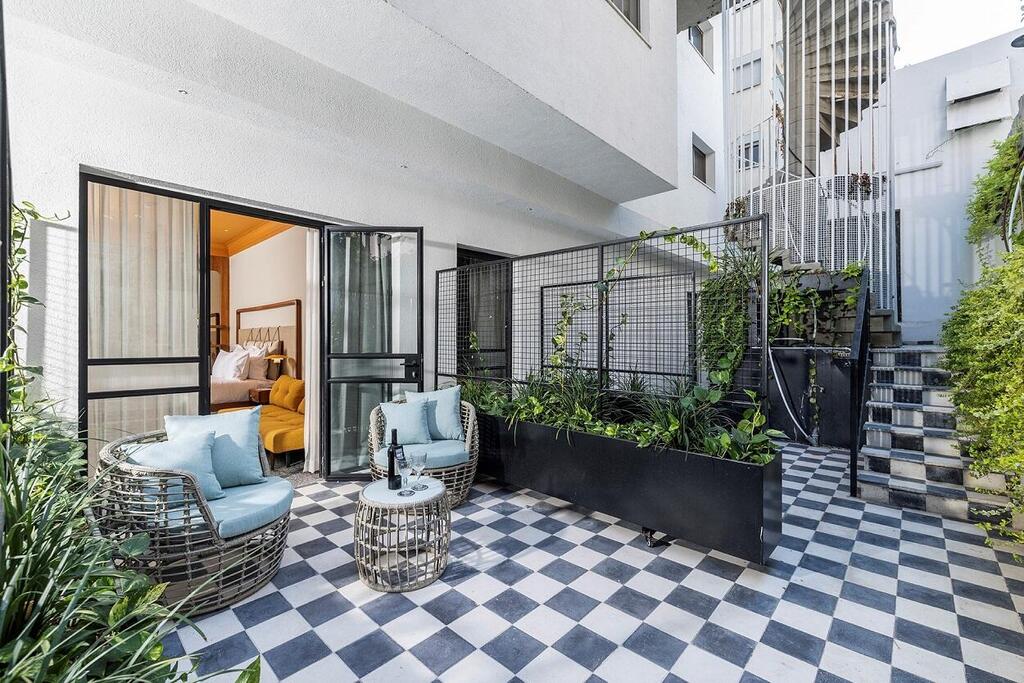
Checkerboard flooring in the back garden
(Photo: Suzie Levinson and Idan Goor)
According to Oberson, from the moment Beit Brenner was inaugurated in the summer of 1935, it became one of the city’s most important and influential public buildings. “In addition to the secretariat and management of the Tel Aviv Workers’ Council, it housed many professional unions and large committees, including metalworkers, construction workers, woodworkers and others.
"For most of its years, Beit Brenner was an active cultural center, hosting lectures, book launches, concerts, politicians, writers, musicians and more. In the 1950s, the number of Histadrut members in Tel Aviv grew significantly, and it was decided to expand the building and add a new wing to the right of the existing one,” she says.
Oberson adds that the building’s facade was preserved and restored, including the shade and texture of the original plaster. Around the street-level windows, black metal frames were designed to emphasize the rhythm of the openings and the entrance door. The door, made of teak and glass, hints at the materials used inside the hotel.
The lobby is designed as an elegant lounge with a feeling of “old money,” recalling the iconic lobby of the Dan Hotel in the 1950s. The claddings and finishes were created with custom artisan carpentry typical of the period, including reddish teak, stainless steel and khaki tones in the textiles and overall palette. The aim was to give guests an authentic experience of staying in old Tel Aviv.
The furniture and lighting fixtures chosen for the interiors are well-known iconic pieces in the Midcentury Modern style.
“The decorative tiled ceiling adds an eclectic layer that belongs to the early period in which the building was built, the 1930s,” Oberson says. “The reddish stone floor gives a nostalgic luxury feeling. Behind the reception desk is a diamond-pattern teak shelving unit, backlit through textured decorative glass, known locally as ‘grandmother glass.’”
The wall claddings in the public areas and the corridor carpets, which recall old concrete tiles, help create a sense of continuity with the guest rooms. The public spaces compensate for the entrance’s zero setback at street level and bring the outside in.
In the ground-floor rooms facing the back courtyard, the team planned access to a shaded private garden with a Jacuzzi. The carpentry items in the guest rooms are characterized by horizontal, rounded lines. The bathrooms include decorative glass partitions, teak frames and vintage-style sink cabinets purchased at the flea market.
“It was important to me to integrate a wooden frame around the TV and give it a vintage look too,” Oberson says. “The frame has rounded corners that echo the details of the partition separating the room entrance from the main space. On the other side of the partition there is a teak drinks bar with a mirrored back, which feels as though it has always been there. The secretary desk and headboard in khaki and wood tones also add to the nostalgic experience.”
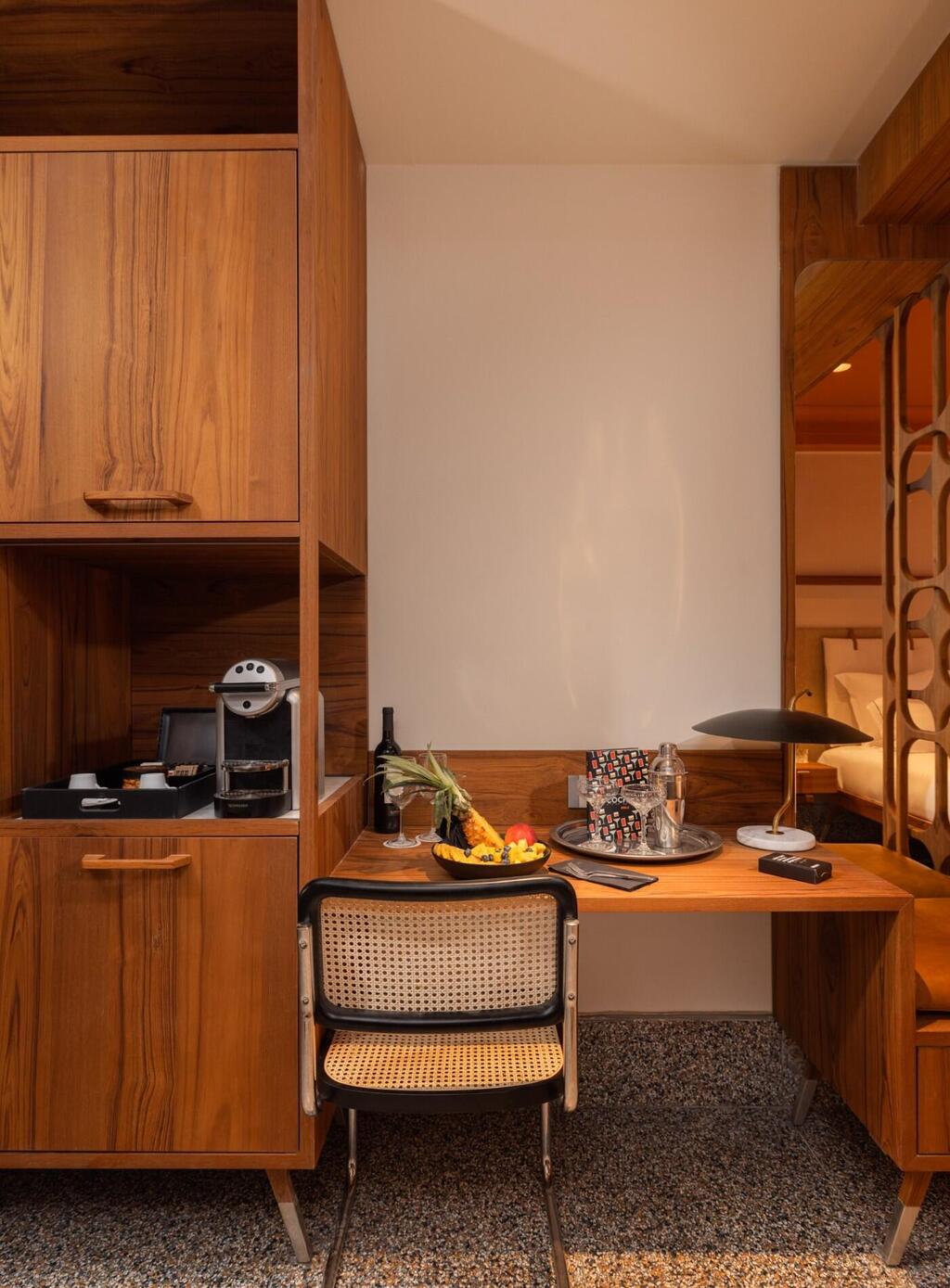
Secretary desk beside the bar and coffee station, all custom-made carpentry
(Photo: Max Kovalsky)
Terrazzo inside, chessboard outside
From classic rooms to a suite overlooking Brenner Street, the hotel offers several room categories, all designed with an intimate and meticulous atmosphere, comfortable beds, work corners and plenty of indulgences old Tel Aviv’s workers could only have dreamed of.
Rates start at 650 shekels (about $230) per night midweek and 850 shekels ($300) on weekends. Guests can choose a 15-square-meter classic room for two, with a bathroom featuring a rain shower, bathrobes, minibar and coffee corner; a 19-square-meter deluxe room, with or without a balcony; or a 35-square-meter suite with a living room, double bed, bathroom and balcony.
There are also family rooms with access to a courtyard featuring a black-and-white checkerboard tile floor surrounded by plants. The courtyard, however, is shared by several rooms and is not private.
When entering the hotel, look up: the lobby ceiling is covered with geometric cladding in a metallic finish, contrasting with the reddish-brown marble floor. In the rooms, guests will find black-and-white terrazzo floors and walls, decorative wooden partitions, special retro-style lighting fixtures and geometric carpets in warm shades such as mustard, cream, burgundy and brown.
In some rooms, the ceiling is painted a light brown-peach shade, creating a cocooning, intimate feel. The hotel dining room is spacious and continues the design line of the other spaces, with large windows facing Brenner Street.
The location allows for a short two-minute walk to Carmel Market, the Nahalat Binyamin pedestrian mall, Sheinkin Street, the Bialik complex and onward to the beach, Rothschild Boulevard and the city’s cultural, dining and nightlife centers.
Hotel 1935 is part of the young Adam Hotels chain, which operates a total of 430 rooms across four hotels: two in Tel Aviv and two in Eilat.
The writer was a guest of the hotel.