

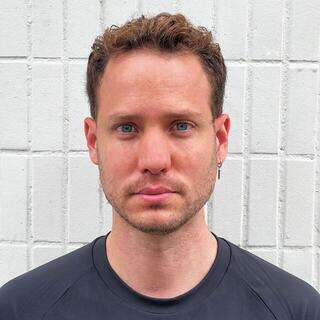
Israeli-British architect and designer Ron Arad, one of Israel’s most prominent and influential creators on the international stage, has been appointed a Commander of the Order of the British Empire (CBE) as part of King Charles III’s Birthday Honours. The distinction, awarded for outstanding contributions to British society and culture, joins a long list of accolades and achievements in a career spanning design, architecture and art.
The prestigious recognition marks more than four decades of groundbreaking work, during which Arad has repeatedly blurred the boundaries between art, architecture, design and technology, establishing himself as one of the most original and influential voices in his field.
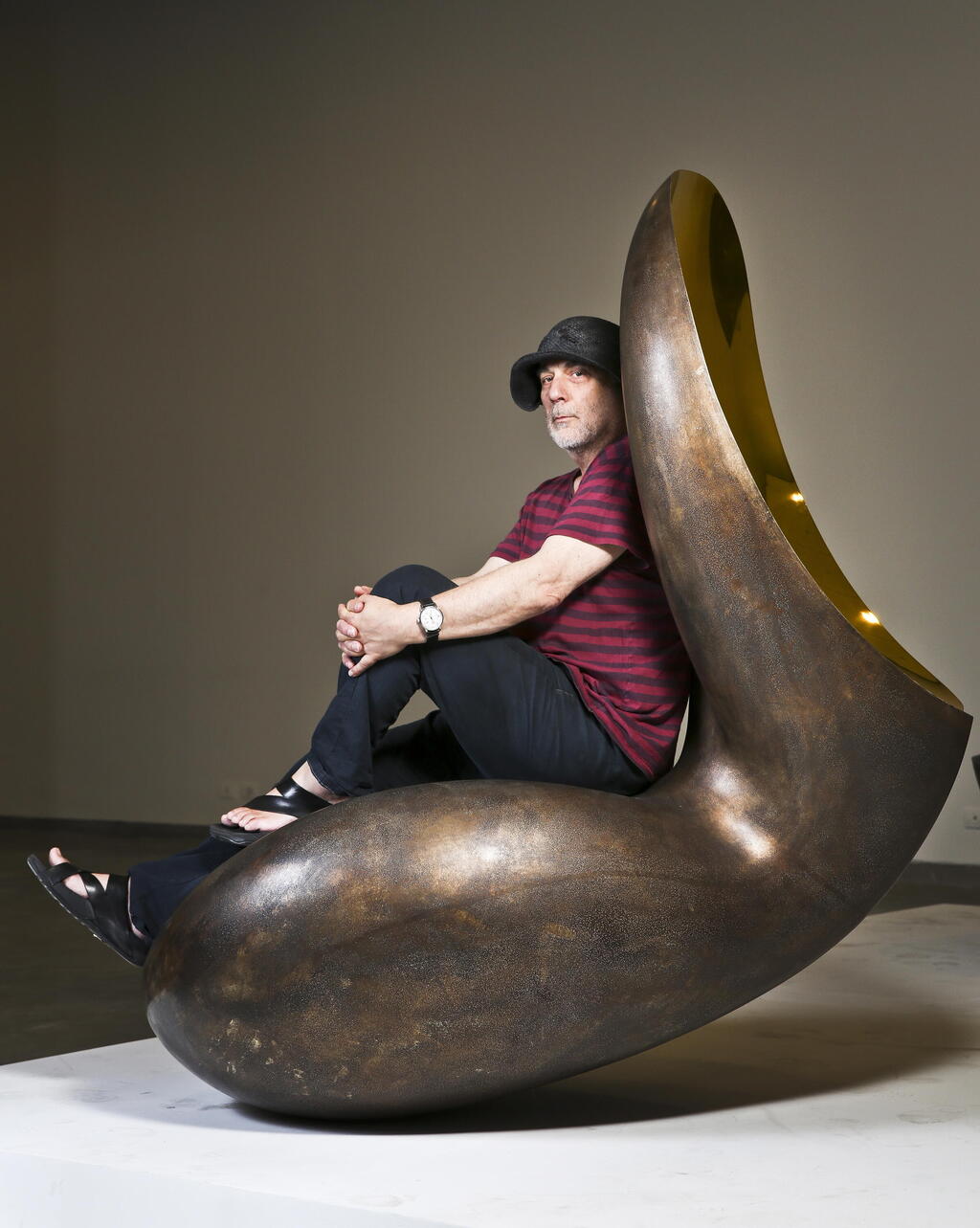
“I’m very happy to receive the honor,” Arad told ynet following the announcement. At the same time, he acknowledged that another recognition he received recently touched him on a more personal level.
“I had the honor of receiving the Yakir Bezalel Award, and that meant more to me personally,” he said.
Recognition in a challenging period
Over more than four decades, Arad has developed a creative language uniquely identified with him — one that combines material experimentation, technological innovation and unconventional thinking while blurring the lines between functional object, artwork and architectural structure.
His works, displayed in some of the world’s leading museums and collections, continue to influence generations of designers and architects through his ability to challenge conventions and propose new ways of thinking about material, form and space.
The recognition from the United Kingdom carries additional significance at a time when Israeli artists and cultural institutions often face public criticism and calls for boycotts on the international stage. The decision to award Arad one of Britain’s highest honors underscores both his exceptional standing and the broad appreciation for his decades-long contribution.
Arad addresses the issue matter-of-factly.
“I don’t think I received the award because I’m Israeli, and I don’t think I received it despite being Israeli,” he said. “I’ve had a studio in London for decades. If someone has a problem with the fact that I work both in Israel and around the world, that’s their problem.”
‘Every person is captive to where they were born’
Arad was born in Tel Aviv in 1951 and studied industrial design at Bezalel in Jerusalem. He later moved to London to study architecture at the prestigious Architectural Association School of Architecture, graduating in 1979.
In 1981, he established his first design studio in London, where he has lived and worked ever since. He gained international recognition in the early 1980s with the iconic Rover Chair, created from salvaged Rover car seats and recycled industrial steel.
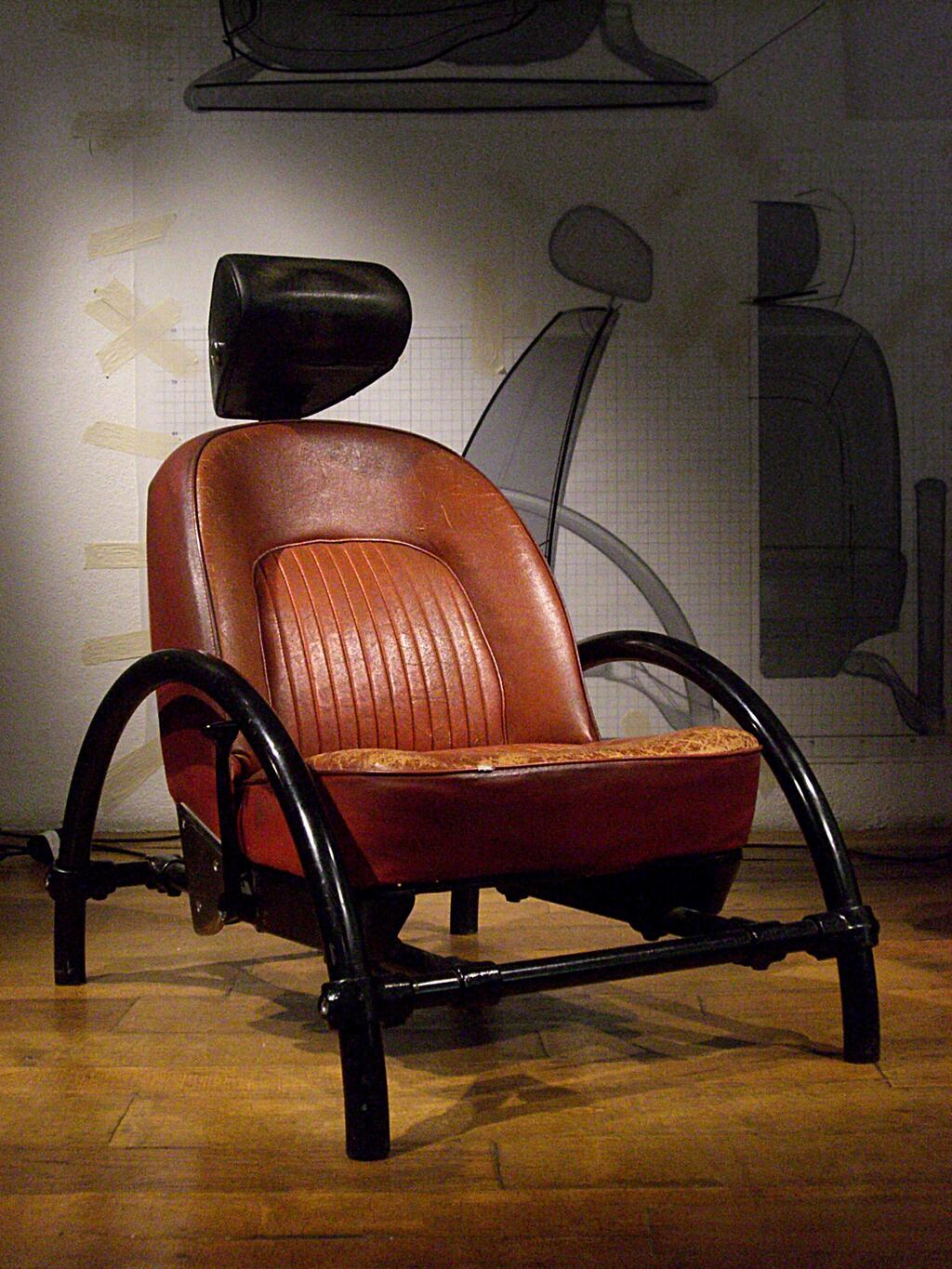
The iconic Rover Chair, created from salvaged Rover car seats and recycled industrial steel
(Photo: Ron Arad and Associates Limited)
He later developed a multidisciplinary practice spanning furniture design, industrial design, art and architecture. Among his best-known works are furniture designs for Vitra and Kartell, commercial interiors including London’s Belgo restaurant, the Tom Vac chair and the Bookworm bookshelf, designed for Kartell in 1993 and now one of his signature creations.
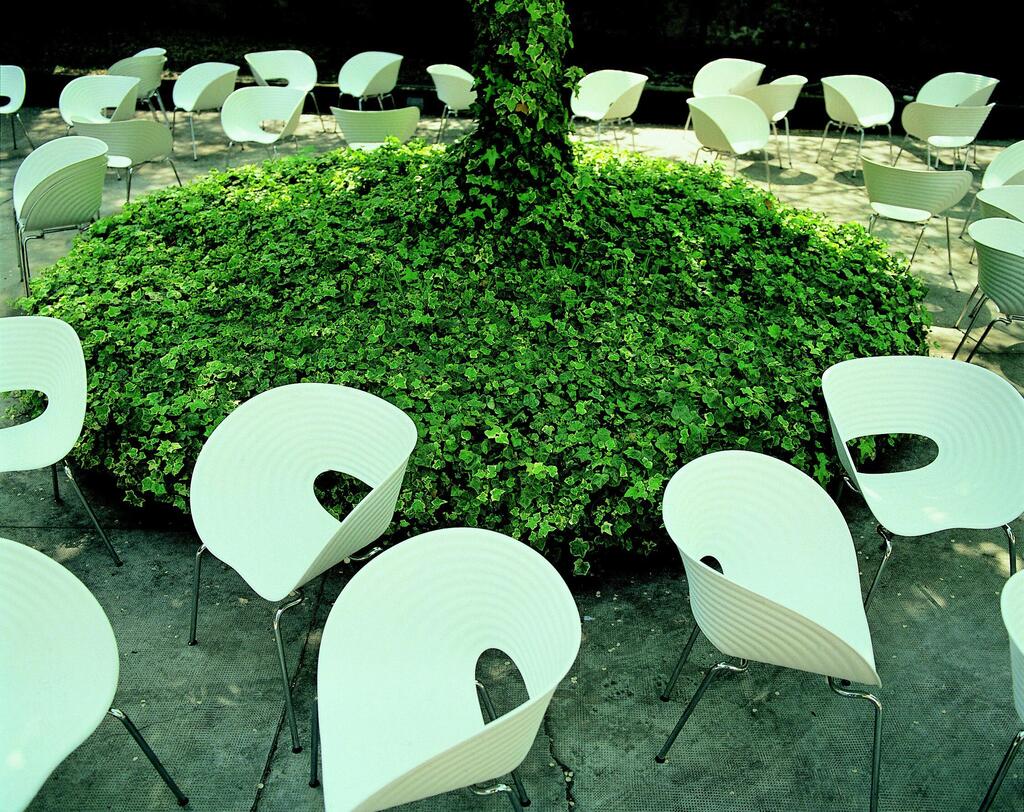
Tom Vac, Vitra, 1997
(Photo: Ron Arad and Associates Limited)
Although he has lived and worked in London for more than five decades, Arad maintains close professional and creative ties with Israel and continues to divide his time between Tel Aviv and London through various projects.
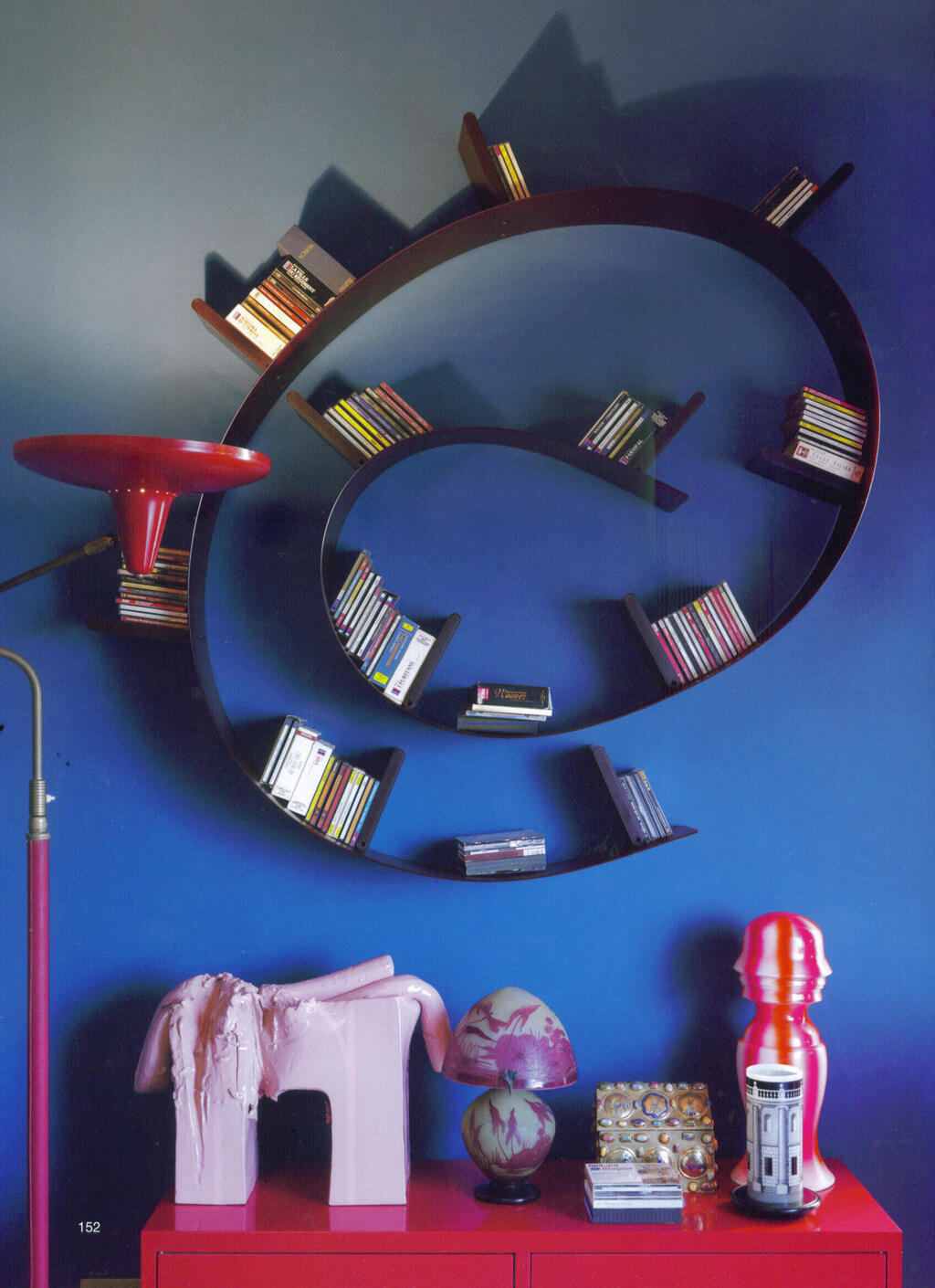
Bookworm bookshelf, designed for Kartell in 1993
(Photo: KARTELL)
His Israeli identity, he says, remains an integral part of who he is.
“You have to understand that every person is captive to the place where they were born and raised, to the language they grew up speaking and to their time,” he said. “I was born in Tel Aviv and thought it was the center of the world. Growing up, I never imagined I would pack up and leave Israel. But I simply found myself in London, and for the past 53 years, I’ve been here.”
A career driven by curiosity
Throughout his career, Arad has cultivated a distinctive creative language rooted in constant curiosity, material experimentation and unconventional — at times humorous — thinking.
Rather than adhering to clearly defined professional categories, he moves freely between disciplines, from furniture and functional objects to installations, spatial design and buildings, continually exploring the relationships between material, technology, movement and form.
His work combines craftsmanship with industrial production, technological innovation with bold formal experimentation, transforming everyday materials and familiar objects into works with a strong sculptural presence.
“Some artists do one thing their entire lives,” he said. “I jump from one interest to another. I’m driven by curiosity, and curiosity isn’t limited to a single field.”
That approach also inspired the title of his 2009 retrospective at New York’s Museum of Modern Art (MoMA), which later traveled to the Centre Pompidou in Paris.
“It was called No Discipline, partly because it reflects my character and perhaps also because I don’t have exclusive allegiance to any one discipline,” he said.
Architecture as experience
The same philosophy is evident in Arad’s architecture, where buildings are conceived not merely as functional shells but as three-dimensional works intended to evoke experience, movement and curiosity.
Among his earliest architectural projects in Israel was the design of the colonnade at Tel Aviv’s Performing Arts Center in 1994. The project most closely associated with him, however, is the Design Museum Holon, inaugurated in 2010 and widely regarded as one of the iconic buildings of contemporary Israeli architecture.
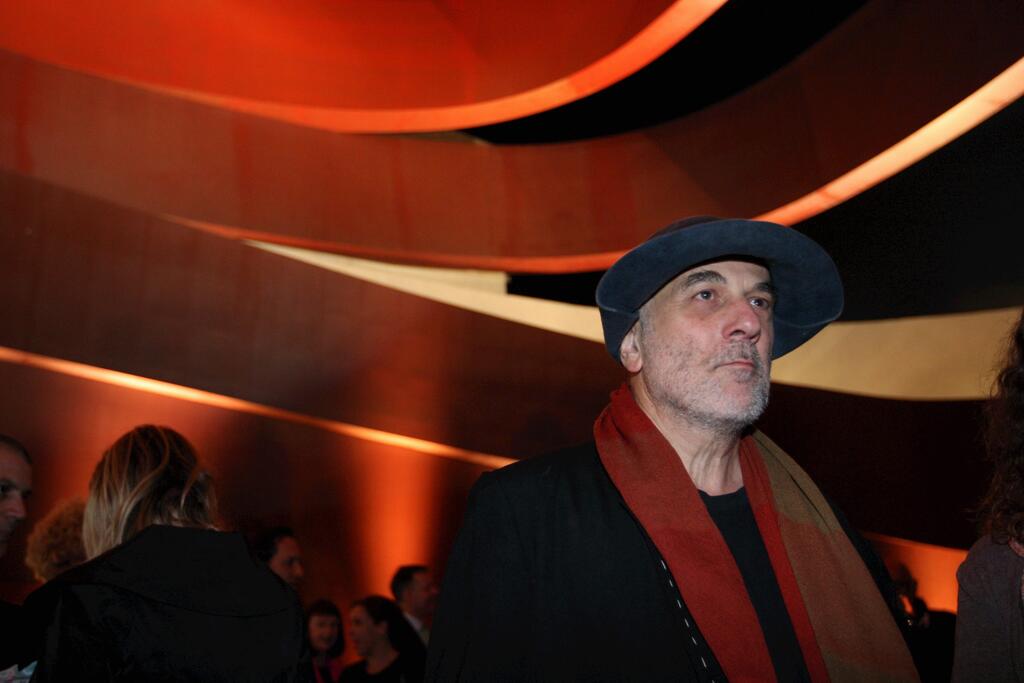
Ron Arad in the Design Museum Holon
(Photo: Amit Sha'al)
Wrapped in twisting bands of corten steel ranging in color from rust-red to orange-brown, the museum embodies Arad’s vision and demonstrates his ability to merge architecture, design and art into a single creation.
In 2013, Arad returned to the museum as an artist for “In Reverse,” a retrospective devoted to three decades of metal works. The exhibition explored the ongoing dialogue in his work between craftsmanship and digital manufacturing technologies, and between functional objects and sculptural pieces.
At its center were iconic works alongside new installations created specifically for the exhibition, including a series of crushed Fiat 500 cars transformed into artworks.
The exhibition reflected Arad’s belief that the act of display itself is an integral part of the creative process.
“I never liked the idea of a retrospective,” he said at the time, ahead of the exhibition’s opening, “mainly because I feel I’m only at the beginning of the journey.”
He added: “I wanted to design the exhibition itself as something that hadn’t existed before and that I hadn’t seen anywhere else.”
ToHa towers and major new projects
In recent years, Arad has continued to contribute to major architectural projects in Israel, including the ToHa towers on Totzeret Haaretz Street in Tel Aviv, designed in collaboration with architect Avner Yashar.
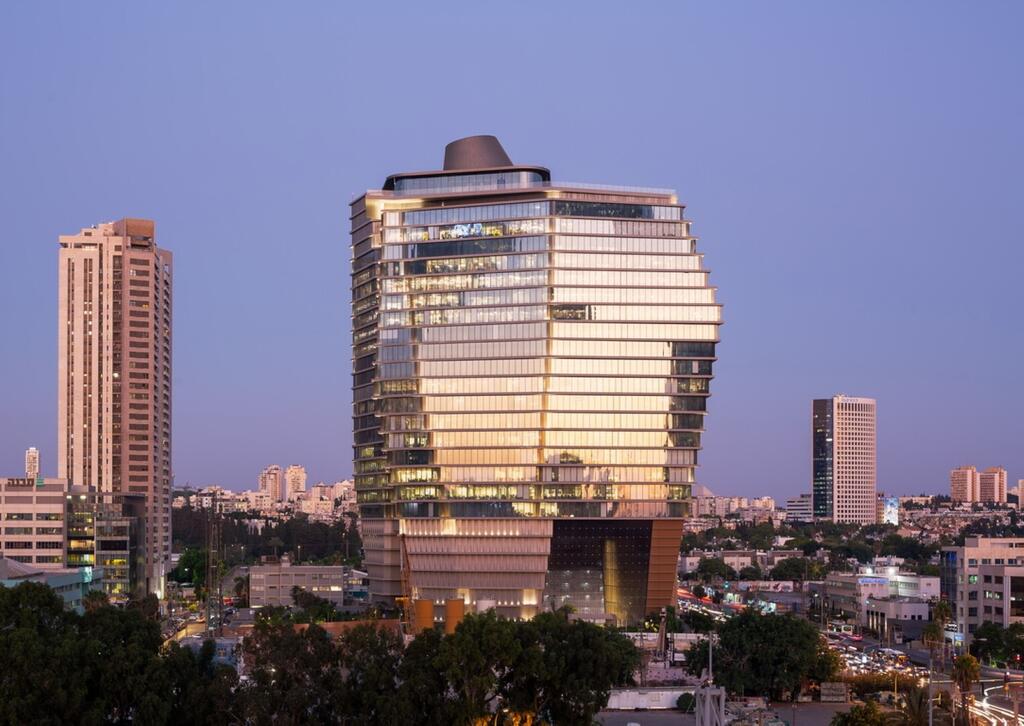
The first tower was completed in 2019
(Photo: Sharon Tzarfati)
The first tower was completed in 2019, while the second, ToHa 2, the taller of the two, is currently in advanced stages of construction. Both towers stand out on the Tel Aviv skyline for their sculptural form, inspired by the image of an iceberg, and their distinctive glass facades.
In 2021, the first ToHa tower was named the world’s best office building by the Council on Tall Buildings and Urban Habitat (CTBUH).
Cancer center in Afula, Holocaust memorial in Britain
One of Arad’s most notable recent projects is the design of Beit Shulamit, a cancer support and treatment center at Emek Medical Center in Afula, completed in 2025.
The facility serves a diverse population from the Galilee and northern Israel — Jews, Muslims, Christians and Druze, as well as residents of the West Bank — and reflects Arad’s belief that architecture also has a social and human role.
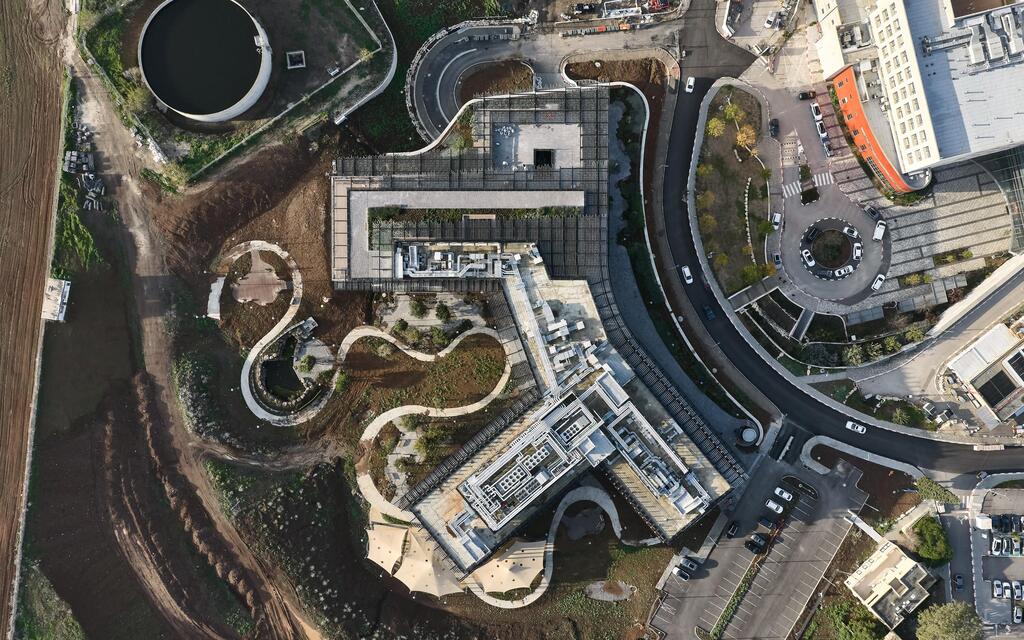
A cancer support and treatment center at Emek Medical Center in Afula
(Photo: Ron Arad Architects Ltd)
Rather than designing a purely functional medical facility, Arad sought to create a calming, welcoming and hopeful environment that fosters a sense of community and belonging for patients and their families during difficult periods of illness.
The project demonstrates how Arad’s design philosophy, typically associated with iconic buildings and sculptural objects, can also serve goals of healing, compassion and connection between communities.
The breadth of Arad’s work is equally evident in the public sphere. One example is Connection, a memorial erected in 2011 on the campus of Tel Aviv University in memory of approximately 4,000 Ethiopian Jews who died while making their way to Israel between 1979 and 1990.
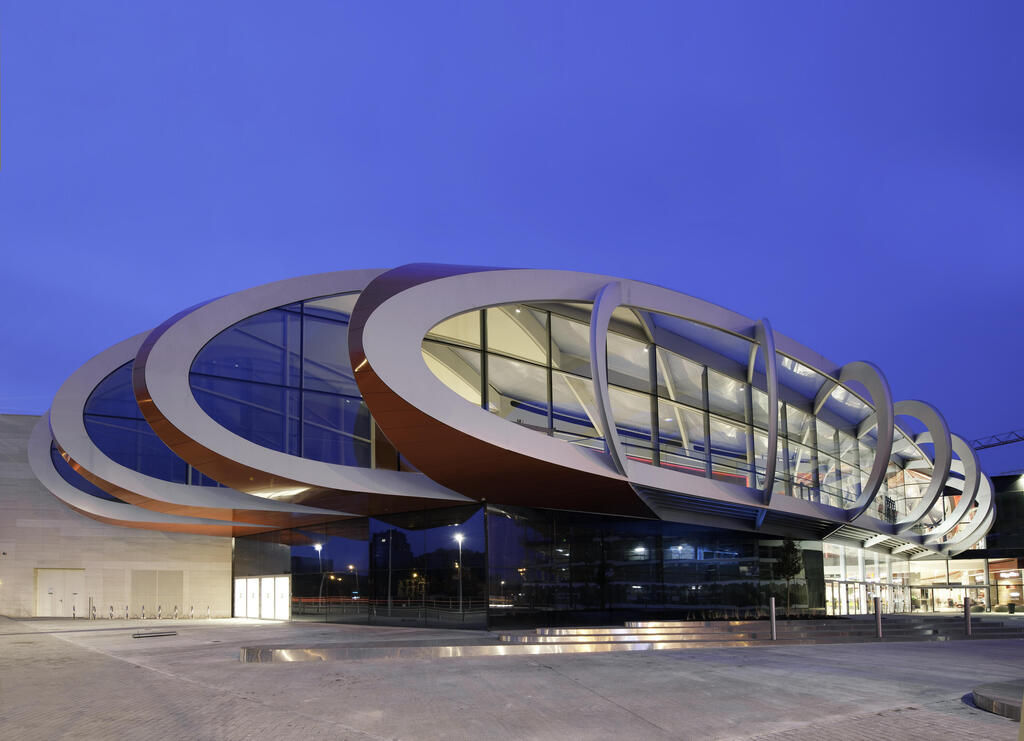
Mediacite, Liege, Belgium
(Photo: Marc Detiffe, Ron Arad Architects Ltd)
Made of twisting metal tubes wrapped around two palm trees and reconnecting at various points, the memorial uses dynamic form to express the story of journey, loss and hope experienced by the Beta Israel community.
Britain’s national Holocaust memorial
In 2017, Arad was selected to design the United Kingdom Holocaust Memorial, one of the most ambitious and sensitive memorial projects undertaken in Britain in recent decades.
The memorial, planned for Victoria Tower Gardens adjacent to the Palace of Westminster and the Houses of Parliament in London, will combine an underground learning center with a sculptural structure composed of 23 vertical bronze fins.
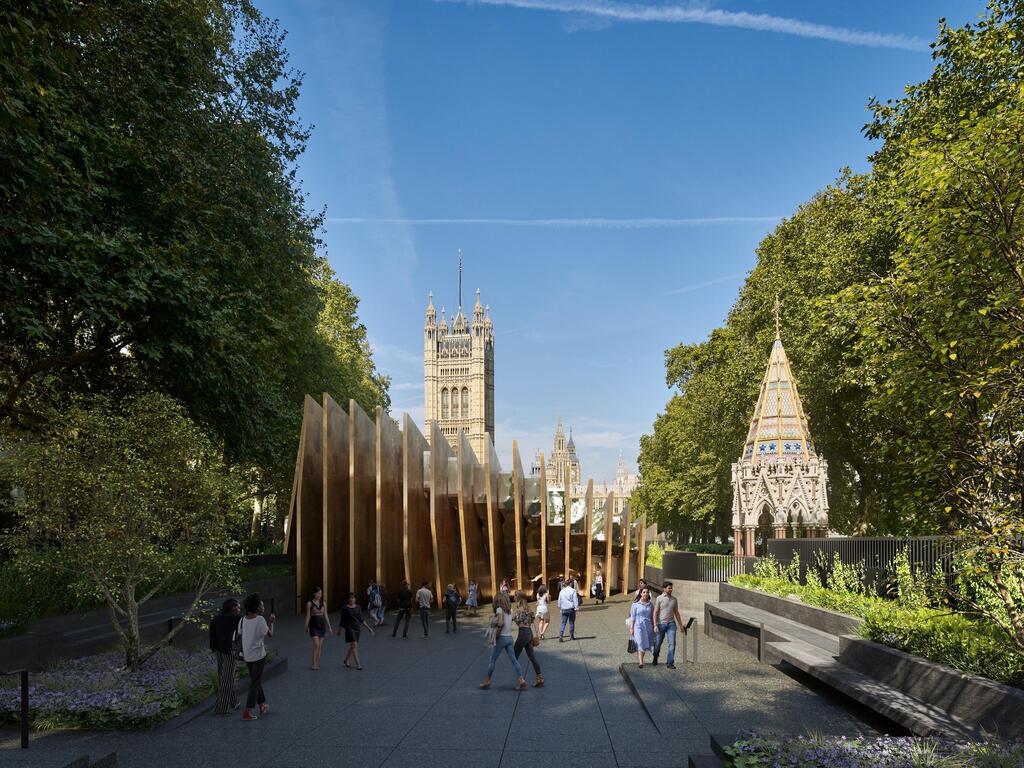
In 2017, Arad was selected to design the United Kingdom Holocaust Memorial
(Photo: Ron Arad Architects Ltd)
The narrow spaces between them symbolize the 22 countries in which Jewish communities were destroyed during the Holocaust, guiding visitors into a space for reflection and learning.
As with many of Arad’s commemorative works, memory is expressed not through a static monument alone but through an emotional and spatial experience intended to evoke loss, remembrance and responsibility.
Its location beside the heart of British democracy underscores the connection between Holocaust remembrance and the continuing commitment to combating antisemitism, racism and hatred of others.