

Seven bidders gathered Tuesday morning at a boutique hotel in Manhattan, each armed with proof of substantial financial resources. To qualify for the auction, they had been required to deposit $750,000 in advance. The prize awaiting them was one of the most extraordinary properties in American real estate: a French-style castle with 127 rooms, grand staircases, landscaped gardens and reflecting pools, backed by more than a century of immense wealth, antisemitism, extravagant parties, political scandals and even an unsolved attempted murder.
By the end of the bidding, Oheka Castle on Long Island, New York, had found a buyer for $72 million, plus a buyer's premium. As recently as May, the property had been valued at $137 million. The auction company said more than 740 prospective buyers from around the world had explored purchasing the estate, but only seven ultimately participated.
Gallery
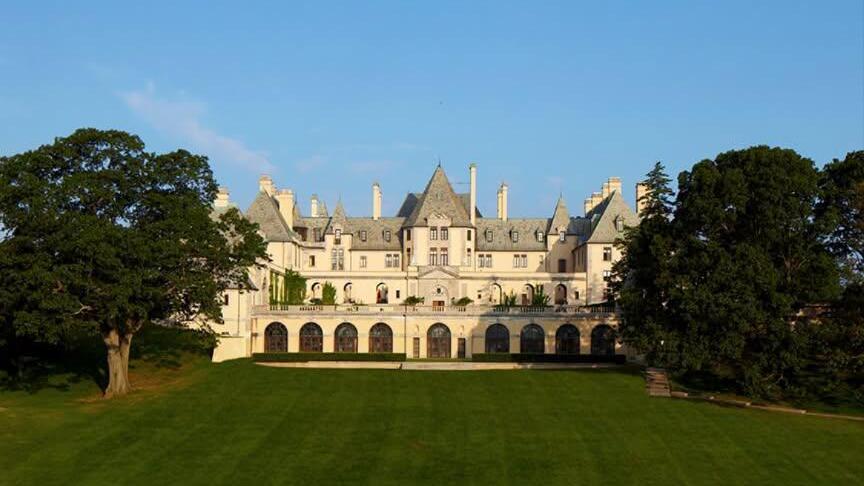
Oheka Castle, a French-style castle with 127 rooms, grand staircases, landscaped gardens and reflecting pools in New York, has found a buyer
(Photo: Oheka Castle)
The buyer's identity has not been disclosed. Those who expressed interest included real estate developers, hospitality professionals and collectors of luxury properties.
The seller was Gary Melius, a businessman who controlled the castle for more than four decades and transformed it into a luxury hotel and wedding venue. Last year, he sought bankruptcy protection after nearly a decade of efforts to prevent foreclosure.
"My debt is too big. I can't carry it. I have no choice," Melius admitted last month.
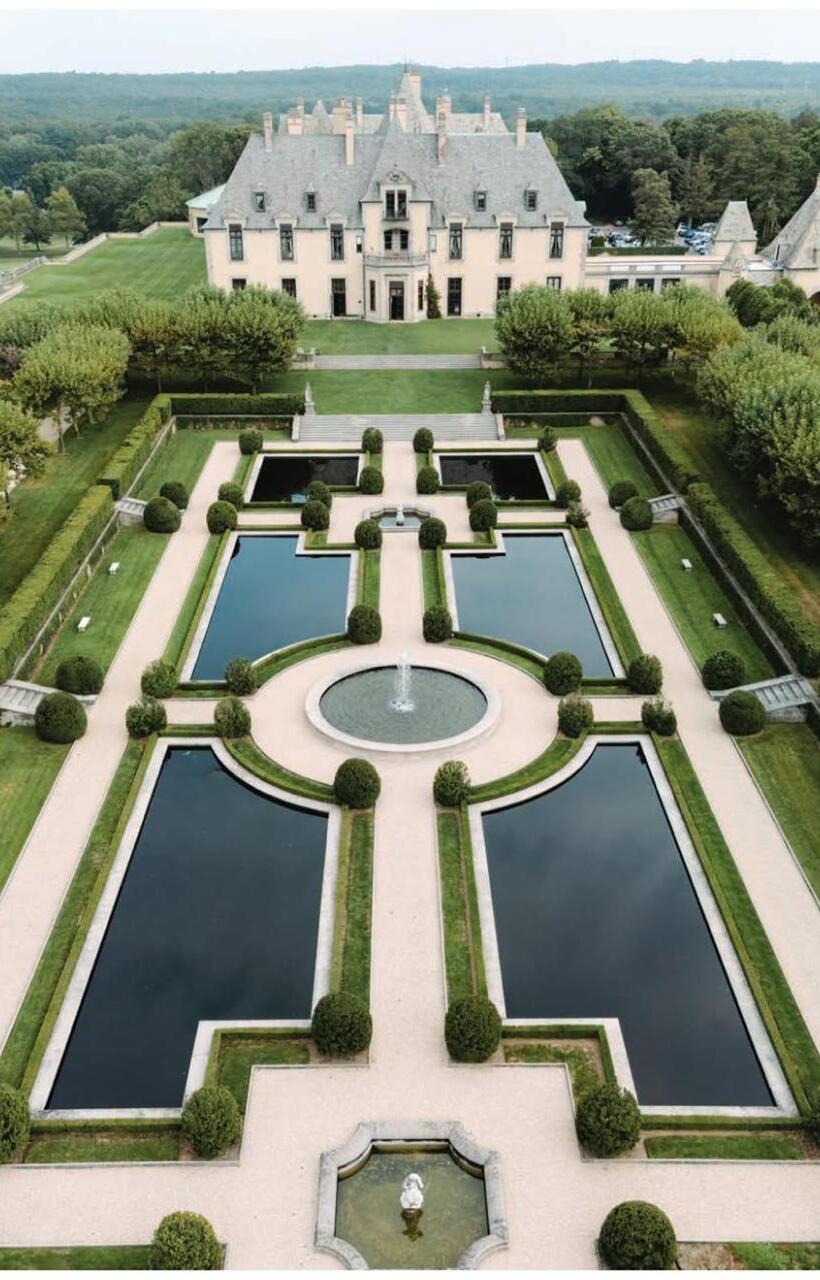
Oheka Castle
(Photo: Oheka Castle)
To understand how the castle reached this point, the story begins with a wealthy Jewish banker whom America's most exclusive clubs refused to admit.
The clubs wouldn't admit a Jew, so he built a castle
Otto Hermann Kahn was born in 1867 into a Jewish family in Mannheim, Germany. He immigrated to the United States and became a powerful investment banker, working on the restructuring of railroad companies and establishing himself as a major patron of music and the arts.
But his wealth did not guarantee him admission to the elite social and golf clubs near his home in New Jersey. Many of those institutions refused to accept Jews. Kahn could afford the lifestyle of America's upper class, but he was not always permitted to participate in it. Thus, the castle was more than an extravagant summer residence. It was also a personal response to the doors that had been closed to him.
Asked about his religious identity, Kahn explained that he had not grown up in an observant Jewish household, but emphasized: "I have never left Judaism, and I have no intention of doing so. Certainly not for a golf club."
After his New Jersey home burned down in 1905, Kahn purchased approximately 445 acres on Long Island's Gold Coast, where prominent New York families such as the Vanderbilts had built enormous summer estates. He also decided to create his own private golf course, allowing him to play without depending on membership in clubs that rejected him.
Between 1914 and 1919, the castle was constructed in the style of French palaces. Its name, Oheka, was formed from the opening letters of Otto Hermann Kahn's three names. Construction cost $11 million at the time, equivalent to hundreds of millions of dollars today.
The result was America's second-largest private residence, surpassed only by the Biltmore Estate in North Carolina, the 250-room palace built by the Vanderbilt family.
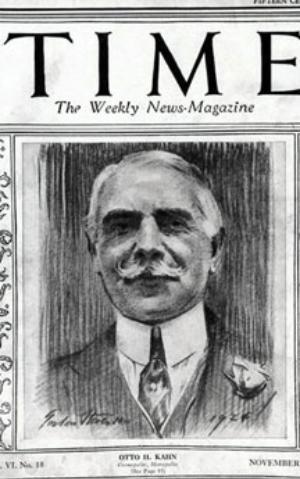
Otto Hermann Kahn on the cover of Time magazine
Oheka covered approximately 10,000 square meters, or 107,600 square feet, and contained 127 rooms, dozens of bathrooms and fireplaces, an indoor swimming pool, greenhouses, stables and an 18-hole golf course. An artificial hill was even constructed to improve the views.
The gardens were designed by the sons of Frederick Law Olmsted, the landscape architect behind New York's Central Park. They included reflecting pools, fountains and tree-lined avenues. The grand staircase was inspired by the Château de Fontainebleau in France. The estate also included numerous guest bedrooms so visitors could stay overnight, as well as service areas deliberately separated from the lavish entertaining spaces.
Elephants in the garden, 600 guests and secret passageways
During the 1920s, Kahn and his wife, Addie, entertained royalty, politicians and movie stars at parties attended by as many as 600 guests. More than 100 employees maintained the estate. Some events featured entire circuses, complete with elephants. Charlie Chaplin and Harpo Marx were among the guests, opera singer Enrico Caruso performed at the estate, and conductor Arturo Toscanini led musical performances in the library. Some visitors arrived via a private airstrip built on the property.
Kahn and his wife operated Oheka almost like a private royal court. During the day, guests could play golf or stroll through the gardens. In the evening, they attended elaborate dinners and performances alongside leading figures from business and the arts. To prevent guests from seeing servants carrying trays and equipment, a network of concealed passageways and tunnels was constructed. Kahn's wife referred to the castle's social scene as "the zoo."
In 1920, their daughter Maud was married at the estate in a ceremony documented in newsreels shown in movie theaters.
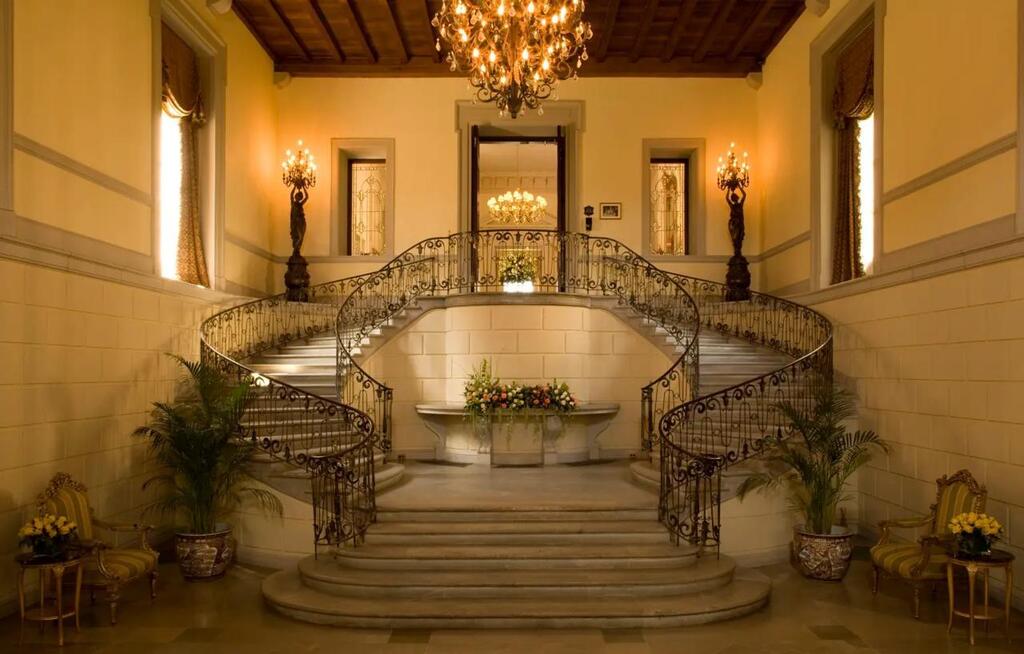
Inside the castle
(Photo: Oheka Castle)
Kahn was also among the founders of New York's Jewish Federation and supported numerous artists and cultural institutions. In his later years, he spoke out against the rise of Nazism in Germany. In 1933, the Nazis closed a library he had established in his hometown in memory of his father. Kahn died the following year, and his family sold the estate in 1939.
From a millionaire's palace to a retreat for sanitation workers
The castle initially became a vacation retreat for New York City sanitation workers, a transformation that would have been difficult to imagine during its years of royal and celebrity guests. It later served as a training facility for radio operators in the U.S. Merchant Marine. In 1948, the property was purchased by a private military academy, which operated there for more than 30 years. The academy divided rooms, painted over decorative wall features and destroyed the landscaped gardens. When it closed in 1979, the building was left abandoned.
Trespassers and vandals took over, and at least 100 attempted arson attacks were documented over the next five years. Fire protection measures installed by Kahn helped the structure survive, but windows were shattered, rooms were destroyed and water used to extinguish fires left mold throughout the building. One visitor compared the scene to a burned-out apartment building in one of New York's poorest neighborhoods.
In 1984, Melius purchased the castle and its remaining land for just $1.5 million. Over the following six months, approximately 300 truckloads of debris were removed from the property.
He invested around $40 million in restoration. Stone roof tiles were brought from the same Vermont quarry used during the original construction, hundreds of doors and windows were replaced, and the gardens were recreated according to their historical plans, complete with eight reflecting pools and three fountains.
The castle reopened as a boutique hotel, restaurant and event venue. It now has 34 guest rooms and suites and is listed on the U.S. National Register of Historic Places.
Taylor Swift, 'Citizen Kane' and a wedding officiated by Bill Clinton
Oheka Castle is widely regarded as an inspiration for Xanadu, the fictional estate in the classic film "Citizen Kane," and is also associated with the world of wealthy elites portrayed in "The Great Gatsby."
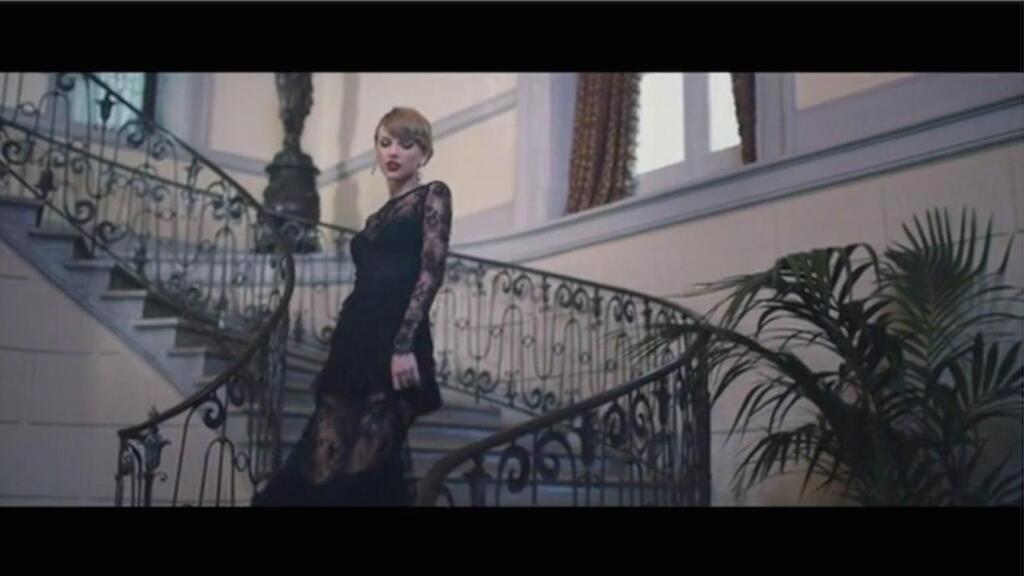
tailor swift baklip shetzulam betira 31 / 5,000 Taylor Swift in a music video filmed at the castle
(Photo: Screenshot)
In 2014, Taylor Swift filmed part of the music video for "Blank Space" at the estate. The property has also appeared in the television series "Gossip Girl," "The Americans" and "Succession," including the memorable "Boar on the Floor" humiliation-game scene.
Its weddings have made headlines of their own. Kevin Jonas, the eldest of the Jonas Brothers, married there in 2009 in a winter-forest-themed ceremony. Conservative television host and prominent Israel critic Megyn Kelly also exchanged vows at the castle, as did NSYNC member Joey Fatone.
In 2010, Democratic congressman Anthony Weiner married Huma Abedin, a close aide to Hillary Clinton, at Oheka. The celebration was a display of the couple's connections to the highest levels of the Democratic Party, with former President Bill Clinton officiating the ceremony. Weiner later became embroiled in scandals involving sexually explicit messages. His political career collapsed, and he was ultimately imprisoned.
Castle's owner was shot in head, but gunman was never caught
Melius was more than a hotel owner. He became a well-connected figure in Long Island politics, donating to both major parties and hosting political fundraisers and poker games attended by business executives and public officials. Jay Jacobs, chairman of the New York State Democratic Party, compared visiting the castle to entering the Oval Office at the White House.
On February 24, 2014, shortly after noon, Melius got into his Mercedes in the castle's parking lot. A masked man wearing a hooded sweatshirt approached and fired through the driver's-side window. A bullet struck Melius in the head near his temple. He was 69 at the time.
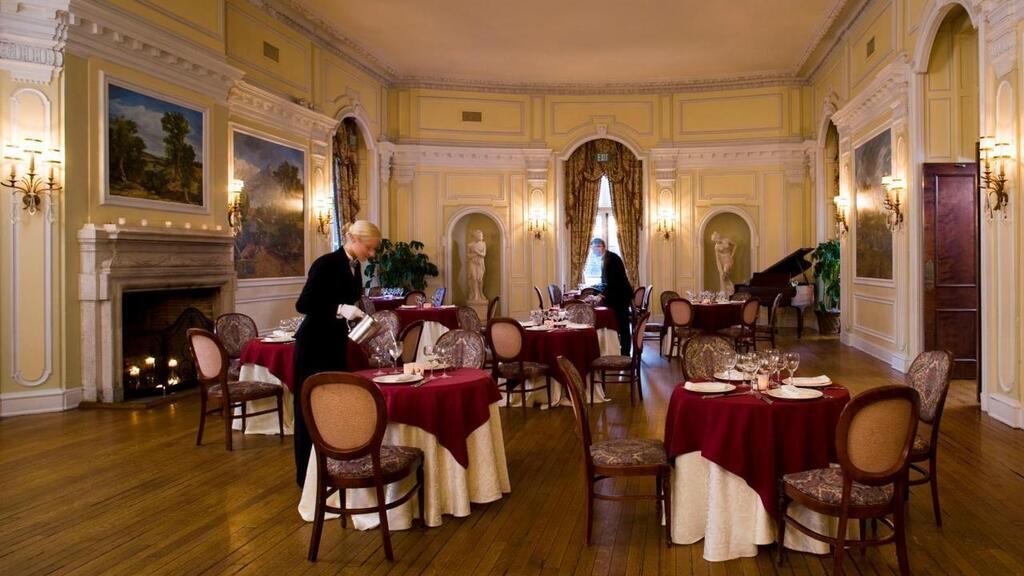
Hotel dining room in the castle
(Photo: Oheka Castle)
Melius survived, and security cameras captured the attacker fleeing in an SUV. Police released the footage, and the FBI joined the investigation, but no one was arrested. More than 12 years later, the attempted assassination remains unsolved. A family member rushed Melius to the hospital. He subsequently offered a $100,000 reward for information leading to the case being solved.
Although the shooting occurred in broad daylight, near a building where major events were held and politicians regularly gathered, the gunman's identity and motive have never been established.
The castle was valued at $137 million, but its debts became overwhelming
Over the years, Melius attempted to finance the property's upkeep through plans to build luxury apartments on portions of the estate. Various proposals stalled, however, while the debt continued to grow. According to court documents, the amount owed to the principal secured creditor reached approximately $60 million, with another $10 million owed to other creditors and for professional and legal expenses.
In 2025, the company that owned the castle filed for bankruptcy protection to halt foreclosure proceedings. Melius was living on the property at the time, and the legal process forced him to relinquish not only the business he operated but also the home in which he lived. The court ultimately ordered the property sold.
Of the original estate, which covered approximately 445 acres, only about 21 to 23 acres remain today. In 2023, a plan was approved to construct a four-story building containing 95 luxury apartments on approximately 1.2 acres of that land. Starting prices of around $1.8 million per apartment were discussed.
In the May valuation, $92 million was attributed to the castle and its grounds, with another $45 million assigned to the land designated for development. According to the projections, selling all the apartments could generate approximately $320 million before construction and development costs. However, the project still requires additional approvals, and nearby residents are concerned about the impact on the neighborhood's character and the additional traffic generated by dozens of new apartments.
For the buyer, therefore, the tens of millions of dollars attributed to the development land do not represent guaranteed income. The final sale price of $72 million, plus the buyer's premium, represents a substantial discount from the valuation established by appraisers just months earlier.
Yet without knowing the buyer's identity or financing arrangements, it remains unclear what the new owner intends to do with the property. The buyer could continue operating the hotel and event venue, pursue the residential development plan or combine the two.
Even if the new owner decides to turn the castle into a private residence, that cannot happen immediately. Under the terms of the sale, the buyer is required to honor every wedding already booked at Oheka Castle through March 31, 2028.
The identity of the person who paid tens of millions of dollars for the castle remains a secret. But the property's event calendar is already booked well into the future.