

Even in New York’s notoriously wild real estate market, it is not every day that a house once occupied by a future president, four refugees and dozens of stray cats changes hands.
The Jamaica Estates, Queens, home where Donald Trump spent the first four years of his life sold this week for $1.93 million. Just last year, it changed hands for $835,000 while abandoned, mold-ridden and uninhabitable. Today it has a chef’s kitchen, herringbone wood floors and spa-like bathrooms.
Gallery
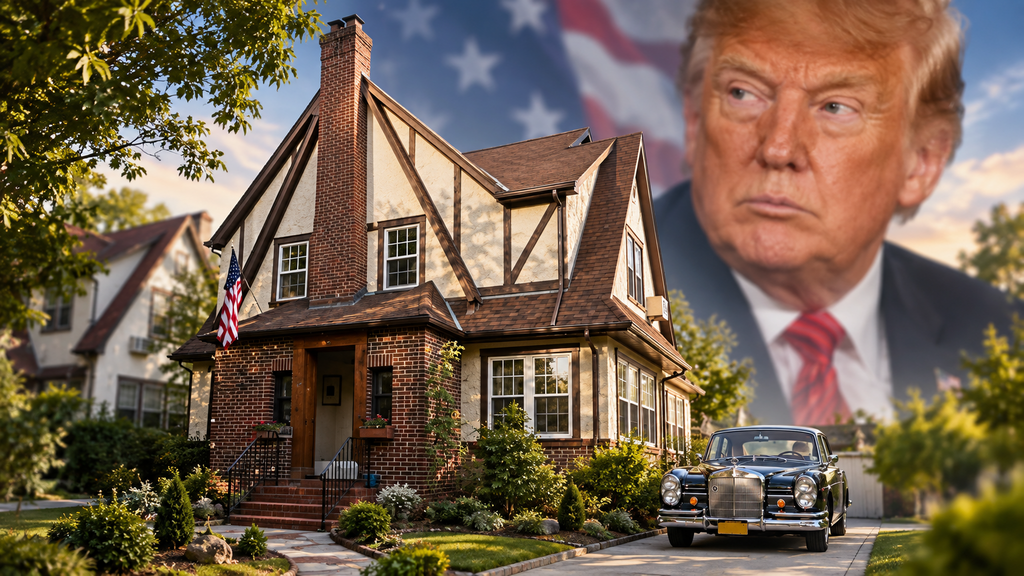
Trump’s childhood home, modest by the family’s standards
(Photo: AP/ Julia Demaree Nikhinson, Airbnb)
The Tudor-style brick and stucco house, with its steep gabled facade, was built in 1940 by Trump’s father, real estate developer Fred Trump. Measuring about 288 square meters, it has five bedrooms, three full bathrooms and two additional half-baths.
Brooklyn developer Tommy Lin said he invested about $500,000 and eight months in a comprehensive renovation. Nearly the entire interior was replaced, although the Tudor facade and a sunroom with an old wood-burning stove were preserved. Before the work began, the house had neither running water nor electricity.
The buyer fell for the renovation
Lin bought the property in early 2025 in an off-market private deal and listed it again in November for $2.3 million.
After several price cuts, the asking price was reduced to $1,999,999, deliberately one dollar below the psychological $2 million threshold. The buyer entered contract in July, and the deal closed on September 10 for $70,000 less.
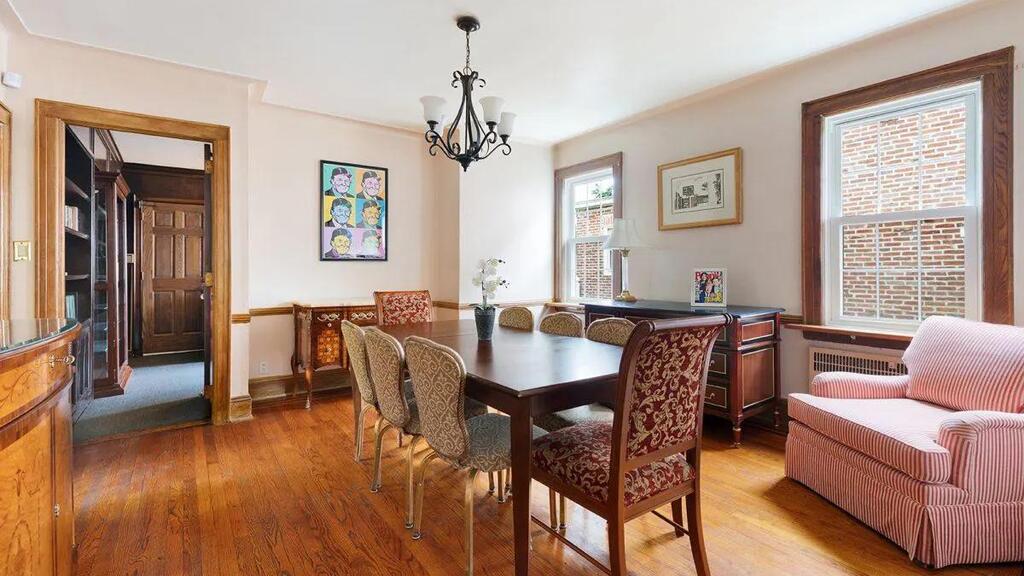
The dining room and living room
(Photo: Airbnb)
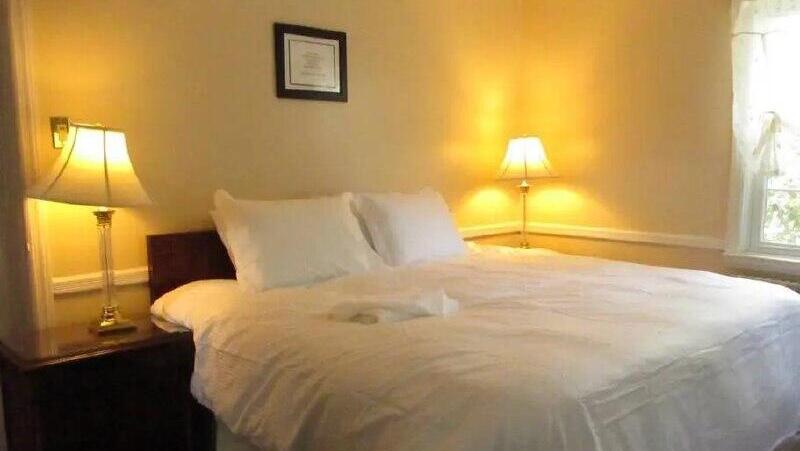
The president’s childhood bed
(Photo: Airbnb)
The buyer’s identity has not been disclosed. His broker said he plans to live in the house long term.
Many potential buyers were attracted by the Trump connection. The listing described the property as a “true legacy property” and a “rare and extraordinary opportunity.” But according to the broker, the eventual buyer fell for the renovation rather than the politics.
The difference between Lin’s $835,000 purchase price and the $1.93 million sale was $1.095 million, seemingly a spectacular return after roughly a year and a half.
But after subtracting the roughly $500,000 renovation cost, about $595,000 remains, even before interest, taxes, commissions and carrying costs. The sale also closed $370,000 below Lin’s original asking price and $210,000 below what the same house sold for in 2017.
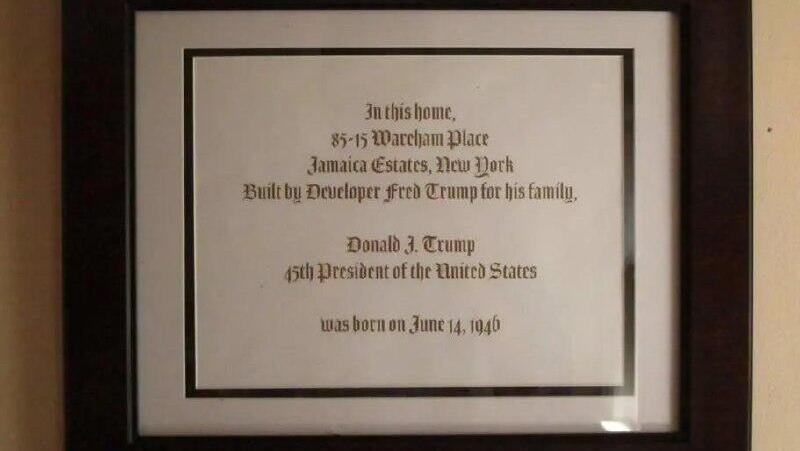
Trump was born in June 1946 at nearby Jamaica Hospital, but the Wareham Place address appears on his birth certificate. He was the fourth of Fred and Mary Trump’s five children.
In 1950, when Donald was 4, his father moved the family into a 23-room brick mansion he built just beyond the backyard on Midland Parkway. Trump lived there until age 13, when he was sent to the New York Military Academy.
(Photo: Airbnb)
His first home is modest compared with the image of wealth Trump later cultivated, but it stands in one of Queens’ most affluent enclaves.
Jamaica Estates was planned in the early 20th century as a suburb within the city, with detached homes, large lots, winding streets and mature trees. Street names including Avon, Kent, Wexford and Tudor were chosen to reinforce its English character, while a stone gatehouse erected at the entrance still stands today.
Around 1,800 families now live in the neighborhood, which retains a quiet, leafy feel despite being a short distance from the final stop of the F subway line. In 2015, Trump called it an “oasis” in Queens.
The nearly $2 million price tag may sound extraordinary outside New York, but in Jamaica Estates it is relatively standard for a large, renovated detached house. At sought-after Manhattan addresses, the same sum might buy little more than a one-bedroom apartment, while in popular Brooklyn neighborhoods such as Williamsburg it falls within the ordinary range for smaller but desirable apartments.
In Queens, the buyer got nearly 300 square meters, five bedrooms and a green yard.
A property that traded like Trump stock
The house began behaving almost like a Trump stock on election night in 2016.
Real estate investor Michael Davis agreed to buy it without ever visiting the property and paid $1.3905 million that December. A few months later, after Trump’s inauguration, Davis sold it at auction for $2.14 million to a company with the not-so-mysterious name Trump Birth House LLC.
בית ילדותו של טראמפ
(Photo: Airbnb)
(Photo: Airbnb)
Chinese investors were behind the company, although their full identities were not disclosed.
Davis later said he had expected to make perhaps $100,000. Instead, the gap between his purchase and sale prices was nearly $750,000 before expenses.
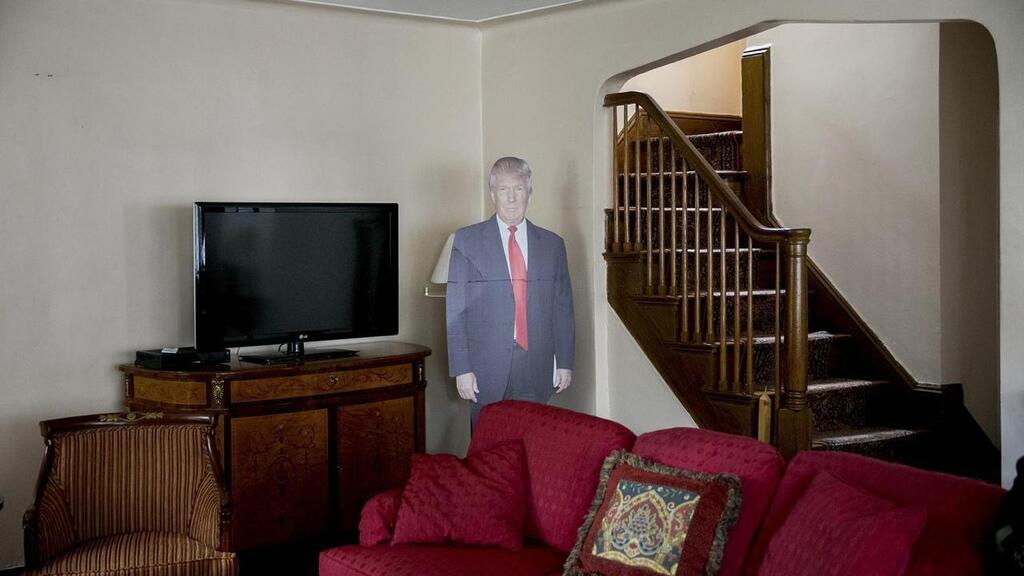
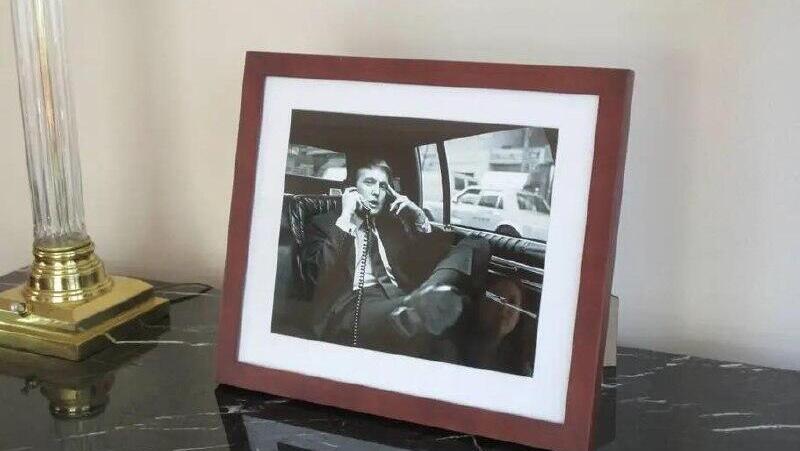
Soon afterward, the property became a presidential-themed Airbnb renting for $725 a night. It could accommodate as many as 20 guests and was furnished with items from the Waldorf Astoria hotel.
A life-size cardboard cutout of Trump stood in the living room, advertised as “a great companion for watching Fox News late into the night.”
Copies of The Art of the Deal, a framed People magazine cover and signs marking the young president’s bedroom were scattered around the house. Above another bed hung a framed note saying it was there that Mary and Fred Trump “likely conceived their son, Donald.”
In September 2017, aid organization Oxfam rented the house and invited four refugees from Syria, Somalia and Vietnam to stay there in protest of Trump’s immigration policies during the United Nations General Assembly.
The property stopped hosting tourists after that event.
Burst pipes, mold and 30 stray cats
In 2019, the owners tried to sell the house for $2.9 million, but several auctions failed.
Then the property began to deteriorate.
A pipe burst. Mold spread through the house. The front door was broken open and weeds took over the yard.
Eventually, a colony of about 30 stray cats moved in. Volunteers who fed them even posted a sign asking visitors not to steal the kittens.
One neighbor said water from the burst pipe reached her basement. Others complained about the smell of cat urine, uninvited visitors and attempted break-ins.
By the end of 2024, it was difficult to reconcile the famous presidential backstory with a property that could still command more than $2 million.
The renovation erased the Trump memorabilia from the interior. The new buyer received a move-in-ready home and an address that cannot be replicated, but not a museum.
Trump, now 80, is occupied with a construction project on a very different scale: the ballroom being built at the White House spans about 8,360 square meters.
That is enough space to fit nearly 29 copies of the house where his life began, with no need to remove the cats first.