


Three hundred acres, a private artificial lake stocked with fish, endless hiking trails, a luxurious pool and, above all, a sprawling, one-of-a-kind estate. That is what $300 million can buy in the exclusive ski town of Aspen, Colorado.
The sellers are billionaire philanthropists Stewart and Lynda Resnick, who made their fortune in agriculture and are well known in Israel for their major donations to the Technion, Reichman University in Herzliya, the National Library in Jerusalem and many other institutions. Why do they sell? “Maintaining all these luxury properties is just too hard,” they say.
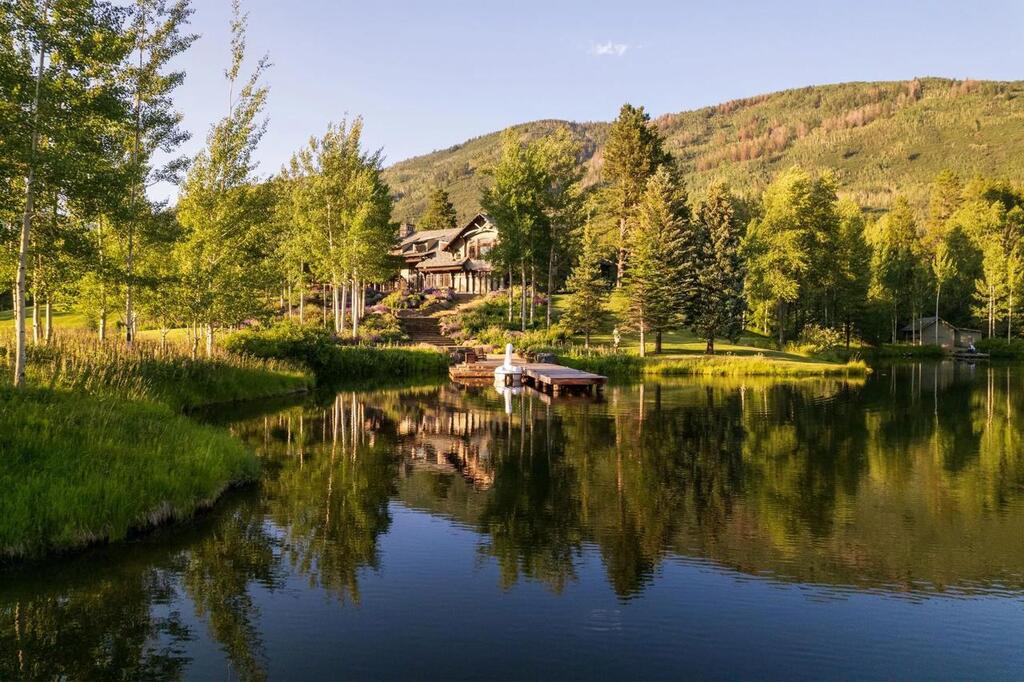
The home, now the most expensive listing in the United States, appears to have been drawn straight out of a Hollywood set. But its proprietors are an American Jewish couple who built an empire on pistachios, pomegranate juice and bottled water, while donating hundreds of millions of dollars to institutions in Israel.
This week, the Resnicks, Stewart, 88, and Lynda, 82, put their Aspen estate, Little Lake Lodge, on the market for $300 million. If it sells for the asking price, it will set a record for the most expensive residential property ever sold in the country. The current record was set in January 2019, when hedge fund manager Ken Griffin bought a penthouse at 220 Central Park South in Manhattan for about $238 million.
The Aspen property spans roughly 300 acres and includes a private lake stocked with trout and carp, plus a swan-shaped boat made for the grandchildren.
The grounds feature dozens of hiking and cross-country ski trails, as well as an infinity pool that blends into the mountain views. The main house covers some 18,500 square feet, with 30-foot ceilings, walls of local stone and a green slate stone roof chosen to camouflage the structure in the surrounding mountains after Lynda rejected the original red-roof design.
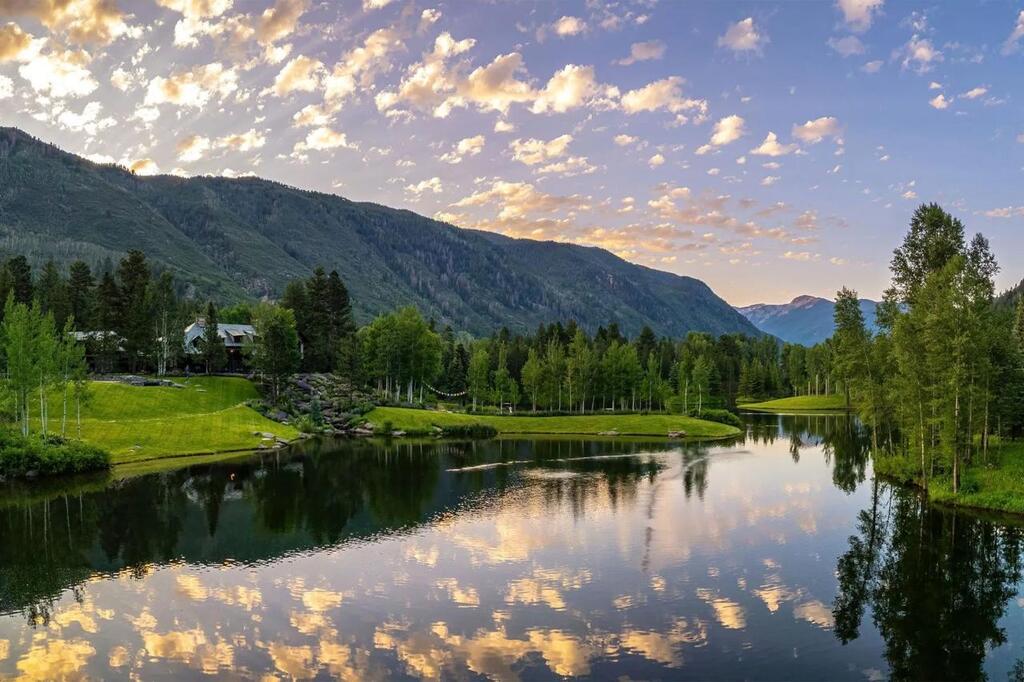
The Aspen property spans roughly 300 acres
(Photo: Sotheby’s International Realty)
The mansion was designed by architect Peter Dominick, known for the Grand Californian Hotel at Disneyland in California.
Lynda drew inspiration from the historic Ahwahnee Hotel in Yosemite National Park, a 1920s stone-and-timber landmark considered a classic example of rustic “parkitecture.” The result is a house that blends into the mountain landscape with stone walls and a dark roof that fades into the skyline.

The compound includes 18 bedrooms
(Photo: Sotheby’s International Realty)
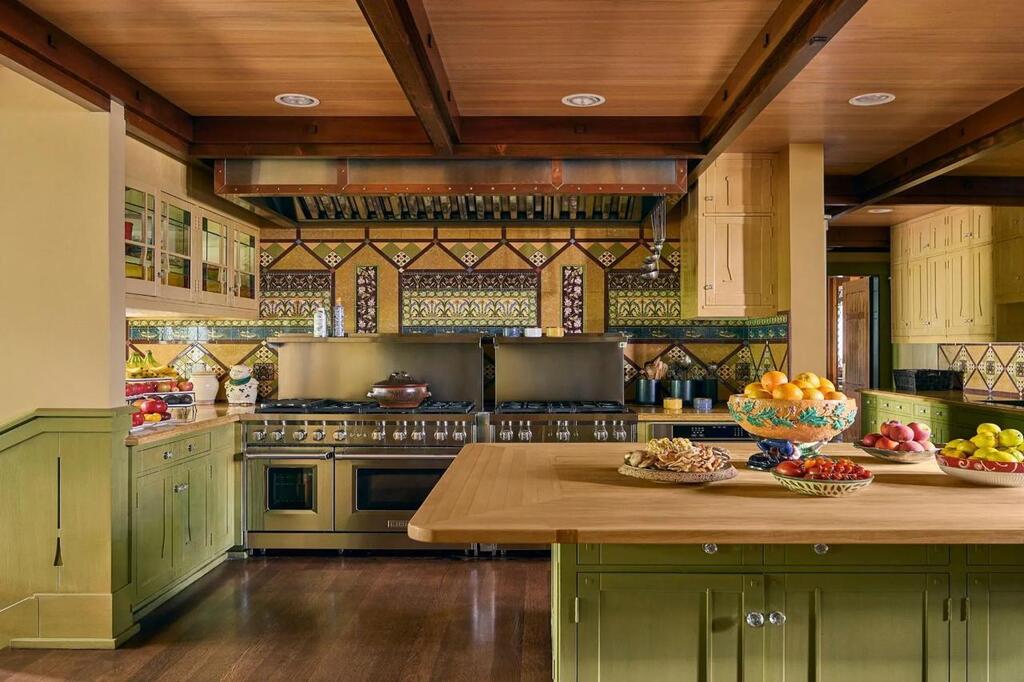
A spacious kitchen
(Photo: Sotheby’s International Realty)
Lynda enjoyed the construction process, unlike Stewart, who kept questioning the rising costs. Eventually, she barred him from the site, convinced that his “sour attitude” was lowering worker morale.
Inside, each of the 24 bathrooms carries its own theme - frogs, snakes, reptiles or a rubber duck collection. A family logo designed by Lynda adorns towels, bedding, dishes and stationery. A custom computer program was even developed to manage the estate’s stock of silverware and napkins for entertaining.
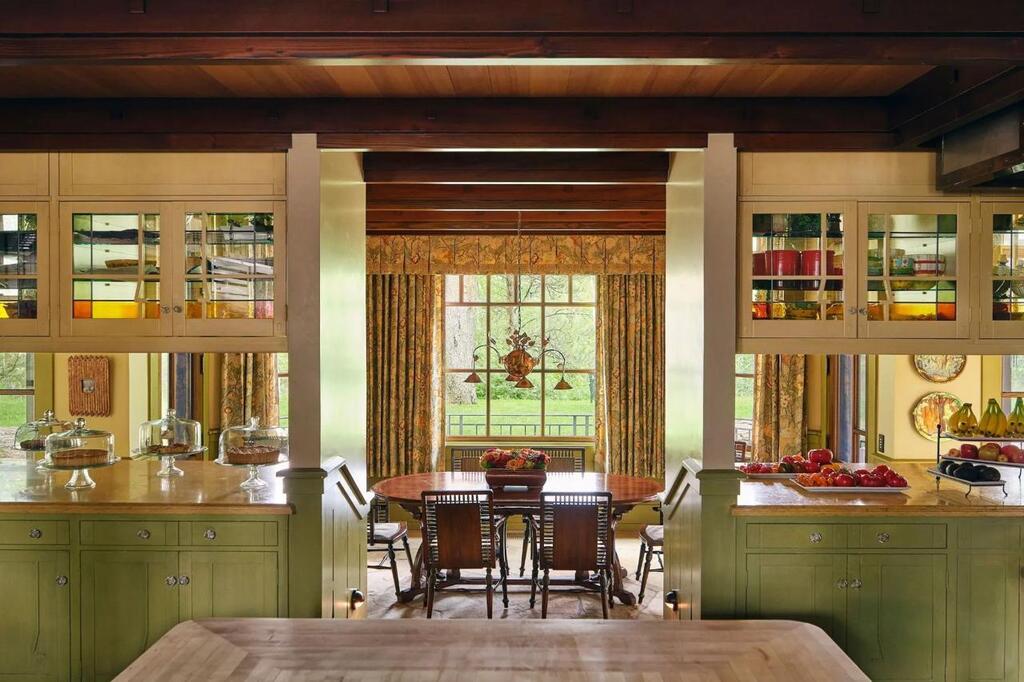
(Photo: Sotheby’s International Realty)
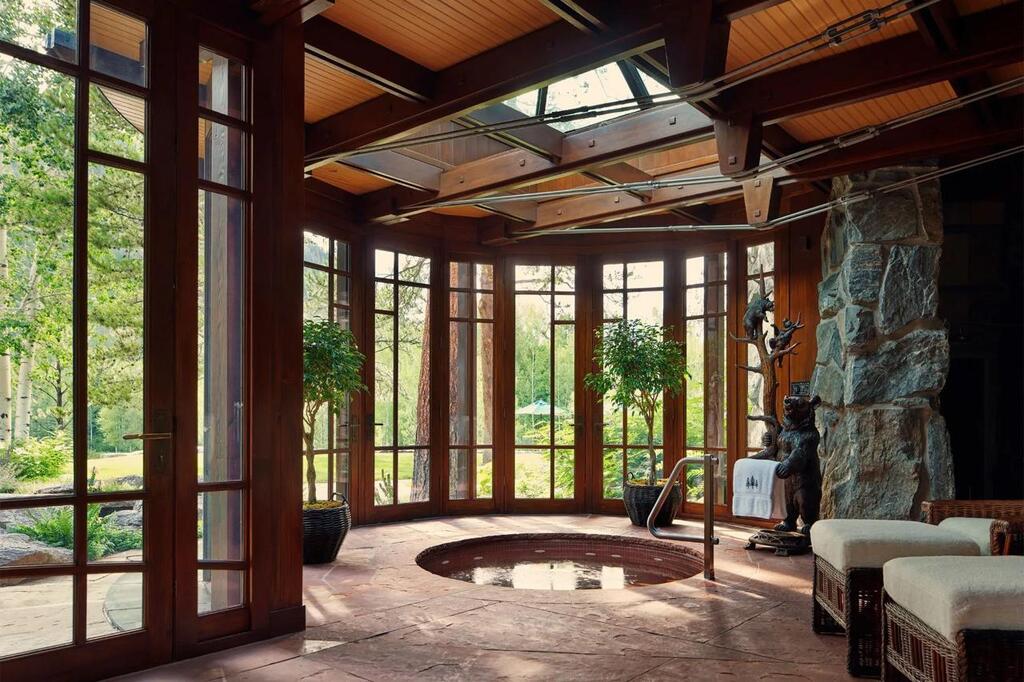
Inner pools and jacuzzi
(Photo: Sotheby’s International Realty)
The compound includes 18 bedrooms, a spa with saunas, hot and cold plunge pools, a jacuzzi, and an oxygen system to help acclimate to Aspen’s high altitude. Several guest cabins dot the property. Every piece of furniture, antique or modern, is included in the asking price.
A pilgrimage site for Jewish celebrities
Since the Resnicks bought it in the 1990s, the Aspen estate has become a magnet for prominent guests. Actress Diane Keaton, singer Barbra Streisand and Supreme Court Justice Ruth Bader Ginsburg were among those who attended parties hosted there by Lynda Resnick.
Now that the couple has completed a new mansion near Santa Barbara, they told The Wall Street Journal they are selling Little Lake Lodge because maintaining so many luxury properties is "just too hard."
Even in Aspen, where homes often sell for $50 million or $100 million, the $300 million asking price has raised eyebrows. Veteran real estate brokers in town describe the estate as a rare “unicorn” but say the valuation may be overly ambitious.
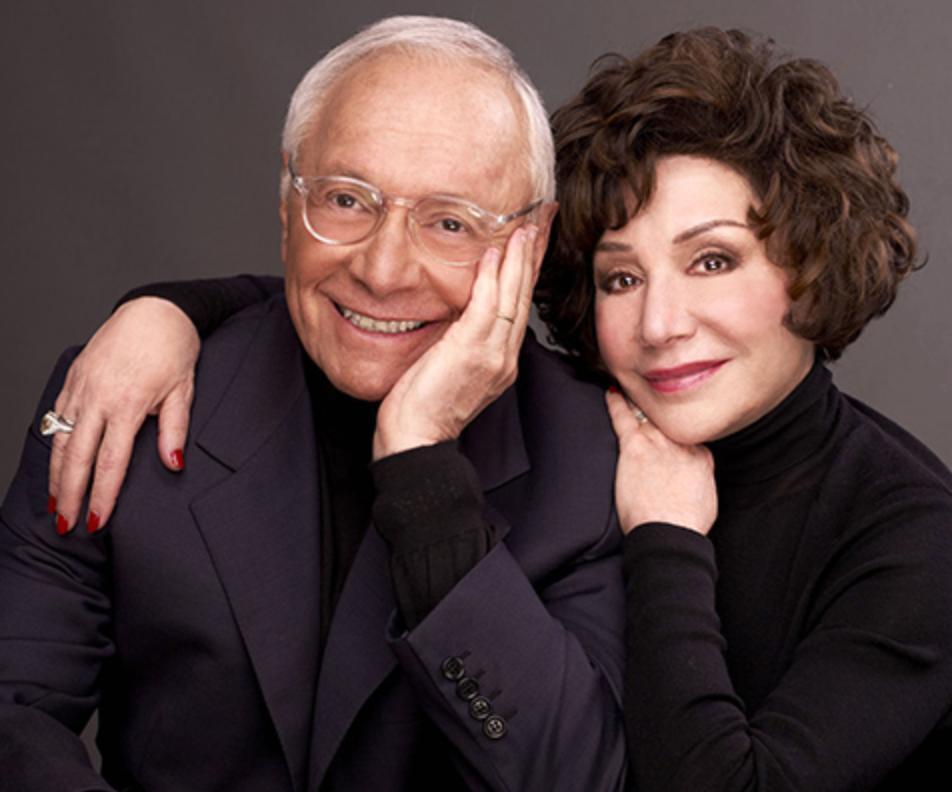
Lynda and Stewart Resnick. Deep ties to Israel
(Photo: The Wonderful Company)
The Resnicks are well known in Israel for their philanthropy. In 2022 alone, they gave $50 million to the Technion, Israel Institute of Technology. They have also supported Reichman University in Herzliya, where the president’s office bears their name, and the new National Library of Israel in Jerusalem, whose main entrance plaza is named for them.
Their $12 million contribution there funded collection acquisitions, educational programs and an international fellowship program. They have also been longtime donors to Friends of the Israel Defense Forces (FIDF), contributing hundreds of thousands of dollars each year.
In U.S. politics, they are among the Democratic Party’s biggest donors, giving millions to the campaigns of Barack Obama, Hillary Clinton and Joe Biden. At the same time, they have carefully maintained ties with political leaders in California, from Republican Gov. Arnold Schwarzenegger to the current governor, Democrat Gavin Newsom, a vocal critic of Donald Trump.
Stewart Resnick, born in 1936 to a Jewish family of Ukrainian descent in New Jersey, studied law at UCLA and sold a cleaning company he had founded while still in school. Lynda, born in 1943 to a well-known Jewish family in Baltimore, is the daughter of Jack Harris, producer of the cult classic film The Blob. At 19 she opened her own advertising agency. The two met in the 1970s and became partners in both business and life.
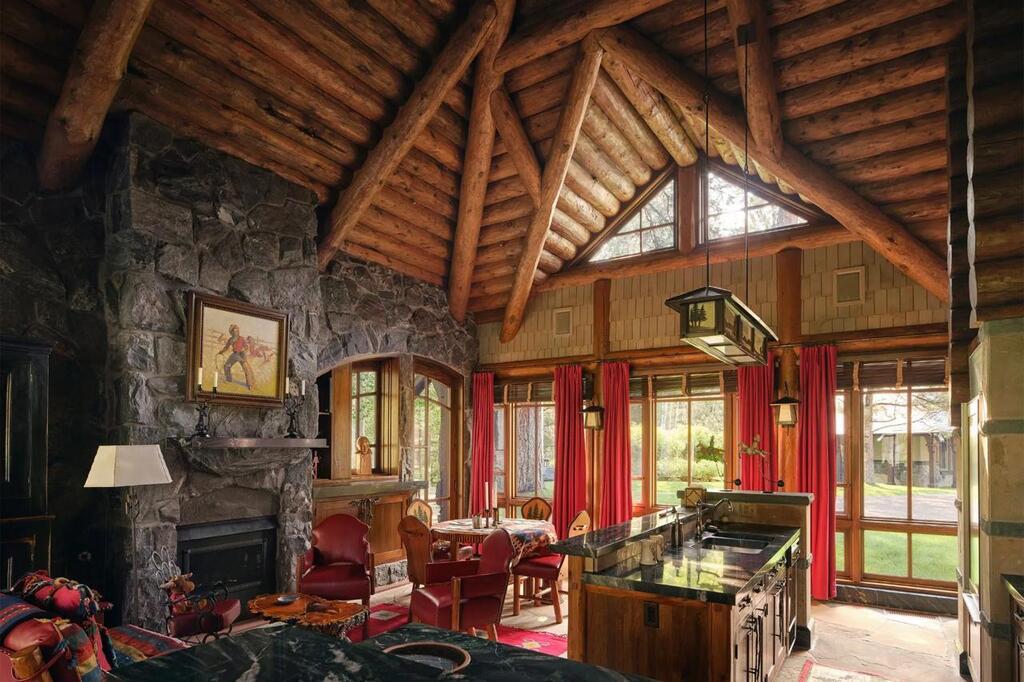
Stone and timber
(Photo: Sotheby’s International Realty)
Their first major success came with the purchase of Teleflora, the flower delivery company, followed by the purchase of Franklin Mint, which made collectible items.
They then shifted into agriculture, building an empire in California’s Central Valley under their parent company, The Wonderful Company. Its brands include POM Wonderful pomegranate juice, Wonderful Pistachios, Halos mandarins, Fiji Water and California vineyards.
With an estimated fortune exceeding $14 billion, the Resnicks are among America’s largest food producers. Forbes ranks Lynda as the fourth-richest self-made woman in the United States in 2025. Each of them holds a net worth of about $7 billion, placing them around 450th on the list of the world’s billionaires.
Exploiting natural sources?
But their success has not been without public criticism. Environmental activists have accused them of exploiting natural resources, pointing to their control of the massive Kern Water Bank in California, an underground reservoir capable of storing nearly 500 billion gallons. Critics argue that intensive almond and pomegranate farming, among the most water-intensive crops, clashes with the state’s years-long drought conditions.
These criticisms have grown louder amid California’s devastating wildfires and debates over water allocation for firefighting versus commercial needs.
The couple has also faced accusations in Fiji, where their bottled water brand is drawn from local sources. Activists there say large-scale pumping depletes the islands’ supply while many residents lack access to clean water.
The Resnicks counter that they have donated about $1.3 billion to environmental sustainability. In California, they invested heavily in Lost Hills, a town home to many of their employees, financing schools, a health center and housing. They have given hundreds of millions of dollars to universities and museums in the United States, including a record $750 million to Caltech for sustainability research.

Harrison Ford introduced Lynda to Aspen and fly-fishing
(Photo: Gettyimages)
The couple's center of life is in California, but their attachment to Aspen began with fly-fishing. In the late 1980s, Lynda visited actor Harrison Ford’s home in Jackson Hole, Wyoming. When the fish started biting, Ford bolted out the door shouting, “They’re rising!” A prominent lawyer stripped off his pants and leapt into the icy water so he wouldn’t miss his fishing chance.
Lynda, stunned by the sight of such accomplished men losing their composure over trout, decided she had to try fishing herself. She practiced casting rods into their swimming pool at their Beverly Hills home before she and Stewart began spending summers and holidays in Aspen to go fishing, which they jokingly called “camp for rich adults.”
In the early 1990s, they discovered the breathtaking parcel of land where Little Lake Lodge now stands. “I stood there and thought to myself, with a pang of guilt, 'Am I allowed to have something like this?'” Lynda recalled.
Three decades later, the property is home to their artificial lake, stocked with trout and carp. Yet Lynda has never fished in it. “They’re like pets now,” she said. Those fish, along with the sprawling estate, could soon belong to someone else if a buyer agrees to pay $300 million.