


When was the last time you heard of the United States formally objecting to the name of a local real estate project in Israel? A few months ago, a developer in Jerusalem’s Moradot Arnona neighborhood tried to brand a residential complex as “Consulate Residences,” but ran into sharp opposition from the US administration.
In an objection filed with the Jerusalem District Planning and Building Committee, the Americans argued that the plan’s name, “American Consulate Residences Arnona Jerusalem,” was misleading and created the impression that the world power had initiated the project or that it was intended to house members of its diplomatic staff. The committee ultimately ordered the developer to change the project’s name to “Diplomat Residences.”
Gallery
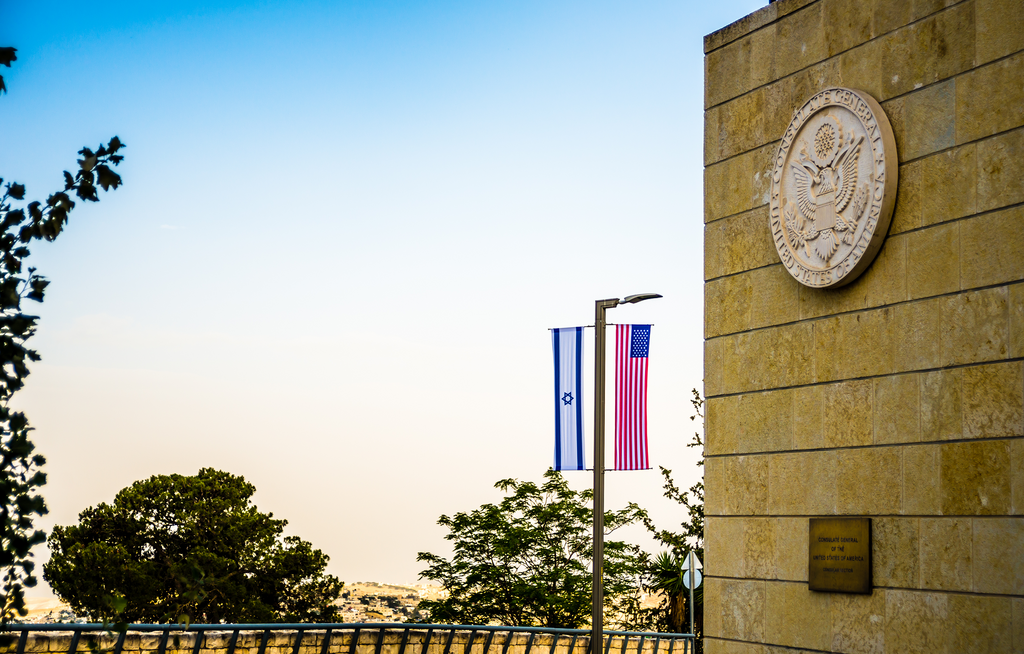
The US Embassy in Jerusalem. Opposed the nearby project’s name
(Photo: John Theodor / Shutterstock)
The unusual episode highlights the marketing value developers attach to proximity to embassies, treating it as a sales driver and a factor that can lift apartment values. “It is known worldwide that foreign embassies seek to locate their operations in the most prestigious areas of every capital city,” says real estate appraiser Ohad Danos, former chairman of the Real Estate Appraisers Association in Israel. “That is the case in Paris, London, New York, Tokyo and elsewhere.”
“When a developer is lucky enough to advance a project near an existing embassy, and usually these are already the best and most built-up areas of the city, he does not need to prove anything. He is building in a prestigious area, period,” Danos says.
“The more prominent the country behind the embassy is on the world stage, certainly when it is a major power, the prestige associated with the area rises significantly. The increase in value due to proximity to an embassy can reach as much as 20%.”
From Jerusalem to Tbilisi
That appraisal logic is reflected on the ground in strong demand. Nir Shmoul, CEO of the Snir real estate group, which markets apartments for developers in Israel and abroad, says that “in many countries around the world, we see a clear pattern: neighborhoods and districts near embassy compounds and diplomatic quarters enjoy steady real estate demand and higher property values compared with the surrounding area. This is mainly thanks to foreign investors and affluent residents seeking prestige and quality of life.”
Shmoul says several other factors indirectly contribute to rising values. “Local authorities usually maintain high standards of cleanliness, lighting, landscaping and roads,” he says. “Neighborhoods near embassies are also safer because of the increased security, which means less crime. In addition, demand for properties in these areas remains stable even during economic crises.”
Examples can be found around the world. In Washington, DC, Embassy Row is home to dozens of embassies and is known for luxury properties. In New Delhi, Vasant Vihar includes many foreign missions alongside affluent private residences. In London, Knightsbridge combines several embassies with proximity to commercial centers and developed infrastructure. In Tbilisi, Georgia, the Krtsanisi district, near the British, French, Lithuanian and Bulgarian embassies, attracts luxury projects and international investors.
Tal Avni, VP of investments at ZION, which specializes in residential projects in Georgia, markets apartments to Israeli investors in ZION EMBASSY, a luxury residential complex being built by Zion Group in Krtsanisi.
“The project, located near the embassies, includes five buildings of 5 to 7 floors, 265 apartments, a three-level underground parking lot, a gym, spa, swimming pool and 24/7 concierge services, in line with what is expected in the city’s prestigious location,” he says.
According to Avni, the project is located in a quiet, green area, near private and public educational institutions, kindergartens, medical centers, restaurants, cafés and shopping centers. The area also benefits from convenient transportation access and draws local and international investors.
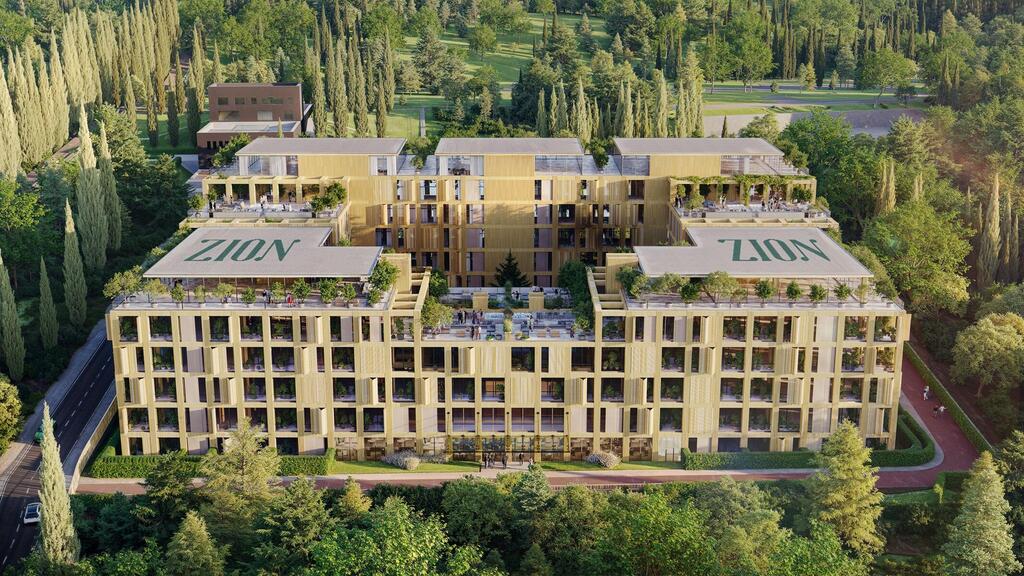
Near the British and French embassies. The ZION EMBASSY project in Tbilisi, Georgia
(Illustration: Render)
The US Embassy effect in Jerusalem
Back in Israel, the Israel Land Council this week approved the allocation of about 31 dunams of land to the US government for the construction of the permanent US Embassy compound in Jerusalem. The decision came three years after the plan for the diplomatic complex in the Arnona neighborhood was approved.
The move is based on an agreement between the Israeli and US governments dating back to 1989, previously approved under Council Decision 423, but never implemented until now.
“The relocation of the US Embassy to Jerusalem turns Moradot Arnona into a neighborhood with more prestigious housing and high appreciation potential, given the population expected to arrive because of the proximity to the embassy,” says Lee Rom Oknin, VP marketing at Sarfati Shimon Group, which is building the Luria project in the neighborhood.
“The project is being built in the upper part of the neighborhood, close to the embassy compound,” she says. “Immediate proximity to embassy buildings has an even greater effect, and plots in the project that are directly nearby are being planned accordingly, with terraced construction, large garden and rooftop apartments and especially high-end specifications, some of which will include swimming pools.”
 Lee Rom OkninPhoto: Tali Nachshon Dag
Oknin says the neighborhood’s elevated positioning is attracting buyers from a high socioeconomic profile. Buyers in the project are mainly families upgrading their homes from Jerusalem and the surrounding area, who want to live near a high-quality population. Alongside affluent local buyers, the project also attracts foreign residents, who the company says make up about 30% of its buyers.
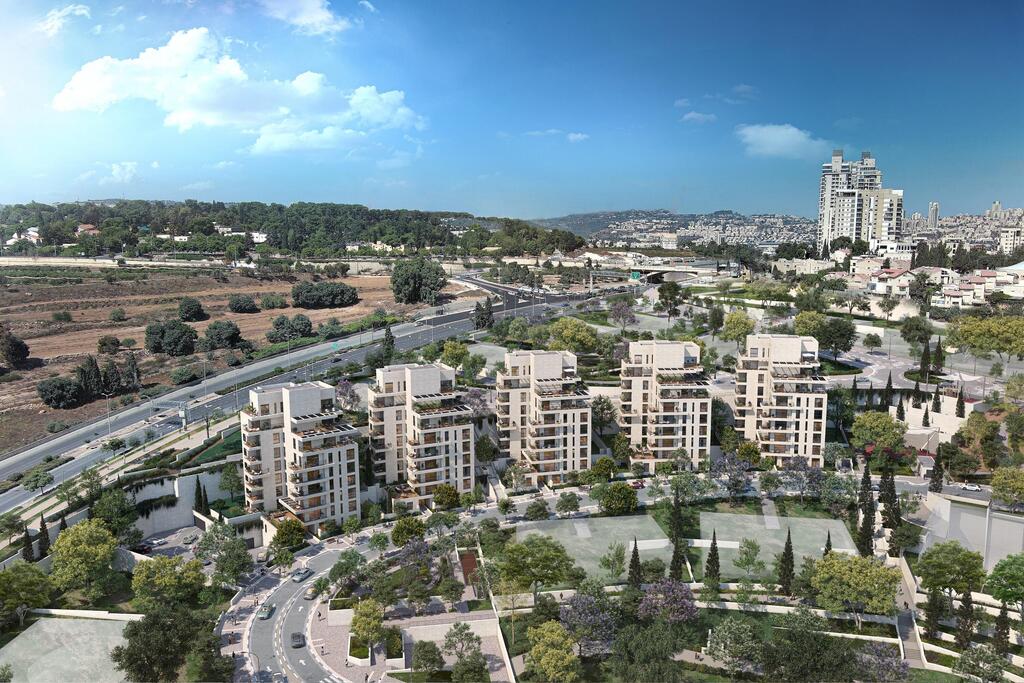
Immediate proximity to the embassy has a significant impact. The Luria project by Sarfati Shimon in Jerusalem’s Moradot Arnona neighborhood
(Illustration: Viewpoint)
“When that rare situation occurs, in which a new residential neighborhood is developed near an embassy, buying an apartment in the project is secure, in both senses of the word,” Danos says.
First, he says, security arrangements nearby raise the level of safety for neighborhood residents, especially after the embassy is occupied. Second, the prestige associated with diplomats arriving at the embassy every day, and the fact that some may prefer to live nearby, subject of course to security considerations, helps support strong rental demand at premium prices, sometimes above regular market levels, while also driving long-term appreciation as the area continues to develop.
The Emiratis are coming to Herzliya
Recently, ynet revealed that the Herzliya Pituach business district is expected to undergo a dramatic facelift, partly against the backdrop of the planned opening of the UAE Embassy. The change is expected alongside the expansion of Apple’s campus and the arrival of major players in the hotel and culinary sectors.
Danos says the new plan for the area, approved about two years ago, did not account for the future metro, which, together with the light rail, could allow a major expansion of land uses, including the addition of housing and long-term rental projects within the transit corridors around both systems.
He estimates that residential and rental construction rights are expected to increase. “Locating an embassy near the metro and light rail in Herzliya Pituach will be good for real estate values and will even bring additional businesses and professionals to the area,” he says. “Sale values will be high and will rise further.”
 Ohad DanosPhoto: Shahar Shirazi
Galei Techelet Street in Herzliya Pituach, considered Israel’s most expensive street and once home to the private residence of the US ambassador, has become a symbol of seafront luxury living among business figures and diplomats.
“An ambassador will live in the best possible location when money is not really a determining factor for the state,” Danos says. “The country will want to place its most senior representative in the most prestigious location, of course, subject to security considerations.”
In most cases, he says, the ambassador joins an already expensive and high-quality area, and only rarely does the reverse happen. “The country will always look for a developed, branded area, and this will usually be in a place that has been built up for many years and has the best reputation in the country,” Danos says.
“In this case, real estate prices are driven by the location itself: a highly prestigious coastal area with some of Israel’s most expensive villas. Thus, proximity to the ambassador’s residence does not really affect the price.”