

The Sigalovs live in a six-room villa in Daliyat al-Karmel with a rooftop overlooking the sea. Rent: 5,000 shekels.
Gallery
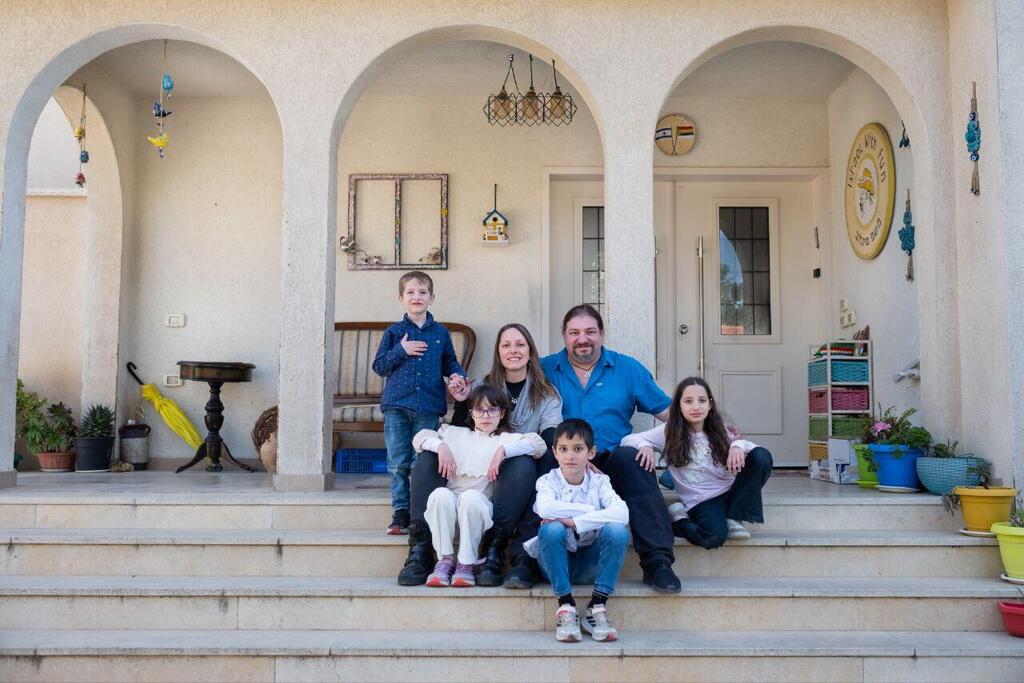
Sigalov family. Daniel (42), Evelin (40), Lavi (9), Tkhelet (9), Tiltan (7), Galil (5)
(Photo: Assi Haim)
How did you meet?
Daniel: “I was born in Leningrad to a Zionist family of refuseniks. My father was detained several times. They dreamed about Israel without even knowing what it looked like, and they left understanding they might never see their family again. Every Passover, after we read the Haggadah, we tell our own family’s personal Exodus story.”
Evelin: “I was born in East Germany. Everything there was gray, and the people were gray in their thinking too. I studied industrial engineering and management and was looking to do my internship abroad. By chance, I ended up in Israel. Daniel was the coordinator at the Technion. I fell in love with him, but also with the Israeli mentality. People are warm and curious, sometimes a bit too curious. I stayed, we got married and lived in downtown Haifa.”
Downtown Haifa?
Daniel: “I studied computer science at the Technion. Neither of us worked a single day in our field. Evelin worked at a travel agency thanks to her German and organized tours in Israel. I worked with the Jewish Agency’s Masa program. Downtown Haifa is lively, full of bars and nightlife. Life was sweet, but then we had twins and everything changed.
“Evelin started looking online for a slightly larger home. She dreamed of having a yard, something affordable that the family could realistically manage. One day, she said she had found a dream apartment in Haifa at a good price. When I looked, I saw it was actually in Isfiya. I told her: ‘Have you lost your mind? It’s a Druze village.’ She didn’t really understand what that meant, so I decided to take her to see the apartment so she’d understand why it wasn’t suitable.”
Isfiya?
Evelin: “We went to see the rental apartment, and they welcomed us with a table full of food and desserts. The people were wonderful and the view was incredible.”
Daniel: “She taught me a lesson. I wanted to show her why a Druze village wouldn’t work for us, but I ended up falling in love with the place and we signed the lease.”
Evelin: “The landlord was a kindergarten teacher. She also watched our kids and taught them Arabic.”
Daniel: “Today they speak Arabic, Hebrew, Russian, German and English.”
Evelin: “We decided to enroll them in the Druze education system because the kindergarten teachers were so caring and warm. Not long ago, we moved to a bigger house in Daliyat al-Karmel. We decided to settle here.”
Daliyat al-Karmel?
Evelin: “We’re part of the community here. The kids studied here until third grade, but we just transferred them to a regular school in Haifa because all the school WhatsApp messages were in Arabic and I couldn’t understand what my kids were learning. I also couldn’t help them with homework because everything was in Arabic, and I realized it was going to become a problem.”
Daniel: “It was also important for us that they stay connected to the Jewish education system. For example, here they don’t learn about all the Jewish holidays. Honestly, you don’t really feel the holidays here. Yom Kippur is basically like a day off; people respect it and don’t drive outside the village, but they still barbecue. Sukkot, for example, doesn’t really exist here.”
Evelin: “Now we celebrate Jewish holidays, Druze holidays, Christmas and Novy God (Russian New Year's) at home.”
Daniel: “We came here for economic reasons, but today we stay because we love the place and the people.”
(Photo: Assi Haim)
Do you cook Druze food?
Evelin: “A little. But honestly, I don’t really need to because food is everywhere around us and it’s cheap. Our neighbor used to cook fresh food every day, and she’d make something different for each child according to what they liked. She always had full pots left over because everything is cooked fresh daily, so she’d bring us the previous day’s food, and we loved it. That’s also how we eventually started running culinary tours in Daliyat al-Carmel."
Tours?
Daniel: “We’re both tour guides. We took the guide certification course together and tried different directions because the industry keeps going through crises. We’ve guided tourists, worked with schools, and now our focus is on culinary tours in Daliyat al-Carmel, emphasizing the connection between Druze and Jews. We introduce people to the individuals behind the food.”
Evelin: “They’re all women cooks from the village. We searched for interesting stories, like someone who invented Druze sushi. It’s not a ‘come in, take a bite and leave’ type of tour. Wherever you visit, the hosts put out food and everyone sits down to talk."
What is your financial situation?
Daniel: “Since we became tour guides, almost 60% of the time, there has been some kind of crisis with no tourism. First COVID-19, then war, then another war, but we survive because we think outside the box. For example, before October 7, we organized tours for cruise ships arriving in Haifa, but that stopped completely. So we started marketing similar tours in the ports of Marseille, Barcelona and Genoa through local agents. Now we’re focusing more on Israelis who want to travel.”
Evelin: “What helps is that the cost of living in Daliyat al-Karmel is much lower. Housing is cheaper and groceries cost much less.”
What is your favorite leisure activity?
Evelin: “Eating knafeh outside. There are no bars here because Druze traditionally don’t drink alcohol, so the dessert scene is very developed.”
Daniel: “They don’t drink publicly, but there are spots that only locals know about. We tried to enter one once but were politely told it wasn’t for women. As the village’s culinary experts, we check out every new place that opens.”