

The Tel Aviv apartment was purchased sometime in the previous decade, but the upheavals of recent years greatly delayed its transformation into its owners’ home.
“The apartment was bought before COVID, and because of the pandemic, the buyers decided to keep renting it out rather than move in,” says interior designer Julia Handji of Jules Studio, who oversaw the renovation.
Gallery
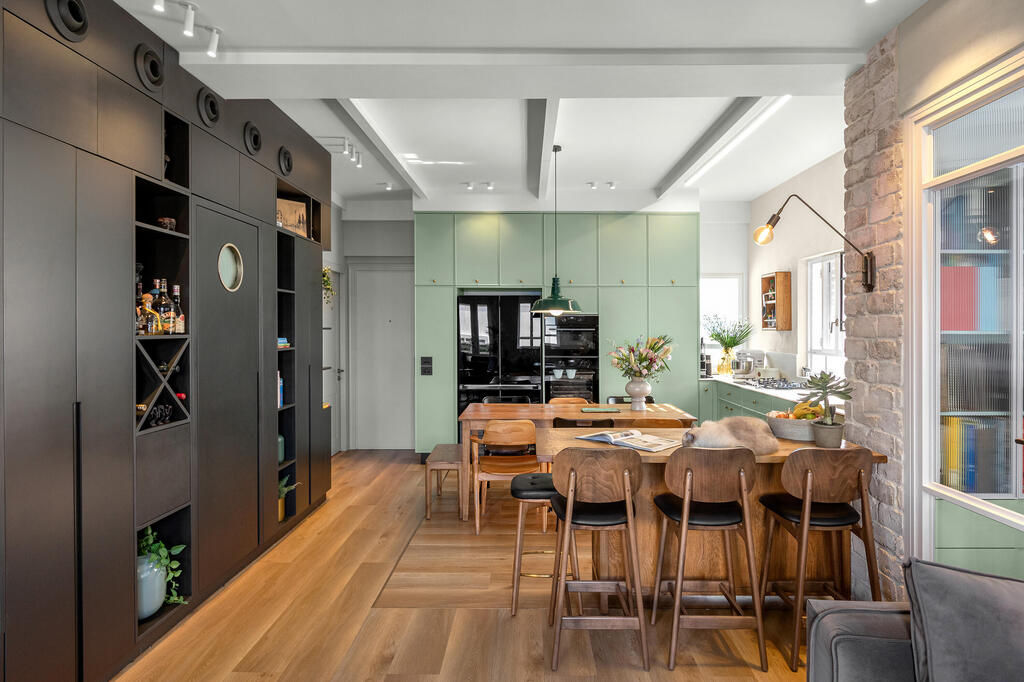
Instead of three rooms across 1,044 sq.ft, the apartment was efficiently redivided
(Photo: Shiran Camel)
The homeowners, a couple in their 40s with two daughters, ages 12 and 11, wanted to turn the old apartment in central Tel Aviv into a warm, inviting home. The 97 sq.mt. (1,044-sq.ft) space, which had been divided into only three large rooms, one of them a living room, was efficiently reconfigured by Handji into an apartment with three bedrooms, two bathrooms, a small home office and even a sun balcony, alongside a living room and kitchen.
“They wanted separate rooms for the girls, a large kitchen because the homeowner loves to cook, and a home office because she works from home,” Handji recalls. “They also wanted to have a place for the cat’s litter box, and a lot of storage, storage and more storage.”
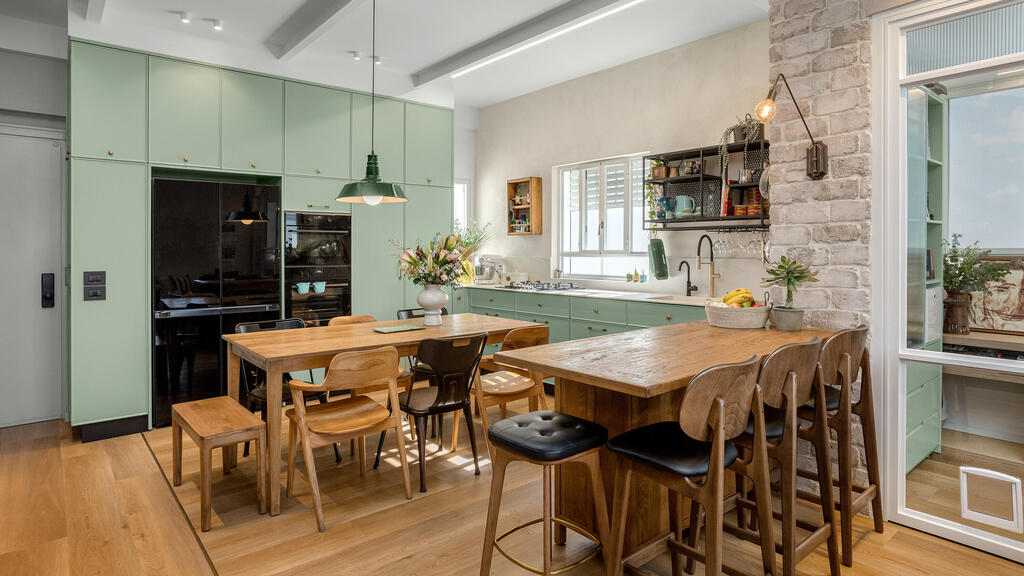
A 3-room apartment turned into a 4-room apartment
(Photo: Shiran Carmel)
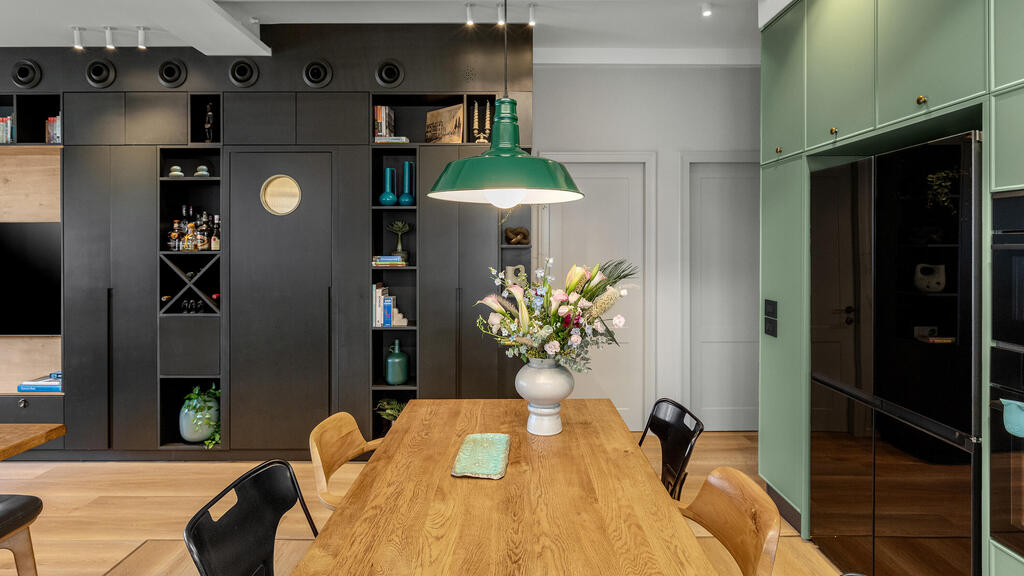
The entrance, library unit and passage to one of the girls’ rooms
(Photo: Shiran Carmel)
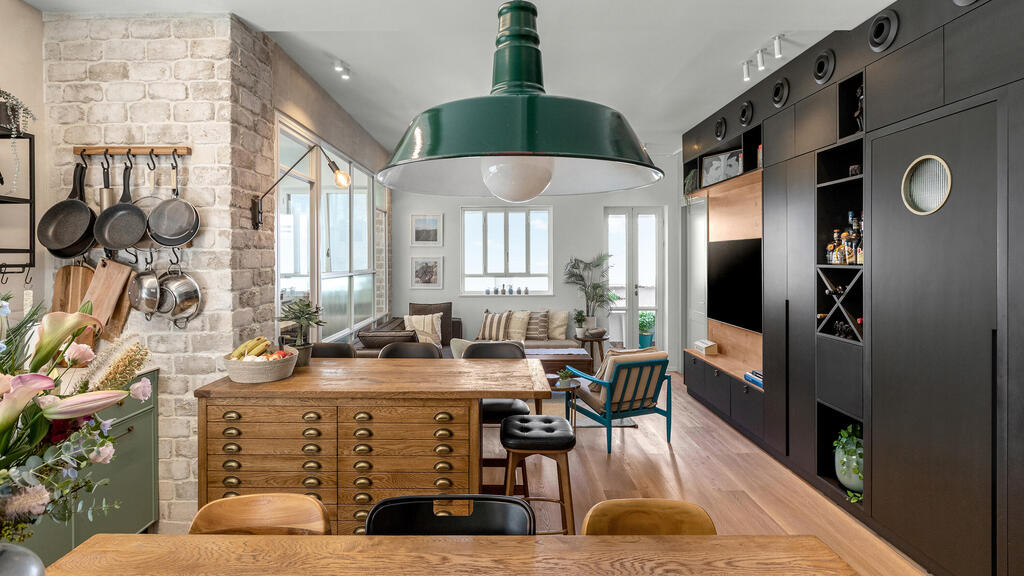
They wanted to combine rustic and urban styles
(Photo: Shiran Carmel)
“After COVID, they were ready to renovate, but then the war broke out, stretching the project over very challenging 18 months.”
When it came to style, the designer had to bridge the homeowner’s dream of living in the countryside, close to nature, with his wife’s decidedly urban taste. The solution was an eclectic style that incorporates both preferences and turns them into a pleasing visual harmony.
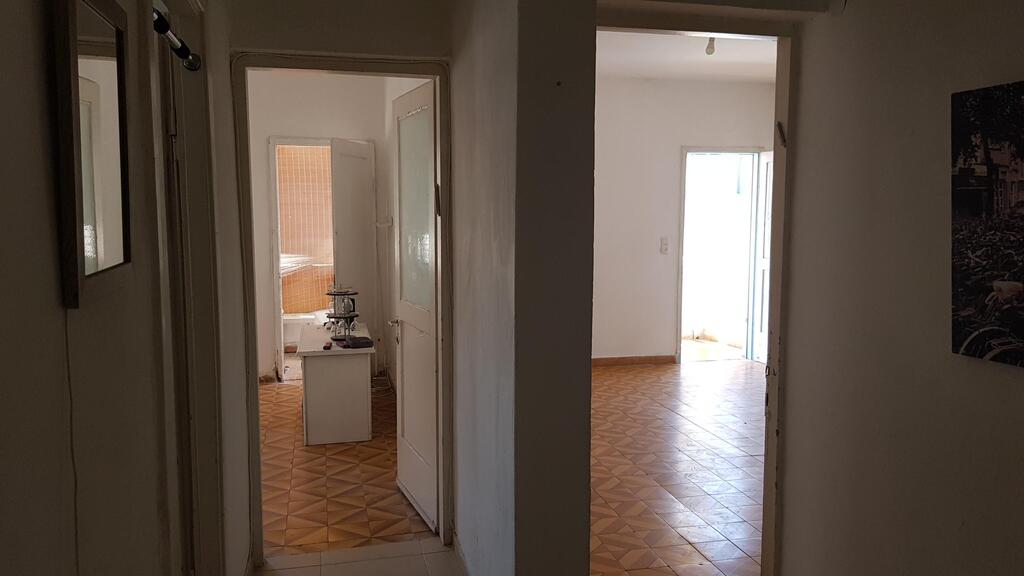
The apartment before the renovation
(Photo: Julia Handji)
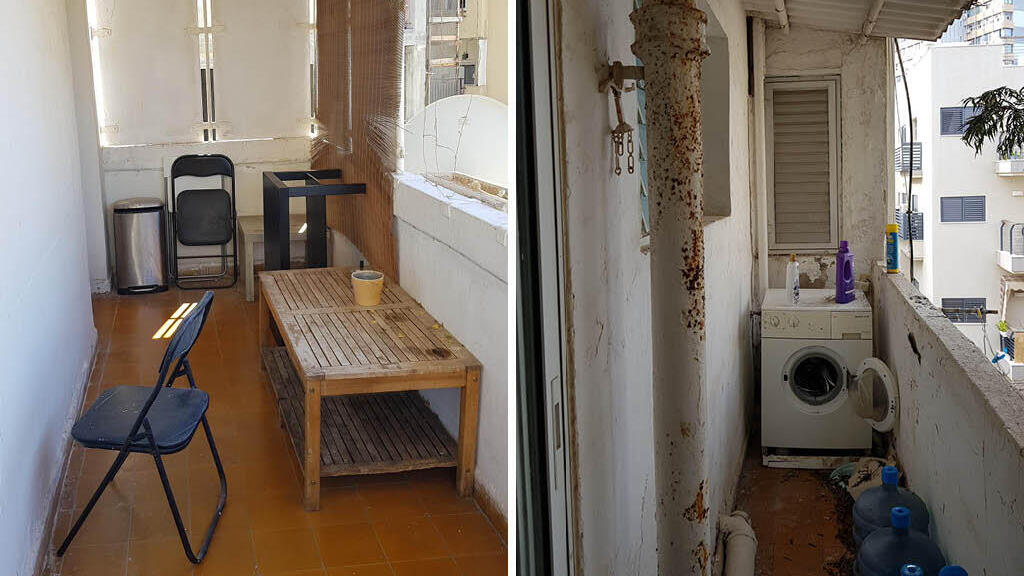
The balcony before the renovation
(Photo: Julia Handji)
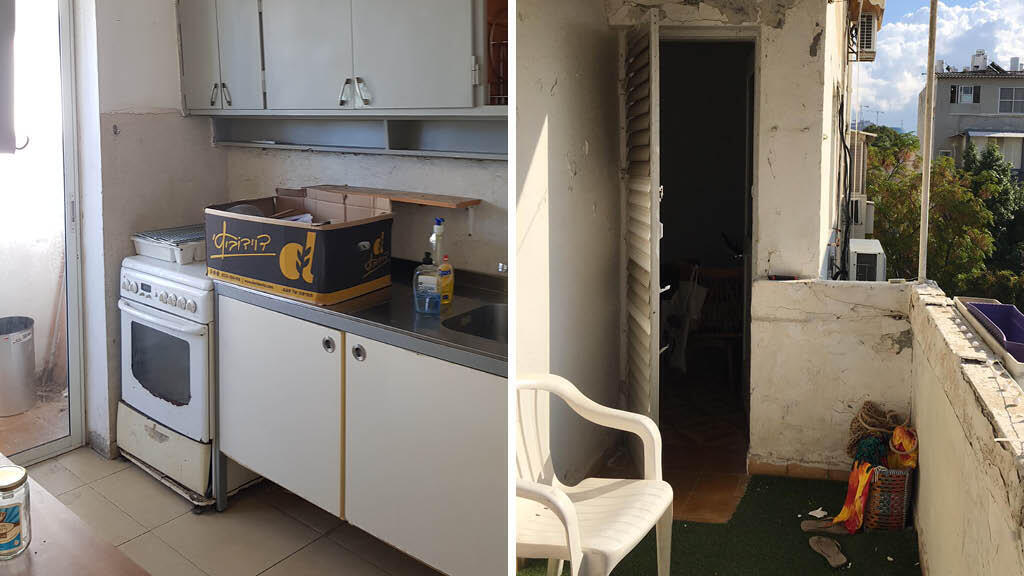
Another view of the balcony and kitchen in their previous form
(Photo: Julia Handji)
A hidden door in the library unit
The front door opens into the central space, revealing a layered and visually rich interior with parquet flooring and white Belgian-style window frames. To the left is the kitchen, where the same parquet was laid at a 90-degree angle, creating the effect of a framed rug, bordered by a brass strip that separates it from the surrounding space.
The kitchen is built in a U shape around an extendable solid-wood dining table. One side of the U contains tall cabinets in a warm sage-green shade that the designer says was chosen after numerous color tests.
The cabinetry stops short of the opposite wall because of a window there, then continues as a run of lower cabinets in the same color, topped with a light work surface. Above it, the wall was finished with textured plaster to add warmth.
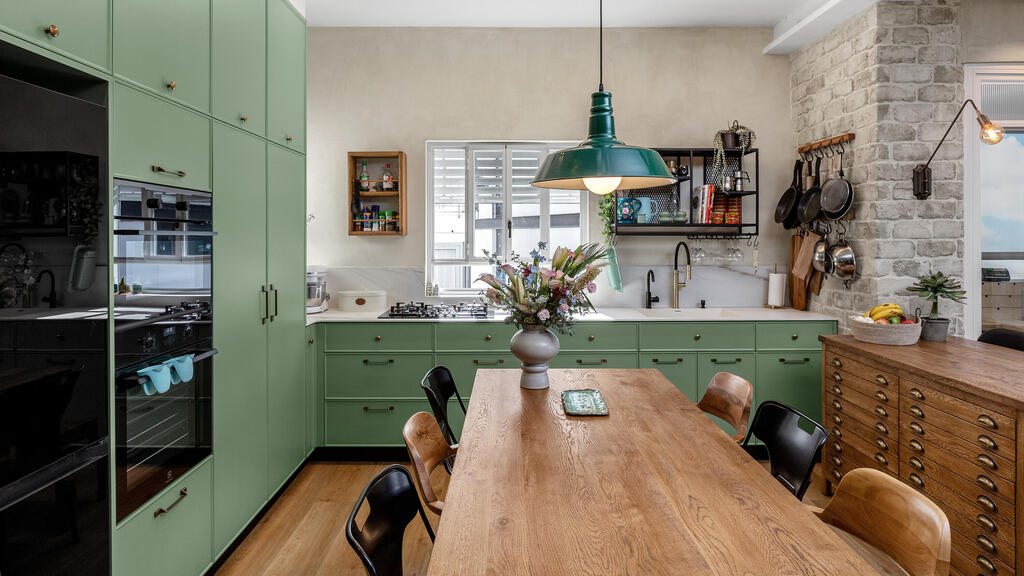
A green kitchen and restored brick wall
(Photo: Shiran Carmel)
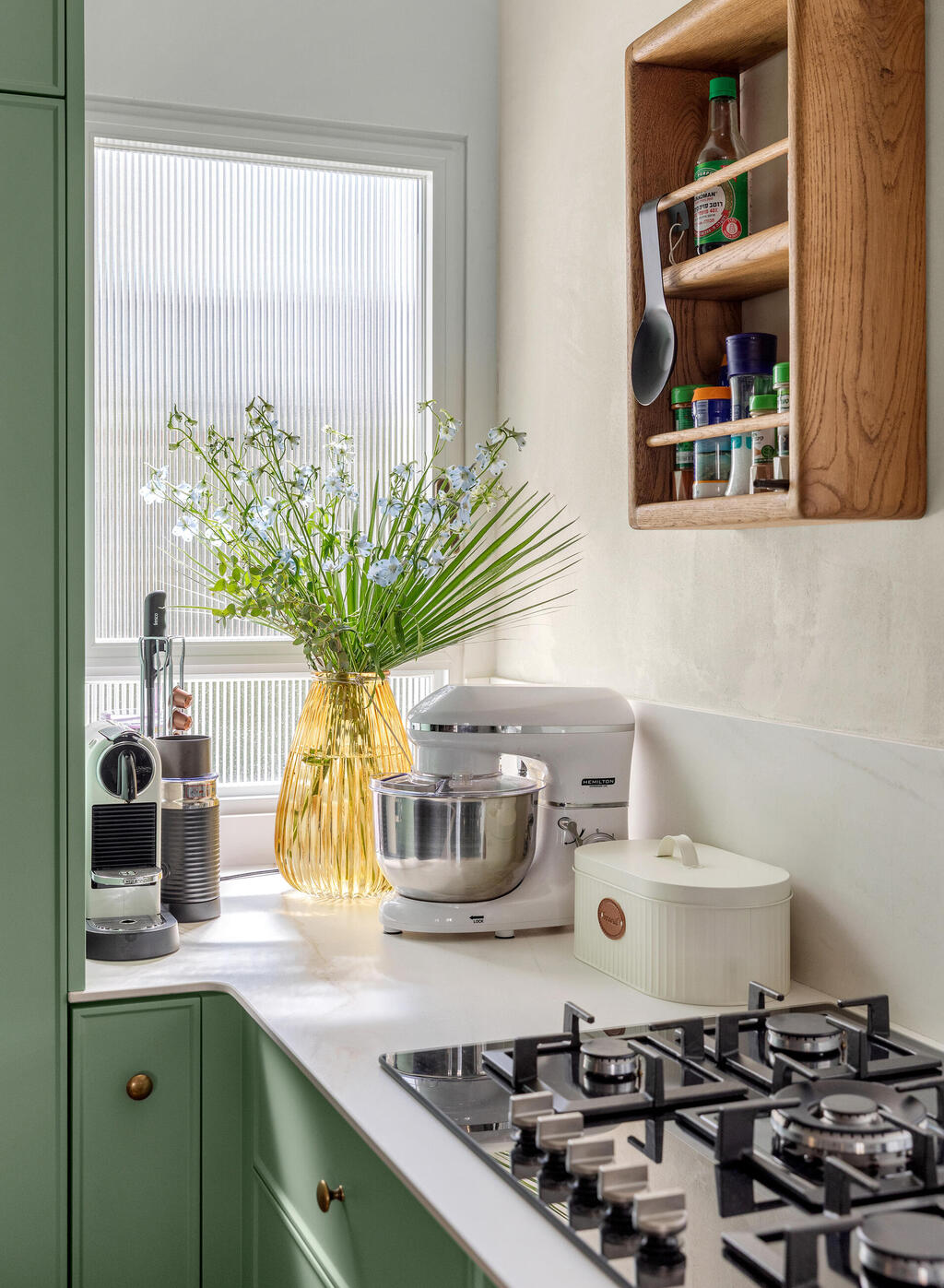
Every corner was used
(Photo: Shiran Carmel)
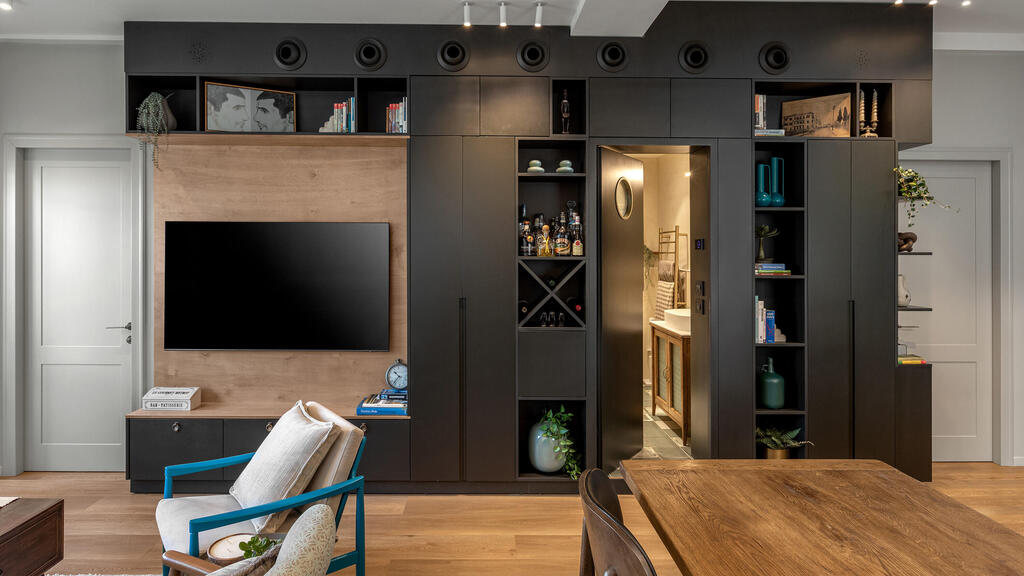
The library unit combines TV, storage and passage to a bathroom
(Photo: Shiran Carmel)
More warmth comes from a solid-wood shelving unit and the island, which forms the kitchen’s third side and is also made of wood. Handji notes that all the custom carpentry in the home was made specifically for the apartment by different carpenters. The kitchen cabinets were made by Avivi Kitchens, while the wooden shelves were created by designer Tomik.
Above the island, a custom wall-mounted light fixture, designed by Handji in collaboration with Naomi Gallery, extends into the space. Above the dining table in the center hangs a large light fixture in a vivid green shade. “It’s an industrial light fixture of the kind that used to hang on ships, and it is one of several pieces that bring that style into the apartment,” the designer says.
Another prominent industrial touch comes from the steel ceiling beams. They were added during the renovation for engineering reasons by contractor Yehuda Even Haim, and the designer decided to leave them exposed and paint them the same white as the ceiling.
The industrial style is also visible in the round air-conditioning vents installed in the upper part of the nearby black library unit. It spans most of the living room wall and serves several purposes: storage, a divider between the private wing and the central area, and as a backdrop for the television.
In addition to closed storage and open shelves for books and decorative objects, it also includes a drinks bar, which was especially important to the couple. In the center of the library unit, built at Fauzi’s carpentry workshop, is a door with a round window covered in ribbed glass, leading to the bathroom used by the girls.
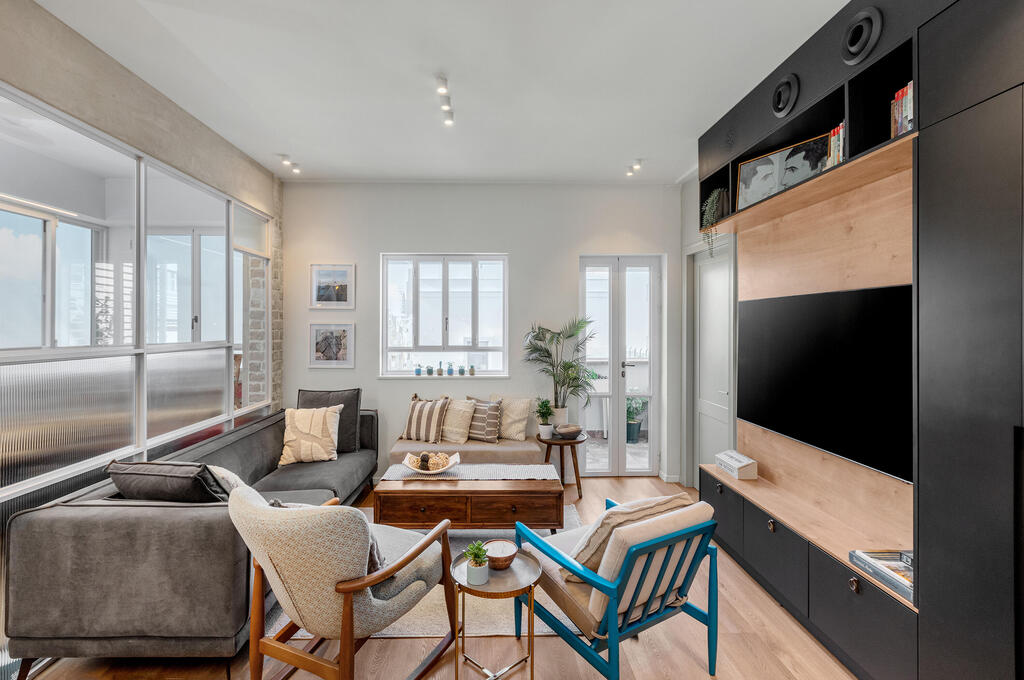
Opposite it is the living room, with a sofa and bench designed by Handji especially for the space, as well as a pair of old armchairs that the homeowners already owned. One was painted turquoise to add color to the room.
From there, a pair of glass doors leads to the small sun balcony, which was very important to the homeowners. It was paved with patterned terracotta tiles imported from Italy, and tiles in a similar shade were also placed on the top of the railing to create a convenient ledge for setting down glasses. Plants were also an important part of the design, so the balcony was outfitted with planters for the couple’s favorite herbs.
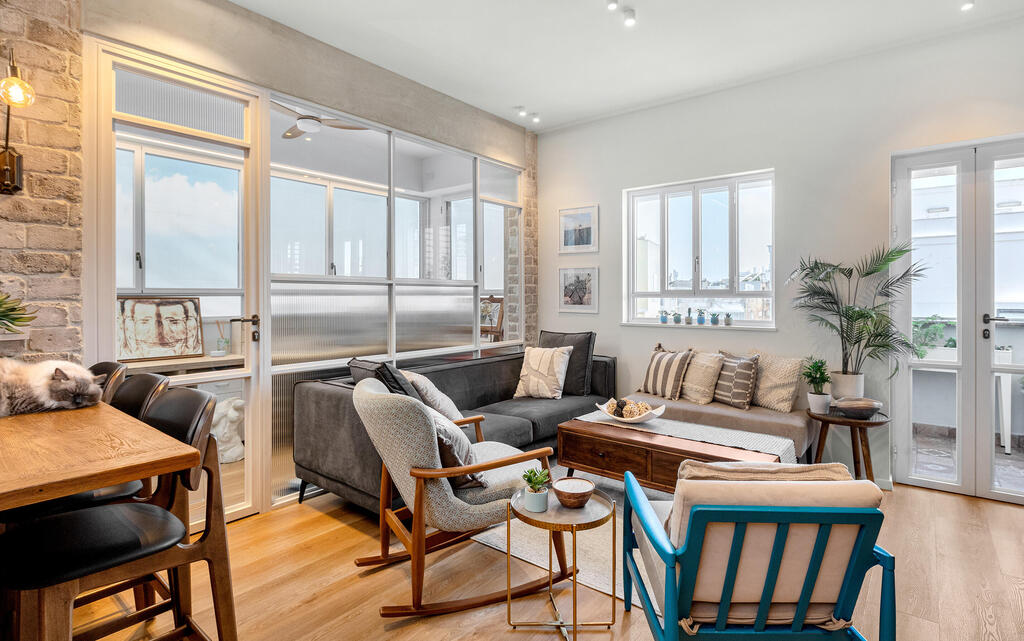
The family living room in an eclectic style, with new furniture alongside old pieces
(Photo: Shiran Carmel)
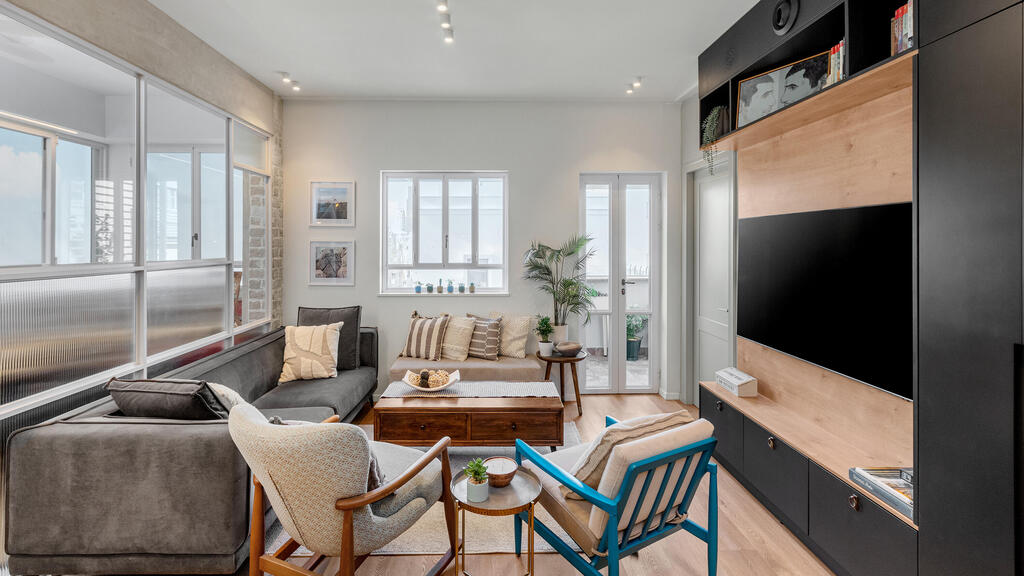
The living room surrounded by glass doors and leads to the balcony and the mother’s home office
(Photo: Shiran Carmel)
The wall in the living room is made entirely of a large glass partition, behind which is the mother’s narrow home office. On both sides of the glass, the walls were covered with bricks dismantled from interior walls that were demolished during the renovation.
“The building was constructed in the 1930s, and when we took down the apartment’s walls, we discovered these bricks and collected them,” the designer explains.
At the bottom of the glass door leading to the office, a tiny additional door was installed for the family cat. Inside the room, carefully hidden within the custom carpentry, is a space for the litter box. “After checking the entire apartment and going through maybe 80 options, we chose this location,” Handji says with a laugh.
The home office
(Photo: Shiran Carmel)
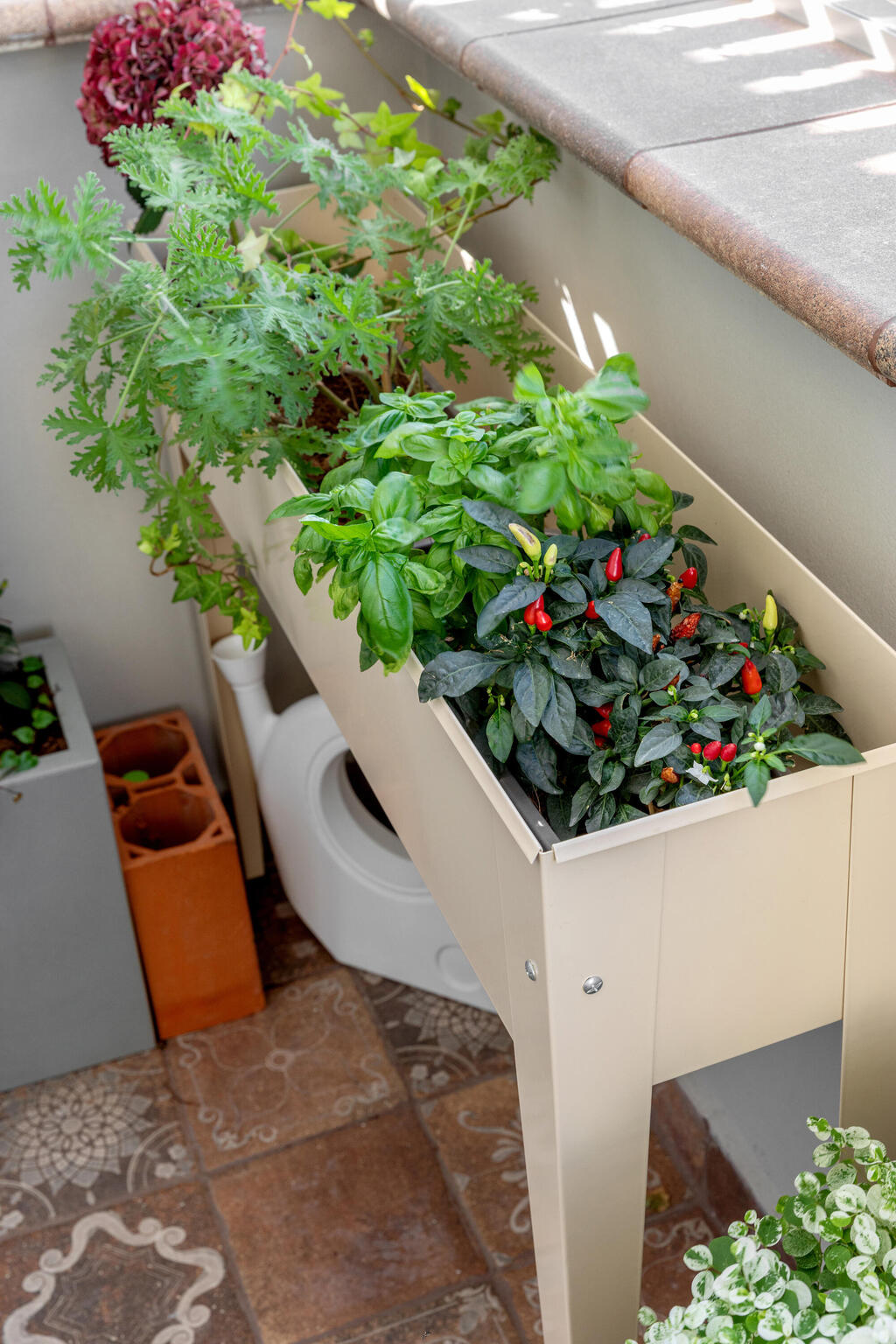
The planters on the balcony
(Photo: Shiran Carmel)
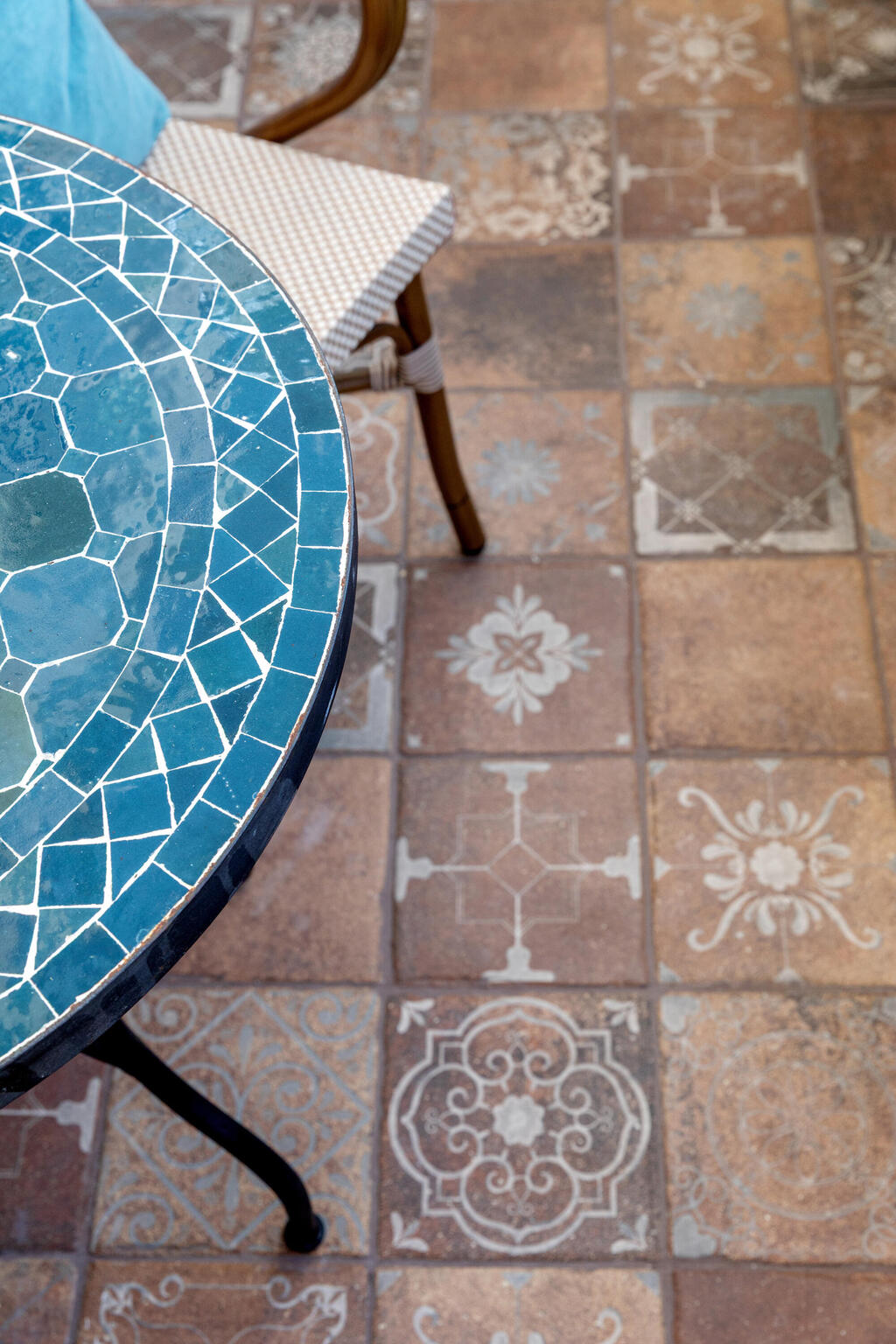
The terracotta tiles the family loves
(Photo: Shiran Carmel)
A personal painting by the designer
The large library unit also serves as a divider between the apartment’s wings. At its edges are doors to the girls’ rooms, which were designed according to their tastes and choices.
“They are very close in age and essentially function like twins,” the designer says. “So we created a connecting door between their rooms, similar to adjoining hotel rooms, giving them the option of privacy or being together.”
The bathroom they use was paved with green tiles purchased from Inbal Tiles and laid in a combination of patterned and plain tiles, creating an interesting look without making it too busy.
The lower part of the walls was covered in yellowish cream tiles, with light plaster above. Inside the shower, the green floor tiles climb the full height of the wall, defining the space, while a solid-wood and glass vanity by Tomik adds a calm rustic note.
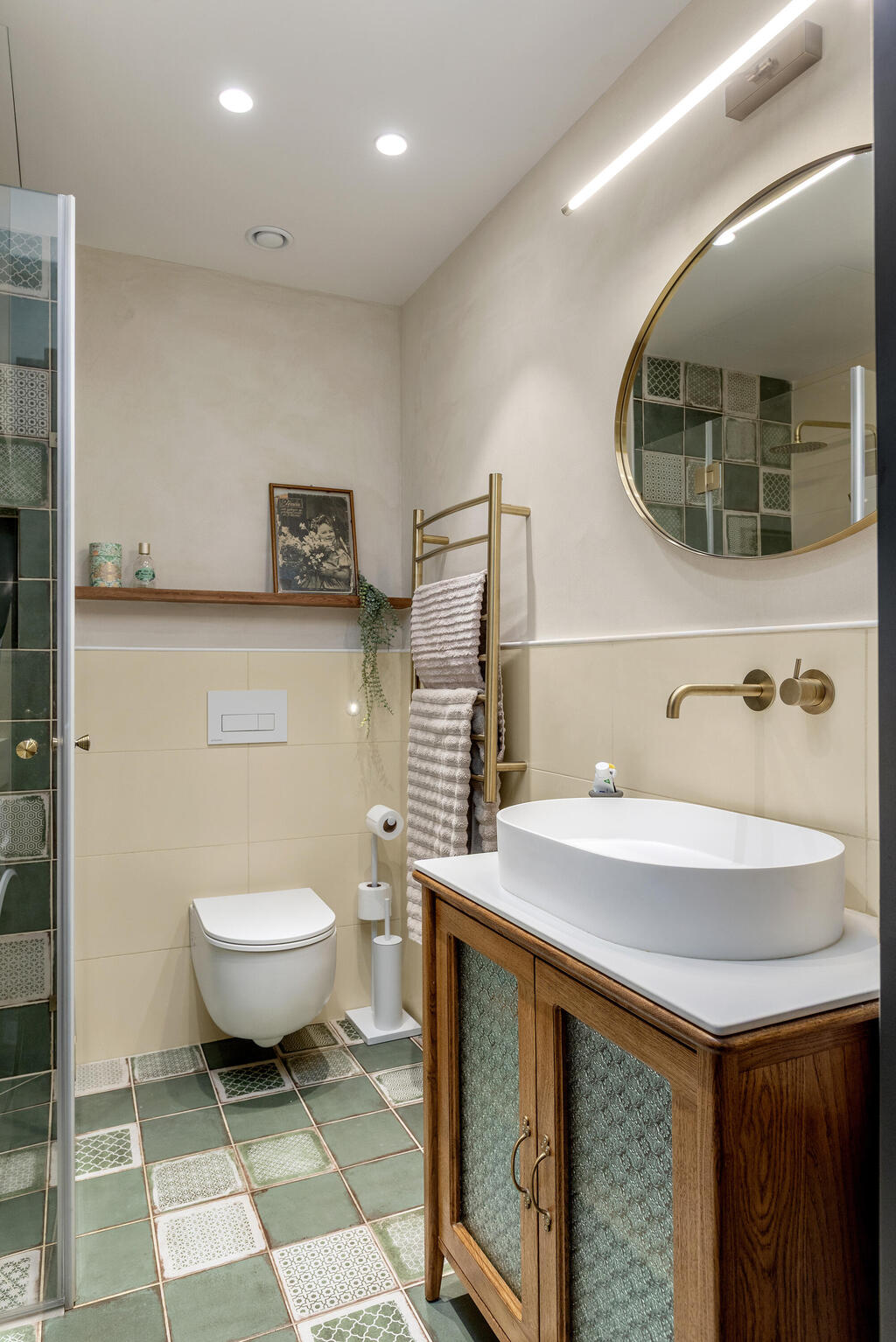
A green-toned bathroom for the girls
(Photo: Shiran Carmel)
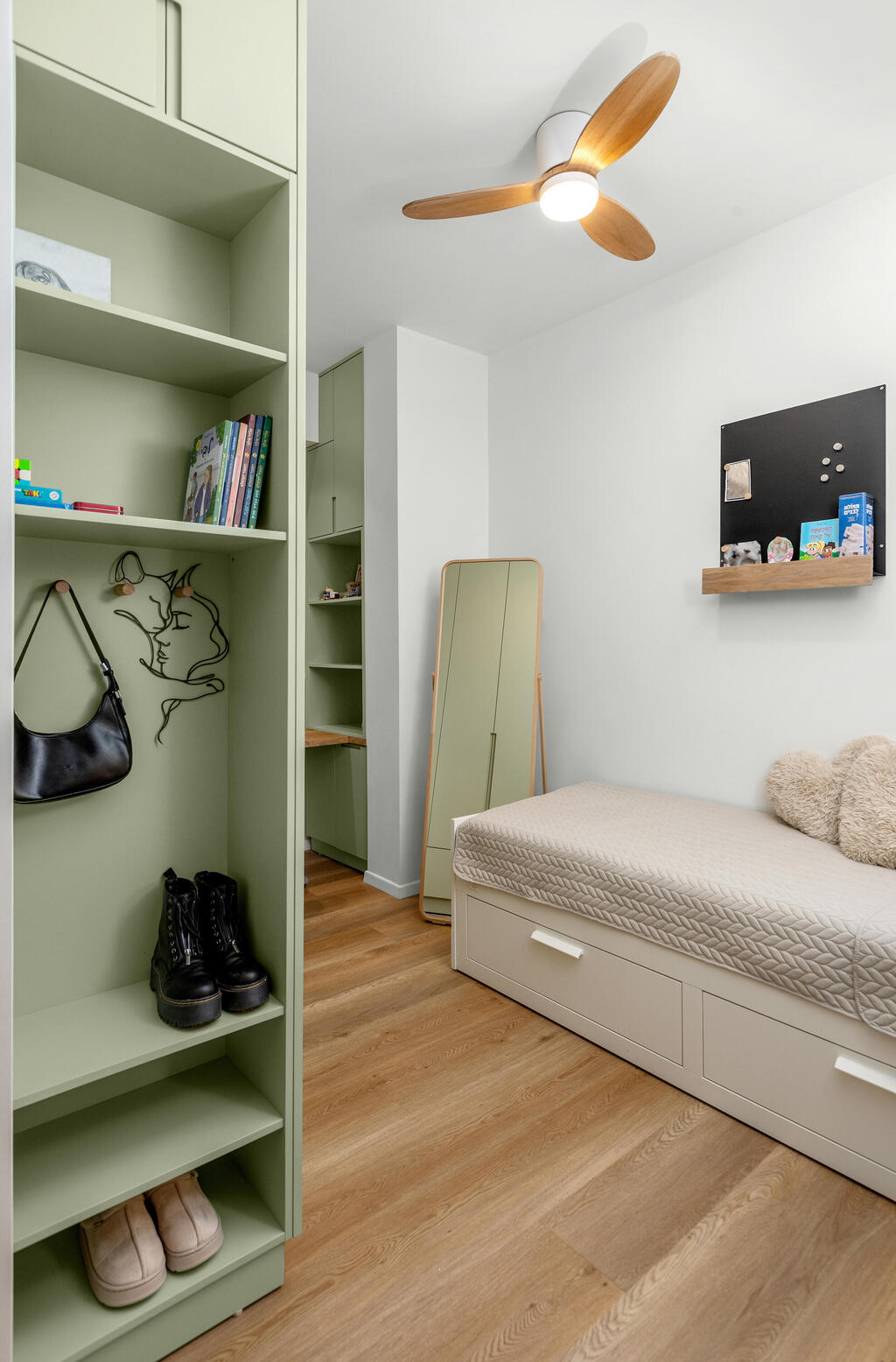
One of the girls’ bedrooms, with a connecting door to her sister’s room
(Photo: Shiran Carmel)
Finally, there is the parents’ bedroom, where Handji says the main challenge was creating as much storage as possible at the couple’s request. The room is wrapped in a huge L-shaped closet that also includes open shelves serving as a small library and a door leading to the couple’s bathroom. The bathroom was designed similarly to the main bathroom, but in shades of blue instead of green.
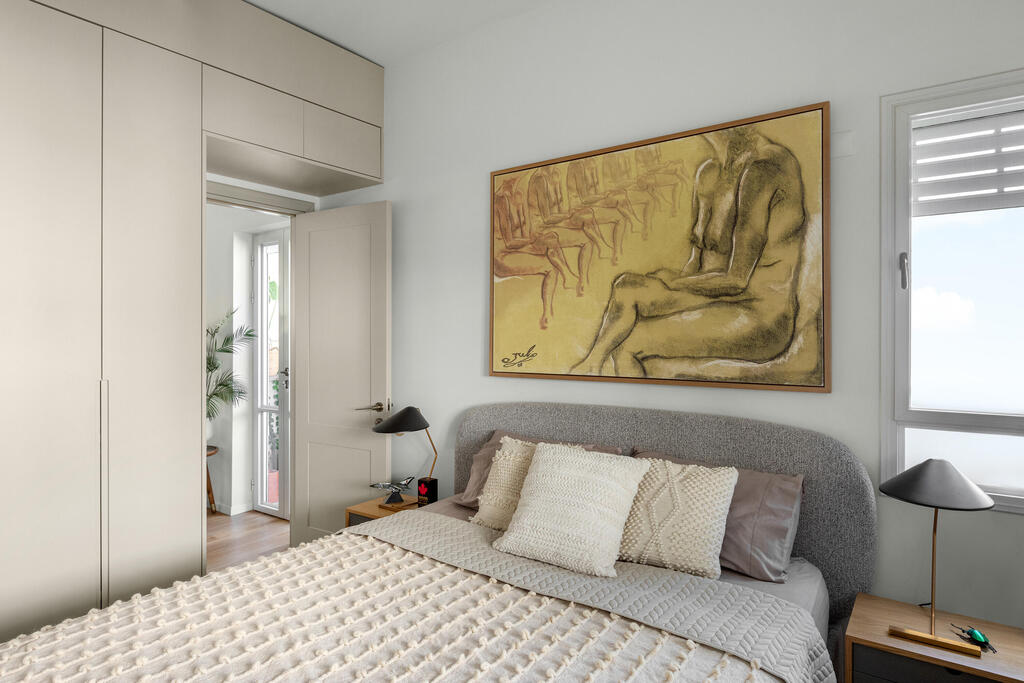
The couple’s bedroom. Above the bed is a painting by the designer
(Photo: Shiran Carmel)
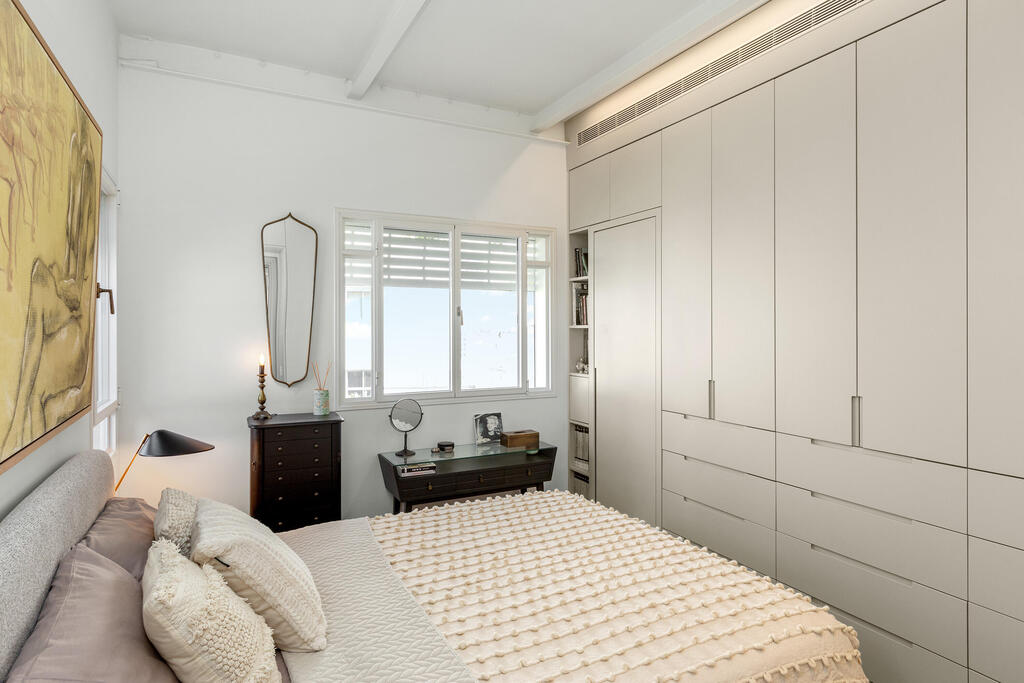
A combination of ample storage and vintage furniture
(Photo: Shiran Carmel)
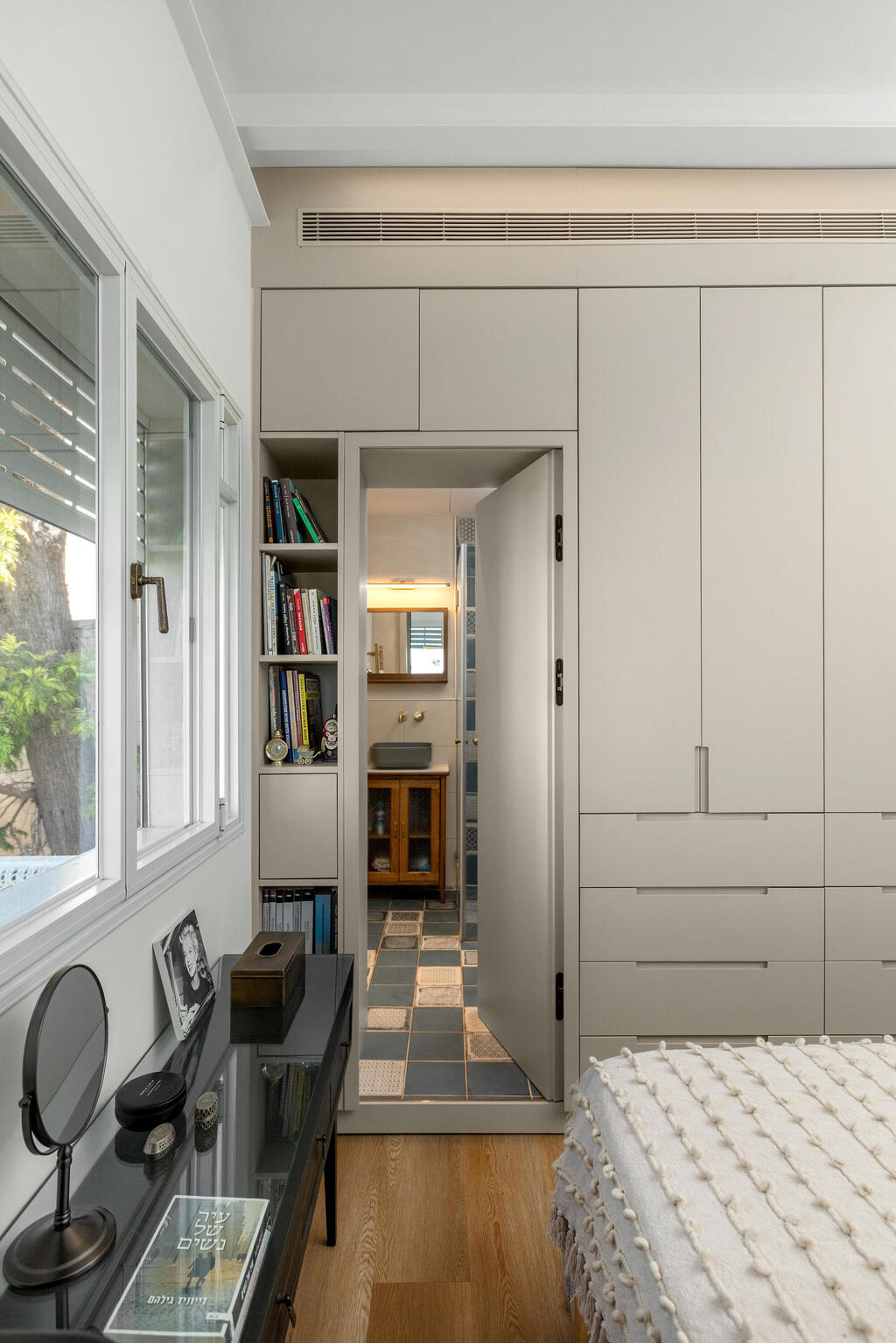
The couple’s blue-toned bathroom
(Photo: Shiran Carmel)
The bedroom includes an upholstered bed and clean-lined side tables purchased from Simply Wood, topped with matching classic bedside lamps from Sheka-Teka. Along the wall farthest from the door are a pair of vintage dressers the couple already owned and had brought with them from previous apartments. One was brown and the other blue, and to create a unified look, Handji painted both in a dark graphite gray.
Above the bed, the designer hung a large painting she made herself. “I hang my own paintings in projects I design as an added personal touch,” she says. “Of course, only if it suits the design style and the homeowners.”