

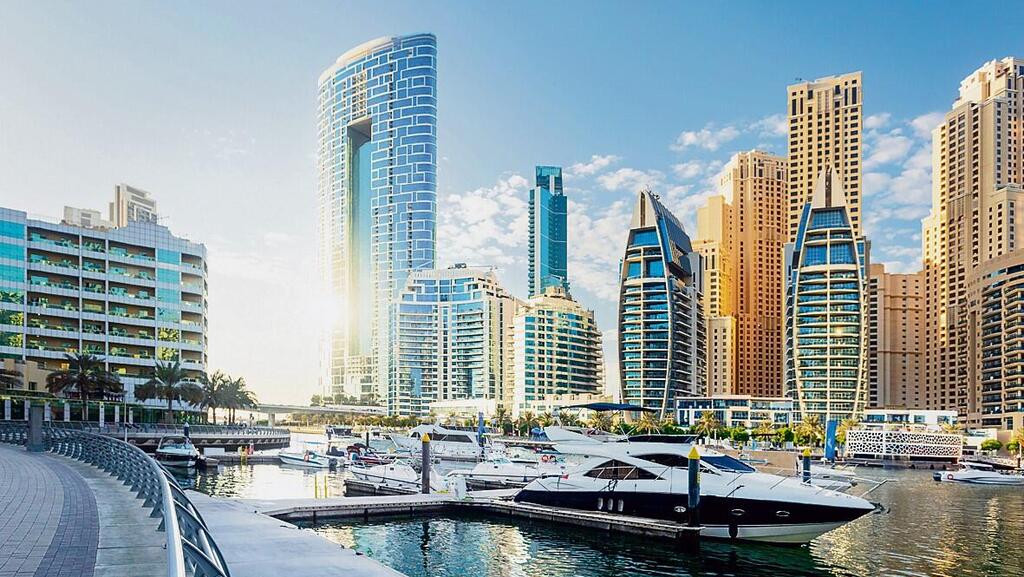
On a summer day in Dubai, the public space becomes a ghost zone: sidewalks without pedestrians, empty cafés and any step outside feels like heading into battle. At midday, the air stands still and the humidity makes movement almost impossible. For decades, Gulf states relied on a simple solution — go indoors, shut the glass doors and turn the air conditioning to full power.
In recent years, however, even some of the world’s wealthiest countries have come to recognize the limits of that equation. No air conditioner can cool entire cities indefinitely. Energy costs are rising, infrastructure is under growing strain and urban life itself is retreating into enclosed spaces. What long seemed like a simple technological fix is now understood as a planning problem.
When climate becomes the starting point again
In that sense, climate is once again becoming a raw material in planning. Since the industrial revolution, architecture has largely aimed to produce uniform know-how. The same glass tower could rise in Manhattan, Berlin or Tel Aviv, based on the assumption that technology would bridge any gap. But climate has changed faster than the construction sector has adapted.
Ironically, in the Gulf states — long seen as a symbol of glass towers detached from their surroundings — a new planning language is emerging that is drawing interest worldwide. Instead of designing a building and then adjusting it to suit weather conditions, climate is once again the starting point. The question is no longer how to cool a building that has overheated, but how to design it to function comfortably even under extreme conditions.
From the Gulf to the world — and to Israel
This shift, taking place just a short flight away, is highly relevant to Israel as well. In the Gulf, extreme climate conditions have made it impossible to sustain previous approaches. Projects such as Masdar City in Abu Dhabi and Msheireb Downtown in Doha return to simple but effective principles: narrower streets that create natural shade, more comfortable street sections, deep façades that reduce direct solar exposure and transitional spaces between indoors and outdoors that allow gradual adaptation to temperature.
In these places, architecture does not attempt to eliminate climate but to work alongside it and reduce risk. The result is not only environmental: the street becomes functional again. People walk, sit and use the city even in summer, and public space returns to being part of daily life rather than merely a passage between buildings.
Climate is reshaping global rules
Across the world, climate is changing the rules. In Europe, heat waves have turned modern apartments with large glass façades into heat traps, prompting a return to external shading, shutters and natural ventilation. In the United States, challenges often take a different form: hurricanes, extreme winds, flooding and snowstorms are reshaping planning. Recent winters have underscored the need for resilient systems — electrical and water infrastructure that can withstand extreme temperatures, accessible placement, balconies protected from prevailing winds and roofs capable of bearing unexpected loads.
The common thread is a conceptual shift: climate is no longer an external factor but part of the planning equation. Israel sits in the middle. On one hand, heat and humidity are intensifying; on the other, short but intense rain events are straining drainage systems and causing flooding. Yet much of new construction still relies on familiar models. A walk through new neighborhoods at midday in August reveals the gap: impressive buildings, but public spaces that do not support use. The problem is not aesthetic but structural — climate is introduced too late in the process.
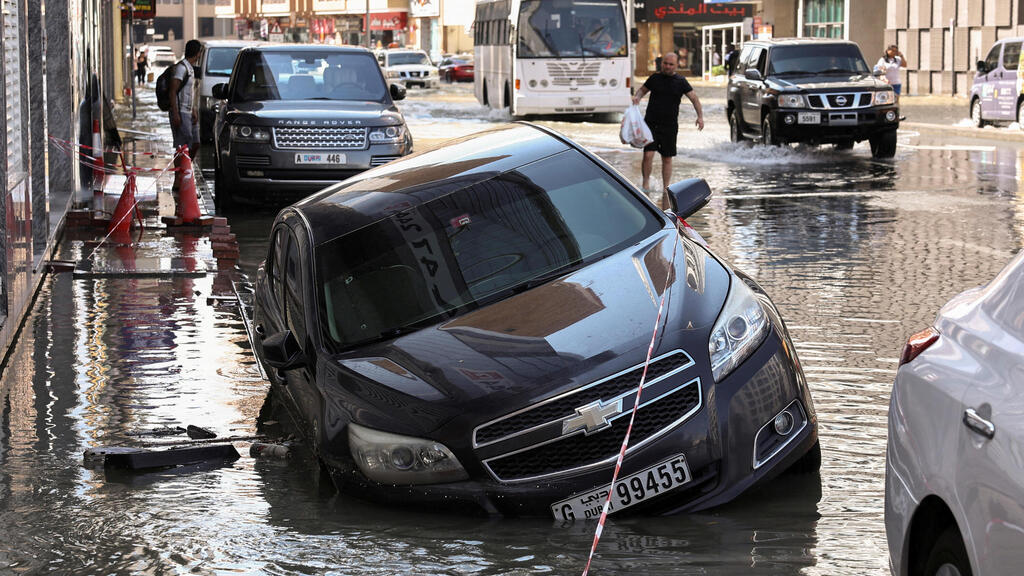
Flooding in Dubai, United Arab Emirates
(Photo: REUTERS/Amr Alfiky)
Positioning the building as a first step
Climate-responsive planning begins even before selecting materials or systems. It starts with the building’s orientation in relation to sun, wind and rainfall. These decisions can reduce heat loads, limit direct solar exposure and lower dependence on air conditioning throughout a building’s life, while also ensuring rain does not impact entrances or façades.
The façade as an active buffer
The façade is not just the building’s face but an active intermediary zone between inside and outside. Depth, setbacks and balconies create a threshold layer that regulates light, heat and movement. Niches, mashrabiyas (traditional lattice screens) and built-in shading allow the structure to generate shade through its geometry, even before mechanical systems are used. Often, a well-designed façade section has more impact than the type of glass or insulation level.
Continuous shade and public space
In hot climates, public space is defined as much by street section as by plan. Continuous shade created through trees, canopies, projections and height-to-width ratios enables walking, stopping and lingering even in peak heat. When streets are shaded, they function again as active urban spaces — places of meeting, movement and life.
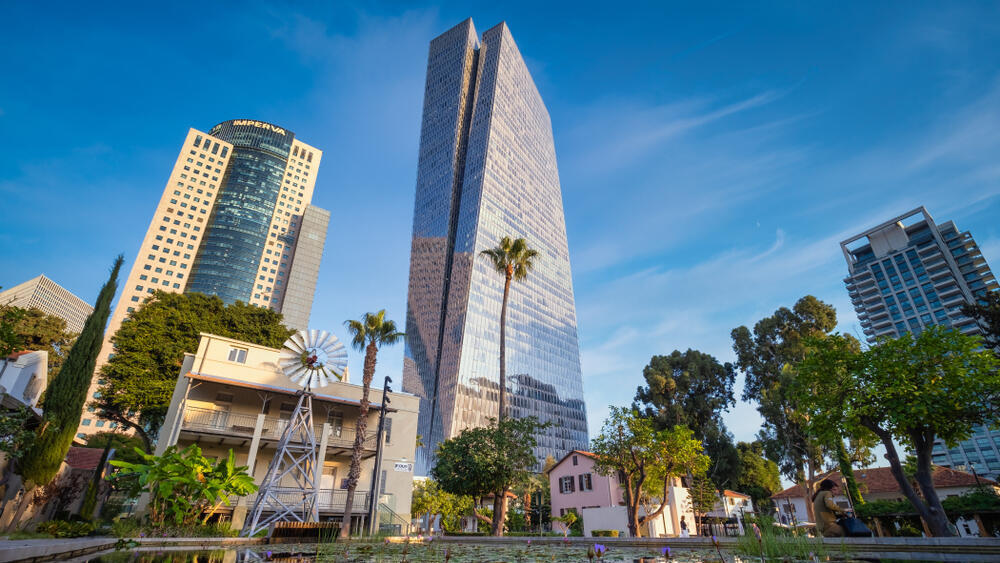
How long will we keep building glass towers? Azrieli Sarona Tower
(Photo: Seth Aronstam, Shutterstock)
Natural ventilation and wind direction
Like light and shade, wind is a design material. The way a building opens, closes and is positioned determines whether air flows through it or stalls at its envelope — whether it cools or traps heat.
Water management as part of design
Short, intense rain events require a different approach to urban ground. Drainage is not just hidden infrastructure but part of open space design. Permeable surfaces, visible drainage and landscape elements that slow and retain water allow cities to absorb extreme events as part of daily function, rather than as emergencies.
Transitional spaces and buffer zones
Patios, ventilated atriums and open lobbies create gradual transitions between outdoor heat and indoor cooling, reducing thermal shock. These are not new ideas but a return to local design traditions developed in hot climates, such as internal courtyards in North Africa and the Middle East. Beyond energy savings, they restore the connection between people, buildings and environment.
Thermal mass and material choice
Materials with high thermal mass can store nighttime coolness and release it during the day, stabilizing indoor temperatures. When combined with climate-aware design, ventilation and shading, they reduce reliance on mechanical systems. In Israel, however, materials are often used generically, detached from climate context, leading to heat retention in summer and cold interiors in winter. Alongside renewed use of thermal mass, new technologies such as phase-change materials are emerging, enabling advanced thermal regulation without increasing energy consumption.
The architecture of the next decade
Architecture in the coming decade is no longer about building higher or more impressively, but about ensuring cities and built environments continue to function under changing conditions. A successful building will be measured not only by its appearance but by its ability to provide resilience and comfort. Good design does not eliminate risks — it reduces the cost of dealing with them in advance. In construction, risks that carry financial cost are not created on-site, but in the planning stage.
Architects Yanin Kliro and Michal Grinvald are co-founders of Climfo, a platform that integrates climate analysis with urban planning to support informed, risk-based decision-making.