

For decades, private swimming pools followed a familiar formula: bright blue water, glossy turquoise mosaics, pale paving and a row of sun loungers around the edge. It became an almost universal architectural language for the classic “villa with a pool.” In most cases, the pool was designed as one of the yard’s most prominent features, intended to catch the eye, emphasize the scale of the house and signal luxury.
That approach is beginning to change. Inspired by trends emerging from Europe, Australia and the United States, more Israeli homeowners are moving away from the largest and most dazzling pool they can build. Instead, they are looking for outdoor spaces that feel comfortable and inviting year-round, with water integrated into the garden, surrounding vegetation and the architecture of the home.
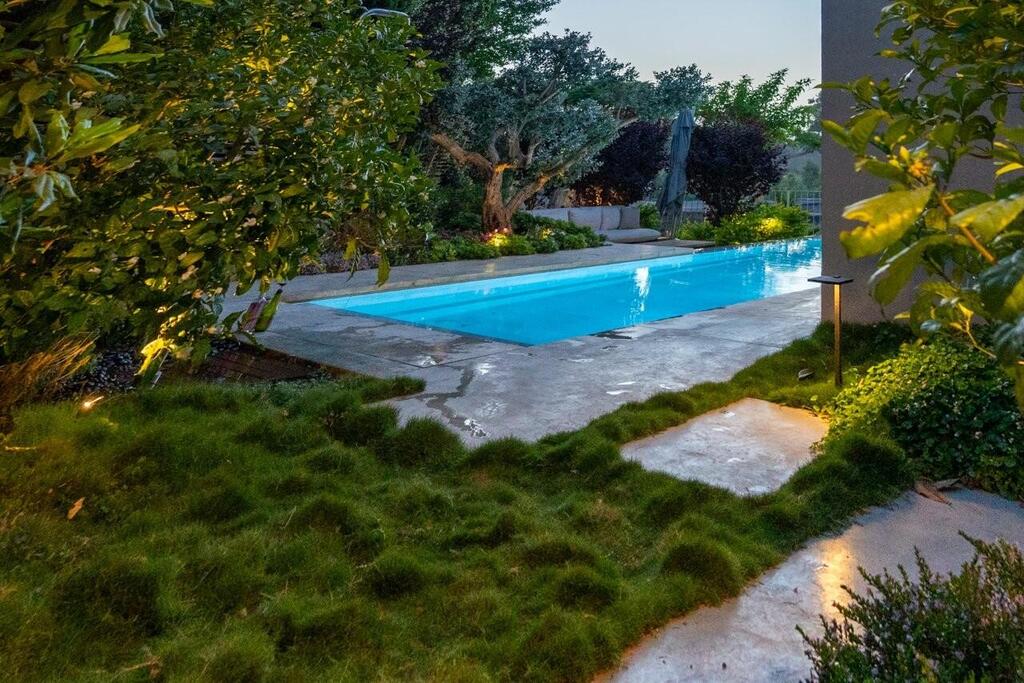
The pool is no longer meant to stand apart as a showpiece. Increasingly, it is being designed to look as though it has always belonged there.
The shift is also connected to the changing role of the home itself. In the past, the yard was often treated primarily as a place for weekend entertaining. Today, it has become a direct extension of the living area.
As more people work from home and spend longer time outdoors, backyards have evolved into true extensions of the home. Homeowners are increasingly looking for spaces where they can read, share family meals or simply unwind.
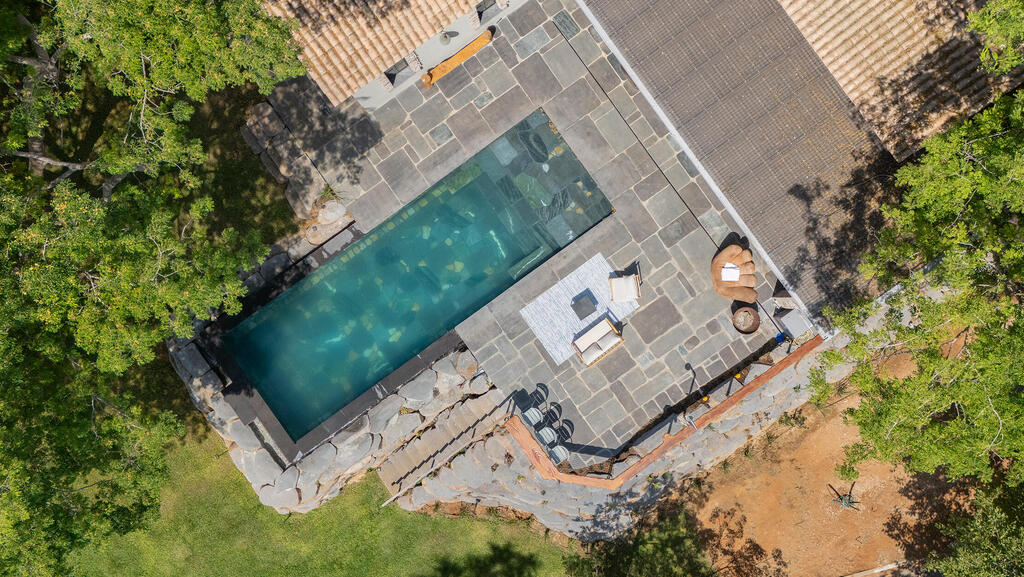
Aerial view of a pool
(Photo: Elad Gonen)
That shift has transformed the role of the swimming pool, which is no longer designed simply as a centerpiece or status symbol, but is becoming an integral part of the overall living experience.
One of the most striking global trends is the move toward pools inspired by nature rather than luxury hotels. Bright blue mosaics and sharply contrasting paving are giving way to natural stone, deeper water tones, local vegetation and materials that blur the boundary between the pool and the garden.
Ecological pools: A different planning philosophy
Ecological pools are attracting growing interest as part of this broader trend. Unlike conventional pools, which rely primarily on chlorine or salt systems to treat the water, ecological pools use biological filtration designed to mimic the way natural ecosystems maintain water quality.
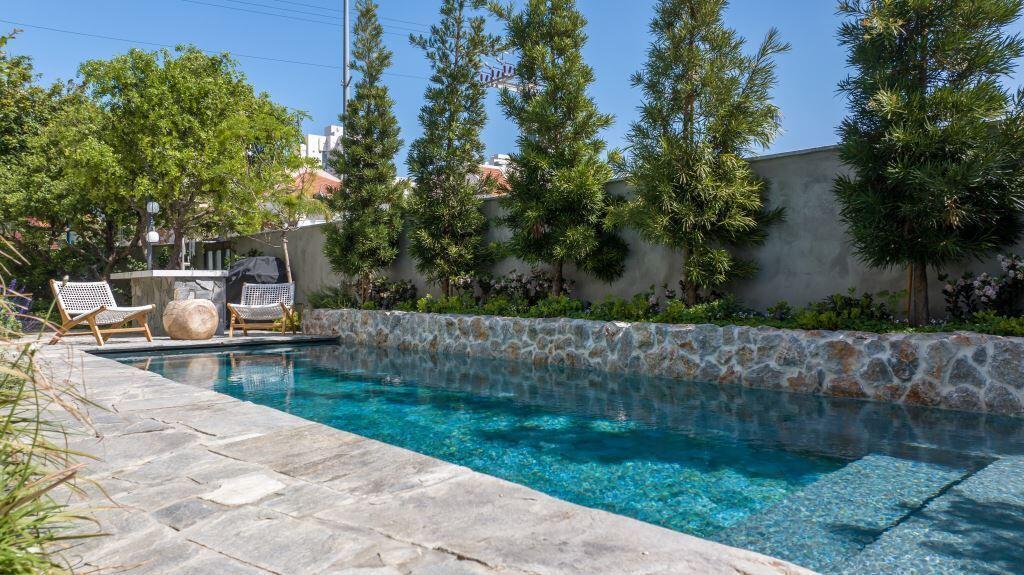
Natural-style pool designed by Plagim
(Photo: Oren Alon Salman)
Water passes through designated filtration zones containing aquatic plants and other biological elements that help keep it clean.
The distinction is not only environmental but also architectural. An ecological pool is not simply a conventional pool fitted with a different filtration system. It requires a new way of designing the entire garden.
The water, plants, surrounding landscape and finishing materials are planned as a single composition to make the pool feel like an integral part of the site rather than an object placed in the middle of the yard.
Good pool design begins with one question
Architecturally, this shift demands a different planning process. Pools were once frequently added near the end of a project, after the house itself had already been designed. Today, architects increasingly argue that a pool should be incorporated into the project from the earliest sketches.
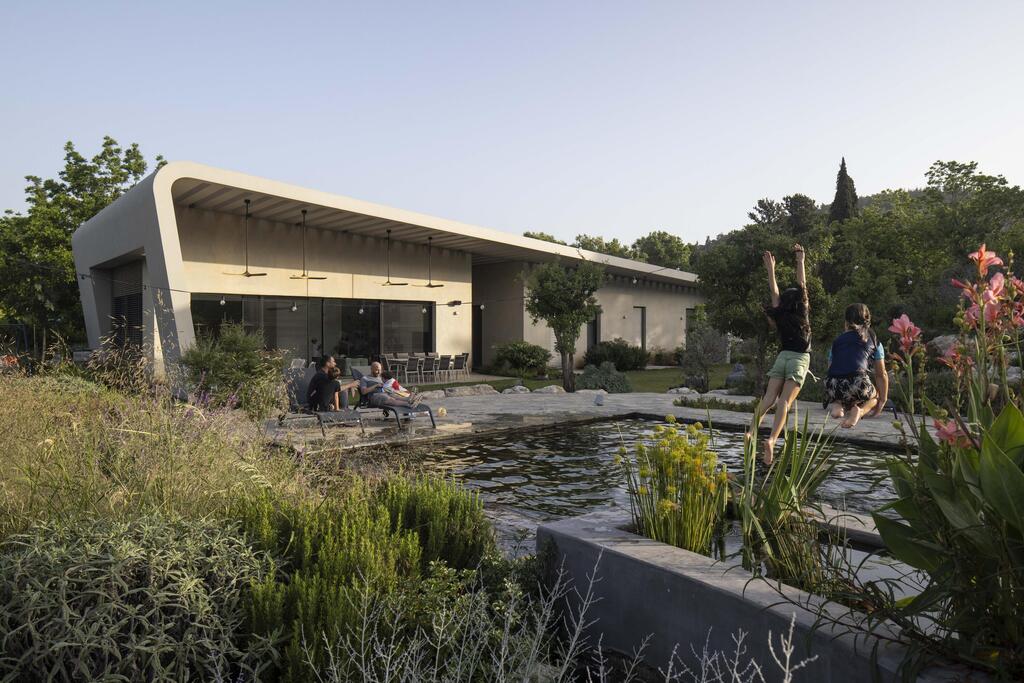
Two homes on a single plot, with a natural pool between them resembling a spring
(Photo: Nimrod Levy)
That is essential when the goal is to create a genuine connection between the interior and exterior. The pool’s position affects sightlines, natural light, shade and the relationship between the garden and the home’s daytime living spaces, including the living room, kitchen and dining and entertaining areas.
The key question is no longer how the pool will look from the garden, but how visible and connected it will feel from inside the home. Designers are paying greater attention to whether the water can be seen directly from the living room and whether the transition between the house, pool and garden feels continuous and natural.
An ecological pool can serve as a year-round gathering place for family and guests, even when no one is swimming. Like a natural lake, it is designed to be enjoyed from the water’s edge as much as from within.
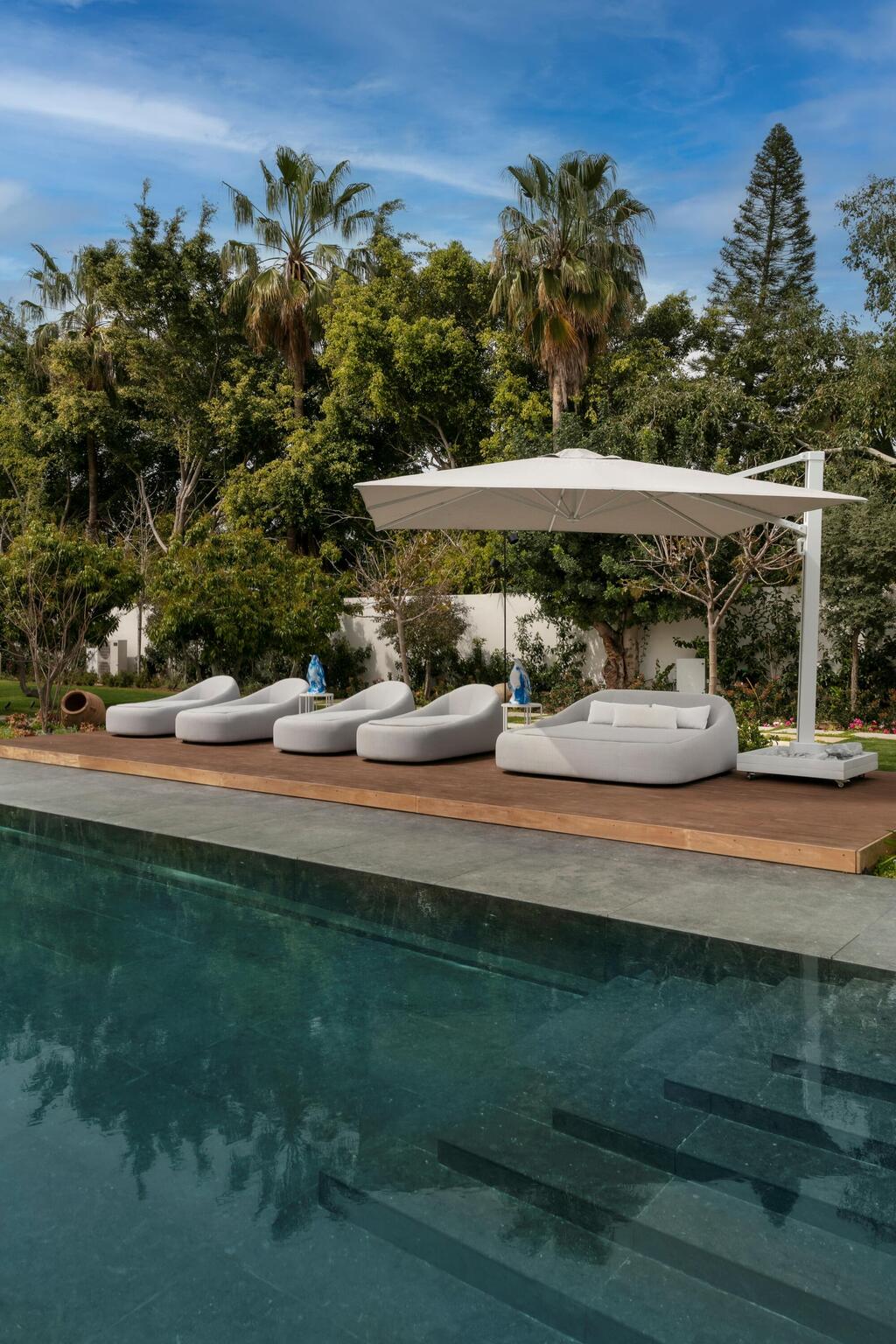
Like a natural water source
(Photo: Elad Gonen and Daniel Tzairi)
The dimensions and proportions of private pools are changing as well. Instead of enormous pools built primarily to impress, more homeowners are choosing compact designs better suited to urban plots.
Smaller pools consume less water, require less maintenance and can be incorporated into a broader outdoor plan that may also include an outdoor kitchen, seating areas, landscaping and wellness spaces.
Will ecological pools become Israel’s new standard?
It is still too early to know. Still, the change in the way homeowners and architects approach outdoor planning is difficult to ignore. The pool is increasingly being treated as part of a wider residential concept rather than merely a place to swim.
 Kobi GalPhoto: Courtesy of GMA
For many homeowners, an ecological pool reflects a preference for nature, sustainability, everyday use and thoughtful design over spectacle. That may explain why some of today’s most compelling pools are precisely those that do not try to steal the show, but instead appear to disappear naturally into their surroundings.
- The writer is an architect, managing partner and co-founder of GMA, Gal Matsliah Architects