

Israel’s housing slowdown is pushing banks to extend more credit to residential developers, allowing builders to keep operating despite weaker sales and growing financial pressure, according to Bank of Israel data.
Credit to residential construction developers jumped 40% in 2025 to 69 billion shekels, up from 49 billion shekels in 2024, the data showed. By comparison, bank financing for land purchases rose just 6%, while credit for income-producing real estate grew 11%.
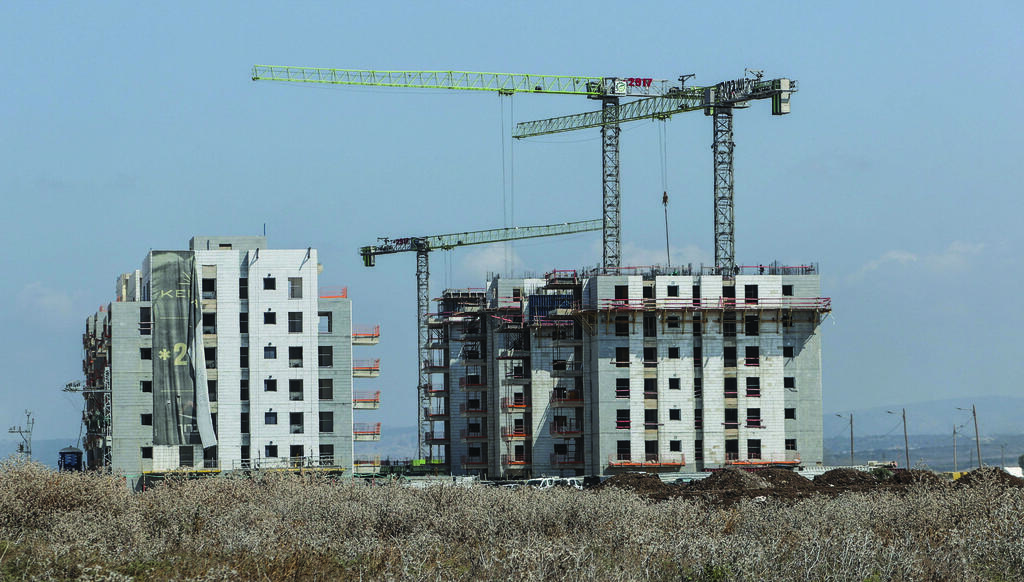
The increase reflects a market in which developers are struggling to sell apartments at the pace they expected. The added credit has helped builders absorb rising construction costs and continue offering financing deals to buyers, including deferred payment plans.
Those arrangements, commonly known in Israel as 80/20 or 90/10 deals, allow buyers to pay only 10% or 20% of the purchase price upfront and the rest when the apartment is delivered. They helped sustain sales during the slowdown but are now adding pressure as some buyers, including investors, walk away from deals or sell apartments at a loss.
Bank of Israel said the growing exposure increases risks for banks, though it does not yet view the threat as immediate. The central bank said a 58% drop in new-home sales would begin to cause losses for banks.
As of the end of 2025, 44% of projects financed by Israel’s five largest banks had construction progress outpacing sales, according to the data. The figure reflects bank exposure only and does not include nonbank lenders.
The figures are part of the Bank of Israel’s upcoming review of Israel’s banking system for 2025.
The housing market failed to recover in 2025 despite earlier expectations. Apartment purchases fell 12% from 2024, after sales had surged 44% the previous year. The growing inventory of unsold homes pushed prices down by an average of 0.9%.

Governor of the Bank of Israel Amir Yaron
(Photo: Shalev Shalom)
By the end of 2025, contractors were holding a record 83,400 unsold new apartments. Market estimates suggest sluggish sales will continue into 2026, with the slowdown concentrated mainly in central Israel.
The pressure stems largely from higher interest rates. The Bank of Israel’s rate rose as high as 4.5%, pushing the prime rate to 6% and making mortgages more expensive. Developers have pressed for rate cuts, including Aura controlling shareholder Yaakov Atrachi, who publicly urged Bank of Israel Gov. Amir Yaron last week to lower rates immediately.
Market participants say the stress is already visible in developers’ financial reports.
“Companies are building and consuming credit faster than they are selling, and hoping for the best,” one investment manager said. Larger residential developers with strong equity may continue growing, he said, but smaller companies could struggle once bank or nonbank financing runs out.
For now, banks have a clear incentive to keep developers and their projects alive. A wave of contractor collapses would hurt bank earnings, mainly through higher provisions for credit losses.
Despite the jump in credit to residential developers, Israel’s five largest banks reduced their coverage ratio