

Sometimes life paths are shaped by chance. For architect Amir Zoref, it began at age 12, when his late father, an educator who recognized his talent, sent him to an adult painting studio. The teacher initially refused to accept a child, but after seeing his drawings, made an exception. “One evening, I overheard my father and the teacher discussing my future,” Zoref recalls with a smile. “They didn’t include me in the conversation, but they decided I would become an architect—and I guess it stuck.”
Over the years, his love for painting evolved into a creative language that defines his architectural work today: clean, restrained lines that strive for harmony rather than shock value “I’m not after the immediate ‘wow,’” he explains. “I look for balance between inside and out, between material and light, between architecture and art.”
Gallery
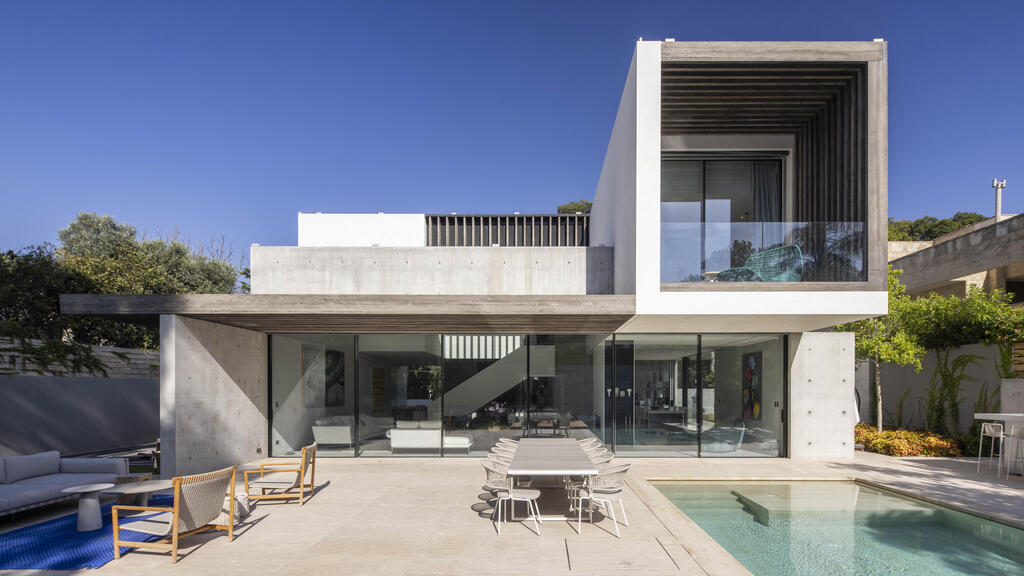
From permit to chair: the structure was designed with a clean, restrained line
(Photo: Nimrod Levy)
Zoref’s architectural language draws inspiration from modernism and Japanese tradition, while leaving space for color, art, and personal expression through furniture and decor. “I prefer that a house tell its story through its connections, not through loud gestures,” he emphasizes.
From foundation to curtains: the total project
The Herzliya house, a 600-square-meter home built on a one-dunam lot, became a turning point in Zoref’s career. It was a “total project,” designed and executed from scratch, including every detail of the interior design. He had known the homeowner since their youth and had already designed several apartments for him.
“At first I hesitated,” Zoref admits. “I was working full-time in another firm and was overloaded. But when I saw the plot and its potential, I knew I had to do it. There was great chemistry between us, and that made all the difference.”
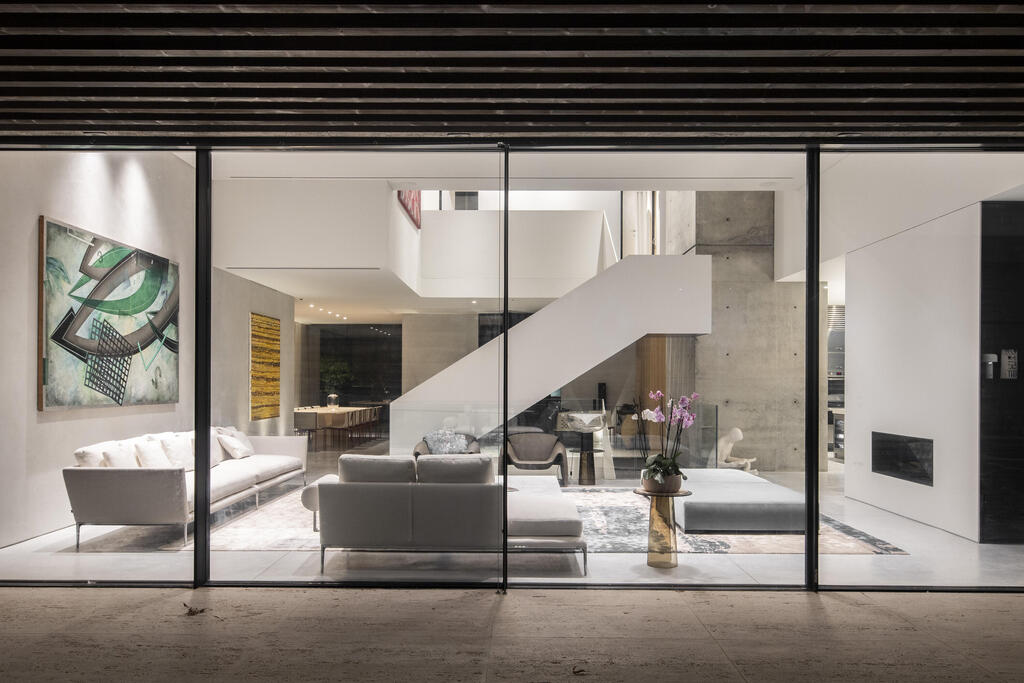
The living room and the layout of the entrance floor
(Photo: Nimrod Levy)
The old 1960s structure on the property was demolished, and the land was leveled by raising the new building above street level, creating a modern, elevated presence. His goal: a horizontal, open structure blurring the line between interior and exterior, combining both drama and tranquility through natural materials and flowing continuity.
The clients entrusted him completely, from building permits to curtain selection. “For me, a house is a gestalt, a whole greater than the sum of its parts,” he says. “Every detail contributes to the overall harmony.”
The sloped lot inspired the design of a dynamic structure
(Photo: Nimrod Levy)
Even seemingly grand design elements, such as three-meter-tall doors, were made to blend into the structure rather than dominate it. “They’re part of the envelope, not sculptures,” he notes.
Originally planning a stainless-steel staircase, Zoref changed his mind mid-process: “It risked becoming a centerpiece, which wasn’t the intention. I wanted everything to speak the same language.”
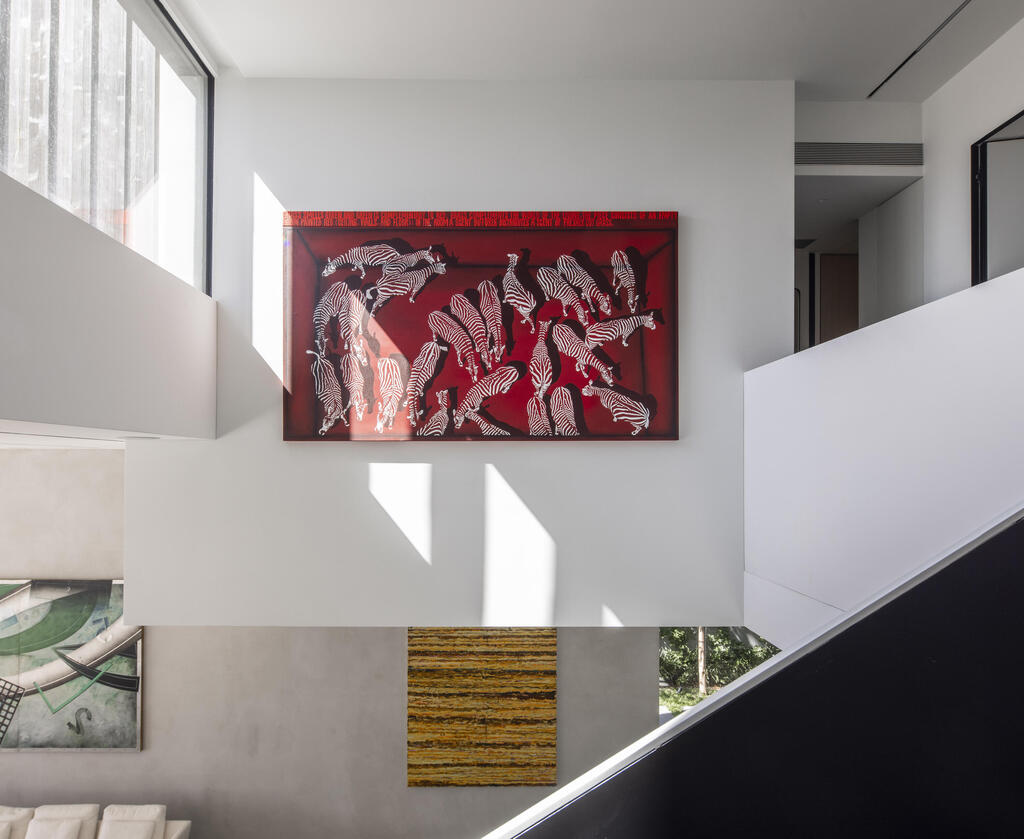
The power lies in the ability to maintain harmony
(Photo: Nimrod Levy)
A balance between restraint and expression
The homeowners wanted a modern, minimalist home that still felt warm and inviting. Zoref designed a three-story structure based on a virtual grid defining every structural and aesthetic proportion, from room divisions to tile dimensions.
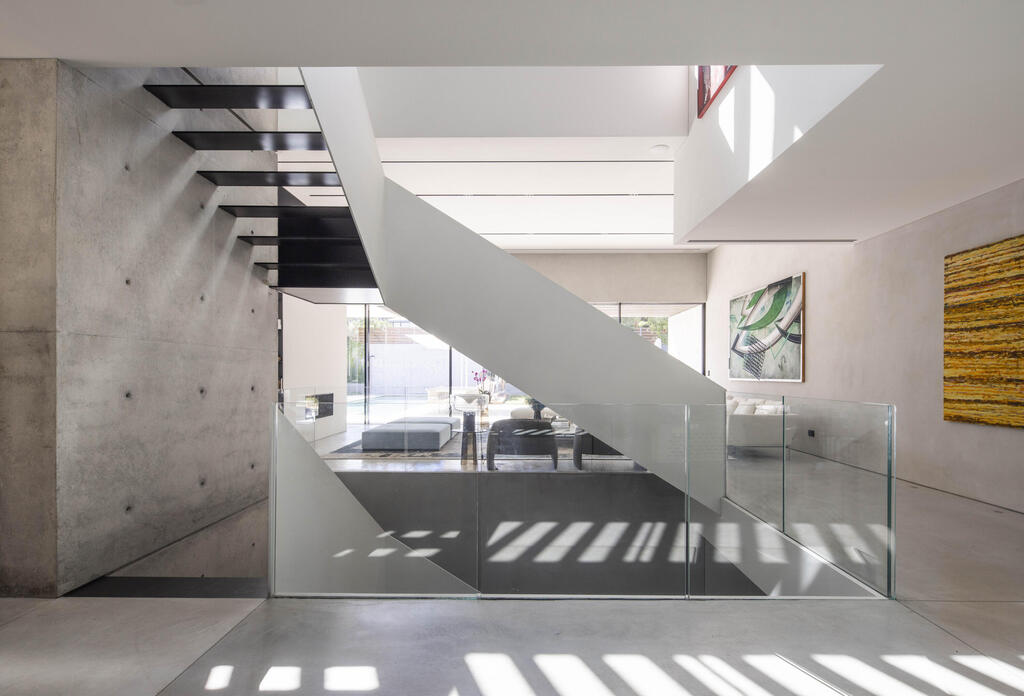
They wanted a modern, minimalist home with clean lines
(Photo: Nimrod Levy)
The ground floor houses the communal spaces: a large entryway, dining room, living room, kitchen, and family area opening to the backyard and pool. Upstairs are the parents’ suite and four children’s suites. The basement includes a guest room, home cinema with a bar, office, laundry room, and shelter.
The exterior uses natural materials: concrete, mineral plaster, oak, stone, glass, and metal, while inside, neutral tones of white, black, and gray create a calm canvas for furniture and art to shine. “A home should be a background,” Zoref says. “What brings it to life are the people and the objects they choose.”
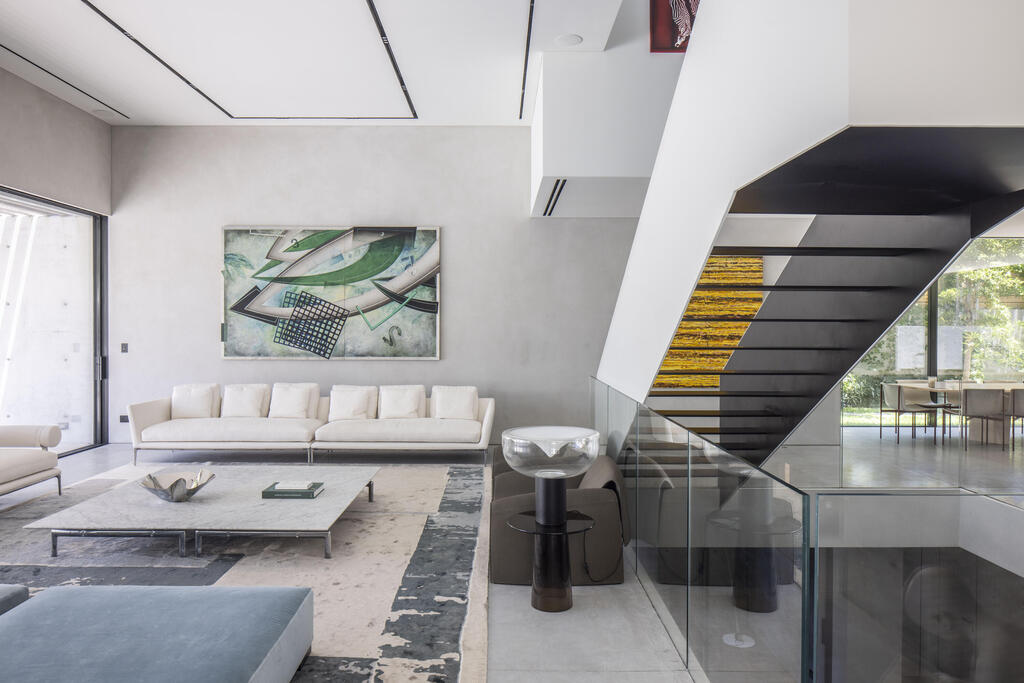
The living room beside the staircase
(Photo: Nimrod Levy)
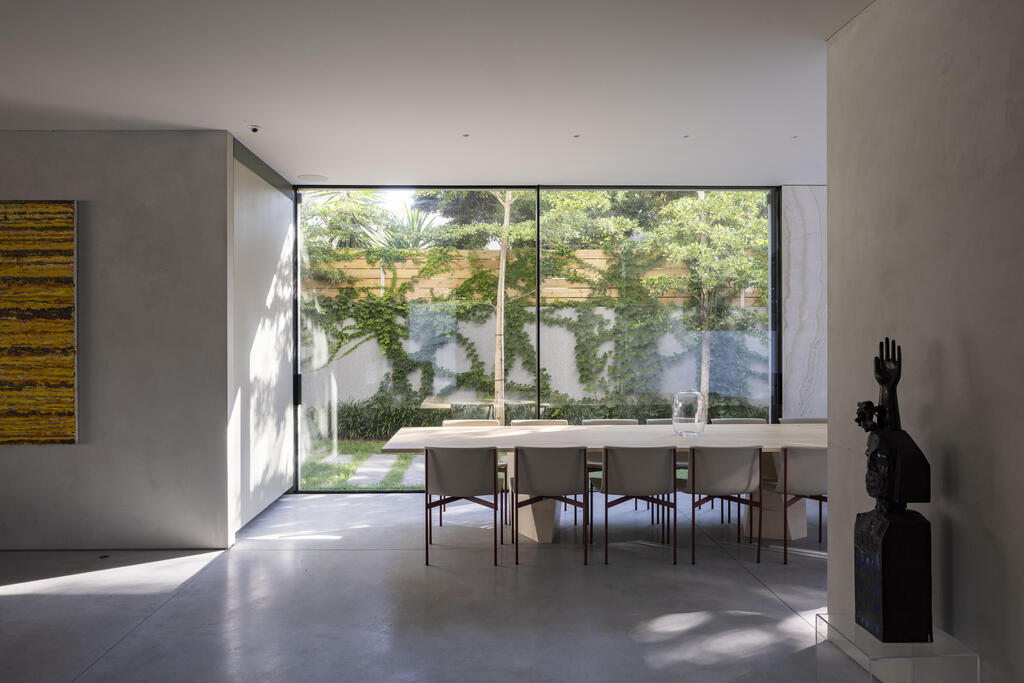
The dining area
(Photo: Nimrod Levy)
The floating effect
From the outside, the home appears to float lightly above the ground. The design was inspired by classical architecture, where heavy lower levels support lighter, more refined upper volumes. Here, the concrete-clad ground floor contrasts with a smooth white upper floor that seems to hover above it.
Creating this effect was an engineering challenge. Working with structural engineer Aharon Daniel, a veteran professional and amateur pilot, they designed the upper floor to hang from roof beams supported by minimal columns. The result: airy openness and a subtle sense of weightlessness.
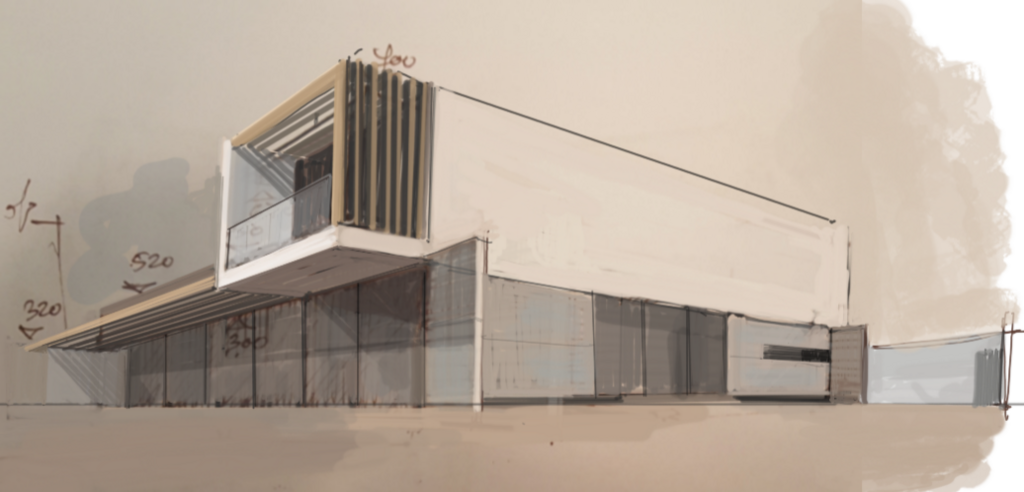
A sketch of the house in a painterly style
(Illustration: Amir Zoref)
The upper floor extends over the pool area, providing shade, while the entrance canopy rests on only two walls, creating a suspended welcome space for visitors.
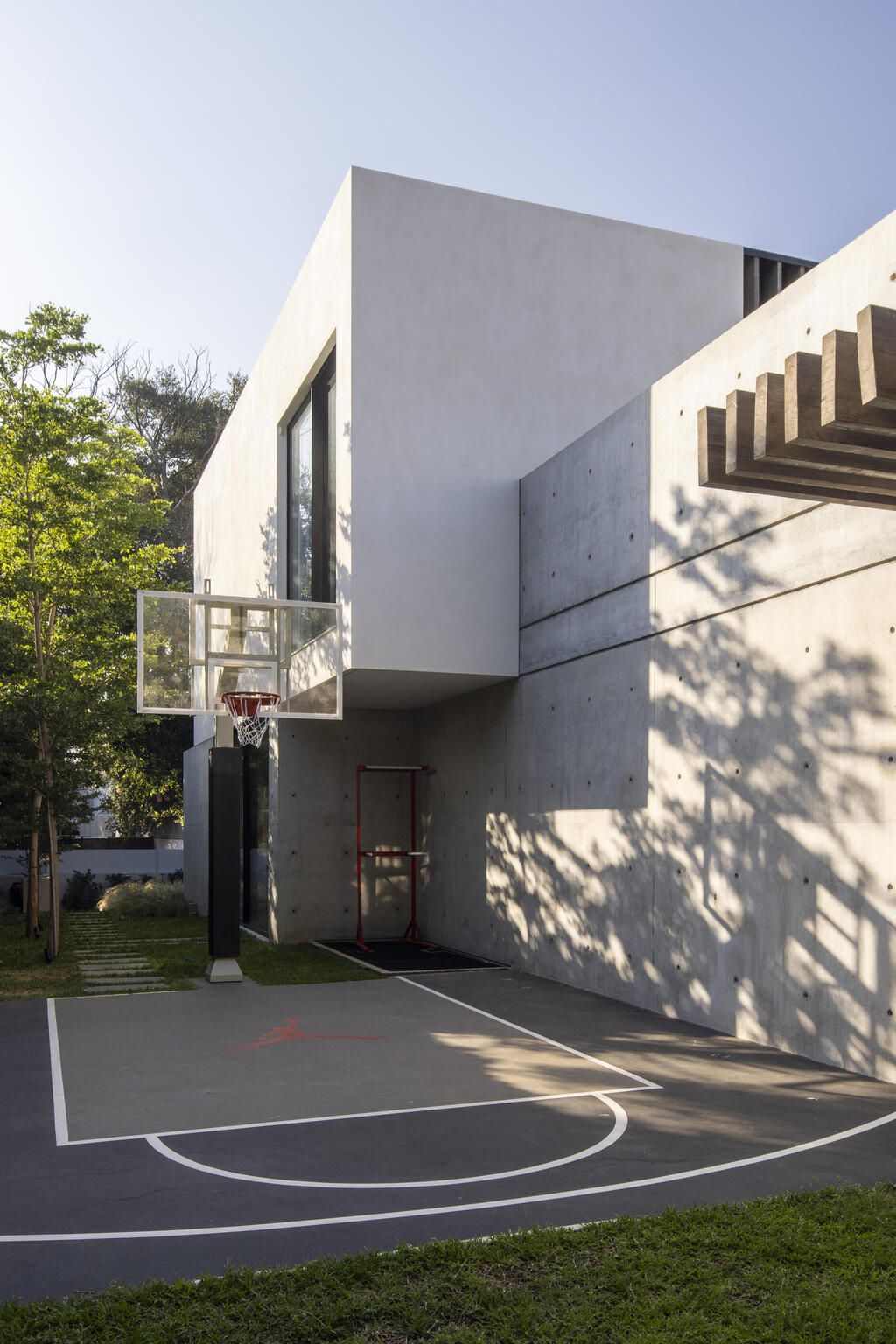
The basketball court in the yard
(Photo: Nimrod Levy)
The outdoor area includes a basketball court, designed at the homeowner’s request for his son’s practice sessions. “It even has regulation markings for three-point shots and free throws,” says Zoref.
Art, light and living
The entrance gate is minimalist, set back from the street to create a gradual ascent lined with greenery. Inside, the open floor plan maintains flow while subtle partitions define space, a two-sided fireplace separates the living and family areas without breaking sightlines.
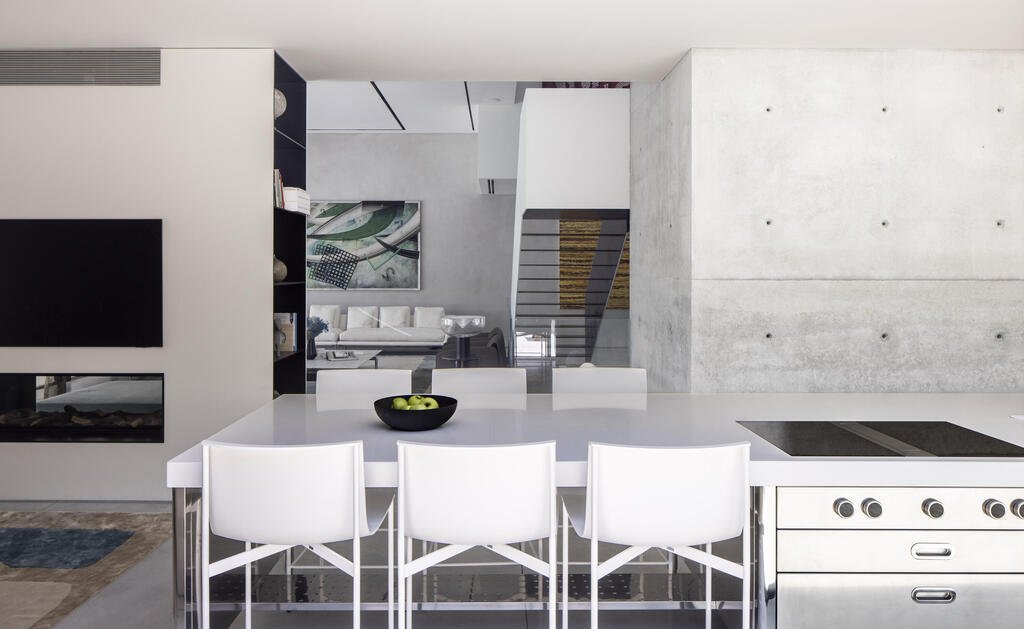
A long stainless-steel island with a white Corian surface
(Photo: Nimrod Levy)
The kitchen combines industrial and elegant elements: a stainless-steel island, white Corian surfaces, and hidden utility areas. “It’s a ‘Nigga Chef’ kitchen, professional yet refined,” says Zoref. “We even flew to Milan to buy most of the furniture.”
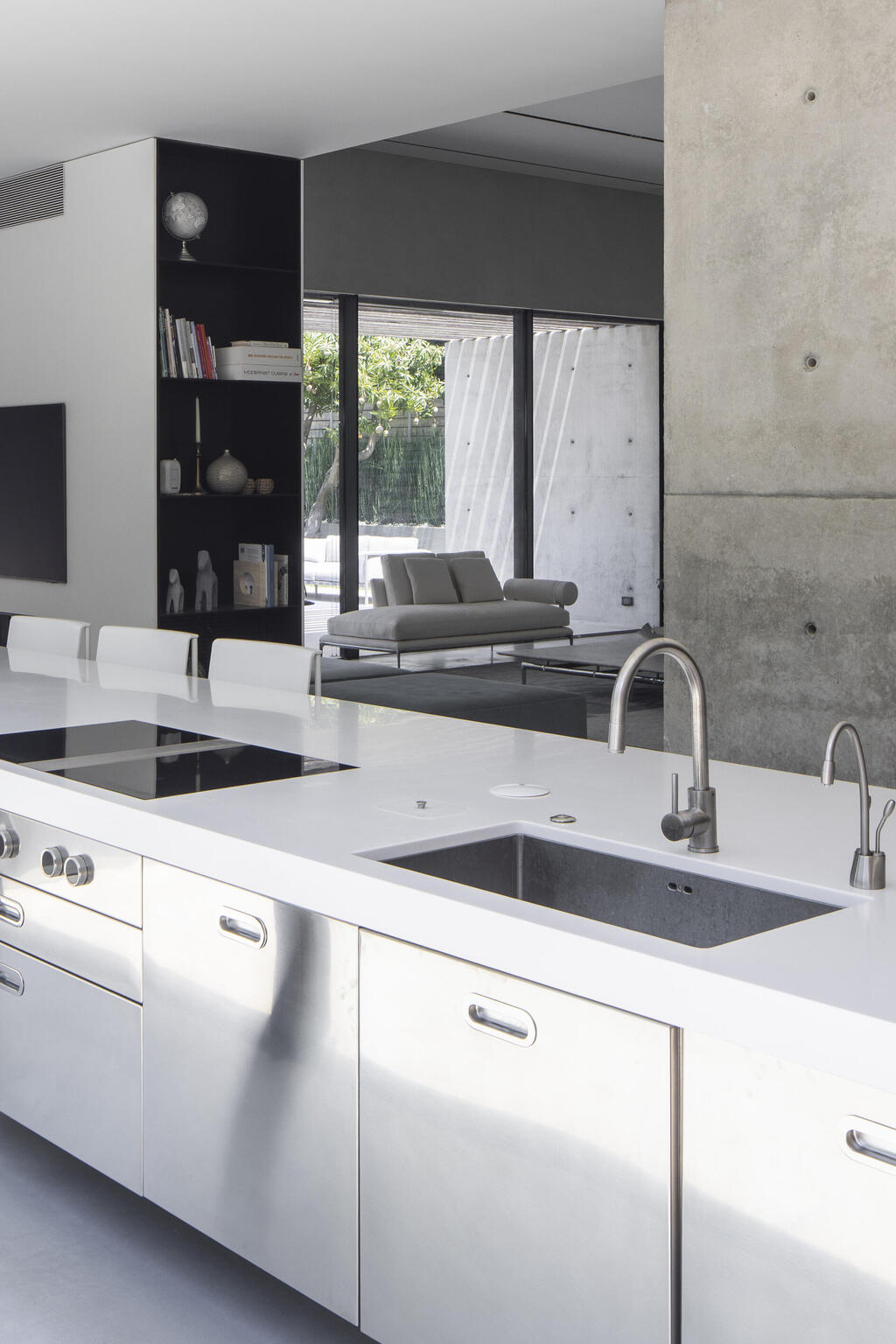
Industrial and durable yet also elegant
(Photo: Nimrod Levy)
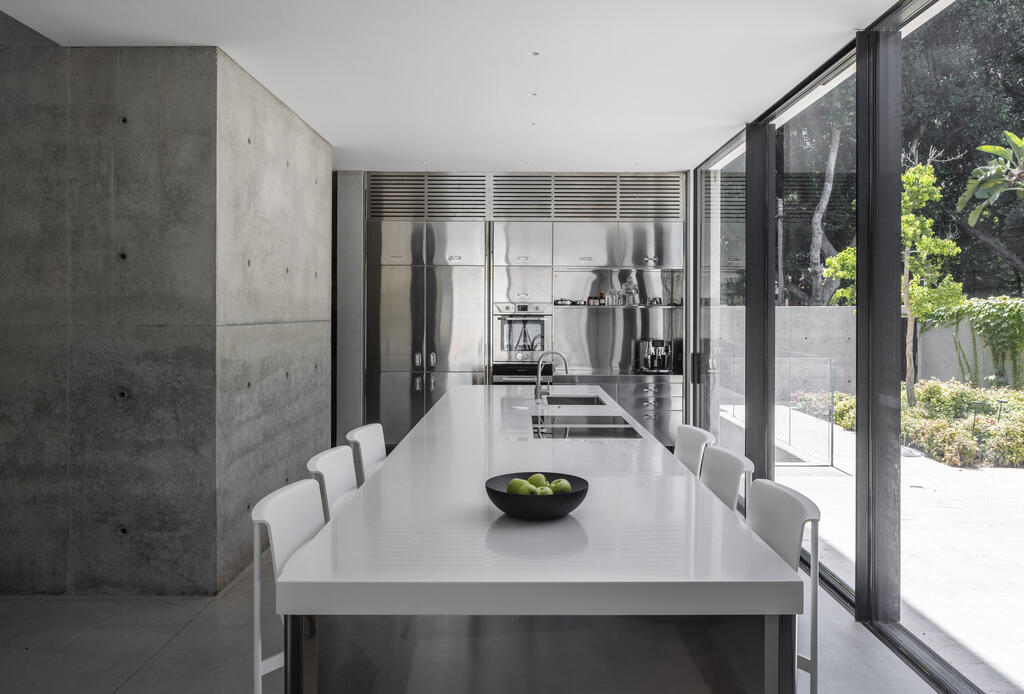
A stainless-steel kitchen adjoining the outdoor area
(Photo: Nimrod Levy)
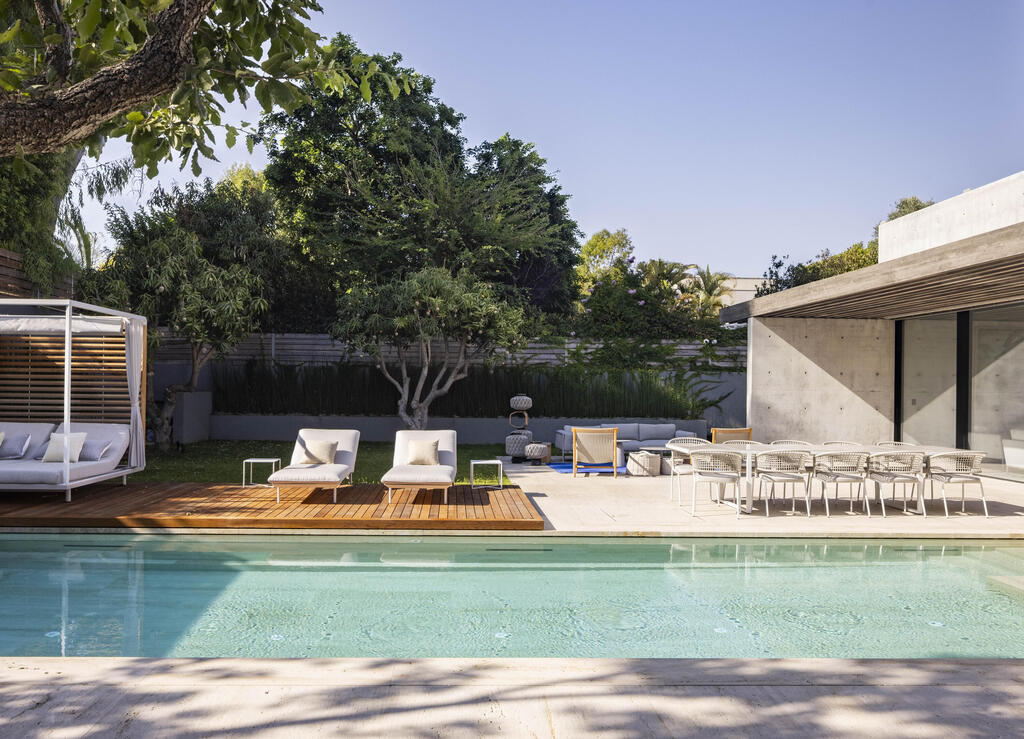
Large glass doors open to the pool terrace, paved in brushed travertine that continues into the pool itself, reflecting the sky’s turquoise and golden hues. The garden features a green wall, mature oak trees, a sunken firepit area, and a concrete bar for outdoor entertaining.
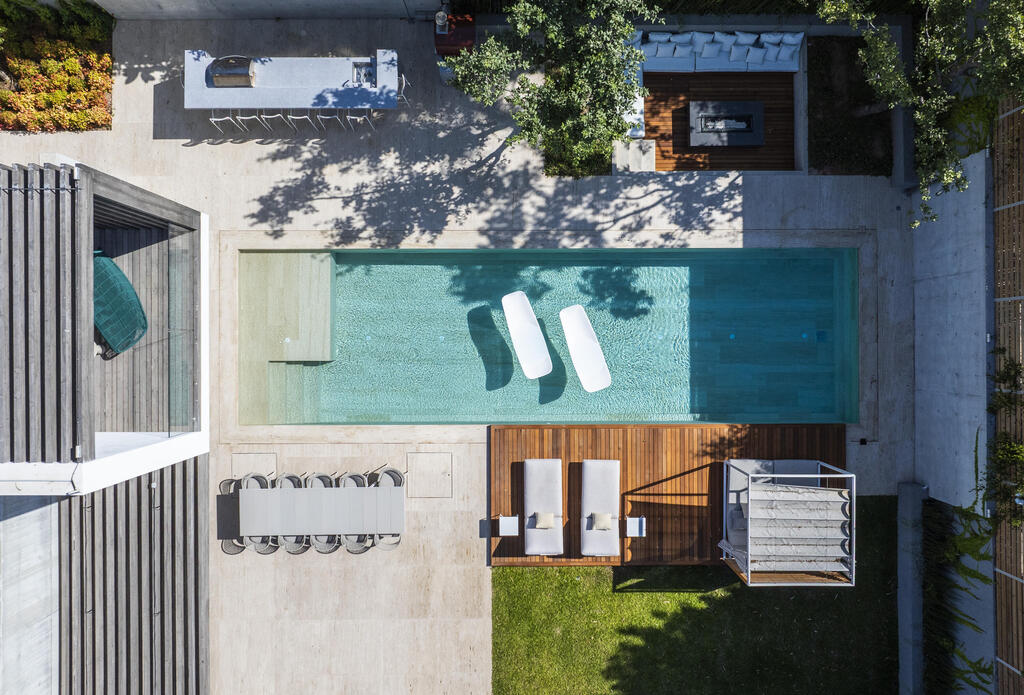
An aerial view of the yard
(Photo: Nimrod Levy)
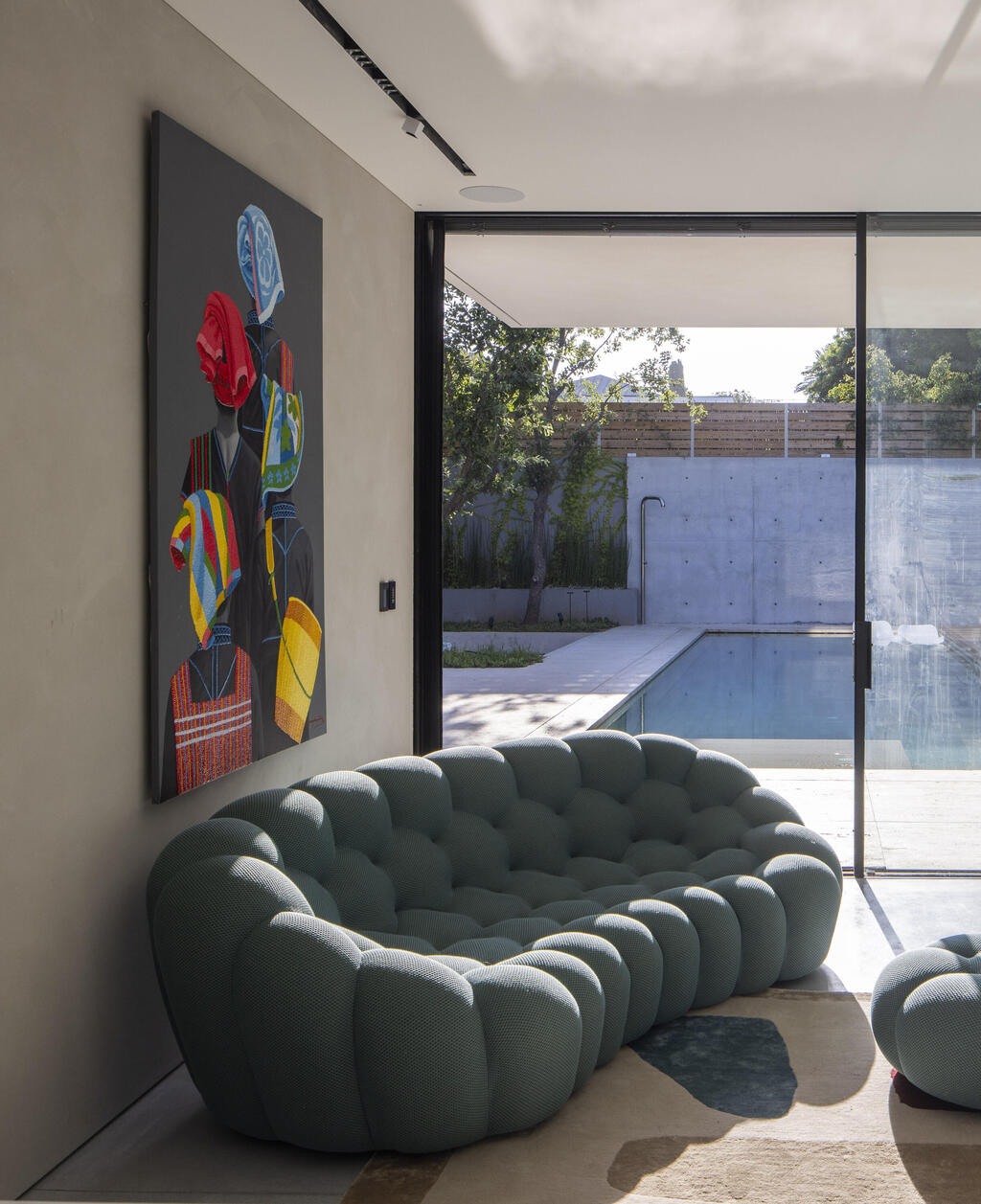
A seating area adjacent to the glass façade
(Photo: Nimrod Levy)
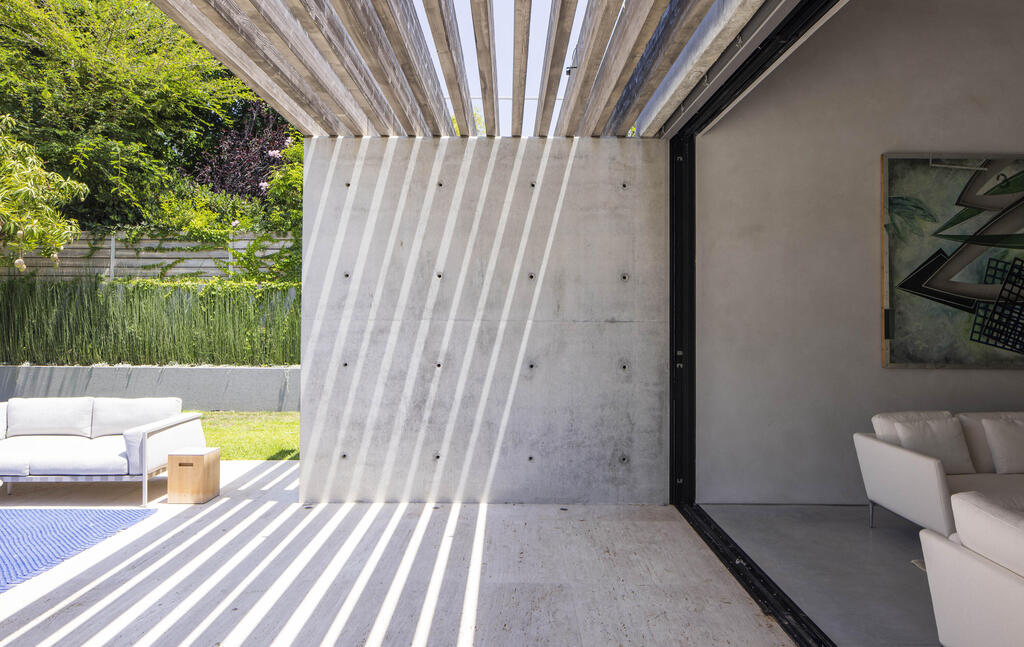
The exit from the living room to the yard, partially shaded
(Photo:Nimrod Levy)
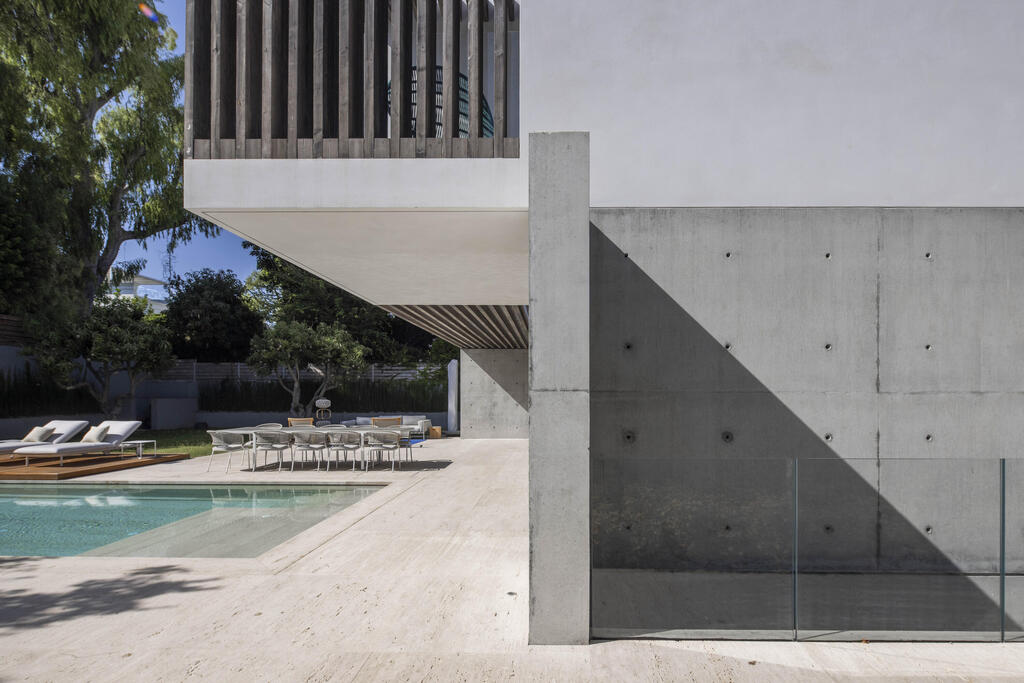
The upper floor casts shade over part of the yard
(Photo: Nimrod Levy)
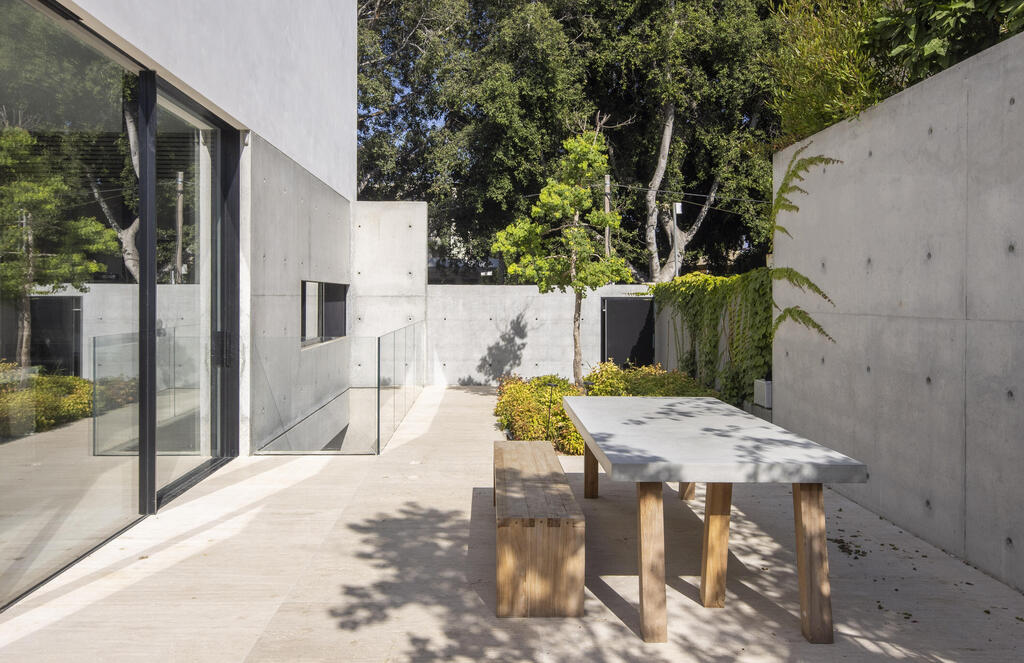
An open-air dining area
(Photo: Nimrod Levy)
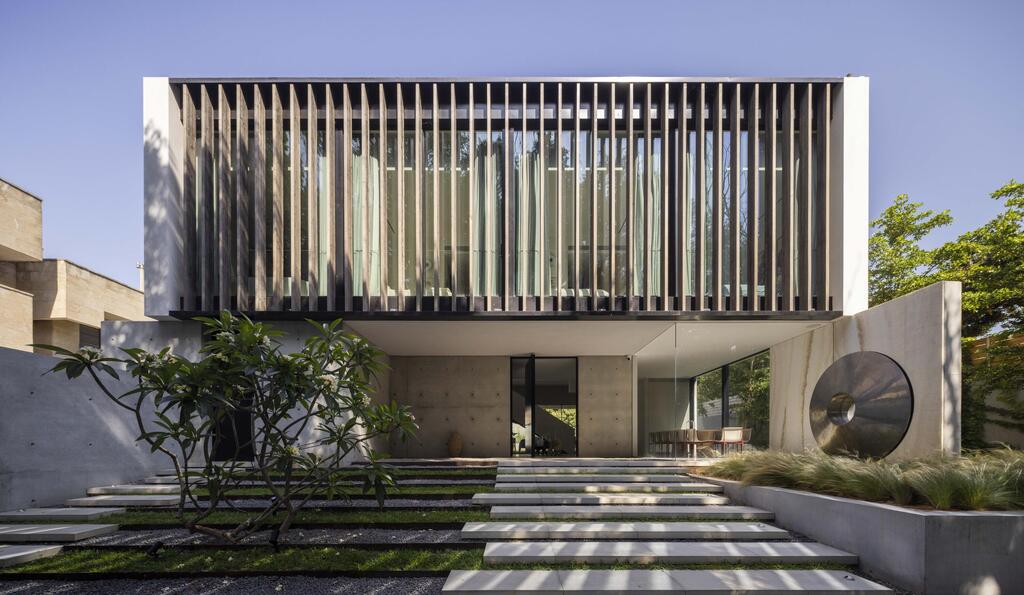
Upstairs, the parents’ suite spans the entire depth of the house, from street façade to garden, with a private balcony, glass wardrobe room, and spacious bathroom. The children’s suites each have private bathrooms and are shaded by vertical oak louvers for privacy and light control.
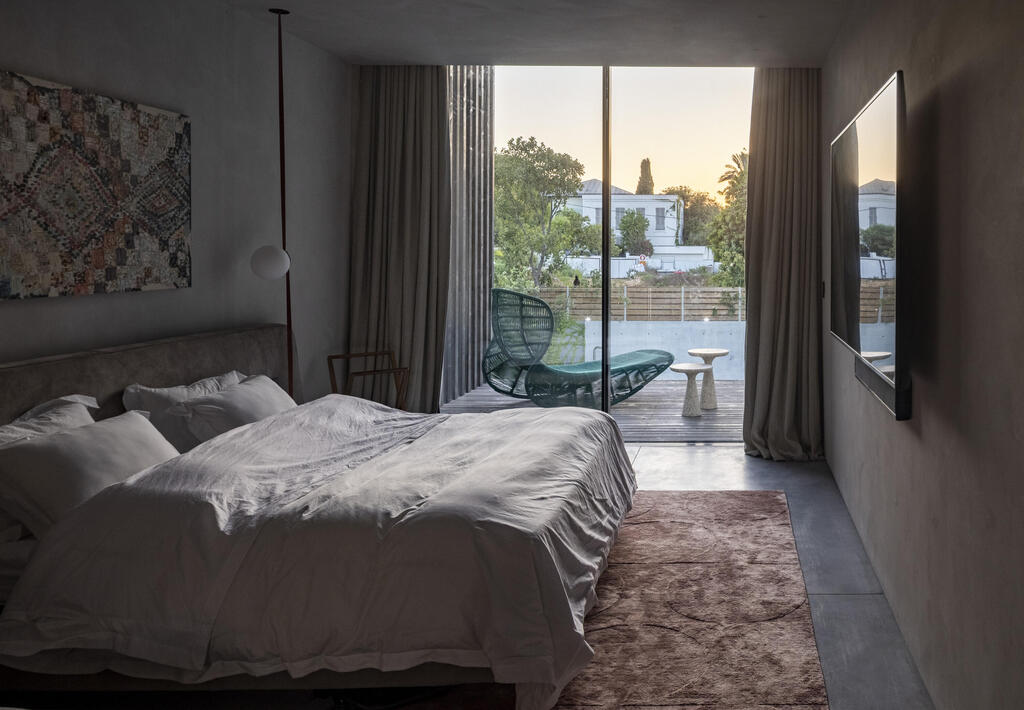
The master bedroom with access to a balcony
(Photo: Nimrod Levy)
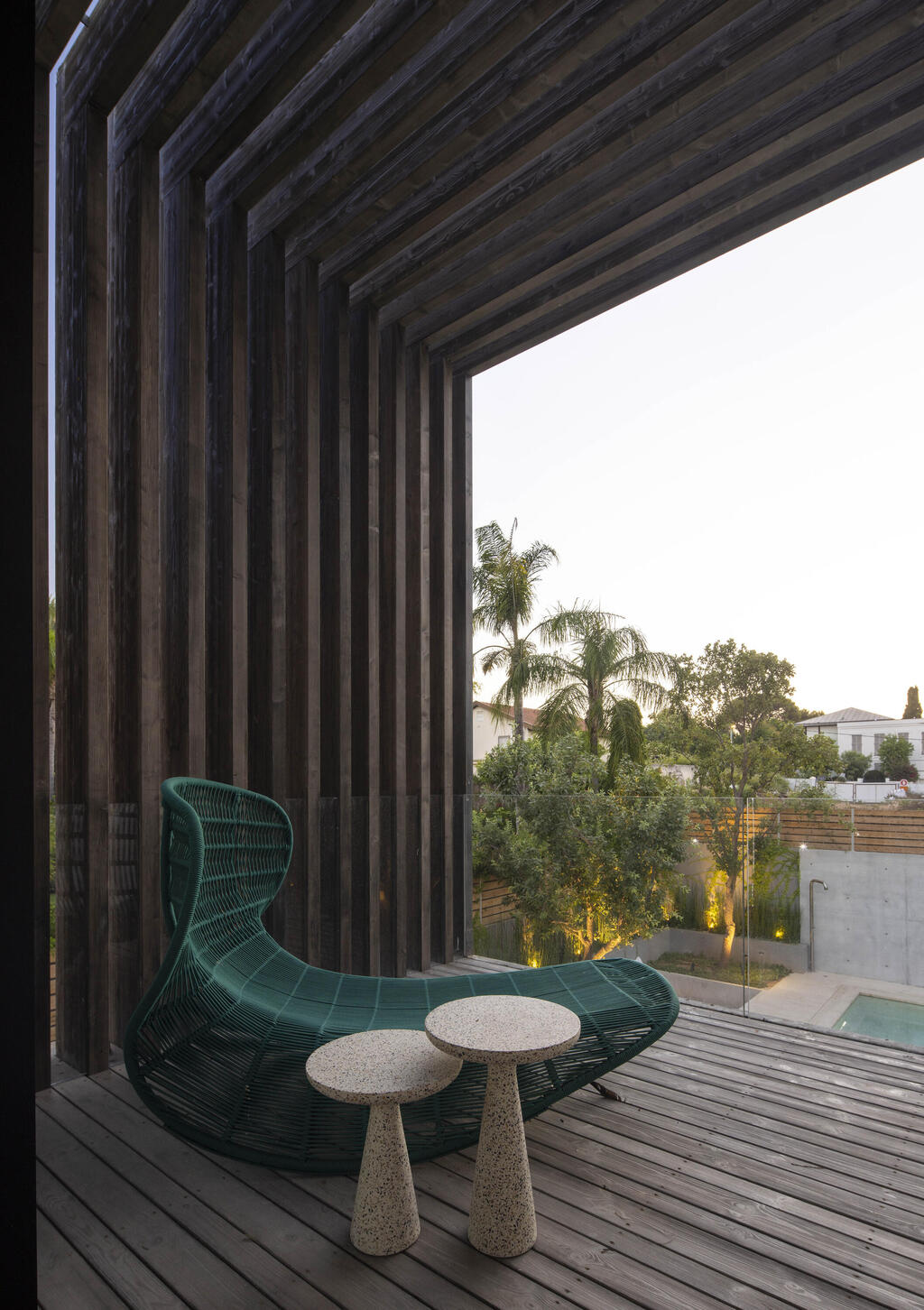
A private sitting area for the couple overlooking the pool
(Photo: Nimrod Levy)
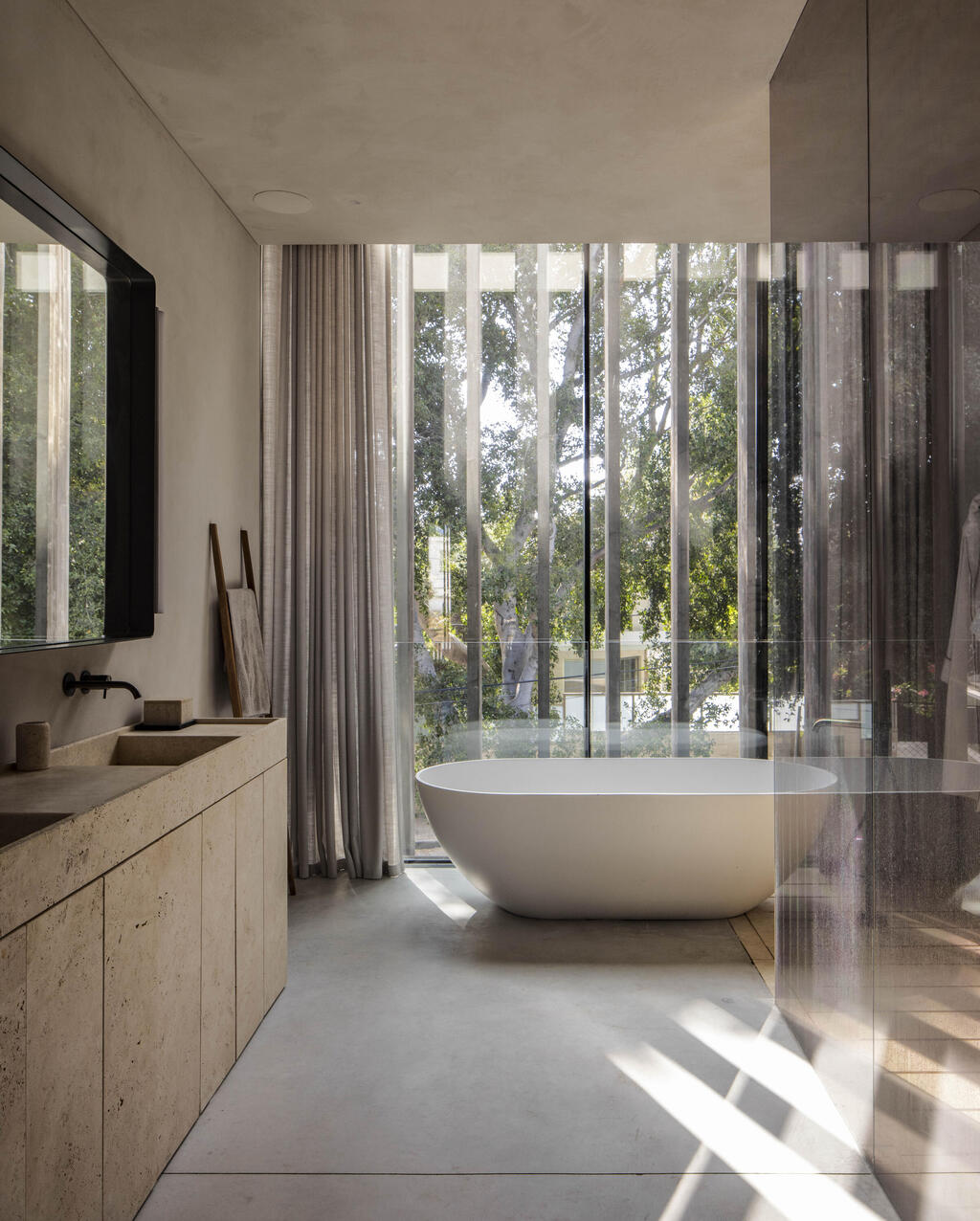
A balance between light and shadow, and between openness and privacy, in the bathroom
(Photo: Nimrod Levy)
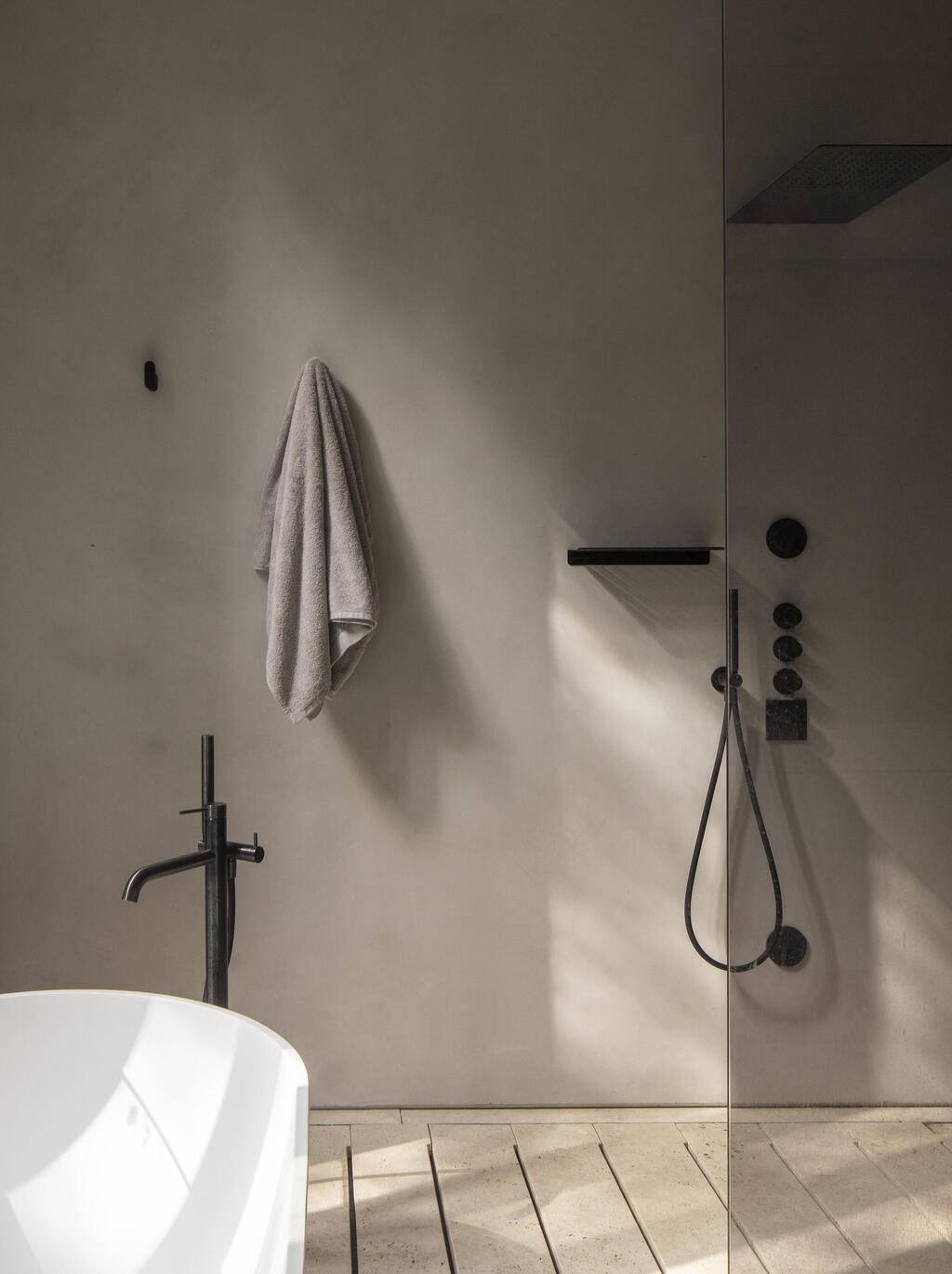
The master bathroom
(Photo: Nimrod Levy)
Descending to the basement reveals a piano corner and library, designed around the elevator shaft. “Originally we thought of placing a grand piano, but I worried about the acoustics,” says Zoref. “They later bought a smaller one, and it fits perfectly.” Nearby stands a custom metal library by CTRLZAK Studio, resembling structural beams yet appearing delicate.
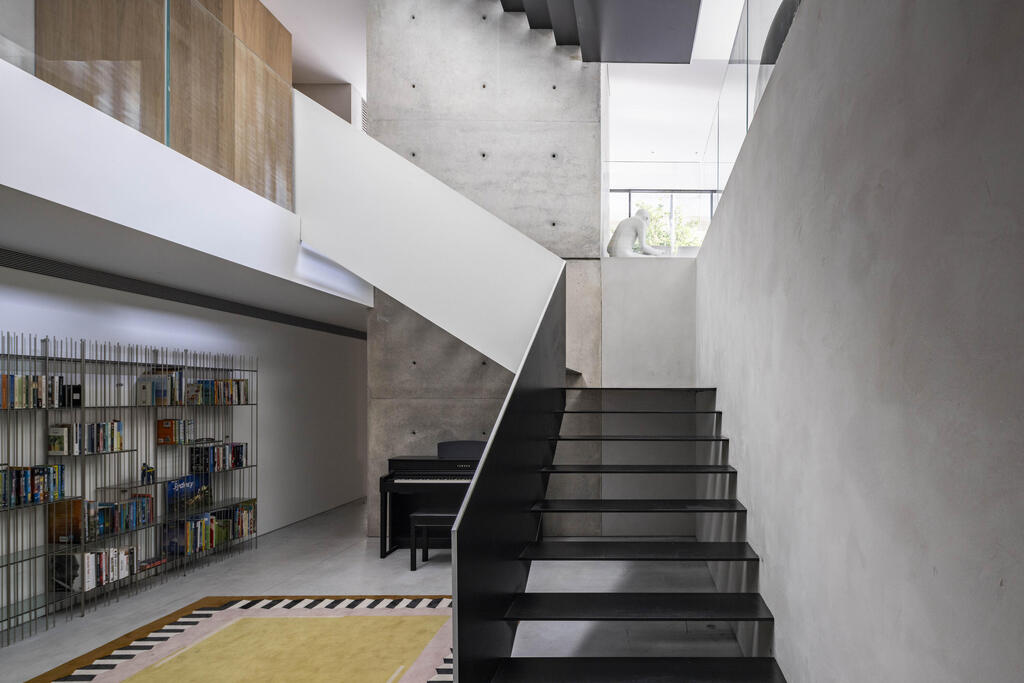
The house features concrete, mineral plaster, massive wooden beams, natural stone, glass, and metal
(Photo: Nimrod Levy)
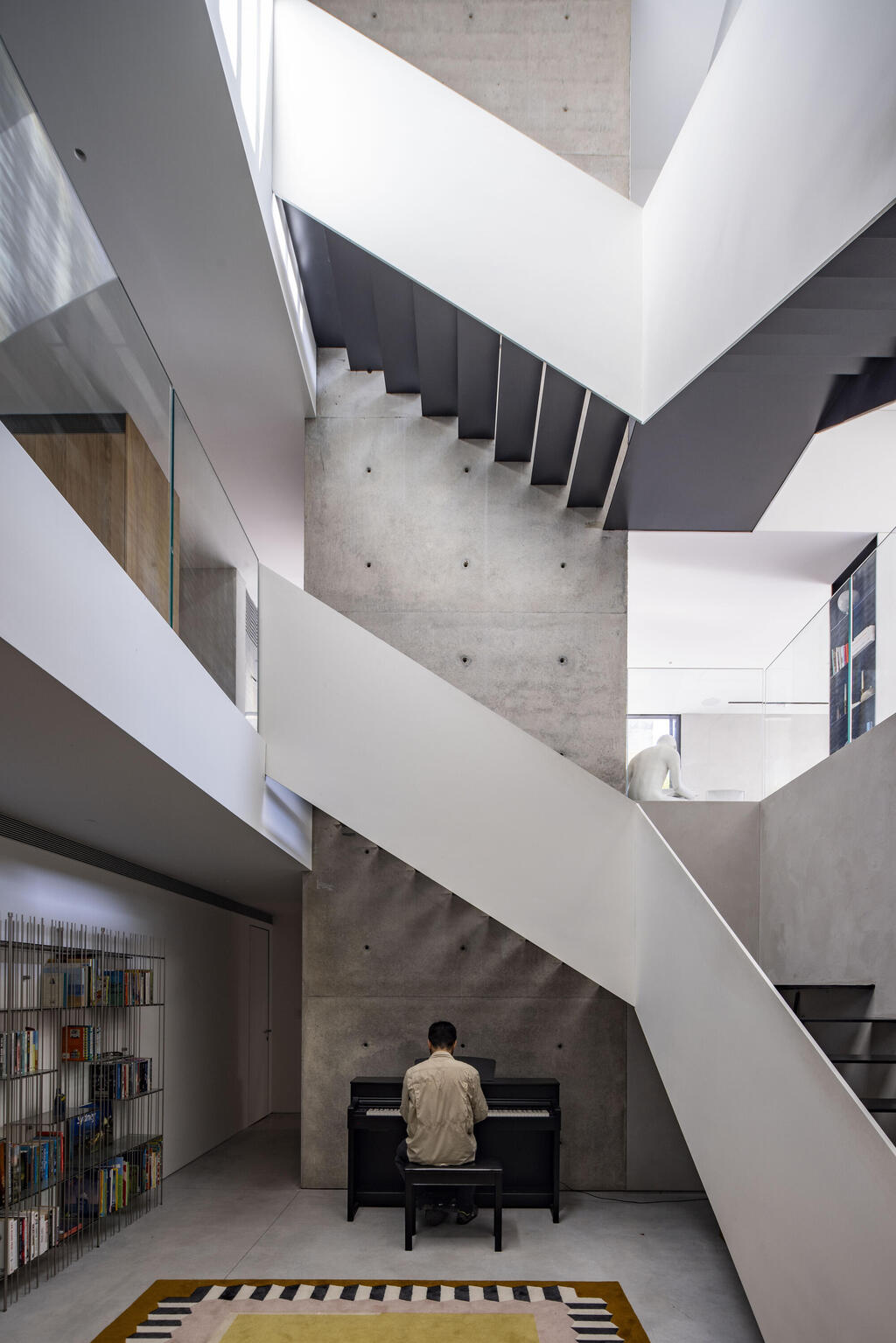
The piano and library area
(Photo: Nimrod Levy)
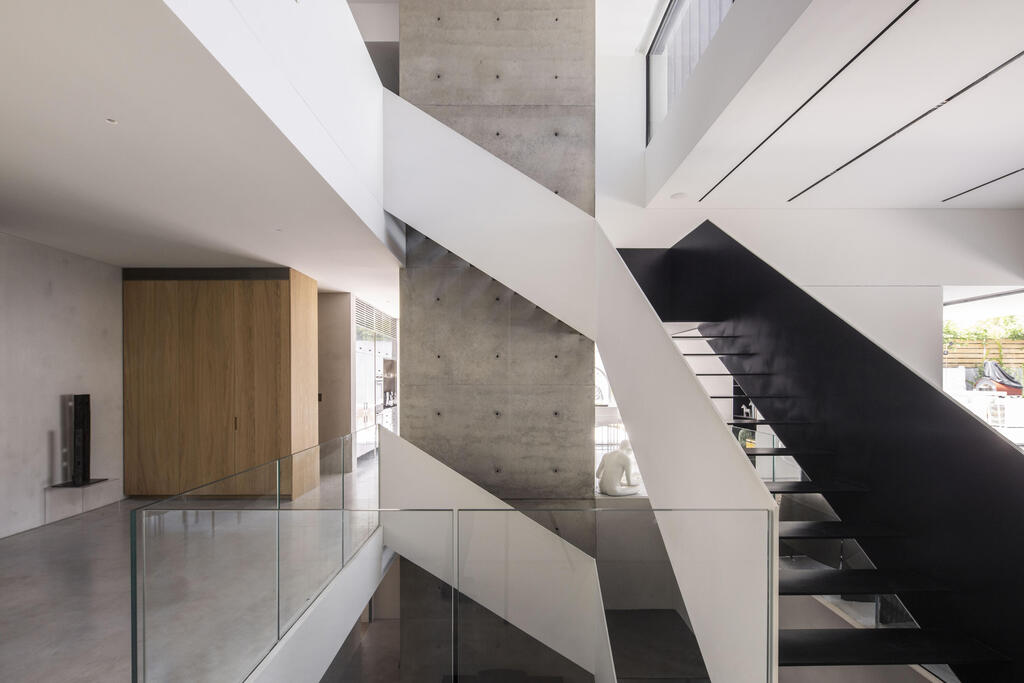
A vertical skylight installed on the upper floor allows natural light to stream inside
(Photo: Nimrod Levy)
The basement includes the cinema and bar, guest suite, office, and service rooms, all naturally lit through sunken courtyards and skylights.
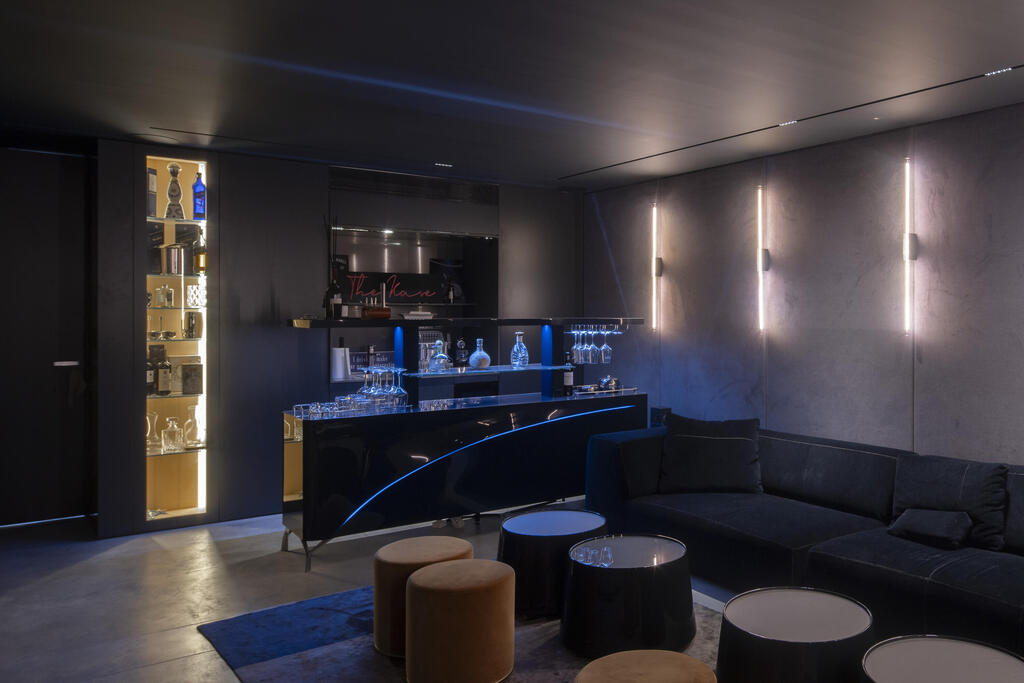
In the basement: a dimly lit home cinema and bar
(Photo: Nimrod Levy)
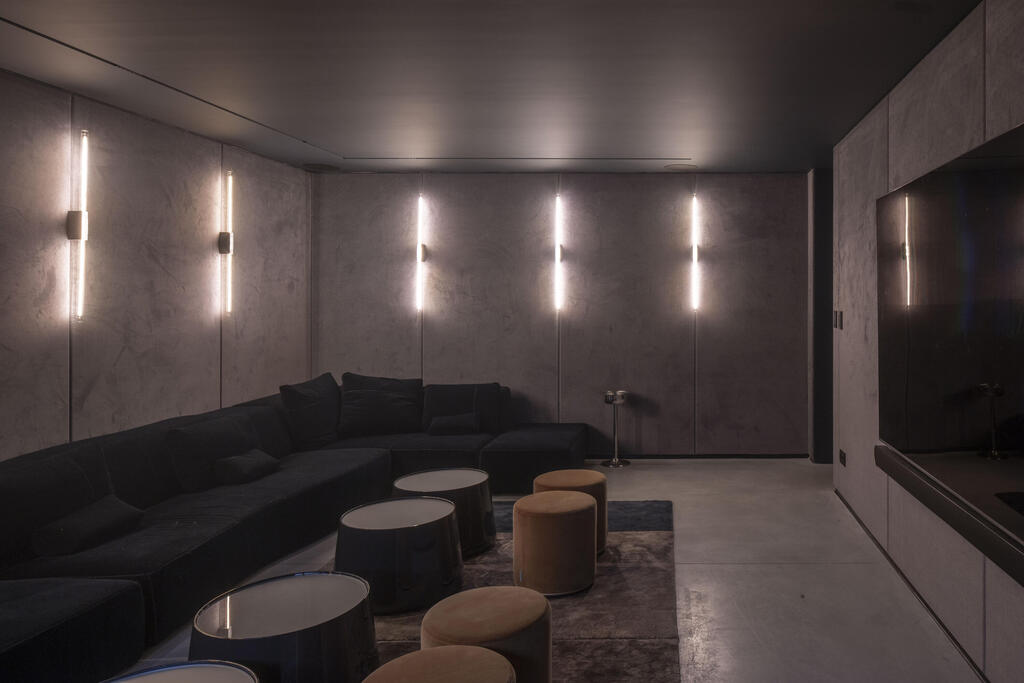
They enjoy hosting in the basement and watching movies
(Photo: Nimrod Levy)
A home that tells a story
Throughout the house, art and architecture intertwine. A polished stainless-steel sculpture greets guests at the entrance, while local Israeli art and bespoke rugs complete the interiors. The staircase, made of folded steel, creates the illusion of a sheet of paper curling through space—one side painted white to merge with the walls, the other black for depth and contrast.
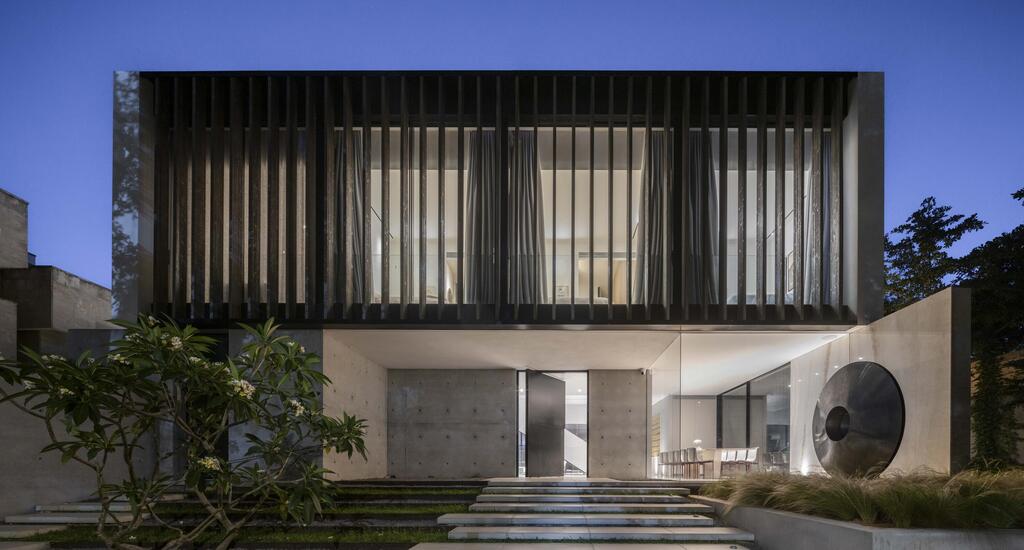
The façade illuminated at night
(Photo: Nimrod Levy)
Even the outdoor flooring reflects thoughtful restraint: natural brushed stone chosen for texture, not show. “The goal wasn’t to impress,” Zoref concludes. “It was to create a home that feels whole, authentic, and alive.”