


On an unconventional 800-sq.mt lot in the green neighborhood of Maccabim stands a home that underwent a yearlong, comprehensive renovation. The project did not attempt to erase the past but to integrate it.
The 350-square-meter house was purchased by a couple with two children who moved from Modi'in to Maccabim in search of space, nature and quality of life.
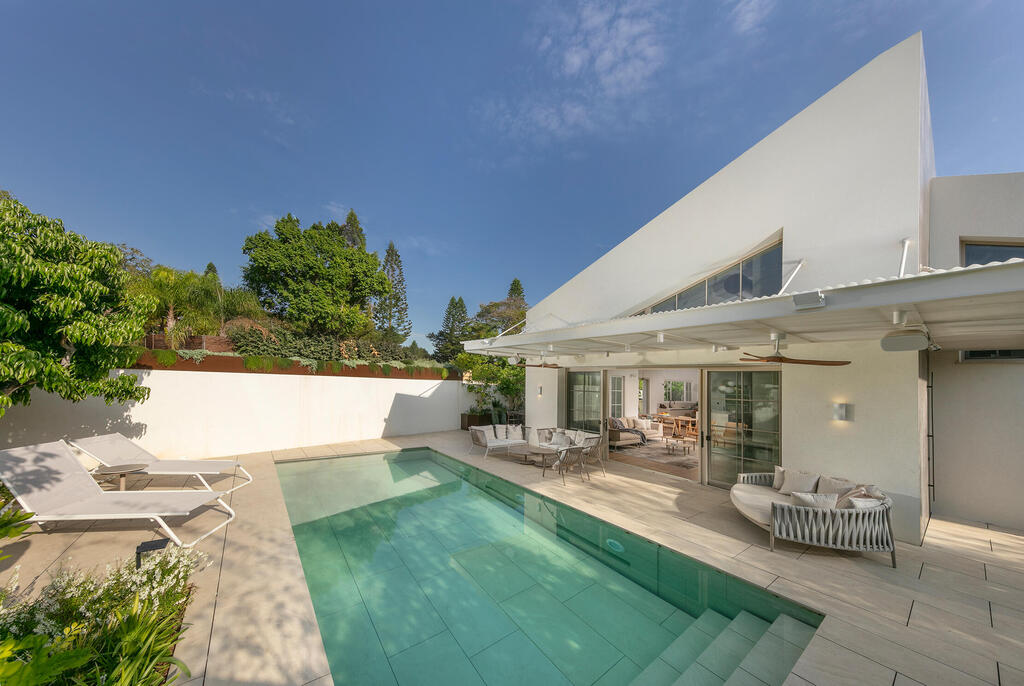
“We could have demolished everything and built a new house from scratch,” said architect Ron Spiegel. “But there was something about this house they loved, the way it sits on the lot and the way the family feels inside it.”
The decision not to raze the structure entirely, but to work within its existing footprint, resulted in a home that blends old and new, layered with character and story. The split-level layout adds both charm and day-to-day comfort.
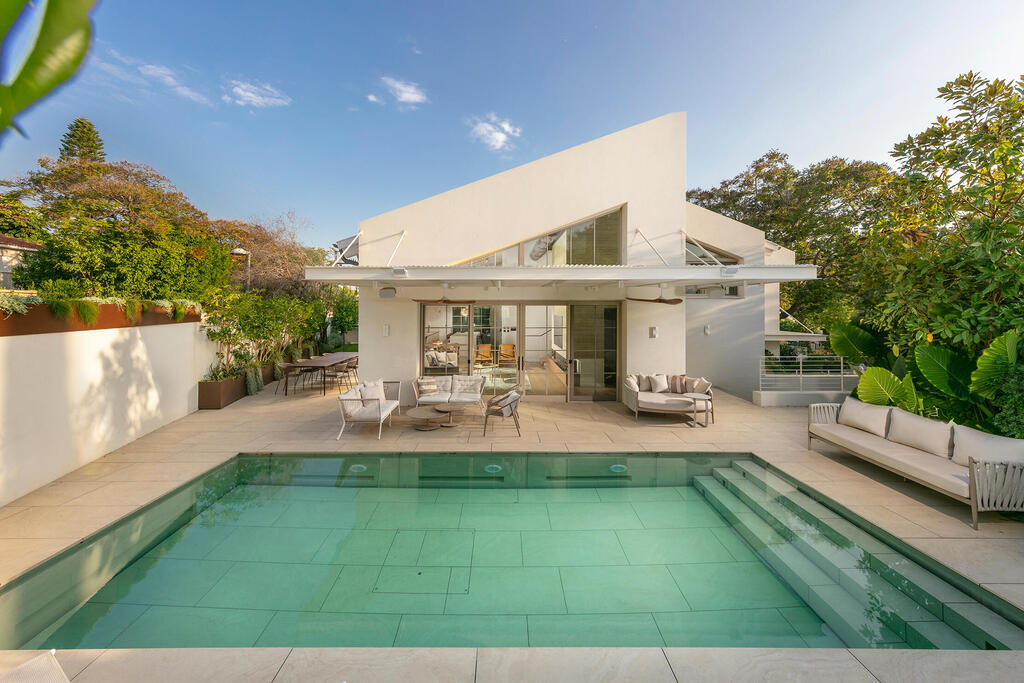
The result: A structure that blends old and new
(Photo: Elad Gonen)
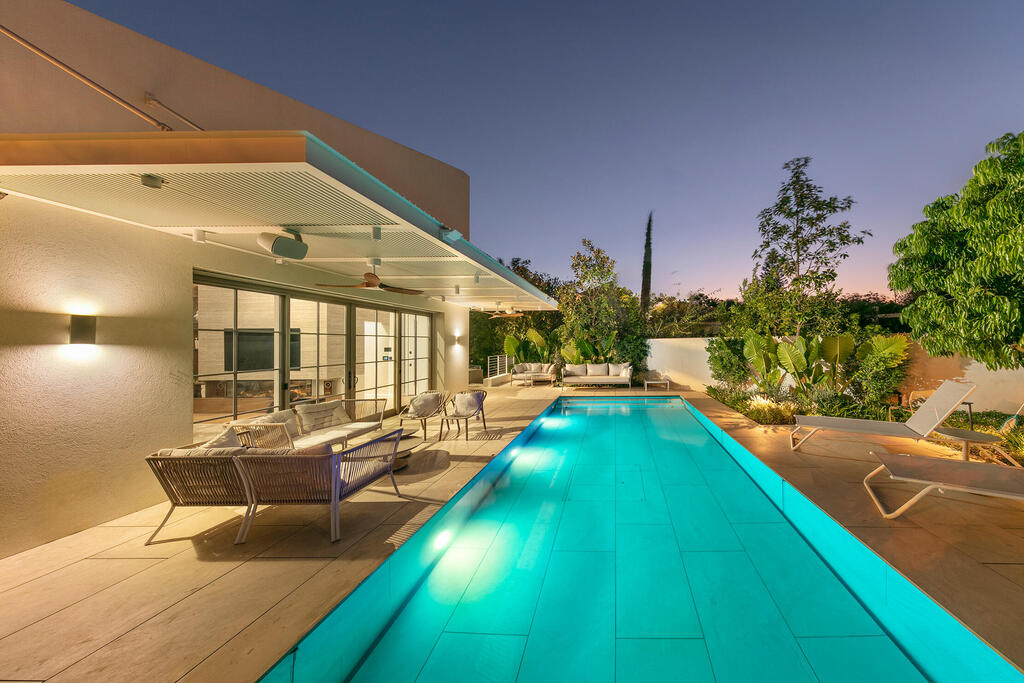
The redesign made it possible to add a swimming pool
(Photo: Elad Gonen)
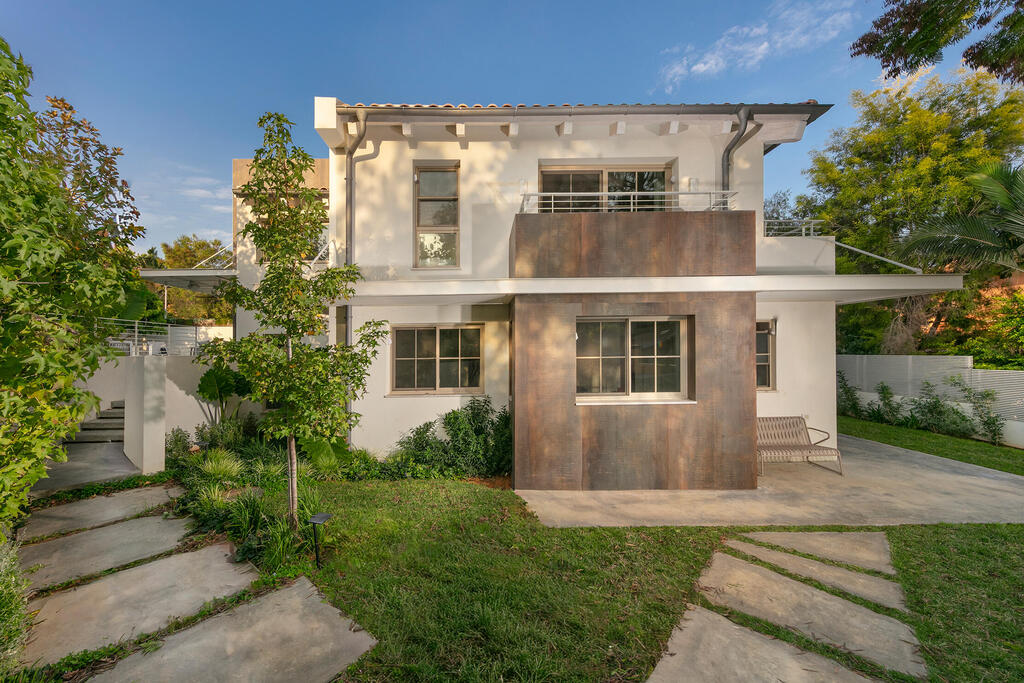
The structure is built across multiple levels. The facade
(Photo: Elad Gonen)
Transforming instead of tearing down
She is a photographer, he works in high-tech, and they asked architect Spiegel to design a home that reflects their shared connection to nature, with an emphasis on functionality.
From the first visit, Spiegel said, it was clear the project posed planning challenges. The trapezoid-shaped lot was unusual, and the original house sat almost at its center, leaving small fragments of yard on all sides, without a clear or usable outdoor area. The structure was also built on multiple levels. The main living space, kitchen and living room, was low, small and enclosed, while the upper floors enjoyed greater height and volume.
“One of the toughest problems in renovation is ceiling height,” Spiegel said. “Once you attempt to increase the ceiling height of an existing house, the project quickly spirals in terms of planning complexity and budget.”
With that in mind, and aiming to keep costs realistic, a strategic decision was made: demolish only about half the house and reorganize the interior to suit the family’s lifestyle.
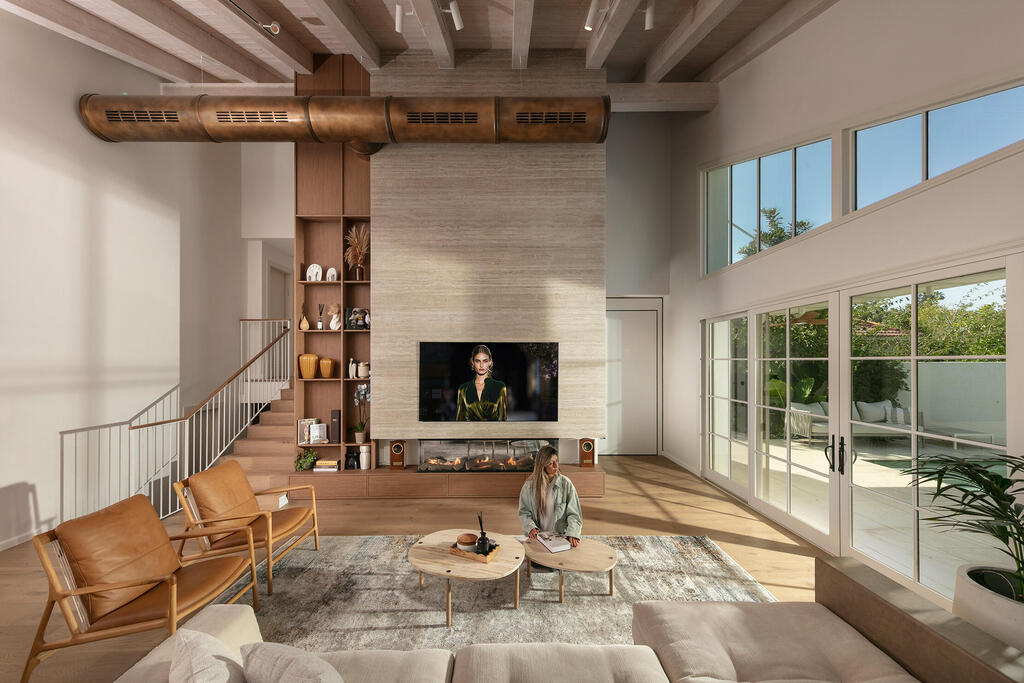
The living room was relocated to a taller, brighter space
(Photo: Elad Gonen)
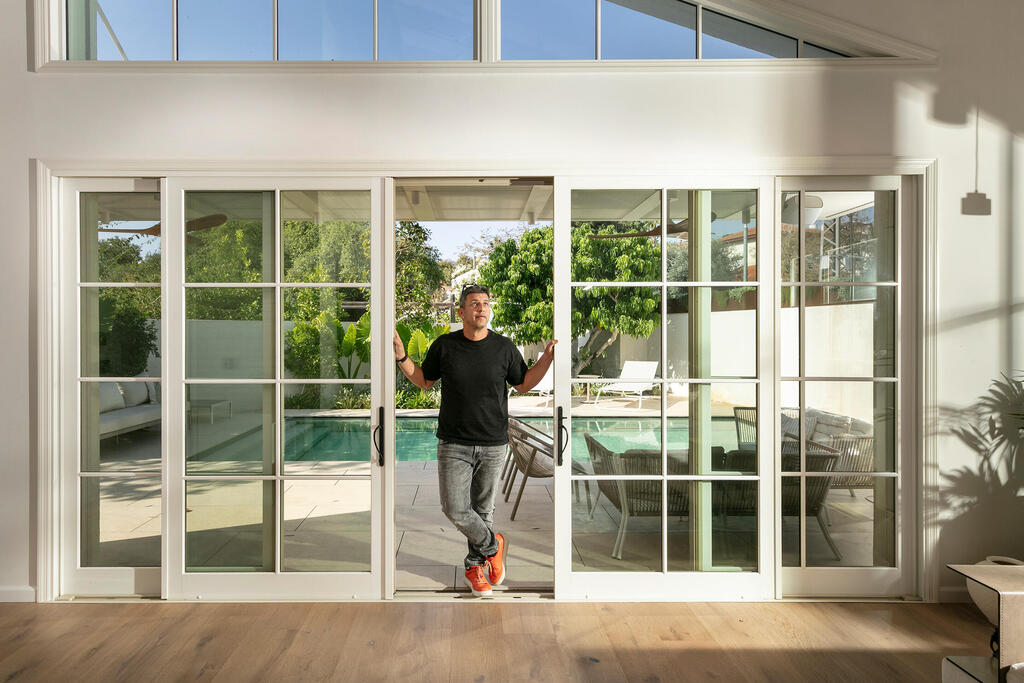
From a closed structure to a home connected to its surroundings. Ron Spiegel
(Photo: Elad Gonen)
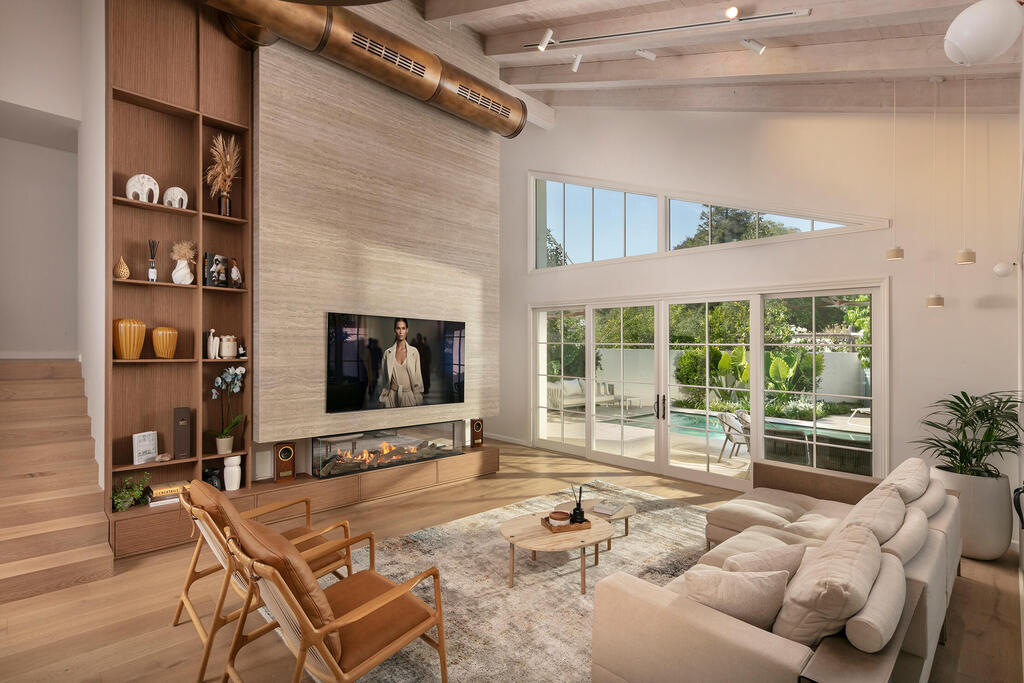
Space that begins at about 6 meters high and gradually descends to 3 meters. Fireplace by Ortal Fireplaces
(Photo: Elad Gonen)
The front portion of the house, which previously contained the low kitchen and living room, was converted into bedrooms. The new central living space, including the kitchen, dining area and living room, was relocated to the rear of the lot, where a soaring ceiling and direct connection to a spacious yard could be created.
The move completely transformed the living experience, from a closed, tiered structure into an open, tall and environmentally connected home.
Relocating the main space also shifted the entrance farther back. The approach became part of the architecture itself, a stepped pathway with precise lighting leading to a dramatic front door approximately seven meters high.
Upon entry, the central space is revealed. It begins at about six meters in height and gradually descends to three meters. Slanted wooden beams, a sense of flow and a wide envelope of windows that frame greenery from every direction give the structure strong character.
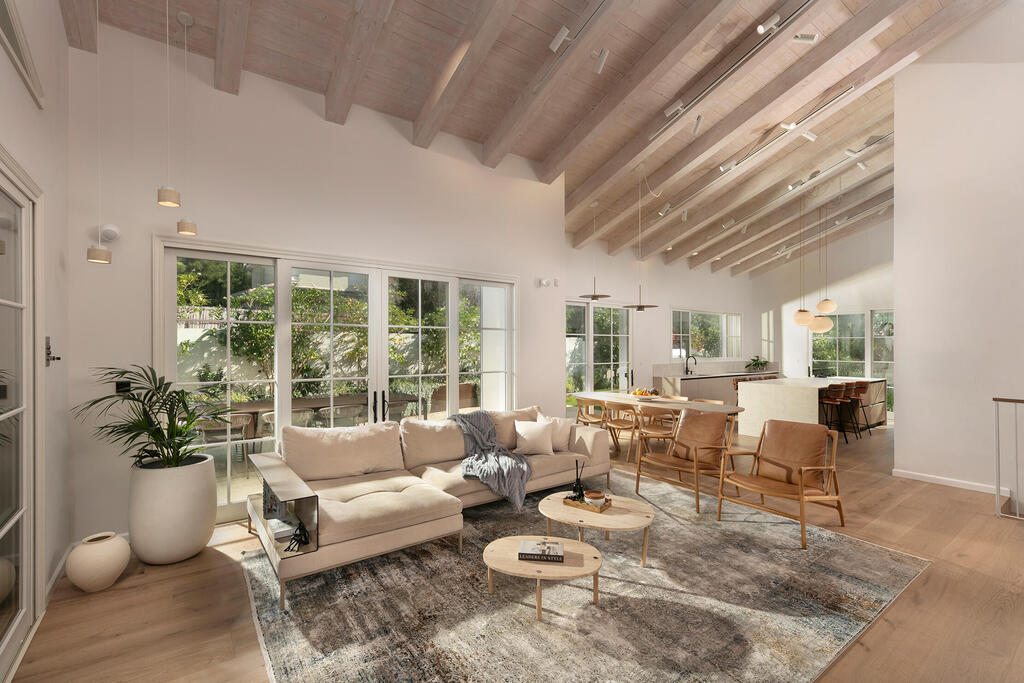
Slanted wooden beams that add character to the home
(Photo: Elad Gonen)
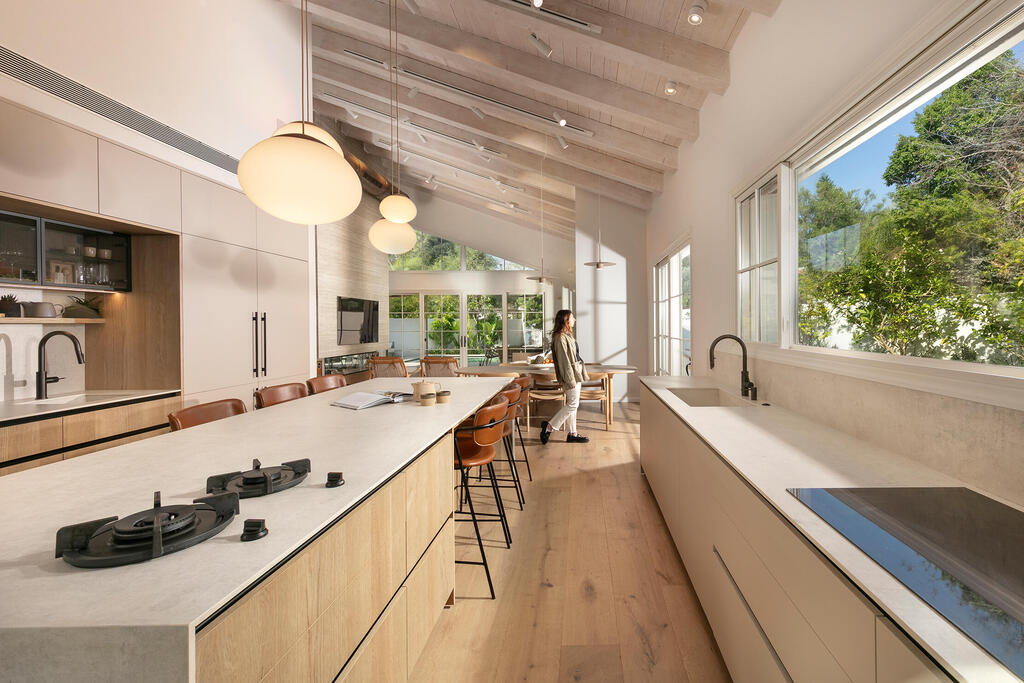
A bright kitchen designed by Semel Kitchens
(Photo: Elad Gonen)
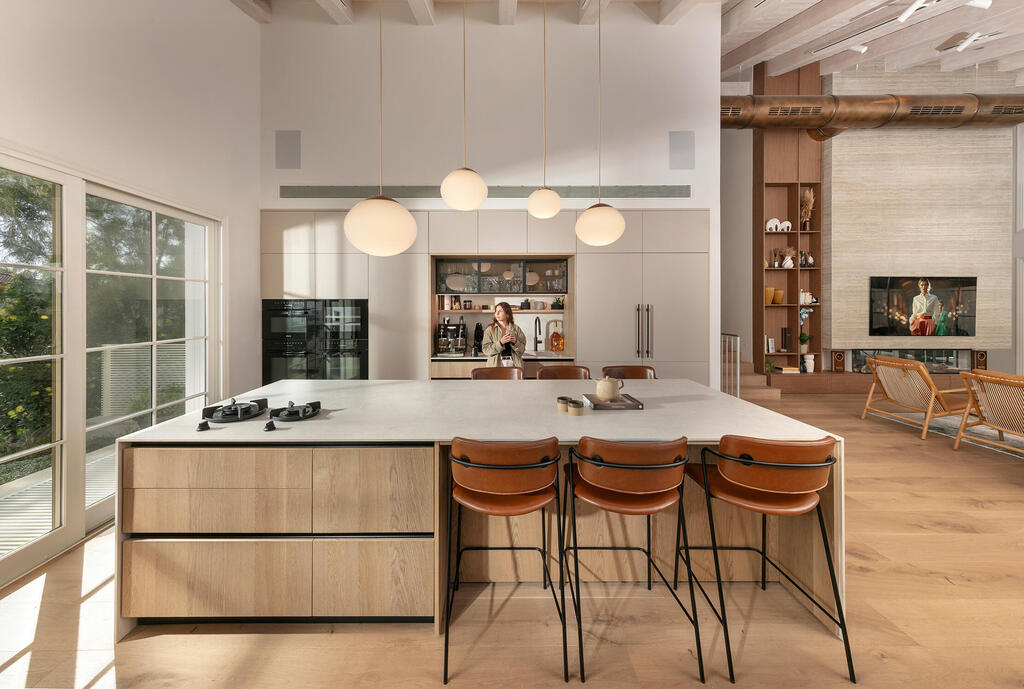
The kitchen
(Photo: Elad Gonen)
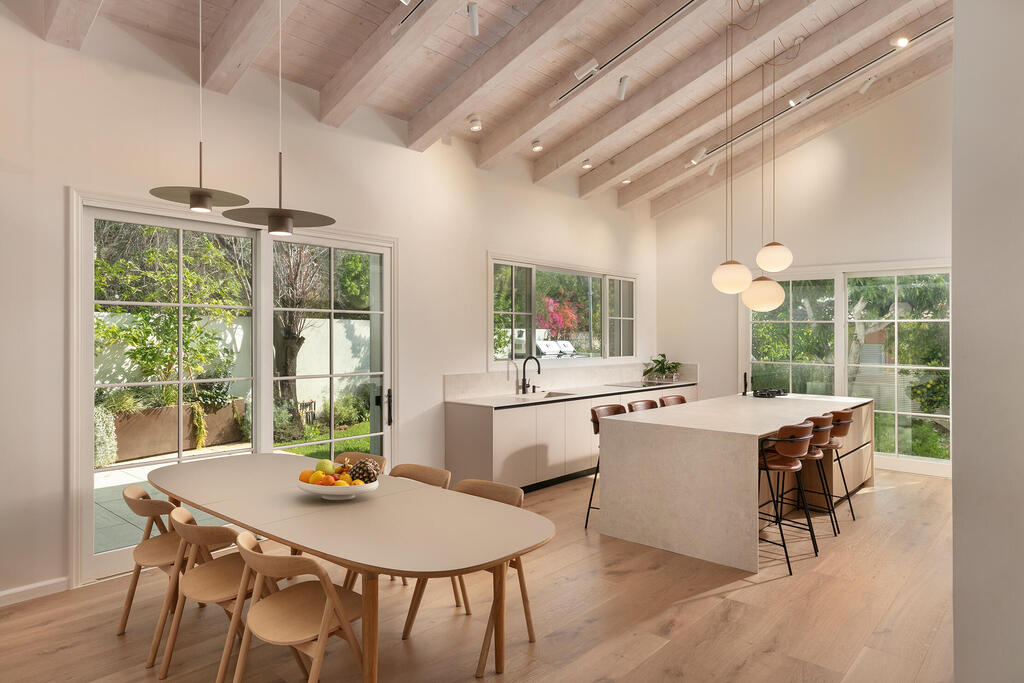
The dining area adjacent to the kitchen
(Photo: Elad Gonen)
A dedicated coffee area
To the right of the entrance are the guest bathroom, and opposite them, a striking TV wall clad in natural travertine stone. Integrated into the wall are a TV, a fireplace by Ortal Fireplaces and an exposed air-conditioning duct. “This creates a foyer that gently separates the entrance from the living room without using walls,” Spiegel explained.
The home was planned so that almost every viewpoint opens to the yard. The windows are set in a measured rhythm that evokes a rural-classic feel, interpreted through a contemporary design language.
The kitchen, designed in collaboration with Semel Kitchens, was moved to a new location and also benefits from generous height and a large window with a door to the garden.
“The kitchen was planned around the family’s lifestyle,” Spiegel said. “Behind the wall of tall cabinets is a hidden pantry, and one unique element is the coffee area, a central hobby of the homeowner, with a dedicated place for every stage of the ritual, from the machine to the cups and even a designated waste bin.”
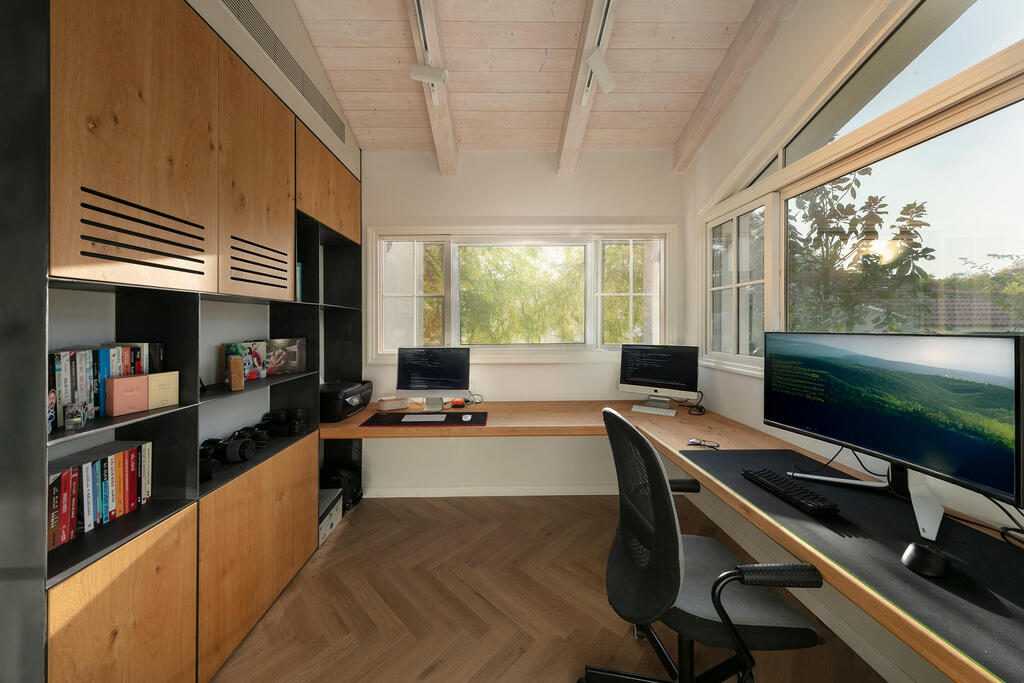
The home office faces the yard
(Photo: Elad Gonen)
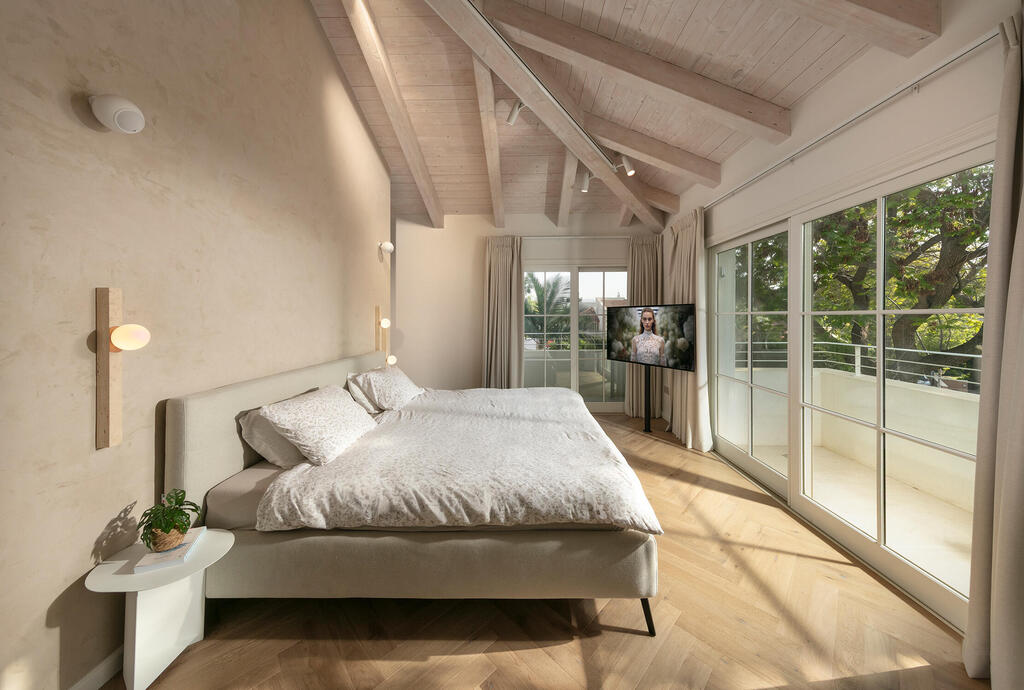
The couple's bedroom
(Photo: Elad Gonen)
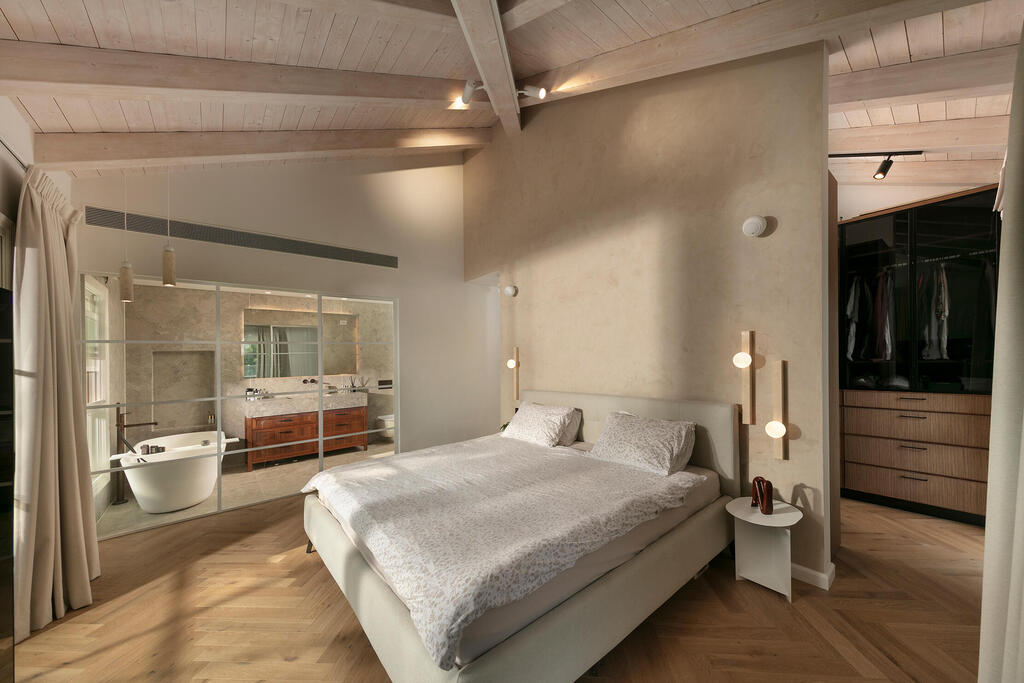
The primary suite is located on a half level
(Photo: Elad Gonen)
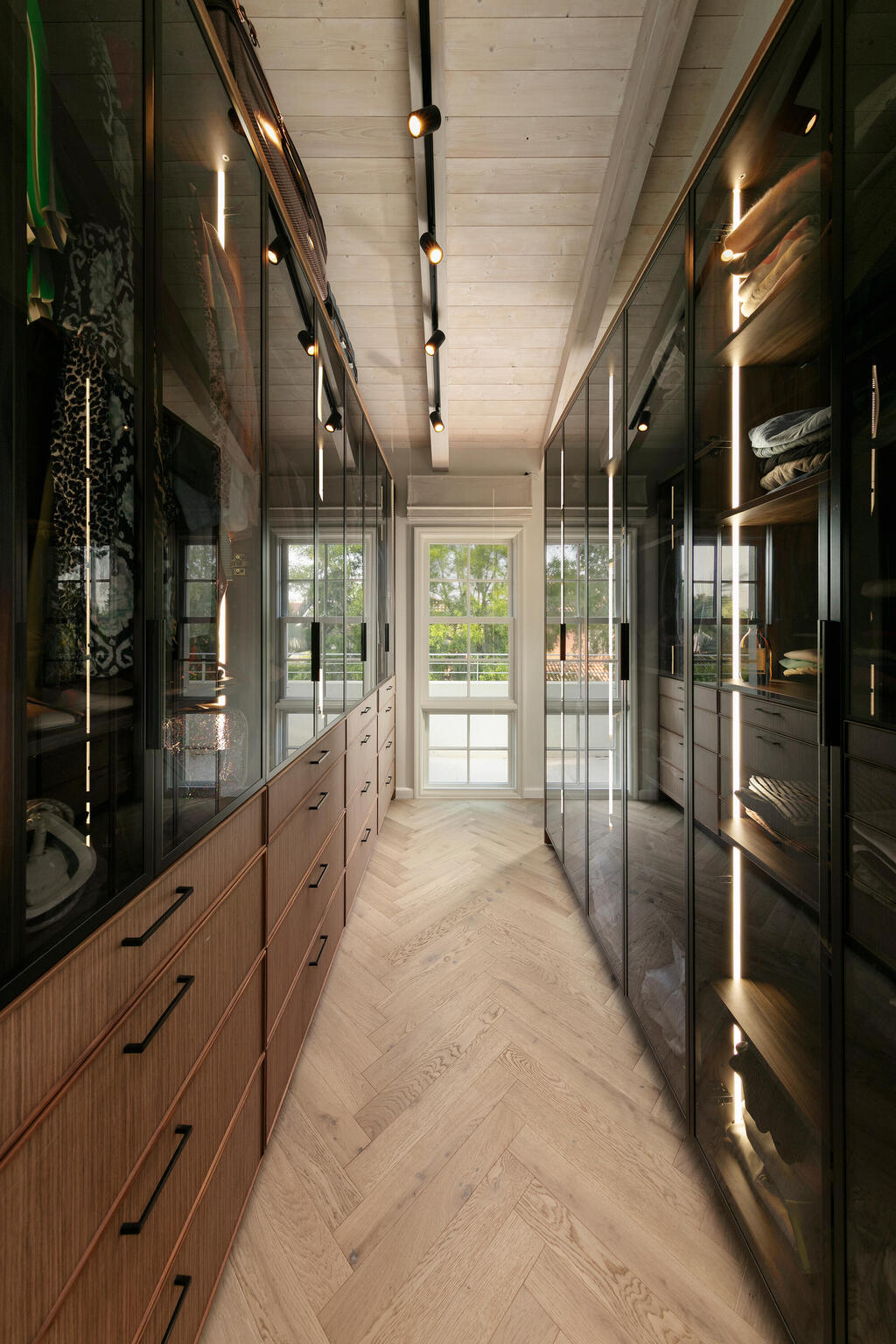
The walk-in closet is partially transparent and partially enclosed
(Photo: Elad Gonen)
The split-level configuration allows for clear separation between zones. Half a level above the central space is the parents’ floor, featuring a spacious suite with balconies, a large glass-walled bathroom with bathtub and shower, and a walk-in closet positioned behind the bed.
This level also includes a home office overlooking both the entrance and the pool, described by Spiegel as a “control tower.” The homeowner, who works remotely in high-tech, asked to remain connected to what is happening inside and outside even during work hours.
Half a level below the central floor are the children’s bedrooms, maintaining visual contact and proximity while preserving privacy. Beneath that, a newly excavated basement, which did not exist in the original structure, houses a reinforced safe room, a play area and a fully equipped home cinema.
“This is the only space in the house where the material language changes,” Spiegel said. “With full acoustic treatment, upholstery, a lounge sofa and armchairs, it is an enclosed and indulgent space designed for complete disconnection.”
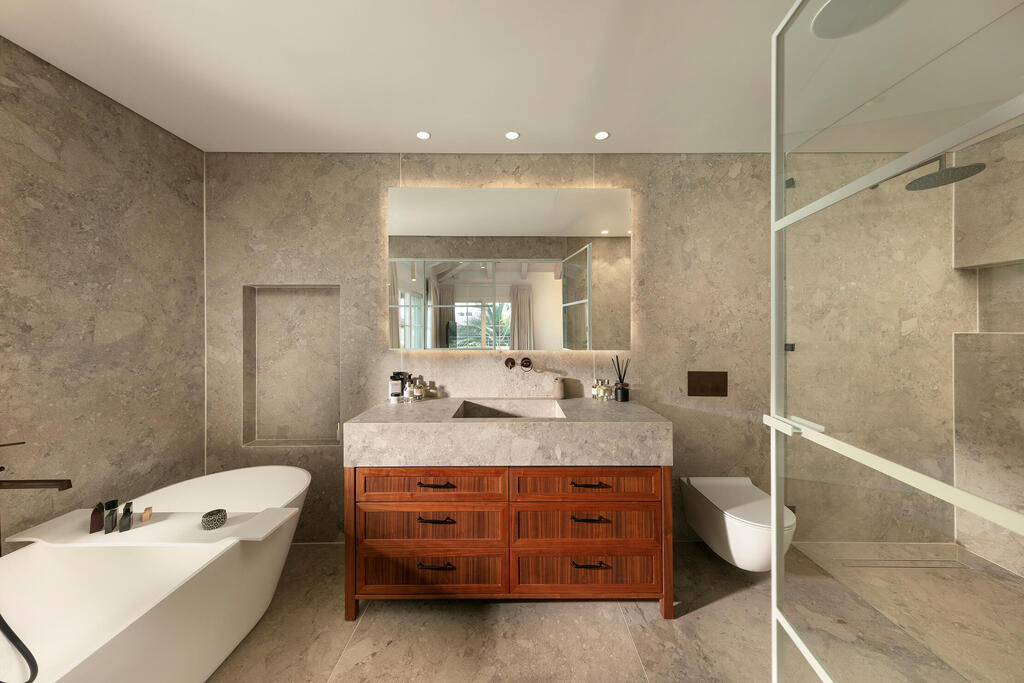
The couple’s bathroom
(Photo: Elad Gonen)
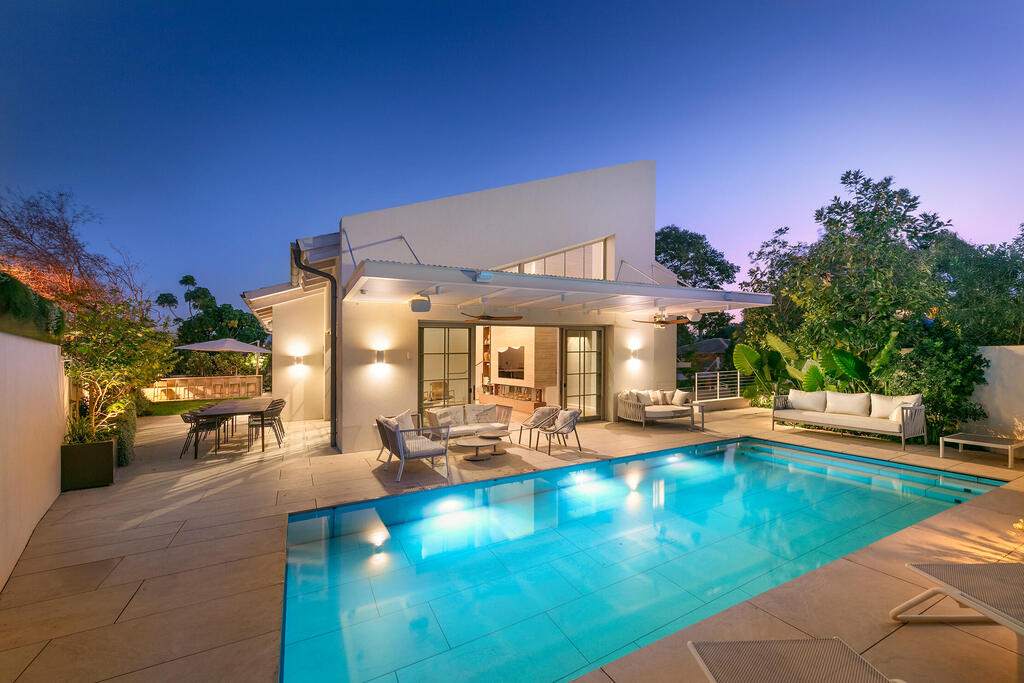
The pool disappears at the push of a button
(Photo: Elad Gonen)
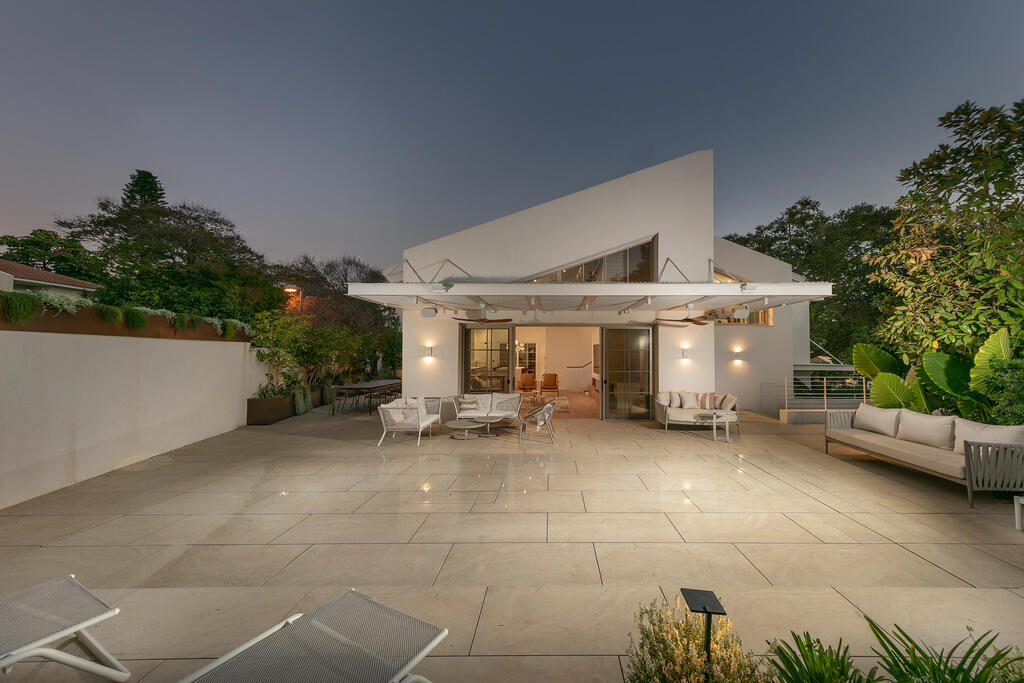
In place of the pool, an additional paved entertainment area
(Photo: Elad Gonen)
Which colors and materials were selected?
"The family favored natural materials, light tones and white, but the design did not shy away from boldness. The ceilings and window frames are made of bleached wood that preserves transparency and reveals the grain. The floor is finished in lightly smoked-colored parquet, and the color palette ranges between Sahara hues, coffee tones and textured white."
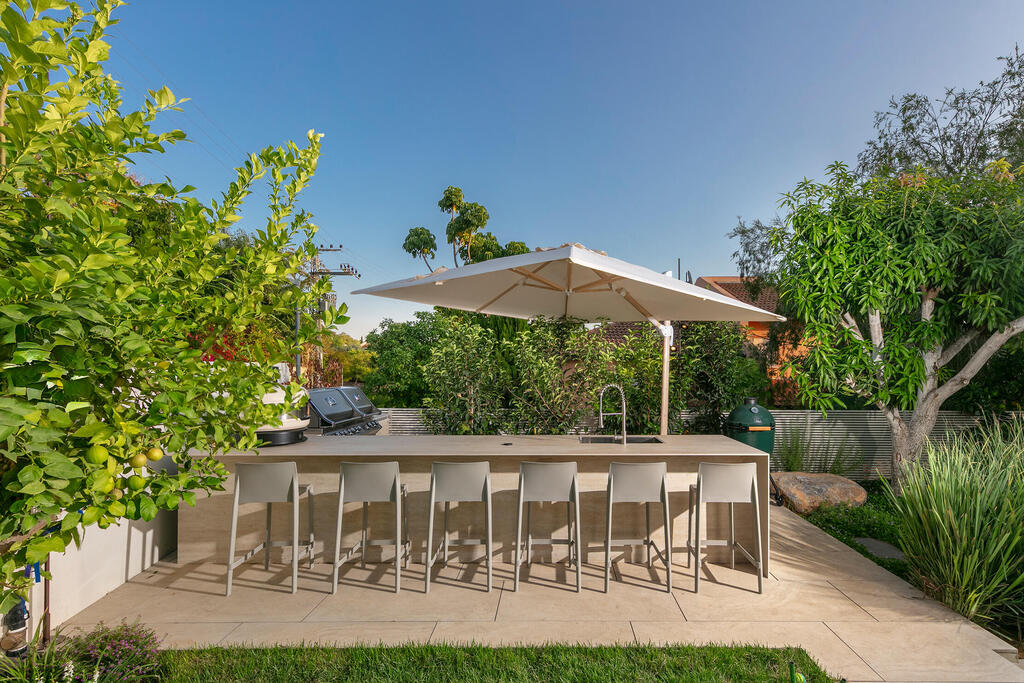
An outdoor kitchen designed to accommodate large-scale entertaining
(Photo: Elad Gonen)
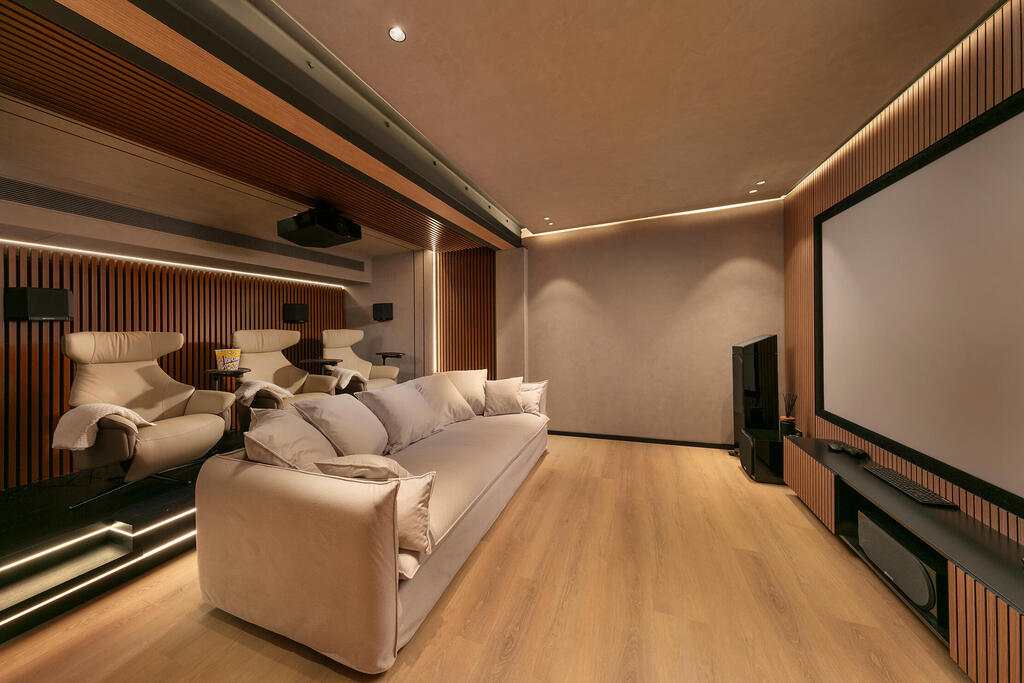
The comfortable home theater room
(Photo: Elad Gonen)
Lighting fixtures were selected in rounded, soft lines to create a calm, harmonious feel. The exterior continues the same language. The cladding of the entrance cube and door features a rusted-metal look, intentionally chosen.
At the rear of the lot, a triangular yard was formed as the heart of the outdoor space. At its center is a swimming pool with a hydraulic cover that enhances safety and maximizes usable area. When closed, the pool transforms into a paved entertainment plaza.
Around it are an outdoor living room, a dining area and a large, fully equipped outdoor kitchen, also clad in natural travertine stone.