

Haifa is advancing an ambitious multibillion-shekel plan to transform the city’s southern entrance into a continuous business, tourism and entertainment district inspired by urban “strip” models in cities including Las Vegas, Singapore, New York and Barcelona.
The project, being promoted by Haifa Municipality and the city’s economic development corporation, is still in the planning and feasibility stage. Initial estimates put its cost at 2.5 billion to 4 billion shekels, roughly $770 million to $1.2 billion.
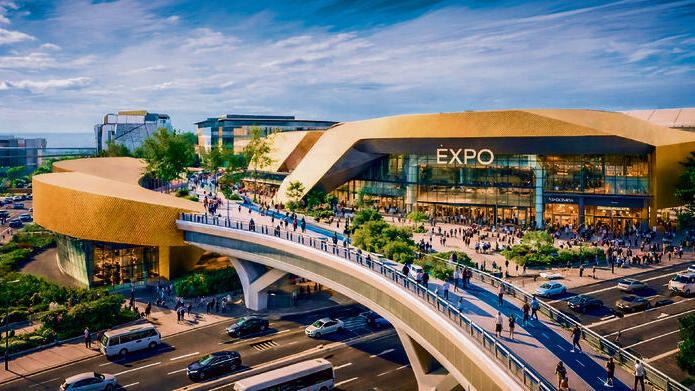
The plan would expand the existing convention center complex from about 76 dunams (19 acres) to roughly 130 dunams (32 acres) and add around 191,000 square meters (2.06 million square feet) of new construction. At its center would be an expanded convention and exhibition complex, alongside new hotels, commercial areas, entertainment venues and a large arena.
The project’s defining feature is intended to be continuous pedestrian connectivity across an area that is currently divided between major transport hubs, commercial sites, sports facilities and the coastline.
Visitors arriving at Haifa’s Hof HaCarmel railway station or adjacent bus terminal would enter a covered, air-conditioned circulation system featuring a moving walkway similar to those used in major airports. The route would connect the railway station with the convention center, planned arena, hotels and the beach.
Above it, planners envision a shaded elevated promenade modeled in part on projects such as New York’s High Line. It would include green areas, restaurants, cafes and small-scale retail, turning the journey through the district into part of the attraction itself.
“Haifa has a combination that no other city in Israel has: mountain and sea, world-class academic and research institutions, high-tech, defense industries, ports and national transportation infrastructure,” Mayor Yona Yahav said. “Our task is to connect all these strengths and translate them into a major engine of growth.”
Arena, hotels and business tourism
A major pillar of the project is the meetings, incentives, conferences and exhibitions sector, known as MICE tourism.
City officials argue that many professional conferences held in northern Israel currently fail to generate significant hotel stays or local spending. The new district is designed to keep visitors in Haifa by combining several attractions within walking distance.
Plans include an arena with about 10,000 seats for concerts and sporting events near Sammy Ofer Stadium, an upgraded convention and exhibition center and a hotel complex with around 750 rooms along the coast.
The hotel component alone would increase Haifa’s room inventory by roughly 40%, according to the project’s planners.
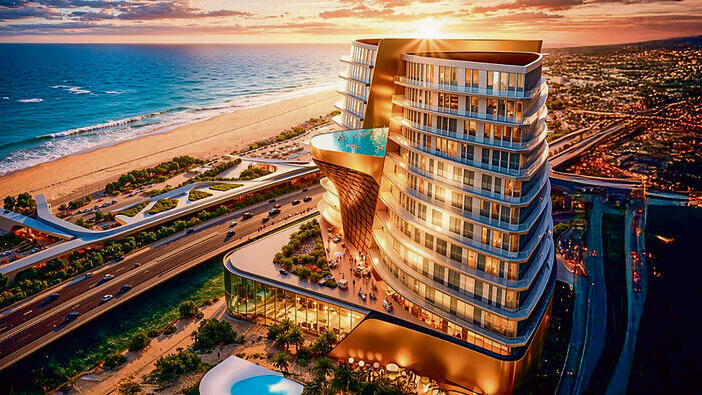
(Rendering: Moshly-Eldar Architects)
The district would also draw on nearby economic and academic anchors, including Matam, Israel’s largest high-tech park, which employs more than 15,000 people, as well as the Technion, University of Haifa, science facilities and major medical centers.
The goal is to allow companies in technology, biotechnology, artificial intelligence and defense industries to host international events in Haifa rather than moving them to Tel Aviv or Eilat.
Rani Bender, chairman of the Haifa Economic Corporation and a city council member, said the wider Haifa metropolitan area and northern Israel have a population of about 2.5 million and lack sufficient convention, entertainment and hotel infrastructure.
“The complex will connect Matam Park, the academic institutions and sports facilities into one economic system,” he said. “We are already seeing interest from international organizations that identify Haifa’s dramatic growth potential and want to invest.”
Gav-Yam CEO Natalie Mashan-Zakai said the project could create a new urban center by linking employment, tourism, culture, transportation and the sea.
A day trip built around the train
City officials are also counting on day tourism.
The direct connection to Israel’s railway network is intended to make it possible for visitors from central and southern Israel to arrive in Haifa without a car and move quickly between the station, convention facilities, hotels, entertainment venues and the beach.
Hanan Markovich, CEO of the Haifa Economic Corporation, said accessibility would be central to the project’s commercial viability.
“If someone gets on a train in Tel Aviv, Beersheba or Acre, gets off at Hof HaCarmel and within a few minutes reaches a conference, hotel or arena, we have created a new national product,” he said.
The planning team is led by Ariel Waterman, the corporation’s real estate chief and Haifa’s former city engineer, together with architect Dagan Moshly.
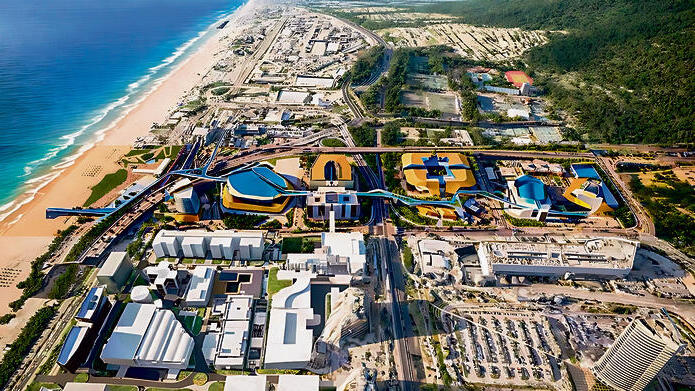
(Rendering: Moshly-Eldar Architects)
Waterman said the city is moving away from treating each parcel as an isolated development.
“For years, the area developed through separate projects, each standing on its own,” he said. “The opportunity now is to connect them. When you look at the whole area as one strip, a completely different urban and economic potential emerges.”
Moshly said the key planning challenge is to make a large and complicated district feel simple to navigate. The elevated promenade and continuous circulation system, he said, are intended to turn a collection of individual buildings into a single urban experience.
Financing and approvals remain unresolved
Despite the scale of the vision, major questions remain over whether and when it can be built.
Urban planning and economic experts who reviewed the proposal told the Israeli financial daily Mamon that financing is the most immediate challenge. A project costing as much as 4 billion shekels would require funding far beyond the resources currently available to the municipality or its economic development corporation.
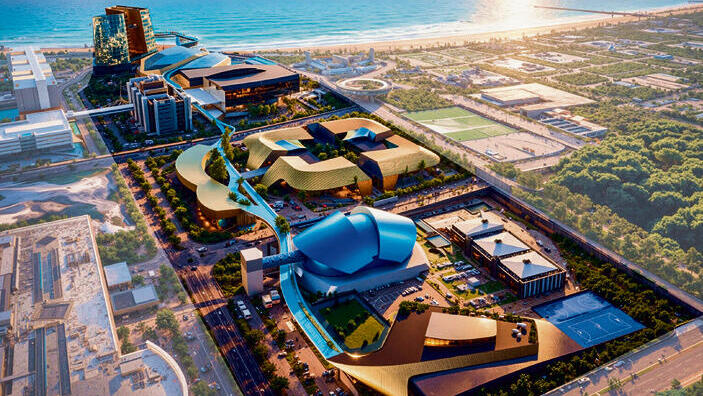
(Rendering: Moshly-Eldar Architects)
That means the plan would likely depend heavily on private investment, expanded development rights for real estate companies or substantial government support, none of which has yet been secured.
The project also faces significant regulatory hurdles. It remains at the conceptual stage and has not yet entered the formal approval process before the district planning committee.
Plans for around 750 hotel rooms and leisure facilities extending toward the coastline are also expected to face scrutiny from Israel’s coastal planning authorities and environmental groups.
“The gap between a plan and reality can sometimes mean a decade of legal and statutory battles,” experts familiar with the proposal said.
Haifa officials say they are aware of those obstacles but remain committed to advancing the project.
“Haifa needs to realize its position as the capital of northern Israel’s metropolitan area,” Yahav said. “We should not be afraid to set ambitious goals and create the infrastructure that will drive the city’s economy for decades to come.”