

A single porcelain plate priced at 1,200 shekels ($324), an Italian glass vase for 6,000 shekels ($1,622), a pair of espresso cups for 699 shekels ($189) and a set of Egyptian cotton bedding starting at 2,500 shekels ($676). For most Israelis, these prices sound nearly imaginary, but at Collect, an intriguing new shop in Tel Aviv's Kikar Hamedina, they are simply part of the daily routine.
Amid hand-blown glass vases, French porcelain decorated with real gold and custom Italian-sewn Egyptian cotton linens, the new design store offers something different. It is not just luxury goods, but a curated collection of brands that have spent decades or centuries building reputations on handcraft, tradition and patience in a world moving in the exact opposite direction—toward cheap mass production.
Curating heritage under one roof
Just before construction wraps up and the famous square comes back to life, parking remains plentiful. Behind the design venture are Maxim Slavin, 38, who prefers to call himself a "curator of good taste" rather than a store owner, and co-founder Karin Shelef Aviv.
"Our shop was born from a desire to gather products with a true sense of value," Slavin told ynet. "We spend a large part of the year searching for brands that represent our values. It takes us a long time to find them and bring them together into one complete world. Anyone can find or buy expensive things. The real skill is knowing how to select the right products—those with heritage, quality and a story—and bring them under one roof."
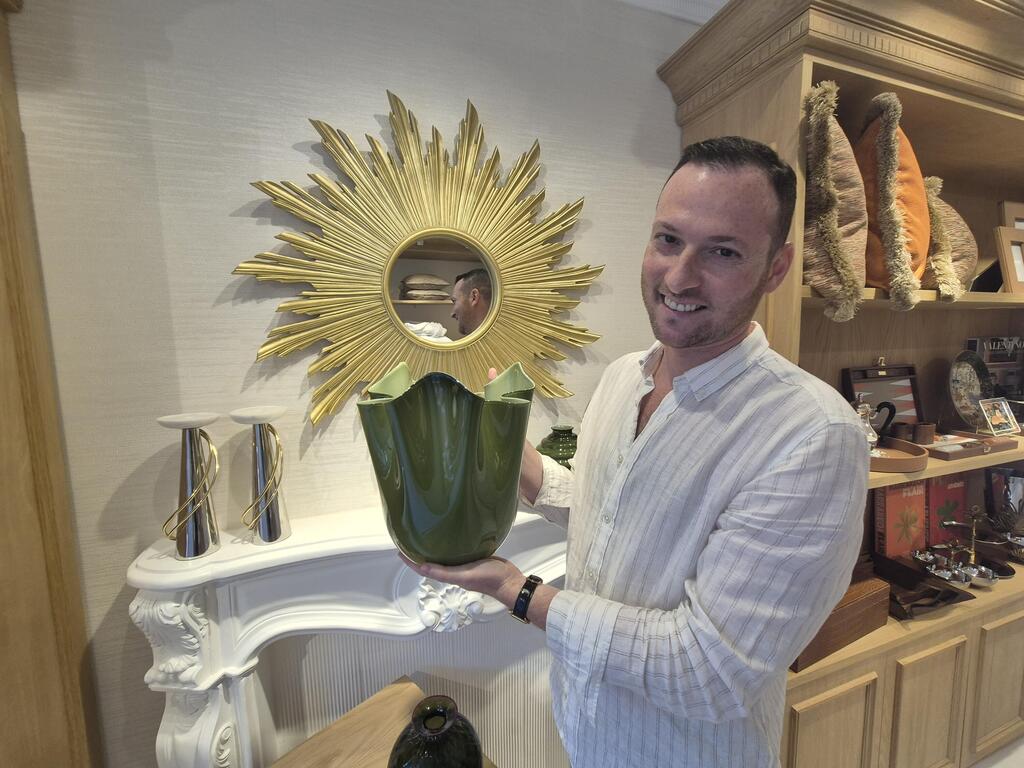
Maxim Slavin. 'Our values are tradition, handcraft and heritage'
(Photo: Assaf Kamer)
In a world where everything is speeding up, Slavin says he looks for the opposite. "Our values are tradition, handcraft and heritage. We are drawn to brands that continue to manufacture slowly and by hand. These are brands that have operated with the same traditions for nearly centuries. There is a story behind every item, and that is why we choose it."
Who buys a pair of cups for 699 shekels?
Price, it turns out, is not the starting point. "I don't choose brands just because they are beautiful. First, I ask if they even deserve to be in the store’s mix," Slavin noted. "First comes tradition, handcraft and an authentic story. Only then comes beauty."
The customer base, he said, is also much more diverse than one might think, and is not limited to Kikar Hamedina's wealthy residents. "Some people buy one cup, one towel or one vase, while others buy an entire porcelain set, bedding and towels. Everyone, in their own way and within their own budget, wants to make their home more beautiful," he said.
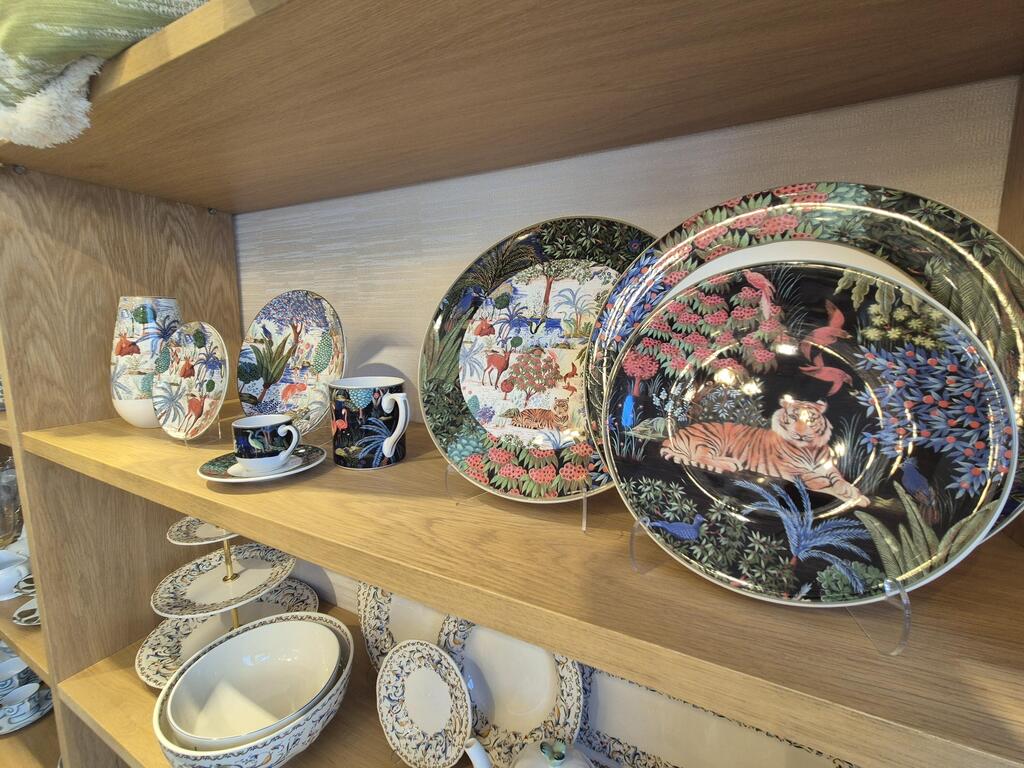
The tour of this high-end design showroom begins in the porcelain department of Gien, a French manufacturer founded in 1821. "Several people work on each plate," Slavin said enthusiastically, justifying the steep pricing. "From the moment work begins until it is packed and shipped, days and sometimes weeks can pass. Every plate is essentially an artist's creation."
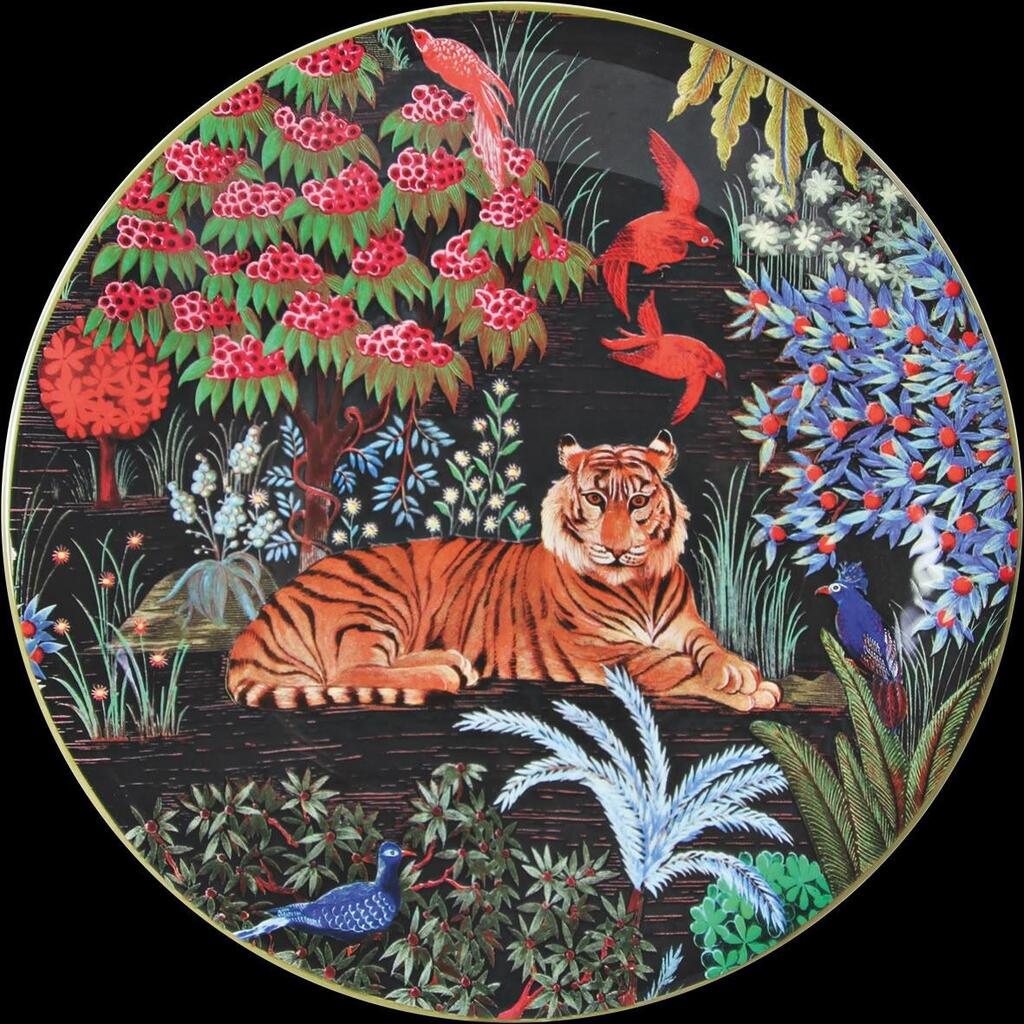
A single plate costs about 300 shekels
(Photo: Assaf Kamer)
A single plate costs about 300 shekels ($81), and a set of six costs about 1,500 shekels ($405). The collections also feature historical patterns based on the company's archival designs, including a tiger pattern dating back to 1875.
While Gien's plates may seem expensive, further into the store lies the ultra-luxury porcelain line by Robert Haviland. Slavin explained that the Matignon series was inspired by the gardens of the Hôtel de Matignon in Paris, the official residence of the French prime minister. In 1974, Bernadette Chirac, the wife of the former prime minister, commissioned the series, which has since been featured at diplomatic dinners and state events.
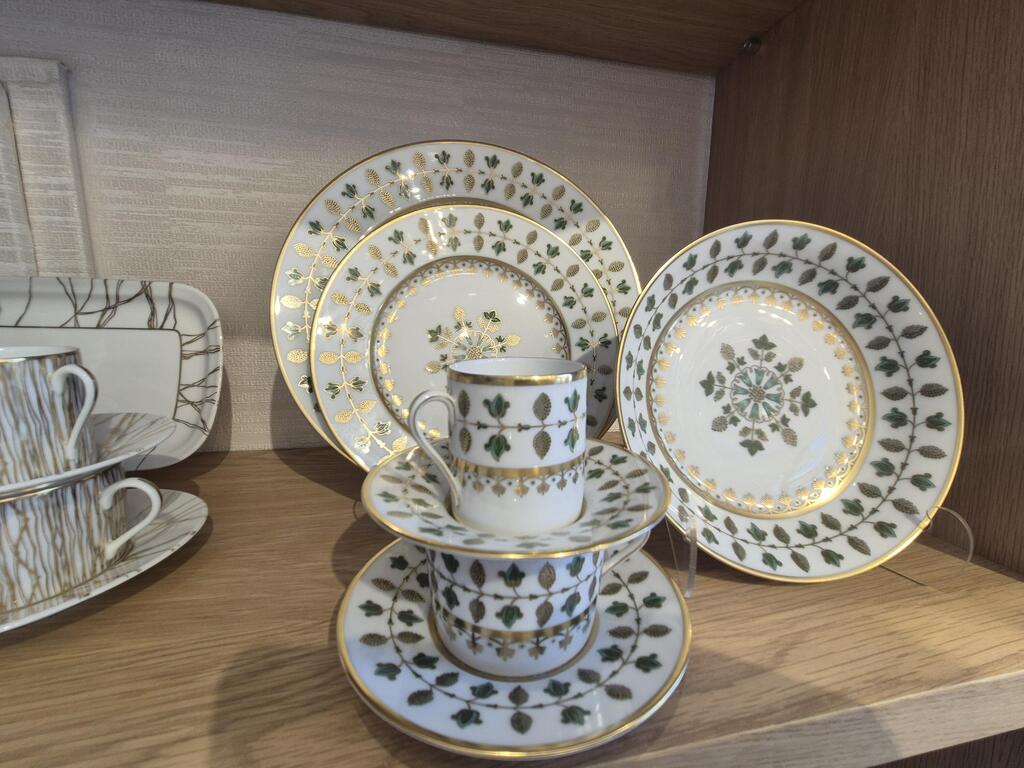
The Matignon series, that was inspired by the gardens of the Hôtel de Matignon in Paris, the official residence of the French prime minister
(Photo: Assaf Kamer)
"All the decorations are done by hand with real liquid gold," Slavin emphasized. "Here, too, it takes weeks to produce each item because it is not mass-produced."
After the pieces are gilded, they are fired again in a special kiln to fuse the gold to the porcelain, giving it its signature luster. The price reflects the process: 1,200 shekels ($324) for a single plate, 1,600 shekels ($432) for an espresso cup and entire dinner sets that can run into the tens of thousands of shekels.
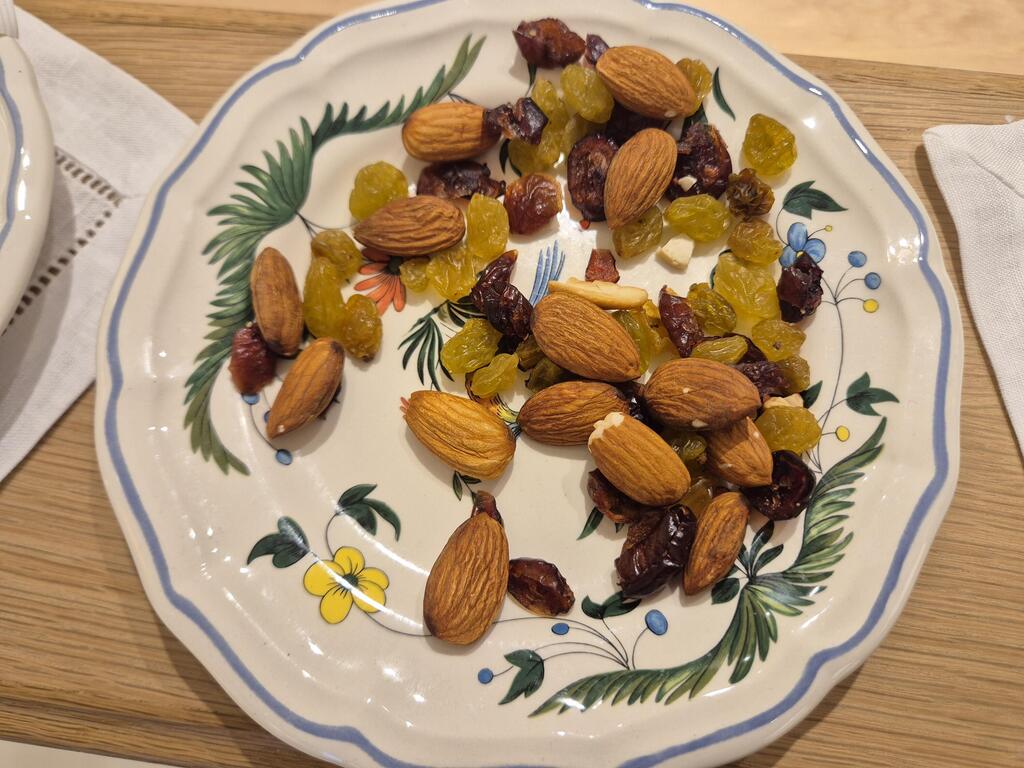
Snacks on a luxurious plate
(Photo: Assaf Kamer)
Nearby stands a metal vase decorated with ginkgo leaves, a signature motif of American designer Michael Aram, priced at 1,500 shekels ($405). "His inspiration always comes from nature," Slavin said. "There are always leaves, branches or flowers. Every piece is handmade, and we are the exclusive importers of the brand in Israel."
Aram founded his brand after discovering traditional metalworking techniques in India. His signature botanical designs are now sold in high-end boutiques worldwide, and now in Tel Aviv.
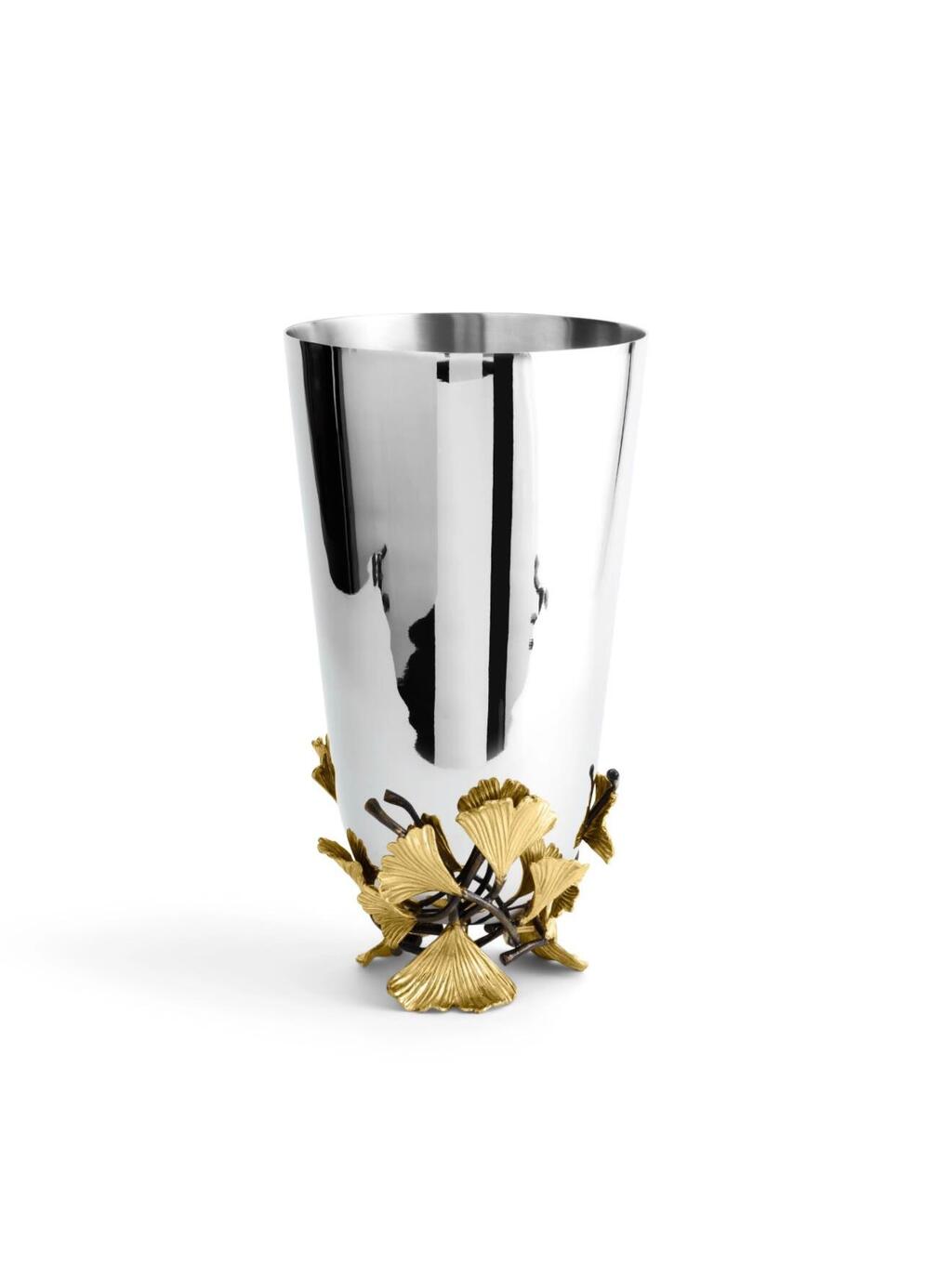
A metal vase decorated with ginkgo leaves
(Photo: Assaf Kamer)
But the crown jewel of the store might be the glassware department from Venini. "Venini is one of the most iconic brands to come out of the island of Murano in Italy," Slavin said. "It was founded in 1921 and largely shaped the Italian glass world over the past century. Every object begins in the hands of an Italian master who blows and shapes the glass by hand."
Murano, located near Venice, has been Italy's glassmaking capital for centuries, hosting Venice's glass workshops since the 13th century. Unlike industrial manufacturing, each hand-blown piece varies slightly from the next, making minor variations in shape or hue part of its unique charm.
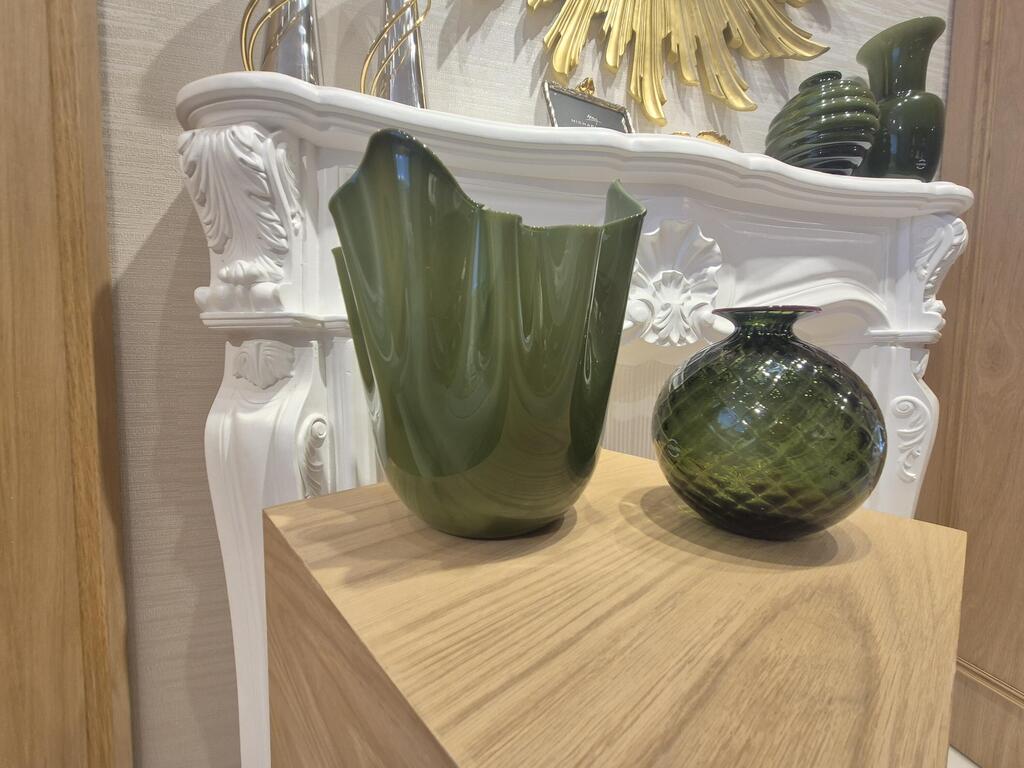
An Italian glass vase for 6,000 shekels
(Photo: Assaf Kamer)
This vase sells for about 3,000 shekels ($811), but the model that catches the eye is the Fazzoletto (Handkerchief), one of Venini's most recognizable designs. Its undulating folds create the illusion of soft fabric blowing in the wind, despite being made entirely of blown glass. "It looks like a fabric handkerchief that someone stopped mid-motion and turned to glass," Slavin said, adding that it costs 6,000 shekels ($1,622).
Nuts with a taste of Luxury
We paused the interview to sip hot espresso from a small, hand-painted cup that costs as much as a dinner for two at a restaurant. Does the design affect the taste? Perhaps only the feeling and the excitement.
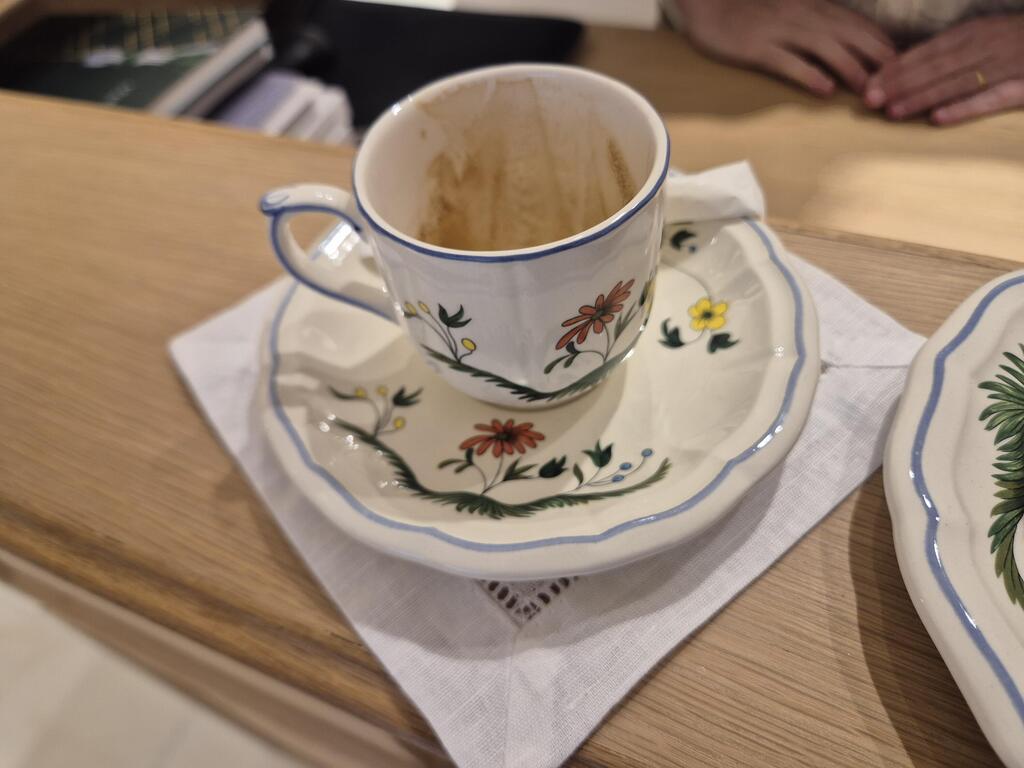
We paused the interview to sip hot espresso from a small, hand-painted cup that costs as much as a dinner for two
(Photo: Assaf Kamer)
From there, we moved to the textile department, which features historic, prestigious brands like Bianco Perla, which has been manufacturing linens in Tuscany since 1955.
"They make bedding almost like a custom-tailored suit," Slavin said. "You can choose the size, the fabric color and the embroidery color." He noted that the raw material is key. "Egyptian cotton has been considered the highest quality cotton for centuries because its fibers are longer and stronger. This means the fabric is more durable and maintains its quality over the years." A set like this starts at around 2,500 shekels ($676).
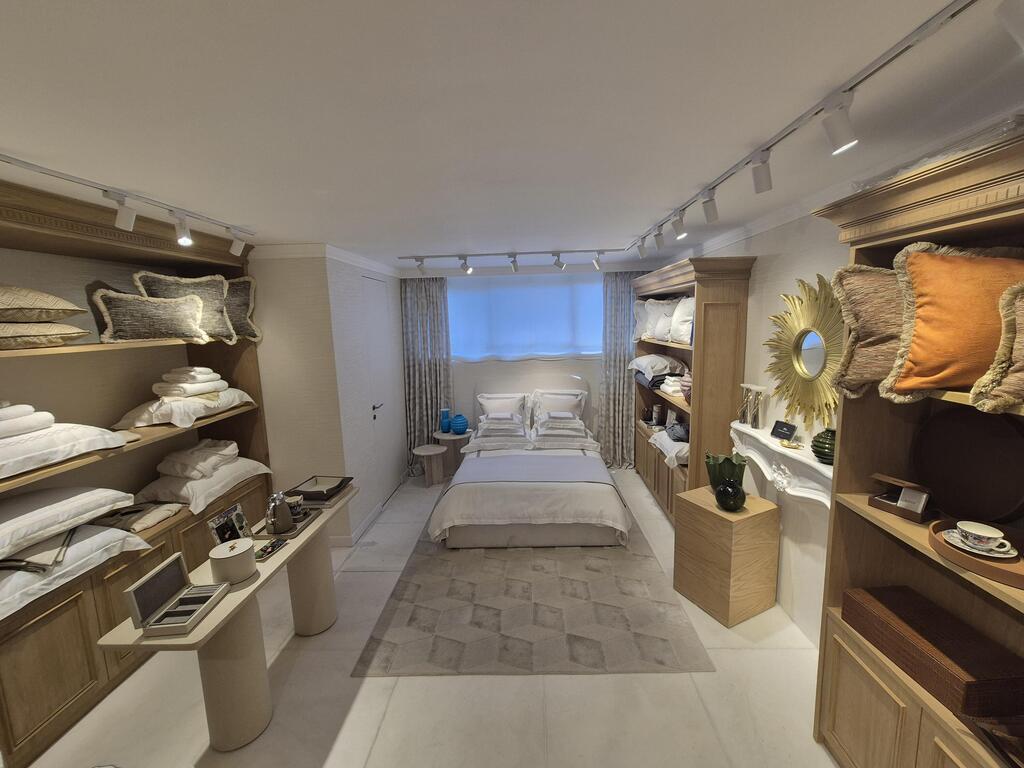
'They make bedding almost like a custom-tailored suit'
(Photo: Assaf Kamer)
Ultimately, Slavin said the high prices of the items are not the main story. "What interests me is not just the beauty of the piece, but the story behind it—the value it brings, the heritage, the quality and the manual labor behind every item. These are the things we look for and want to bring here."
I was offered nuts on a luxury saucer worth hundreds of shekels and felt it actually enhanced the flavor. The snacks tasted better, or at least that is what I imagined.

The customer base is also much more diverse than one might think, and is not limited to Kikar Hamedina's wealthy residents
(Photo: Assaf Kamer)
In a world of fast, mass-produced goods, the old-world luxury brands continue to sell a story of craftsmanship, meticulous attention to detail and limited editions. For their clients, value is measured not just in raw materials or brand names, but in the number of hands that touched each piece and the heritage built over decades, centuries or even millennia.