

In a world where giant corporations dictate a banal aesthetic through mass production, and fear of financial failure has turned us into copies of one another, interior designer Sammy Kattan offers a new design manifesto. One that forgoes square footage in favor of spatial quality, prefers small workshops over showrooms, and reminds us of the value of close collaboration with the carpenter, the metalworker and the stone artisan as the only way to create architecture with a personal signature.
“People here have no idea how lucky they are. In England, design boils down to choosing from catalogs, like sitting in a restaurant and ordering from a menu. In Israel it’s like going to the market with the chef, picking the vegetables together, going into the kitchen with him, and telling him exactly what you like to eat. That way, I can create whatever I want,” Kattan says of his creative process. From a round yellow staircase to a mashrabiya made of 15,000 handcrafted wooden pieces, his home in Neve Tzedek proves that it is right here, in Israel, that a creative freedom exists which conservative Europe can only dream of.
A tour of Sammy Kattan's home in Neve Tzedek
(Video: Noam Ron)


Kattan is an entrepreneur, artist and designer who did not arrive at the drafting table through academia, but through a journey of trial and error that began in small apartments in London and matured in Israel into a unique design language. His home, where he lives with his family, is far more than a residential project. It is a living laboratory where he and his partner, architect Noy Cohen, test the boundaries of material, color and space.
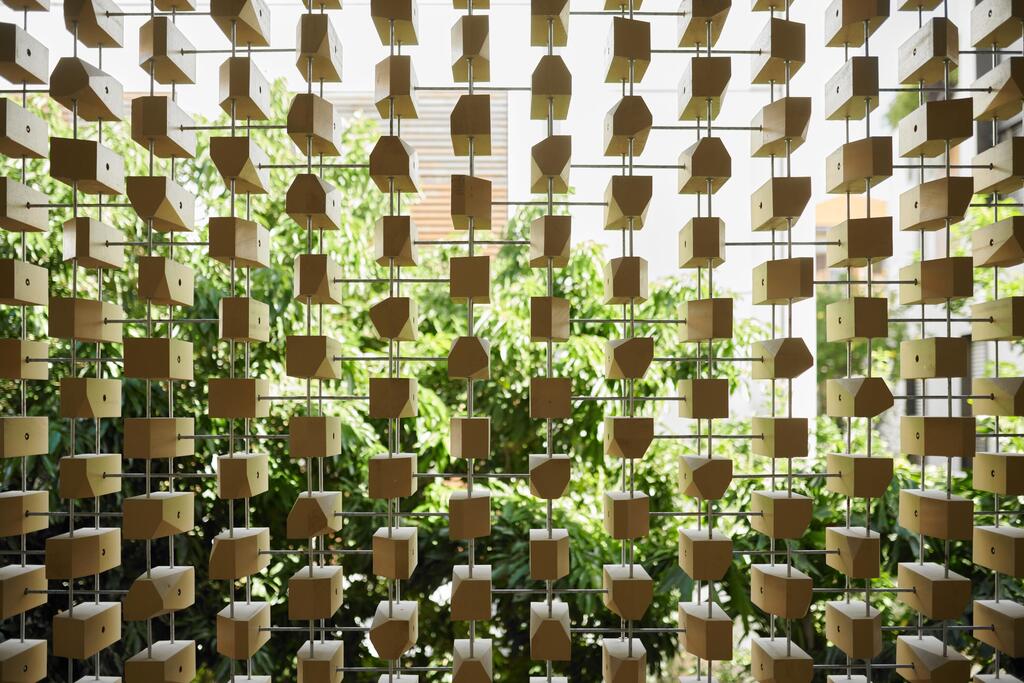
Behind the Mashrabiya - 470 square meters over four floors
(Photo: Dor Kedmi)
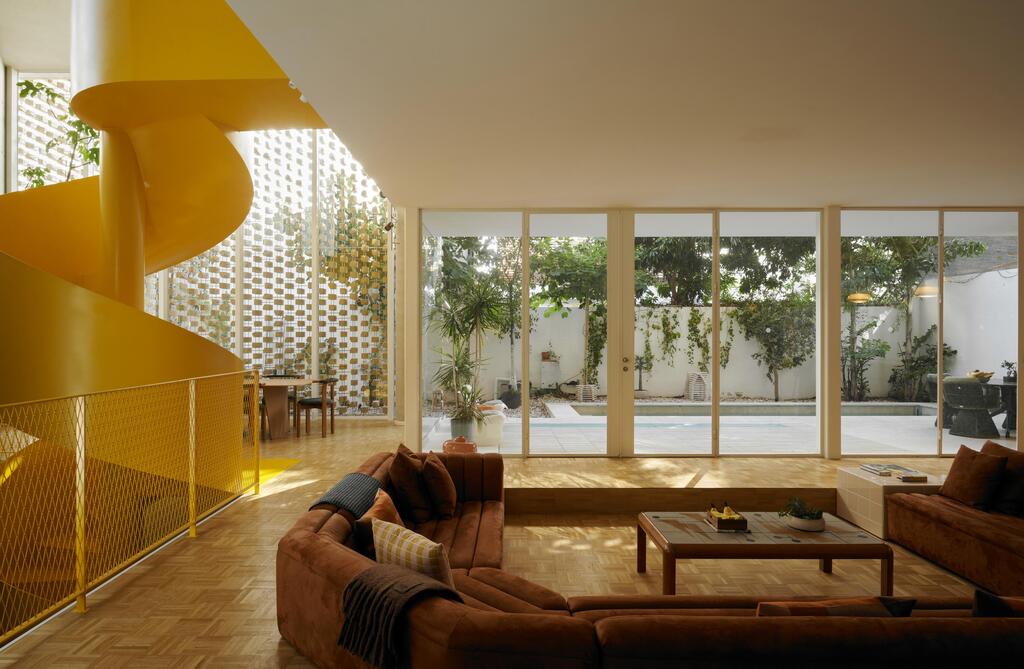
The sunken living room
(Photo: Dor Kedmi)
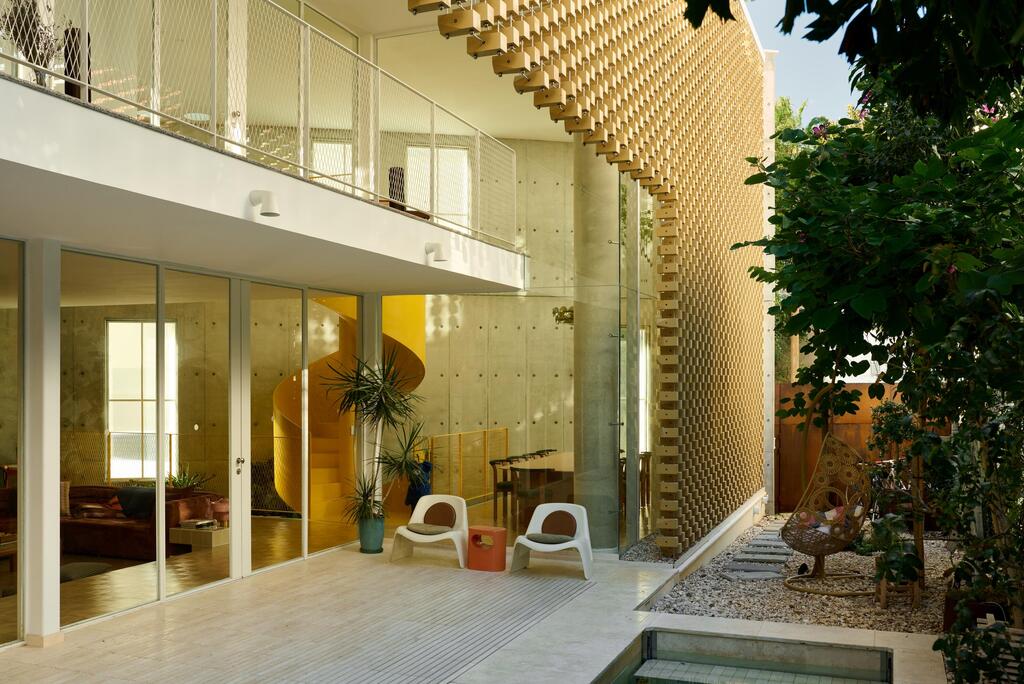
A view from the garden inside, between the wood, concrete, and glass facades
(Photo: Dor Kedmi)
Giving up square footage for the sake of a garden
Kattan and Cohen began planning the private home with an empty 220-square-meter plot and complete freedom. On it, they built a 470-square-meter house across four floors for Katan, his wife and their three children.
“In Israel there is a very strong focus on square meters — what is the maximum you can build. I tend to give up meters in favor of high ceilings and double-height spaces. In this house I gave up maybe 150 square meters that could have been several closed rooms,” he explains. “In my view, once you have the basics — a kitchen, bedroom and living room — what matters is the quality of the space. The same goes for a garden. People try to shrink the garden to enlarge the interior. Maybe because I came from England, for me the outdoors in Tel Aviv is everything. I gave up interior space so I could have a larger garden — it’s an asset. The ability to plant in the ground, step on grass, sit in the sun. I’m always amazed that garden apartments in Israel are cheaper than those on higher floors.” The garden was designed by Biosphera Landscape Planning.
What principles guided you in the design?
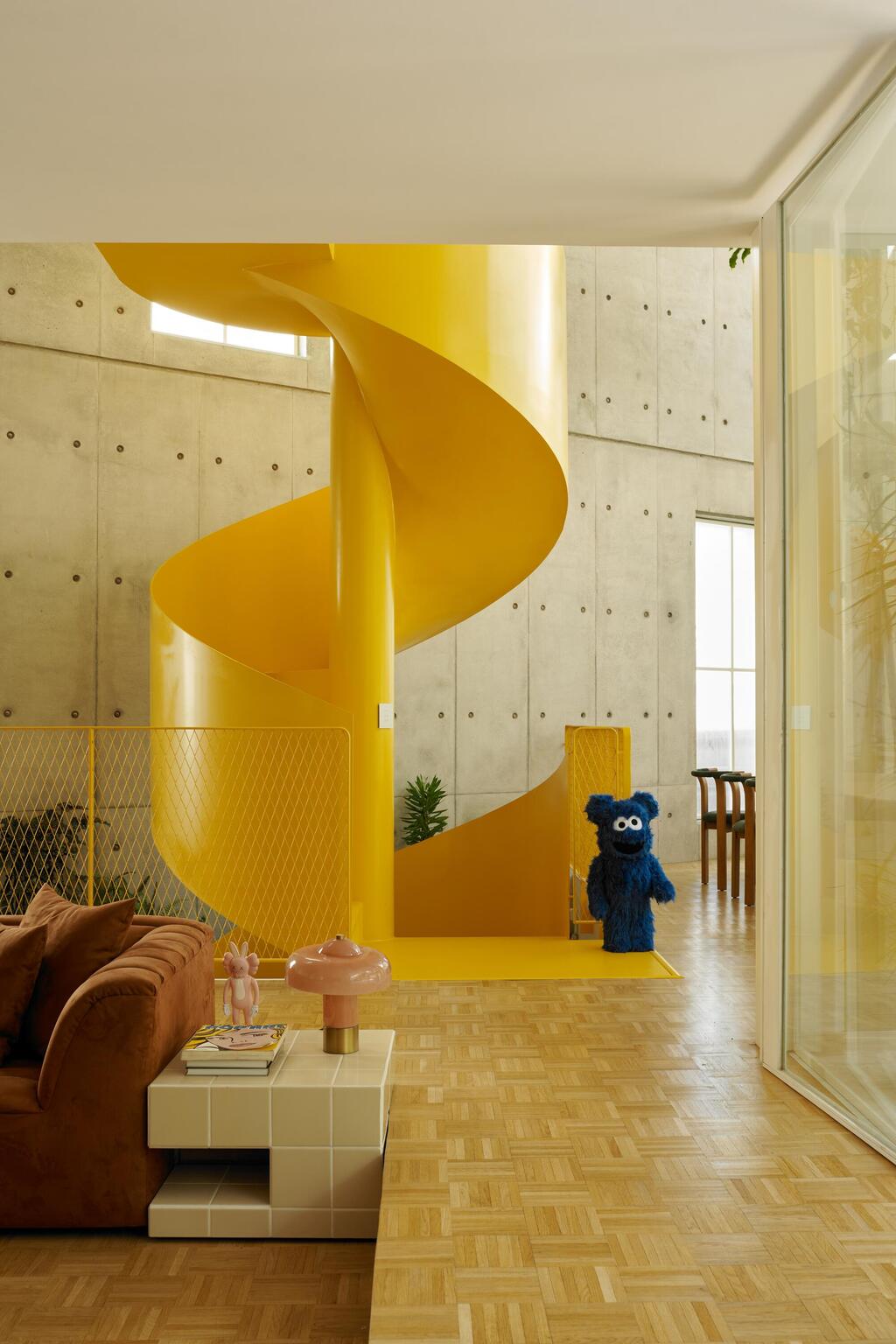
“The quality of the space, the entry of light and the use of color. I believe in the philosophy of placing ‘noisy’ objects against ‘quiet’ ones. If we have a gray, quiet concrete wall, you can break it with a yellow, loud staircase, like we did. But then the rest of the space has to submit to it. It was also important to me that the space would connect the family. Today there’s a tendency to build homes with a room for everything: a cinema room, a gym, a separate office for everyone. I worry about that because in the end it disconnects. I emphasized the quality and size of the shared spaces so that we would spend most of our time there — and it actually works.”
Color is very present here. Is that a recurring element for you?
“Yes, I noticed that in all the projects I’ve done in Israel, color enters at an early stage. The first house I did was green, the last was pink and the current one is yellow. Maybe it’s tied to certain periods in life, maybe the yellow came from a need to add joy. We carried the yellow throughout the house in different elements. It was a risk, but we made it as calculated as possible.”
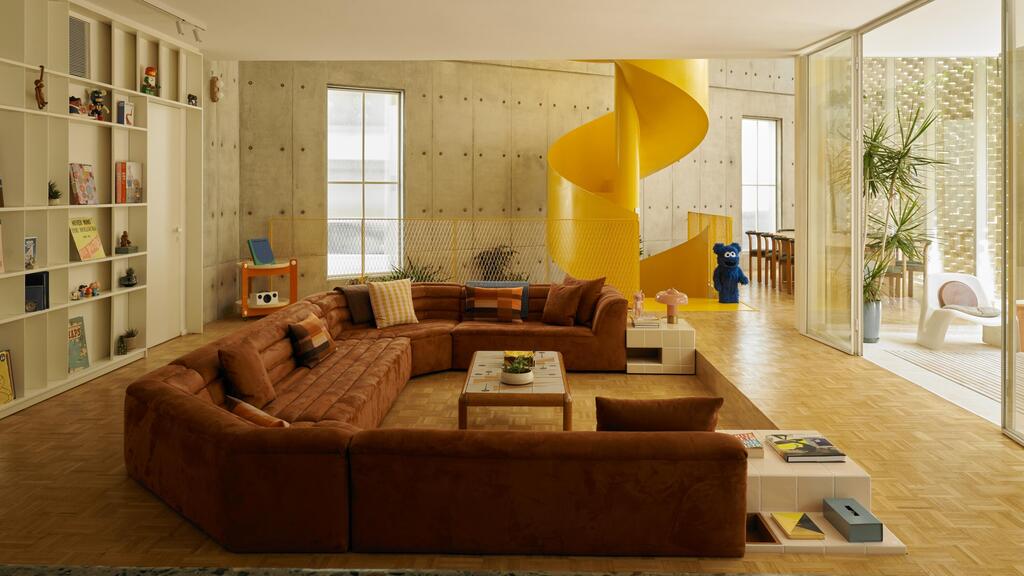
Design from the 1950s to the 1970s and elements from the 1980s
(Photo: Dor Kedmi)
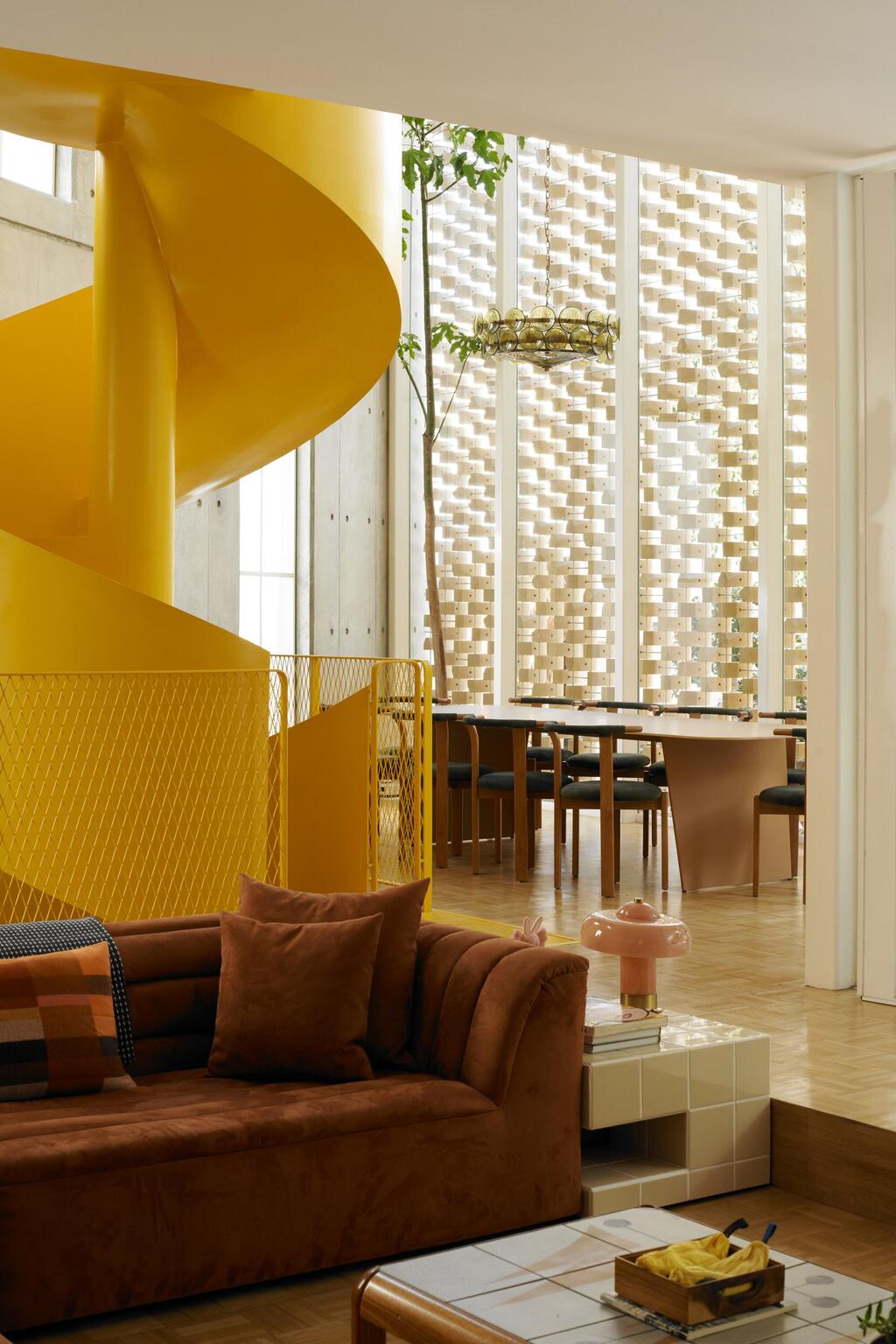
View from the living room to the dining area
(Photo: Dor Kedmi)
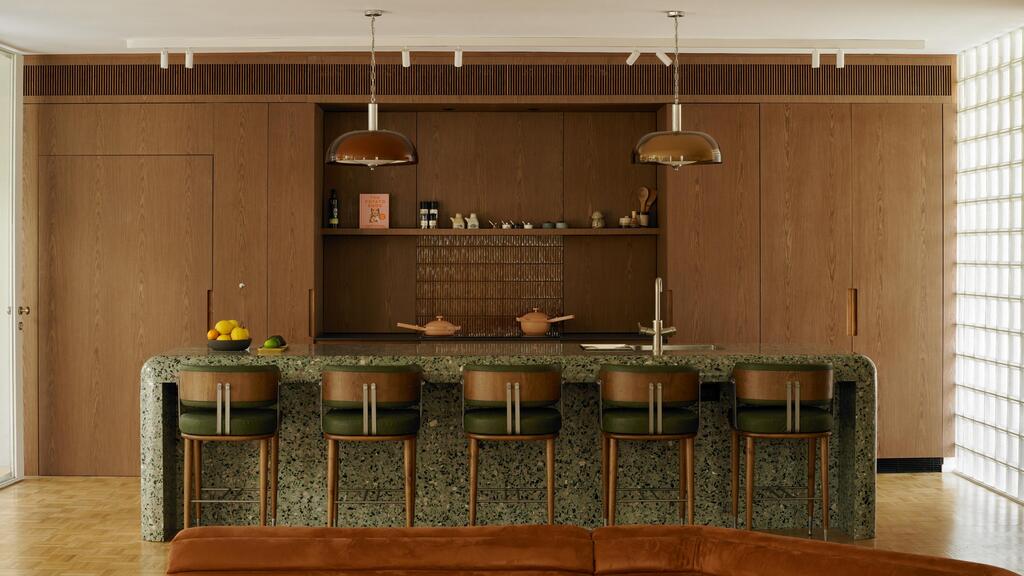
The dark kitchen with the curved island posed a significant challenge
(Photo: Dor Kedmi)
How do you calculate or reduce the risk in a bold design choice?
“You can mitigate the risk. You do research and look for references that prove it can work. Today it’s easier because there’s artificial intelligence and you can generate 100 different renderings at the push of a button. Still, until it’s executed, you can’t know for sure. Like anything in life. The yellow staircase is the best example. Its form is very dominant, and the expectation was that it would be white or black. When I said, ‘Let’s make it yellow,’ everyone doubted me, but I was set on yellow. Still, it’s not that I knew for certain it would work, but I trusted my intuition — and it worked. It was one of those cases where I knew that when I’d see it standing, I’d say either ‘wow’ or ‘f*ck.’ And sometimes I look at something I did and know I messed it up, and it sits with me for a long time. But the ‘mistakes’ are usually also what drives me to create a new project.”
Was there anything in the house that made you say, ‘that’s a shame’?
“Yes, the English courtyard, for example. It’s a challenge I still haven’t cracked, and I’ve been trying to create a good one for years. On one hand I want it to look good from the outside and not take up garden space, and on the other to bring in enough light to the basement. In this house we managed to create one that looks great from the outside but lets in little light and doesn’t feel like a courtyard when you step into it. In the next project we’ll do better.”
What inspired the design?
“I have a strong tendency toward design from the 1950s to the 1970s. In this house we also added elements from the 1980s. I learned a lot about the Memphis movement and was drawn to its philosophy, which broke the minimalism that had been so prevalent for many years. They proposed maximalism — and I like that.”
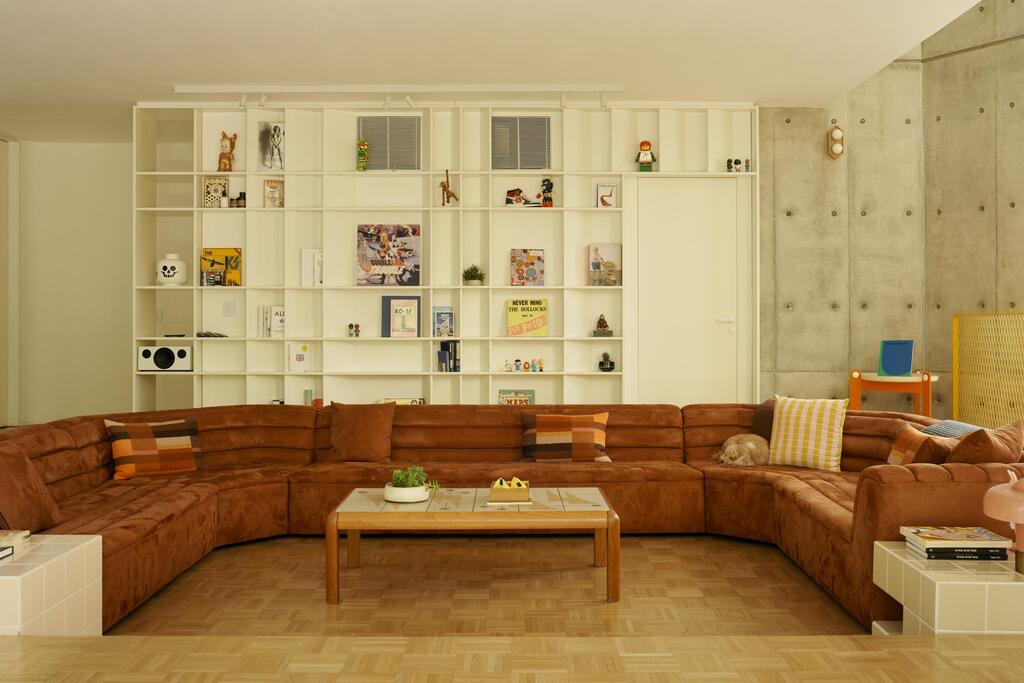
The central seating area without a television to encourage conversation and gathering
(Photo: Dor Kedmi)
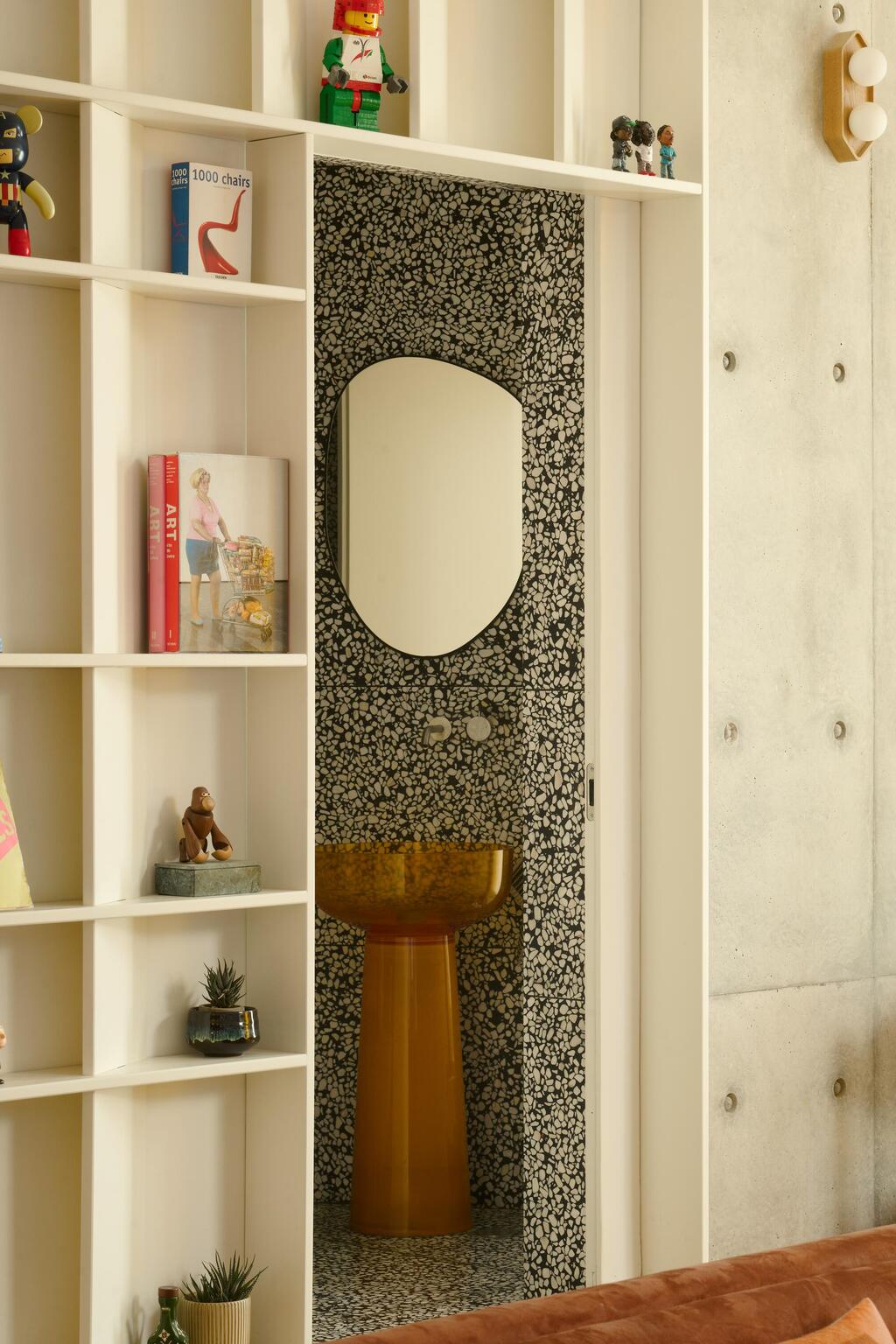
For the guests: Terrazzo from floor to ceiling
(Photo: Dor Kedmi)
How did you approach privacy while living directly on the street, as is typical in Neve Tzedek?
“There’s no way around it — you have to like it. Some clients try to isolate the house as much as possible, but in my view that misses the point of the neighborhood. There’s a Blue Zones study that analyzes places where people live the longest. What they share is density and community — spaces that create encounters and interactions that enhance a sense of security and happiness. In recent years we’ve been living through war, and you can become quite isolated and fearful. But when you’re here and hear someone passing by laughing or children playing in the street, it sends a message that everything is okay. This sense of community should be celebrated. It’s something so beautiful and rare — and at the same time, to create creative solutions for privacy at home. That’s how the mashrabiya was born.”
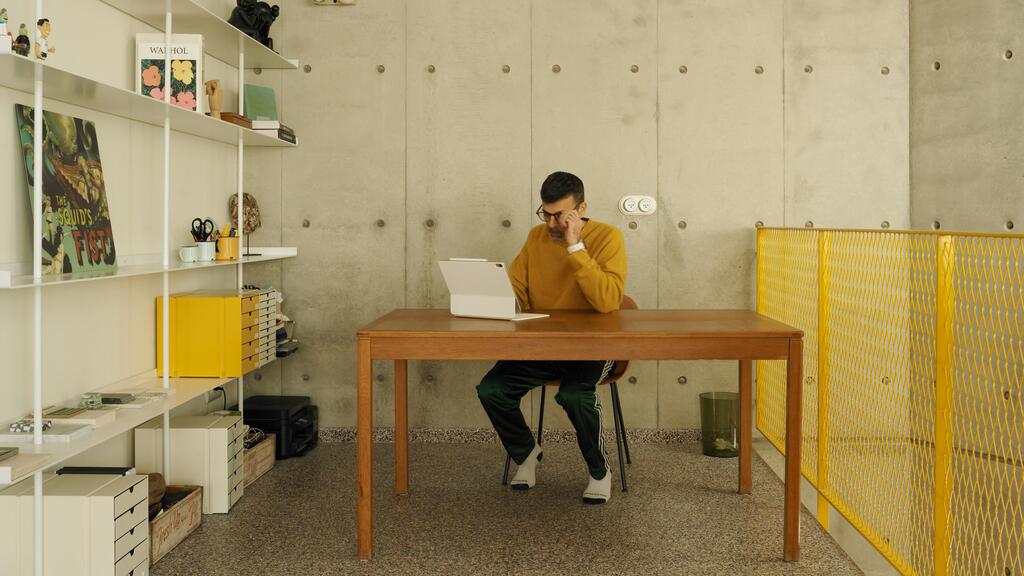
Sammy Kattan in the work corner he designed for himself
(Photo: Dor Kedmi)
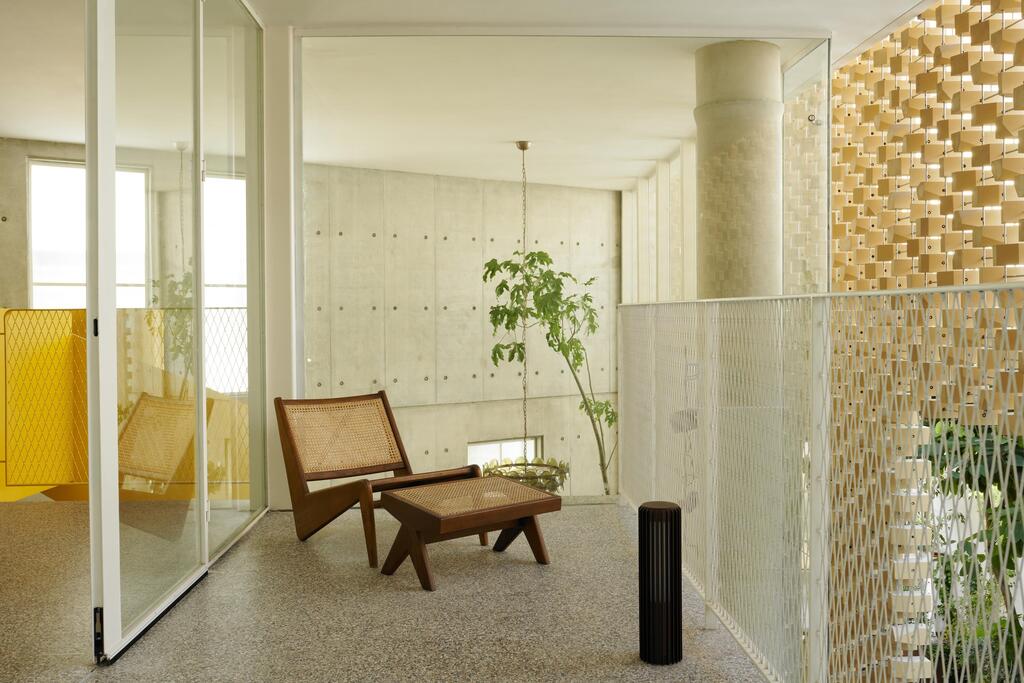
Between the inside and the outside
(Photo: Dor Kedmi)
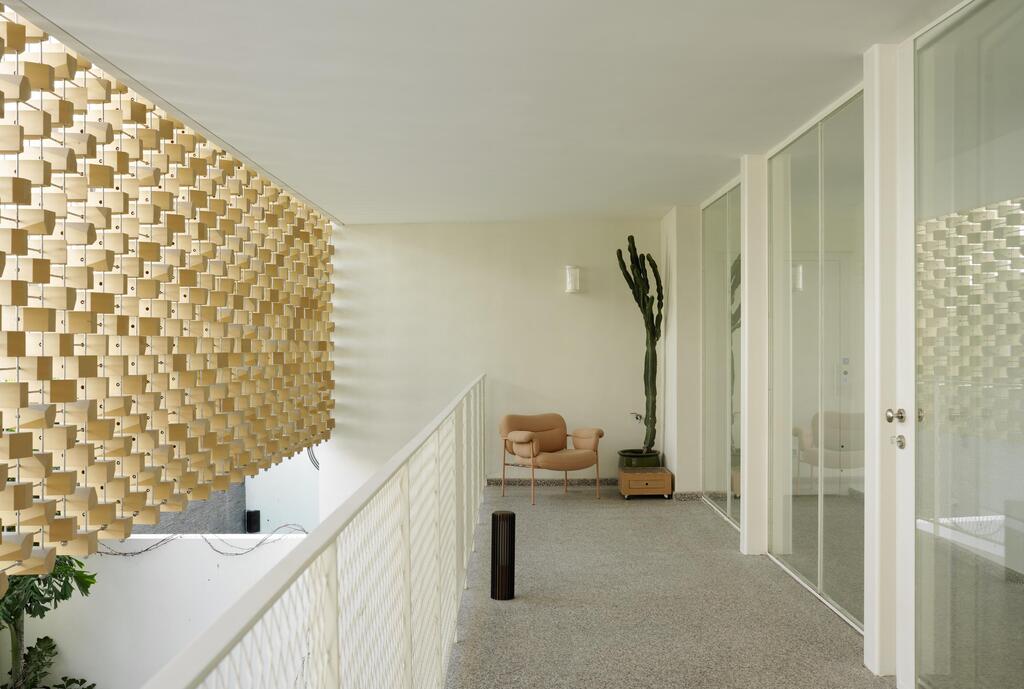
Continuation of the balcony
(Photo: Dor Kedmi)
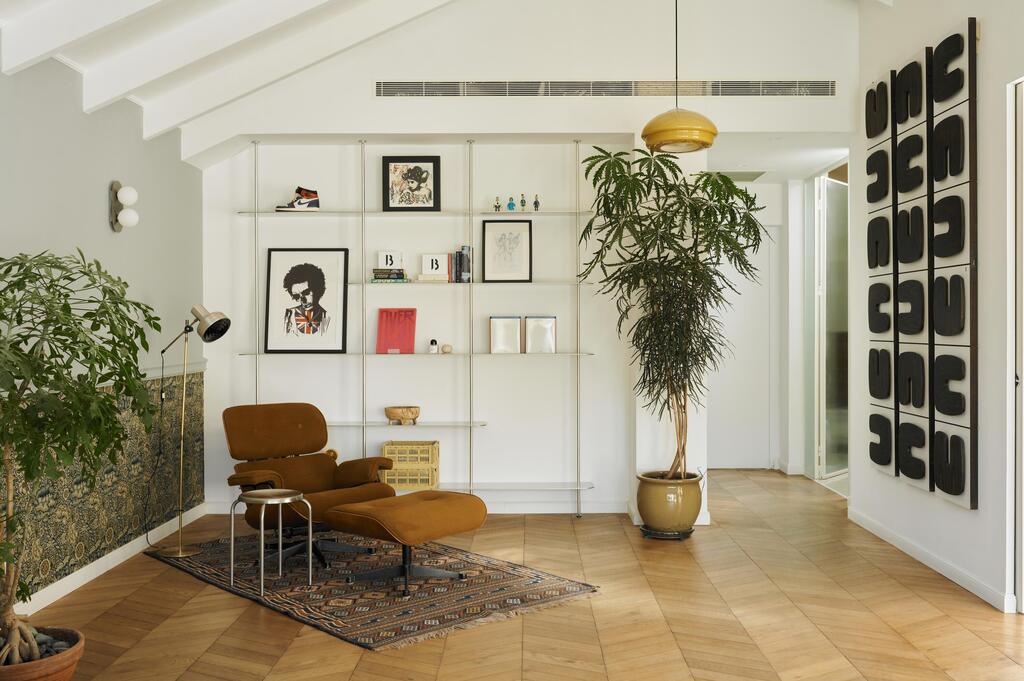
Sitting area on the top floor
(Photo: Dor Kedmi)
The mashrabiya looks like a particularly complex project.
“It was an extraordinary project that demonstrates the power of successful collaboration with skilled craftsmen. We needed a technical solution for privacy because the buildings in Neve Tzedek are very close to each other, while still allowing sufficient light. The problem was that all existing solutions required wall support, whereas our entire façade is glass. We needed something lightweight that would look good both inside and out. We realized it had to be cable-based rather than a metal or concrete structure. I was connected with Roni Karsh, who works with wooden windows and shutters, and I saw he was excited by the challenge. Together we found a reference and adapted it to our needs. It required 15,000 parts and a year of work, with each piece of wood built at a different angle to create depth and break the light beautifully. When we got to choosing the color, I said, ‘Let’s try mustard,’ and again took a risk. But the day we installed the mashrabiya was a ‘wow’ moment. The way the light changes throughout the day and the reflections it creates on the interior walls — it’s amazing. It’s a unique element globally, and it brought us to the finals of three international design competitions.”
How did you approach designing the unique living room? What experience did you want to create?
“I intentionally designed the main seating area without a TV, so people would sit facing each other and talk, with the sunken level enhancing the intimate bubble I wanted for the living room. Here too we faced many issues because we had to design the infrastructure layout in the floor according to the sofa. But I was convinced this was the sofa that needed to be here. It fits the language of the house, which draws inspiration from the 1970s. But the important thing is that the extended family can sit here together, in a circle, and its design creates something playful and spontaneous because there are essentially two seating levels. I think it’s a good example of how design can change a family’s daily life. In recent months I’ve noticed we’re doing things we didn’t do before, like playing card games with the kids. To me, that’s a huge achievement.”
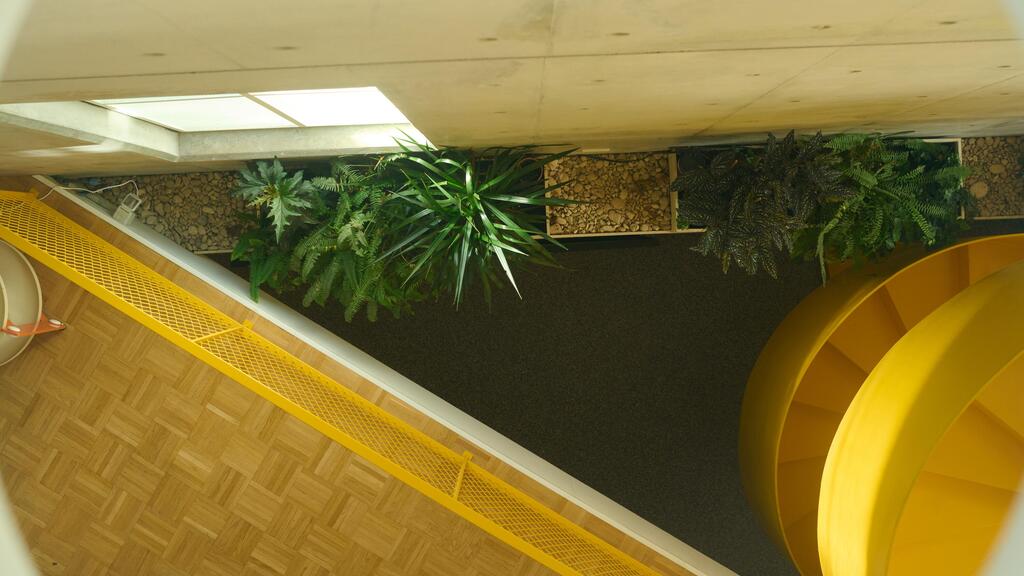
A view from above
(Photo: Dor Kedmi)
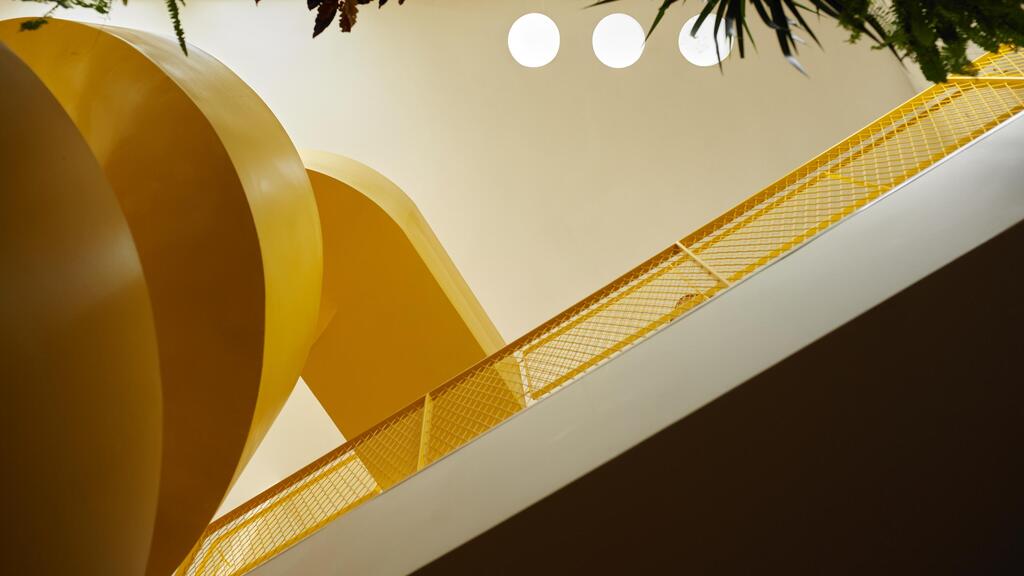
View from below
(Photo: Dor Kedmi)
Custom-made furniture — and the flea market
One side of the living room borders the dark kitchen area, composed of two parallel lines.
“The kitchen island is another example of a creative journey full of challenges and refusals. I wanted it to be rounded. I went to 10 different suppliers and they all told me it couldn’t be done. In the end we found a small factory that agreed. We bought extra-thick terrazzo from Italy that allowed us to round the edges of the surfaces, which were then glued together. You can see the seams, but it’s the only island in Israel with this kind of finish. It proves that if 10 people tell you ‘no,’ it just means you need to keep looking. These small details are what make the difference in the feeling — the rounding softens the massive stone, so I’m glad we didn’t give up,” Kattan says.
What about the rest of the furniture in the house?
“I either custom-made the furniture in Israel or bought it at the flea market in Jaffa. The market is a gold mine if you have time and a bit of vision. The only items that move with me from house to house are vintage pieces. Once I bought an artwork in Jaffa for 50 shekels, invested 3,000 shekels in restoring it, and a decade later discovered it was a piece displayed at the Israel Museum. It turned out it was photographed by a well-known photographer named Rachel Fisher in the 1940s in a refugee camp. It moved me very much, because my grandparents were also immigrants, and when I look at it I feel a sense of pride.”
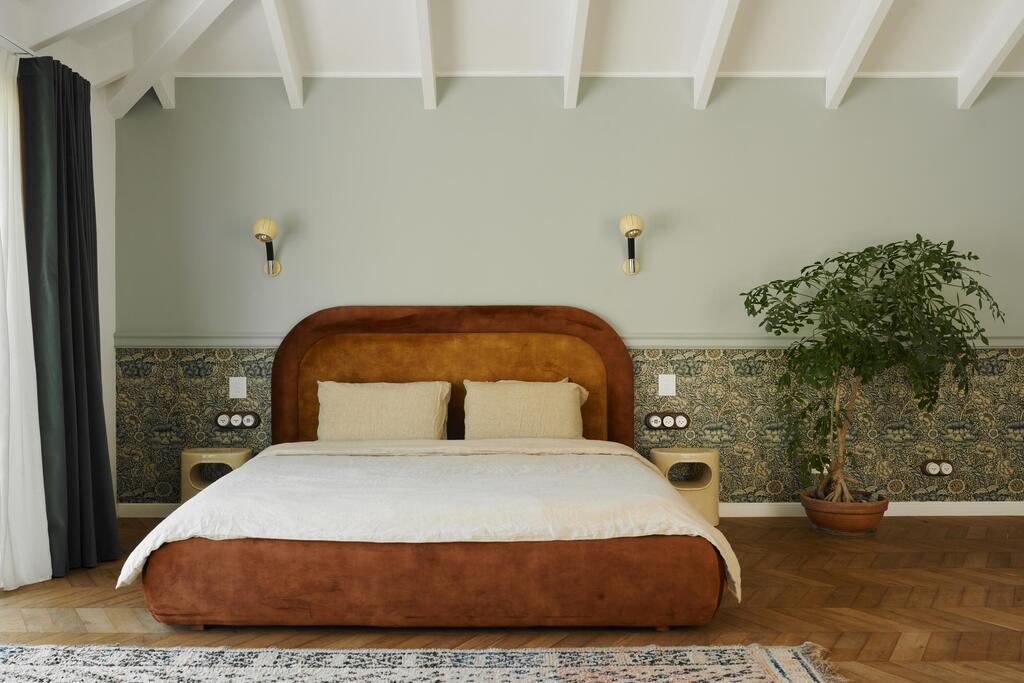
Furniture custom made for the home
(Photo: Dor Kedmi)
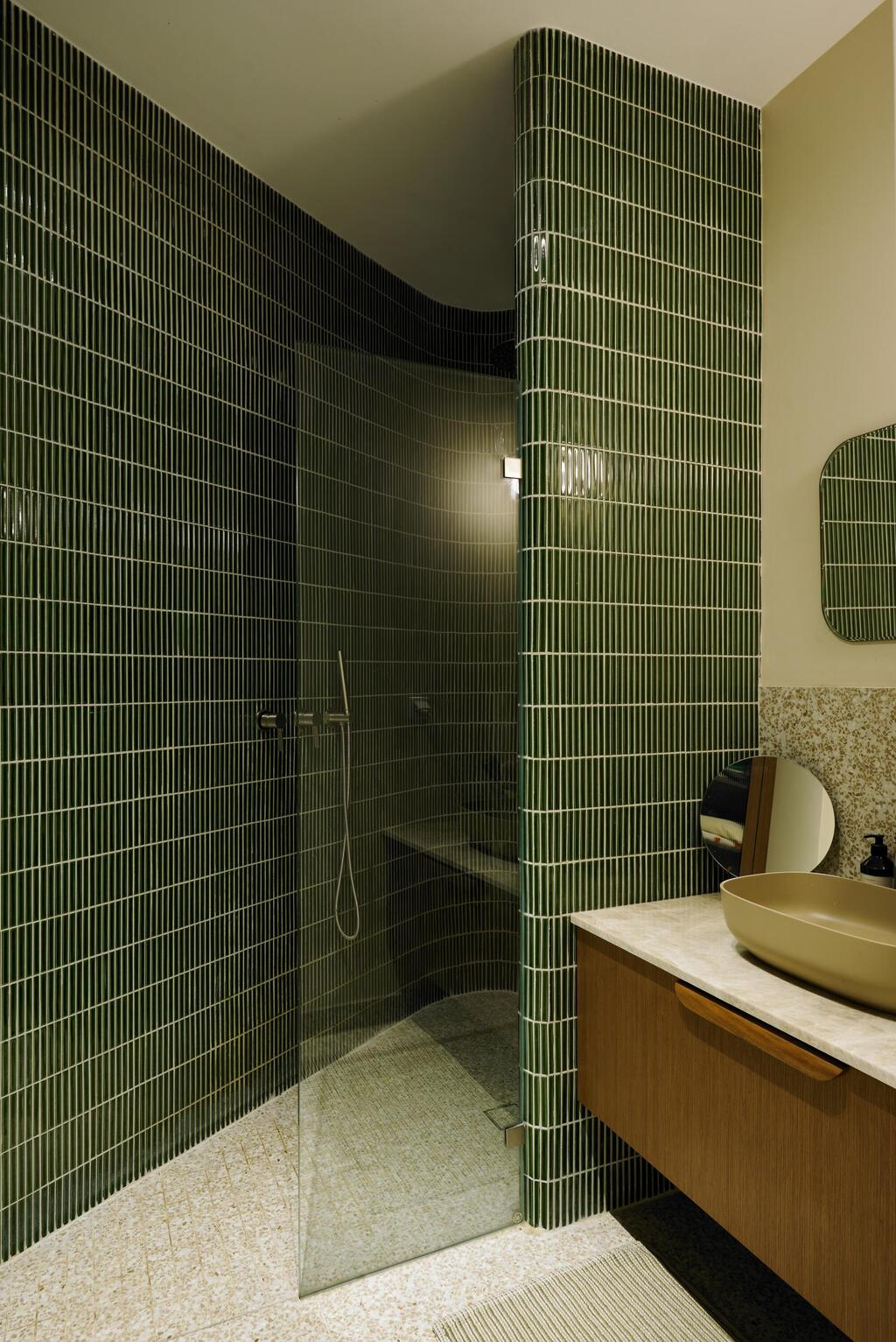
Small green tiles in the bathroom
(Photo: Dor Kedmi)
Do you have a favorite object or corner in the house?
“There are all kinds of small objects here that are dear to me. For example, the blue collectible bear I found in my brother’s house in London. I fell in love with it immediately and brought it here. I moved it dozens of times around the house until it landed next to the stairs and created a harmonious composition. A similar story happened with the orange vintage dresser I found in a Raphael's Midcentury shop in Kerem HaTeimanim, which also creates a moment of perfection. There’s something obsessive in the design process. I move things on a shelf again and again until it feels right. Every shelf is like a small scene — a precise combination of colors, materials and stories.”
Are you already thinking about the next house?
“Not really yet, but as time goes by I prefer taking existing old houses and renovating them. In a new house everything is possible, and that actually makes decision-making harder. In an old house there are constraints, and they help the design. The house itself dictates what needs to happen, and then the problem becomes the inspiration for a design solution. I really love the moment when a problem becomes a feature — that’s how the most beautiful and unique things are created.”
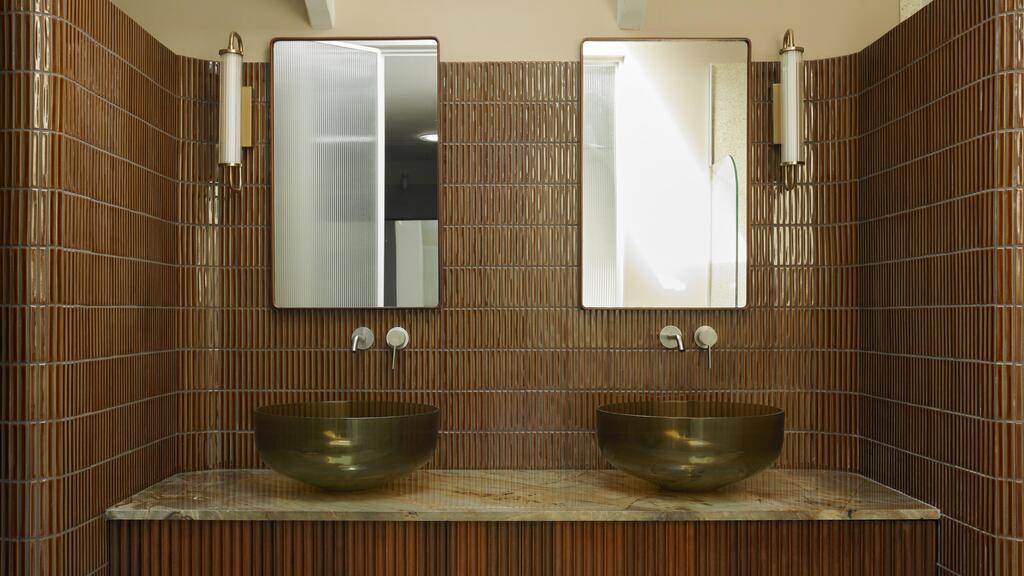
Bathroom with brown tiles and two sinks
(Photo: Dor Kedmi)
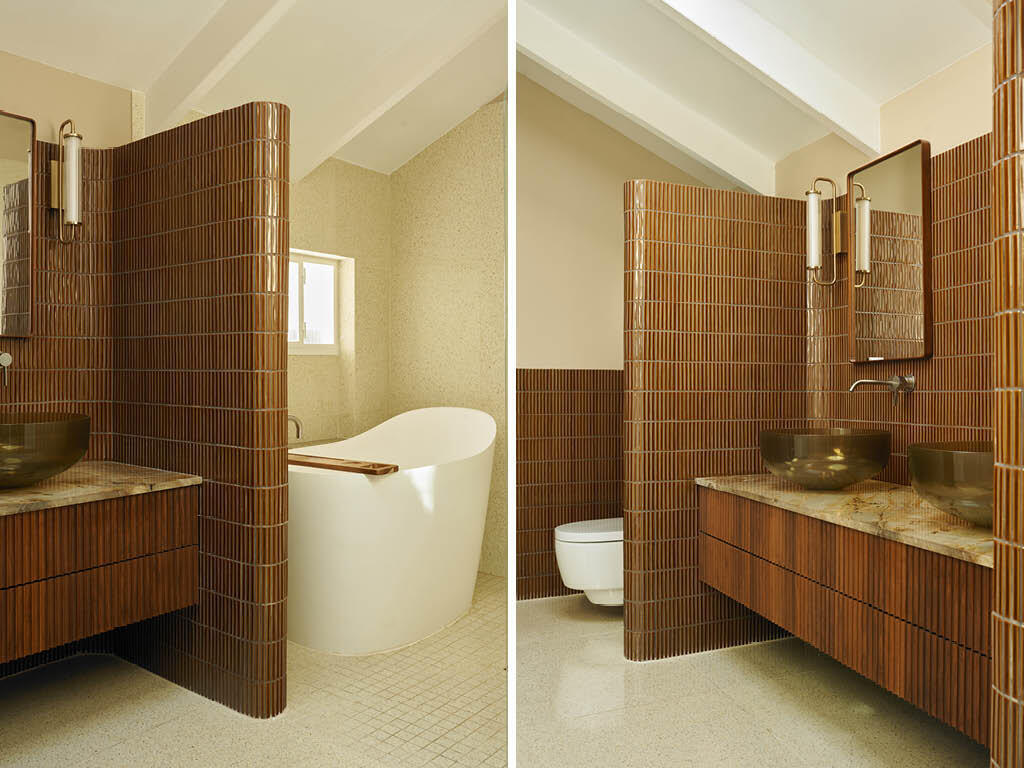
On one side is a toilet, on the other side is a freestanding bathtub
(Photo: Dor Kedmi)
'Design is made up of an endless series of risks'
“I grew up in England, in an environment where older people I respected made safe decisions aimed at not lowering property value and not alarming the neighbors. They went with the neutral: beige tiles, white walls, gray sofas. I think design today is generally very cautious. I identified two reasons for that. The first is that people don’t want to take risks. A design project is expensive, and people are afraid to try something new that might fail. The second is that people simply do what they see around them. A culture has formed in which most homes look the same,” Kattan says.
How does the industry influence this?
“The industry is a big part of it. When you walk into a store, it feels like there are many options, but in practice the choices are very mediated and limited. The same is true outside — buildings look the same, in black or white. You can even take it beyond design, to how we dress, how we speak and think. Everything is quite limited.”
When did you feel you were breaking away from the mainstream?
“At a certain point it just didn’t feel right to me. I remember when I designed my first apartment in England, I bought a bright red leather sofa. The truth is it didn’t look very good and didn’t fit with anything, but I knew why I did it — I was simply trying with all my might not to choose beige. Through that apartment I understood that, if you take risks, sometimes they work and sometimes they don’t. And I realized that the design process is essentially an endless series of taking risks, which I accept and even get excited about.”
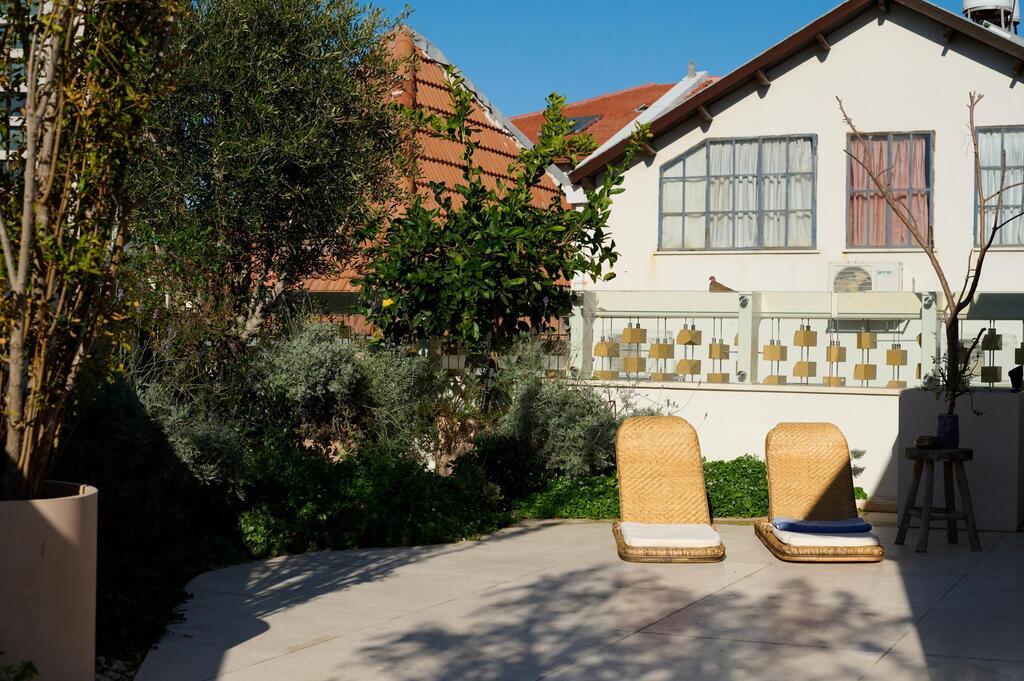
The rooftop seating area. Both private and communal
(Photo: Dor Kedmi)
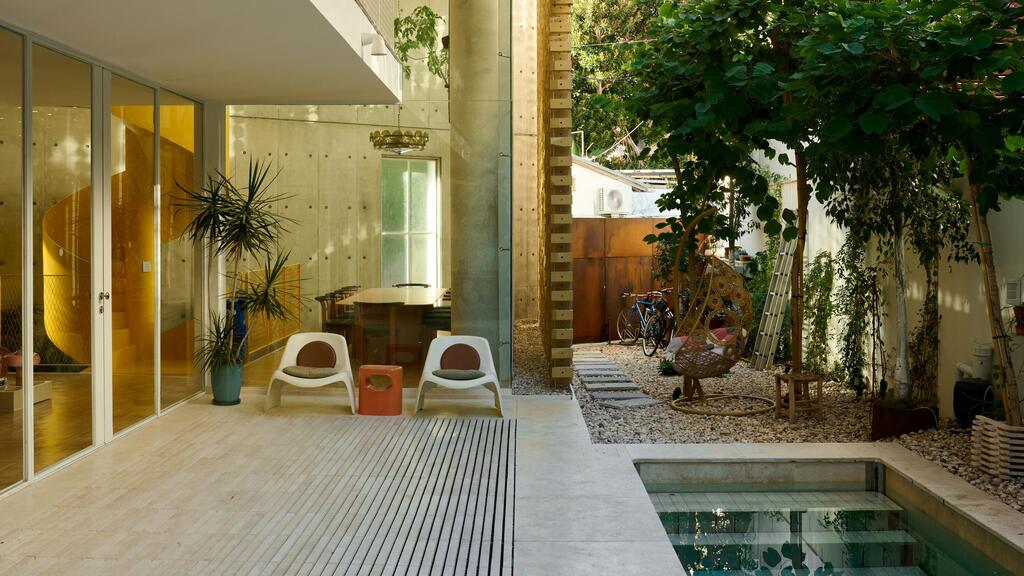
The yard has a small pool and plenty of shade and greenery
(Photo: Dor Kedmi)
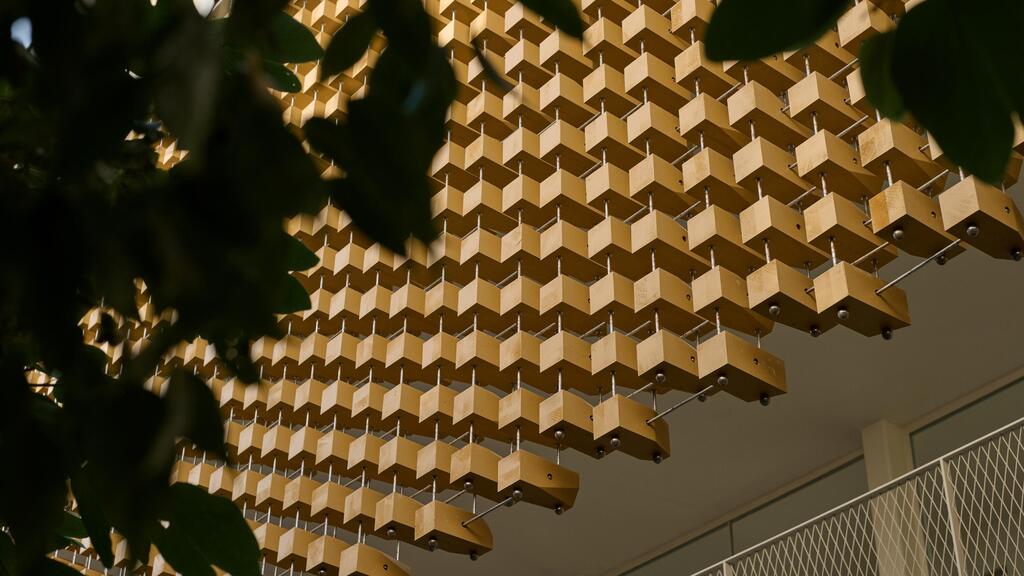
Allows light to enter but also isolate from the dense construction in the neighborhood
(Photo: Dor Kedmi)
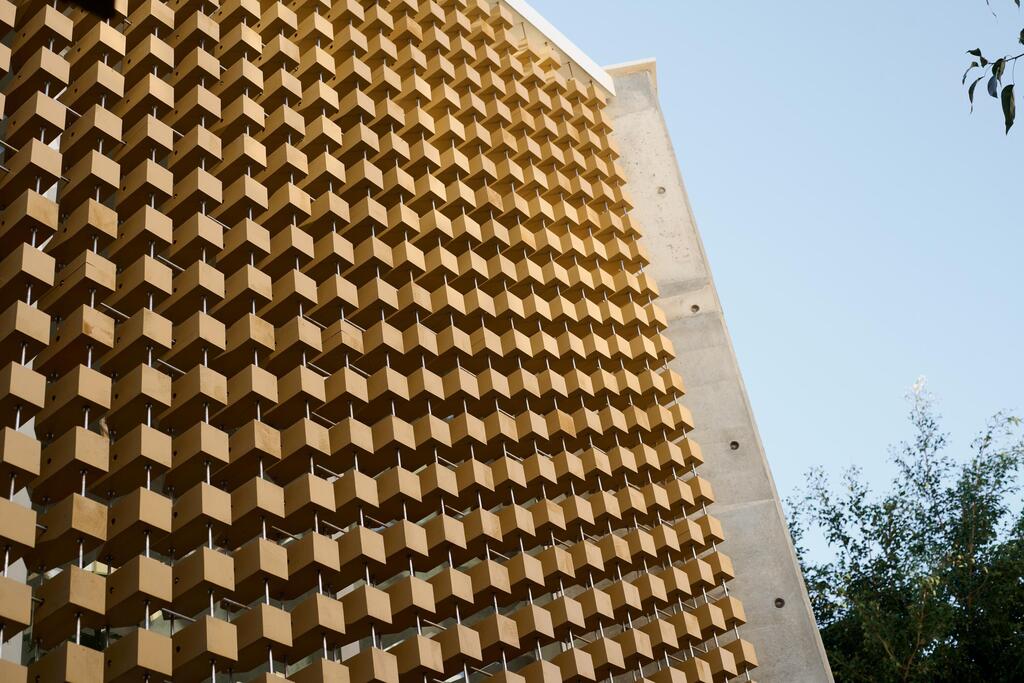
Each piece of wood was built at a different angle to give depth and to refract the light beautifully
(Photo: Dor Kedmi)
Is that how you became a designer?
“Even if I wasn’t formally trained, I always designed. It started with small successes in my own apartments. People saw the results, family members began asking for help, and I gained a reputation as ‘creative’ in my environment. People started asking me to build for them as well. At first I asked, ‘Are you sure? I don’t really know anything about construction,’ but gradually I learned. Since 2007 I’ve been working with Noy Cohen, who is an architect, project manager and my right-hand man. He handles all the complex technical aspects I can’t do alone. We’ve completed about 15 projects together.” The contractor who accompanied the project was Tal Nir.
What is the most significant difference you found between working in London and in Israel?
“There’s a huge difference in the structure of the industry. In most of Europe and the United States, design is based on an industry of large corporations. You go to a showroom and choose a kitchen from 10 options. In England I never met a carpenter or metalworker. The idea of custom-made furniture exists only at the very top end of the market.
“When I came here, my first project was renovating my grandparents’ old house in Ramat Gan. My uncle took me to a village in the north to choose stone. He explained that you choose the stone, they cut it for you, and you determine the shape and finish. When we wanted to make a kitchen, I asked: ‘Where is the showroom?’ and they told me you draw what you want and go meet the carpenter. At first it seemed like a lot of work, but then I understood the potential: it means I can create anything I want. I’m not just going to a carpenter and saying, ‘Make this for me.’ I try to find carpenters who want to do something new — they get bored too. The project of creating our home is built from many small projects — the stairs, the kitchen island, the sofa, the mashrabiya, the parquet — all one-off, very complex projects. I was lucky to find people willing to do them.”
First published: 19:05, 04.19.26