


“They had one request: We want Costa Rica,” architect Zohar Jospe says of the private home she designed in the Sharon region for a young couple with three small children.
“It was not just a design direction, but an invitation to create a space that connects indoors and outdoors, and turns life into an ongoing experience of freedom,” she says. “I tried to bring Costa Rica philosophy into the heart of Israeli architecture, right in the center of the country.”
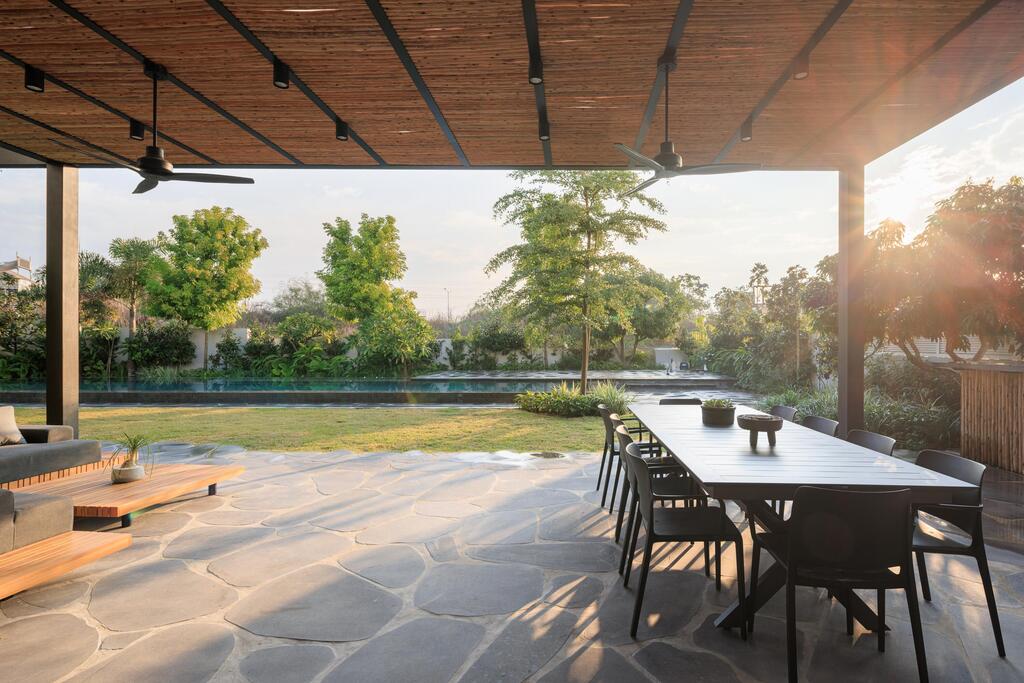
Anyone familiar with Costa Rica knows its lifestyle revolves around the idea captured in the phrase Pura Vida, literally “pure life,” but more broadly a sense that everything is good, a pursuit of positivity and slow living. It is about effortless beauty, material minimalism and a direct, natural connection to the landscape, water, wild greenery and the rhythm of the waves.
The young family wanted to build its new home on a roughly 770-square-meter (8,300 sqft.) lot around that worldview. They asked for an aesthetic that did not seek showy perfection, but comfort and a simple connection to nature.
“The main challenge was taking that faraway feeling, wild and soothing at the same time, and translating it into local architecture,” Jospe says. “It had to suit the climate and way of life here in Israel without losing the magic of a secluded resort.”
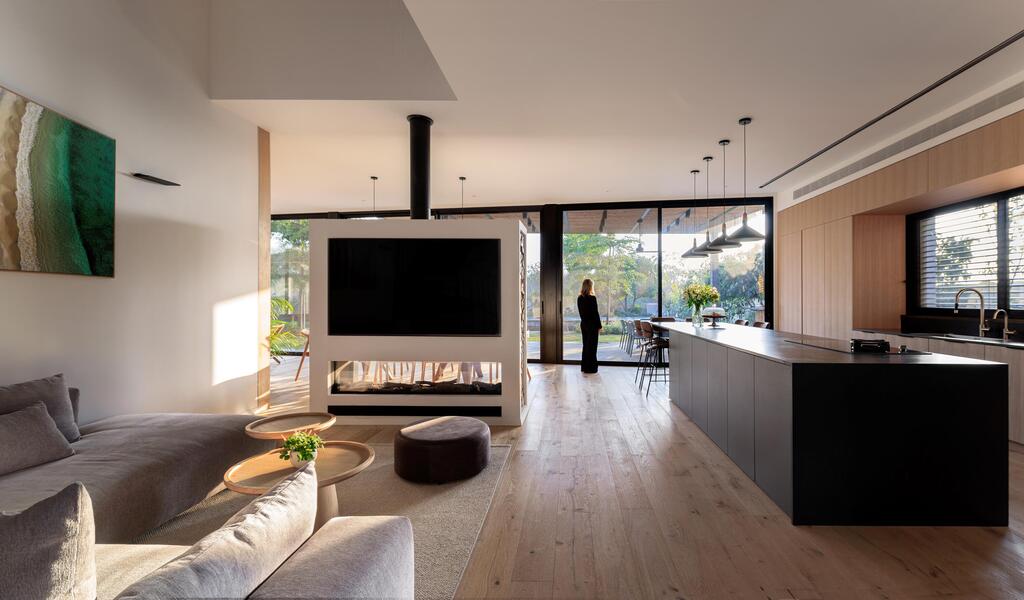
Slow living, Israeli-style
(Photo: Shai Epstein)
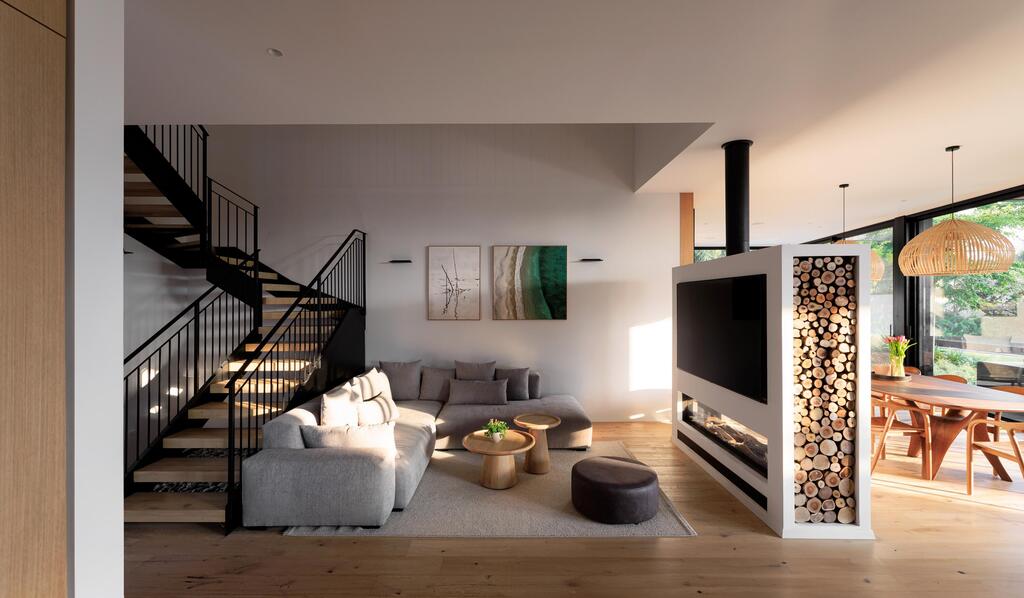
An Ortal fireplace beside a log partition
(Photo: Shai Epstein)
Connected to daily life while feeling entirely removed from it
(Photo: Shai Epstein)
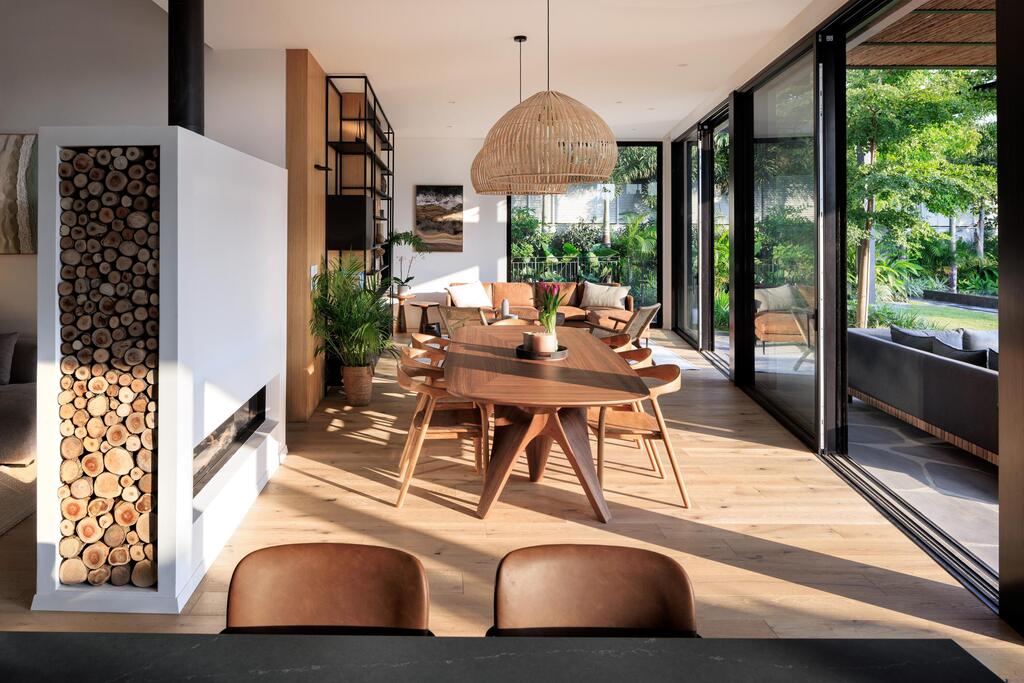
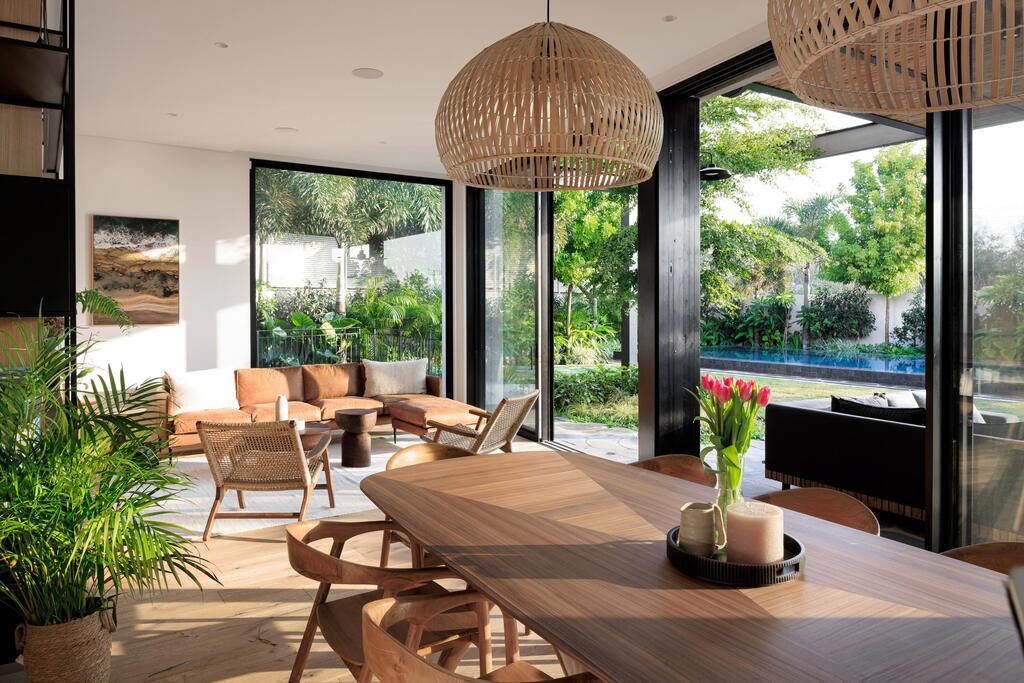
The dining area framed by glass walls
(Photo: Shai Epstein)
Modern luxury and tropical wildness
Located in a new, developing neighborhood in the Sharon region, the house creates a striking duality: It is connected to everyday life while feeling entirely removed from it. The entrance from the street is quiet and restrained, blending into the local neighborhood and giving almost no hint of the architectural surprise inside. But once the front door is crossed, the atmosphere changes and the pace slows.
The wide openings blur the physical and visual boundaries between indoors and outdoors. Tropical greenery, together with a large surf-style pool designed to resemble a natural spring, becomes an integral part of every space in the home. The garden areas, entertaining zones, seating corners and outdoor kitchen are immersed in exotic vegetation. Here, the landscape and nature are not a backdrop, but a central part of the living experience for the family and its guests.
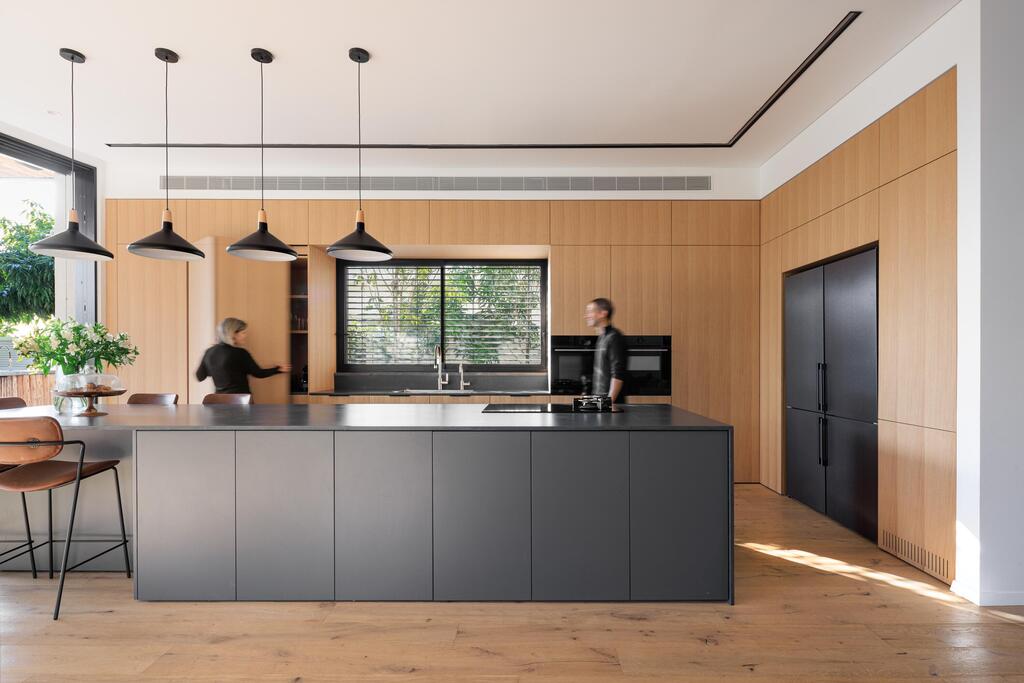
The spacious kitchen is the busiest place in the home
(Photo: Shai Epstein)
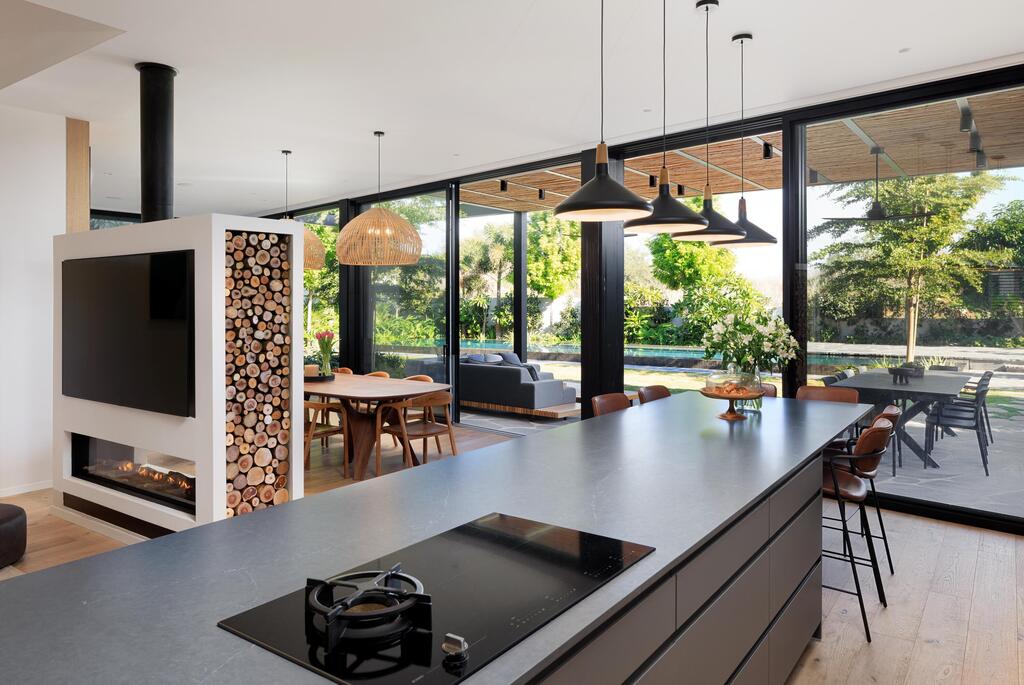
Comfortable kitchen for a family that loves to entertain
(Photo: Shai Epstein)
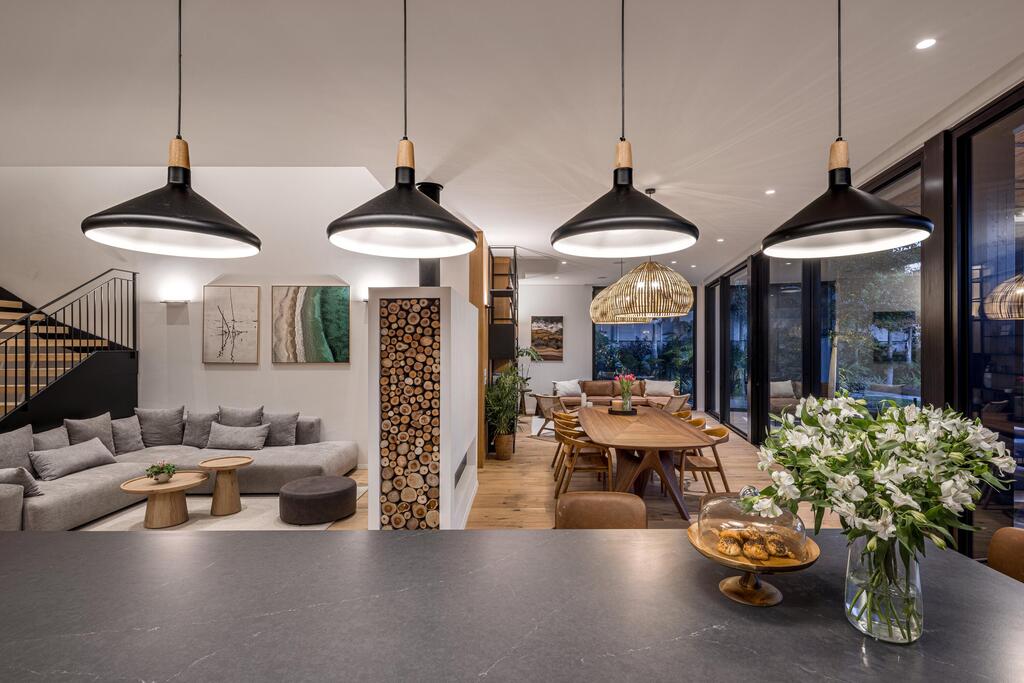
The interior spaces seem to 'spill' outdoors
(Photo: Shai Epstein)
The parquet flooring meets amorphous basalt surfaces, creating a dialogue between natural materials. The choice of warm wood, natural stone and a monochromatic, earthy palette balances modern luxury with tropical wildness.
Jospe says the house was designed around the family’s way of life. “Getting to know the family deeply led to the planning of a home built for family, friends, closeness and togetherness,” she says. “The kitchen and family gathering space are the beating heart of the house, where real daily life happens: cooking together, conversations late into the night, games and watching television opposite a fireplace that adds both visual and physical warmth.”
“The double-height space above the family area is not just an aesthetic element,” she adds. “It creates a vertical connection with the upper floor and allows direct, continuous contact between the entrance level and the bedroom level, so the family feeling is preserved even when the children are upstairs.”
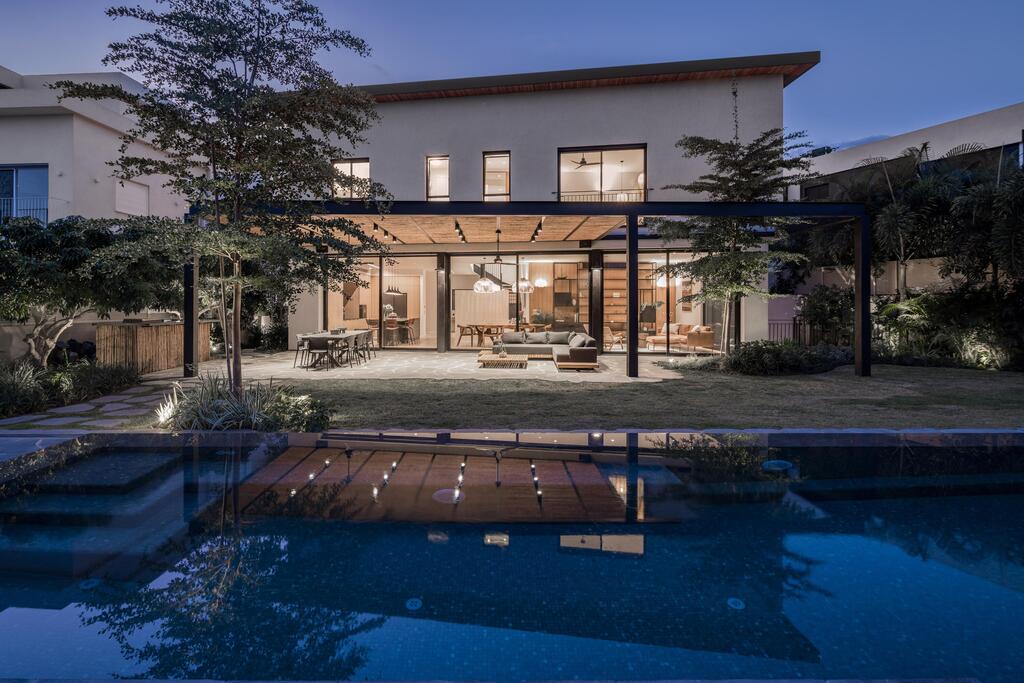
A view from outside into the bright double-height space
(Photo: Shai Epstein)
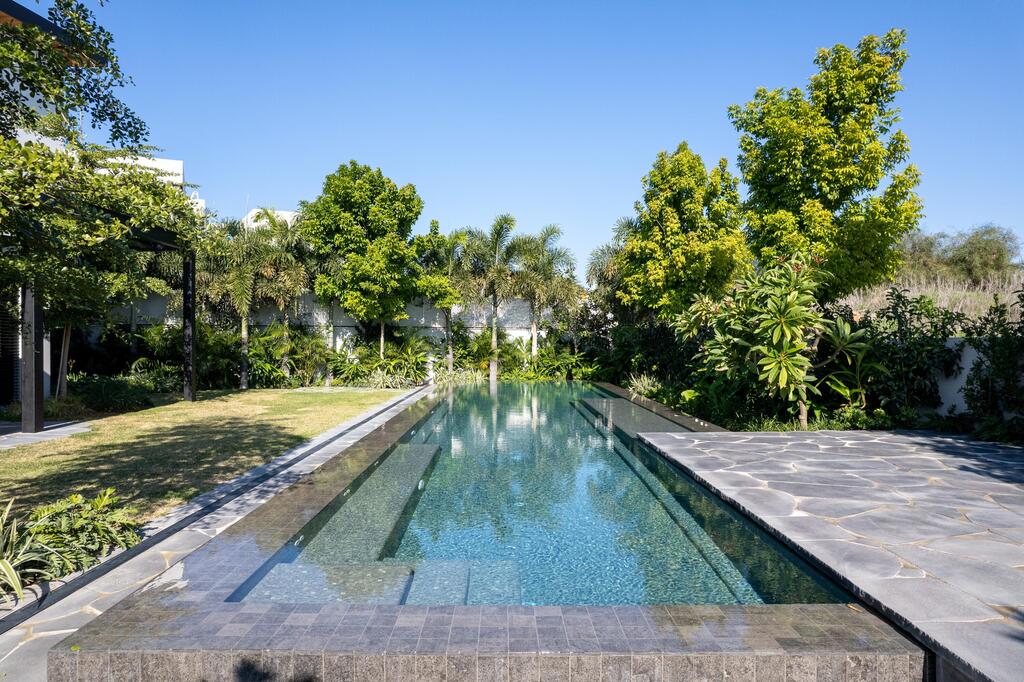
Black basalt, water and greenery meet beside the pool
(Photo: Shai Epstein)
On the other side of the fireplace, directly connected to the kitchen, stands the large dining table. It was positioned to give diners an open view of the greenery and pool. The link to the kitchen was planned for maximum comfort for a family that loves to host, while the seating along the wide glass wall creates the feeling of eating in nature.
Beyond the glass wall is the living room, which opens to the garden and was designed to feel as if it sits in the heart of the jungle. To preserve the height of the space and avoid lowered plaster ceilings, Jospe planned a concealed vertical air-conditioning unit. The wall was clad in elegant oak veneer, naturally connecting the air-conditioning cabinet with a slim iron library, allowing the technical systems to disappear into a designed, visually rich wall.
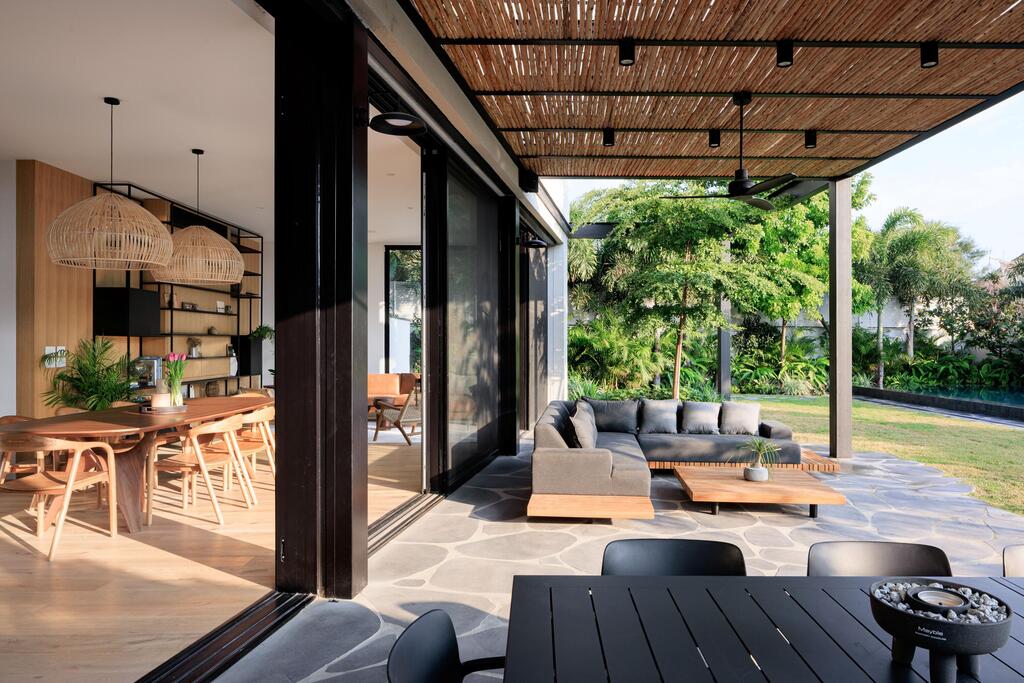
A seamless flow between indoors and outdoors
(Photo: Shai Epstein)
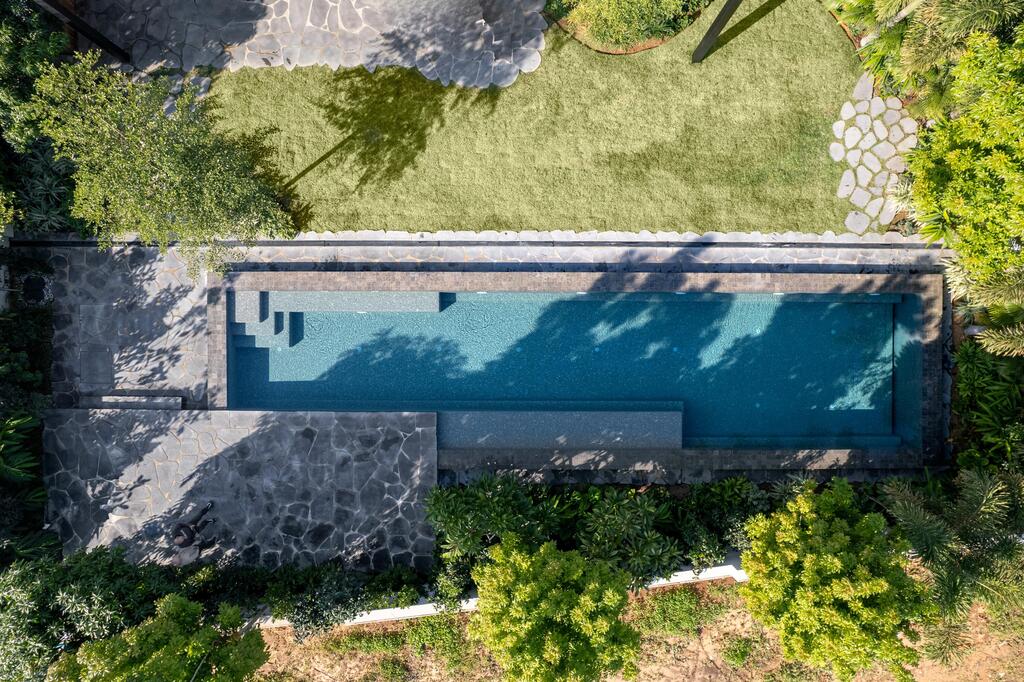
Overhead view of the rectangular pool
(Photo: Shai Epstein)
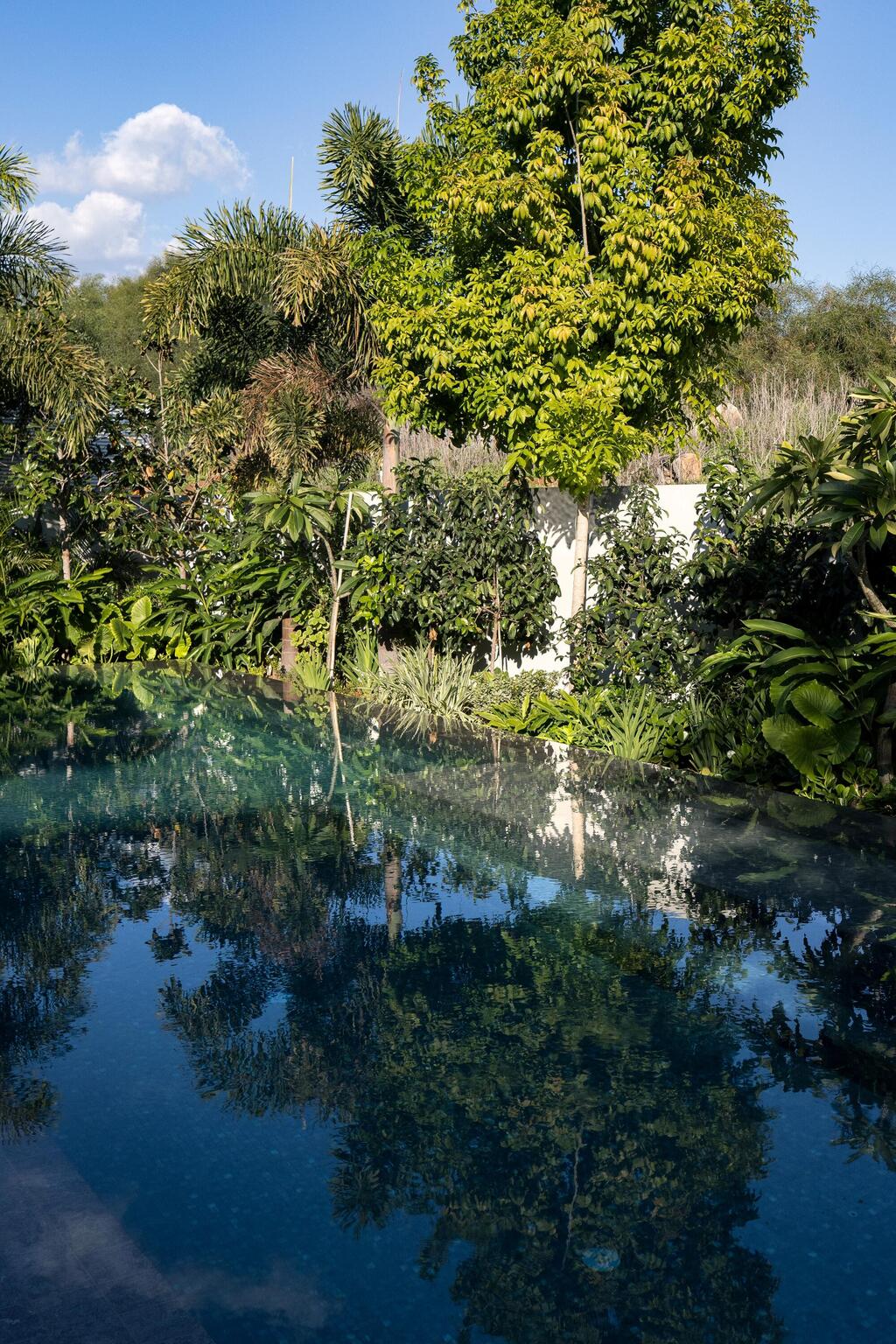
A backyard jungle, just like in Costa Rica
(Photo: Shai Epstein)
A dance of light and shadow
The house opens entirely to the east. The columns were clad in matching aluminum to create a continuous, uniform glass-wall look, producing a visual flow between the kitchen, dining table and living room. According to Jospe, this is not a technical connection but a natural continuum of life.
“The interior spaces almost spill outward into the outdoor entertaining areas, the exterior dining table and the open living room wrapped in greenery,” she says.
Light plays a central role in the planning. “Morning light enters through the large glass wall that stretches along the entire ground floor,” Jospe says. “The sun rising in the east highlights the architectural lines and creates a living movement that accompanies the house.”
The light follows the rhythm of daily life and the sun’s path, continuing south to the large kitchen window, which remains bright and alive throughout the day, and later west in the afternoon toward the quiet work corner. By evening, the house changes character. The lighting plan allows for different kinds of gatherings and moods, from social seating in the living room to intimate ambient lighting for a relaxed evening, emphasizing the plants and water outside.
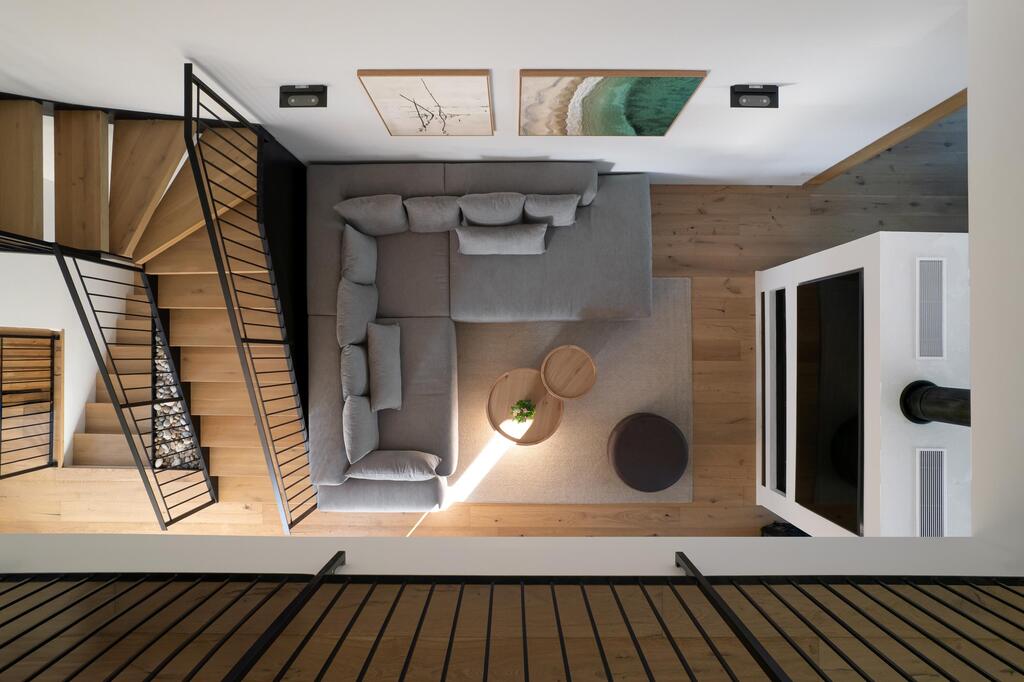
A view from the bedroom level down below
(Photo: Shai Epstein)
Life at resort pace
Jospe says she planned the house according to the family’s daily rhythm: “A quiet morning facing the pool, afternoons full of movement through the different spaces, hosting evenings that continue into the night, and finally retreating to the private bedrooms.”
The entrance to the parents’ suite continues the tropical experience, with materials that carry the same design language. The parquet floor gives a warm, pleasant feel each morning. The wall behind the bed is clad in natural oak over a raw-looking mineral plaster wall. Carefully chosen light fixtures softly frame the bed, while the large glass wall opening to the landscape and pool makes every morning feel like the start of another vacation day.
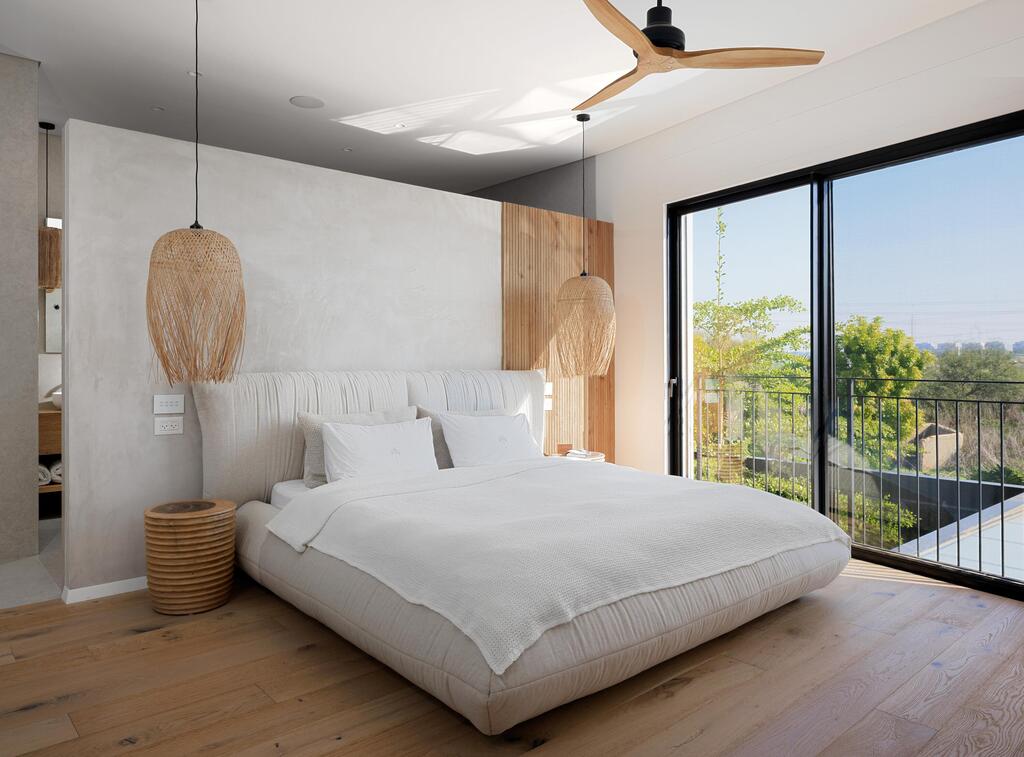
The couple’s bedroom feels like another day on vacation
(Photo: Shai Epstein)
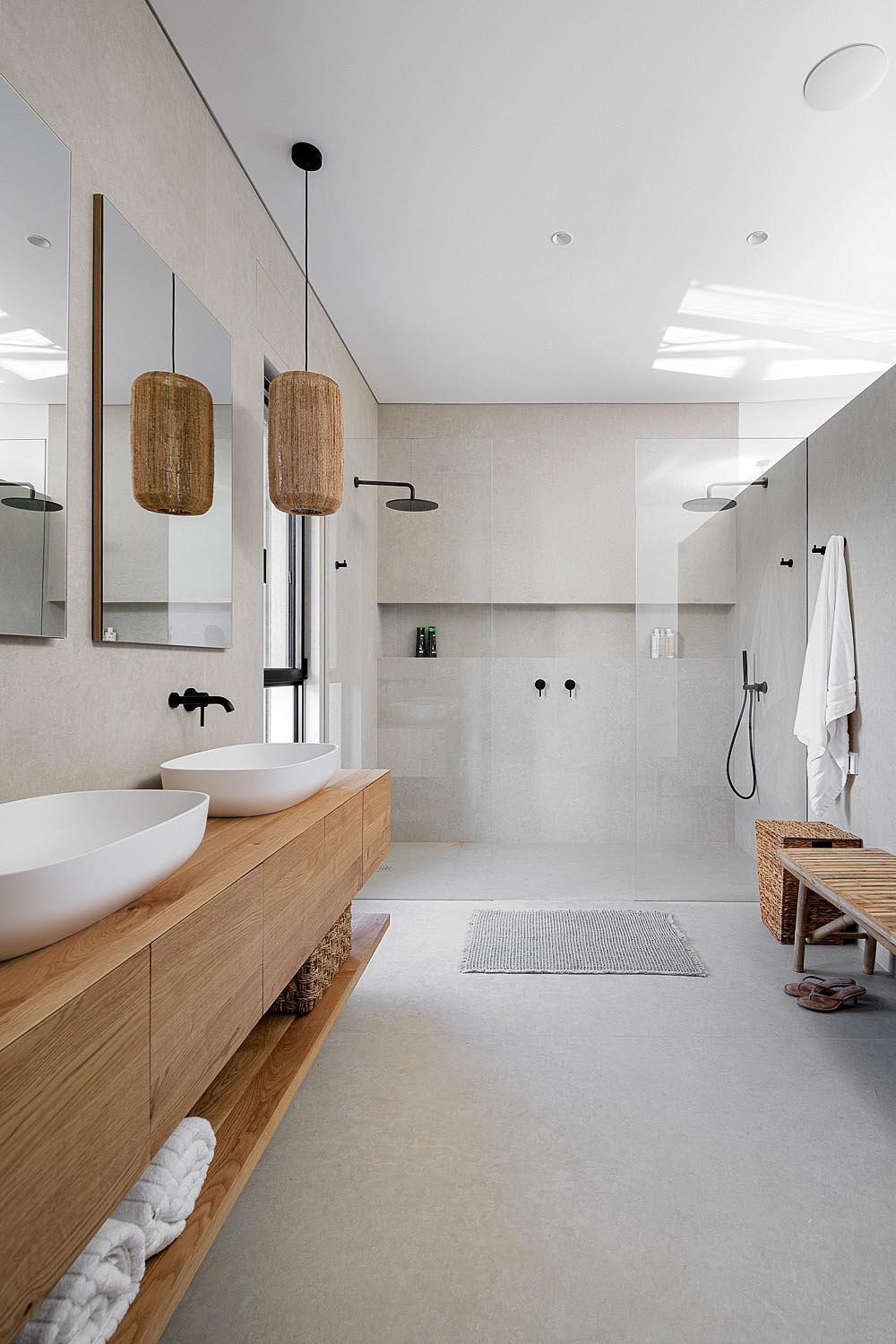
A spacious bathroom with a clean, bright design
(Photo: Shai Epstein)
The parents’ bathroom was designed as an open space connected to the bedroom through a delicate play of concealment and exposure. The separating wall is low, allowing the room to benefit from the full scale of the space and the natural light. The design is clean, with large porcelain-granite slabs creating a uniform look without divisions. Mirrors that double as hidden storage cabinets inside niches, above countertop sinks and wall-mounted faucets complete the experience.
Jospe stresses that this is not a trendy home, but a project that turned an abstract dream of a faraway place into a dynamic daily reality. “The house proves that good design is not measured by passing trends, but by its ability to create emotion, in this case, complete calm and a connection to nature in the middle of life’s noise,” she says.
“The combination of functional planning that sanctifies family life and a choice of colors and materials devoted to nature created a home that is far more than architecture: a place to live the dream, the essence of life in Costa Rica.”