

Sometimes we see what everyone else has - the polymer wall moldings in the neighbors’ home, the yellow ceiling on Pinterest, every side table in the catalog - and we want it too. Instead of asking what works for us, we look at what works for others and base our choices on other people’s design, even when it looks bad.
That is how homes end up looking great in photos but feeling far less comfortable to live in. A sofa may be ordered without checking how it feels to sit on it. A plastic chair that looks great in photos but is plainly uncomfortable. A light fixture chosen for its appearance rather than the amount of light it provides.
In an era when everything is available at the click of a button and looks perfect on a screen, it is easy to confuse inspiration with reality. We fall in love quickly, order quickly and adjust ourselves to what we bought instead of the other way around. What follows are some of the most common home design mistakes.
Not just trends, or why a beautiful home can still feel lacking in character
The world is full of inspiration, and it is more accessible than ever. The problem begins when people try to copy-paste everything, without asking whether it really fits their lives. What looks perfect in photos does not always survive daily life, and sometimes feels empty and out of place.
Good design does not begin with what looks good, but with what is right in terms of who lives here, how they actually use the space and what their daily life looks like. Only then comes style. Character is not created through copying, but through layers: textiles, books, art and objects with a story. Not too perfect, not too forced, but personal and authentic.
Between perfect symmetry and total chaos, there is plenty of room for balance. Not everything has to match exactly, and not every corner has to be perfect. Sometimes an unexpected, slightly unplanned combination is what creates depth. That is especially true when seeing influencers’ beige homes on social media. Remember, it doesn't fit everyone.
Gallery
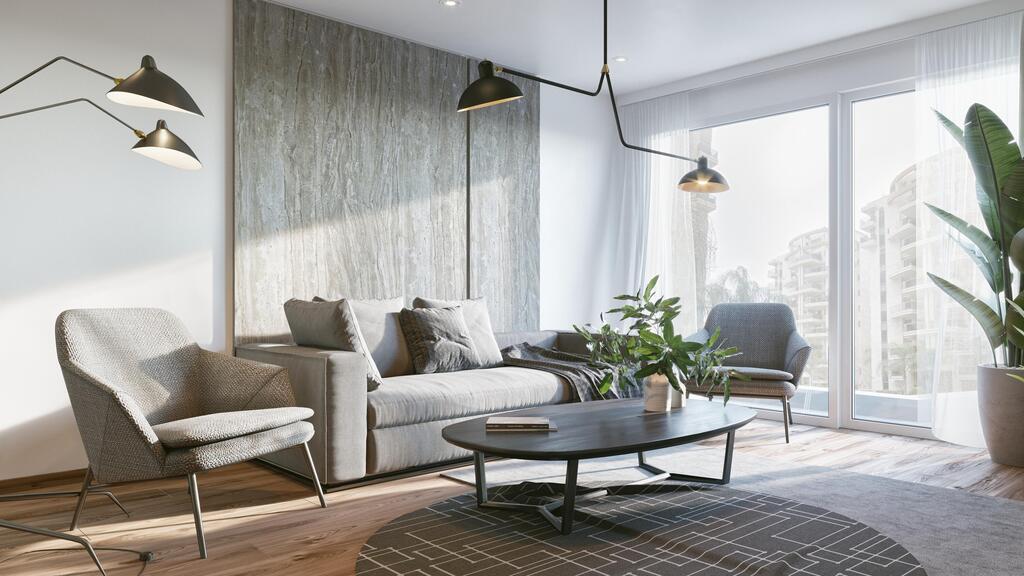
Keep the furniture in proportion to the space and avoid going too large. Givat Shmuel project
(Photo: Courtesy of Buchalter Studio)
Out of proportion, or how one small rug can ruin an entire living room
It starts with innocent decisions: a rug that looked “cute” in the store, a colorful side table, or another small stool to complete the look. But once they arrive home, the room feels like a collection of items rather than one clear composition.
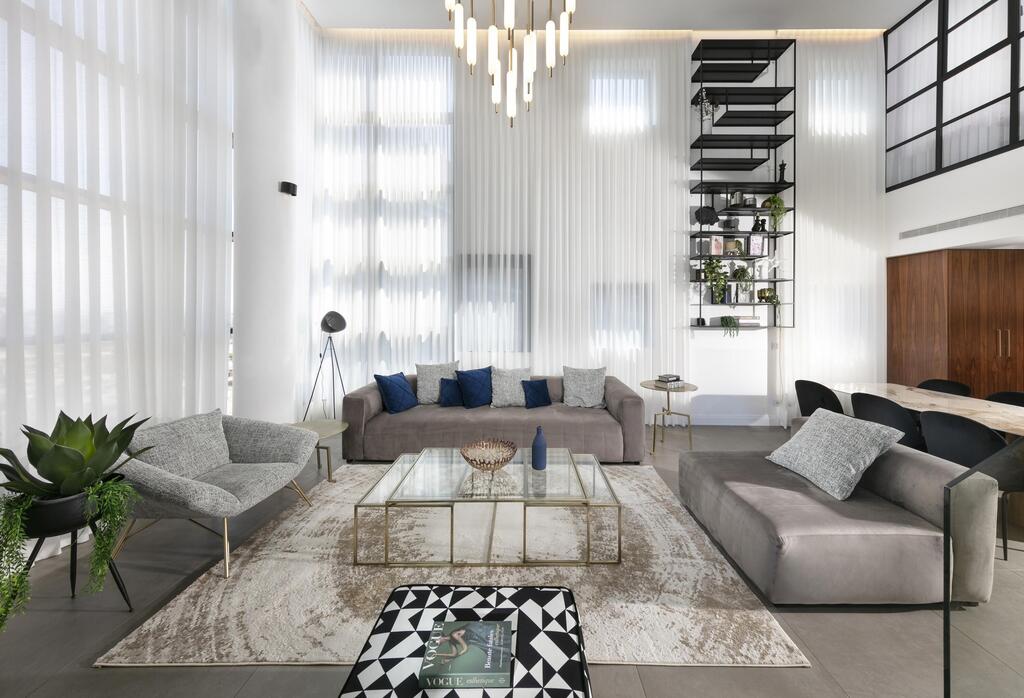
A rug can serve as foundation, make sure it is not too small
(Photo: Elad Gonen)
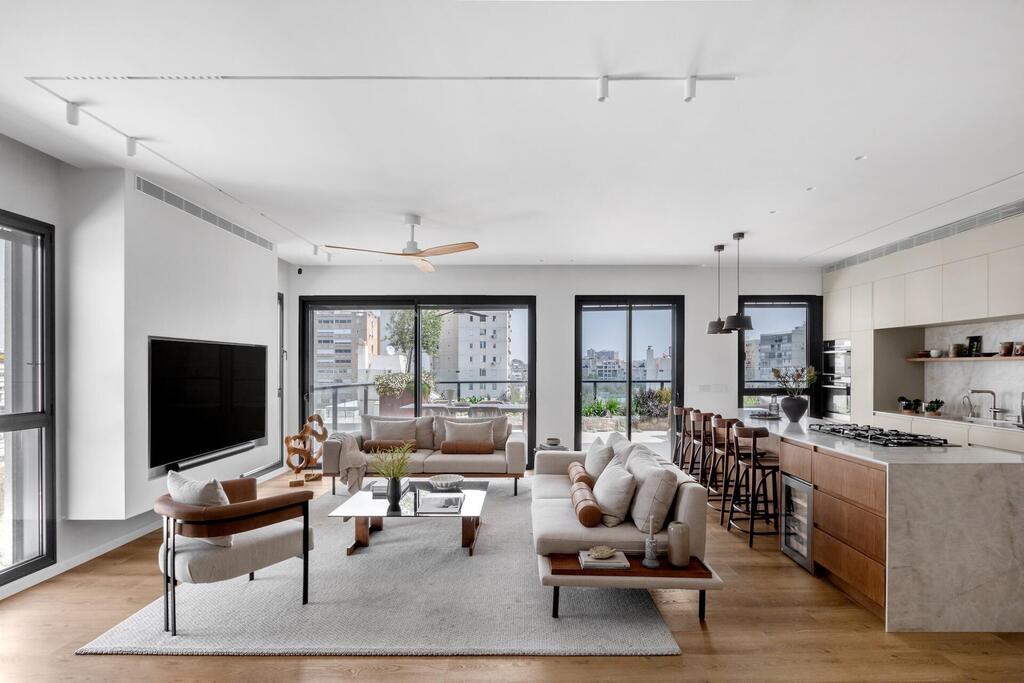
A rug that defines the boundaries of the living room
(Photo: Shiran Carmel)
On the other hand, there is the opposite mistake: oversized furniture trying to squeeze into a small space, a huge sofa that “chokes” the living room, or a table that leaves not enough space for a person to pass.
Interior designer Guy Buchalter and architect Ornit Buchalter say the common problem is inaccurate scale and relying on intuition instead of measurement. “The furniture should fit the space, not fight it,” they explain.
A rug that is too small, for example, only highlights the lack of proportion. It is better to buy a rug large enough to hold at least the front legs of the sofa and armchairs, tying the whole area into one clear composition.
The principle does not stop in the living room, but continues in smaller details: a kitchen island with a counter that is too high on one side, a vessel sink placed at an uncomfortable height, or a faucet that is too tall and may block a window or send water splashing outside the sink.
Designer Shlomit Itzhakov says it is important to account for the height of the sink itself and add it to the height of the countertop to create a comfortable, functional setup. In the end, proportion is not about style. It is about fitting real life.
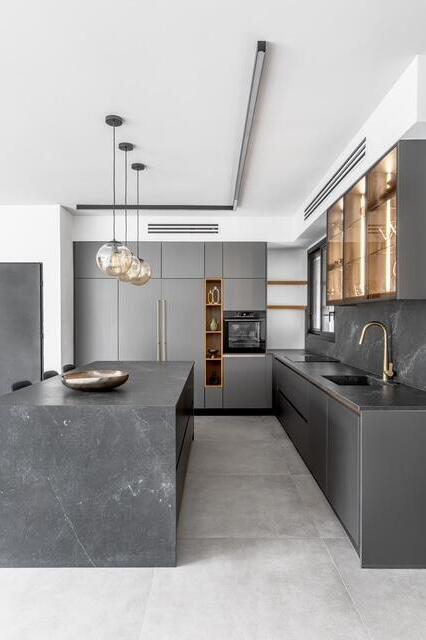
Plan counter heights around the people using them, not the standard
(Photo: Yonatan Tamir)
Why is it better to center the room
We have an almost instinctive tendency to push everything against the walls. Without noticing, the living room starts to look more like a waiting room than an inviting place where people actually want to sit. The mistake comes from the desire to “open” the space and leave as much empty floor as possible in the middle. In practice, it does the opposite: the room feels empty, cold and uninviting.
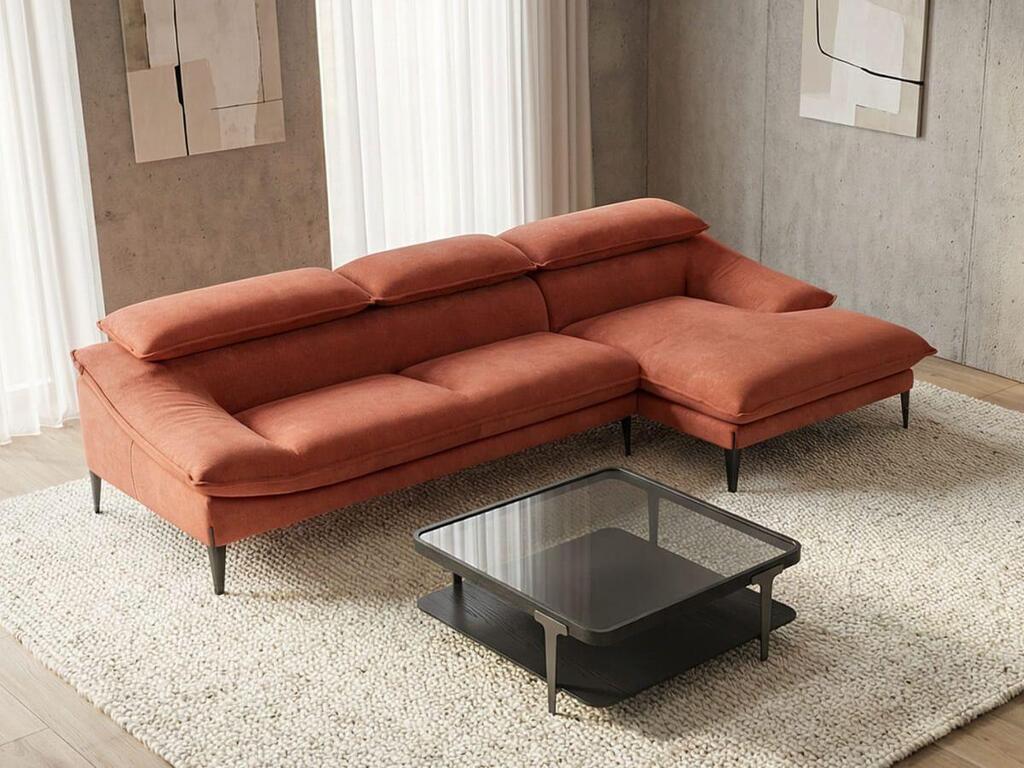
Pull furniture away from the walls
(Photo: Courtesy of Italsofa)
The solution requires a little courage. Give the center of the room more credit and pull the furniture inward, creating zones and corners suited to different uses, such as conversation, reading and entertaining. Moving away from the walls and creating “islands” of seating, with enough room for conversation, brings depth, intimacy and a sense of home, even if it means giving up 12 inches of floor space.
Light is not just drama, or why a beautiful fixture is not enough
Lighting is one of the most important elements in a room, and somehow it is often the last one addressed. People usually invest in furniture, colors and textiles, then "wrap things up" with a single striking ceiling fixture, expecting it to carry the entire room. But a central light fixture, however beautiful, cannot carry an entire space alone. Without layered lighting, general, functional and atmospheric, the home remains flat and sometimes simply unpleasant to spend time in.
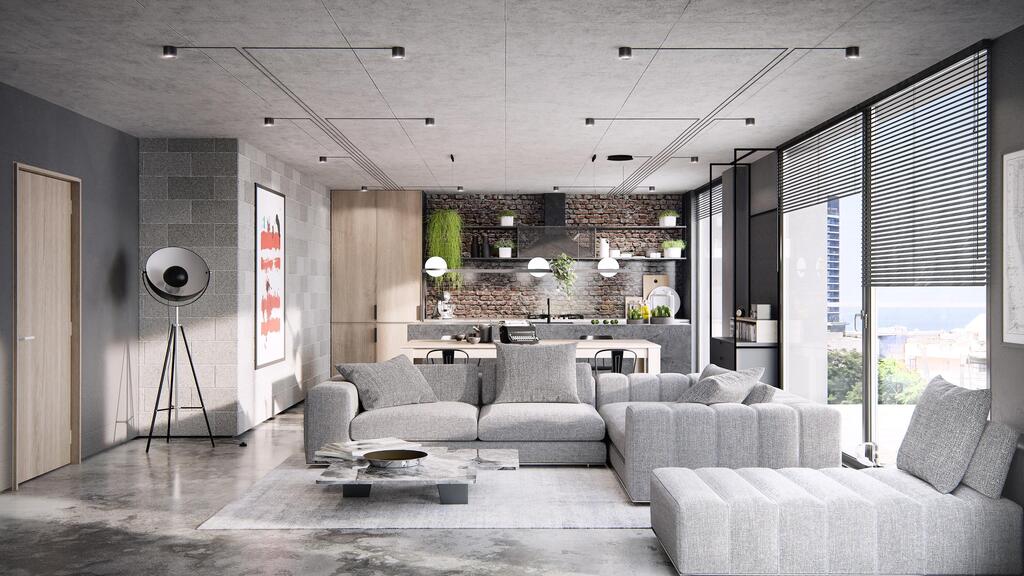
Lighting should suit the space: its size, natural light and the family’s movement through it
(Photo: Courtesy of Buchalter Studio)
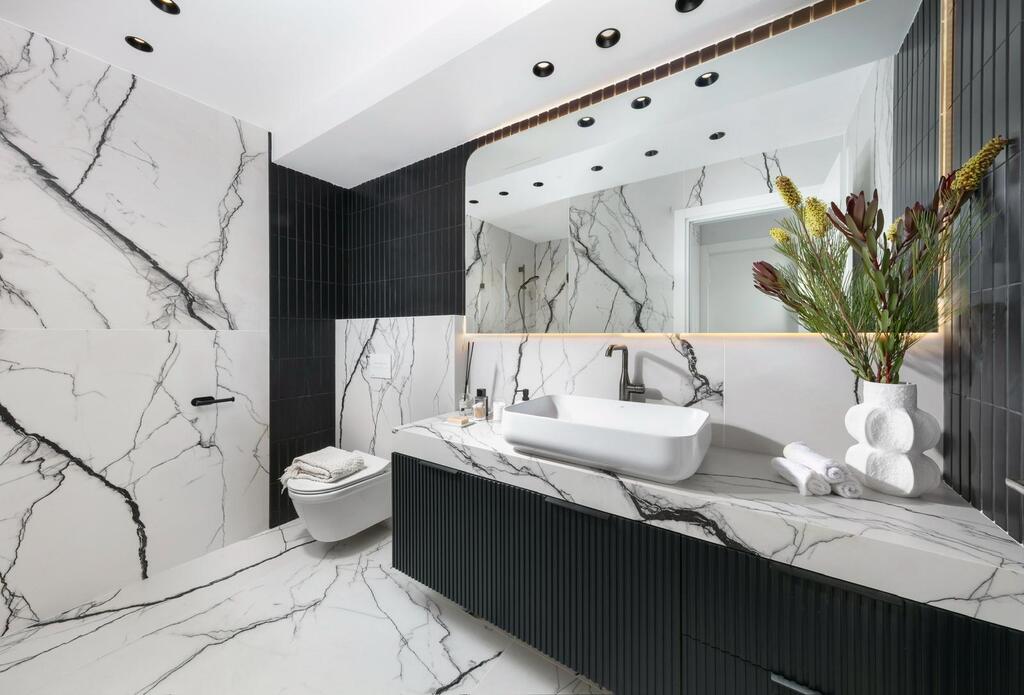
Prioritize strong lighting in bathrooms and other functional spaces
(Photo: Elad Gonen)
The solution begins with the right combination: soft, warm light of 2700K to 3000K for main areas, precise task lighting for the kitchen or reading, and complementary lighting that adds depth and atmosphere.
As always, the small details matter: work lighting should not be placed behind the person using the space, where it will cast a shadow; hanging fixtures should not collide with doors; and there should be suitable, different lighting for cooking, reading, dining or lounging.
Matching sets usually belong in showrooms
It is convenient, easy and arrives in the same package, but matching sets often threaten to erase almost any sense of personality and create visual boredom. The urge to create perfect coordination, down to the throw pillow, may feel safe, but in practice, it creates a sterile space that looks like a photo set.
Ksenia Bahak, studio manager at Naaman-Vardinon, sees the same pattern in room styling. “It is less advisable to choose a dominant color or pattern that repeats across every textile item in the room,” she says. “A bedroom should reflect the person who lives in it, rather than look like a showroom.”
The solution, she says, is to release some control. Choose a limited palette of two or three flattering shades and mix patterns and textures that create interest and sensuality in the space without falling into overmatching.
A little lower please, or art that should not require a ladder
If you need to lift your head to see a picture, you probably hung it too high. Rule of thumb: art should meet the eyes, not the ceiling.
One common mistake is hanging art “high and beautiful,” which disconnects it completely from the room and the furniture around it. The center of the picture should be at eye level, roughly 5 feet from the floor, so it connects with the other elements.
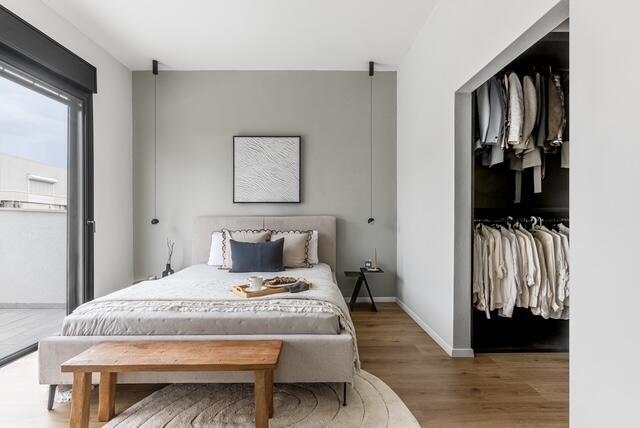
Hang art pieces at eye level
(Photo: Yonatan Tamir)
The same principle applies to curtains. A track installed too low, or fabric that ends halfway down the wall, “cuts” the space and makes it look smaller. Hanging curtains close to the ceiling and letting them reach the floor creates a sense of height and airiness without moving a single wall.
Electrical outlets placed too high are also outdated. Proper planning of electrical points, based on furniture placement and actual use, prevents improvisation, extension cords, visible cables and small daily frustrations.
Let go of old loves
A long-standing attachment to a single item can be one of the biggest pitfalls in home design. Antique chairs, a standing light fixture inherited from the family, or a humorous piece carried over from a bachelor's apartment can turn into a random collection. The problem begins when it is not one small keepsake, but a whole set of irrelevant objects.
Designer Shim Edri knows the pattern well. “There is always a piece of furniture people do not want to give up, even when it is clear it no longer works. Then the whole house "bends" around it, instead of letting go and starting clean,” he says.
The result is not a small compromise, but a chain of compromises that follows the entire space. Good design is not a collection of things we once loved, but a relationship that changes over time.
An accent wall without a story, or one wallpapered wall while the rest falls flat
The accent wall is still one of the most useful tricks in home design: a bold color, wallpaper, brick or an interesting textured finish on a central wall. But the problem begins when one wall puts on a show and the rest of the home stands behind it like extras in a low-budget movie. The result is one photogenic moment and an entire space that feels generic and lacks depth.
It is just as important not to go too far in the other direction by piling on color, texture and print. One major mistake is choosing colors without a clear plan and combining too many styles and shades that do not connect.
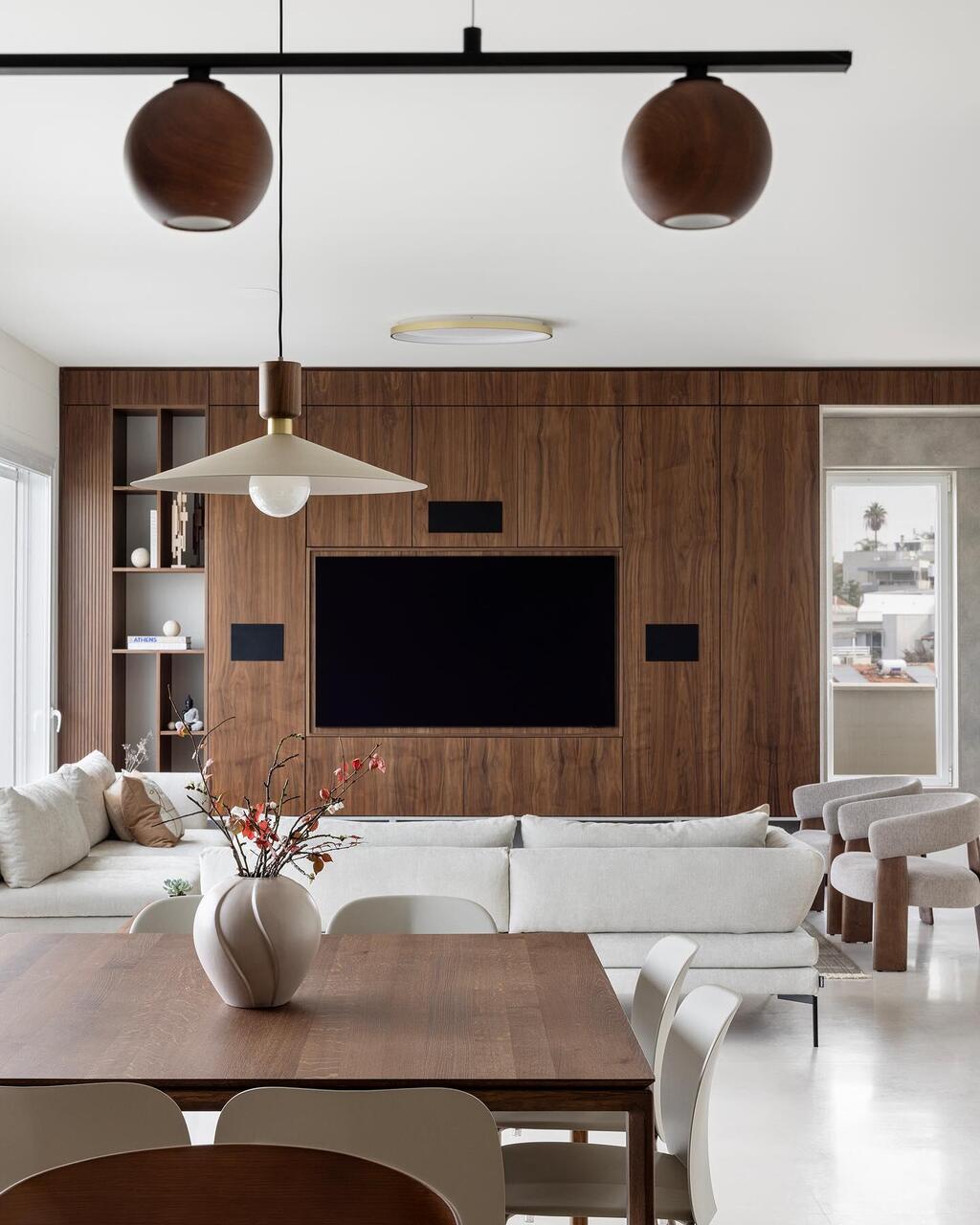
Create depth and richness, not uniformity. Media wall
(Photo: Itay Benit)
The solution is to choose a palette of several leading shades and build layers around them through textures, materials and combinations. Designer Hadar Melamed Rechter suggests, for example, using the same color in different shades, such as blue on blue, to create rich depth rather than flat uniformity, as long as the play comes through texture: smooth fabric against woven material, soft against rough.
Design with a tendency to overfill
Interior designer Maya Sheinberger says one of the most prominent problems in Israeli homes is not too little, but too much. “We are a people raised on the mantra of ‘so nothing will be missing,’ and the home fills accordingly: the table is loaded, the cabinet never stays empty, and the living room is supposed to contain everything for every scenario,” she says.
But the real problem is not only the quantity, but the way people try to handle it. Another cabinet, another shelf and another dresser do not always solve clutter. Sometimes they only allow it to spread. The solution is not adding more storage, but planning more carefully around what you already have: smart use of niches, vertical storage solutions and a mix of closed and open storage.
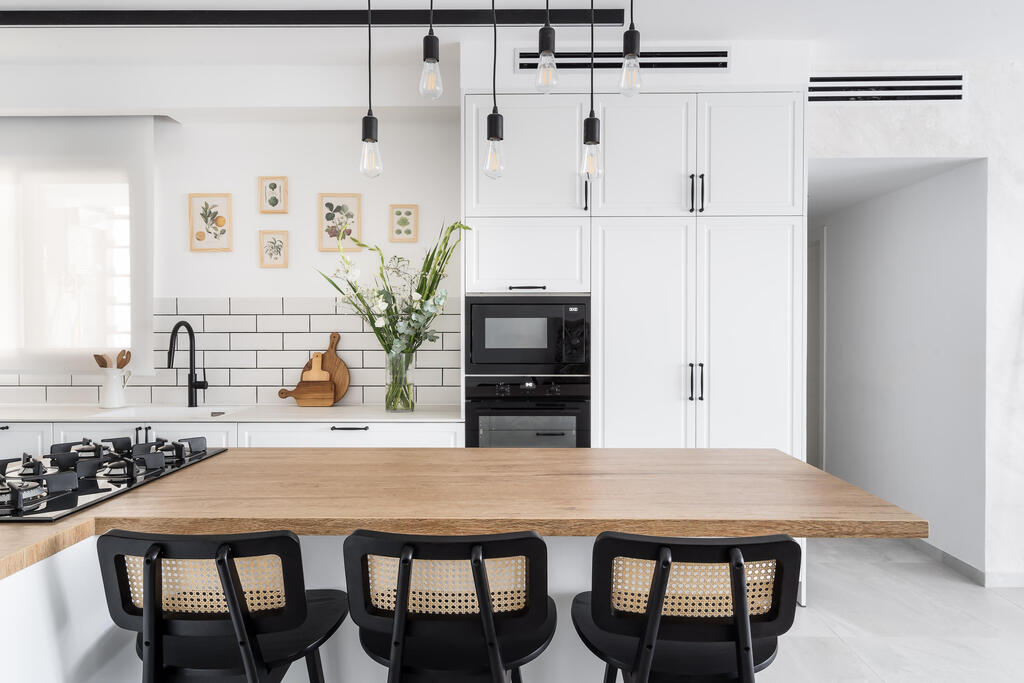
Extend kitchen cabinets all the way to the ceiling to maximize storage
(Photo: Avi Kabalo)
Interior designer Tali Gold recommends eliminating the unnecessary gap between upper kitchen cabinets and the ceiling, extending them all the way up. That creates additional storage without burdening the space. “Dead” areas, such as under the stairs or near the entrance, can also become precise storage solutions that prevent clutter from spilling into the center of the home.
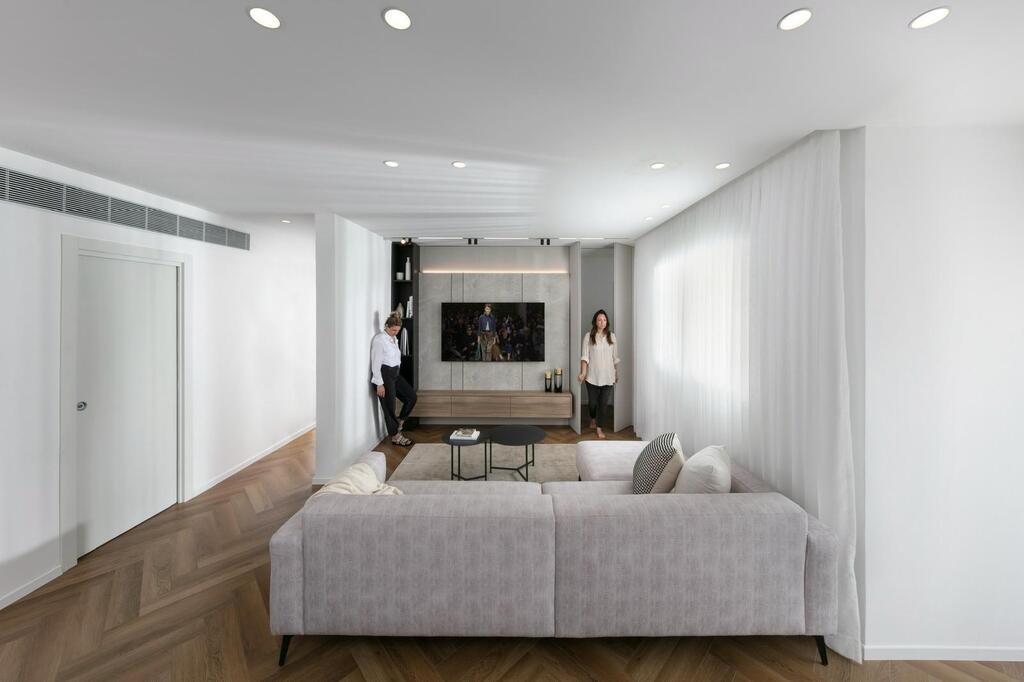
Create separation between the home office and the living room
(Photo: Elad Gonen)
No balance between home and work, or when the office moves into the living room
Since the COVID pandemic and the beginning of the Zoom era, work areas have appeared in homes. But in quite a few homes, that corner has taken over the space. A work desk in the middle of the living room, an office chair next to the sofa, cables climbing the walls, all blur the line between work and home.
Architect Shira Dromi of Bazelet Architects describes a common situation in which the work corner is completely open to the living room. It may sound good on paper, but in practice it becomes noisy and impractical. “In reality, it's hard to concentrate on work and nothing functions as it should,” she says.
The solution, she says, is to create an intimate, acoustic work area that allows people to actually work, with a light but important separation. Sometimes the boundary is exactly what holds the balance.
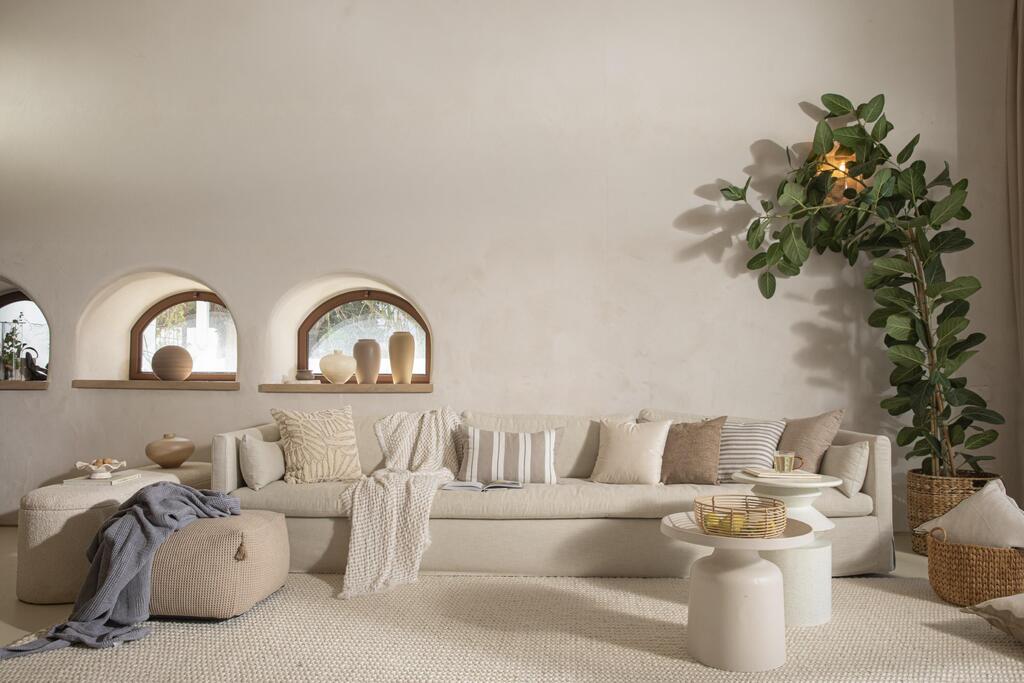
Avoid overcrowding and blocking the space
(Photo: Eran Salem)
Blockage instead of flow, or when you keep bumping into things
Good design is measured not only by what you see, but by what happens when you move. If you need to plan a route just to function in a space, perhaps you are less of a designer and more of a navigator in an obstacle course.
It happens when people try to squeeze both an island and a dining area into a space that cannot really contain both, when a chaise blocks access to the balcony, or when the gaps between furniture become too narrow. Designer Hadar Melamed Rechter of the Kaufman Group says sometimes the right choice is to give something up: choose one function that works well instead of two that do not work at all.
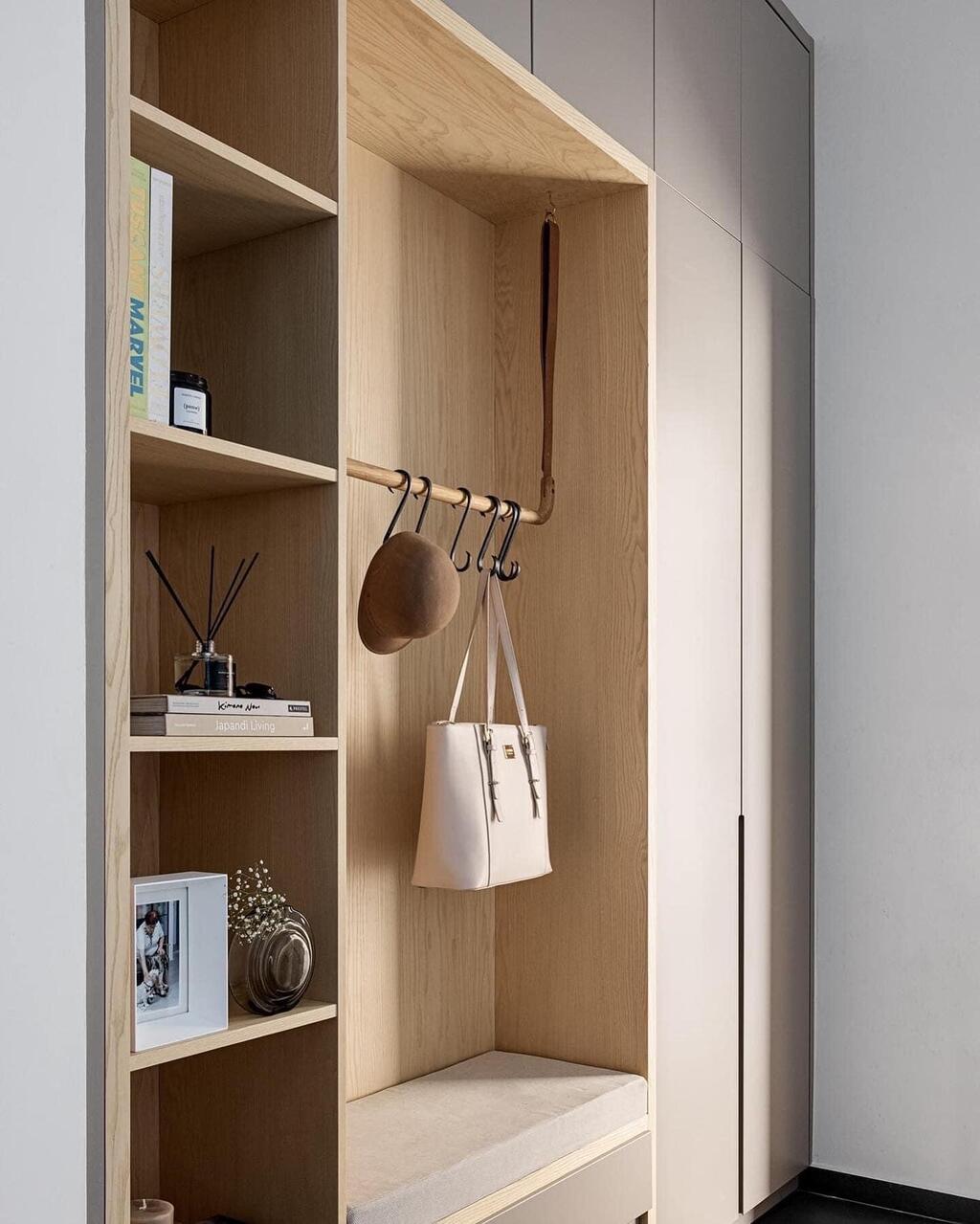
Do not block the light. Entryway cabinet
(Photo: Itay Benit)
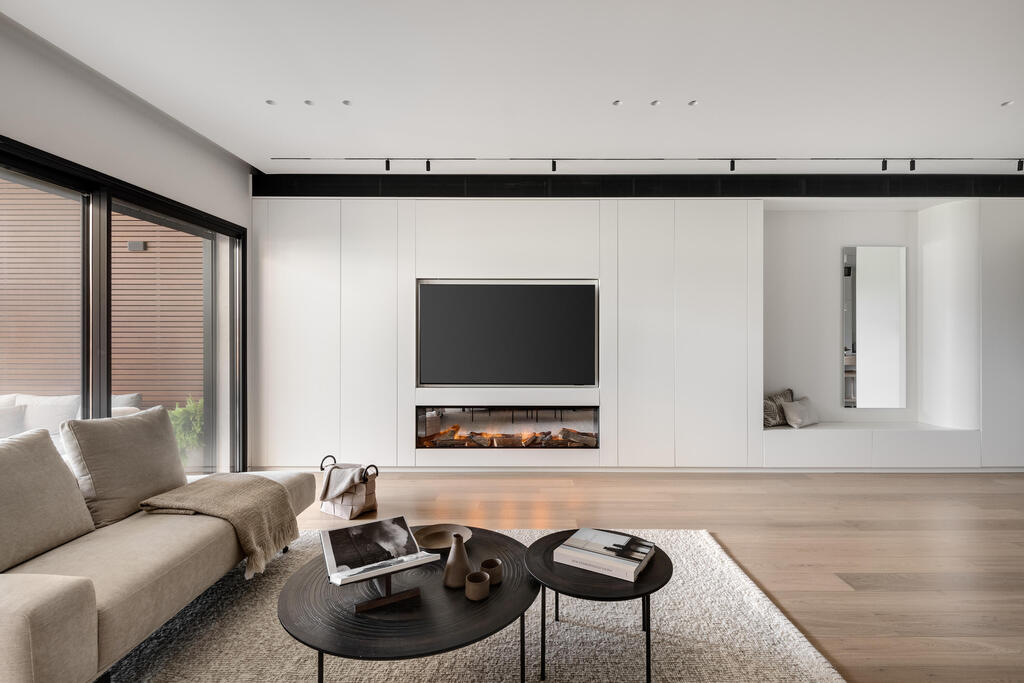
Less is more. Avoid overloading the space with furniture and objects, even if the room is large
(Photo: Oded Smadar)
Interior designer Michal Wolfson also points to the tendency to place cabinets at room entrances, creating a heavy, uninviting first impression. “It is better to plan the right combination of closed storage and open elements, such as a bookcase or niche, to create a sense of flow,” she says.
The same is true in hallways and transition points. Softening sharp corners, opening sightlines and bringing in natural light can turn a “technical” area into a living, breathing part of the home.
Interior designer Tzvia Kazayoff highlights another trend: replacing the view with a television screen. “It is very important to plan around the view instead of hiding it,” she says. “There are always solutions for TV, but the view is part of the home, and it should lead.”
Ultimately, a well-designed space should let you move freely. If you have to squeeze or turn sideways to get through, something isn’t working.