


They completed the largest deal in the history of Israeli high-tech, selling their company, Wiz, to global technology giant Alphabet for $32 billion. Now, it is time to cash in and enjoy the proceeds. The founders of the cybersecurity firm, considered one of Israel’s wealthiest and most stable tech companies, are purchasing real estate worth tens of millions of shekels.
Earlier this week, it emerged that Wiz co-founder and CEO Assaf Rappaport bought an 8-dunam (about 2-acre) estate in the moshav of Rishpon, in the Hof HaSharon Regional Council, for about 40 million shekels. A few weeks earlier, Wiz co-founder and chief technology officer Ami Luttwak purchased half a street in Binyamina for about 28 million shekels.
Gallery
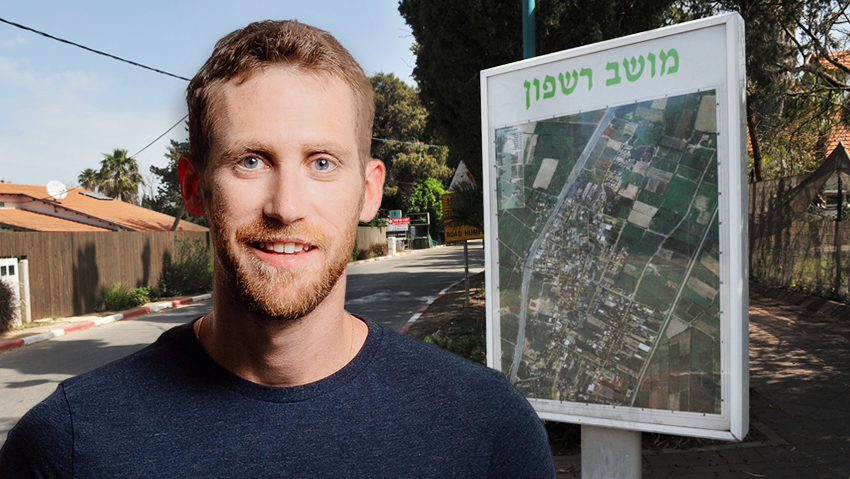
Assaf Rappaport with the moshav of Rishpon in the background
(Photos: Yaron Brener, Netanel Tobias)
“The phenomenon of cashing in high-tech success in the real estate sector is well known. One could even say it has been a significant factor in rising housing prices over the past 15 years,” real estate appraiser Ohad Danos, a property expert and former chairman of the Israel Association of Real Estate Appraisers, told ynet. “The size of the exit naturally affects the scale of the transactions carried out by high-tech professionals.”
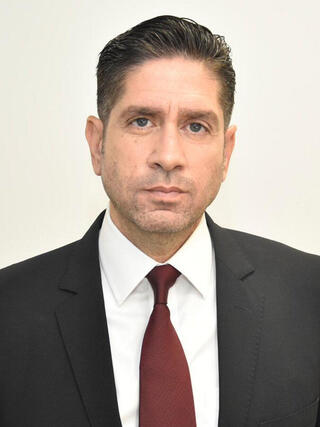 Ohad Danos
Photo: Shahar Shirazi
Ohad Danos
Photo: Shahar ShiraziFor example, he said, an exit worth several million dollars after tax might lead to the purchase of a first home or an investment apartment for tens of millions of shekels. Larger exits often result in the acquisition of plots, private homes and penthouses. “In the case of Wiz, we are seeing investments of tens of millions in land, which are still considered modest relative to the capital generated.”
“We should not assume these are unsophisticated players. On the contrary,” Danos added. “They are extremely smart, know exactly what they are doing and do not treat the money lightly. In their eyes, it was earned through years of very hard work and personal sacrifice. That sense of sacrifice leads them to make thoughtful, long-term investments.”
Still, he noted that it is interesting that some of the most forward-thinking people seek tangible proof of their success and stability in real estate. “In that sense, they too are realizing the ethos of a ‘home in Israel’ like any young person in the country. The main reason they can be said to have contributed to rising housing prices is simply the sheer number of exits in recent years, and the strong appetite for real estate that boosted demand and influenced prices.”
As part of Rappaport’s deal in the upscale and sought-after Sharon moshav, he purchased the 8-dunam estate for about 40 million shekels. The transaction is especially intriguing given Rappaport’s modest image. In the past he lived in an old rented apartment in central Tel Aviv and used public transportation. Rappaport is estimated to hold about 10% of Wiz shares, meaning he could net roughly $3.2 billion before taxes.
“His landlady is amazing, they have a wonderful relationship,” a childhood friend of Rappaport previously told ynet. “He visited her during Passover and she was so excited. She is over 90, she does not care about the rent. She knows exactly who he is and how successful he is, and it does not move her. She never raised his rent by a single shekel. It started as a shared apartment, and he stayed there with his partner, Ofir. For him, owning very little was actually convenient. Having a car, especially in that area, is not practical.”
Lee Ziv, a luxury real estate marketing and sales expert who led sales at the Port TLV project by the Hagag brothers and the Meier on Rothschild tower, analyzed the Rishpon deal and said Rappaport paid a record price.
 Lee Ziv
Photo: PR
Lee Ziv
Photo: PR“The estate spans about 8.3 dunams. That is key, because most estates in Rishpon are half that size, about 4 to 5 dunams, which explains why the price jumped to 40 million,” she said. “In terms of luxury moshav properties, this reflects about 5 million shekels per dunam — a record for Rishpon, but one that reflects the size and quiet location.”
According to Ziv, the property currently includes two old houses, one an original “Agency house” — a term for early homes built during the founding years of moshavim, typically on large plots of half a dunam to a dunam or more. The structures are outdated and usually demolished, meaning this is effectively a land deal with building rights.
“Rappaport bought the plot as vacant land, with the intention of demolishing the structures and building a modern estate,” she said. Under local zoning plans, up to three separate housing units can be built on the residential portion of the lot, along with extensive rights for auxiliary buildings, a pool and basements.
Ziv said the estate was purchased from heirs of one of the moshav’s veteran families, which explains why it had not been on the market for many years and added to its rarity premium. Beyond the 40 million shekel purchase price, buyers of such estates face substantial taxes. “Purchase tax on moshav estates is calculated in a complex way, distinguishing between residential and agricultural land. In addition, payments must be made to the Israel Land Authority to formalize residential rights,” she said.
In Luttwak’s case, he bought about 3.5 dunams in Binyamina, near the Binyamina Winery, in two separate deals from two long-established local families. In the first, he acquired the northern portion, about 2.5 dunams bordering the winery, with two old houses. In the second, he purchased an adjacent plot of about one dunam with another house.
“When I look at Luttwak’s transactions in Binyamina and Rappaport’s in Rishpon, I see a clear trend that characterizes Israeli tech wealth in recent years: a shift from thinking about a luxury home to thinking about land, control and territory,” Ziv said. “These are no longer emotional purchases, but highly calculated moves.”

Ami Luttwak
(Photo: WIZ)
In Luttwak’s case, she said, combining several plots into a contiguous 3.5-dunam property for about 28 million shekels represents a classic land deal with development upside. “The effective price is about 8 million shekels per dunam — still significantly lower than prices in the most sought-after Sharon moshavim. Beyond the house itself, there is clear appreciation potential from unifying the plots and creating a rare asset of that size.”
“When someone holds a continuous stretch of land like that, they are not buying a house — they are creating a private compound,” she added. “It is a rare asset, and its value rises nonlinearly. That is the mindset of a developer, not an end buyer.”
“In Rappaport’s case, the picture is different. There, you are paying a premium for a rare and immediate location,” she said. “Rishpon is one of the most limited and sought-after locations in Israel — very small supply, very few transactions and almost impossible to enter. Deals for quality properties typically close around 35 to 45 million shekels. That price reflects not land for development but a premium for privacy, a tight-knit community and a rural setting very close to employment centers in Herzliya and Tel Aviv. It is less a real estate investment and more a purchase of quality of life and capital preservation.”
What both transactions share, she said, is that today’s senior high-tech figures are seeking space and control. “Less luxury towers, fewer penthouses and more land, gardens, privacy and security. They want a home that is both a rare asset and a place that cannot be replicated. Ultimately, this is a market facing a real shortage — not of square meters but of rarity. When there is true scarcity, price sensitivity declines. Those who buy there intend to stay.”
Roie Kaner, CEO of the Montefiore Real Estate Group, which specializes in luxury residences, echoed the sentiment. “These deals reflect a growing trend among senior high-tech executives and leading businesspeople — a deliberate shift from intensive urban living to nature and open, quiet green spaces, without giving up accessibility to employment centers. That is exactly what Binyamina and especially Rishpon offer.”
 Roie KanerPhoto: Karin Peliwasser
According to Kaner, senior executives live at a particularly demanding pace, with heavy responsibility, frequent travel and long hours. “In that reality, the home becomes not just a place to live but a space for recovery, privacy and quiet outside working hours. It is no surprise many are choosing the dream of peaceful life in a moshav.”
He added that purchasing relatively large plots also reflects a conceptual shift, as the home is no longer seen solely as a real estate investment but as an environment that enables balance and privacy, with room for children, comfortable remote work and a calmer daily routine compared with urban density and noise. “In an era when remote work has become standard, more and more executives understand they can manage global business operations and still return at the end of the day to a quiet, natural environment.”