

In Jerusalem, a city layered with history, where hundreds of buildings carry architectural significance, planning and construction become complex undertakings that present local and international architects with endless dilemmas on the way to finding the best design solutions. Against that backdrop, and in honor of Jerusalem Day, we took a closer look at some of the most prominent Jerusalem projects by Ada Karmi Melamede, led by partners Ori Lanir and Ofer Arusi, alongside managing partner Meital Yaffe. For decades, the firm has succeeded in translating the city’s unique spirit into an architectural language capable of containing its layered complexity.
The firm’s work in Jerusalem reflects a deep sensitivity to the city’s character, dating back to the years when it was led by architect Ada Karmi Melamede and her brother, architect Ram Karmi. Today, the architects leading the office continue to connect the historic and local with modern urban planning, tying projects to their environmental context and terrain while making repeated use of Jerusalem stone and the city’s distinctive light.
Gallery
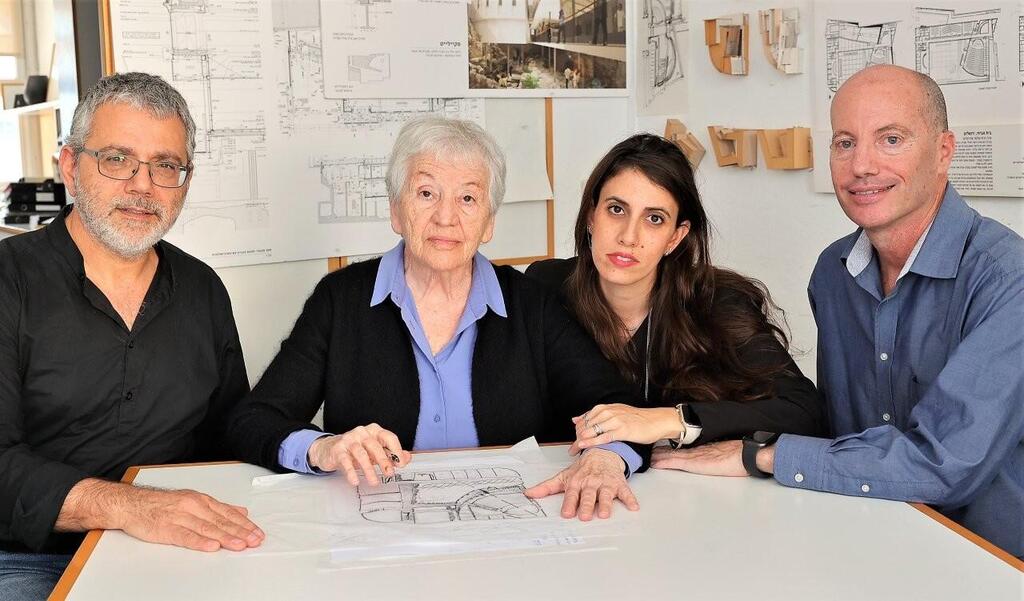
From right to left: Ori Lanir, Meital Yaffe, Ada Karmi Melamede and Ofer Arusi
(Photo: Rafi Deloya)
From Outside In — and Vice Versa
One of the firm’s most prominent Jerusalem landmarks is undoubtedly the Supreme Court of Israel, designed by Ada Karmi Melamede and Ram Karmi. The low stone structure, which rests modestly along the ridgeline overlooking the city, is rooted in traditional architecture and materiality, emphasizing values of dignity and restraint while drawing natural light inward from the outside.
Discussing the planning of the courthouse in the past, Ada Karmi Melamede explained that the building’s location and context were just as important as solving its functional needs. The structural concept therefore established a new geometric urban order for the government complex, reflected in both the architectural and landscape design. The firm created a pedestrian axis linking the public plaza to the north through the courthouse and onward to the Knesset. That axis becomes a covered passage crossing the courthouse at ground level, animated throughout by shifting patterns of light and shadow along the building’s walls.
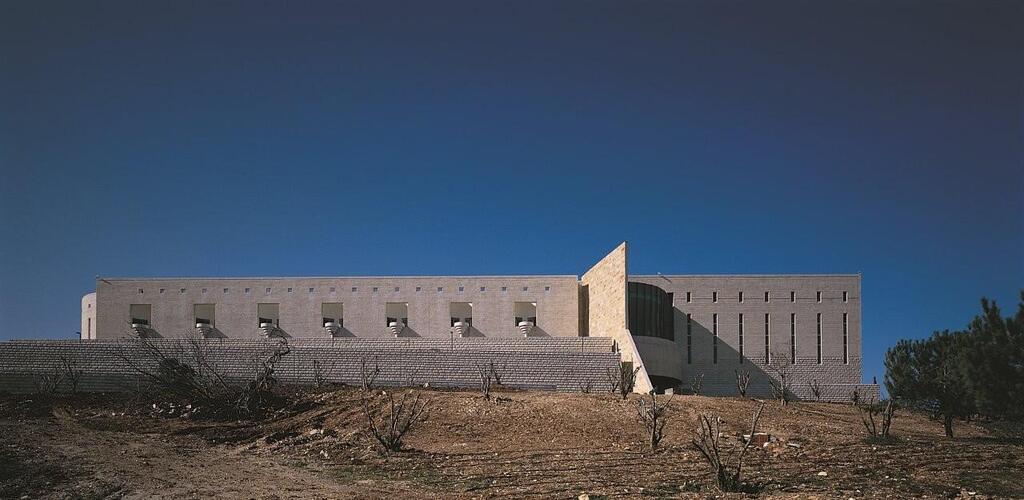
Supreme Court in Jerusalem, architecture Ada Karmi Melamede and Ram Karmi
(Photo: RICHARD BRYANT)
The integration of exterior and interior architecture is expressed through the project’s essential relationship to the landscape and its use of Jerusalem light as a central building material. The massive Jerusalem stone wall enveloping the structure speaks in a language that contrasts with the modern white walls inside, which convey freedom, fluidity, dynamism and even playfulness.
A similar approach appears in Beit Haliba, which houses a museum and classrooms near the Western Wall in Jerusalem. There too, Karmi Melamede emphasized the importance of adapting the building to the city’s historical and cultural context and highlighted the complexity of combining old and new. She explained that the building contains two architectural languages — ancient and modern — each fiercely preserving its independence. Yet despite the conflict between them, both are constantly expressed through the natural light penetrating the space between them, at times illuminating and softening, and at others darkening and cutting sharply across the surfaces.
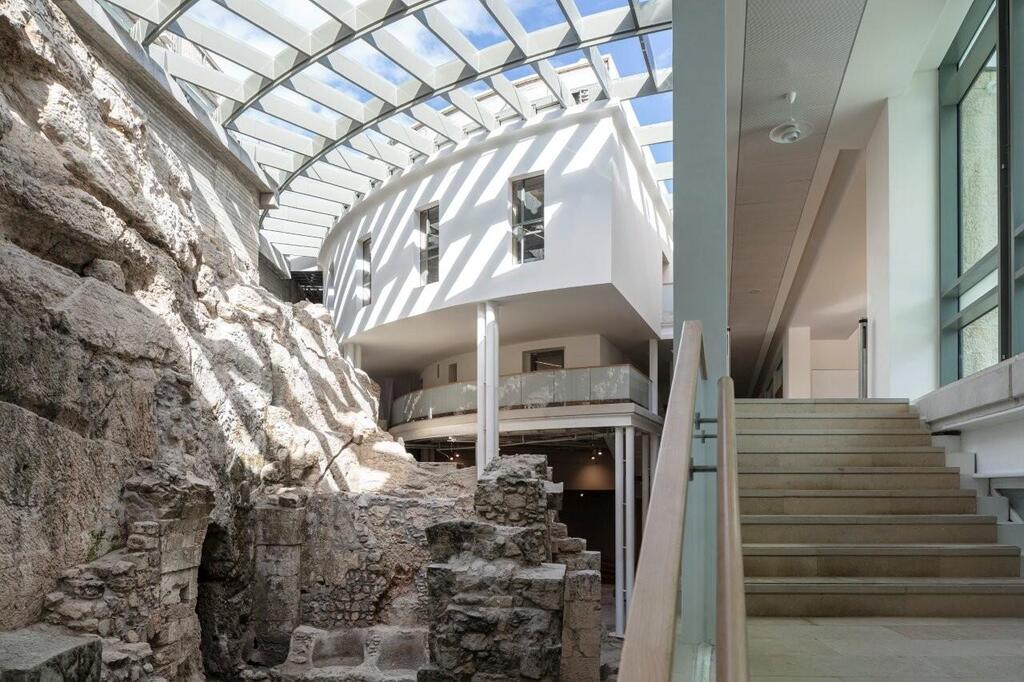
Beit Haliba, architecture Ada Karmi Melamede
(Photo: Amit Giron)
The Courtyard as an Outdoor Room
Beit Avi Chai, located in central Jerusalem, serves as a center for study while fulfilling both public and private roles. The building’s architectural composition is organized around a sunken internal urban “room” toward which its educational functions are oriented. The courtyard extends into the lobby and library and is visible through the glass walls lining the public corridors. Only the auditorium stretches the courtyard upward through a long, broad staircase that gradually narrows before disappearing entirely behind a stone wall.
Here too, Jerusalem’s interplay of light and shadow plays a dramatic central role. “The architectural composition unfolds between structural, private and public layers,” Karmi Melamede said in the past. “The layers of stone, concrete, plaster, glass and wood are nourished by the play of light and shadow situated in the spaces between them, while frosted-glass louvers change angle according to the sun’s radiation and protect the various facades.”
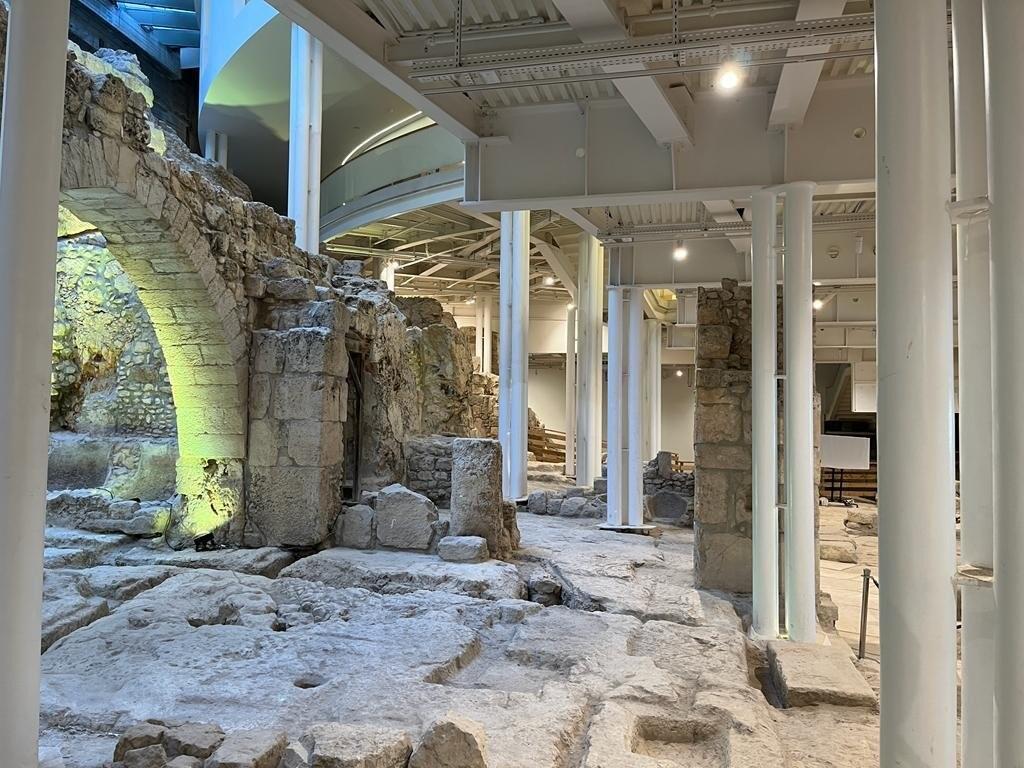
Beit Haliba, architecture Ada Karmi Melamede
(Photo: Amit Giron)
Another educational institution designed by the firm is Yad Ben-Zvi in Jerusalem’s Rehavia neighborhood. The site unites the residence once used by President Ben-Zvi with the adjacent Pioneer Women’s House into a single large campus containing all of the organization’s activities.
“We approached the site as a campus in which we created structural links between the existing and new functions,” Arusi said. “At the heart of the planning process, we sought to adapt the preserved structure to the urban fabric and find a connecting thread that would turn the collection of different buildings into a single entity. We also preserved all of the building’s facades and created a landscape axis stretching from the new entrance at Gan HaKuzari into the campus. To maintain regular academic activity, we enabled direct outdoor access to the more public functions — the bookstore, cafeteria and new hall.”
The requirement to add roughly 500 square meters (5,400 square feet) of auditorium space to the preserved heavy-stone structure led to a solution in which the auditorium was excavated beneath the lawns while preserving the building facades and trees. The result was an additional modern structure composed of materials, transparencies and openings that differ in size and shape from the existing ones.
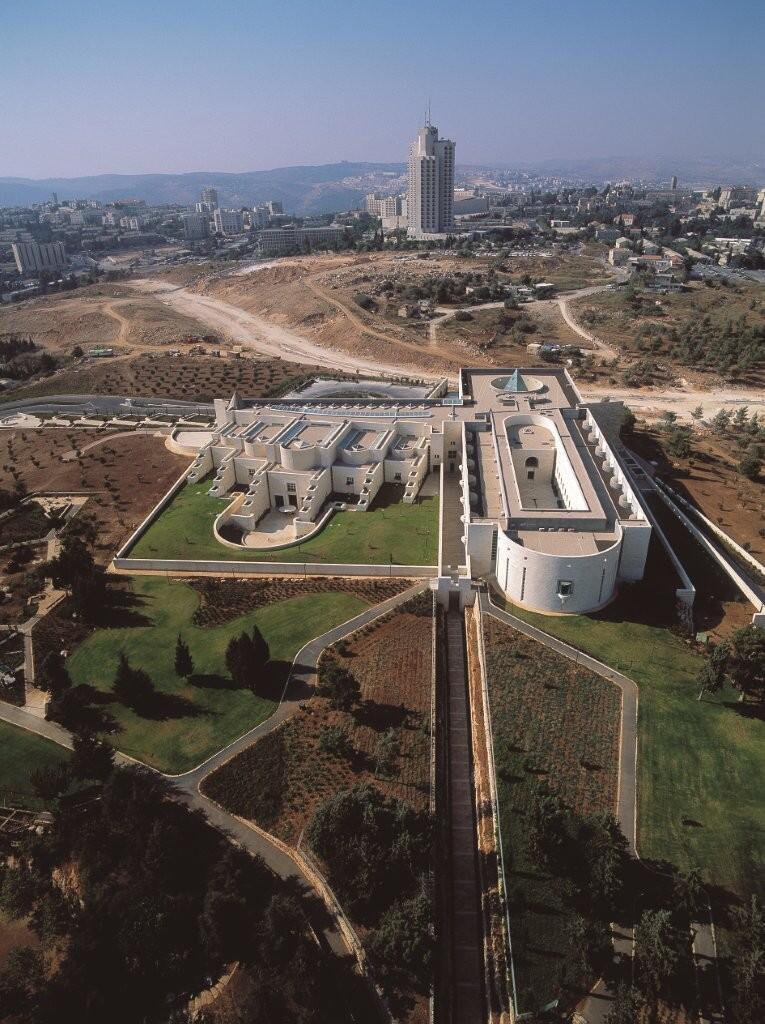
Supreme Court in Jerusalem, architecture Ada Karmi Melamede and Ram Karmi
(Photo: Albatross)
Arusi has also spoken frequently about the firm’s interventions in residential construction projects throughout the city. “The combination of old and new, heaviness and lightness, is achieved primarily through the introduction of natural light, which frees the existing structural masses and allows long sightlines to flow from within the building outward,” he said in discussing the challenges and complexities of private construction in Jerusalem. “Strict preservation restrictions often require creative solutions, such as excavating a house from within while carefully preserving its outer shell. Even so, we remain committed to bringing natural light into the interior in order to ensure harmonious integration with the historic and urban environment.”
Throughout the firm’s work, the contrast and tension between past and present — between the Jerusalem of old and the Jerusalem of today — are consciously reflected in its buildings. Architectural solutions serve as the mediating force between those competing elements, allowing them to coexist side by side.