

“One of the core principles of Design Day is making local design accessible as a social and cultural value for the wider public,” says Ori Sela, founder and producer of Israeli Design Day. “Local design is far more than a pretty object. Design Day plays an important role in accessibility, and we plan events for a wide age range, from six to 100. The goal is to expose children, their parents and older adults to the creative world. Over two weekends, we run design tours, including ones tailored for kids, along with discounts and many hands-on workshops in leather, textiles, ceramics and more. It’s a glimpse into the backstage world of Israeli creators and the processes behind their designed products.”
Two weekends dedicated to local design take place in early December (Dec. 4–6 and 11–12), marking the fourth and most expansive edition so far, with about 30 creators. The event, which this year spans five days across two sessions, is an initiative of LOCAL DOT COM, an organization that promotes design entrepreneurship in the local market and aims to increase awareness of Israeli design, local creation and social solidarity. This year, Sela also brought on board the Tel Aviv municipality, which views local design as an important cultural asset. Events include open studio visits, exhibitions, hands-on workshops, tours and meetups in the Greek Market in Jaffa, Gan HaHashmal and Kiryat HaMelacha. Designers from outside the city also participate, making it a broader showcase than just the big-city scene.
Israeli Design Day, Electricity Park Complex
(Video: Ori Sela)


Taking root
“This year we also opened a group exhibition bringing all the designers together in one space at the Jaffa gallery Yaara Open Studio,” Sela adds. “About 30 objects under the theme ROOTS form an emotional exhibition combining a wide range of materials, rich textures and vibrant color. The story behind a locally designed object — the designer’s idea, the inspiration, the decisions that led to a specific shape or color — is what gives the piece a deeper meaning beyond its beauty.”
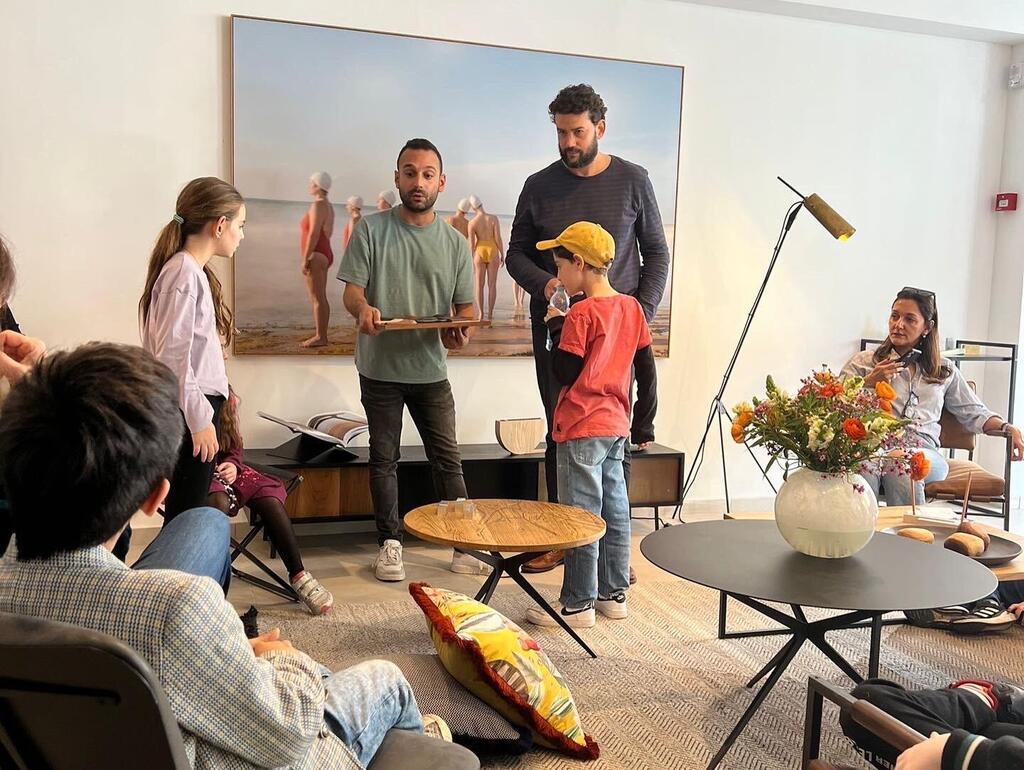
Israeli Design Day - Workshops and guided tours in three complexes, also for children
(Photo: Ori Sela)
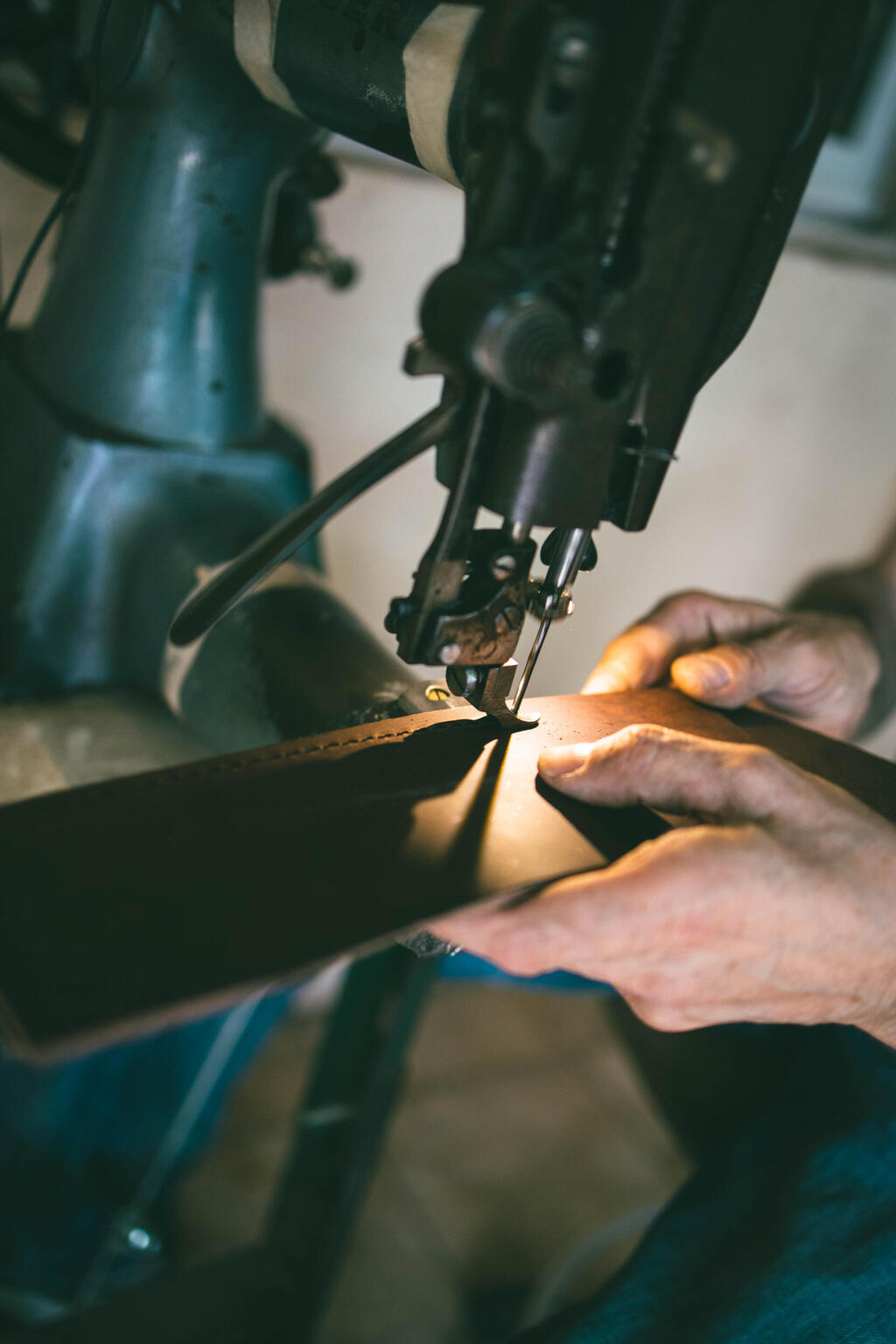
Discounts will be offered, both in the studio spaces and in the designers' online stores
(Photo: Tom Weintraub)
Sela says, “The turbulent period we’re living through has sharpened our longing for rootedness, to seek origins and belonging, to ground ourselves physically and mentally.”
In the studios, workshops and shops, visitors will find lighting designers, woodworkers, ceramicists, textile makers and a wide array of home goods that are functional as well as aesthetic. Participating designers include: Shay Hoffenbartel, Michal Bar-Ness, Daniel Nissim, Raz Israel of Studio ZING, Aviv Mor Yosef, Keren Atas of Studio ROOTA, Perach Pieterse of Studio PERPEL, Tali Zelnik, Yaara Klein-Yemin, Gila Babich of Studio FRILL, Keren Velvart of Studio VELVART, Adam Shlavi, Alina Levi of Studio Igorashka, Talia Lovatton, Aviad Petel and Efrat Zafran of Studio Mabua, Shay Jersey and Adi Tal of Studio Material Girls, Maayan Ben Yona, Tomer Nachshon of Studio NACHSHON, Tamar Branitzky and Chen Taoz. Some are graduates of academic institutions or the Bat Yam Design Terminal.
Studio visits will allow direct encounters with creators and their work. During Design Day, discounts will be offered in studios and online shops. Visitors are encouraged to take self-guided tours using a dedicated map prepared for the event. Guided tours will also be available at all three hubs (about two hours each; cost: 200 shekels per participant; reservists admitted free while tickets last).
Five must-see stops
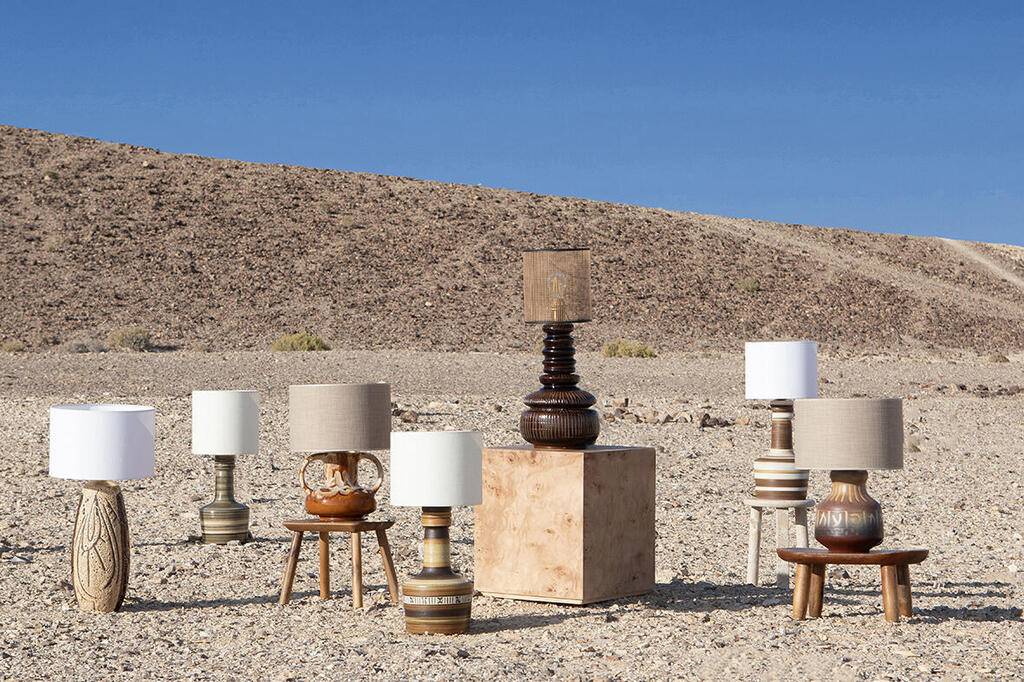
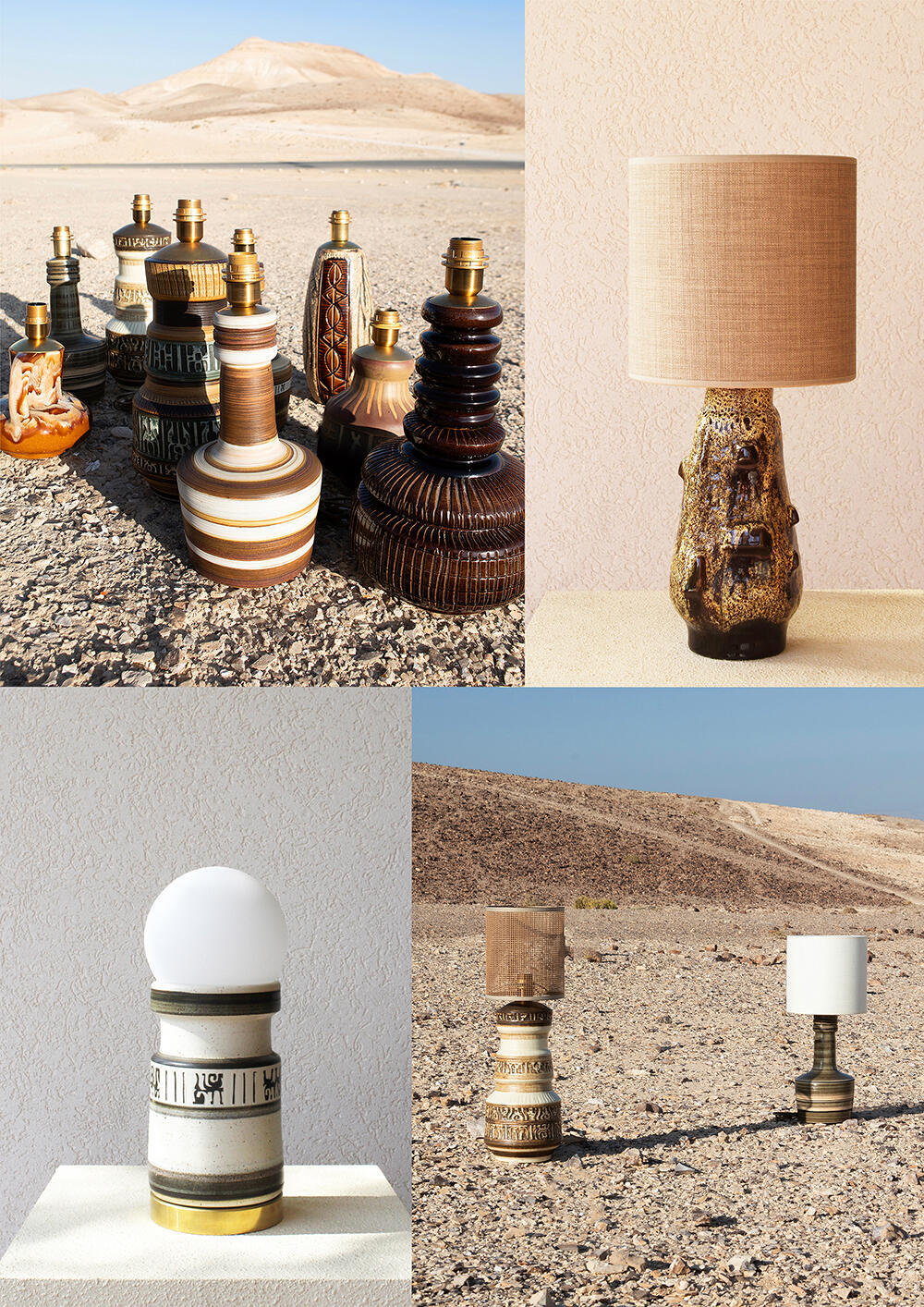
Tali Zelnik bridges past and present in her lighting fixtures, made from ceramic vessels manufactured in Israel from the 1950s through the 1980s. “The goal is to breathe new life into nostalgic objects. I’ve always loved wandering through markets and finding unique items you don’t see everywhere,” Zelnik says. “My connection to this world began with my grandmother, who filled her home with old, special pieces she collected. She worked at the Ne’eman ceramics factory, and as a child, I was captivated by the objects. Over the years, I began collecting Israeli ceramics from the past and knew I had to do something with them. I didn’t want to refurbish or restore them; I wanted to revive them. It felt natural to turn them into lighting fixtures.”
From there, Zelnik dove into researching the vessels — where they were made, the workshops that operated during that era and the local artistic culture that has vanished. “Each piece is a moment in time. Every time I find one, it excites me. It’s a treasure to me. When I transform them into lighting fixtures, their value is preserved, and they become both artistic and functional.”

Lighting fixtures made from old jars, Tali Zelnik, PIECE OF MINE
(Photo: Roni Cnaani)
(Photo: Roni Cnaani)
How does your design reflect the local reality of Israel in 2025?
“In a chaotic era where everything is mass-produced and looks more or less the same, there’s a natural desire to return to roots, to search for meaning and something real to hold onto. In that reality, I choose to pause and give space to material, tradition and objects with history and a connection to a local creative world that has nearly disappeared. For me, it’s a chance to bring new life to something forgotten and remind people that Israeli design existed here and didn’t get enough spotlight. When I revive such an object and give it a new version, I feel I’m returning a piece of the past to our present — something rooted and tied to place. That, to me, is the essence of Israeli design in 2025: bringing home not just a beautiful object, but one with meaning.”
At Zelnik’s space, visitors will find ceramic vessels with brass elements, handmade modern fabric shades, glass shades and more. “It isn’t a technological innovation, but a conceptual one,” she says.
What do you hope visitors feel when they encounter your work?
“My pieces are meant to evoke emotion, nostalgia, a sense of home and memory.”
What is the designer’s role in a time when artificial intelligence is beginning to design?
“Precisely now, when AI is everywhere and expanding rapidly, the designer’s role is more human than ever. AI can produce endless possibilities, but it will never compete with emotion, memory, longing and the human touch that handmade work holds. When I take a piece crafted by hand decades ago and give it new life, that’s exactly where AI cannot reach. When material meets human touch, a unique relationship forms — something technology can never replicate. I truly believe authenticity comes above all.”
Zelnik will exhibit her work during Design Day at the Comme Il Faut store at 28 Levontin Street in the Gan HaHashmal district of Tel Aviv.
Perach Pieterse, founder of Studio PERPEL, is a ceramic artist whose work blends contemporary twists with everyday function — from practical household pieces to striking decorative objects. “The guiding line in my work is the connection between advanced technologies and traditional crafts, a combination that has accompanied me since my final project,” she says. “Alongside the precision, clarity and structure that digital tools provide, I have a deep love for handwork with living materials like clay. The meeting between a material that responds to touch and time and tools that give me formal and structural control — that’s the core of my design.” For Israeli Design Day, Pieterse is launching a new collection in blue and white.
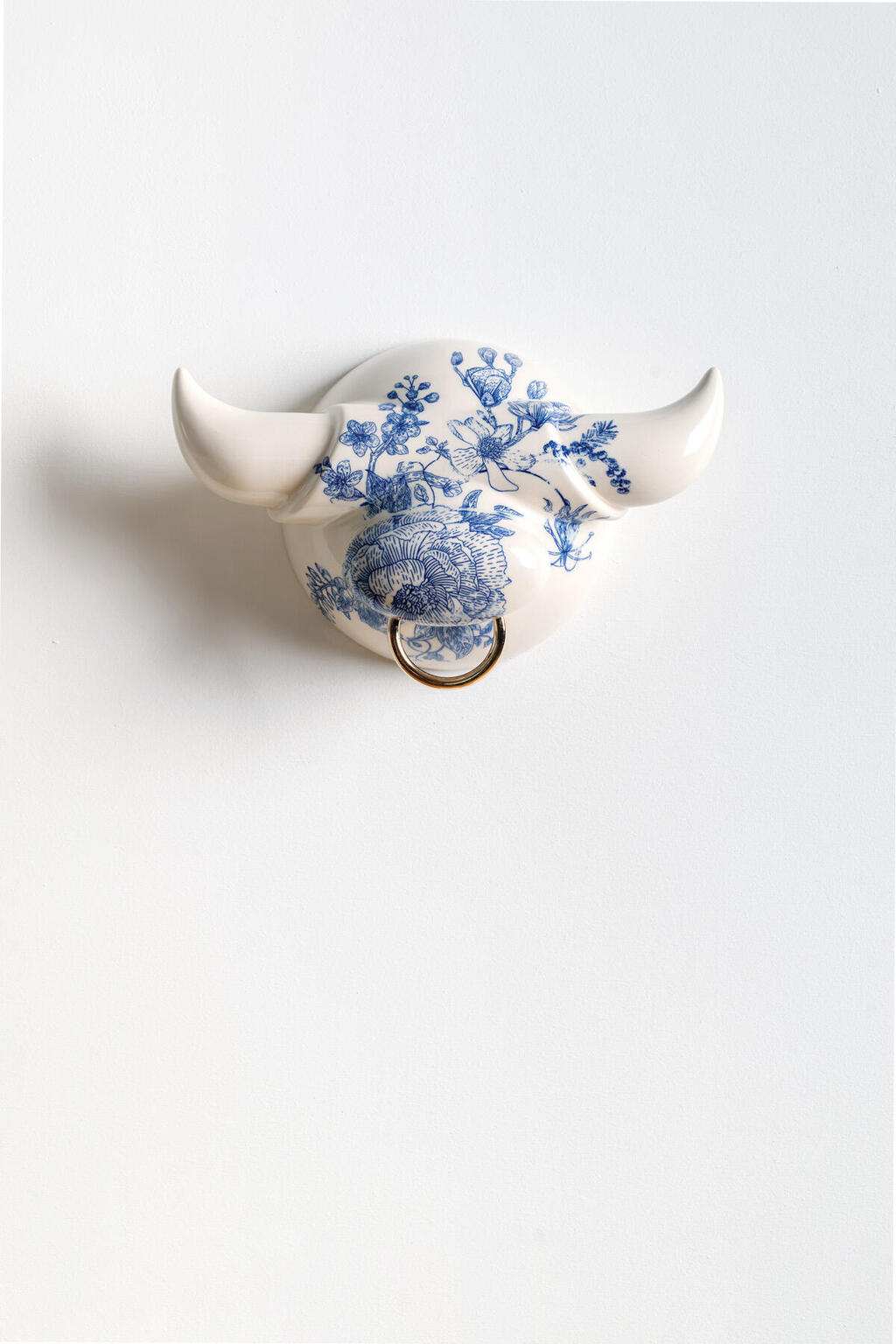
New collection in blue and white; ceramic bull by Perach Pieterse, STUDIO PERPEL
(Photo: Aya Wind)
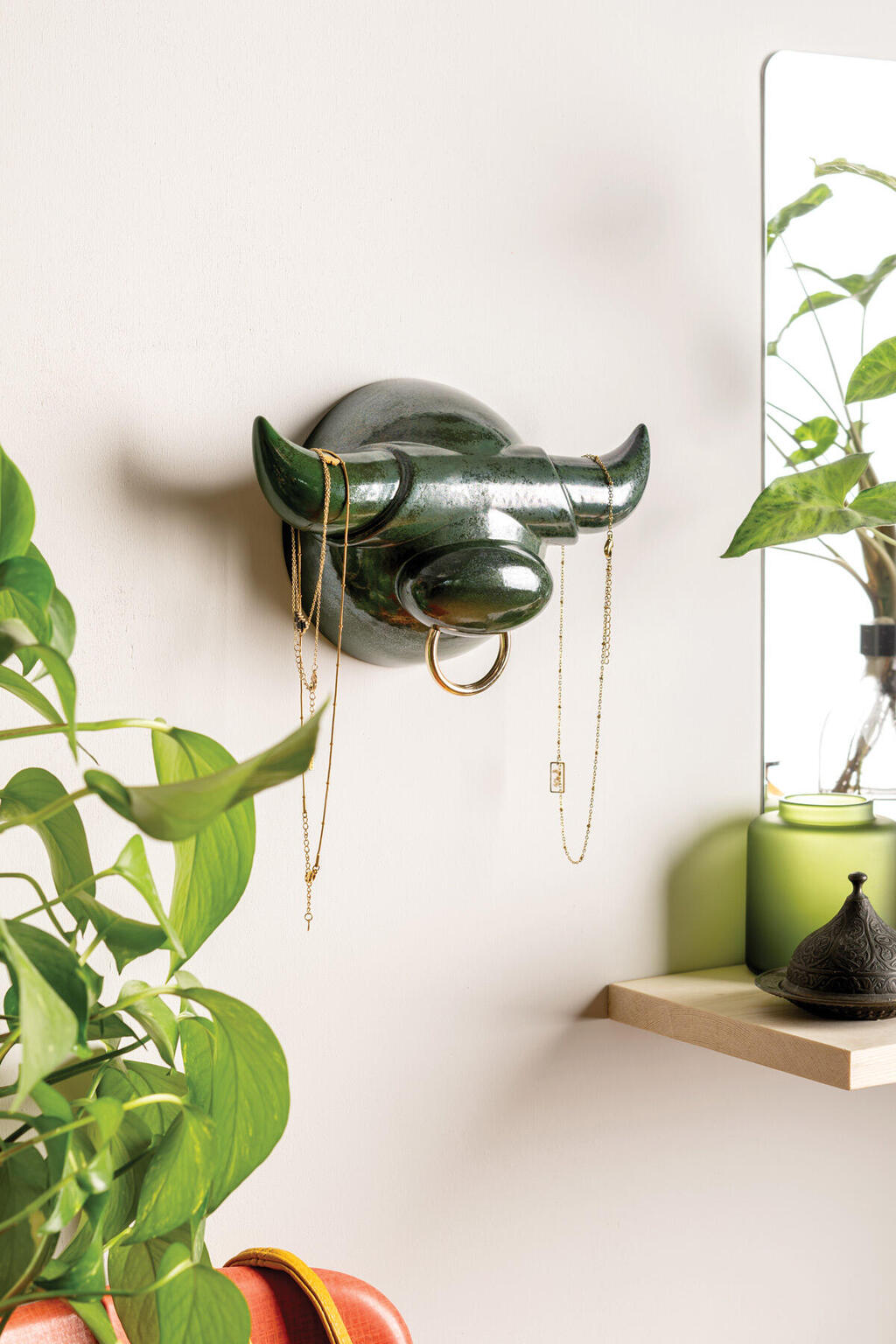
Pieterse creates special items from ceramics; both useful and decorative
(Photo: Aya Wind)
How does your design reflect the local reality of Israel in 2025?
“The local reality pushes me to create from a place that feels close and authentic. I work with local production for an Israeli audience, and meeting the people who live with my pieces shapes my language. I’m trying to find my own voice within the culture I live in, aiming to create objects that bring joy and color to daily life, especially in such a complex period.”
What materials and technologies define your work, and why choose them?
“I use 3D printing and design software that allow full control over form, and then I continue with handwork using living materials like clay and rattan. The technology gives clarity and order and allows me to build clean, mathematical structures, while the handcraft adds a soft, human layer that breaks the precision.”
Pieterse, an industrial designer and graduate of the Holon Institute of Technology and the Bat Yam Design Terminal, works out of a shared ceramics studio in Tel Aviv. She is showcasing her work at the Prat Living shop in the Gan HaHashmal district for Design Day.
Michal Bar-Ness, founder of OME Studio, launched it six months into the war with the aim of creating art that integrates harmoniously with its surroundings. A graduate of Tel Aviv University’s multi-disciplinary arts program (architecture, art history and film), she spent a decade as a product photographer before returning to her long-held desire to work with material, shape, color and texture. “The studio’s signature pieces are OME compositions — wood and MDF works cut by laser and hand-painted in shades from the Tambour color palette, combined with textures and effects,” she says. “Each piece is completely site-specific, distilling the character of the space into a sensorial exploration of color, materials, fixtures and textiles. They are timeless and do not age. Simple geometric shapes combined with color and texture create a complete story.”
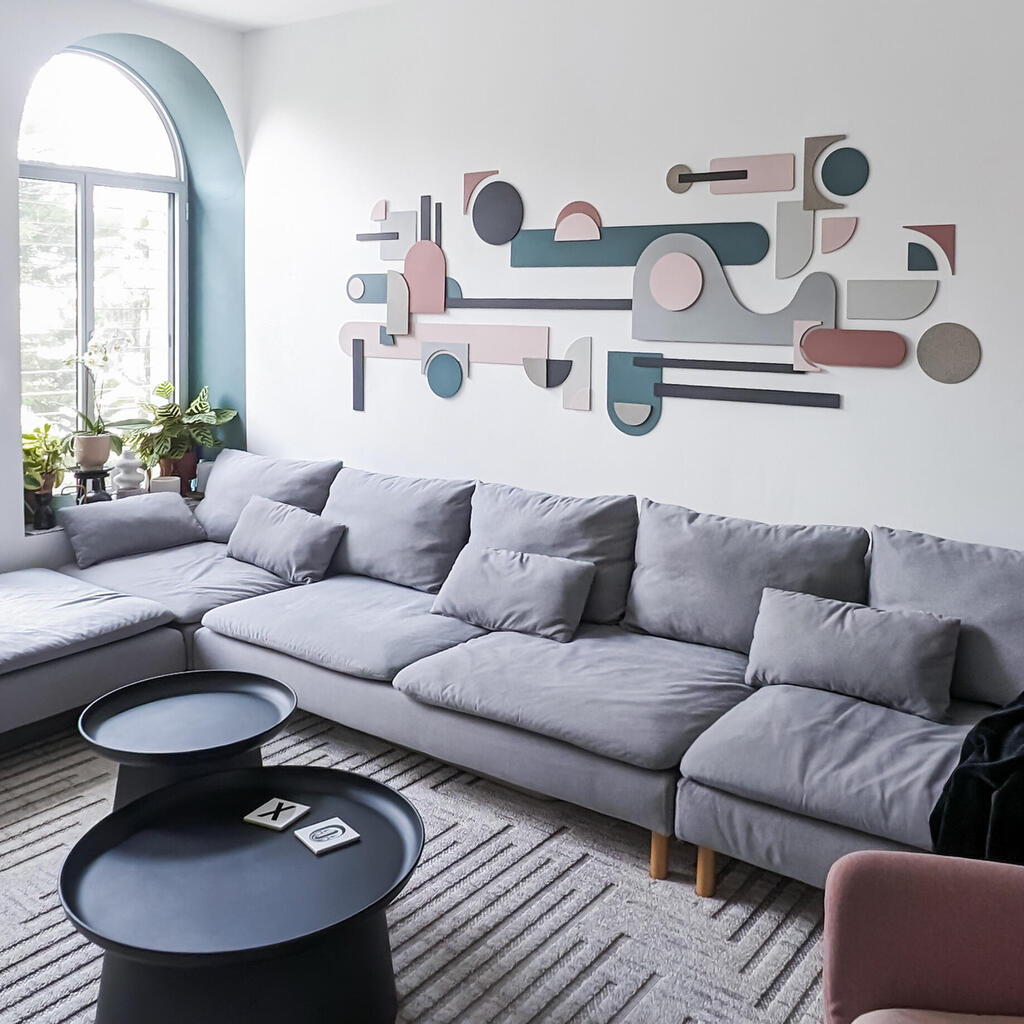
Wall decorations and designs by Michal Bar-Ness, OME Studio
(Photo: Michal Bar-Ness)
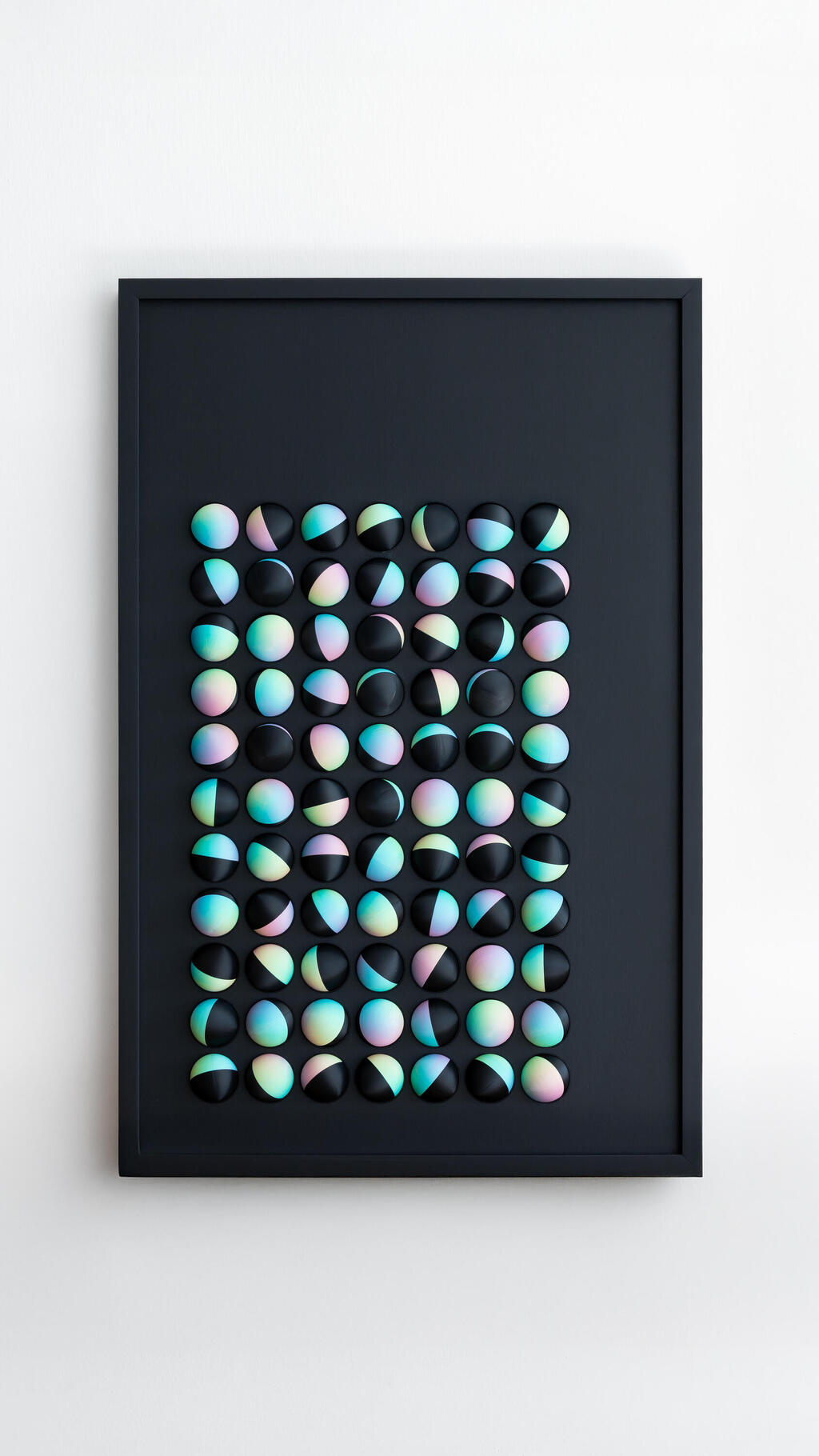
XL version of REVORB, a kinetic work of art composed of 77 3D printed spheres
(Photo: Michal Bar-Ness)
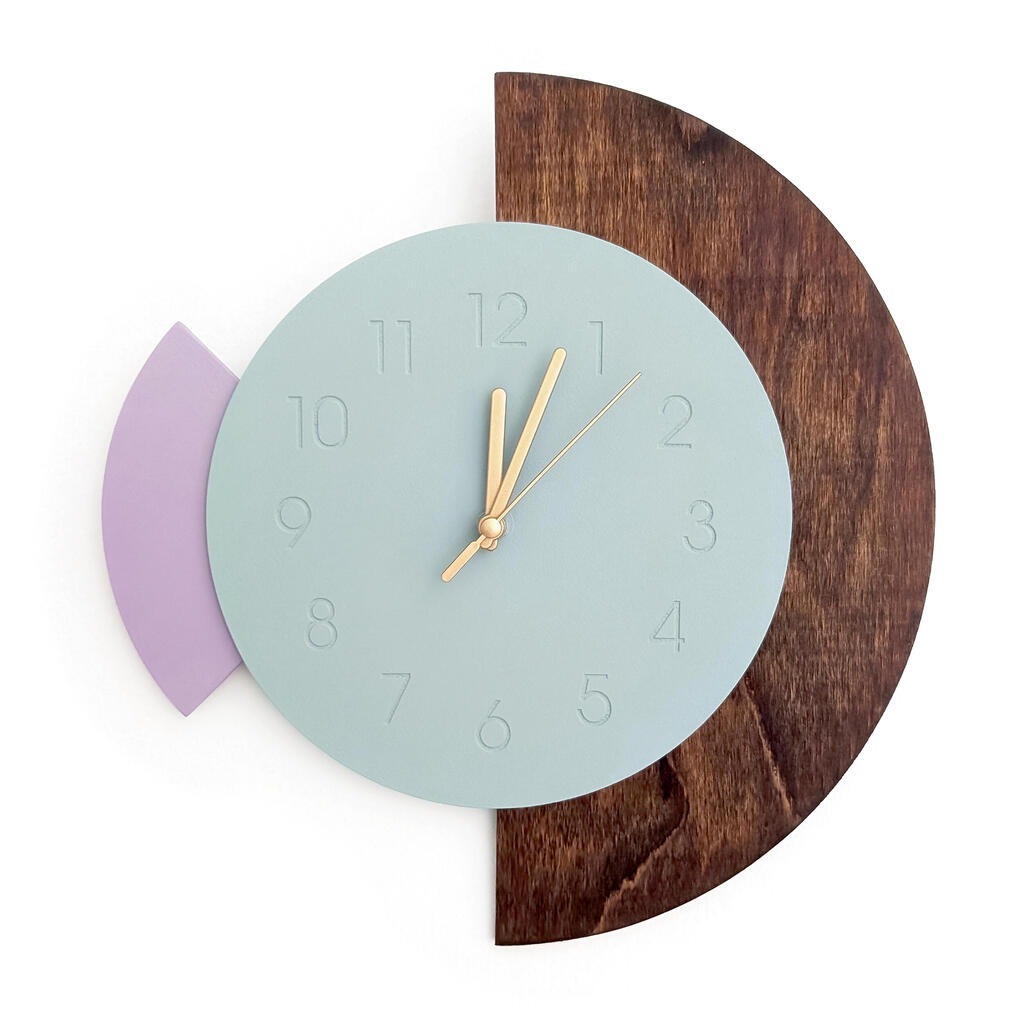
Laser-cut and hand-painted wooden and MDF wall clock
(Photo: Michal Bar-Ness)
Bar-Ness creates home décor items, including mobiles, clocks, sculptures and signs. Some works emphasize movement; others highlight color, texture or composition. “My goal is to break the distance between viewer and artwork and invite touch, sound and movement,” she says. For Design Day she created the MeMoire series, iconic works altered by a playful moiré effect. “The pieces encourage viewers to move, allowing motion to become another dimension of the work and turning the viewer into an essential part of its existence. Viewed head-on, the work appears familiar; from the side, change emerges. It’s a light, humorous reading of the artistic canon, challenging the formality of high, museum-bound art.” The series uses a mix of studio techniques: printing, embroidery, paint, 3D printing, laser cutting and digital and AI-assisted editing.
She will also present an XL version of REVORB, a kinetic, sensory piece composed of 77 3D-printed spheres that spin freely inside a wooden frame. “It’s a playful artwork that anyone can alter, becoming part of its evolution. The look remains minimalist and clean, but the composition changes with every touch. The black half of the spheres creates a dramatic monochrome, while the colored half fills the space with bursts of color. It’s addictive to touch.”
What is the designer’s role when AI begins to design?
“AI is a powerful tool that requires us to learn how to ask questions and refine the essence of our ideas. Just as Photoshop or a brush are tools in an artist’s hands, AI still needs a human mind to guide it. AI doesn’t ‘create design’ on its own; it helps distill concepts or expose new processes. There is no substitute for a human mind that thinks critically, emotionally and culturally.”
Keren Atas is an industrial designer and environmental entrepreneur, a distinguished graduate of the industrial design department at Bezalel. She founded Roota, a brand that turns discarded industrial plastic tubes into magnetic propagation vials using 3D printing, while working as a designer at Studio Nomadity with a specialization in textiles.
“I started Roota during my studies at Bezalel after visiting the SodaStream factory, where I saw a massive container filled with discarded tubes,” she says. “‘These are defective tubes — take as many as you want,’ the guide told me. Holding one in my hand, I knew I had to find a use for it. I later learned that several tons of these tubes are shredded every year and turned into low-grade plastic. Roota offers a long-term systemic solution by transforming industrial waste into a functional home product — for plant propagation, flowers or leaves. I enjoy learning techniques and then pushing their limits in unexpected ways.”
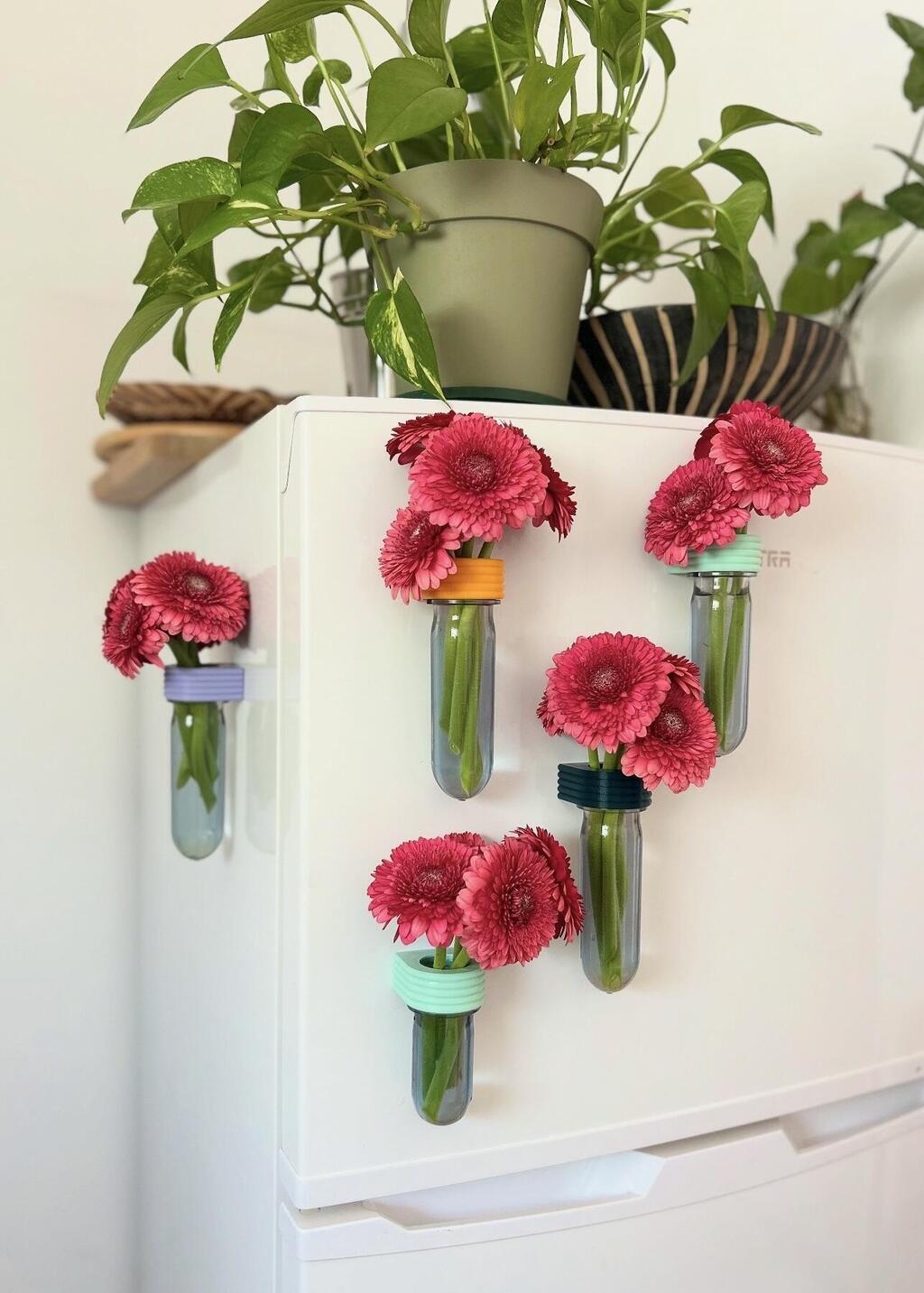
Magnetic implantation tubes made from industrial waste; Studio Roota
(Photo: Keren Atas)

Studio Roota, reusing disposable plastic utensils
(Photo: Keren Atas)
For Design Day, she will present a concept installation at Cooper Gallery in Jaffa (9 Shimon Hatzadik St.), exploring color perception as a state of mind. “We created 100 different units using only 10 colors. Each unit combines two colors that shift between print layers, creating an optical illusion perceived as a new shade. The result is a rich series of hues formed by the meeting of material, light and perception.”
Shay Hoffenbartel, an industrial designer, creates furniture and lighting using wood-bending techniques, mainly in the Japandi style — a blend of minimalist Japanese lines and Nordic functionality. Working with local woods and bending methods, he designs practical, comfortable pieces.
What idea drives your work?
“My work revolves around creating material calm. I design and build furniture and lighting that merge traditional craftsmanship with contemporary design thinking. My style draws from the balance of Japanese minimalism and Scandinavian warmth. I aim to create objects that feel like a breath within a space — clean forms, soft light and material that tells a story.”
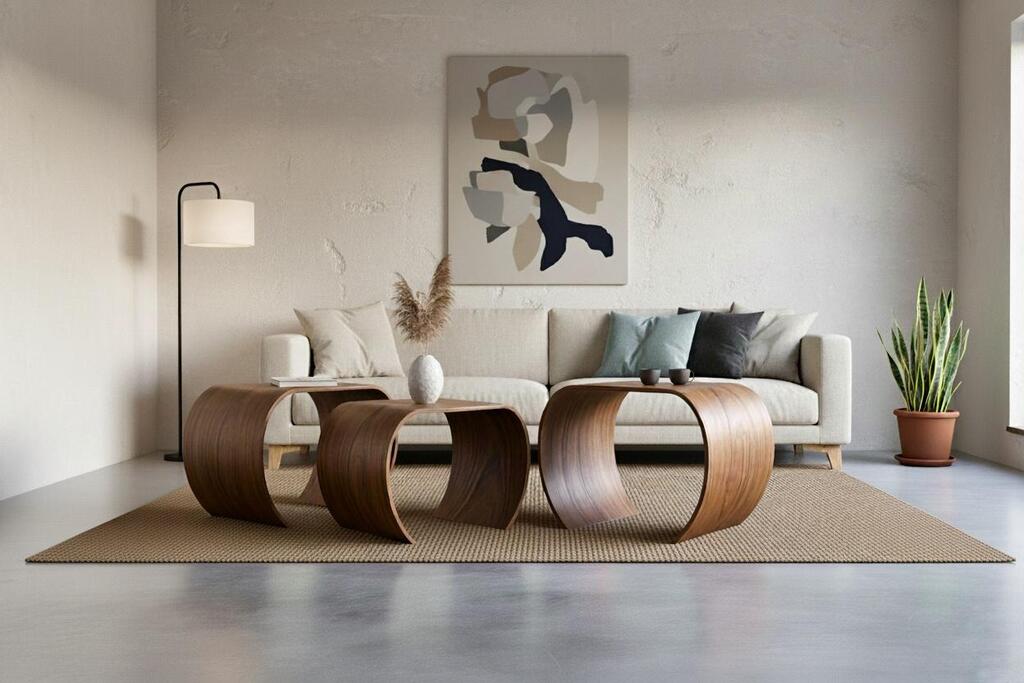
Creates furniture and lighting fixtures using the wood-bending technique, mainly in the Japandi style
(Photo: Shay Hoffenbartel)
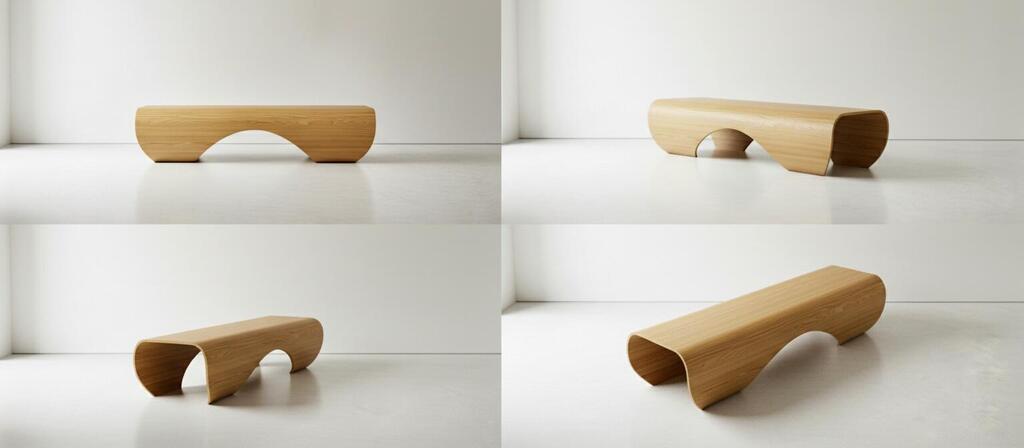
Modeler, wood bender, metal processor, manufactures each item from scratch
(Photo: Shay Hoffenbartel)
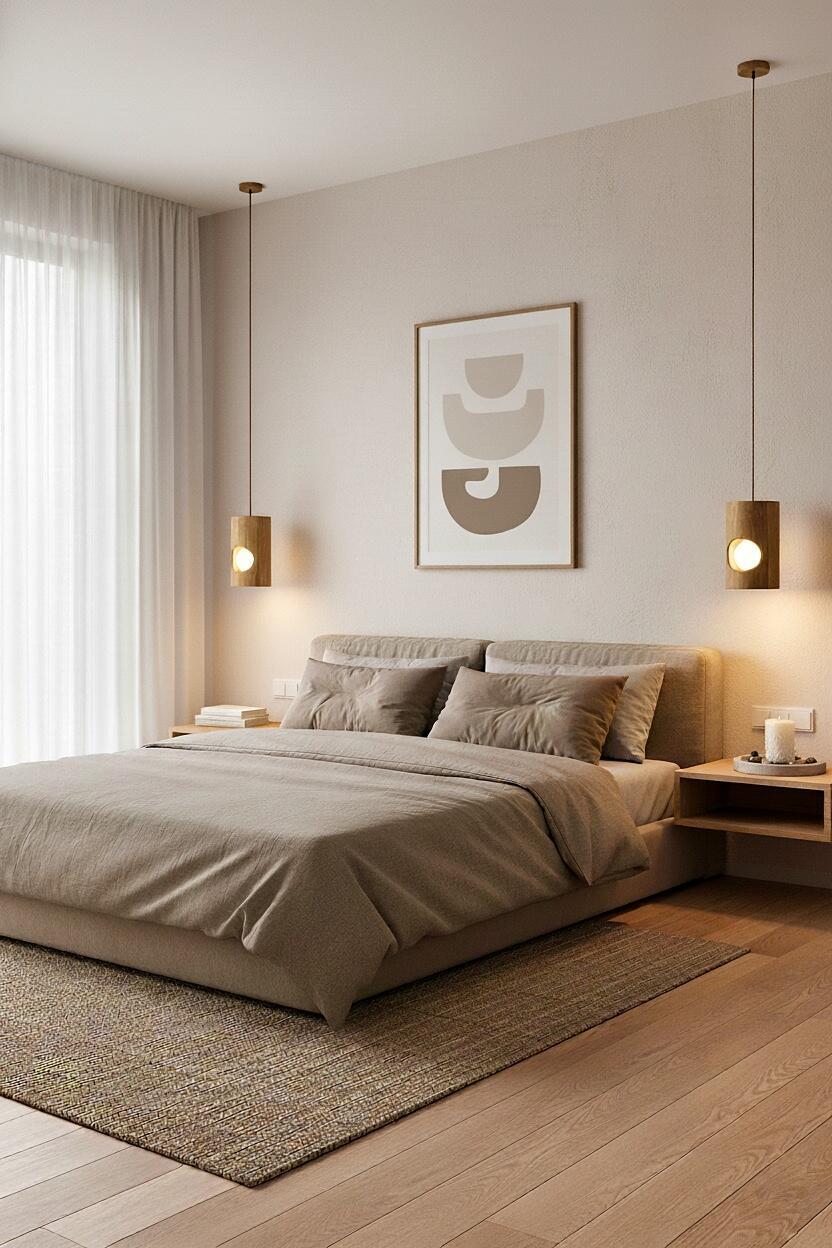
Lighting fixtures in a style that combines Japan and Scandinavia
(Photo: Shay Hoffenbartel)
Hoffenbartel studied at the Holon Institute of Technology, where he developed a deep appreciation for industrial design and precision. His final project — a bent-wood veneer bench — won honors and led him to the Bat Yam Design Terminal incubator, where he developed his first furniture and lighting collection.
Where do you create today?
“In my studio, Studio Hoffenbartel, on 34 Menachem Begin Road in Tel Aviv. It’s a shared space with two designers I met in the incubator. The studio is a lab, workshop and quiet place for focus. I build models, bend wood, work metal and make each piece from scratch with high precision. I combine traditional tools, modern machines and visualization technologies, including AI.”
How does your design reflect Israel in 2025?
“Israel is loud, fast and often overwhelming. My design is a response — an attempt to create islands of calm, points of balance within the chaos. The need for simplicity, softness and authentic materiality feels deeper than ever. Each piece I make is an invitation to take a breath.”
What do you hope visitors feel when they encounter your work?
“I want them to feel quiet — to pause, look closely and discover the softness within the material.”
First published: 03:12, 12.10.25