

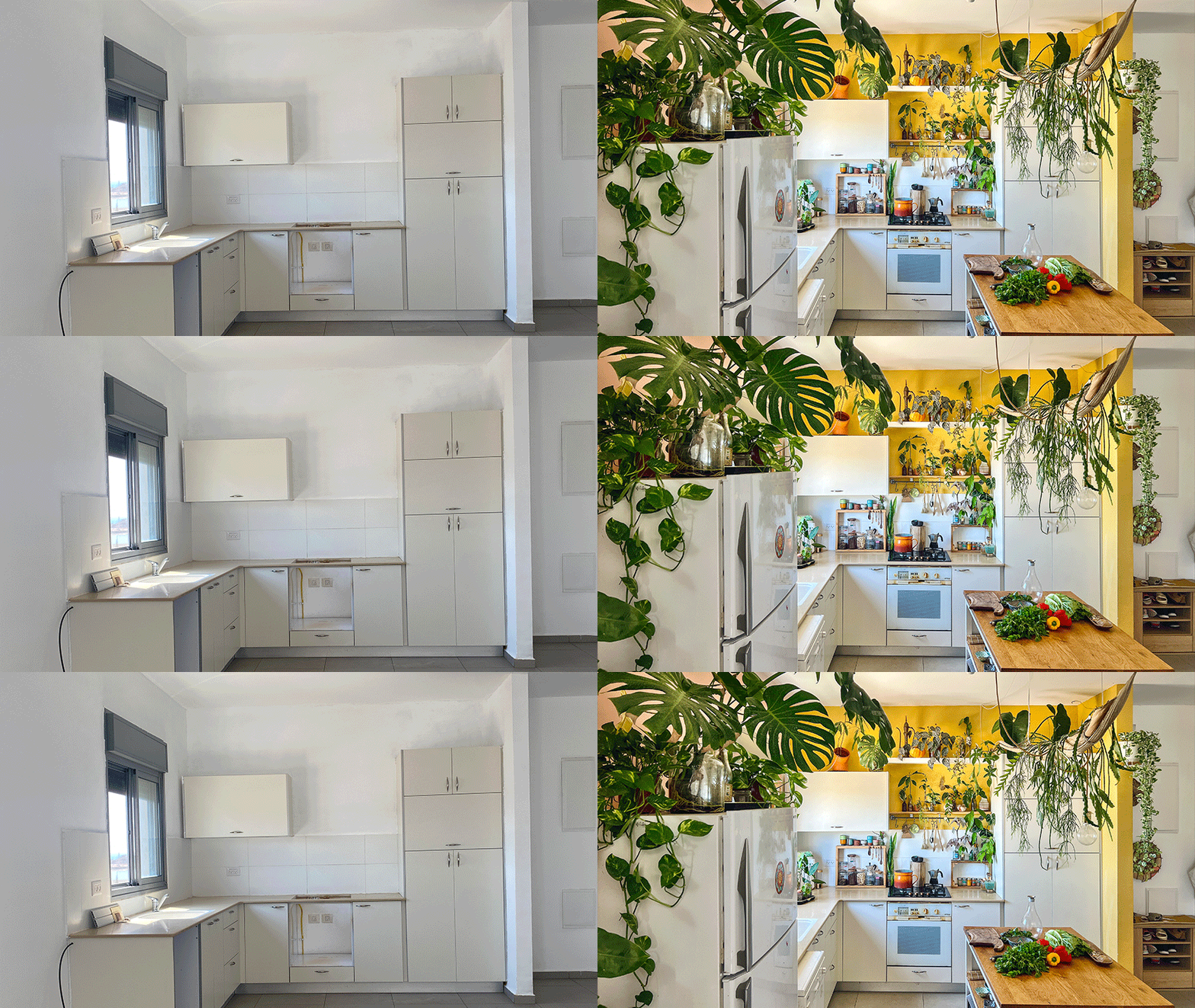
So what makes the kitchen so special, and so challenging? Kitchen real estate is always in demand, and that holds true even if you are blessed with a huge kitchen. Countertops are a resource you can never have enough of, and we like to keep them free for cooking. Floor space needs to stay open for easy movement between zones and for access to every part of the kitchen, and cabinet doors have to open without obstacles. To add plants, you need to think creatively, for example by using unused space above the kitchen cabinets or on the window ledge.
So why bother bringing plants into the kitchen if it is this complicated? First, the kitchen is one of the most central rooms in the home. It is usually visible from the entrance, the living room and other shared spaces, and it is the place we walk into most often at different hours of the day. That is exactly why we will enjoy the plants so much, and they will enjoy our attention in return. What is close to the eye is close to the heart.
How to make it yourself: hanging plants above the kitchen island
(Video: rinat Tal)


Plants in the kitchen get a daily glance, and they are easy to care for because they are close to the faucet and sink. Finally, cooking steam is a real advantage. You may be surprised to learn that the vapor rising from pots and spreading through the kitchen helps plants. We will explain in a moment how, and also when it is not helpful.
To use the strengths and overcome the challenges, here are four solutions for making the most of kitchen space for plants:
1. A green island
If you have a kitchen island, it does not have to be barren. The island area can define a zone above it where a cluster of plants hangs down, just like light fixtures. You can even mix plants and lights in alternating arrangement.
In one home, we hung a wooden palm-leaf spoon from the ceiling in the kitchen and planted it with tropical succulents. In Chen and Dror’s apartment living room, there are climbing and fitness installations, including a ninja-style setup. Inspired by that, we came up with the idea of a “ninja” rack for plants above the island. We suspended a thick, strong bamboo pole over the island. You can use a rod in any material and finish you like. From it we hung different planters.
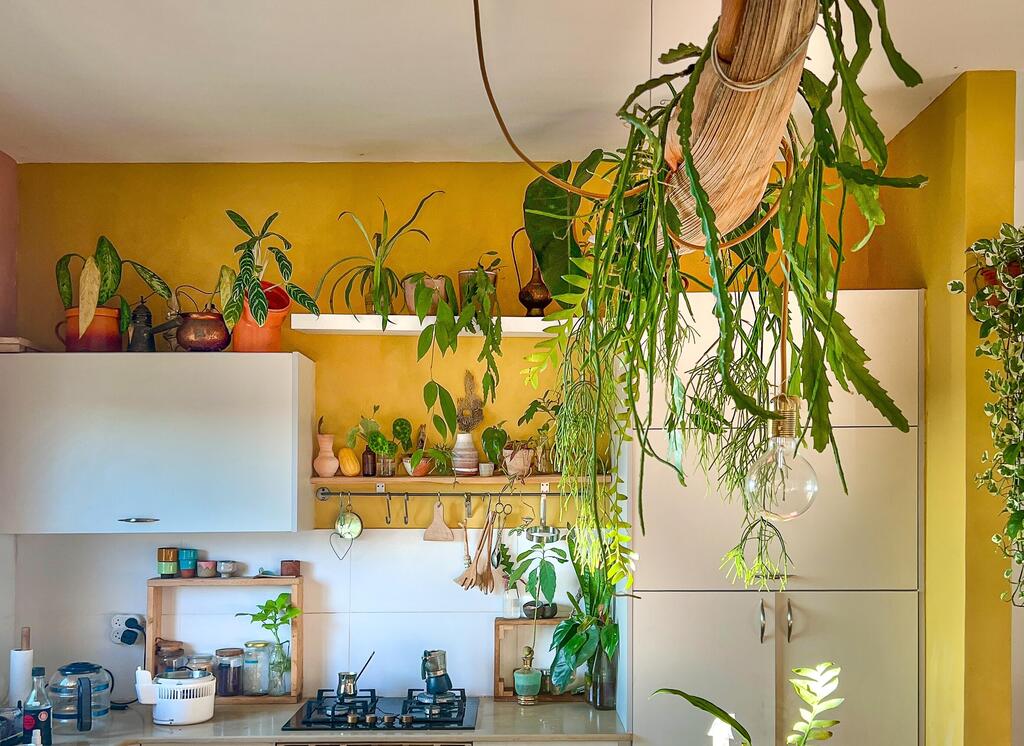
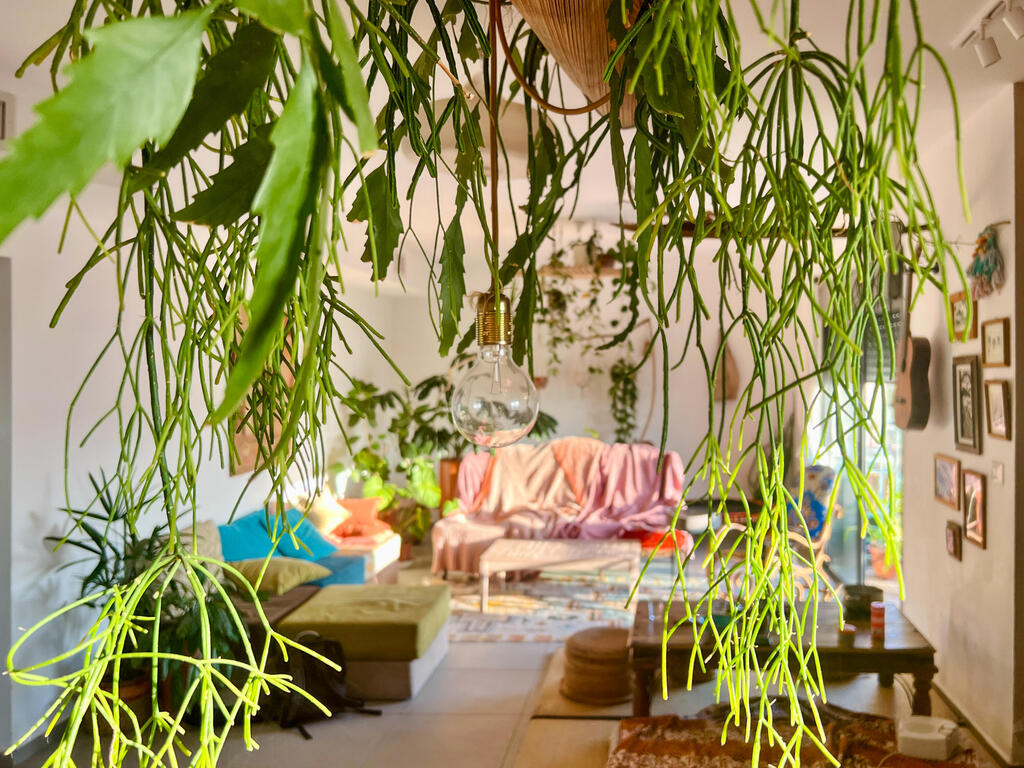
Above the island, a palm frond spoon topped with succulents
(Photo: Rinat Tal)
It is best to vary the heights. Set the hanging height so it is right above you, does not touch your head and does not get in the way. At the same time, make sure the plants are within reach, or at most that you need a light step onto a stool to care for and water them. For advanced setups, you can install a drip line that draws water from a container using a small rechargeable irrigation controller.
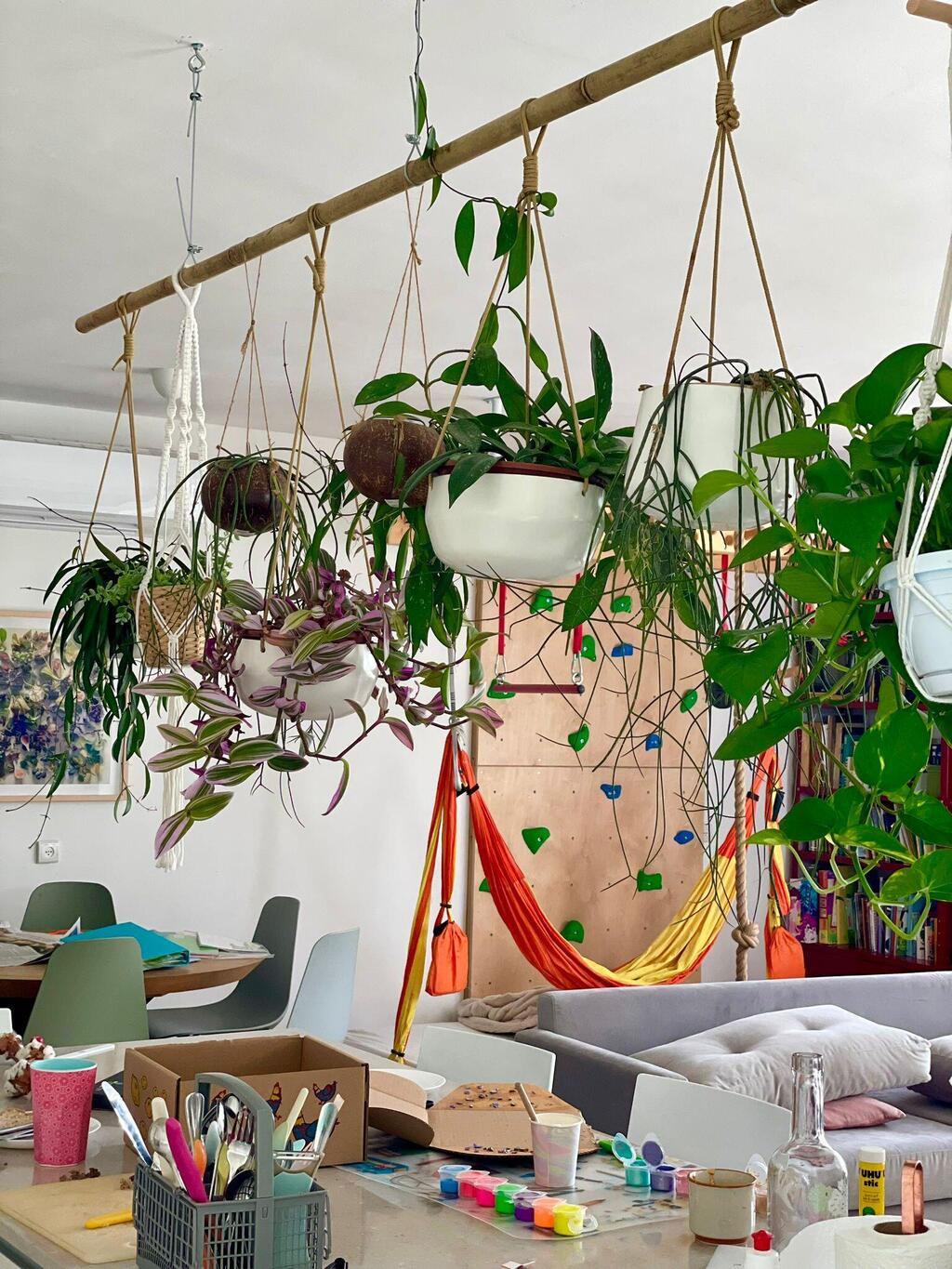
Above Chen and Dror’s island, a “ninja” setup for plants, with a ninja rig for people in the background
(Photo: Rinat Tal)
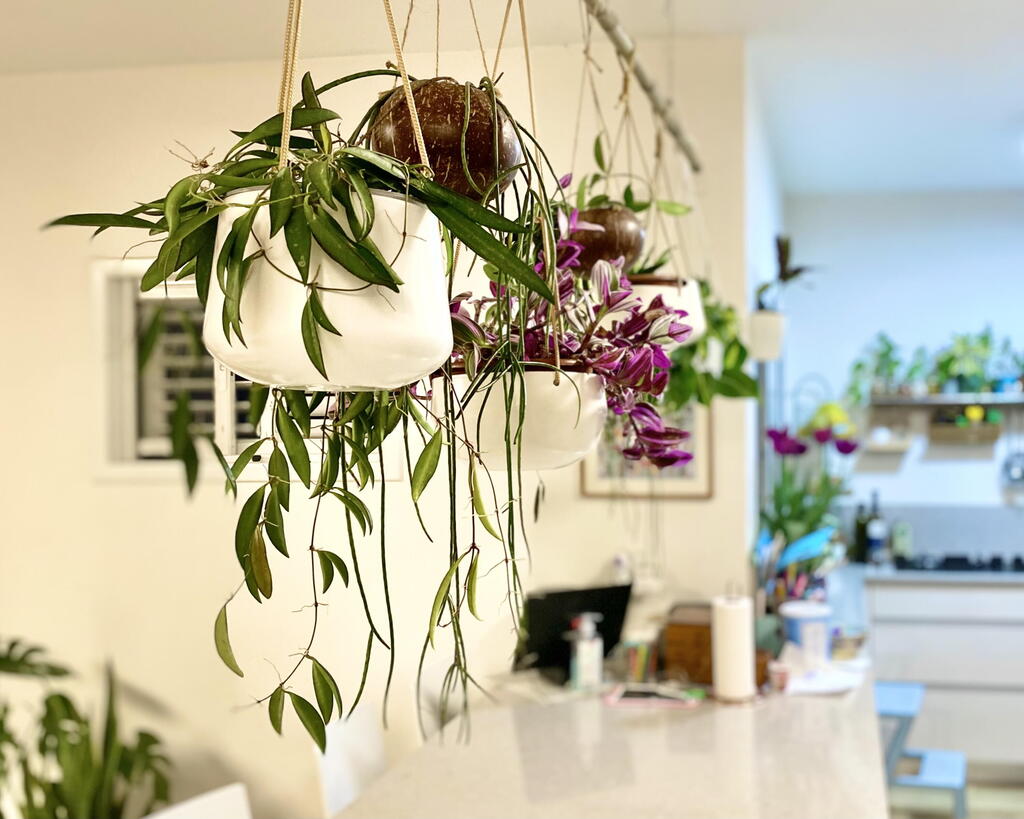
Trailing plants above the kitchen island in Chen and Dror’s home, with shelves of potted plants in the background
(Photo: Rinat Tal)
2. A dedicated narrow shelf
A slim shelf, about 4 to 5 inches deep, is an excellent solution for plants without sacrificing meaningful storage space or disrupting daily kitchen work. You can place propagation jars that do not require much depth, or small pots, and combine them with collections that add color to the kitchen, such as your favorite ceramic cups, decor pieces or natural elements.
The higher the shelf is mounted, the less it interferes, and the deeper you can make it. You could even mount shelves 6 to 10 inches deep. Where can they go? Any open wall space, yes, even above the stove, as long as there is no range hood there.
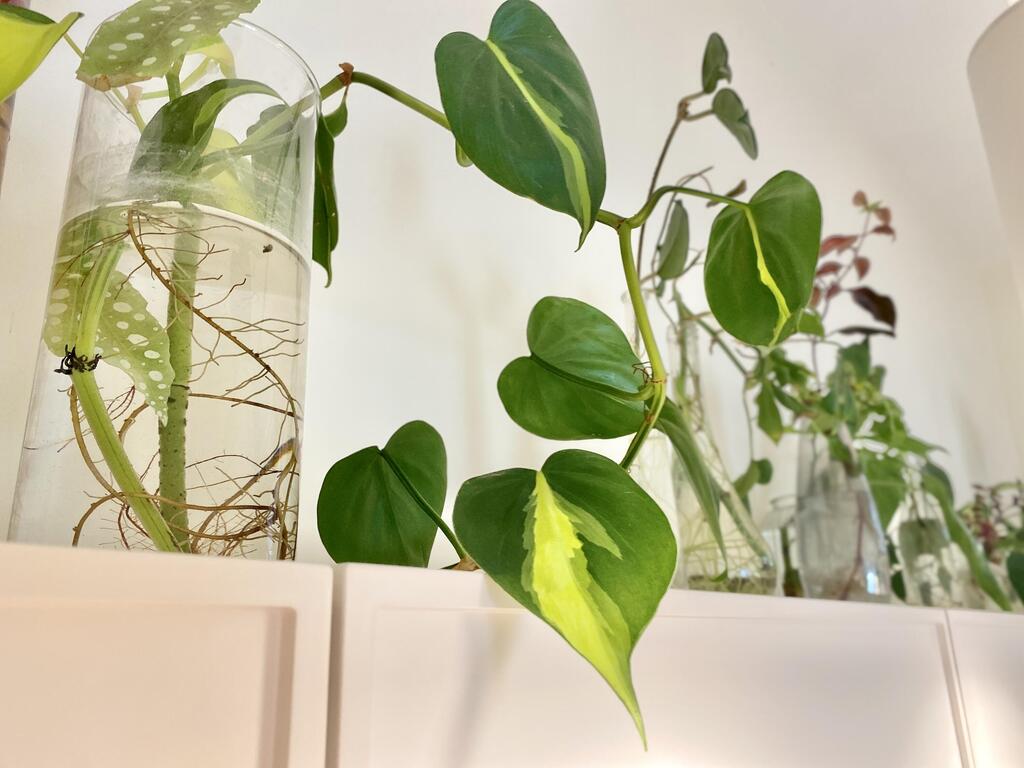
Choose plants that grow in water
(Photo: Rinat Tal)
And what about cooking steam? The vapor rising from pots and drifting under the upper cabinets is great and adds local humidity for plants. When is it not good? If you have ever been burned by steam escaping a boiling pot, you know where not to put your hand. The same goes for plants. The recommended distance is about 12 to 16 inches above the steam source. There may also be oily droplets that can dirty surfaces, so pay attention to where they land, and avoid placing plants or other objects in that range.
As for mounting style, you can hang shelves above the tile line, or create square or H-shaped shelves flush to the wall. In our kitchen, we built the shelving inspired by Molet, custom carpentry that reuses wood from pallets that finished their working life. All we needed was to cut the beams, hammer in a few nails, do a light sanding and finish with matte lacquer spray.
3. The window ledge
The most classic place for plants will always be the window, where they get the most light. In many kitchens, the window ledge is deep and acts as a real shelf for pots. If that is not the case in your home, and your kitchen window is standard with no ledge, you can easily create a shelf attached to the window as an extension.
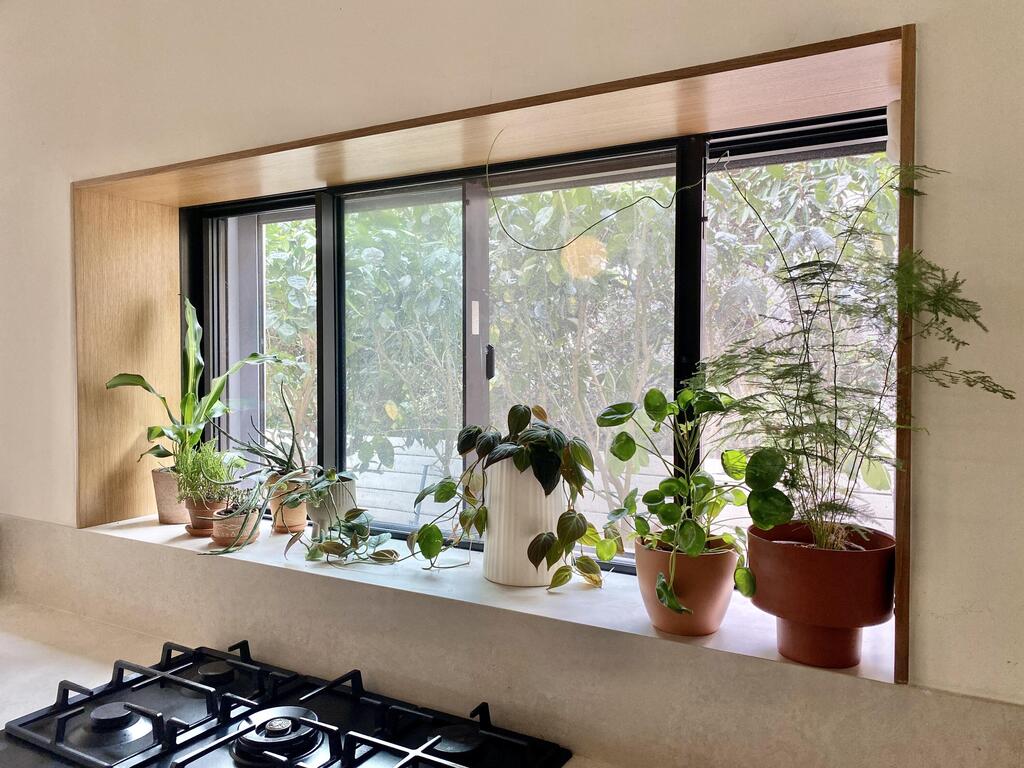
Plants on a wide kitchen windowsill in Limor’s home
(Photo: Rinat Tal)
Aesthetically, it is best if the shelf spans the full width of the window and ends at the frame edges. To avoid drilling into tile, build an H-shaped shelf that stands on the countertop, a simple, stable structure you can make yourself or order from a carpenter. If the ledge sits above the sink, plan so it does not collide with the faucet.
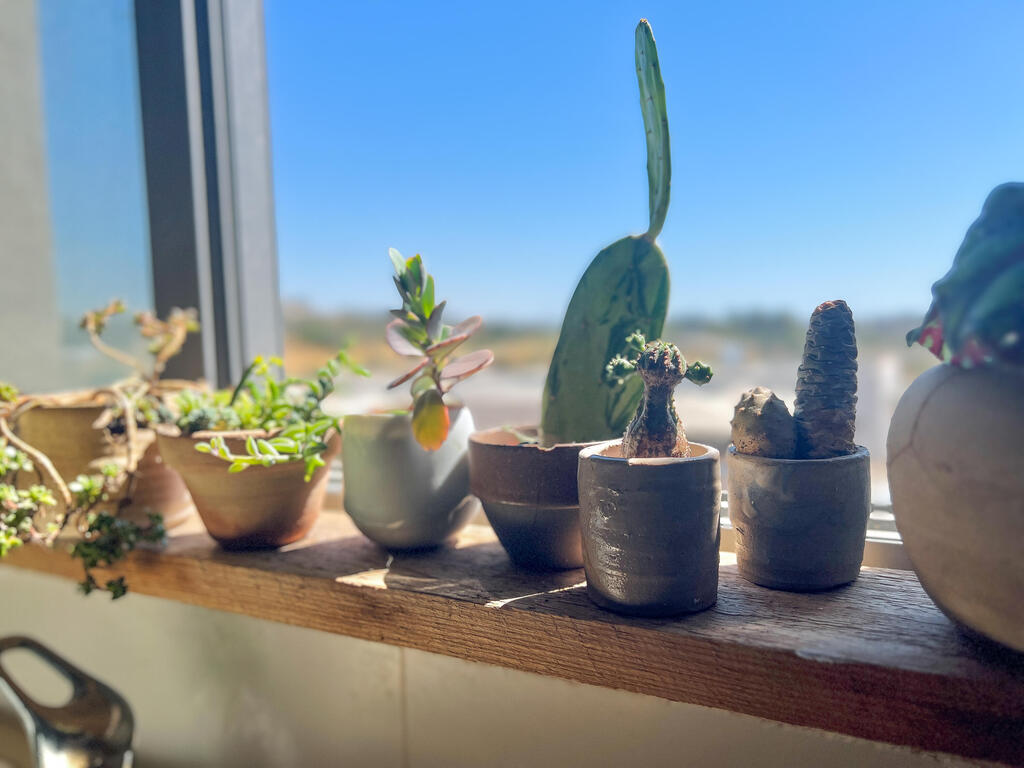
A windowsill with an extended shelf, with care not to bump into the faucet
(Photo: Rinat Tal)
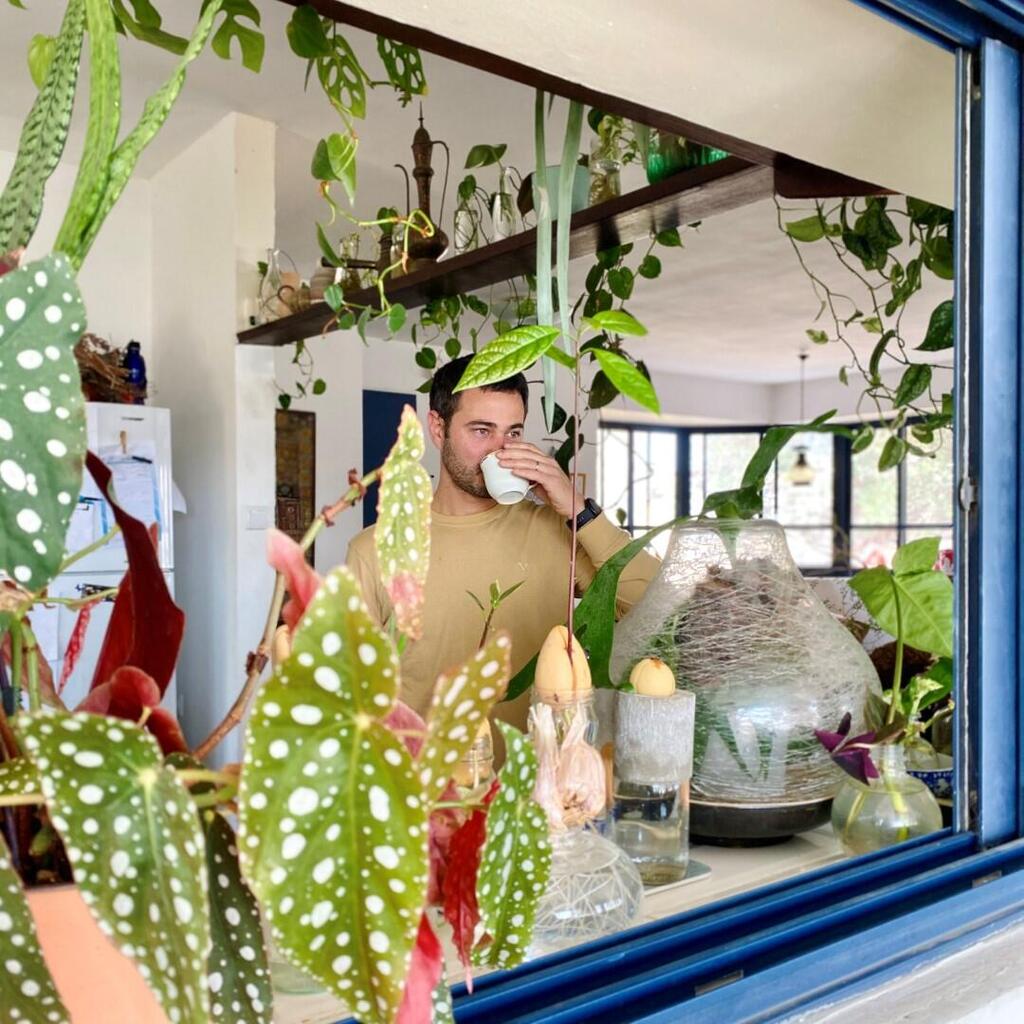
Plants on the windowsill and on a shelf near the ceiling
(Photo: Rinat Tal)
If the window faces south or west, the shelf may get a few hours of direct sunlight. Unlike other kitchen spots, this means you are not limited to indoor plants, and you can include certain outdoor plants. If the ledge is outside the window, you may be even better off with more direct sun. Either way, check exactly which hours of direct sun reach the shelf. Then consult a nursery and choose plants suited to those conditions. Shelf width matters too. If it is narrow, grow succulents. If it is wide enough, you can place larger pots and grow herbs over time to use in dishes and stews.
4. Above the kitchen cabinets
Usually, there is leftover space above the kitchen cabinets that people want to use. Because trailing plants up there would interfere with opening doors, opt for upright plants. Still, evaluate each plant carefully, especially how it looks from below. Sometimes the space is too low, too dark, or simply tucked too close to the ceiling.
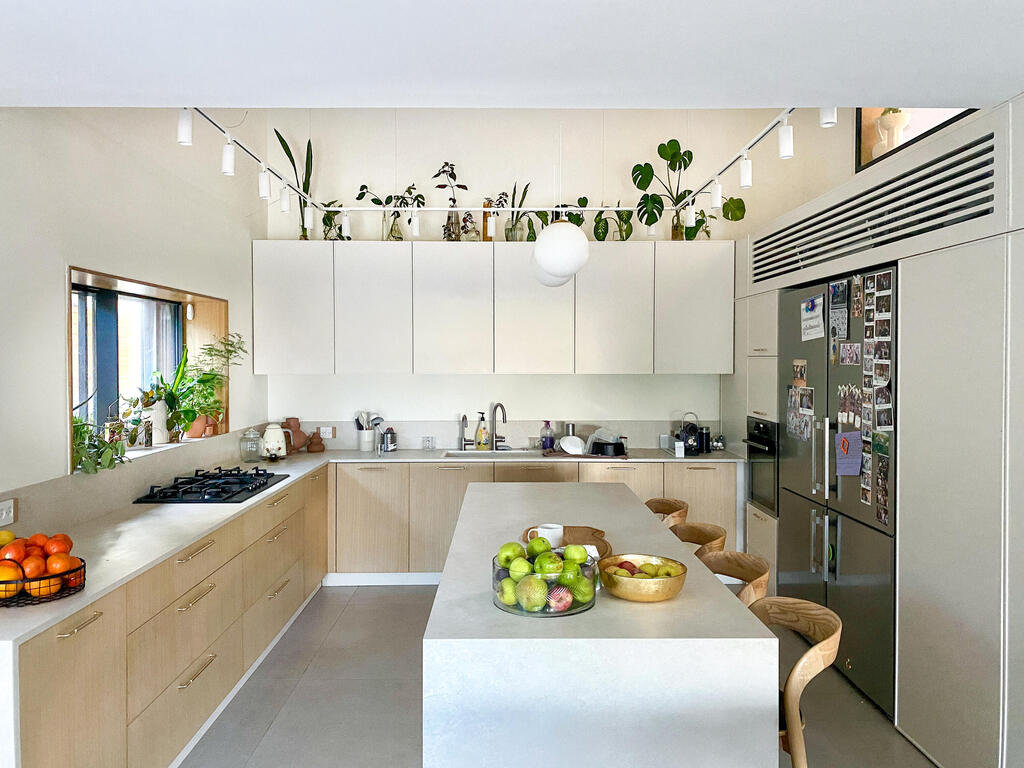
Above the cabinets in Limor’s kitchen, plant styling
(Photo: Rinat Tal)
If the gap is high enough for a variety of plants, it becomes an ideal shelf that already exists and can carry weight. The best approach is to use jars where plants grow in water or in a semi-hydroponic medium such as expanded clay pebbles. In a separate article, we explained how to root plants and grow them in water alone.
Why water-growing? First, the area near the ceiling almost always has less light, and cuttings in water are more tolerant of low-light conditions. Second, you will want to delay trips up there for care and watering, and plants in water need the least frequent attention. Even so, every so often you should climb up not only to top off the water but to replace it, clean the glass containers and remove branches or roots that have rotted or dried out.
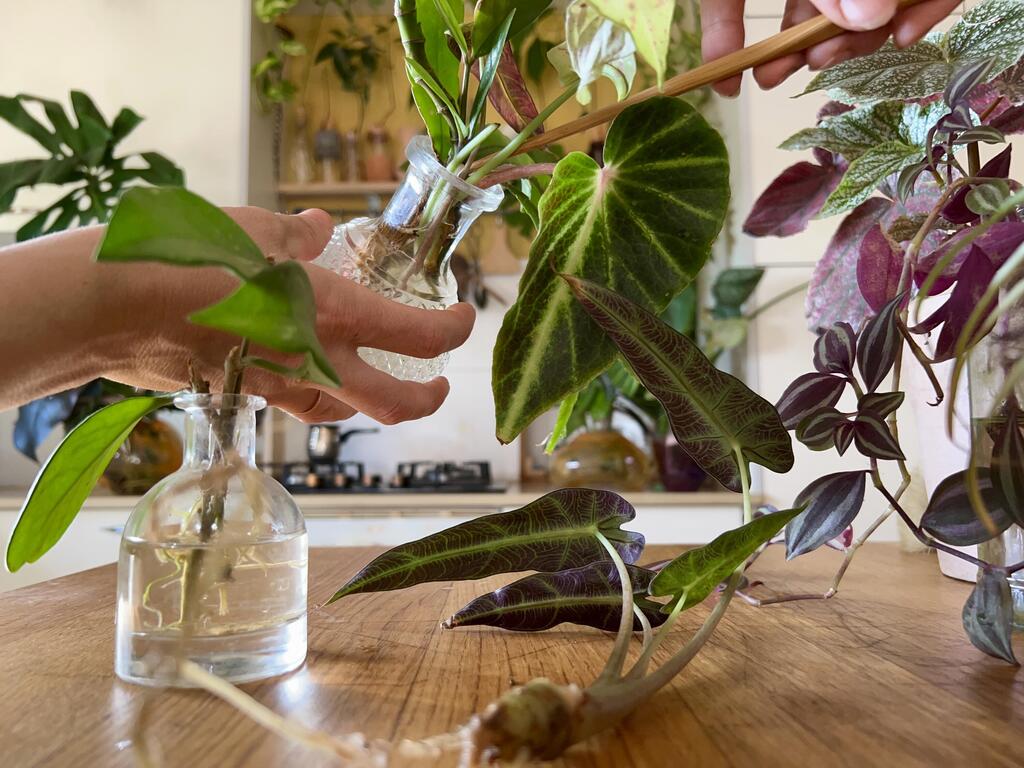
Root and grow plants in water for lower maintenance
(Photo: Rinat Tal)
In Limor and Avi’s kitchen, there was a very tall space above the cabinets, and Limor wanted to add plants there. By the end of our plant-design project for their home, we had plenty of pots to take cuttings from. We rooted the first ones downstairs, and after they succeeded, we filled the area above the cabinets with jars.
Finally, it is worth repeating that ornamental plants are not meant for eating, and some are highly toxic if ingested. If you add plants to the kitchen or anywhere else, remind everyone in the household not to nibble them. Keep them out of reach of toddlers and pets, and keep them separate from edible herbs.
Rinat Tal of Sukolina is a plant stylist, a designer who creates living spaces with plants.