

The Winter Olympic Games, set to open next week in Italy, will be the second Games for Hungarian-Israeli siblings Noa and Barney (Barnabás) Szőllős. The alpine skiers, who have represented Israel for many years, know only a few words of Hebrew (shalom, ma nishma, tov, toda) and visit Israel about once a year — but they feel Israeli when they represent the Jewish state and wear the blue and white flag on their ski suits.
Their father, Peter Szőllős, who manages the pair, introduced them to snow from the moment they were born. Barney, 27, and Noa, 23, told Yedioth Ahronoth that they have no first memory of the white landscape because it was simply always there. “We were less than two years old," Barney said. "We learned to ski at the same time we started to walk.”
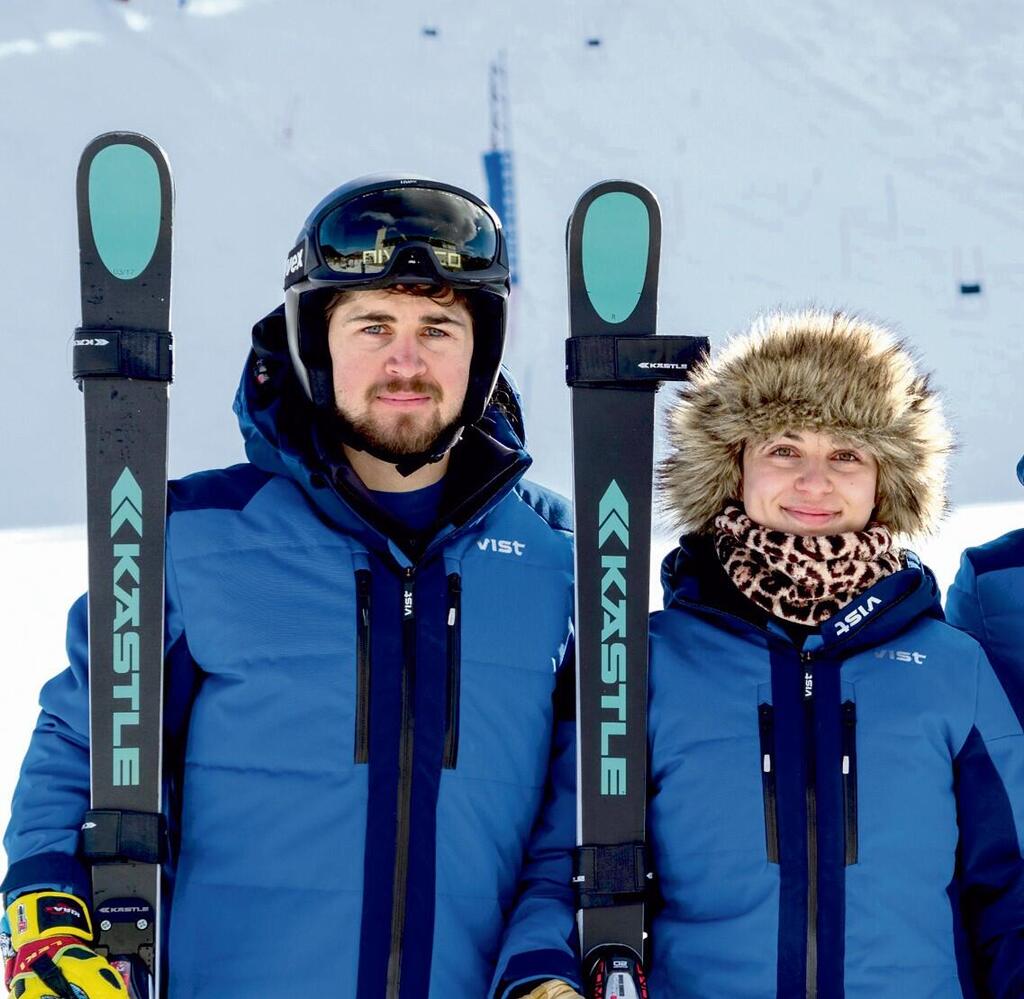
Peter, a Hungarian Jew whose parents lost part of their family in the Holocaust, realized after conflicts with the local ski federation that his children’s careers would not progress, and in 2018 he moved them to Israel under the Law of Return. “It’s something very common, to represent a country even though you don’t live there,” says Noa, who is based in Austria for training, though her and Barney’s physical home is in Budapest.
Barney tried several sports in childhood, but always came back to skiing, even if he didn’t really like it at first. “It’s hard for a little kid to get up early in the morning for training to make it to the mountains,” he says, and Noa shares that only in the last two years has she truly begun to enjoy it. “I always loved horseback riding and wanted to join that sport, but my mother said it was dangerous and refused. I also really love art.”
It will not surprise you that her favorite Disney princess is Elsa. “I would sing ‘Let It Go’ at home, it’s still on my playlist. You could say, like the song, the cold doesn’t bother me,” she laughs.
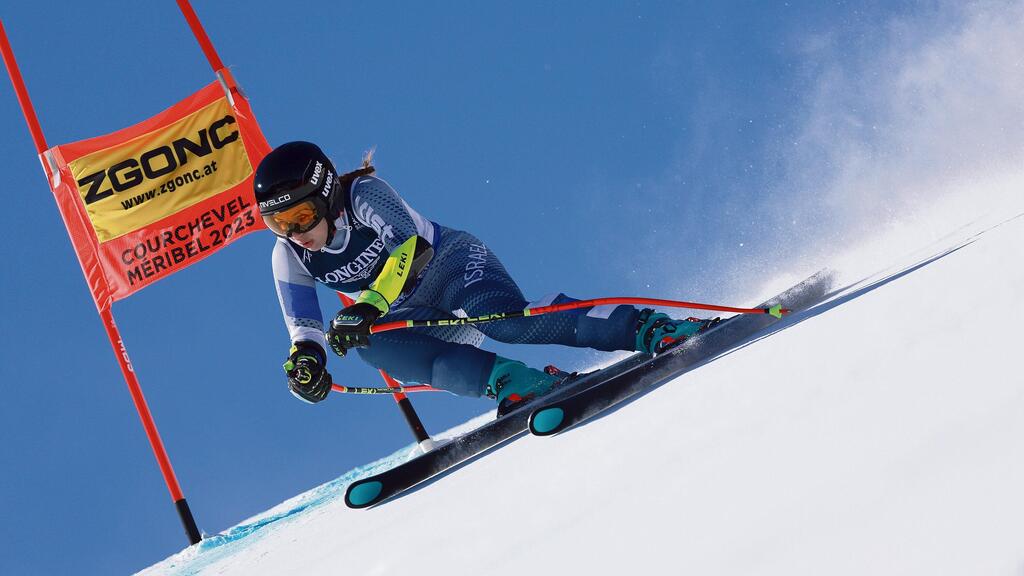
Noa Szőllős on the slopes
(Photo: Oz Mualem)
From a very young age, the siblings left their warm home in Budapest for snowy Austria, later attending a special ski school. “We were there half the year and half the year, mostly in summer, we would return to Hungary,” says Barney, which leads Noa to recall that she didn’t see her future in the sport at all. “It was always moving from place to place, saying goodbye to everyone again,” she sighs. “Being without friends from home and then going back to friends in Austria and then back again. It was very stressful not being able to stay in one place for a long time. Now I can say it was worth it.”
Noa realized her Olympic dream was coming true in 2020, when she already represented Israel and competed in the Youth Olympic Games. She won two medals, Israel’s first ever at the Winter Youth Olympics — silver in the combined event and bronze in alpine skiing. “That competition made me realize I can do it on the senior stage.”
Barney says: “As a child I did not see skiing as a dream, I did it out of habit, like a job. It started somewhere around age 13, I found I was good, winning various competitions. Over time I realized I could go further and do more.”
When your father told you that you were going to represent Israel, how did you react?
Barney: “I was not surprised. Dad coached quite a few Israeli athletes and we met many of them as kids.”
Noa: “I thought it was nice to connect to Israel this way, to learn about a new culture, a new country. It was a good decision that helped us a lot.”
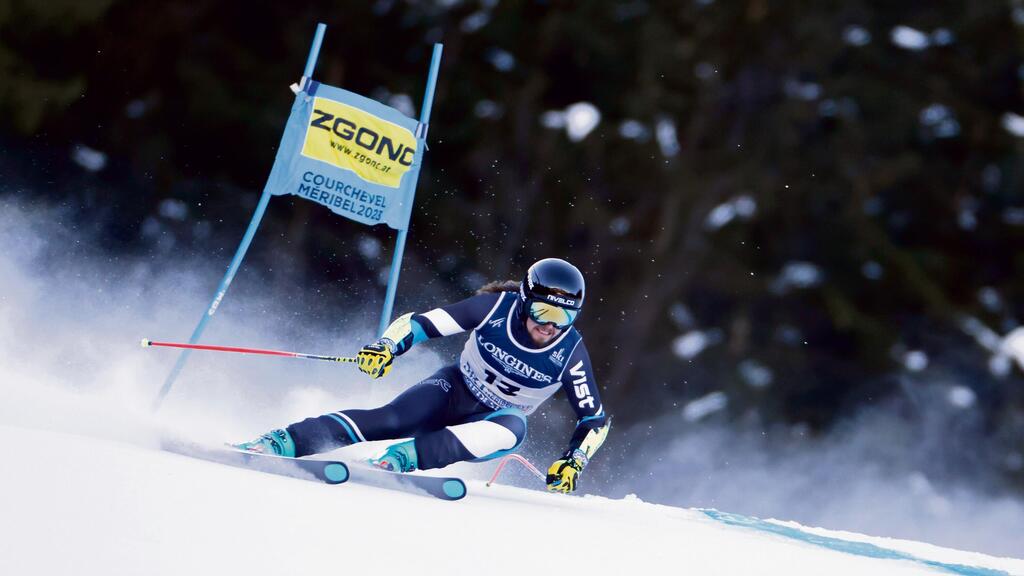
Barney Szőllős
(Photo: Oz Mualem)
Do other athletes ask how it works if there’s no snow in Israel?
Noa: “Yes, yes (laughs). In my last year as a youth competitor they already understood I wasn’t really from Israel. My abilities surprised them then, but now everyone knows me by my name.”
But representing Israel brings up the question of whether you are Jewish, doesn't it?
Noa: “Yes, it always comes with the question ‘Why Israel? Do you have family there?’ Then I say my father is Jewish. I get curious and interested reactions about that. My grandmother’s mother was in Auschwitz and my father’s grandfather died on the train on the way there, he was in one of the labor camps. I feel very connected to my Jewish roots.”
You have a very common name in Hebrew, do you know its meaning?
Noa: “Since I was young, I understood I have a name in Hebrew, and yes, its meaning is funny. It’s about movement, energies. That name fits me perfectly. I love it.”
Barney: “I have no idea what my name means, I only know our parents chose us Jewish names.”
Do you observe Jewish holidays at home?
Noa: “Not really. I know about Passover and Rosh Hashana.”
Do you visit Israel often?
Noa: “Not often, because we are busy with our schedule. We come for checkups and dry‑land training. It’s a very beautiful country. I love the hummus; that’s something you don’t get in Austria or Hungary.”
Barney: “The food in Israel is great. I love the seafood, it’s all very fresh.”
Have you ever met athletes from other countries who treated you badly because you represent Israel?
Barney: “It hasn’t happened, but I did meet an athlete from Iran in the Olympic Village. I exchanged pins with some athletes from around the world, and when it was our turn to exchange pins he saw the Israeli flag, turned around, said ‘Oh no’ and left.”
Noa: “I wanted to trade a pin with one of the Iranian coaches and he asked me if I was sure about that, if I was serious. He gave me his pin, I tried to give him the one from Israel and he refused.”
Training and competition
The siblings no longer train together since turning professional. Noa is expected to compete in another European Cup event in Switzerland after she scored her first points for Israel earlier this month in a competition in Slovenia. “We only meet at major competitions, like the World Championships,” Noa says. “In Beijing 2022 we did compete at the same venue, now we’ll be about four hours apart by car.”
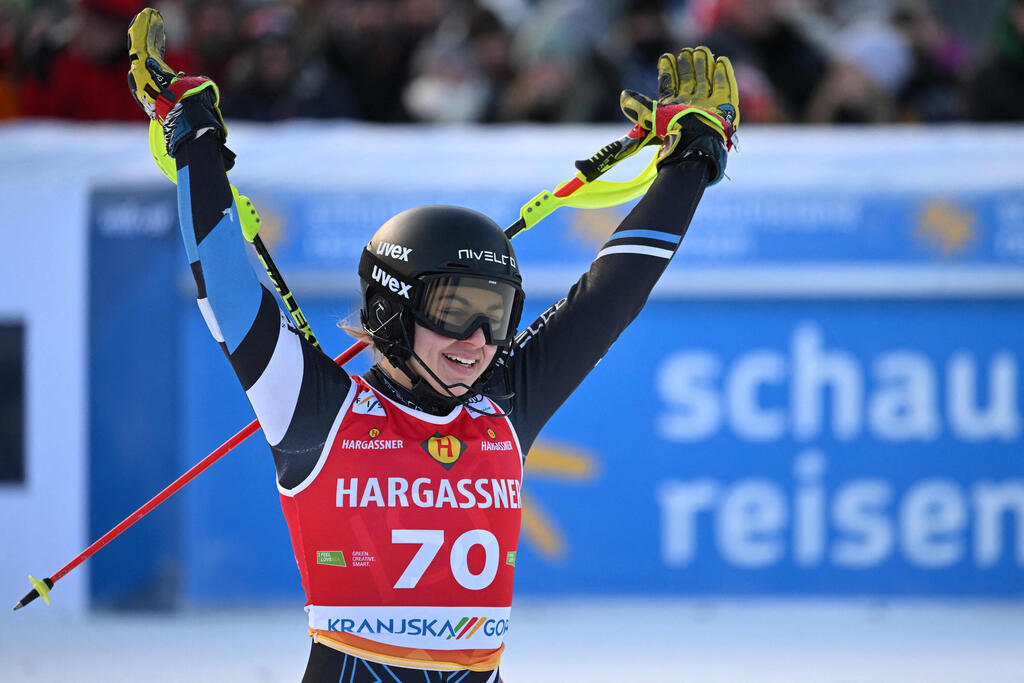
Noa Szőllős celebrates successful run
(Photo: Jure Makovec / AFP )
In the Games in China, Barney matched the best result ever by an Israeli at the Winter Olympics. He finished sixth in the combined downhill, the same ranking achieved two decades earlier by figure skaters Galit Chait and Sergei Sakhnovski.
“I felt amazing after that result, and then I learned I had tied the best placement, which was also great,” Barney says with a smile. “Those were really good Games for me. Unfortunately, this year they canceled that event; it’s no longer in the Olympic program. It will be harder for me to achieve that ranking again, but I will do my best.”
“I’ve grown a lot, especially mentally, in these four years,” Noa says. “I was very tense and did not compete the way I wanted. This time I hope I can ski at full ability and achieve the result I want.”
Support from the Olympic Committee
“We have supported the family from a young age and have a close relationship," Yael Arad, chair of the Israeli Olympic Committee, said. "We support them professionally and financially. Winter sports do not receive much exposure in Israel, but we are working consistently with the winter sport federations, skating, skiing and sledding. Our delegation is a blend of Israelis and Jews who grew up in different countries, and that is why Jewish communities around the world especially identify with it.”