


Before Game 1 of the Western Conference Finals against the Oklahoma City Thunder, Victor Wembanyama sat on the San Antonio Spurs bench and stared straight ahead. To his left, Shai Gilgeous-Alexander was receiving his second straight MVP award. Over the final month of the regular season, Wemby had made no secret of how badly he wanted that trophy.
So he sat there, eyes forward, burning with envy. He took it personally, like a Michael Jordan GIF come to life. Then he went out and scored 41 points with 24 rebounds in a double-overtime win.
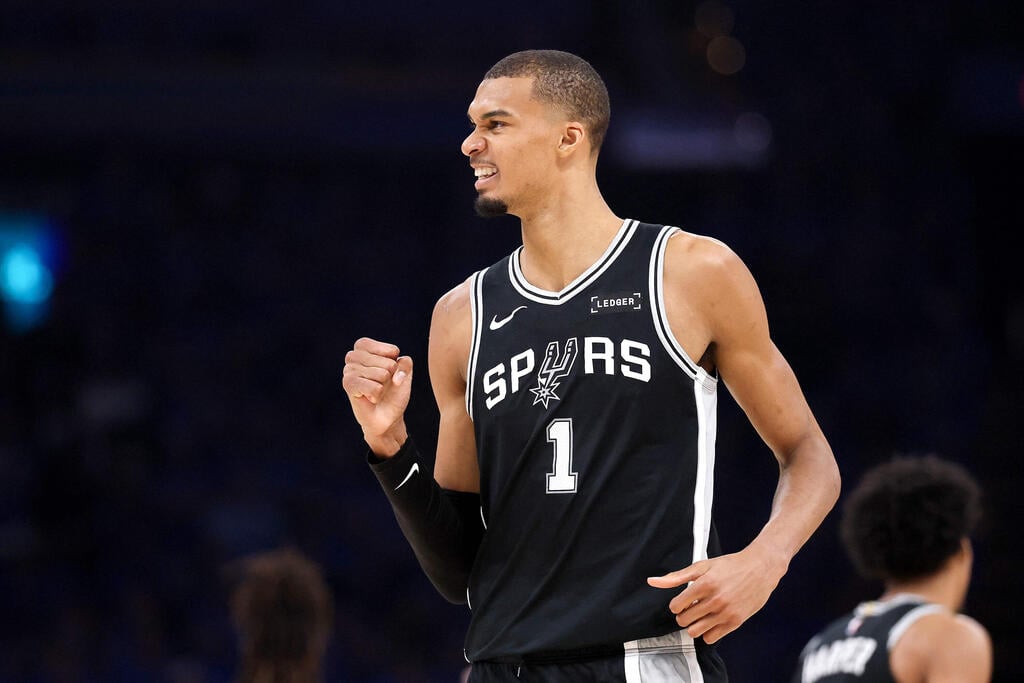
If, in four, five, six or seven games, the San Antonio Spurs are NBA champions, that Wembanyama game will become his version of Jordan’s 63-point game against the Boston Celtics in 1986, with one major difference: Jordan’s game, the one that made Larry Bird call him “God disguised as Michael Jordan,” ended in defeat, and the Chicago Bulls lost the series.
Jordan was 23, and it would take him another five years to win the first of his six championships. Wembanyama is 22, and he is already in the NBA Finals.
This was not supposed to happen so quickly. Not like this.
Even a league that has lived through Tim Duncan, Kobe Bryant, LeBron James and Stephen Curry since Jordan has never seen a spectacle quite like this, from a player whose spirit is as fascinating as the DNA that produced his abnormal body.
The NBA Finals, which open tonight in San Antonio, are almost too perfect. The matchup between the iconic team from the world’s biggest city and a young global star who truly looks as if he stepped out of a spaceship is everything anyone could have asked for.
This series arrives at the end of a playoff run that will be remembered no matter who wins, because these two months taught us who Wembanyama is. Not only the player, but the person.
We learned it without trying. He simply showed us everything, completely free of the restraints that have tied down so many NBA players in the 21st century.
The realization that Victor Wembanyama is genuinely unlike anything the NBA has ever seen began to settle in during the All-Star Game in Los Angeles in February.
Not only because he has a 2.44-meter wingspan, or because when he raises his arms he reaches a little over three meters, or because he can dunk without leaving the floor, or because when he holds a baseball, the ball disappears in his hand. Not only because, with all those physical tools, he dribbles and shoots threes like an artificial-intelligence version of Kevin Durant.
All of that is astonishing on its own. But when a 22-year-old French player, who had barely visited the United States before nearing the NBA, looked heartbroken because his team lost an All-Star Game, an event that in recent years has become an embarrassing stain on the league, you could almost hear the ground move.
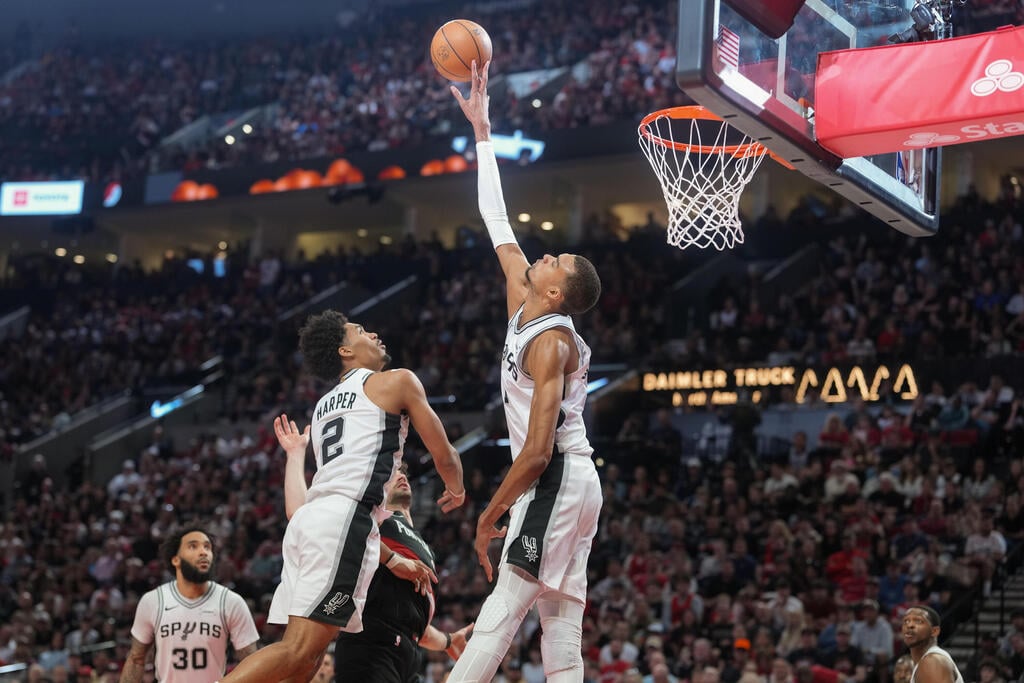
(Photo: AP Photo/Jenny Kane)
The world is cynical. Sports fans are not. They care, and they want the players to care too.
The All-Star Game joined the Spurs’ late-2025 surge, which included several wins over the Thunder and a run to the Cup final, a young and minor tournament, but one whose two finalists are now meeting in the NBA Finals, with the New York Knicks chasing the first double in league history.
Together, it made one thing clear: the Spurs, and Victor Wembanyama, are far ahead of schedule.
Last season, they won 34 games and finished 13th in the West, with Wemby missing a large part of the year. They had not reached the playoffs since 2018-19. Before this season, the reasonable expectation for such a young team, assuming Wemby stayed healthy, was a fight for the sixth to eighth seeds in the West.
All those plans were thrown in the trash. Wemby threw them there.
That was the first lesson he learned from the deep vein thrombosis in his right shoulder that abruptly ended his previous season. Once he understood that everything can end at any moment, he stopped waiting for permission from the gods of development timelines.
Along with that sense of urgency, a hypnotic personality began to emerge: a young man far more mature than his age, but still a child whose emotional purity has not been spoiled by the world.
Win or lose, Wemby feels everything deeply. He shows it. And in doing so, he breaks one of the uglier habits of today’s NBA players, and not only NBA players: nonchalance.
Nonchalance has become part of modern media training. Accept everything with detached coolness. That has become the standard for superstars.
“Ring culture,” which reduces a career’s value to one criterion, whether you won a championship or not, and social media have turned the very admission that you care into a weapon against athletes. So athletes learned to neutralize it.
The Thunder, for example, won the championship last year and responded with the required nonchalance. Maybe the pose was fake, maybe it was not, but if you want to identify the moment Oklahoma City went from impressive Cinderella story to disliked team, it began there, not with SGA’s flopping.
Winning an NBA championship is the hardest achievement in professional sports. No title in any team sport requires a longer road. Winning it is not casual. It cannot be taken for granted. Michael Jordan cried while lying on the locker room floor. Who are you to act as if it is just another checkmark?
Not everyone is posing. Stephen Curry’s career was calculated down to the smallest details, but he never treated basketball with nonchalance. LeBron James became so consumed by the chase for history that he lost some authenticity, but when he won the one title that mattered most to him, with Cleveland, he threw away every mask.
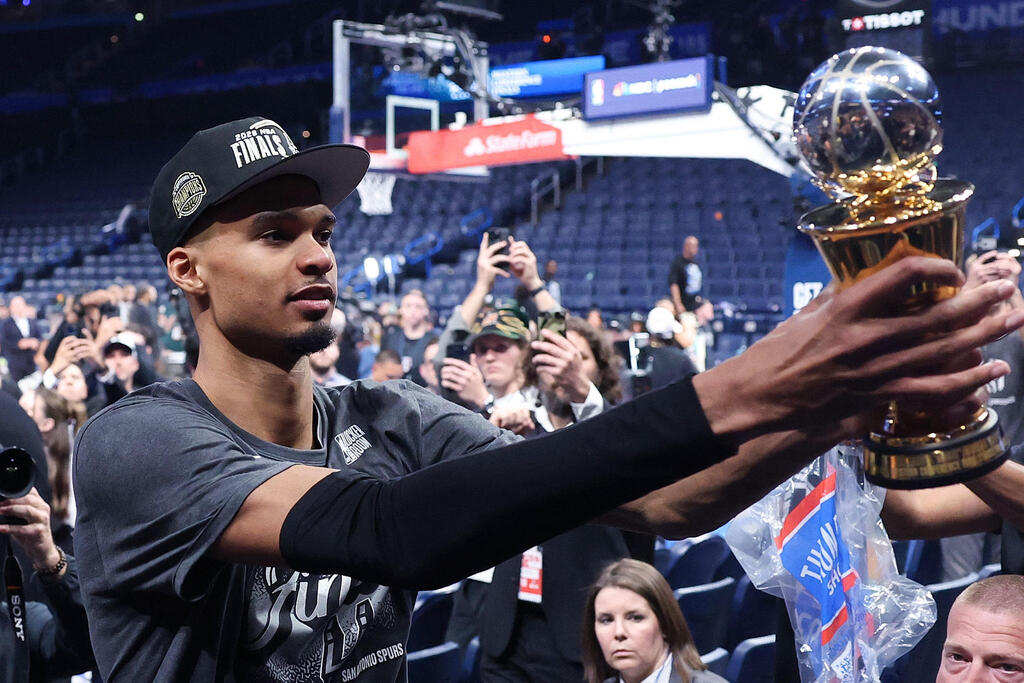
(Photo: Christian Petersen / AFP)
Some great players have nonchalance as part of their myth because it feels authentic. Nikola Jokic really does seem to love his horses more than anything. Tim Duncan pre-recorded a video of himself waving to fans, and it was not arrogance.
But all of them together helped create a league where it sometimes seemed as if no one truly cared anymore, and the only thing that mattered was the brand.
In the same way, NBA players are supposed to pretend that individual awards do not matter to them. “I don’t think about it. I’m only focused on the championship.” That is nonsense, of course. Every player thinks about it.
Wemby, who does not understand why you cannot simply say what you feel, says what he feels. He never gives a public-relations answer. He thinks for a few seconds and then answers honestly, eloquently, in English he learned only shortly before arriving in the United States.
After the Spurs lost to the Knicks in that Cup final in December, Wemby came to the press conference in tears. His grandmother had died that morning. Most players would not have shown up at all, and no one would have blamed them.
Wemby has given so much of himself this season to the culture surrounding the game that he won the Magic Johnson Award from the basketball writers’ association for excellence in cooperation with the media and fans. But after the Spurs lost Game 5 against the Thunder, he left the court without speaking to reporters, reminding everyone that he is still very, very young, and that pressure can make him err.
After the Spurs eliminated Portland in the first round, Wemby cried. A reporter asked him how he turns his full range of emotions on the court into an advantage, and why that is so rare among elite athletes.
“I think it is first of all fear of judgment,” Wemby said. “That feeling that you have to behave a certain way, all kinds of social codes. Personally, I refuse to carry the burden of having to hide my emotions.”
A 22-year-old is not supposed to be able to say a sentence like: “I refuse to carry the burden of having to hide my emotions.”
That is another fascinating thing about Victor Wembanyama. He makes mistakes and learns from them quickly. His learning curve is something we have not seen from a star this young, under the kind of hype and pressure reserved for very few.
Again and again, he needs only one game to correct the mistakes he made in the previous one. His punch to Naz Reid’s throat in Game 4 against Minnesota crossed every line and justified a long suspension. That did not happen because, let’s not be naive, the league was not going to suspend its biggest star in the middle of the playoffs. Wemby used it to learn not to lose control again.
Perhaps the most important thing Victor Wembanyama has done in these playoffs is dismantle the ridiculous definition of masculinity in 2026.
He is French, raised in an atmosphere where no one told him to hide his emotions or that crying was not masculine. He grew up in a warm, nurturing environment that most Americans in the league could only dream of. None of that made him soft. The opposite. There is not a drop of fear in him.
Very few athletes with a global aura of this magnitude expose themselves this way. Rafael Nadal, the subject of an excellent Netflix documentary series, grew up in a background similar to Wemby’s. He, too, had a deep competitive screw loose in his brain, held philosophical debates with himself about the importance of victory versus the importance of the path, and cried not only in the locker room but in front of the whole world.
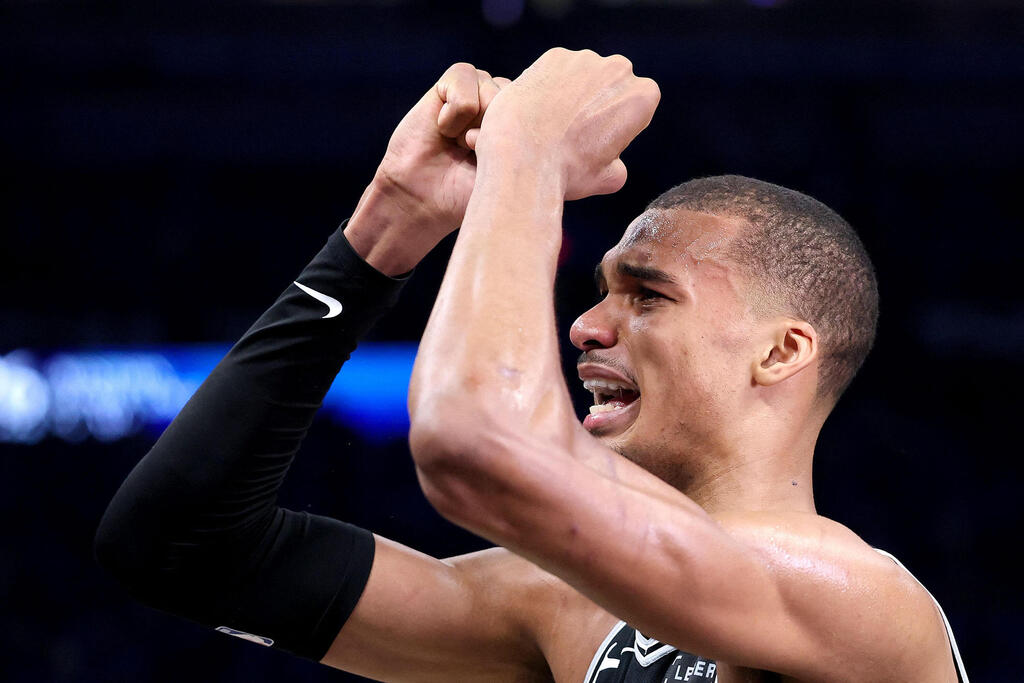
(Photo: Christian Petersen / GETTY IMAGES NORTH AMERICA / AFP)
Wembanyama’s physiology and skills gave him the alien brand, but he may be the most human young superstar the NBA has ever had.
So much of his game exists in spiritual dimensions. He reads books in the locker room. He meditates. He gets angry. He gets happy. He is a full spectrum of human emotions, the kind everyone has, and he has learned not to hide them but to use them.
“This game is so hard, this team, the Thunder, is so good, that you have to use every emotion you have in order to win,” Wemby said after Game 7.
Sometimes he is driven by passion, he told NBC’s stunned panel, which is simply not used to answers like these. Sometimes he is driven by love. Sometimes by anger.
“Sometimes it is even jealousy,” Wemby said. “But I don’t want to burden myself with any of these energies. I use them on the court.”
In an age when young people are not supposed to speak out loud about their dreams, when the goal is to cultivate some emotionless aura that protects you, an athlete of this scale arrives and makes it clear that caring is actually good.
Caring is cool.
Maybe that will trickle down too. Maybe children watching Wemby will understand that everything they are told today about masculinity is nonsense. And that is already a piece of legacy for a player still on his rookie contract, and four wins away from an NBA championship.