

Kiryat Shmona is the hardest-hit city in the long, seemingly endless war. The northernmost city in the country has endured relentless rocket barrages that scored direct hits on residential buildings, the commercial center and, twice, the municipal stadium.
The city’s prolonged evacuation has, in retrospect, led to a situation in which thousands of residents have still not returned, and many do not intend to do so, even though the official evacuation has ended and the state has stopped transferring funds. Residents got a taste of living in the center of the country — the sea, entertainment and a real life, and understood the gap between that and a remote city with few options, and preferred to move their lives elsewhere.
More than 10,000 residents, about 40% of the city’s population, still have not returned. This painful figure is severely harming commerce, local businesses and educational institutions, with many classrooms and kindergartens forced to reduce their activity.
Despite the difficult years and painful blows the city has suffered, there appears to be no light at the end of the tunnel. Kiryat Shmona’s soccer team — which won the Premier League championship and the State Cup, developed dozens of players over the years and served as a source of pride for the city’s residents and nearby communities — was forced to move its games to central Israel.
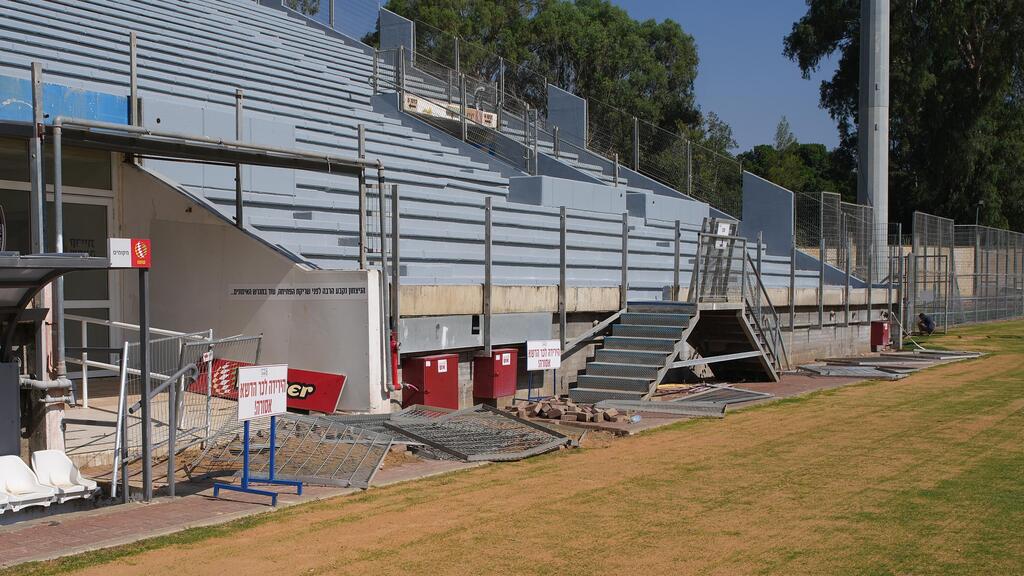
The team has had to wander from one training field to another, from hotels to hostels, and hosts its home games at Netanya Stadium. The local crowd has been forced to cheer from afar. For three years now, Kiryat Shmona has been a team without a home and without a real anchor, and after a tour of the municipal stadium, there is serious doubt whether the team will be able to play at home even in the coming season.
Between one round and the next
At the Kiryat Shmona soccer club, no one can say when the team will return to playing at home, and for now the situation is shrouded in heavy uncertainty. In March, the team was supposed to host its playoff games in the city, but just before they began another round of fighting broke out in Lebanon and the team was forced to remain in central Israel.
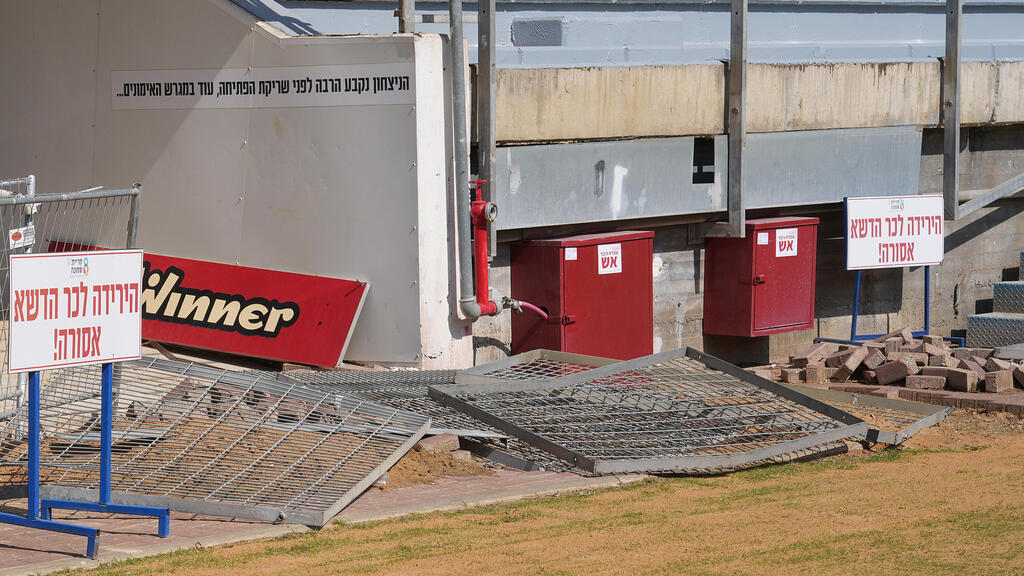
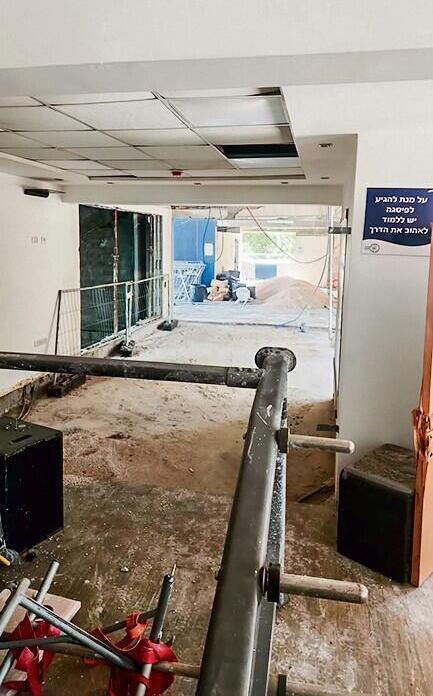
Kiryat Shmona, which trained at the municipal stadium last season and played in Netanya, is no longer training in the city, and instead of grass, the field now has only dirt. The stands have no seats, the locker rooms are far from ready, and the bathrooms and showers are undergoing a prolonged renovation.
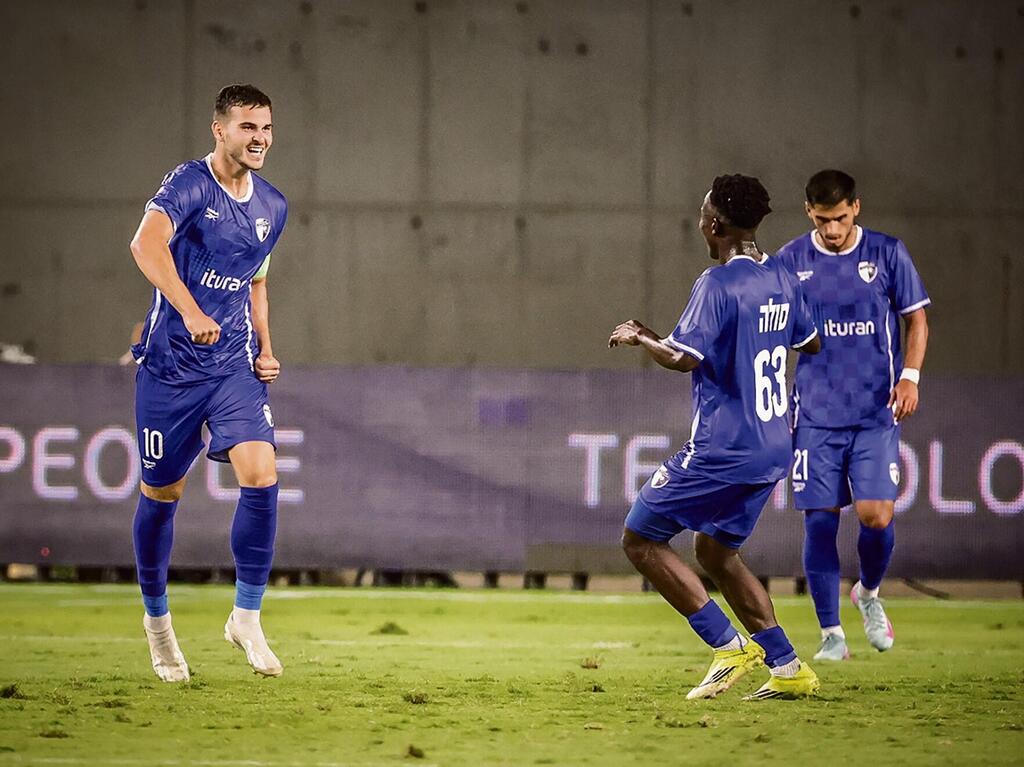
Kiryat Shmona players hope to return to their home field soon
(Photo: Oz Moalem)
Even more concerning is the lack of manpower moving the work forward. During a tour of the stadium, only two workers could be seen and at that pace doubts over whether there will be a solution for the coming season are only growing.
Club officials refuse to speak on the record, but a source close to the team described the anger, disappointment and uncertainty felt by the club, players and fans: “What is happening with our stadium is simply an indescribable failure. We have no community. We train in Shefayim and play in Netanya for the fourth season already. If we changed the logo to Ironi Shefayim, it would be exactly the same. If I once imagined that soccer would be a moral, cultural and economic engine for the city’s rehabilitation, that is absolutely not the case. There is nothing. There is one worker with a drill. The situation is bad and serious, and we do not know when we will return, if at all. It is simply delusional. A project manager was appointed, but nothing is moving.”
Last season, the team began its training sessions in Kiryat Shmona, hosted its games in Netanya and spent weekends at a hotel in central Israel to prepare for its “home” games. March 10 was marked in highlighter in the club offices as the date of the return to the local stadium with the start of the lower division playoffs.
Severe economic consequences
(Photo: Eff)
But fate had other plans. Hezbollah resumed its attacks in early March, training was moved back to central Israel and the return to the team's real home was postponed. The team was supposed to resume playing under a limit of only 3,000 spectators, because only one stand was expected to be ready, while the rest of the renovation was supposed to be completed during the break.
A source close to the club said: “They are not working right now. There are no people. They replaced the architect and are waiting for new plans. The condition of the grass is bad, there are no seats in the stands, they tore apart the bathrooms, the showers and the gym — everything is destroyed.”
The contractor demands more
The economic consequences of the prolonged exile are extremely severe and, according to a club source, the costs reach about 4 million shekels per season. The amount includes hotels for players and staff, transportation, laundry services, rental of training fields - apart from Shefayim, which is provided by the Israel Football Association, and the cost of renting Netanya Stadium all for a team that is already struggling to bring in local fans who will buy tickets and support it.
Strangely, almost no one is willing to speak on the record. Everyone is afraid, the project manager needs approval from the municipality and the team is trying to avoid political battles — but off the record, everyone is disappointed in everyone else.
Serious damage to the building and infrastructure
(Photo: Effie Sharir)
A senior figure familiar with the details of the renovation explained the reasons for the ongoing delays: “When the fighting stopped several months ago and the workers returned, the contractor claimed that prices had risen and demanded an additional 20%. Because this is not a private business, every such demand requires committees, meetings, budget requests and an entire bureaucratic drag.”
Another major problem is delays in the global supply chain. Essential equipment such as seats and lighting is stuck at sea and is not arriving on time. Beyond that, the war damage turned out to be far worse than initially thought. “Pieces from interceptions got under the grass and caused very significant damage to the infrastructure,” the source explained. “We decided to do thorough work, not a Band-Aid that would require another renovation in two years. When you combine all these factors, you get serious delays.”
Among club officials, there is little optimism about the return. Cautious estimates suggest the team may be able to return to training around the end of September or mid-October at best, while a return to official home games may happen only at the beginning of next year.
Municipality: 'We hope to return in the coming months'
The municipality said in response: “These days, extensive work to restore and upgrade the municipal stadium is continuing at full pace under the direction of the mayor. As part of this, the grass and irrigation systems are being replaced, the stands are being renewed and about 5,400 new seats that will arrive from China are being installed, public restrooms are being dismantled and rebuilt, electrical systems are being replaced, entrance turnstiles are being installed and camera systems are being upgraded.
“During the work, war damage was discovered beneath the grass, which led to a decision to carry out thorough treatment of additional infrastructure. The delays do not stem from the project being halted, but from the planning complexity, along with rounds of fighting that caused work stoppages, longer delivery times for components and higher execution costs. The municipality hopes the grass surface will be ready for training in the second half of September, and hopes league games will return in the coming months, subject to approval by the authorized officials.”