


The NBA playoffs are so different from the regular season that they feel like an entirely different game — for fans and especially for players.
Suddenly, the whistles that blew every time a defender barely brushed his opponent fall silent. Every possession matters. Bodies hit the floor more often. Even the easiest shots stop falling. There is no room to breathe. It is difficult even for experienced players, and a system-wide shock for those without playoff experience.
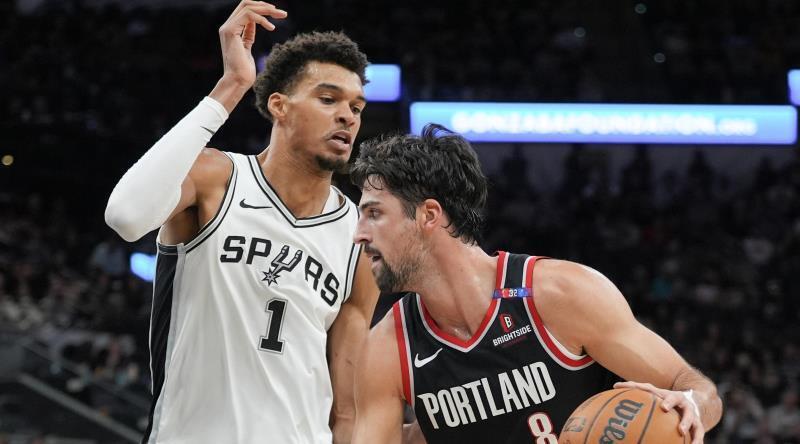
The first-round series between the San Antonio Spurs and the Portland Trail Blazers, set to begin Saturday night at the Frost Bank Center in eastern San Antonio, will bring together many players who have little idea what they are stepping into. That leaves a blank canvas, waiting for someone to define it.
The fact that the race to do so will be led on one side by a 7-foot-4 French “unicorn” with a wingspan nearing 8 feet, and on the other by a player from Israel born on a kibbutz, sounds both improbable and compelling. This is the NBA in 2026 — a global village of physical outliers, open to all.
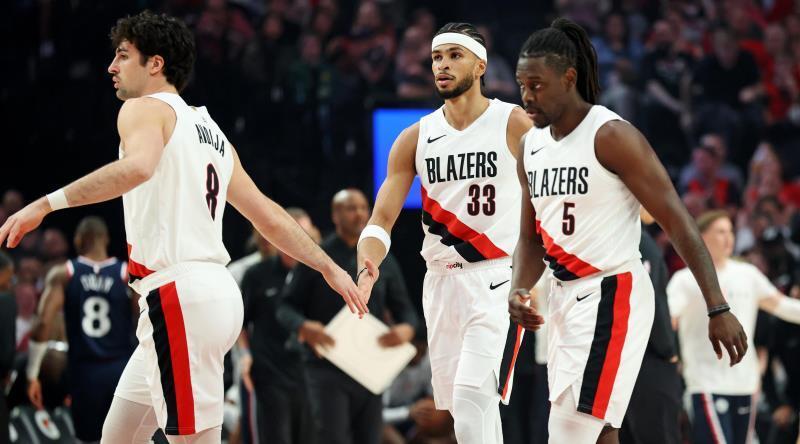
At this stage, no superlative seems excessive in describing Deni Avdija’s season. But the win over Phoenix in the play-in tournament, which sent Portland to the playoffs for the first time in five years, stands as a defining career moment.
A performance like that, in a do-or-die game, with full control over everything happening on the court and a clear sense that without him the team would not have come close — elevates a player, even one already enjoying an All-Star-caliber season.
In the days since Portland’s win in Phoenix, there has been a noticeable shift among NBA analysts and fans across television and social media — the platforms that shape the conversation — toward a consensus around Avdija. “He’s better than Ja Morant, and it’s not even close,” one widely shared comment said, a statement that would have sounded absurd a year ago but is now met with nods.
What truly cemented it was Avdija’s game-winning shot. Discussions about greatness in the NBA revolve around clutch moments and decisive baskets. Fair or not, those are what define elimination games. A day after Portland’s win, Stephen Curry delivered a similar moment for the Golden State Warriors against the Los Angeles Clippers — albeit in his own unique fashion — and suddenly Avdija found himself part of that conversation.
The narrative that Portland would be several places lower in the standings without Avdija appears accurate. He looks like a franchise player, though not a lone one.
Under interim coach Tiago Splitter — with Chauncey Billups no longer in the role — the Trail Blazers have become a tough, aggressive team. They are among the league’s best in offensive rebounding and generate the highest percentage of their points from second-chance opportunities.
(Photo: Reuters)
Portland has won 10 of its last 14 games and, since the All-Star break, is tied with San Antonio as the league’s third-best defensive team. The roster is finally healthy. Many players are high draft picks. Even veteran Jrue Holiday appears effective, and he brings more playoff experience than the rest of both rosters combined.
Portland also has, unexpectedly, a player capable of challenging Victor Wembanyama.
Wembanyama did not play in any of the three regular-season meetings between the teams — San Antonio won twice, while Avdija recorded a triple-double in Portland’s victory — leaving little precedent for how he will match up with Donovan Clingan, a 7-foot-2 center who has had a breakout season.
Clingan may not match Wembanyama in height, flexibility or skill, but he brings nearly 290 pounds of strength and no fear, fully aware this is the opportunity of his career.
Any matchup between Wembanyama and a larger, stronger center tends to be compelling. Clingan, a national champion with UConn, can create real problems in the paint on both ends, and his ability to shoot from 3-point range could force Wembanyama away from the basket.
For Portland to have any chance in the series, Clingan — along with Robert Williams, another physically imposing presence — must at least partially neutralize Wembanyama or force him into foul trouble. One advantage for Portland is that it has little to lose. Another is that San Antonio has everything to lose.
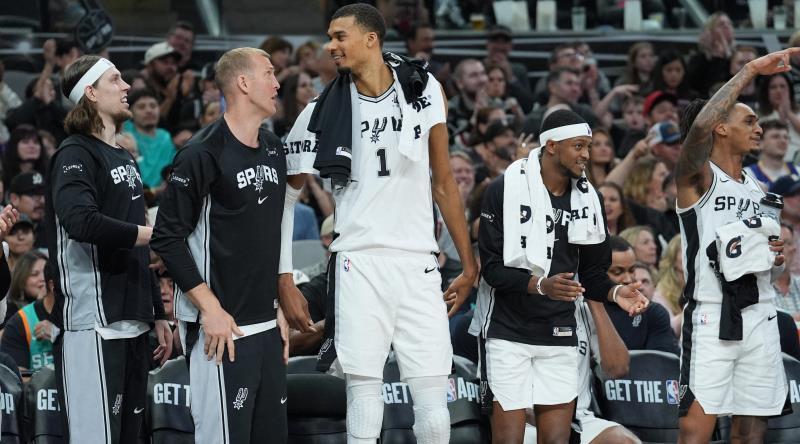
Wembanyama enters his first playoffs as one of the most popular athletes in the United States. Beyond the labels — unicorn, alien — he has captivated the league. Still early in his career, he shows unusual maturity, curiosity and openness, engages easily with fans and media, and approaches every game with seriousness.
On Thursday, he received the Magic Johnson Award, given to a player who combines excellence on the court with cooperation with media and fans. He faced little competition for the honor and is widely liked. That popularity brings expectations — and pressure he has yet to experience.
(Photo: Reuters)
San Antonio was not expected to be this good this soon. The team won just 34 games last season, and the timeline pointed to another year, possibly two, of development. But Wembanyama said recently that during training sessions with Hakeem Olajuwon, he was told: “You don’t have to wait to win. You can do it now. If you’re that good, you will make your team win anyway, at any age.”
Wembanyama appears to believe that, and his play this season supports it.
What remains unclear — even to him — is how the Spurs’ young roster will respond to playoff reality, where every game is a grind and there are no easy matchups to recover after a tough loss.
San Antonio is the second-youngest team in NBA history. The only rotation players with more than seven playoff games of experience are reserves Harrison Barnes and Luke Kornet. Wembanyama, Stephon Castle, De’Aaron Fox, Devin Vassell, Keldon Johnson and Dylan Harper are all entering unfamiliar territory.
This may be the central question of the playoffs: whether a young, inexperienced team that won 62 games — including four of five against Oklahoma City — can translate that success into the postseason.
The logical expectation is a 4-0 sweep, or at most 4-1, in favor of San Antonio. The Spurs appear too deep, disciplined and versatile, with multiple defensive options to throw at Avdija, who is likely to draw fewer free throws than in the regular season.
Castle, for example, may be shorter than Avdija, but he is physically imposing, requiring repeated effort to get past. And even if that happens, waiting in the paint is a player widely expected, if healthy, to soon win both the MVP and Defensive Player of the Year awards in the same season.
In short, Portland would need a near-miracle — the kind that becomes the subject of documentaries. It is difficult to believe it will happen. But there is little chance Avdija agrees with that assessment.