

Deni Avdija ended last season on April 5, 2025, with 37 points in Portland’s loss to Chicago. By then, after a difficult adjustment period in his first year with the Trail Blazers, he had spent two months establishing himself as the team’s best player. The expectation was that he would keep improving and that Portland might take a modest step forward after finishing near the bottom of the Western Conference.
On April 28, 2026, he ended another season in a completely different place: an All-Star, third in Most Improved Player voting, a realistic candidate for an All-NBA third-team spot and the centerpiece of a team that beat every projection. Portland did not just fight for a play-in spot. It reached the first round of the playoffs.
That is the main takeaway. In one year and 23 days, Avdija became a superstar and helped make Portland a team the rest of the league has to take seriously.
That should shape how the season is judged. San Antonio was simply too good for Portland, closing out the series 4-1 with a 114-95 win. Had Victor Wembanyama not suffered a concussion in Game 2, the sweep many predicted might have happened. The Spurs were a far stronger team, with the look of a franchise headed for something big.
Still, Portland’s strong finish to the regular season, combined with the uncertainty around Wembanyama’s health, may have created a misleading sense of disappointment about the way the series ended. It should not. Portland got everything it possibly could out of the 2025/26 season. This was a major success.
Avdija finished the series with 22 points and averaged 22.2 points, 6.0 rebounds and 4.6 assists in his first playoff appearance. Even in a matchup Portland was never expected to win, he was clearly the Blazers’ best player.
Longtime Portland broadcaster Kevin Calabro captured the scale of the change when he recently said, while still sounding as if he was trying to contain his excitement, that “the trade that brought Avdija to the team was one of the five greatest in franchise history.”
Here are the lessons Avdija, and everyone watching him, learned this season.
Lesson 1: he now gets star treatment
Avdija has entered the NBA elite. You could see it on the road, where opposing broadcasts focused on him. You could see it in the way rival coaches sent two defenders at him as soon as he crossed half-court, trying to stop him from starting Portland’s offense. You could see it in the stands, too.
The final game in San Antonio was the kind of night every real star eventually experiences. An entire arena booed him, screamed at him and even waved a sign mocking his broken tooth. Avdija answered by cupping his ears and giving a thumbs-down gesture, a small exchange that added another bit of edge to his growing profile.
The foundation of his rise is simple: speed, strength and relentless drives to the basket. But if it were that easy, more players would do it this well. Avdija used that combination only sparingly in his first five NBA seasons. This year, he turned it into his identity.
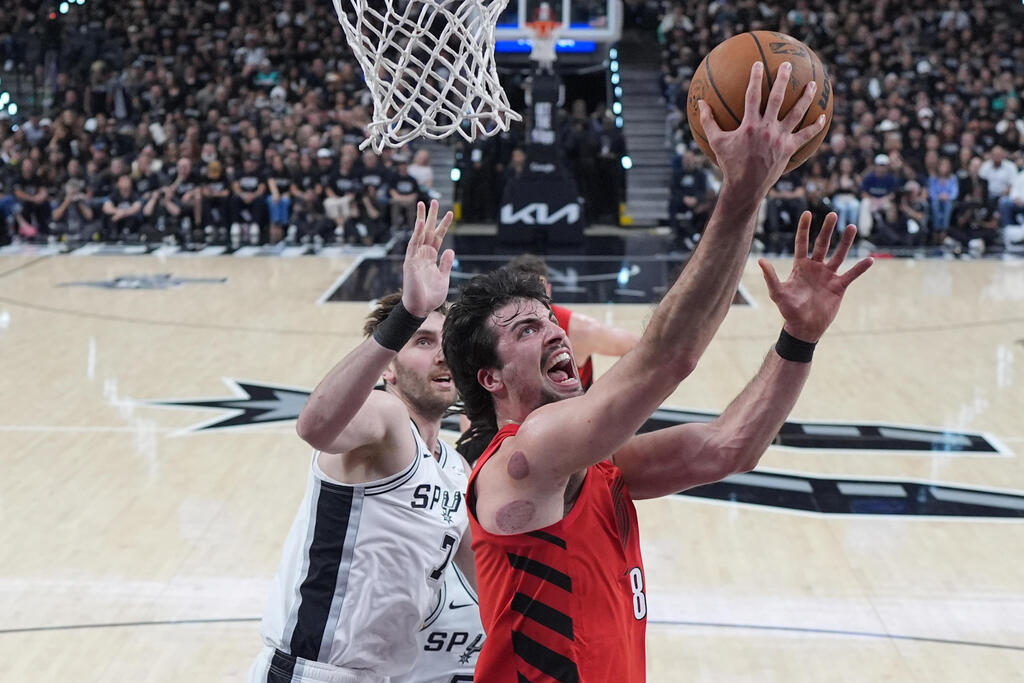
When he attacks the paint, three things can happen. If the defense is late, he gets an easy basket. If he absorbs contact and gets the whistle, he goes to the free-throw line. Avdija ranked near the top of the league in and-one plays and was among the leaders in free throw attempts and makes.
The third option is the pass. Avdija led the NBA this season in assists after drives, despite playing on a team with serious outside-shooting problems. That works because he is not just powerful. He is also an excellent passer and a high-level decision-maker.
In an NBA increasingly built around 3-point shooting, a player who attacks the rim with that much force and intelligence stands out even more. Avdija’s drives lifted him into the league’s top tier and helped turn a rebuilding team into a winning one.
Lesson 2: he adjusts quickly
Avdija also learned what happens when the league starts game-planning for him. The NBA is a constant battle of adjustments, and the good news for Portland is that by the end of the season, Avdija still looked one step ahead of most defenses.
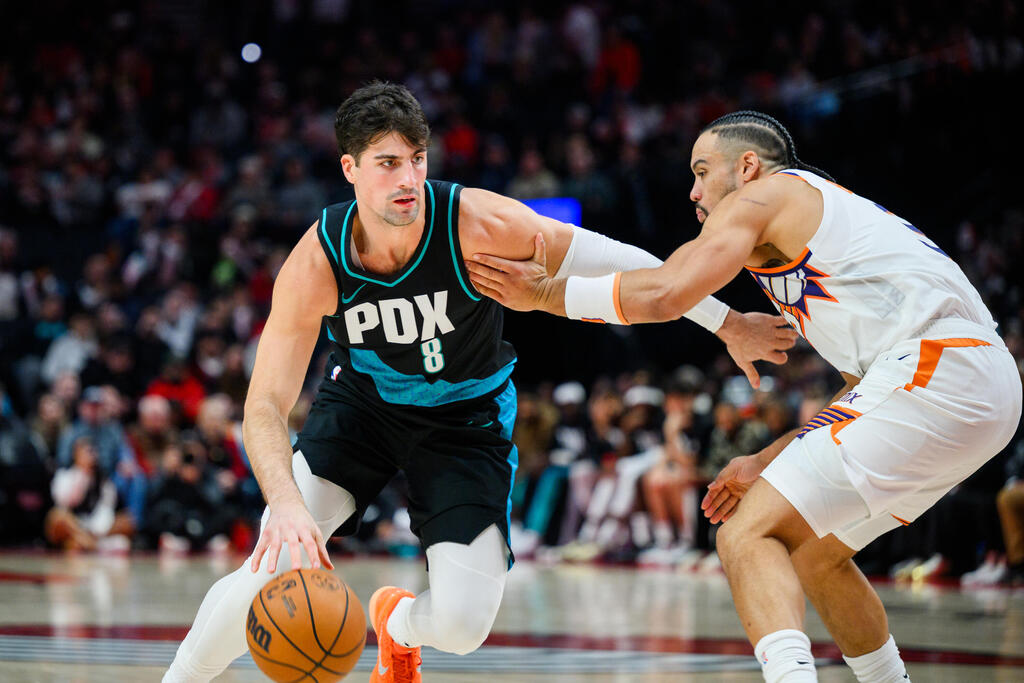
Opponents know he prefers driving right and finishing with his right hand. They fight to take away the first step that lets him explode downhill from the perimeter. Early on, that gave him trouble. Over time, he adapted, attacking from the left side and still finding ways to finish with his right around the rim.
Some teams also waited for him in the paint, trying to cut off his path to the basket. There were stretches when he was blocked often and struggled to score inside. But the adjustment was visible from game to game. By the end of the season, he had added more patience near the rim: stopping, faking, shifting his body and throwing shot blockers off balance. That helped him create cleaner looks and draw more fouls.
The only player he could not solve was Wembanyama, who rejected him emphatically in the final game. Then again, no one really solves Wembanyama.
(Photo: AP Photo/Molly J. Smith)
Another adjustment came in Portland’s lob game. For much of the season, several possessions each night ended with Avdija throwing alley-oops to rookie center Donovan Clingan. By the playoffs, that option had nearly disappeared. Defenders read Avdija’s passing angles, got hands on the ball and pushed Clingan farther from the rim.
Avdija responded by turning more often to Robert Williams, Portland’s athletic but injury-prone backup center, who was the one supporting player who performed well throughout the series. Williams can reach passes Clingan cannot and moves better in tight spaces, giving Avdija another way to create near the basket.
That is the cycle: attack, adjust, counter, repeat.
Lesson 3: he is not afraid of playoff physicality
De’Aaron Fox broke Avdija’s tooth earlier in the series with an elbow to the face on a made basket. After a video review, the officials ruled that Avdija had committed the foul and turned the play into a 3-point opportunity for San Antonio.
In the final game, with the result already decided, Fox knocked Avdija to the floor on a drive with an outstretched arm that caught him near the throat. Avdija jumped up immediately and tried to confront him, and it took Vit Krejci and Clingan to hold him back.
The officials did not call a flagrant foul. Avdija received the free throws, but only after being assessed a technical foul. It was the second straight game in which he got caught in that kind of exchange, after a confrontation with Stephon Castle in Game 4 that began when Castle shoved the ball into Avdija’s chest.
Welcome to the NBA playoffs. This is the physicality Avdija spoke about afterward, and it is exactly the kind of thing that often shocks young teams when they first reach this stage. San Antonio did not just defend hard. Its players punished Avdija physically and made Portland work for every clean look.
(Photo: Reuters)
That should not scare the Blazers. It should harden them. Toumani Camara, a player who usually thrives on contact but struggled badly in the series, will have an entire offseason to carry that lesson with him.
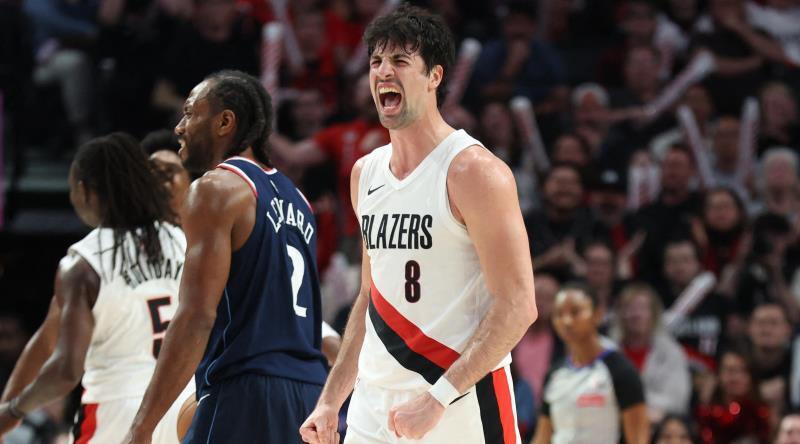
Avdija, for his part, seemed to grow in that environment. While some of his younger teammates faded, he looked like a leader. Portland now knows it has someone it can trust in those moments.
“This experience was needed for me and the whole team,” Avdija wrote after the season ended. “To fight together and learn about the physicality in the playoffs. I enjoyed it a lot. We left everything on the floor, have to stay determined and do it together.”
Lesson 4: there are still clear areas to fix
Now comes the work. Damian Lillard is expected to recover in time for next season, Portland should be more experienced and the roster may get deeper. But Avdija’s focus has to be on the parts of his own game that still need improvement.
The turnovers, 3.8 per game, are not ideal, but they come with the role. A player who handles the ball as much as Avdija will give it away sometimes. That number can come down, but it is not the biggest concern.
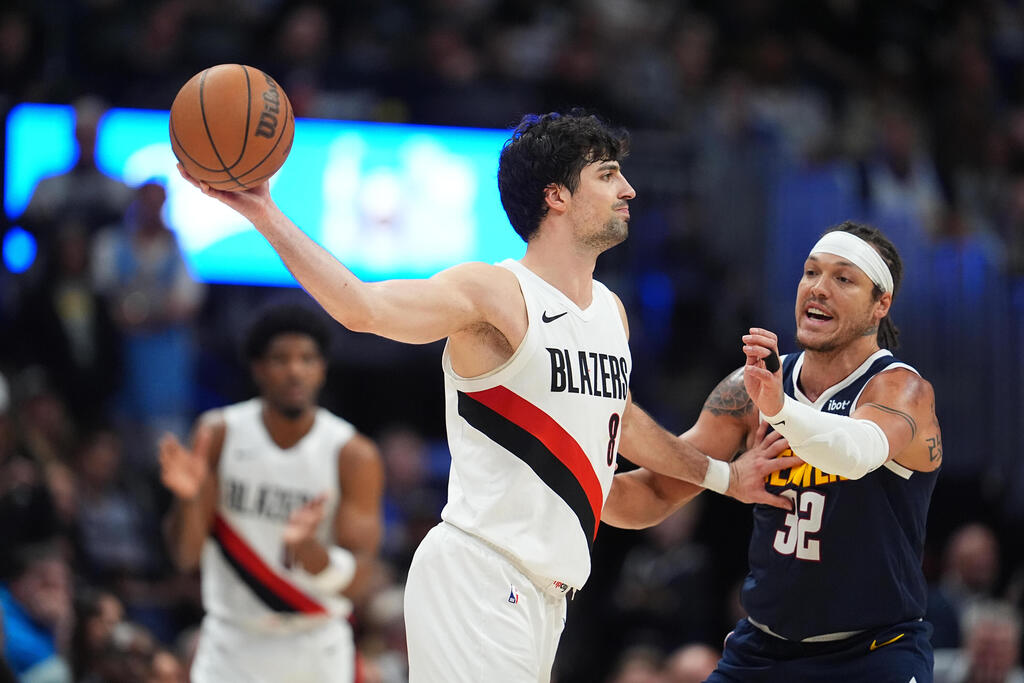
The 3-point shooting is. After two years of progress, Avdija fell back to 31.8% from beyond the arc. The decline began after he returned from injury, and it may have been connected to the back strain that appeared to affect his shooting motion. His shots began falling short, and most of the ones that went in were catch-and-shoot attempts.
(Photo: AP Photo/David Zalubowski)
The self-created 3-pointer, a shot he had developed and that helped fuel his rise, largely disappeared. At six attempts per game, the percentage has to be better. He went 2 for 18 in three February games, and in March he shot just 20.6% from deep. That cannot continue. If defenders are going to keep respecting his drives, he needs to shoot well enough to make them pay for backing off.
The second issue is how he handles the officials. Dwyane Wade raised it twice during a broadcast, saying in different ways that if Avdija wants respect around the league, constant complaining is not the way to get it.
Wade is not the only one who has noticed. Avdija argues with referees often, reacts strongly to contact and sometimes seems to expect a whistle before it comes. Whether that comes from passion, frustration or gamesmanship, the perception is already forming among fans, commentators and officials. His next stage of growth has to include better composure in those moments.
Lesson 5: set your alarms
You have half a year to get used to waking up at 4 a.m. again. Next season should be worth it.