

The past two years have felt like “an entire lifetime,” says Sheina Vaspi, 24, the Israeli alpine skier who will represent the country at the 2026 Paralympic Winter Games in Italy, opening March 6. The trauma of October 7 affected nearly every part of her life — including her competitions. She lost a cousin killed in Gaza, then her grandmother, and later suffered a major injury of her own. Vaspi, who lost her leg in a car accident at age three, realized that the best way to reach her peak for Milan–Cortina was, paradoxically, to step away.
In Thailand, where she underwent the physiotherapy that literally and figuratively put her back on track, she was finally able to process everything she had been through. Thanks to that pause, she feels ready again to represent Israel.
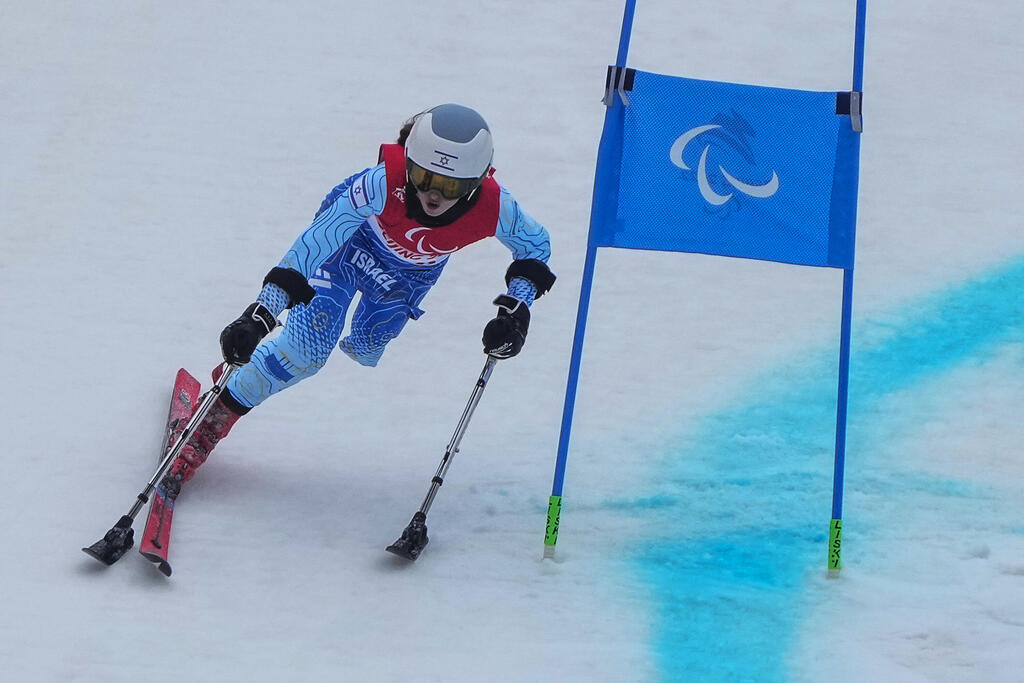
“It was already hard enough for me to leave everything in Israel and keep training abroad,” she recalls. “I had to separate myself from it all, and it felt like sport shrank in importance compared with what was happening in Israel and in my family — with my cousins fighting. I needed to gather strength, to find a sense of purpose that would give everything greater meaning.”
A road full of obstacles
Vaspi will not only be Israel’s sole representative in Italy — she is the only Israeli, man or woman, ever to compete in the Paralympic Winter Games, after making history at Beijing 2022. Sheina (“beautiful” in Yiddish), the name chosen by her Chabad parents, is religiously observant; she finished 15th in alpine skiing but had to skip the slalom because a schedule change pushed the race into Shabbat.
This time, she says, the mission goes far beyond sport. “I want to put the Israeli flag everywhere I can, even though at first I was very worried because of rising antisemitism. I was asked to hide the flag, and that’s really hard — even if it’s only in certain places or for certain periods. It was one of the challenges I faced right at the start of the war, when I was training in the U.S. And then I was told about my cousin, Arnon Benvenisti Vaspi, who was killed on November 20, 2023. I’m just finishing a visit to Israel now, and the purpose was his memorial. He served in the Givati Reconnaissance Unit and was killed at 26. I drew strength from his courage — from the stories I heard — and brought that into my sport. He was an athlete too.”
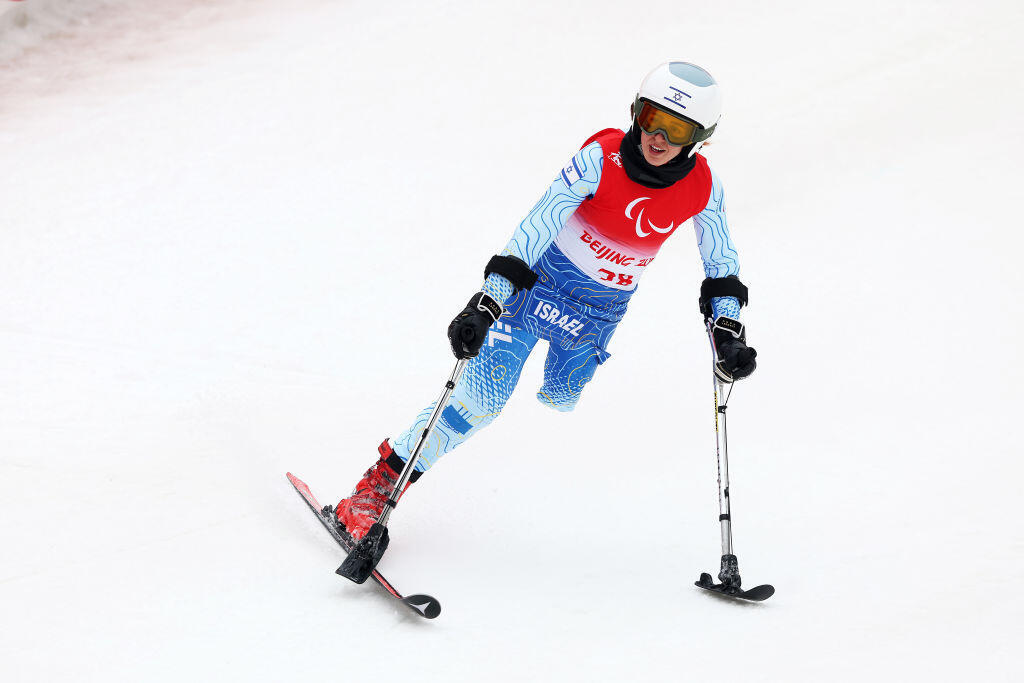
Sheina Vaspi
(Photo: Alexander Hassenstein/Getty Images)
In what sport?
“Horses. Horseback riding. I carry many of his character traits with me today. We are a third-generation bereaved family. My grandfather, Yoav Vaspi, was killed in the Yom Kippur War, and Arnon’s uncle — after whom he was named — fell in the First Lebanon War. It was hard enough telling my grandmother and aunt and making sure they didn’t collapse.”
Were you able to make it to the funeral?
“No. They called me on video. I connected to Wi-Fi on the flight and forced myself to stop crying. I was sitting between two passengers who looked uncomfortable — as though they were feeling my pain too. After the shiva, I decided to return to training, because that’s who Arnon was. He pushed for excellence. He had a saying that stayed with me this whole time: ‘What comes easy, goes easy. Everything takes persistence, hard work, and in the end it pays off. Those who keep going, work hard, and don’t give up get results.’ From that week of mourning I found so much strength to go back, and the season started off really well.”
Like the fourth-place finish in the World Cup.
“Just a few hundredths separated me from the podium. After that race I went back to training, and in January I crashed going 120 km/h and tore a ligament in my knee. My season was over. I came back to Israel — and this time I had to face losing my grandmother, who passed away a month after the injury. She had been devastated by Arnon’s death, and she fell ill. We were very close. Very.”
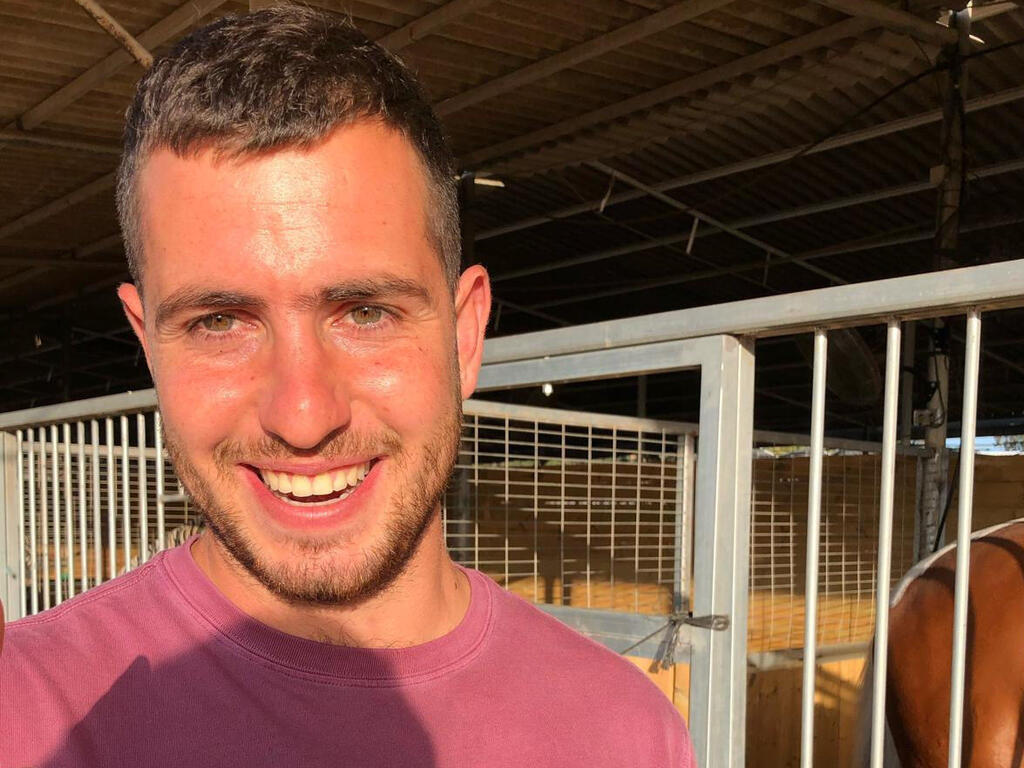
Capt. Arnon Benvenisti Vaspi
(Photo: IDF)
How so?
“I lived with her the past six years, in Yesod HaMa’ala. Every departure for a race and every return was from her home — everything went through her, with her. She came to competitions; her dream was to be with me at the Paralympics. The injury gave me the last month of her life, to be with her — that was a huge gift. It was a very big challenge to absorb yet another loss while also dealing with an injury at the most critical time for preparations.”
“I didn’t undergo surgery — they decided on rehabilitation — and I looked for a physiotherapist in Thailand. After the shiva, I flew there. It was too hard to be in my grandmother’s house; it put the loss right in front of my face. My time in Thailand was a mix of inner quiet, escape and focusing on rehab so I could come back as the best version of myself.”
Vaspi feels she has become a better athlete since Beijing. “I know what to do if the day doesn’t go my way. Sport and my personal losses became intertwined, and that helped me professionally — knowing how to be mentally strong in competitions, putting pressure in perspective.”
What’s the biggest professional difference?
“In 2022, my toolkit was very limited, and the goal was simply to raise the flag. Since then, I’ve made a major leap. We’re not a winter-sports country, so I’m surprised at the level I’ve reached. I’m closing the gap and proving that I, too, belong on the mountain.”
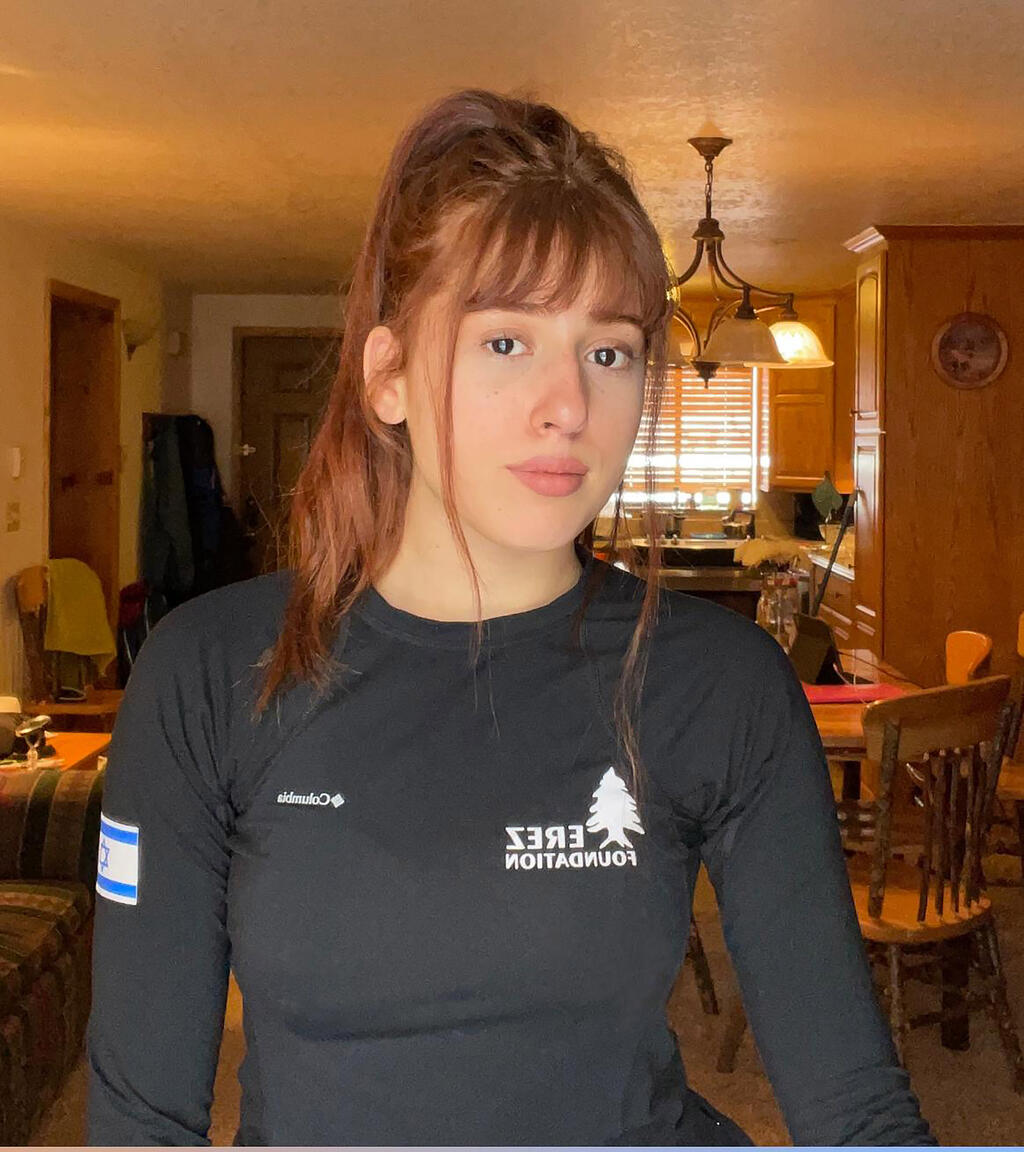
Sheina Vaspi
(Photo: Courtesy)
What do you hope to achieve in Italy?
“It’s crazy that I even made the qualifying criteria after everything I went through. Through the Foundation organization I got into skiing, and without them — and without my family pushing me even when I was alone abroad — I wouldn’t be anywhere near this point. I want to go as high as possible, to show everything these years have built. And when I do — I believe the sky’s the limit.”
Admires the wounded
Faith, Vaspi says, is a central part of her life. Still, although she skis in a skirt, she does not define herself as Haredi (ultra-Orthodox). “I see myself as a God-fearing Jewish woman, very believing, knowing that an inseparable part of my path comes from the Lord, who accompanies me — and from Chabad houses around the world,” she explains. “I’m there on Shabbat, on holidays, I keep kosher, I speak Hebrew. Even if you had asked me four years ago about the word ‘Haredi,’ that wouldn’t have been the definition.”
She is the first athlete to ski wearing a skirt. “It’s a title I’m very proud of. It’s also a message to girls from that world that anything is possible — that the world of holiness can enter sports, and it’s not a contradiction. I stood by my values, my faith and my principles.”
Her observance of Shabbat prevented her from competing in one of the events at the previous Games. “I want to believe I won’t have to face that test again. There were competitions scheduled for Shabbat that were postponed — God postponed them, I have no other way to explain it. Shabbat is part of my Jewish pride. My coach is a practicing Christian, and he respects religion. So do my sponsors — the Israel Paralympic Committee, the Disabled Sports Association and the Foundation organization — all of whom support me and stand behind me.”
Many soldiers lost legs during the war.
“I’ve met wounded soldiers, and I admire them. They’re fighters, and if they look at me and it gives them strength — then I’m fulfilling my mission.”