

Kathleen Krüger is set to become the first woman to hold a senior sporting director role in the Bundesliga, the latest in a series of breakthroughs for women in soccer.
Hamburger SV is moving to appoint Krüger, a longtime Bayern Munich executive and former Bayern player, to its top sporting post. Bayern confirmed she is in talks with Hamburg, and German reports said the club’s supervisory board has backed her for the job.

The expected appointment comes during a remarkable period for women in the sport. FIFA this week cleared the way for Afghan women players who fled the country after the Taliban returned to power in 2021 to represent Afghanistan in international competition.
In Germany, Marie-Louise Eta recently became the first woman to lead a men’s team in the Bundesliga when Union Berlin appointed her interim coach. Tatjana Haenni took over as RB Leipzig’s chief executive Jan. 1, becoming the first woman to hold that role at a Bundesliga club.
Now Krüger, 40, is poised to move into one of the most powerful decision-making jobs in German soccer.
The comparison has already been made in Germany to Jackie Robinson breaking baseball’s color barrier in the United States. It is an imperfect one. Robinson’s arrival in Major League Baseball in 1947 was not only about talent; it was also a test of whether a Black player could withstand racist hostility in a segregated sporting culture.
Eta’s appointment carries some of that burden. She is not only coaching a team. She is also being watched as a test case for whether a woman can operate under pressure in one of Europe’s most male-dominated leagues, especially after defeats.
Krüger’s case is different, and potentially more significant. Eta’s role is interim. Krüger would not be managing from the sideline; she would be helping set policy, shape the squad, influence hiring and define the sporting identity of one of Germany’s most historic clubs.
Krüger played for Bayern’s women’s team from 2003 to 2009, making 33 Bundesliga appearances and scoring once. After briefly studying international management, she accepted a job at Bayern as assistant to the sporting director. In 2012, she became team manager of Bayern’s men’s team, a rare position for a woman in the Bundesliga.
Her duties were not glamorous, but they were central to Bayern’s day-to-day operation: travel, schedules, fines, sponsor appearances, nutrition, logistics, buses, protocols and, during the pandemic, health rules. She later moved into Bayern’s organization and infrastructure department and in 2024 was given a senior role in sport strategy and development.
Inside Bayern, Krüger built deep trust with players and coaches. She was the only person outside the squad included in the players’ WhatsApp group, German reports said. In a 2020 club profile, she said she smiled and kept quiet as funny photos and jokes moved through the chat.
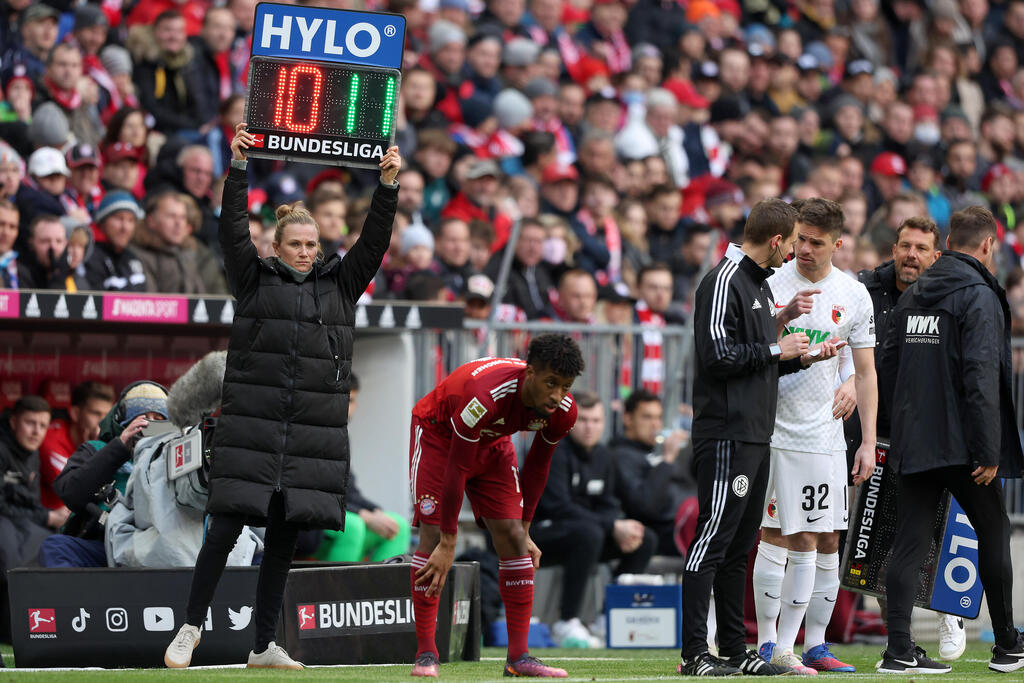
(Photo: Alexander Hassenstein/Getty Images)
For years, she was considered part of Bayern’s internal fabric. Players and coaches viewed her as a problem-solver, organizer and steady presence behind the club’s run of domestic and European titles.
Hamburg’s search reportedly included four candidates, three of them men. A journalist who covers the club told the original author that Krüger’s selection was driven primarily by professional considerations, especially her recent work connecting Bayern’s senior team with its youth setup.
Her appointment would still carry obvious symbolic weight. German soccer remains a deeply masculine arena, and senior sporting posts have long been dominated by men. Choosing Krüger gives Hamburg a modern and newsworthy profile, but it also hands the job to someone with more than 15 years of experience inside the most successful club in Germany.
Women’s soccer has traveled a long road to reach such moments. In England, women were effectively banned from playing on Football Association-affiliated grounds from 1921 until 1971 after the women’s game had drawn major crowds following World War I.
More than a century later, the breakthroughs are arriving quickly: Afghan women fighting for the right to play under their country’s name, Eta leading a Bundesliga men’s team, Haenni running RB Leipzig and Krüger preparing to take charge of soccer strategy at Hamburg.
Krüger left little mark as a player. There were hundreds like her on the field. But if her move to Hamburg is completed, her management career will stand as one of the biggest breakthroughs yet for women in men’s professional soccer.