

Las Vegas is used to spectacle, but even by its standards, the Enhanced Games offered something sport had never seen before: a competition in which performance-enhancing substances are not only permitted, but openly embraced.
The event, already nicknamed by critics the “Steroid Olympics,” made its debut in a casino parking lot in Las Vegas, bringing together swimmers, sprinters and weightlifters under rules that reject the central premise of traditional anti-doping sport. Organizers say they are creating a transparent, medically supervised alternative to a system they view as hypocritical. Critics say they are staging a dangerous experiment with athletes’ bodies.

The biggest payday went to Greek swimmer Kristian Gkolomeev, who won the men’s 50-meter freestyle in 20.81 seconds, beating the official world record of 20.88 set by Australia’s Cameron McEvoy. The result will not enter the official record books because the Enhanced Games permits substances banned by the World Anti-Doping Agency and also allows swimmers to use polyurethane “super-suits” banned in elite competition since 2010.
Gkolomeev, a former University of Alabama swimmer who competed in four Olympics without winning a medal, earned $250,000 for winning the race and a $1 million bonus for breaking what organizers called a “world record.” Reuters reported that he had also received a $1 million bonus last year for a 20.89-second swim in a super-suit.
“Great race. I had a lot of fun. This is amazing,” Gkolomeev said, according to Reuters. “I had a mistake on the break-out and I got a little bit nervous, but then the rest of the swimming was good, so I got it.”
Of the prize money, he added: “I’m going to say it’s not bad at all. This is going to change my life to the good, for sure. It’s a big help for me and my family. And yeah, I’m going to continue next year. Maybe I’ll break it again.”
The Enhanced Games were founded by entrepreneur Aron D’Souza and later led by CEO Maximilian Martin, with backing from high-profile investors including Peter Thiel and Donald Trump Jr.-linked firms. The project presents itself not just as a sports competition, but as a wider attempt to recast the use of performance-enhancing substances as part of a new culture of human performance, technology and medical supervision.
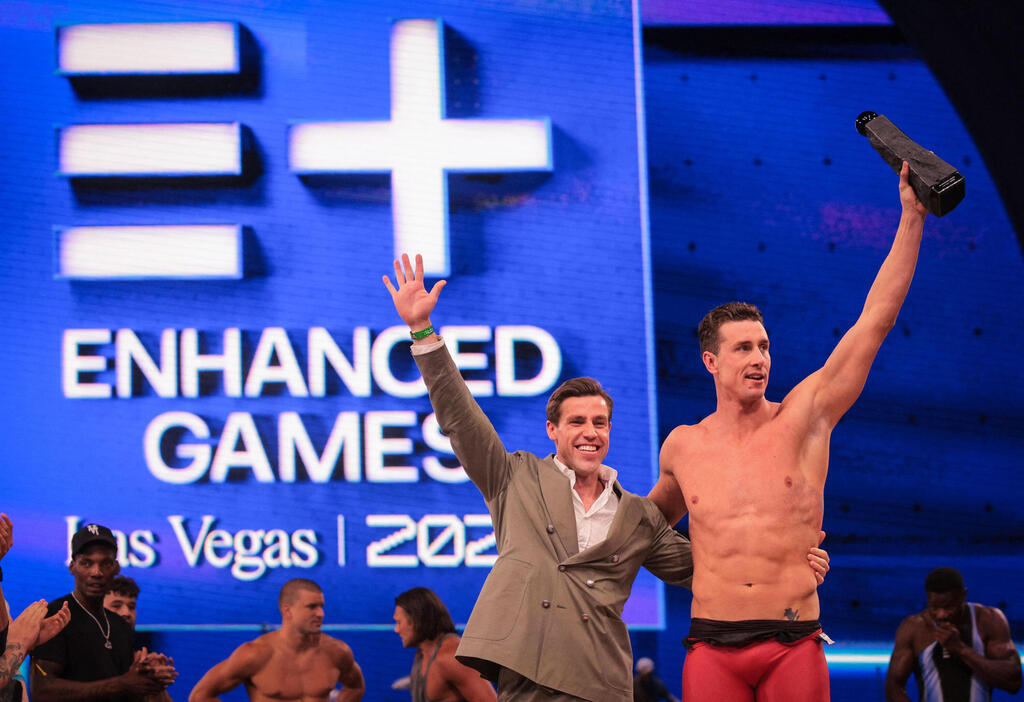
Greek swimmer Kristian Gkolomeev
(Photo: ETIENNE LAURENT / AFP)
In practice, the event challenged nearly every norm of modern elite sport. The Games endorse the use of substances banned by WADA, while organizers argue that prohibition has failed, that many athletes already use such substances secretly and that supervised use is safer than underground doping. WADA and other sporting authorities strongly reject that claim, warning that the model risks athletes’ health and could encourage young people to experiment with dangerous substances.
Health experts and anti-doping officials have warned of risks associated with anabolic steroids, testosterone, growth hormone and other banned substances, including cardiovascular damage, hormonal disruption, infertility, aggression, anxiety, depression and, in some cases, death. WADA has also warned that “stacking” multiple substances, a practice some Enhanced Games athletes have discussed openly, creates risks whose long-term effects are not fully understood.
World Aquatics has condemned the event, calling it a “circus, built on short-cuts,” and has moved to bar swimmers, coaches and officials who participate in or support competitions that embrace prohibited substances or methods.
Still, the money on offer has drawn athletes who say the traditional Olympic system does not reward them adequately. British Olympic silver medalist Ben Proud, who joined the Enhanced Games, has acknowledged the financial incentive behind his decision. In earlier comments, he said he could earn in one Enhanced Games competition what would take 13 consecutive years of world championship victories to match.
Proud, who won Olympic silver in the 50-meter freestyle at Paris 2024, reportedly received $250,000 for participating. British swimming officials warned that he would not be able to represent Britain again at the Olympics if he competed in the Enhanced Games.
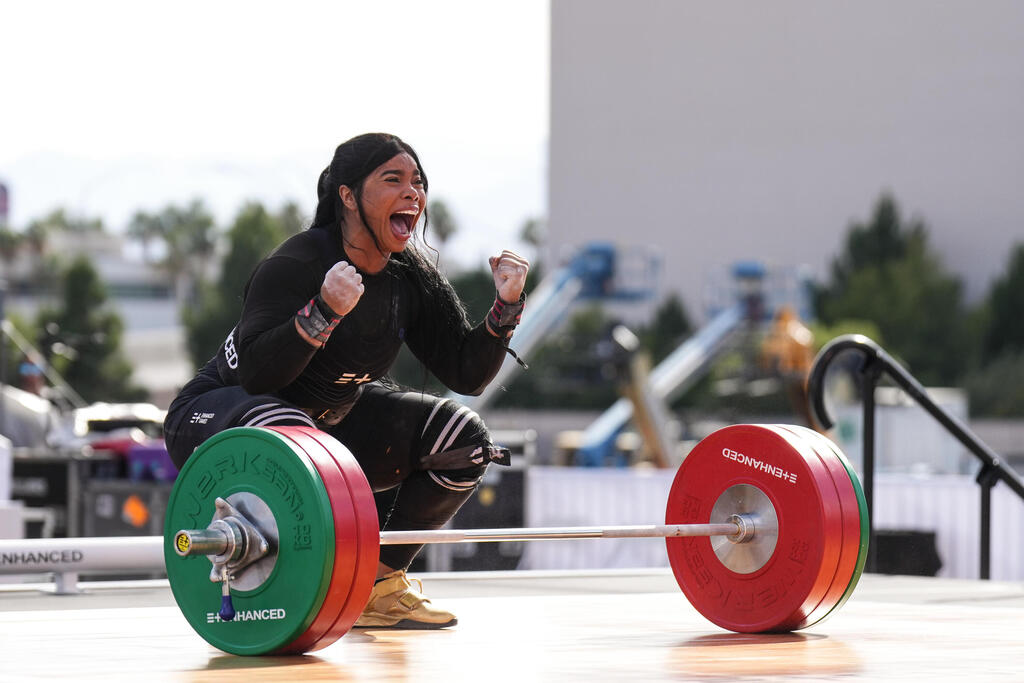
(Photo: AP Photo/Jae C. Hong)
The Las Vegas debut, however, did not produce the flood of records organizers had promised. American sprinter Fred Kerley, a former world champion in the 100 meters, won the race in 9.97 seconds, far short of Usain Bolt’s 9.58 world record and slower than Kerley’s own personal best of 9.76. Kerley, who is banned from World Athletics competition for two years for failing drug-testing protocols, said before the Games that he was racing clean and hoped to threaten Bolt’s mark.
After multiple false starts delayed the sprint, Kerley criticized his rivals.
“You saw that, a lot of false starts, a lot of jumping. A lot of people don’t want to run the heats and everything. They’ve got to do better than that,” he said, according to Reuters.
Some athletics fans mocked the result online, and the Guardian reported that the inaugural event ended with only one unofficial record broken, despite organizers’ sweeping claims about the future of human performance.
Other athletes sought to frame the Games as a more honest alternative to the hidden use of banned substances in traditional sport. American sprinter Shania Collins told the BBC that participants were being upfront about the rules they were competing under.
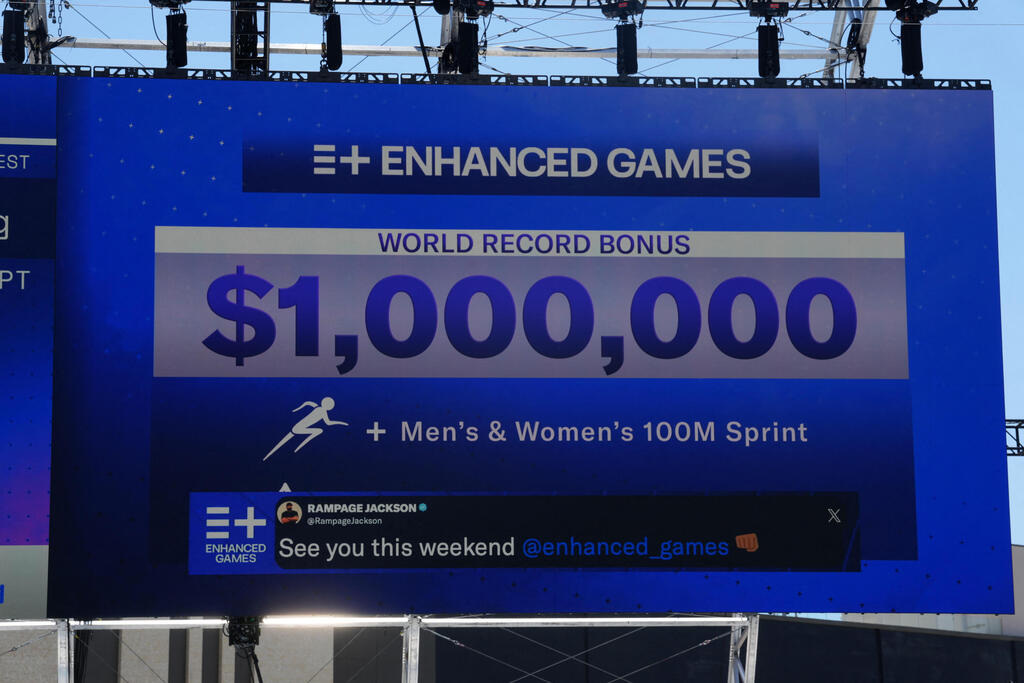
(Photo: Kirby Lee-Imagn Images)
“We’re open, transparent and say everything upfront,” she said. “So how can anyone question our integrity when we’re at least telling the truth?”
The message has not persuaded the official sports world. Anti-doping agencies, Olympic bodies and many athletes have warned that the Enhanced Games normalize drug use and undermine the meaning of fair competition. WADA has called the concept “dangerous and irresponsible,” while athletes’ commissions from the IOC and WADA described it as a betrayal of core sporting values.
Organizers argue the opposite: that the old system is already broken, that performance enhancement is widespread, and that athletes should be paid far more for pushing human limits. But the debut in Las Vegas showed both the appeal and the weakness of that promise. There was real money, real controversy and one unofficial record. There was also a 100-meter race that did not come close to the world’s best, empty official record books and a sport world still recoiling from the idea that the future of competition may be built not around clean performance, but openly enhanced bodies.