

When Aya Haviv Buck steps onto the field, there’s a sense that something special is happening. At just 16, the Israeli teenager—who grew up in Bangkok—already looks like a player destined to go far. By day, she’s a student with a packed academic schedule; by evening, a soccer player. This week, she signed with the girls’ team of England’s West Ham United, with dreams of making it to the senior squad and one day representing Israel’s national team.
For Aya, soccer is more than a passion—it’s part of her identity. A language that connects her Israeli roots, her life in Thailand and her future in England. In a world still learning how to center women in sport, Aya has already claimed her place on the pitch.
Nearly 7,000 kilometers separate Israel and Thailand, where the Haviv Buck family relocated 12 years ago. Her father, Ran, serves as chief revenue officer at Taboola and moved the family to the bustling Thai capital when Aya was just four. There, she grew up alongside her parents and three brothers—including Ohad, a soccer player himself. “It was hard at first,” she recalled. “I moved here without speaking any English. Now, it’s the language I use every day. I love the city, and at my international school, I have friends from all over the world.”
So how did soccer enter your life?
“My brother always played and was really good, so I followed him. I started when I was six, just for fun, and then I realized I had talent. It’s my passion—this is what I want to do. I love playing, I love the team, and I love the game.”
In the Haviv Buck household, sports aren’t a pastime—they’re a way of life. Her father, Ran, once played handball for Israel’s national team. Her brother Ohad stood out from a young age, rising through youth ranks at Hapoel Ramat HaSharon and later playing at elite academies in Portugal and England, before earning a Division I college scholarship in the U.S.
Ran sees soccer as a powerful educational tool. “Some people still look down on soccer,” he said, “but that’s not how we see it. Ohad completed his undergraduate degree and now works in the neuroscience lab at Reichman University. Aya is a top student with straight A's. They’re not in sports because they have no other option—they’re here out of real passion.”
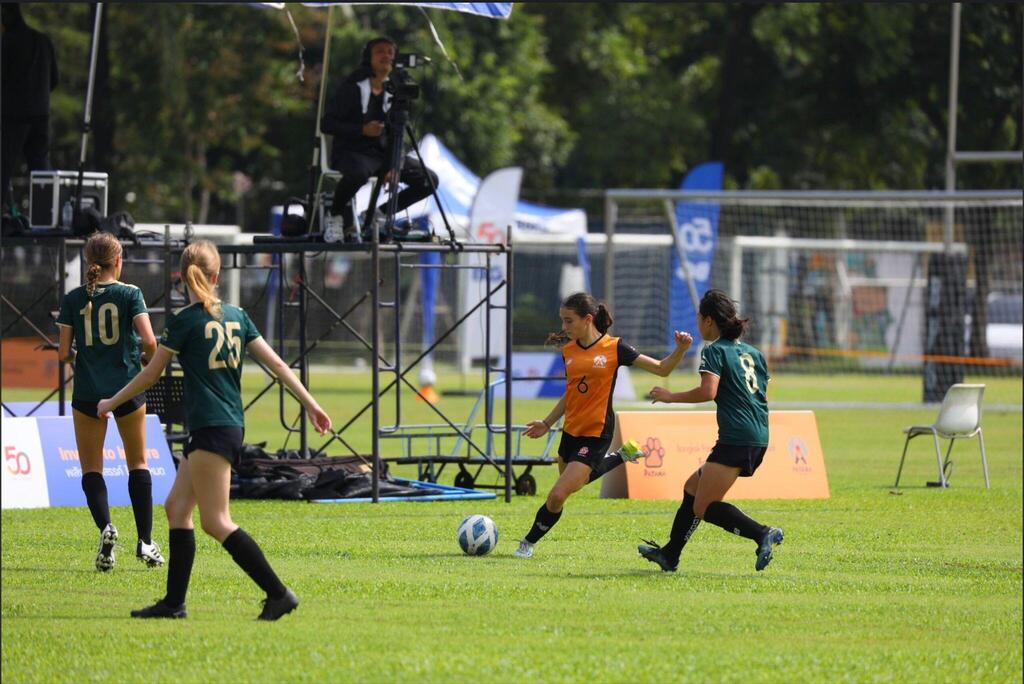
Aya Haviv Buck in action
(Photo: Bangkok Patana Football Academy)
Today, Aya speaks English with near-native fluency, but her heart remains deeply Israeli. From a young age, it was clear she had talent. She began playing on her school’s girls’ team at just six, and her skills quickly drew attention.
That attention took an unexpected turn a few years ago. While playing in a tournament in Thailand, representatives from the West Ham Foundation noticed her. The club runs an official academy branch in Bangkok to scout talent across Asia. “They watched me play and really liked what they saw,” Aya recalled. She joined the Bangkok affiliate and began participating in regional tournaments, later earning invitations to training camps at the club’s facilities in England.
How did people around you react to your decision to pursue soccer?
“Because my brother played, people always said I’d be next. I’ve always had support and encouragement. Maybe my friends in Israel don’t realize how developed things are here, but they’re still really supportive.”
Founded in 1895, West Ham United is one of East London’s most storied clubs, known for developing young talent. Alongside a top-tier men’s squad competing in the Premier League, the club also runs a thriving women’s soccer program—one that now includes Aya Haviv Buck.
'I called my parents and cried from excitement'
Over the years, several Israeli players have worn the West Ham United kit. The first was Eyal Berkovic, known for his sharp vision and pinpoint passing. He was followed by Yossi Benayoun, a fan favorite at the club for his playing intelligence, technique and impressive scoring ability. In later years, Yaniv Katan had a brief stint on loan from Maccabi Haifa, and defender Tal Ben Haim also joined the East London side.

Eyal Berkovic
(Photo: Getty Images)
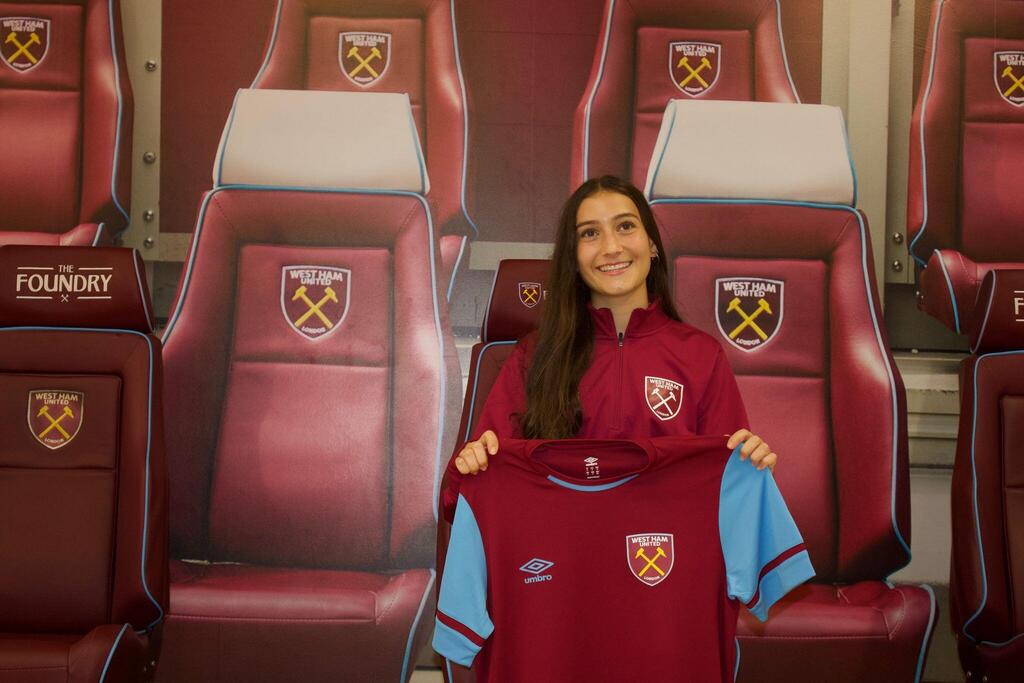
On Wednesday, Aya Haviv Buck became the latest Israeli to join the club—this time, the first female player to do so. After years of intense training and personal sacrifice, she officially signed with West Ham’s U18 girls’ team.
“The signing was a complete surprise,” she said with a smile. “I knew there was a chance it would happen someday, but I never imagined it would be so soon. I immediately called my parents and cried from excitement.”
During her recent 10-day stay in London, just before the signing, she had no idea the dream was about to come true. “After practice, they took me into a room, handed me a shirt and all the West Ham merchandise. Derek, one of the managers, shook my hand and said 'congratulations'—and we took photos.”
What does it feel like to be a West Ham player?
“I still can’t believe it—it’s surreal. It’s hard to put into words what this means to me.” Her father, Ran, added proudly: “We’re all overjoyed here. She cried—and we cried with her. It’s amazing.”
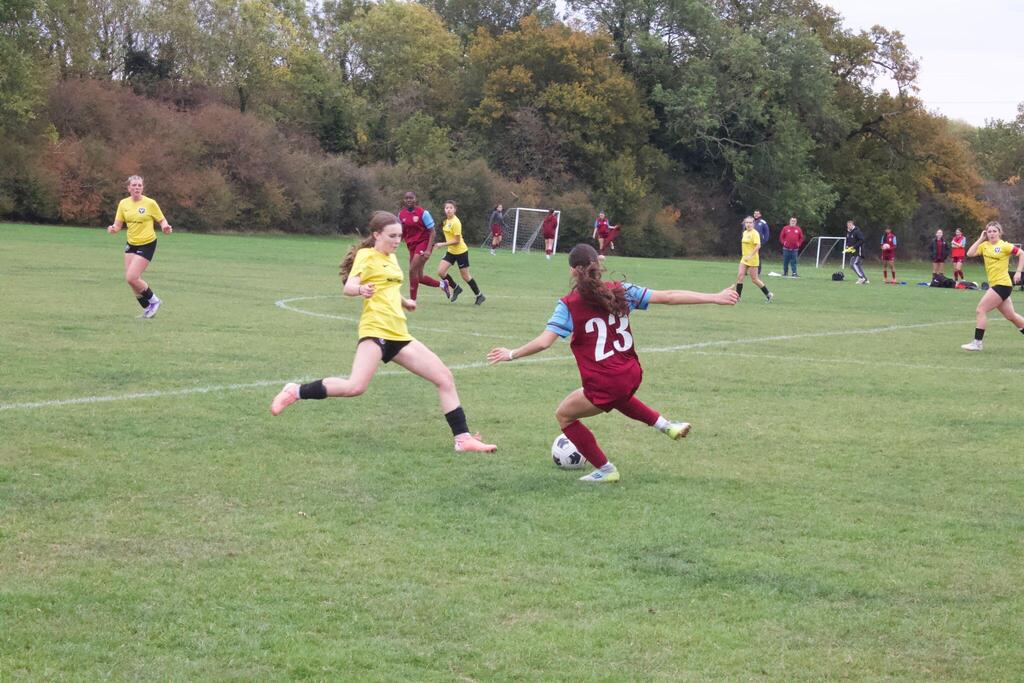
Aya Haviv Buck
(Photo: Naama Haviv Buck)
The past decade has seen a genuine revolution in women’s soccer. Once sidelined by outdated stereotypes, the sport has become a major fixture in the global arena, drawing significant investment, media coverage and the formation of professional leagues. In Israel, however, progress has been slower. Resources are limited, infrastructure remains basic and budget disparities mean that female players often cannot rely solely on soccer to support themselves.
Aya’s path to the upper levels of the sport has been paved with commitment and sacrifice.
How does your routine differ from other girls your age?
“First I’m a student, then I’m a soccer player,” she said. “I train almost every day after school, in the evenings, and I try to balance school and soccer. Sometimes it’s hard. I’m doing the IB, the international diploma. It’s tough, but I enjoy it. Without soccer, I’d be bored.”
Raising a soccer player—especially abroad—is far from inexpensive. Behind every kick are hours of effort, sacrifice and significant financial costs. The investment adds up quickly, and strong family support becomes essential. Aya has been fortunate to grow up in a supportive and encouraging home, but her family is also aware of the price.
“It’s very expensive to raise a soccer player,” her father said. “Every international tournament involves travel, hotels. It costs ten times more than it would in Israel. If your child excels at something, you have to invest in them.”

Orian Goren
(Photo: Pedro Salado/Getty Images)
“My parents’ support helps me so much,” Aya said. “They always remind me what really matters. Everyone is incredibly encouraging. Soccer helps me mentally—it constantly pushes me to aim higher. It also helps socially and teaches me perseverance. What I learn on the field, I carry with me in life.”
Aya’s story draws a parallel with that of Orian Goren, the 16-year-old Israeli prodigy playing in Barcelona’s youth academy—one of the country’s most promising talents in recent years. Both are reminders that Israeli talent no longer stops at the nation’s borders.
“One of the barriers preventing Israelis from succeeding abroad is the language and the loneliness,” Ran noted. “Even with Orian Goren, whose career is thriving in Barcelona, the entire family moved with him. Aya has an older sister living in London who’s with her all the time—and if needed, we’ll join her too.”
'I don’t hide that I’m Israeli'
After October 7, as the world reacted and Israelis everywhere felt growing pressure, Aya took it upon herself to advocate for Israel in her own way. “Sometimes people just say things online about the situation,” she said. “I talk about it. I don’t hide that I’m Israeli. I’m always open to explaining and also hearing the other side. It was important to me to show people what’s really going on.”
“Since October 7, it’s been hard,” she admitted. “There are different opinions at my international school, but I have a strong family and a large Israeli community here. I’ve never felt unsafe. Thailand is a safe country, and my family helped me a lot.”
Now, following her emotional signing with West Ham, Aya is beginning a new chapter with the club’s U18 girls’ team. Her life will be split between two worlds: London and Bangkok. She will continue studying at her international school in Thailand and train with West Ham’s official affiliate in Bangkok, which operates under the club’s sponsorship. Throughout the year, she will travel to England for tournaments.
“I’ll train here, focus on school and fly there to play,” she said. “During breaks, I’ll be in England, training and being part of the team. When I finish school, I’ll move there permanently.”
Aya is also preparing for another challenge in about a month: competing in the South East Asia Student Activities Conference (SEASAC), the region’s largest international school tournament, held in Bangkok. The three-day event includes teams from Thailand, the Philippines, Singapore and other countries.
Do you have any rituals before games?
“Before the hostages came back, I always had a pin on my soccer bag. Now that they’ve returned, I could finally take it off. I listen to music and talk with my friends.”
Who’s your biggest inspiration?
“My brother. Many of the other West Ham players are already based in England, and I’m still here in Thailand—it’s harder to reach the top from a distance. The fact that my brother took a similar path and succeeded—that’s what inspires me. The way he plays, the commitment he has.”
And your biggest dream?
“To play for West Ham’s senior women’s team—and maybe one day get a West Ham scholarship in the U.S., so I can combine soccer with my studies. I want to study something in the sciences. My mom wants me to be a doctor. And I want to play for Israel’s national team and represent my country. I also have a Portuguese passport, so I could choose which national team to play for—but for me, there was never any question.”
Despite living in one of the most idyllic and distant places in the world, far from Israel and within a completely different culture, the Haviv Buck family never forgets where they come from. “We celebrate all the holidays,” Aya said proudly. “We invite a lot of people over. We have Friday night dinners, my dad bakes challah and we only speak Hebrew at home. We travel to Israel twice a year. I listen to Hebrew music and watch Israeli TV. I’d love to go to an Omer Adam concert—maybe he’ll read this and invite me,” she added with a laugh.
What would you say to young girls who dream of playing soccer at the highest levels?
“That it’s absolutely possible. Being Israeli and being girls doesn’t mean we can’t succeed. If there’s a will, there’s a way. It takes persistence—not just talent. It’s hard work—but it’s possible.”