

“I thought: how is this happening to me again? But this is our country.” Raz Hershko already missed one world championship because of war. This time, the tournament was smaller, but the frustration was similar. At least the journey ended with a gold medal in Austria.
Now she speaks about the middle-of-the-night flight after a Shin Bet order, the call to her mother, staying in Europe while sirens sounded in Israel, and the feeling of standing on the podium since October 7. “If I manage to give even one person a small smile, that’s amazing.”
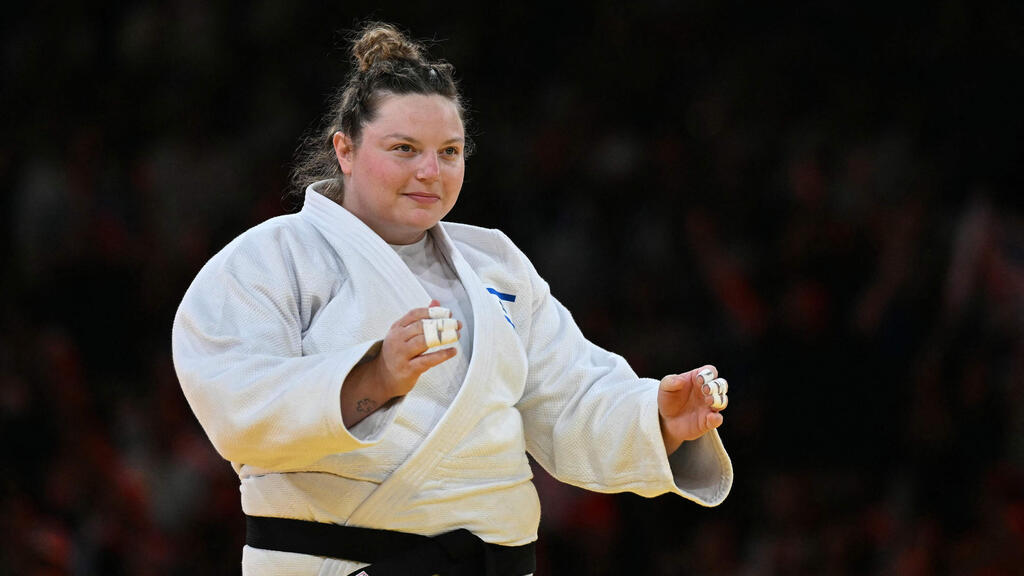
About two weeks ago, Hershko flew to Uzbekistan, knowing she would return to Israel shortly after her competition day at the Tashkent Grand Slam. It was meant to be a quick trip of less than a week.
The Paris 2024 Olympic silver medalist packed only a few clothing items in a small suitcase. She had no idea the trip would turn into a multi-country journey because of the war with Iran and the airspace closures that followed.
The drama began during the night between Saturday and Sunday, when Israel’s judo team received an order from the Shin Bet security service to leave Uzbekistan immediately.
Hershko, who had arrived physically and mentally ready for her competition day, never even stepped onto the mat. But the urgency was clear.
In the middle of the night, the Israeli delegation boarded a flight to Austria. With quick thinking and a desire to salvage something from the trip, the team managed to register at the last minute for the local Grand Prix.
Hershko adapted quickly. Early last week she won the gold medal in the +78 kilogram category at the competition in Linz.
It was some consolation, but the talented judoka still feels the sense of missed opportunity.
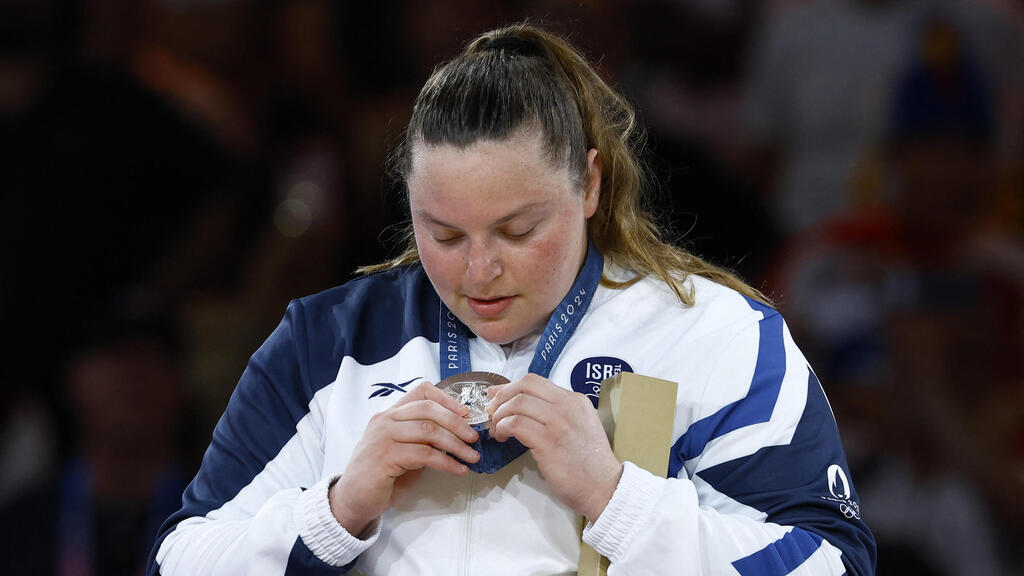
'If I manage to give someone even a small smile, I’ve done more than enough.' With her medal in Paris
(Photo: Kim Kyung-Hoon/ Reuters)
'It took me two days to reset'
Hershko has experienced before how security realities can collide with sporting goals.
At last June’s world championship, she never even boarded the plane to Budapest, where the tournament took place. At the time, the reason was Israel’s military operation “Rising Lion.” Despite attempts by officials to find a way for Israeli athletes to leave the country, missile fire and sirens forced the entire team to remain in Israel.
A sense of déjà vu crossed her mind.
“The feelings are different between the two situations, because during the previous war I was safe at home,” Hershko said shortly before flying to another European destination for a training camp.
“In Tashkent, we were already at the venue. I had passed the weigh-in and we came to watch Gili Sharir compete that day. We were in the atmosphere, with the desire to win and compete, and then suddenly they say, ‘No, you’re not competing.’ Honestly, I wasn’t surprised.”
Did you feel something like that might happen?
“I understood something would happen the moment the attack started on Saturday. It was Gili’s competition day and she managed to compete. I felt something would happen, and when it did I said, ‘What a shame. How is this happening to me again?’
“It was frustrating, but there’s nothing you can do. This is our country and we need to fight for our independence and existence. If that’s what’s required, then that’s what will be.”
The Shin Bet's order to leave Tashkent immediately sounded dramatic. What did it look like from your perspective?
“We rushed back to the hotel. We found a flight, packed quickly and left for the airport for Austria. Process it? There’s no time.
“Yes, the schedule was chaotic, especially when I was supposed to compete there and suddenly I’m competing somewhere else. At first we didn’t even know if we would be allowed to register for the Grand Prix in Austria. Everything felt like heading into the unknown.
“It took me two days to reset, understand the situation and the circumstances. After two days we got approval to compete, and then we went back into competition mode.”
'Living without control'
For Hershko, the situation was unusual.
She often competes week after week, but this time the change came without warning and she never competed in Tashkent at all.
“For me it was after a long preparation,” she said. “In a way it’s about living without control, preparing the engines for another week. I continued with the training plan and made final adjustments for the fights.
“There wasn’t much else to do. Together with the staff we did what was necessary. They helped me handle the situation mentally as well, not just physically. It’s hard because our families are in Israel.”
What did you say to your mother in your first phone call?
“We were still in Tashkent. I asked if everything was OK and what the situation was. She said she was in a protected room and that we should take care of ourselves there.
“I told her we were flying to Austria. She sent me her blessing and love, and I sent her my worries. She calmed me down and said they were following instructions at home and everything was fine.”
A suitcase with almost no clothes
Hershko had not prepared for a long trip. Aside from her judo uniforms, she packed very few clothing items suitable for everyday life.
When the team arrived in Austria, she turned to Israel national team coach Shani Hershko, who is also her uncle, and admitted she did not know how to deal with the situation.
“We all laughed about it,” she said.
“In the first two days in Austria we just rebuilt the wardrobe and bought whatever we needed. You see, Mom? The fact that I don’t have room in my closet isn’t an excuse. I really didn’t have anything to wear.”
The Israeli team still cannot return home, and there are logistical challenges, including basic needs like food.
The Austrian Judo Federation and national coach Yvonne Boenisch, who previously worked with Shani Hershko, stepped in to help.
“Yvonne is amazing,” Hershko said. “They made a real effort to help us train and compete in the best way possible.”
Hershko did exactly that. She stayed focused and won gold.
This weekend, she will try to do it again at the Tbilisi Grand Slam.
“I arrive at every competition as a favorite for gold. That’s the goal and the expectation,” she said. “I aim as high as possible, including in Tashkent.
“The level of the competition changed and I had to adapt quickly. Once we got approval to compete in Austria, I studied my opponents and prepared with the coaches.”
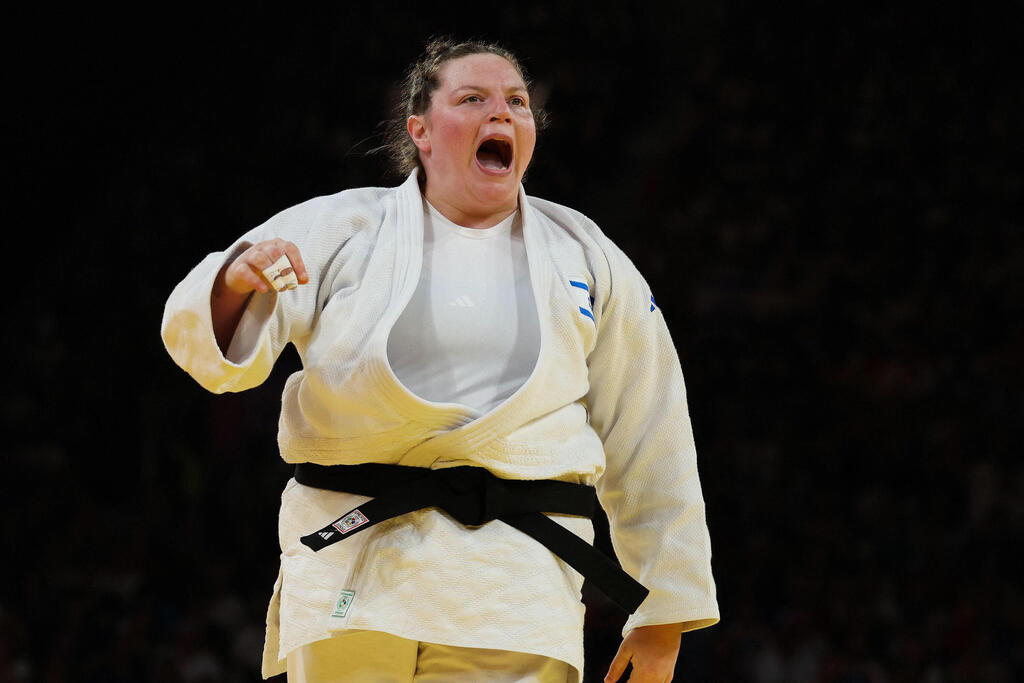
(Photo: Jack Guez/ AFP)
'War is hard'
The competition in Austria served as preparation for the European championship next month.
“I see it as the same competition, just a week later,” Hershko said. “Now I’m focused on the training camp, which is part of the preparation for the European championship.”
It will be her first major competition since the 2025 European Championship after missing the World Championship.
“That’s difficult and it takes the wind out of your sails,” she said. “You think, ‘What a shame. Why am I training if in the end I depend on heaven?’
“But I’m very proud and happy to be part of this people. We have to be strong and resilient, even if it means missing competitions. In the next one I’ll come with full force.”
What is harder, being stuck abroad or staying in Israel and missing competitions?
“There’s no better option. On one hand I’m outside Israel and can continue training and competing, but I’m far from my family and home. It’s complicated.”
How does all this affect you?
“It’s hard. War is hard. Seeing the country under attack is stressful. Friends tell me about sirens all night while I’m sleeping comfortably in my bed abroad.
“But when we compete and show what we’re capable of, it gives me the feeling that I have to keep going with everything I have. It’s not just for me, it’s for the people.”
Did you feel that on the podium?
“I’ve felt that more and more since October 7. If I manage to give even one person a small smile, I’ve done more than enough. Having that privilege is incredible.”